How to Plan a Trip to East Africa: The Complete Safari Planning Guide
An East African safari is one of those trips that changes the way you see the world. Whether you’re watching a lioness stalk through the Serengeti’s golden grass, tracking mountain gorillas through the mist in Bwindi, or listening to the dawn chorus from a tented camp in Tarangire, these are experiences that stay with you long after you come home.
But a great safari doesn’t happen by accident. The best trips are the ones that are planned thoughtfully and well in advance, with the right timing, the right logistics, and a good understanding of what to expect. We’ve been designing East African safaris for more than twenty years, and we’ve put together this guide to walk you through everything you need to think about before you go.
If you want a private Tanzania safari (your own Land Cruiser, not a packed jeep), we plan it with you — typically $4,000–$6,000 per person for 8–14 days, safari or safari then Zanzibar. Stacy designs the trip; Alika Africa runs it on the ground.
Tanzania safari itineraries | Get a custom quote
IN THIS GUIDE
When to go | Visa Requirements | Health Preparations | Travel Insurance | Packing List | FAQ
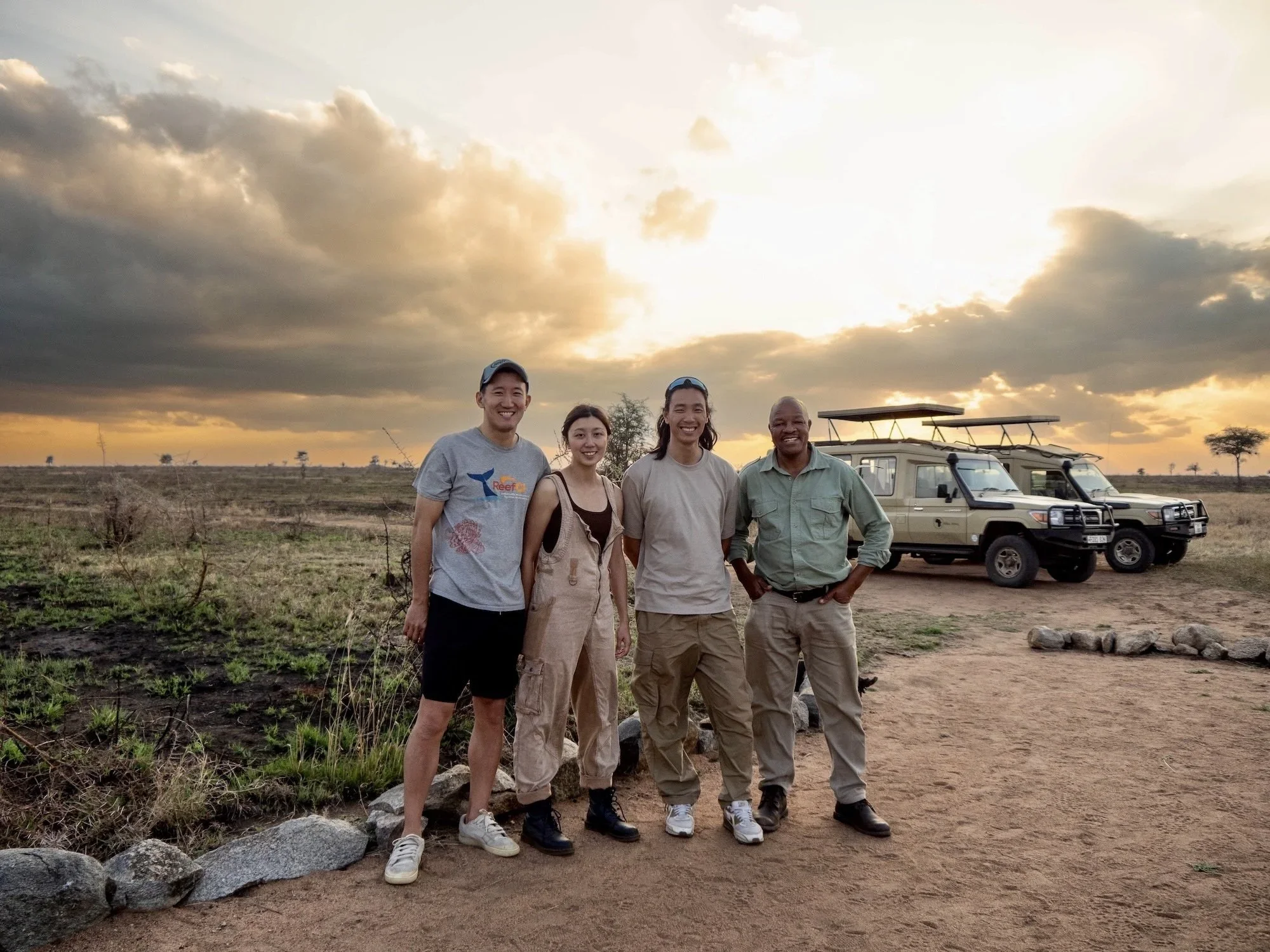
Guests and safari guide Halifa Msangi enjoying a golden sunset on the Serengeti plains
Start Planning Early
This is the single most important piece of advice we can give you: start planning your safari early. If you’re hoping to travel during peak season (July through October, February for the wildebeest calving in the southern Serengeti, or over the Christmas holidays), we recommend beginning the planning process at least 12 to 18 months in advance. Many of East Africa’s best safari lodges and tented camps are small — some have as few as six to ten rooms — and they fill up fast. The most sought-after properties in the Serengeti, Ngorongoro, and Bwindi can be fully booked a year or more ahead for peak dates.
Even if you’re traveling in the shoulder or low season, giving yourself six to nine months of lead time means you’ll have more options for accommodations, better availability on internal flights, and more flexibility to design the itinerary you actually want rather than working around what’s left.
When to Go: Seasons, Weather, and Pricing
East Africa offers rewarding safari experiences year-round, but the character of the trip — and the price — changes significantly with the seasons.
The dry season (June through October) is considered peak safari season across Tanzania, Kenya, Uganda, and Rwanda. Vegetation thins out, animals congregate around remaining water sources, and game viewing is at its most reliable. This is also when the Great Wildebeest Migration reaches the northern Serengeti and the Mara River. February is another peak period — the wildebeest calving season on the southern Serengeti plains around Ndutu draws huge numbers of visitors for one of Africa’s most dramatic wildlife spectacles. Demand is highest during these windows, and lodge rates reflect that.
The wet season (November through May, with the heaviest rains usually from March through May) brings lush green landscapes, migratory birds, newborn animals, dramatic skies, and far fewer visitors. Many lodges offer significant discounts during this period — in some cases, rates can be 30 to 50 percent lower than peak-season pricing. Some camps in remote areas (particularly in southern and western Tanzania) close during the long rains, but the Northern Circuit parks remain open and accessible year-round.
The shoulder months — early June, late October, November, early December, and March — are often the sweet spot. You’ll get good weather, strong wildlife viewing, lower prices, and far fewer vehicles at sightings. We encourage travelers to consider these windows whenever their schedules allow.
| Month | Season | Weather | Game Viewing | Crowds | Safari Highlights |
|---|---|---|---|---|---|
| Dry Season — Peak Safari Months | |||||
| June | Early Dry | Warm days, cool nights. Very little rain. 15–28°C | Excellent — vegetation thins, animals gather at water | High | Migration enters central/western Serengeti. Southern circuit opens. |
| July | Dry | Dry and warm. Clear skies. 13–28°C | Excellent | Peak | Migration reaches northern Serengeti. Mara River crossings begin. |
| August | Dry | Dry and warm. Clearest skies. 13–29°C | Excellent — best of the year | Peak | Peak Mara River crossings. Best predator sightings. Most crowded month. |
| September | Late Dry | Warm and dry. 14–29°C | Excellent | High | Migration continues in the north. Ruaha and Katavi at their best. |
| October | End of Dry | Warming up, occasional brief showers. 15–30°C | Very good — animals still at water sources | Moderate | Migration begins moving south. Last month for western circuit camps. |
| Short Rains — Green Season Begins | |||||
| November | Short Rains | Brief afternoon showers. Warm. 16–30°C | Good — landscapes green, wildlife disperses | Low | Shoulder season value. Migratory birds arrive. Short rains refresh the plains. |
| December | Short Rains / Holiday | Showers ease late month. 16–30°C | Good | Moderate | Holiday season brings visitors. Migration reaches southern Serengeti. Lush scenery. |
| Calving Season — Southern Serengeti | |||||
| January | Warm & Drier | Warm with occasional showers. 16–30°C | Very good — calving begins | Moderate | Wildebeest calving begins in southern Serengeti. Predator action peaks. |
| February | Calving Peak | Warm, brief showers. 16–30°C | Excellent — calving spectacle | High | Peak calving: 8,000+ calves born daily. Predators follow. Ndutu area at its best. |
| March | Late Calving / Rains Begin | Increasing rain, warm. 16–29°C | Good — herds begin moving | Low | Calving continues. Migration starts northward movement. Excellent birding. |
| Long Rains — Low Season | |||||
| April | Long Rains | Heavy afternoon rains. 17–28°C | Moderate — some roads muddy | Very Low | Lowest prices of the year. Some southern/western camps close. Lush and dramatic. |
| May | Long Rains | Rain easing late month. 15–27°C | Moderate — improving toward month end | Very Low | Best value month. Northern parks stay accessible. Migration herds consolidate. |
Conditions vary by region. The Northern Circuit (Serengeti, Ngorongoro, Tarangire) is accessible year-round. Southern Circuit parks (Ruaha, Nyerere) are best June–October. Western Circuit parks (Katavi, Mahale, Gombe) are best July–October. Temperatures shown are typical for northern Tanzania at safari altitude.
Visas and Entry Requirements
Every country in East Africa requires a visa or electronic travel authorization for most foreign nationals, but the process is straightforward. Here’s what to know for the four main safari destinations:
Tanzania: Most visitors need an e-visa, which should be applied for in advance through Tanzania’s official immigration portal. US citizens are typically issued a multiple-entry visa ($100). The standard single-entry visa costs $50. Your passport must be valid for at least six months from your entry date and have at least two blank pages. Tanzania is not part of the East Africa Tourist Visa, so you’ll need a separate visa if combining Tanzania with Kenya, Rwanda, or Uganda. Apply at: immigration.go.tz
Kenya: Kenya uses an Electronic Travel Authorization (eTA) system. All visitors, including infants and children, must have an approved eTA before travel. The processing fee is $30, and applications should be submitted at least three working days before departure. Your passport must be valid for six months beyond your stay with at least two blank pages. Apply at: etakenya.go.ke
Uganda: Visas must be applied for online through Uganda’s official e-visa portal ($50 for a tourist visa). Visa-on-arrival options have been discontinued, so apply before you travel. Be sure to use only the official government website — treat any other site advertising Uganda visa services as fraudulent. Apply at: visas.immigration.go.ug
Rwanda: Visas can be obtained on arrival or applied for online before departure through Rwanda’s IremboGov platform. A single-entry tourist visa costs $50. Processing takes approximately four days if applied online. Apply at: irembo.gov.rw
East Africa Tourist Visa (EATV): If you’re visiting Kenya, Uganda, and Rwanda on the same trip, the East Africa Tourist Visa costs $100 and covers all three countries with multiple entries for 90 days. You must enter through the country that issued the visa first. Note that Tanzania is not included in this visa.
We help all of our clients navigate the visa process and will walk you through exactly what you need based on your itinerary and nationality.
Vaccinations and Health Preparations
Yellow fever vaccination requirements vary by country and depend on where you’re traveling from. Tanzania and Rwanda require proof of yellow fever vaccination only if you are arriving from a country with risk of yellow fever virus transmission (this includes Uganda and Kenya). Uganda and Kenya both fall within yellow fever risk zones, and the CDC recommends vaccination for travelers visiting those countries. If your itinerary includes Uganda or Kenya before entering Tanzania or Rwanda, you will need to show your yellow International Certificate of Vaccination (the yellow card) at immigration. Because many East Africa safari itineraries cross multiple borders, we recommend getting the yellow fever vaccination regardless of your specific routing — it’s valid for life and removes any potential entry complications.
We recommend reviewing the CDC Travelers’ Health pages for each country you plan to visit, as vaccination recommendations are updated periodically:
CDC — Tanzania | Kenya | Uganda | Rwanda
Beyond yellow fever, we recommend consulting a travel medicine clinic or your doctor at least six to eight weeks before departure to discuss malaria prophylaxis (essential for all East African safari destinations), hepatitis A and B, typhoid, and ensuring your routine vaccinations are up to date. Your doctor can advise on the best antimalarial medication for you based on your health history and the specific regions you’ll be visiting.
We also recommend bringing a small personal medical kit with basics like hand sanitizer, sunscreen, insect repellent (DEET-based), rehydration salts, and any prescription medications you take regularly. Pharmacies in Arusha, Nairobi, Kigali, and Kampala are well stocked, but remote safari areas have limited access to medical supplies.
Travel Insurance
We strongly recommend comprehensive travel insurance for any East African safari. At a minimum, your policy should cover trip cancellation and interruption, emergency medical treatment, medical evacuation (including by air ambulance), baggage loss or delay, and travel delays. Safari trips often involve significant non-refundable deposits, internal flights, and remote locations where medical access is limited — good insurance gives you peace of mind that you’re covered if something goes wrong.
Look for a policy that specifically includes coverage for adventure activities if your trip involves climbing Kilimanjaro, gorilla trekking, or other active pursuits. Many standard travel insurance policies exclude high-altitude trekking above a certain elevation, so read the fine print carefully or ask your provider to confirm coverage. A good place to compare policies side by side is Squaremouth, which lets you filter by trip details and coverage needs to find the right plan.
If your trip includes Zanzibar, be aware that Zanzibar requires all inbound visitors to have travel insurance. You may be asked to show proof of coverage on arrival. Insurance can be purchased through the official Zanzibar portal if you don’t already have a qualifying policy: Visit Zanzibar Inbound Insurance
AMREF Flying Doctors: Emergency Evacuation Coverage
In addition to your own travel insurance, we provide all of our safari guests with AMREF Flying Doctors emergency evacuation coverage at no additional cost. AMREF Flying Doctors is East Africa’s leading air ambulance service, operating since 1957 with more than 65 years of experience providing life-saving medical evacuations across the region. Their fleet of fully equipped flying ambulances, staffed by professional doctors and pilots, is on standby 24 hours a day and can be mobilized in as little as 20 minutes from a call.
If a medical emergency arises while you’re on safari — whether you’re in the Serengeti, Maasai Mara, Bwindi, or any other remote location — AMREF can evacuate you by air to Nairobi, which has East Africa’s best-equipped hospitals. We cover this evacuation service for every guest on every safari we operate, because when you’re hours from the nearest hospital, knowing that a flying ambulance can reach you is not a luxury — it’s a necessity.
It’s important to understand that AMREF covers emergency evacuation only. Hospital bills, treatment costs, and ongoing medical expenses are not included — which is why your own comprehensive travel insurance remains essential.
Getting There: International Airports
East Africa is served by several well-connected international airports, and the one you fly into will depend on where your safari begins:
Kilimanjaro International Airport (JRO), Tanzania: The gateway to northern Tanzania’s safari circuit. Located between Arusha and Moshi, JRO puts you within a few hours’ drive of the Serengeti, Ngorongoro, Tarangire, and Mount Kilimanjaro. This is where most of our Tanzania safari and climbing clients arrive.
Jomo Kenyatta International Airport (NBO), Nairobi, Kenya: East Africa’s largest and busiest airport, with the most international flight options. Nairobi is a common hub for connecting flights to Kilimanjaro, Entebbe, and Kigali, and is the starting point for Kenya safaris to the Masai Mara, Amboseli, and Samburu.
Entebbe International Airport (EBB), Uganda: Uganda’s primary international gateway, located on the shores of Lake Victoria about 40 kilometers from Kampala. Entebbe is your entry point for gorilla trekking in Bwindi, chimpanzee tracking in Kibale, and safaris in Queen Elizabeth National Park.
Kigali International Airport (KGL), Rwanda: Rwanda’s main airport, conveniently located just outside Kigali’s city center. Kigali is the most direct entry for gorilla trekking in Volcanoes National Park and chimpanzee trekking in Nyungwe Forest.
Abeid Amani Karume International Airport (ZNZ), Zanzibar, Tanzania: Zanzibar’s international airport receives direct flights from several European and Middle Eastern cities as well as connections from Nairobi and Dar es Salaam. If your trip includes a beach extension on Zanzibar after your safari, you can fly directly from the Serengeti or Arusha to Zanzibar and depart internationally from there — a popular and convenient routing.
While we do not arrange international airfare to and from East Africa, we handle most internal bush flights, ground transfers, and logistics within the region. Our services operate from airport to airport — we have you covered from the moment you arrive in East Africa until the moment you depart.
Packing Light: Luggage Restrictions and Laundry
If your safari includes any bush flights — which is common for trips to the Serengeti, Ruaha, Katavi, Mahale, or Nyerere — you’ll need to be aware of strict luggage weight limits. Most bush airlines in East Africa restrict passengers to 15 to 20 kilograms (roughly 33 to 44 pounds) of total luggage per person, including hand carry. It is recommended that bags be soft-sided (no hard-shell suitcases) to fit in the small aircraft cargo holds.
Auric Air, the airline we use most frequently, advises the following luggage dimensions:
Maximum size per piece: 90cm x 65cm x 35cm (LxWxD). While all bag types are accepted‚ we recommend soft-sided bags for easier packing into aircraft pods.
This sounds restrictive, but it’s more than enough for a safari. You don’t need a different outfit for every day. Neutral-colored, lightweight clothing that you can layer is ideal. A good packing list for a 10-day safari might include three to four shirts, two pairs of long trousers, a pair of shorts, a fleece or light jacket for cool mornings, a sun hat, comfortable walking shoes, and sandals for evenings at camp.
One of the things that surprises many first-time safari travelers is that most lodges and tented camps include complimentary laundry service, and those that don’t offer it for a small fee. Your clothes are typically washed, dried, and returned to your room the same day. This means there is truly no need to overpack — you can wear the same few outfits throughout your trip and have them laundered every day or two.
What to Wear on Safari
Safari style is practical, not formal. Neutral colors — khaki, olive, tan, brown, and gray — blend into the bush and are less likely to attract insects. Avoid bright whites (which get dusty fast and can startle wildlife), dark navy or black (which attract tsetse flies in some areas), and camouflage patterns (which are restricted or prohibited in some East African countries).
Mornings on safari can be surprisingly cold, especially at higher elevations like the Ngorongoro Crater rim or in the highlands of Bwindi. A warm fleece or light down jacket is essential for early morning game drives. By midday, it’s often warm enough for short sleeves. Layers are your best friend.
For gorilla and chimpanzee trekking, long trousers, a long-sleeved shirt, sturdy waterproof hiking boots with ankle support, and gardening-style gloves for grabbing vegetation are recommended. The forest trails can be steep, muddy, and dense with nettles.
Money, Currency, and Tipping
The local currencies in East Africa are the Tanzanian Shilling (TZS), Kenyan Shilling (KES), Ugandan Shilling (UGX), and Rwandan Franc (RWF). However, US dollars are widely accepted for tourism-related payments throughout the region. Bring clean, undamaged US bills printed after 2006 — older or worn bills are sometimes refused. Small denominations ($1, $5, $10, $20) are useful for tips, drinks, and small purchases. Once you’ve paid for your safari, most of your meals and activities are included, so you don’t need to carry large amounts of cash. The main extras are tips, drinks (sodas and alcohol unless noted as included in your itinerary), and any optional excursions you add along the way.
Tipping follows a similar culture to North America and is customary throughout East Africa. As a general guide, we suggest approximately $10 per guest per day for your safari guide/driver — though for smaller groups (two guests or fewer), tipping $40 to $50 per day to the guide is appropriate given the personalized attention. For lodge and camp staff, $10 per person per night to the communal tip box is a good benchmark, and higher-end properties with more personalized service may warrant more. Tips are best given in US dollars or local currency — not in coins, which can’t be easily exchanged. For Kilimanjaro climbs, tipping guidelines are higher and we provide detailed recommendations with your pre-trip information.
We’ve written a detailed breakdown of how much spending money to bring and who to tip in our blog post: How Much Money Should I Bring on a Safari?
Photography and Charging
East Africa is a photographer’s dream, and you’ll want to make sure your equipment is ready. A camera with a good zoom lens (200mm minimum, 400mm+ ideal) will let you capture wildlife from a comfortable distance. Bring more memory cards and batteries than you think you’ll need — a single morning game drive can easily produce hundreds of photos.
Most safari lodges and tented camps have charging facilities in the rooms, though some remote camps run on solar power and may have limited charging hours. Power outlets in East Africa typically use UK-style three-pin plugs (Type G), so bring a universal adapter. A portable power bank is a smart backup for keeping phones and smaller devices charged during long game drives.
Connectivity and Communication
Most safari lodges and camps offer some form of Wi-Fi, though speeds and reliability vary significantly — especially in remote locations. Don’t expect to stream video from a tented camp in the Serengeti. Many travelers find that the limited connectivity is one of the best parts of a safari — it’s a chance to genuinely unplug.
If you need to stay connected, local SIM cards with data plans are inexpensive and easy to purchase at the airports in Kilimanjaro, Nairobi, Entebbe, and Kigali. Your guide can help you set one up on arrival. Cell coverage in the parks is surprisingly decent in many areas, though it drops off in the most remote regions.
Traveling with Children
East Africa is a wonderful family destination, and many of our clients travel with children. However, there are a few things to keep in mind. Some lodges and camps have minimum age requirements (often 6 or 8 years old for game drives). Walking safaris require a minimum age of 15 in most areas, and gorilla trekking in Uganda and Rwanda also has a minimum age of 15. We’ll help you find family-friendly properties that welcome younger travelers and offer activities designed for kids, from junior ranger programs to cultural visits and age-appropriate game drives.
Frequently Asked Questions About Planning an East Africa Safari
-
For peak season travel (July–October, February for the calving season, and Christmas/New Year), we recommend starting the planning process 12 to 18 months in advance. Many of East Africa’s best lodges are small properties that fill up quickly. For shoulder and low season travel, six to nine months is usually sufficient, though earlier is always better for the widest selection of accommodations.
-
Yes. Tanzania, Kenya, Uganda, and Rwanda all require visas or electronic travel authorizations for most nationalities, all of which can be applied for online before you travel. If your trip includes Kenya, Uganda, and Rwanda, the East Africa Tourist Visa ($100) covers all three countries. Tanzania requires a separate visa. We help all clients with the visa process and provide links to the official government portals.
-
Yellow fever vaccination requirements depend on your routing. Tanzania and Rwanda require proof of vaccination only if you’re arriving from a country with yellow fever transmission risk (including Uganda and Kenya). The CDC recommends yellow fever vaccination for travelers to Uganda and Kenya. Because many East Africa itineraries cross multiple borders, we recommend getting vaccinated regardless of your specific routing. Also consult your doctor about malaria prophylaxis, hepatitis A and B, and typhoid at least six to eight weeks before your trip.
-
We recommend drinking bottled or filtered water throughout your trip. All reputable lodges and camps provide complimentary bottled water in rooms and on game drives. Your guide will always have water available in the vehicle.
-
Most bush airlines restrict passengers to 15 to 20 kilograms (33–44 pounds) of total luggage per person, including hand carry. Bags must be soft-sided. This applies to flights within the Serengeti, Ruaha, Maasai Mara, Mahale, Nyerere, and other remote parks. We’ll confirm the exact limit for your specific flights.
-
Safari pricing varies widely depending on the time of year, accommodations, group size, and which parks you visit. As a general guide, expect $450 to $1000+ per person per day for a well-designed safari with quality lodges. Peak season rates are typically 30 to 50 percent higher than low season. We provide custom quotes for every trip and work within your budget.
-
Yes, we strongly recommend comprehensive travel insurance that covers trip cancellation, emergency medical treatment, medical evacuation, and baggage loss. We provide all safari guests with AMREF Flying Doctors emergency evacuation coverage, but this does not replace full travel insurance. If your trip includes Kilimanjaro or high-altitude trekking, confirm that your policy covers those activities.
-
Yes. Most lodges and tented camps include complimentary laundry service or offer it for a small fee. Clothes are typically washed and returned the same day. This is one of the best reasons to pack light — you don’t need a fresh outfit for every day.
-
East Africa primarily uses UK-style three-pin plugs (Type G). Bring a universal adapter. Most lodges have charging facilities in the room, though some solar-powered camps have limited charging hours. A portable power bank is recommended for keeping devices charged on game drives.
-
Absolutely — and many of our clients do. We recommend climbing Kilimanjaro first and then relaxing on safari afterward. Combined trips typically run 12 to 16 days. See our Kilimanjaro climbing page for route options and pricing.
-
Yes. Tanzania, Kenya, Uganda, and Rwanda are all safe and welcoming destinations for tourists. Safari tourism is a cornerstone of these economies, and parks are well managed and secure. We handle all logistics, transfers, and accommodations, so you can focus entirely on the experience.
Ready to Start Planning?
Whether this is your first safari or your fifth, the planning process is where the excitement begins. Tell us where you want to go, when you’re hoping to travel, and what matters most to you — and we’ll design a trip that fits. Every safari we build is custom, and every detail is handled.
Get started with a free custom itinerary → Contact Stacy at Duma Explorer
Or reach us directly on WhatsApp: +1 510 424 1675