Preparing for your Kilimanjaro trek: Q&A with Canadian Mountaineer Mike Hurry
By Dhyana Levey
Staff Writer
Canadian mountaineer Mike Hurry first ascended Tanzania’s Mt. Kilimanjaro in 2009, choosing Duma Explorer/Alika Africa guides to lead his group of 24 for this initial fundraising trek. Hurry, executive director of Big Brothers Big Sisters Sarnia-Lambton, has now climbed Africa’s highest mountain six times — returning each time to scale Mt. Kilimanjaro with our tour company managing the trip. Sure, the adrenaline rush of reaching the summit is enough to keep a dedicated mountaineer coming back (although six times is a lot!), but what inspired his loyalty to Duma Explorer/Alika Africa? We sat down with Hurry for a Q&A session to find out. We also got his take on the best ways to choose a tour company, how to train for a climb, get the right gear, packing advice, health and safety tips, helpful mindsets, and more.
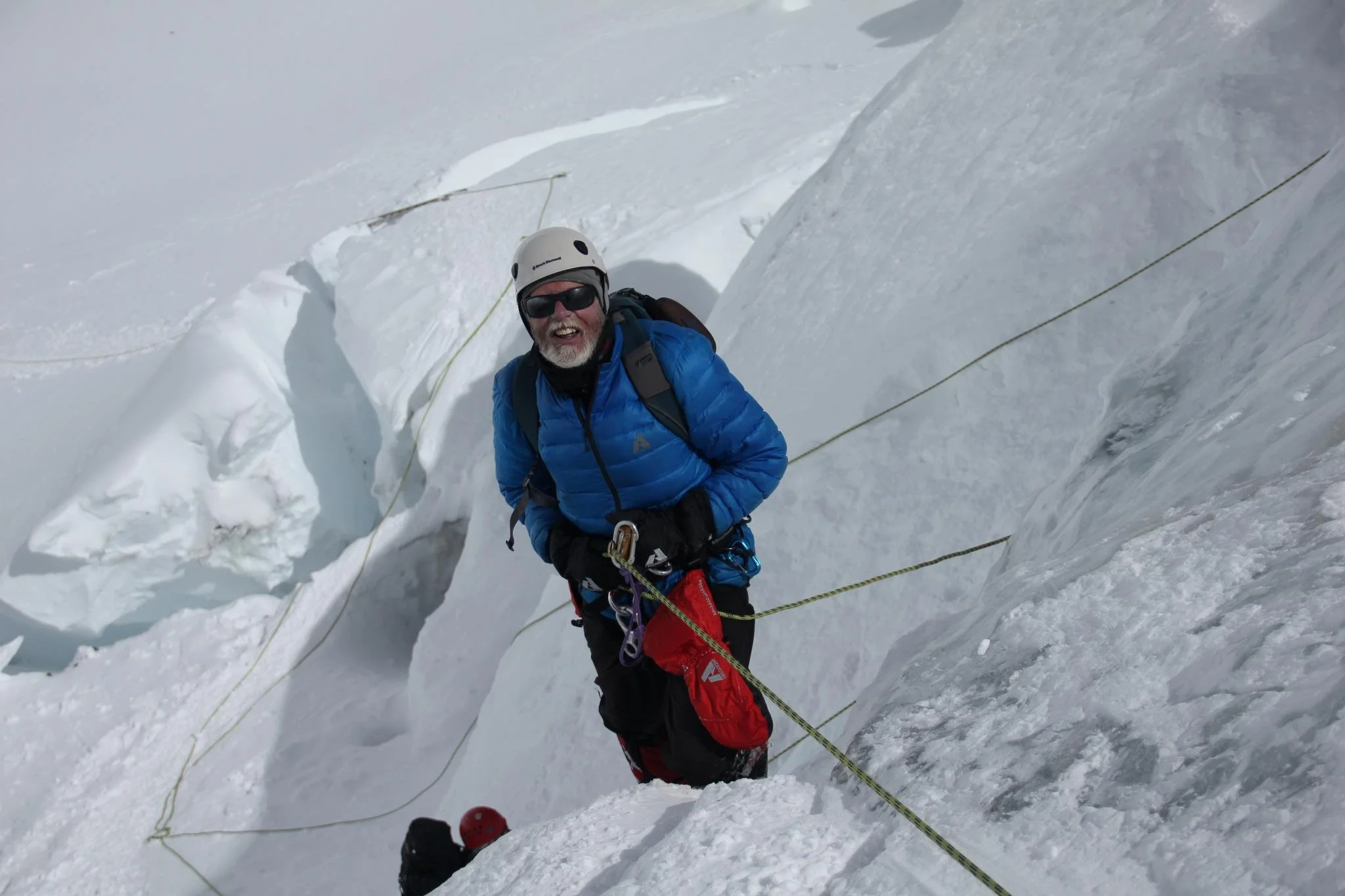
Mike climbing Elbrus, one of the Seven Summits
Q: You’ve climbed the world’s great mountains. In your view, what makes Kilimanjaro unique compared to other high-altitude climbs?
A: The first thing is that Kilimanjaro is a very doable mountain — you aren’t roped up and wearing high-tech gear. It’s a walk up a hill. And it’s still the highest peak in Africa and the tallest free-standing mountain above sea level in the world.
Q. What do climbers often underestimate about Kilimanjaro, even though it’s non-technical?
A: I think that people who haven’t done climbing and start first with Kilimanjaro, they think: You are just walking. But they forget the effect of altitude and that it can vary from person to person. They try to do it too quicky and don’t let their bodies acclimate. If you talk to doctors at basecamp, they say you don’t need to take Diamox (medication) if you let your body adjust naturally. But you have to take it slower.
Q. From your experience at extreme elevations, what aspects of acclimatization are most important for success on Kilimanjaro?
A: Give yourself enough time. If you try to do it in four or five days, the trip might be less expensive, but you only have about a 27 percent chance of success. If you go over seven or eight days, there’s a 90 percent chance of success. Don’t do it too quick. The extra three or four days makes a big difference.
Q. What type of physical training do you think best prepares someone for Kilimanjaro?
A: Everyone who goes with me who is successful hikes every day, takes long walks, goes to the gym. When you go to the gym, tell the trainer what you are doing and use the StairMaster. In North America we live in a flat place. There aren’t a lot of mountains here. But walking and getting in good physical shape is the best thing that you can do.
Q. Is there a particular mental approach or mindset you recommend for first-time high-altitude trekkers?
A. Anything you are doing has to be positive. You have to believe you can do it. If you read and start to understand it’s about taking your time, going slow, and that the high percentage of time people are successful in seven or eight days, you can do it one step at a time. I’ve taken people up from ages 18 up to age 78. I’ve taken about 100 people up and only four of them didn’t make the summit. Also, going with a good tour company that understands the mountain is important. They know what they are doing and have your best interests at heart.
Q. What skills or habits from your big-mountain expeditions translate well to Kilimanjaro?
A. Patience: Any mountain you are on, it’s about going slow, taking time, listening to your body, taking breaks when you need them. Some people call it a block step or breath step — it’s when you step, you lock your knee — you are standing on frame not muscle. If you do that every time a split second, it gives you a rest each time and makes it that more doable. Also, make sure you are hydrated and eating and taking breaks.
Q. How many of Kilimanjaro's routes have you climbed? Which one is your favorite and why? Is there one you would avoid?
A. I’ve done three and I think there’s eight. I’ve done more of the Lemosho Route. It’s the prettiest and you get around a good part of the mountain. I see people doing the Coca Cola Route, which I haven’t done, but it seems like people are going too fast.
Q. From all your expeditions, what piece of gear is most essential for a successful Kilimanjaro climb?
A. A lot of people don’t think they need hiking poles. But when you are hiking for long distances over a couple of days, they give you stability on uneven pavement and it takes some stress off joints and knees. People regret it when they don’t bring them and always appreciate it when they do.
Q. Is there anything climbers tend to bring on Kilimanjaro that you think is unnecessary?
A. People take too much clothing. It’s best to just think of layering up and layering down throughout the day but people bring too many clothes and, also, too many snacks. They are concerned about how the food will be, but with Duma the food is really good.
Q. How important is layering and thermal management on Kilimanjaro compared with other cold, high-altitude environments?
A. You have to have some understanding of the weather. It’s going to be different on Denali (Mount McKinley in Alaska).You are still layering but your layers are going to be a down jacket. You aren’t going to need that at Kilimanjaro. Look at the weather and adjust.
Q. What’s the most important thing a climber should understand about altitude sickness before attempting Kilimanjaro?
A. The more aware you are of anything, the better prepared you can be. Most people take Diamox for altitude sickness. I haven’t yet. I’ve had people come with me who have medication for pulmonary edema. The key is to take your time. In Tanzania they say “pole, pole,” (slowly, slowly in Swahili). On the first climb, they took the slowest person and put them at the front of the group, and we all went at that pace: pole, pole. And if your body keeps having issues with the altitude, turn around and come down the mountain.
Q. Based on your experience, what safety practices should climbers look for when choosing an operator? Our guides are all Wilderness First Responder certified.
A. Look for a good track record, success in previous climbs, talk to people who have gone with that company — is there concern about safety? Do they check your O2 sats (oxygen saturation)? Do they have their own staff? The good ones have long-term paid guides. There’s a porter’s association and international associations that rate companies. I want someone who has a good rapport with their staff, it trickles down. Ask what training they have and if they are certified. All of those things give you comfort.
Q. If someone starts to struggle on the mountain, what steps would you recommend they take based on your experience at extreme altitudes?
A. Most times I will take an O2 sats meter with me. I check the oxygen level and expect it to be low—it’ll adjust. Then I check it again the next day. If the oxygen level is coming back up —good, let’s keep going. If not, the only thing you can do is go down the mountain. Oxygen gets thicker (as you go down the mountain), it gets better. Even if you have the medications for high altitude, pulmonary edema – it can happen. Come out of the high-altitude situation.
Q. What do you wish every climber knew before stepping onto Kilimanjaro?
A. I’ve explained to people what they need to do to get ready — go to the gym, get in shape — they promise you they’ll do it, but they don’t. So, I wish they knew the importance of preparation. You can make it up Kilimanjaro even if you aren’t in great shape. But you’ll enjoy it more if you are. Why not just make it a good experience for you and everyone else you are with? Pay attention to the material the company sends you – what you should wear, what you should pack. It’s not a walk in the park.
Q. What’s the best piece of universal mountaineering wisdom you think applies perfectly to this mountain?
A. Take it slow. Pay attention to your body and how you are adjusting. Don’t try to do it in too fast a time.
Q. After climbing Everest and other demanding peaks, what do you think makes Kilimanjaro a meaningful climb for anyone — beginner or expert?
A. Kilimanjaro is doable, it’s achievable by a vast majority of people who take it seriously. You come back feeling good because you climbed one of the highest mountains. Tanzania is a wonderful country; there are all sorts of other things you can do too while you are there — like go on safari.
Q. You’ve climbed Kilimanjaro six times with us—what initially inspired your first climb, and what made you choose our company back then?
A. I ran a charity, Brothers Big Sisters, fundraising climb and it was the best fundraiser. It started a whole series of adventure fundraising trips. This showed that people want to do this, they just don’t know how to start it themselves. And I just continued to do it for fundraisers and groups of friends. There are a lot of companies in Tanzania that do this, and we wanted to use one that treated its employees well and was highly rated. It was important that they weren’t just there to make money off of tourists, they were interested in making the country better. That they would never take money out of your experience and do something like give you substandard food. Duma had you stay at places that gave back to the country. We stayed at a place that assists disabled children, another that did glass blowing. Another put money into a school. Not only do they want you do to have a good experience, they want to make Tanzania better. I’ve gone back several times, always gone with this company. The travel was excellent: They aren’t the most or the least expensive but it’s really good value and you come back successful.
Q. How would you compare the professionalism, training, or decision-making of our guides to those you’ve climbed with in places like Nepal or South America?
A. Duma’s training is excellent: they are all certified guides, they all went to school, they have good background knowledge. They are well experienced. They are good on the hospitality end of things: taking care of clients, being attentive, knowing when people are struggling. I give them high marks— a lot are actual employees. I know Stacy supported many during Covid when they didn’t have an income. She’s giving back to the country. She gives employees chances to do things in other parts of Africa, to try climbing in other countries, like Nepal. A lot of other companies don’t do stuff like that.
Q. Have you observed differences in porter treatment and welfare across the world? How does our ethical approach measure against what you’ve seen elsewhere? We were founding partners of Kilimanjaro Porters Assistance Project back in 2003.
A. Nepal for example: We were staying in key houses on the way up—that was one level of accommodation, and it’s ok, but where the porters were staying were awful. That wasn’t right. Those people work really hard. We want to make sure the porters and guides are being accommodated and fed.
Q. Our staff has very low turnover—many have been with us for a decade or more. How has building relationships with the same team over multiple climbs shaped your experience?
A. Some of the porters have been with Stacy for years— she even has porters trained to be guides that go back to being porters because that’s what they prefer. It’s not just the guides who are loyal. You know the people before you get there. I know I’ve had a great experience with that person. You know the quality of the people.
Q. What aspects of the logistics, daily camp life, or climb management consistently impressed you over your six climbs?
A. Everybody who goes is so impressed with the amount of work these guys do. Everyone is really organized. You leave, they take everything down. They pass you as you are hiking and they are ready when you get there. They are singing as they go past you. They do the cooking, you are sleeping on decent mattresses, you have coffee, hot water, soap, purified water—everything you can think of to make the experience enjoyable. The food is incredibly good. Tables and chairs to sit on. You are out of the elements. Toilet tent so you aren’t out behind a rock. So impressed with the dedication.
Q. How would you describe the atmosphere the team creates on the mountain?
A. Service above self. They get real joy out of your success. They all start singing when you get to the bottom. It’s pretty magical. They are happy to be there. They are happy everyone is down. Most are successful. They really do celebrate.
Q. If someone were considering climbing Kilimanjaro and comparing different companies, what would you tell them?
A. Do your research. There are a ton of companies. Look at the Porters’ Association. There are international associations that rate porters and adventure companies—it says a lot about how they treat their employees. Don’t just look at the price. The most expensive company doesn’t mean it’s the best.
Q. Is there anything unique about our approach that you feel other operators simply don’t match?
A. They treat their employees well and it trickles down to how they are going to treat you as a client and how they are going to be focused on your success.