

How to prepare for gorilla trekking
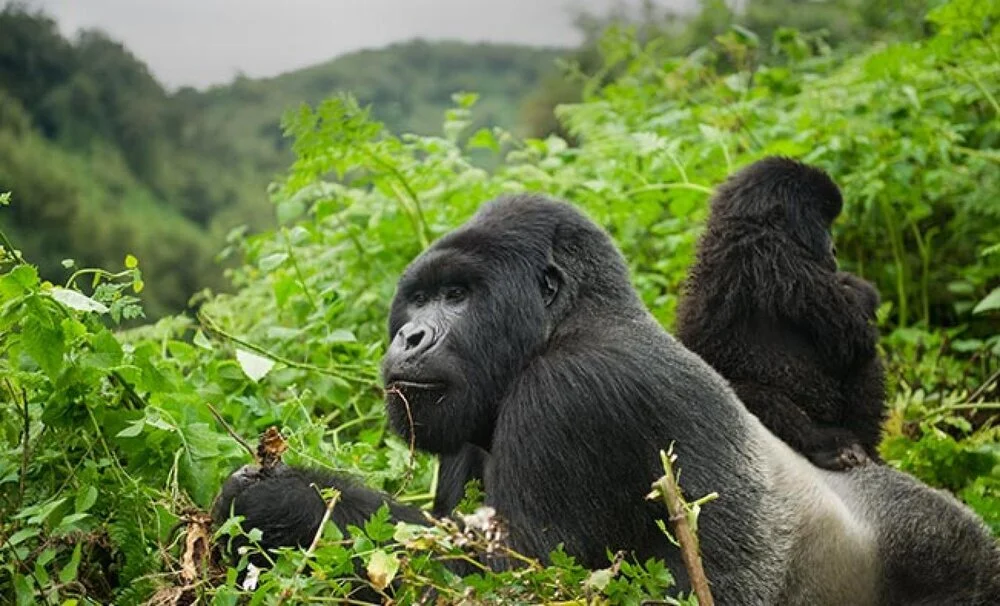
Silverback gorilla in Uganda
Just over 1,000 mountain gorillas remain in the wild in 2021. They are found in Uganda, Rwanda and Congo.
The Complete Guide to Gorilla Trekking in Rwanda and Uganda
Gorilla trekking is one of the most profound wildlife experiences on earth. Coming face to face with a wild mountain gorilla — watching a silverback yawn, observing juveniles tumble through the undergrowth, or making brief, electric eye contact with a creature so genetically close to ourselves — is a moment that stays with you for the rest of your life. It is also a short, expensive, and logistically demanding experience. The more prepared you are, the more you will get out of it.
This guide covers everything you need to know: from the morning your alarm goes off at your lodge, through the park briefing and family assignment, to the hour you spend in the forest with the gorillas and the long hike back out.
Gorilla Trekking Permits: Costs, Booking, and What to Know
Mountain gorilla permits are among the most coveted in African safari travel. They must be booked well in advance — particularly during peak travel months of June, July, August, September, December, and January, when permits frequently sell out months ahead.
In Rwanda, a gorilla trekking permit costs $1,500 USD per person. In Uganda, the standard gorilla trekking permit costs $800 USD during peak season. Uganda has recently announced new tariffs taking effect in 2027: the peak season one-hour trek permit remains at $800 USD, but a discounted rate of $600 USD will be introduced during the low season months of April, May, and November — making these an excellent time to visit for travelers looking to reduce costs without compromising the experience.
Uganda also offers a unique Gorilla Habituation Experience, which allows up to four hours with a semi-habituated gorilla family — a remarkable option for those who want a more extended, intimate encounter. The habituation permit is increasing to $1,800 USD under the 2027 tariffs, up from $1,500 USD. Only four permits per day are issued for the habituation experience.
Children under the age of 15 are not permitted to go gorilla trekking in either Rwanda or Uganda.
Your Duma Explorer itinerary will include permit acquisition as part of the planning process, but it is worth booking as early as possible — ideally a year or more in advance for travel during peak months.
Best Time to Go Gorilla Trekking in Rwanda and Uganda
Gorilla trekking is possible year-round in both Rwanda and Uganda, but the time of year significantly affects trail conditions, trekking difficulty, and permit availability.
Peak season (June–September and December–February) offers the most reliable dry conditions. Trails are firmer and less muddy, making trekking easier, and forest views are clearer. These months are the most popular and permits sell out furthest in advance — book at least 12 months ahead for travel in June, July, or August.
Low season (March–May and October–November) brings heavier rainfall, particularly in Uganda's Bwindi Impenetrable Forest. Trails can be slippery and demanding, and short afternoon downpours are common. However, the forests are lush and green, crowds are smaller, and — from 2027 — Uganda is introducing reduced permit pricing of $600 USD during April, May, and November. The gorillas are no less active or visible during the wet season; if anything, the dramatic forest atmosphere adds to the experience.
For travelers choosing between Rwanda and Uganda: Rwanda's Volcanoes National Park treks tend to be shorter on average and the infrastructure is more polished, while Uganda's Bwindi Impenetrable Forest offers a more rugged, remote feel with a larger number of habituated gorilla families across its four sectors.
The Day of Your Gorilla Trek: A Step-by-Step Guide
Morning Hotel Pickup
Your gorilla trekking day begins early. Duma Explorer vehicles will collect you from your lodge between 5:30 AM and 6:30 AM, depending on your lodge's distance from the park headquarters. Lodges closer to the park — which we strongly recommend — allow for a slightly later start, but regardless, expect an early morning. Have your gear laid out the night before, eat a proper breakfast, and hydrate well. You will not be able to eat or drink in front of the gorillas, so arriving at the trailhead well-fuelled matters.
Arrival at Gorilla Trek Park Headquarters
In Rwanda — Volcanoes National Park: All treks depart from the Kinigi Park Headquarters, located approximately a two-hour drive from Kigali on the slopes of the Virunga volcanoes. Rwanda's headquarters is a well-organized, modern facility with paved pathways, outdoor lounges with cushioned seating, educational displays, and a complimentary coffee bar — a pleasant way to pass the time before your briefing begins. Arrival is typically between 7:00 and 7:30 AM.
In Uganda — Bwindi Impenetrable National Park: Bwindi is divided into four trekking sectors — Buhoma, Ruhija, Nkuringo, and Rushaga — and your specific sector will have been determined at the time of booking based on your itinerary and the gorilla families available. Uganda's ranger stations have a more modest, bush-camp character than Rwanda's headquarters, which many trekkers find adds to the sense of adventure. Upon arrival, local community women often perform traditional song and dance to welcome visitors — a warm and memorable start to the morning. Arrival at the trailhead is typically between 7:30 and 8:00 AM.
The Pre-Trek Gorilla Briefing: Rules and Regulations
Once all trekkers have assembled at park headquarters, a park ranger or senior guide conducts a mandatory pre-trek briefing. This typically lasts 30 to 45 minutes and covers the rules and expectations for your time in the forest and with the gorillas.
Distance and behavior around the gorillas. You must maintain a minimum distance of 7 meters from the gorillas at all times — though in practice, the gorillas often close this gap themselves, particularly curious juveniles. If a gorilla approaches you, guides will instruct you to back away slowly and avoid direct eye contact, which can be interpreted as a challenge.
Health and hygiene rules. If you are feeling unwell — particularly with a cold, flu, or gastrointestinal illness — you may be asked not to trek. Mountain gorillas share approximately 98% of human DNA and are highly susceptible to human diseases. This is taken seriously at both Bwindi and Volcanoes. You must not cough or sneeze directly toward the gorillas; turn away and cover your mouth if needed.
Photography guidelines. Camera flashes are not permitted as they can startle and distress the gorillas. Bring a camera with a zoom lens and ensure your flash is disabled before entering the forest.
The one-hour rule. Once the gorillas have been located, your time with them is strictly limited to exactly one hour. The clock starts the moment your guide signals that you have found the family. Make every minute count.
How Gorilla Family Assignment Works
After the briefing, your group will be assigned to a specific habituated gorilla family. This is one of the most important moments of the morning — and understanding how it works helps manage expectations.
Each gorilla family that is open for trekking has been through a multi-year habituation process, gradually accustomed to human presence until they are comfortable being observed. Both Rwanda and Uganda have multiple habituated families across their respective parks. Rwanda's Volcanoes National Park is home to families including Susa (one of the largest and most famous, known for having twins), Amahoro ("peace" in Kinyarwanda — known for its calm demeanor), Umubano, Kwitonda, and several others. Bwindi's four sectors offer access to more than 20 habituated families, among them Mubare (the first habituated family in Uganda), Habinyanja, Nkuringo, and Bweza.
Family assignment is made by park rangers and is not something trekkers can choose on the day. However, your fitness level and preferences can influence which family you are allocated to. Families that require shorter treks are often assigned to older trekkers, those with physical limitations, or groups with less hiking experience. Families requiring longer treks — which may also offer more dramatic terrain or larger group sizes — are typically assigned to fitter trekkers. When booking through Duma Explorer, your guide can communicate your fitness level and preferences to the park rangers so that your assignment is as well-matched as possible.
Once assignments are made, your group of up to eight trekkers sets off with a lead guide, assistant guides, and armed rangers.
What to Expect on Your Gorilla Trek
How Long Does Gorilla Trekking Take?
Here is the single most important thing to know about gorilla trekking: trekking times vary enormously, and cannot be predicted in advance. The gorillas are wild animals and move freely through the forest. On any given day, your assigned family might be found within 45 minutes of the trailhead — or they might have moved deep into the forest overnight, requiring a full day's hiking to reach.
Typical gorilla trekking times range from 1.5 to 8 hours of hiking, though most groups find their gorilla family within two to four hours. The average trek at Volcanoes National Park in Rwanda tends to be somewhat shorter than at Bwindi, owing to Rwanda's more compact terrain. At Bwindi, treks into the more remote sectors — particularly Nkuringo and Ruhija — can be considerably more demanding.
How the tracker system works. Park rangers known as trackers wake before dawn and return to the spot where the gorilla family nested the previous evening. Following fresh signs — knuckle prints, discarded vegetation, dung — they track the family's overnight movement and radio the guides with their current location. This is why you are almost guaranteed to find the gorillas. The trackers have already done the hard work of locating them; your trek is the journey from the trailhead to wherever the family happens to be.
Gorilla Trekking Terrain: What the Forest Is Really Like
Gorilla trekking takes place in tropical rainforest, and the terrain can vary dramatically from one part of your trek to the next. You may begin on relatively open farmland at the forest edge, pass through stands of dense bamboo, push through thick jungle understory, and cross steep, muddy slopes before reaching the gorillas. Your guides will use machetes to slash through vegetation, clearing a path and opening sightlines when the gorillas are close.
The forest floor is often wet, slippery, and uneven. There is no maintained trail — you are moving through wild forest, and the going can be strenuous regardless of your fitness level. What makes a gorilla trek hard is less about distance and more about terrain: steep inclines, scrambling over roots and rocks, and pushing through dense vegetation.
The Gorilla Viewing Hour: Making the Most of Your 60 Minutes
Finding the gorillas is the culmination of everything that has come before — but the hour itself is where the experience truly lives.
When your guide signals that the family has been located, you will likely hear them before you see them: the sound of vegetation moving, deep rumbling vocalizations, the crack of a branch. Then, through the forest, shapes resolve into gorillas — and the scale of them, the intelligence visible in their eyes, and the extraordinary normalcy of their behavior (grooming each other, nursing infants, playing, eating, simply resting) is genuinely arresting.
Your hour begins the moment the guide confirms visual contact with the family. From this point, park rules limit your group to exactly 60 minutes in the gorillas' presence, and the timer is enforced strictly. Use the time well:
Move slowly and stay low when directed by your guide
Keep your voice quiet — speaking softly is permitted, loud noise is not
If a silverback displays or charges, do not run; crouch, avoid eye contact, and let your guide step forward
You cannot eat or drink in front of the gorillas, so ensure you are well hydrated and fed before the viewing begins
Enjoy the moment — put the camera down occasionally and simply be present
When the hour ends, you begin the hike back to the trailhead, which typically takes the same amount of time as the inward journey.
Should You Hire a Porter for Gorilla Trekking?
We strongly recommend hiring a personal porter for your gorilla trek. Porters are available for hire at the trailhead in both Rwanda and Uganda, and the cost — typically $10 to $20 USD — is money very well spent.
Your porter will carry your daypack, including your water, lunch, and camera equipment, freeing you to focus entirely on the hike and the gorillas. More than just a bag carrier, an experienced porter will help you find better footing on slippery terrain, pull you up steep inclines, steady you on the descent, and often guide you to a better vantage point when the gorillas are in view. Hiring a porter also directly supports local community members from the villages surrounding the national parks — many porter programs were specifically designed as a community benefit scheme. It is one of the easiest and most impactful decisions you can make on the day.
Gorilla Trekking Packing List
Pack light — you will be hiking for potentially many hours in hot, humid conditions, and every gram matters. The essentials:
Sturdy hiking boots with good ankle support and grip — the terrain is uneven and often wet
Lightweight hiking pants — long trousers protect against branches, thorns, and safari ants
Long socks — tuck your trousers into your socks to prevent safari ants from crawling up your legs
Long-sleeve hiking shirt — protects arms from branches and thorns; layer a short-sleeve shirt underneath in case it gets warm
Hat for sun protection during open sections of the trek
Jacket or fleece for the cool early morning start
Rain jacket — rain is common in tropical forest and can begin without warning
At least 3 liters of water per person
Packed picnic lunch
Camera with a zoom lens — ensure your flash is disabled before entering the forest
Gardening gloves — optional but useful for grabbing vegetation on steep sections
Insect repellent
We recommend leaving a change of clothes in your vehicle. Rain during the trek is common, and dry clothes waiting for you at the trailhead are a welcome comfort at the end of the day. Your Duma Explorer guide and vehicle will wait for you at the starting point throughout the trek.
How Much to Tip Gorilla Trekking Guides, Trackers, and Porters
Gorilla trekking groups consist of up to 8 trekkers, accompanied by a head guide, one or more assistant guides, and armed rangers. When you reach the gorilla family, you will meet the trackers who have been monitoring the family since early morning — often spending hours in the forest before your group arrived.
Tip your trackers before you leave the gorilla viewing area, as they will remain behind with the family rather than hiking back with your group. Your head and assistant guides can be tipped at the trailhead when you return to the vehicle.
We recommend a tip of $35-50 USD per trekker, which can be divided among the head guide, assistant guides, and trackers at your discretion. For a full group of 8 trekkers, this results in up to $400 total — a meaningful contribution for the team that made the experience possible. Tip your porter separately at the trailhead; $10 to $20 USD is customary depending on the length and difficulty of the trek.
Frequently Asked Questions About Gorilla Trekking
How long does gorilla trekking take? Trekking times vary from 1.5 to 8 hours depending on how far the gorilla family has moved since the previous day. Most groups find their assigned family within two to four hours. Once you reach the gorillas, you have exactly one hour with them.
How much does a gorilla trekking permit cost? In Rwanda, a gorilla trekking permit costs $1,500 USD. In Uganda, the standard one-hour trek permit costs $800 USD during peak season, dropping to $600 USD in April, May, and November from 2027 onwards. Uganda's Gorilla Habituation Experience — which allows up to four hours with a semi-habituated family — costs $1,800 USD from 2027.
Is gorilla trekking physically demanding? Yes. The trek involves hiking through steep, dense tropical forest on uneven, often slippery terrain. Trekkers should be in reasonable physical condition. That said, rangers take fitness levels into account when assigning gorilla families — less mobile trekkers are generally assigned families that require shorter treks. Hiring a porter is strongly recommended regardless of fitness level.
Are you guaranteed to see gorillas? Almost certainly yes. Park trackers locate the gorilla family each morning before trekkers set out, so you are almost always guaranteed to find them. Sightings are only rarely missed due to extreme weather or exceptional circumstances.
Can children go gorilla trekking? No. Children under 15 are not permitted to go gorilla trekking in Rwanda or Uganda.
What is the best time of year to go gorilla trekking? The dry seasons — June to September and December to February — offer the easiest trekking conditions. However, gorilla trekking is rewarding year-round. From 2027, Uganda's low season months of April, May, and November will offer reduced permit pricing of $600 USD, making them an excellent value option.
How far in advance should I book a gorilla trekking permit? For peak season travel (June–September, December–February), book at least 12 months in advance. For low season travel, six months is generally sufficient, though earlier is always better.
Can I choose which gorilla family I trek with? Not on the day. Family assignment is made by park rangers based on group size, fitness level, and permit availability. Your tour operator can communicate preferences on your behalf, which can influence the assignment.
A Final Word
No amount of preparation fully captures what it feels like to sit quietly in the forest while a mountain gorilla family goes about its morning. The silverback who pauses and meets your gaze. The infant who tumbles into view and then retreats behind its mother. The sheer, improbable fact of the encounter.
Be physically ready. Pack well. Hire a porter. Stay present during the hour itself. And trust that whatever trekking time the forest requires to reach them, the gorillas are worth every step.