


Marangu Route Kilimanjaro
Kilimanjaro's Shortest and Most Direct Path to the Summit
The Marangu Route — known worldwide as the "Coca-Cola Route" — is the oldest and most established climbing route on Mount Kilimanjaro. It is also the shortest route on Kilimanjaro, covering approximately 64 km (40 miles) round trip over six days. Unlike every other route on the mountain, Marangu follows the same path on ascent and descent, creating the most direct line to Uhuru Peak at 5,895 m (19,341 ft).
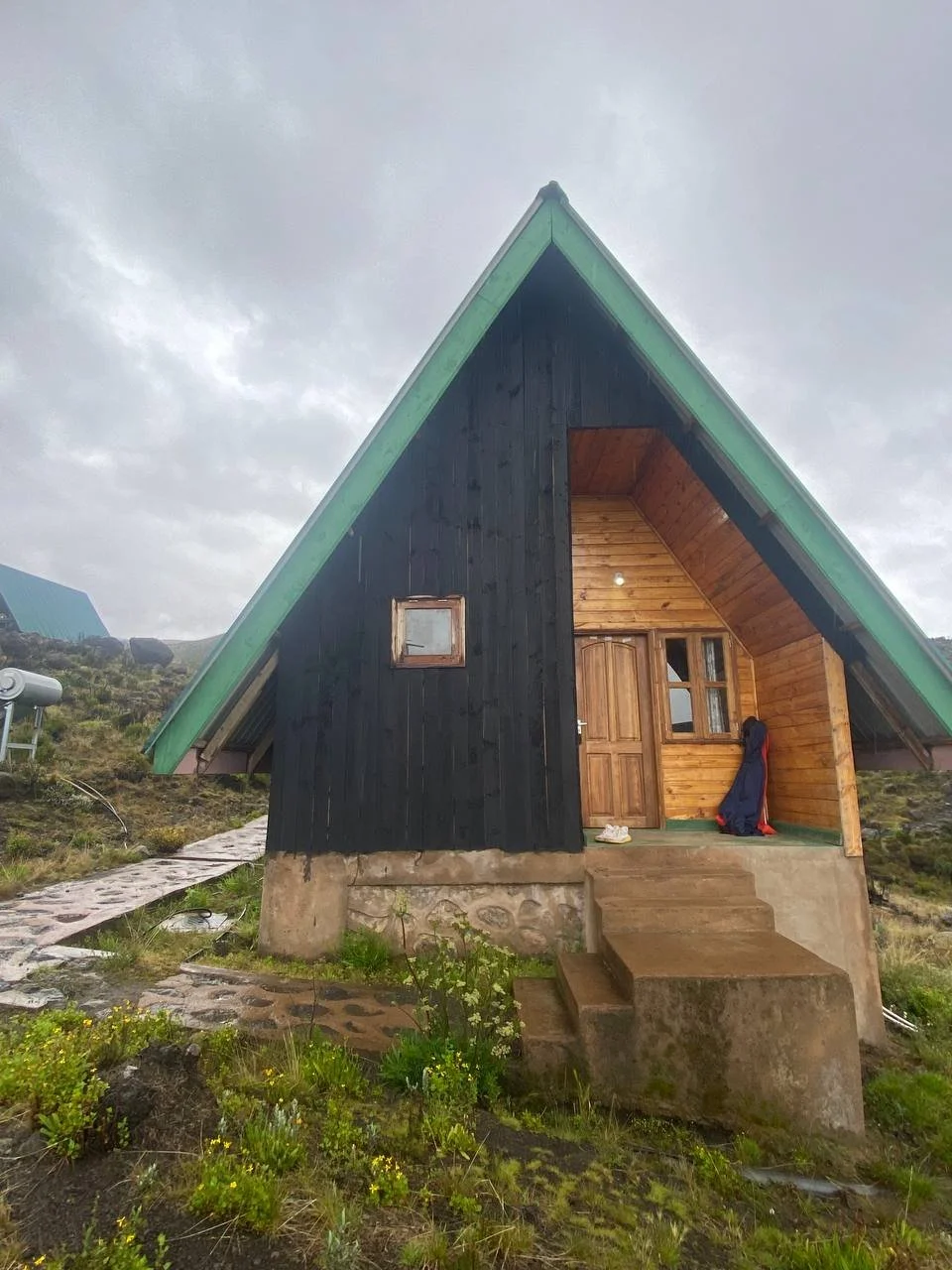
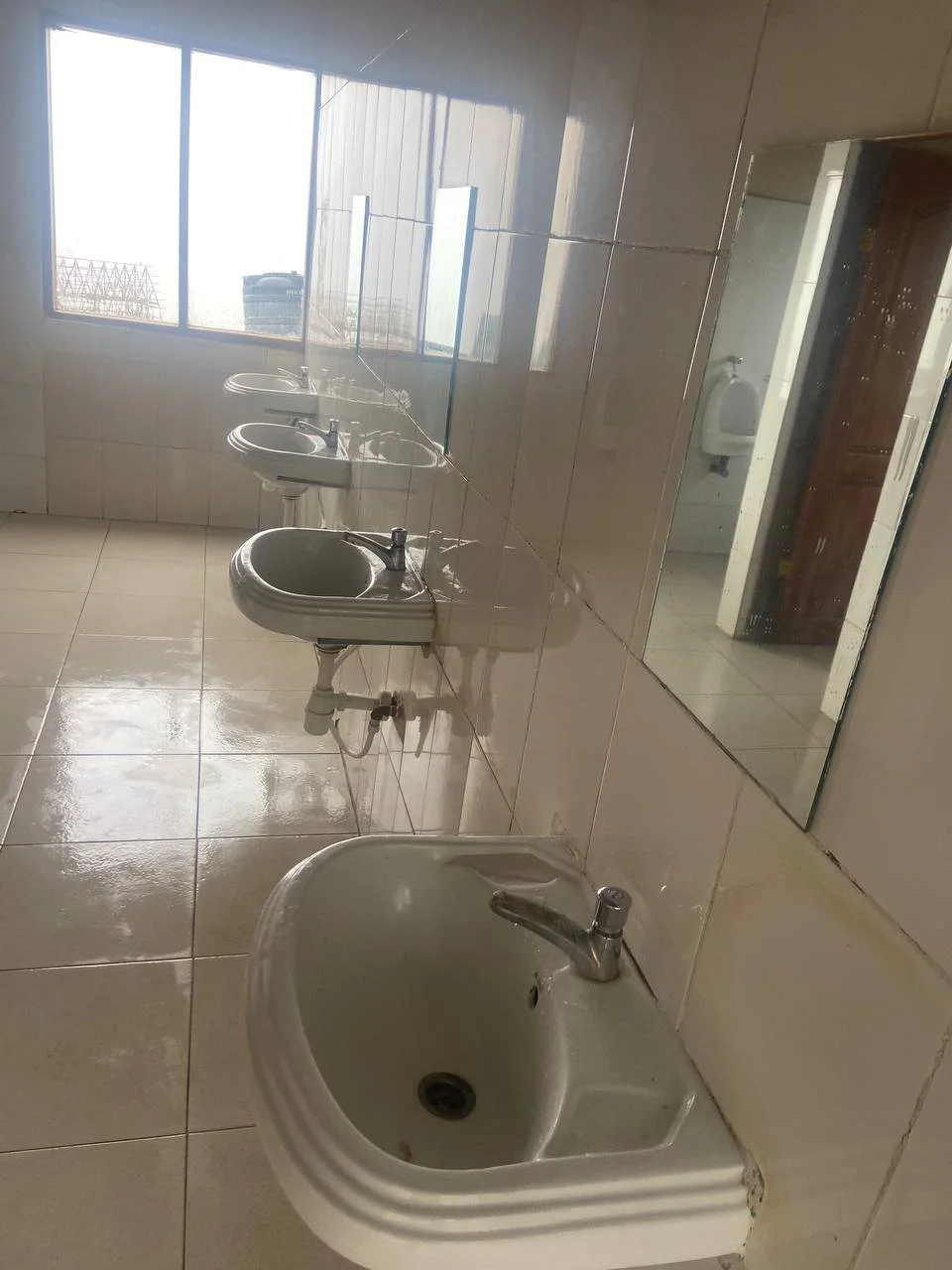
What sets Marangu apart is its hut accommodation — the only route on Kilimanjaro where climbers sleep in permanent structures rather than tents. The huts at Mandara, Horombo, and Kibo have been significantly upgraded in recent years. Self-contained units now feature hot showers and flush toilets, with additional huts currently being built to expand private-booking capacity. For climbers who prefer hotel-like amenities at altitude, Marangu is the clear choice.
Although a 5-day itinerary exists, we strongly recommend the 6-day version. The extra acclimatization day at Horombo Huts more than doubles the summit success rate — from roughly 30% on the 5-day schedule to approximately 65–70% on the 6-day itinerary.
IN THIS GUIDE
Day-by-Day Itinerary | Route Summary | Pricing | Photos | Kilimanjaro Itineraries | FAQ
Self-Contained Hut Accommodation — Only on Marangu
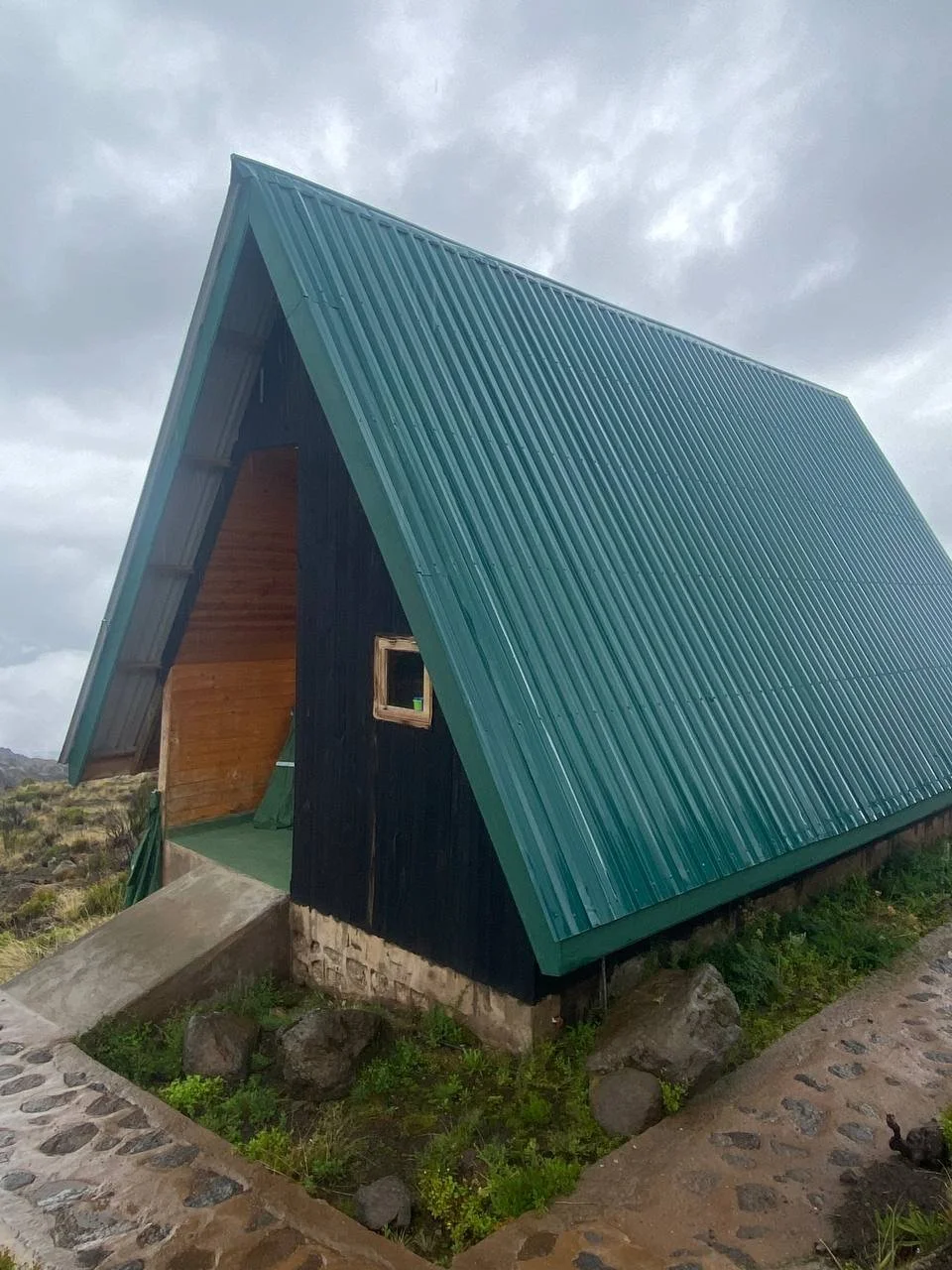
The Marangu Route is the only Kilimanjaro route with permanent hut accommodation. Forget tent camping — at Mandara, Horombo, and Kibo, climbers sleep in A-frame or dormitory-style huts with mattressed bunk beds. Recent upgrades have introduced self-contained huts with hot showers and flush toilets, a level of comfort unavailable on any other route.
Private huts sleeping up to four people can be reserved in advance. More self-contained huts are currently being built to meet growing demand, so availability of private units is expanding each season. For climbers who want the mountain experience without roughing it in a tent, Marangu offers the closest thing to a lodge-style ascent.
Kilimanjaro's Five Ecological Zones on the Marangu Route
The Marangu Route takes climbers through all five of Kilimanjaro's ecological zones — from lush tropical rainforest to the glaciated Arctic summit. Because Marangu ascends the southeastern face of the mountain, each zone transition is pronounced and dramatic.
| Zone | Elevation Range | What You'll Experience |
|---|---|---|
| Montane Rainforest | 1,844 m – 2,800 m | Dense canopy, blue monkeys, colobus monkeys, tropical birdsong. The trail is a well-maintained packed-earth path beneath towering Podocarpus and Camphor trees. Often muddy after rain — gaiters or waterproof boots recommended. |
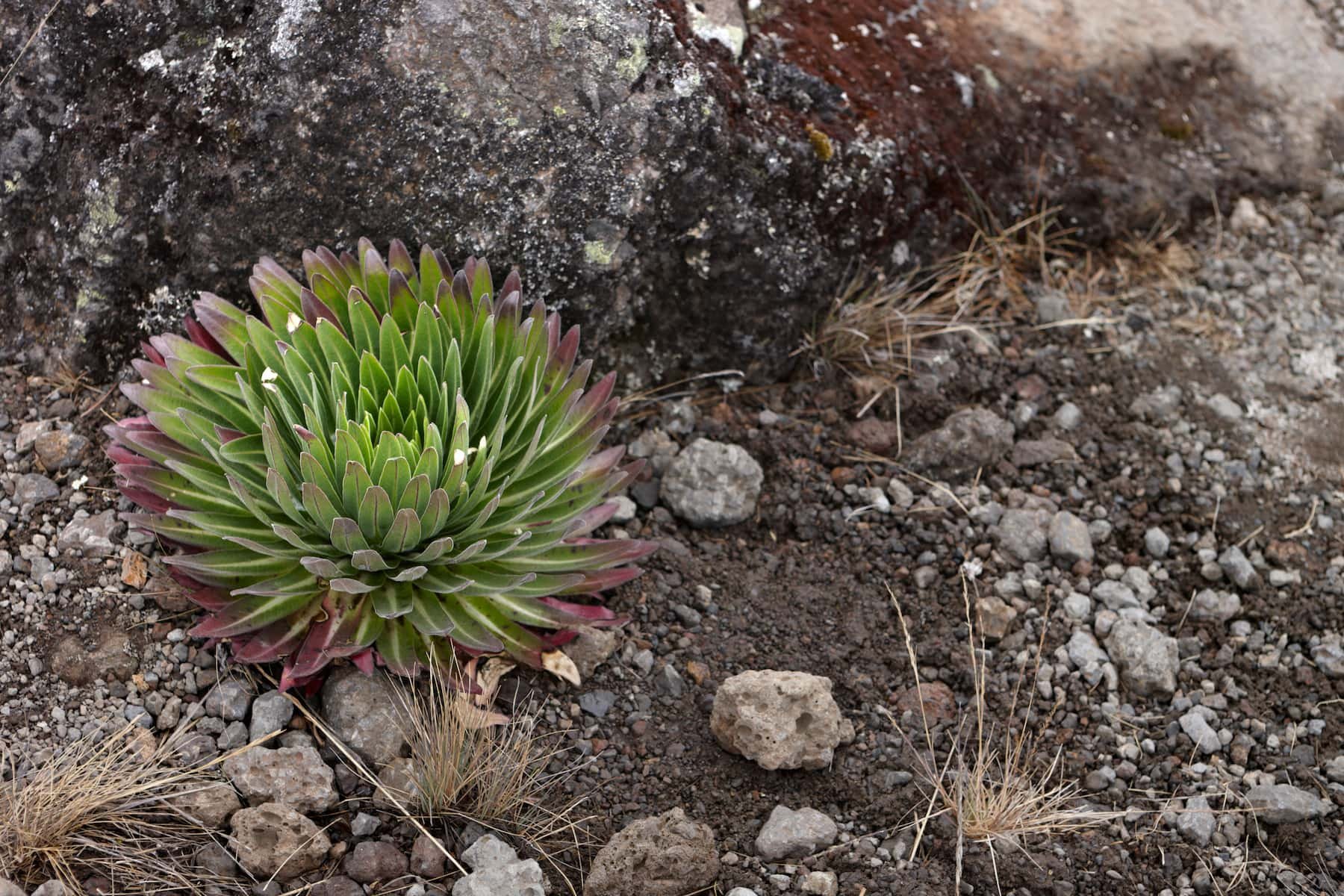
| Heath & Moorland | 2,800 m – 4,000 m | Giant heather, wild grasses, and the first panoramic views of Kibo and Mawenzi peaks. Trail opens to exposed ridgeline walking. Giant lobelias and senecios appear as altitude increases. |
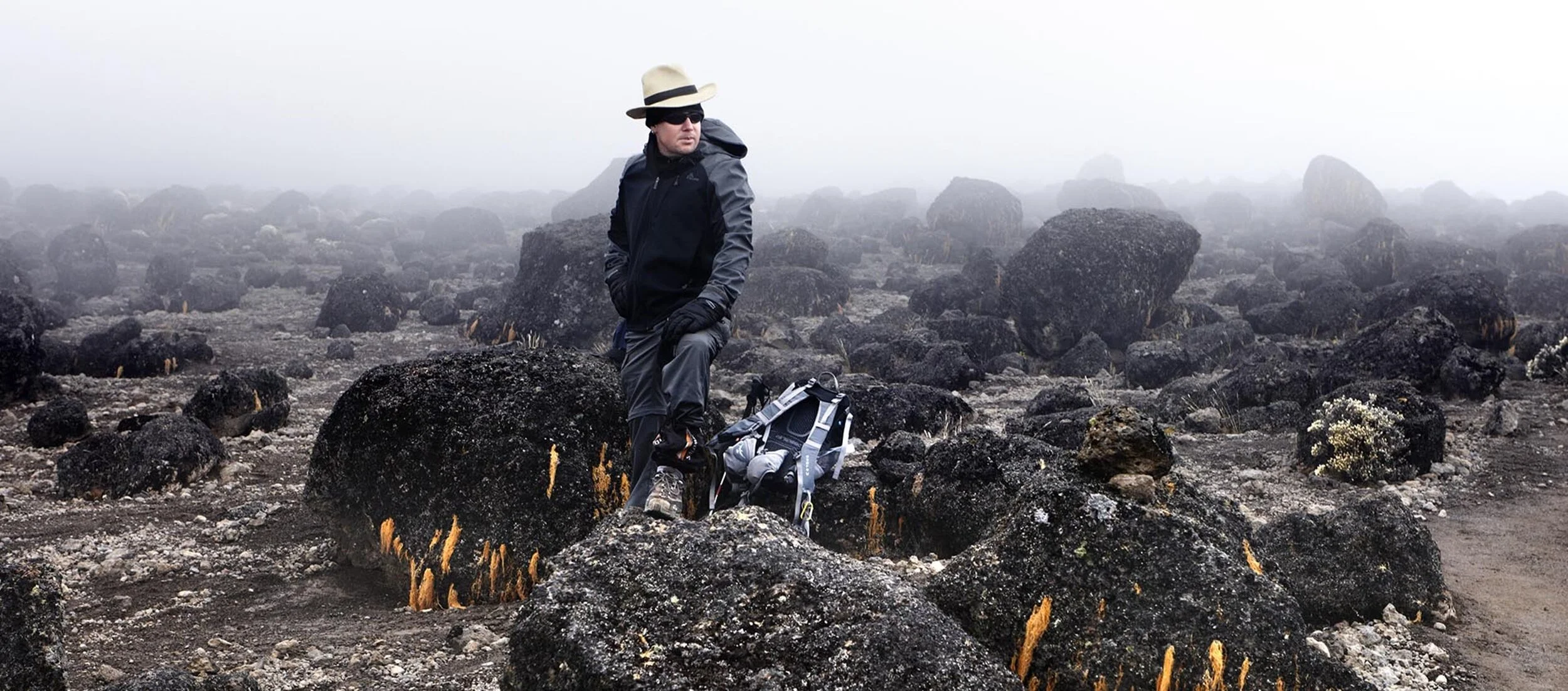
| Alpine Desert | 4,000 m – 5,000 m | Sparse, rocky terrain across "the Saddle" — the barren plateau between Kilimanjaro's two volcanic cones (Kibo and Mawenzi). Dry, dusty conditions with extreme temperature swings between day and night. Virtually no vegetation. |
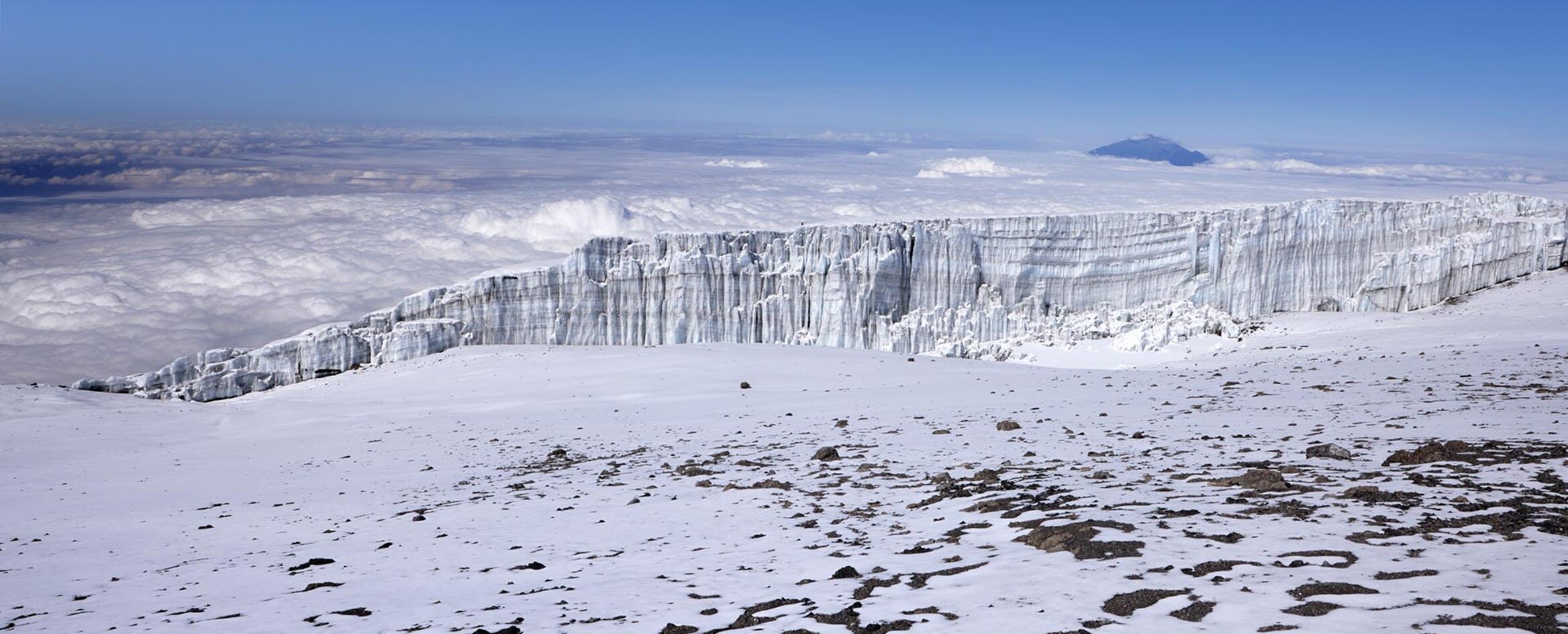
| Arctic / Summit Zone | 5,000 m – 5,895 m | Glaciers, scree, loose gravel, and snowfields. The midnight summit push crosses steep switchbacks to Gilman's Point (5,685 m) on the crater rim, then traverses the snowfield to Uhuru Peak (5,895 m). Wind, cold, and low oxygen define this zone. |
Marangu Day-by-Day Itinerary
The 6-day Marangu itinerary follows the most direct path to Uhuru Peak, ascending and descending the southeastern face of Kilimanjaro. Each day brings a distinct shift in landscape — from moist rainforest to barren alpine desert to the glaciated summit — with overnight stops at three permanent hut camps along the way.
-
1,844 m → 2,700 m | +856 m elevation | 8 km | 4–5 hours
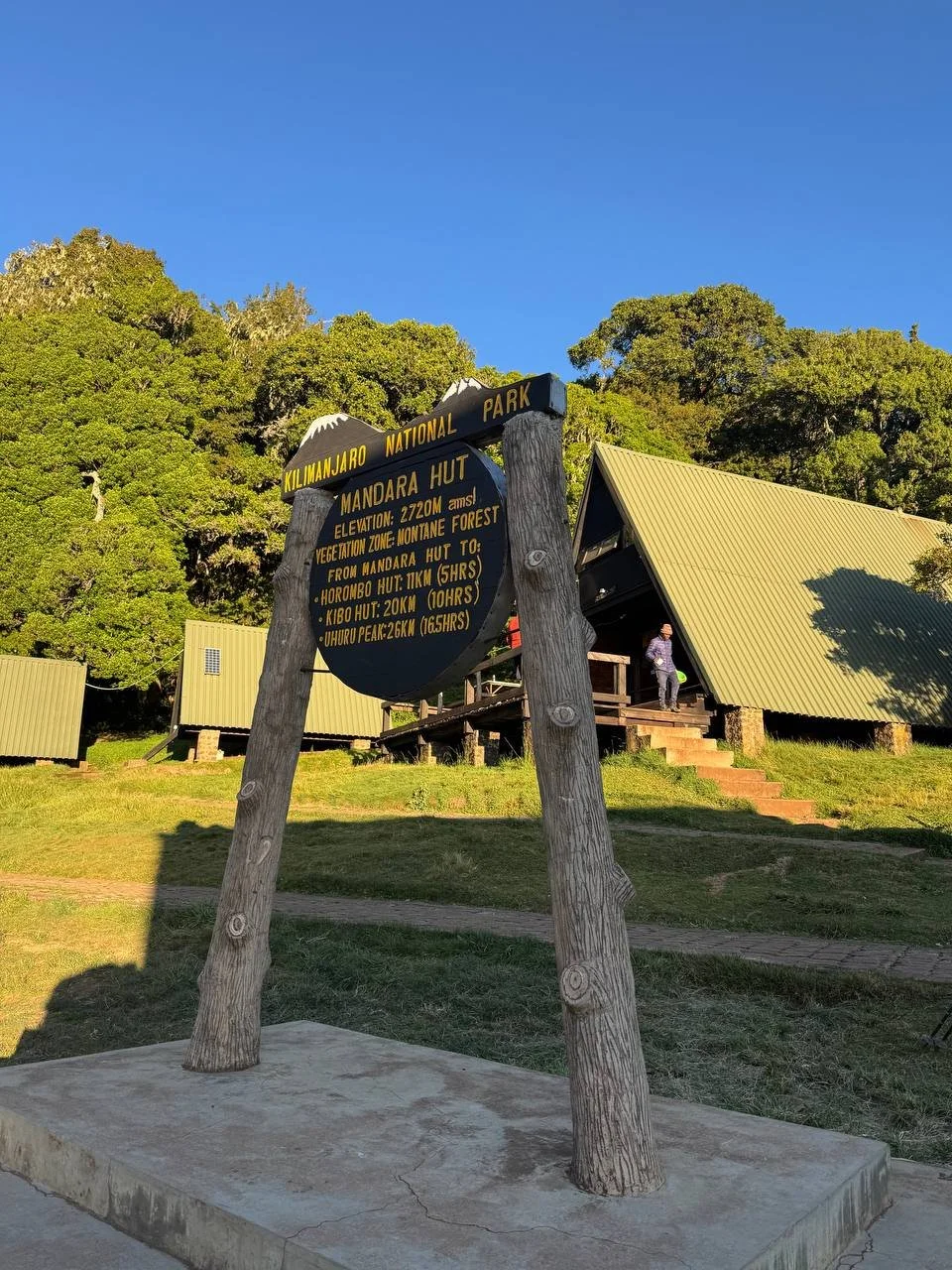
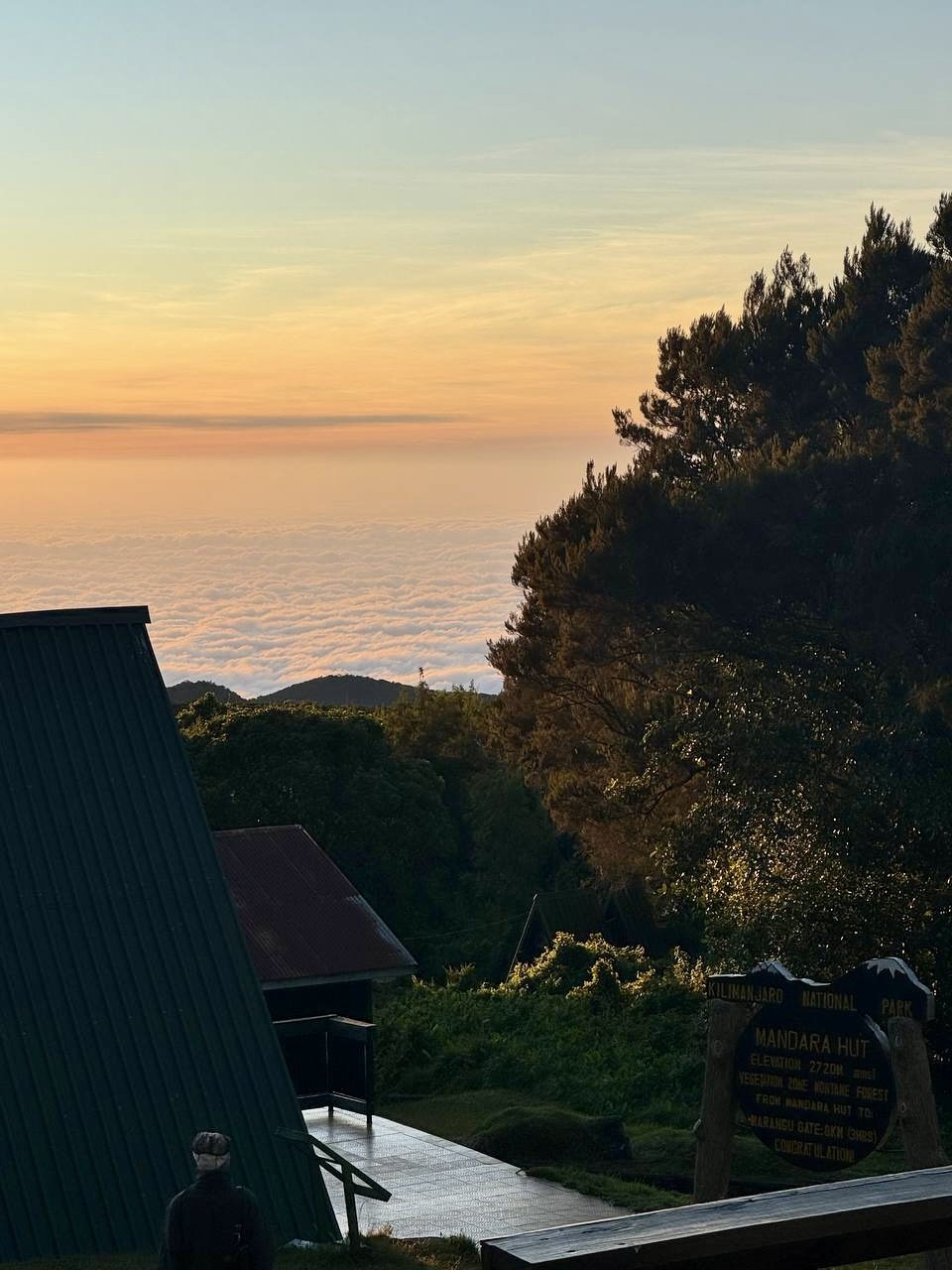
Your climb begins at Marangu Gate (1,844 m) on Kilimanjaro's southeastern face. After registration and a final gear check, the trail enters dense montane rainforest. The path is wide and well-graded — a packed-earth surface beneath a towering green canopy. Blue monkeys and black-and-white colobus monkeys are frequently spotted in the trees overhead. After roughly four hours of steady uphill walking, the forest thins and you arrive at Mandara Huts (2,700 m), a cluster of wooden A-frame cabins in a small clearing. The upgraded self-contained huts here include hot showers and flush toilets — a comfortable first night on the mountain.
Overnight: Mandara Huts — 2,700 m / 8,858 ft
-
2,700 m → 3,720 m | +1,020 m elevation | 12 km | 6–8 hours
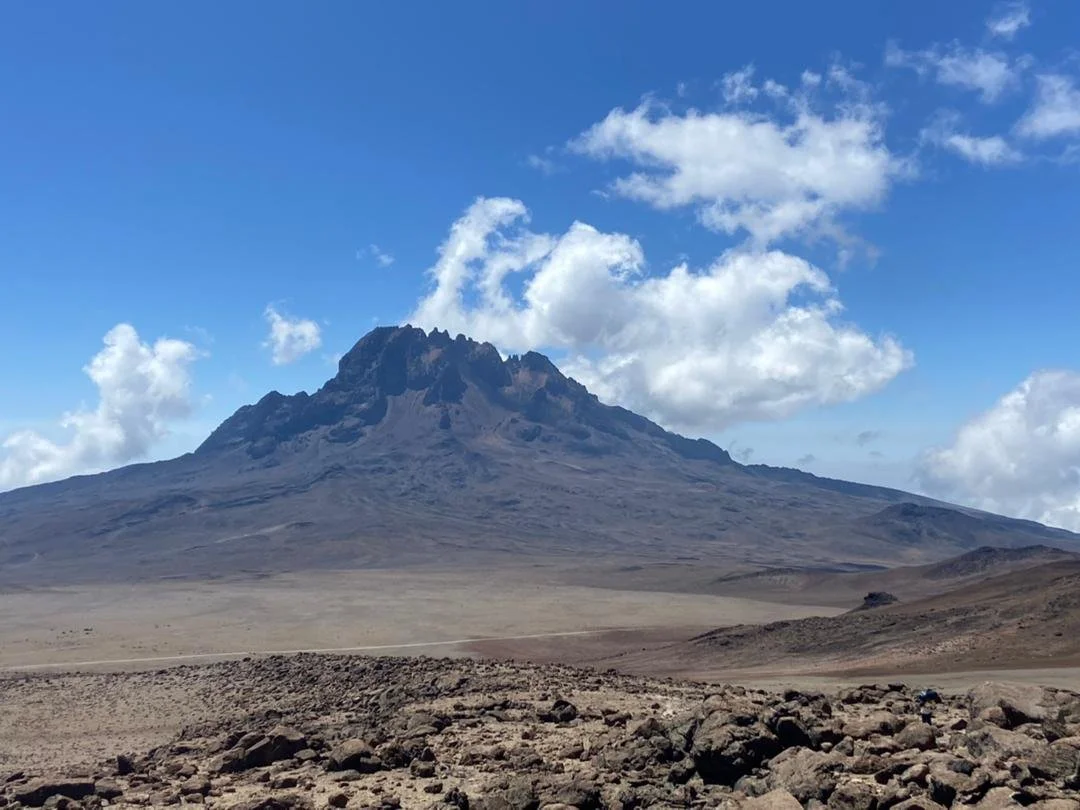
The longest day on the route by distance. The trail climbs out of the rainforest and into the heath and moorland zone, where giant heather and tussock grass replace the closed canopy. The landscape opens dramatically — on clear days, both the Kibo summit cone and the jagged Mawenzi peak are visible ahead. The path narrows to a single-track trail over rolling terrain. Giant lobelias and groundsels (senecios) begin to appear as you gain altitude. Horombo Huts (3,720 m) is the largest hut camp on the mountain, situated on a ridge with sweeping views of the plains below. This is your home for the next two nights.
Overnight: Horombo Huts — 3,720 m / 12,205 ft
-
3,720 m → 4,390 m → 3,720 m | +670 m / −670 m | ~10 km | 3–5 hours
This is the day that separates a 65–70% success rate from a 30% one. Rather than pushing straight for Kibo Huts, you spend a second night at Horombo to acclimatize. In the morning, your guide leads a hike toward Mawenzi Ridge (4,390 m), a rocky outcrop with stunning close-up views of Mawenzi's towering spires. The principle of "climb high, sleep low" lets your body produce more red blood cells at altitude before returning to the comfort of Horombo Huts for the evening. Your guides will conduct health checks — pulse oximetry, blood pressure, and general wellness assessment — to confirm you're ready for the next push.
Overnight: Horombo Huts — 3,720 m / 12,205 ft
-
3,720 m → 4,700 m | +980 m elevation | 10 km | 6–8 hours
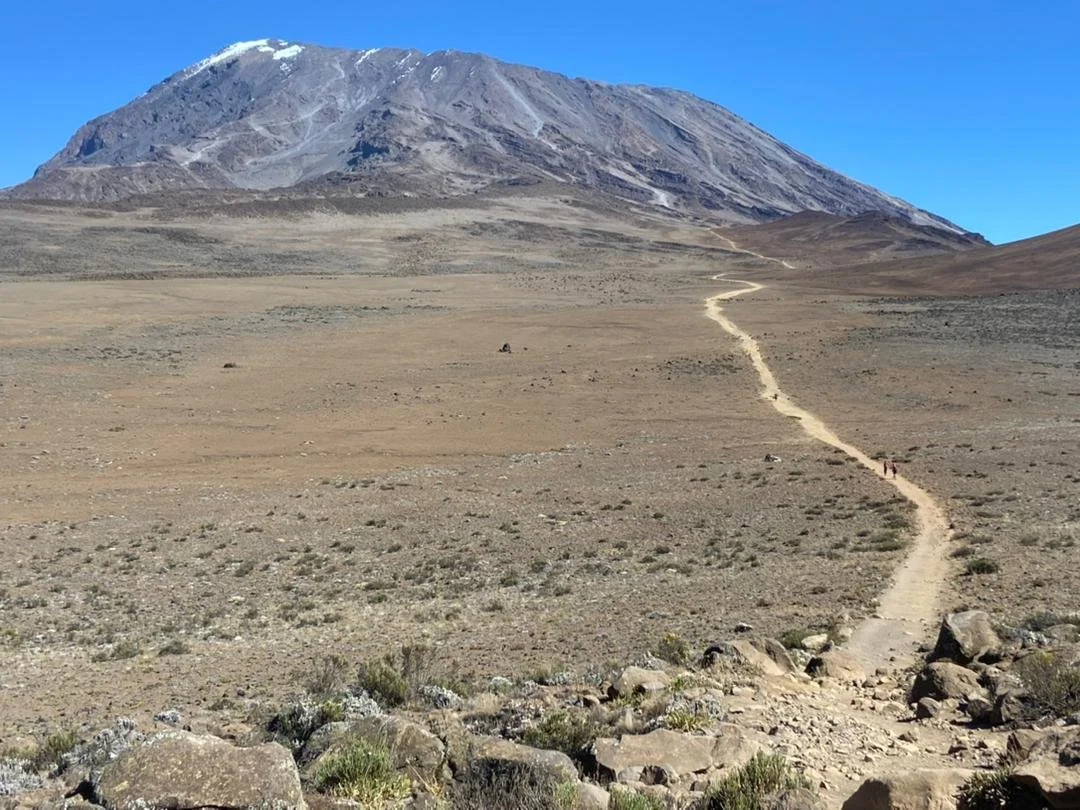
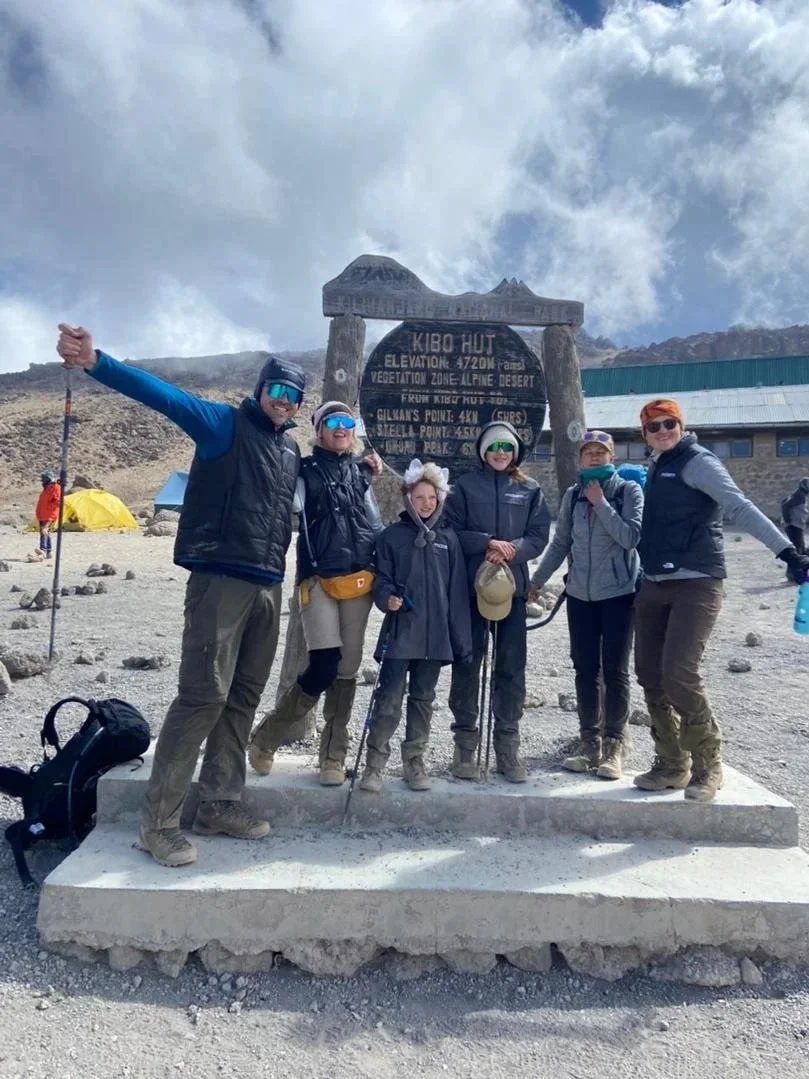
The trail crosses into the alpine desert — a stark, barren landscape that feels more like the surface of the moon than equatorial Africa. The vegetation falls away almost entirely as you traverse "the Saddle," the vast rocky plateau between the Kibo and Mawenzi volcanic cones. The path is dry, dusty, and exposed, with little shade and significant temperature swings — warm in direct sunlight, bitterly cold in wind or shadow. After a long, gradual ascent, you reach Kibo Huts (4,700 m), the final camp before the summit push. This is the most basic of the three hut camps — stone dormitories with mattresses but limited facilities. Your team will prepare an early dinner; lights out by 7:00 PM for a midnight wake-up call.
Overnight: Kibo Huts — 4,700 m / 15,420 ft
-
4,700 m → 5,895 m → 3,720 m | +1,195 m / −2,175 m | 22 km | 12–16 hours
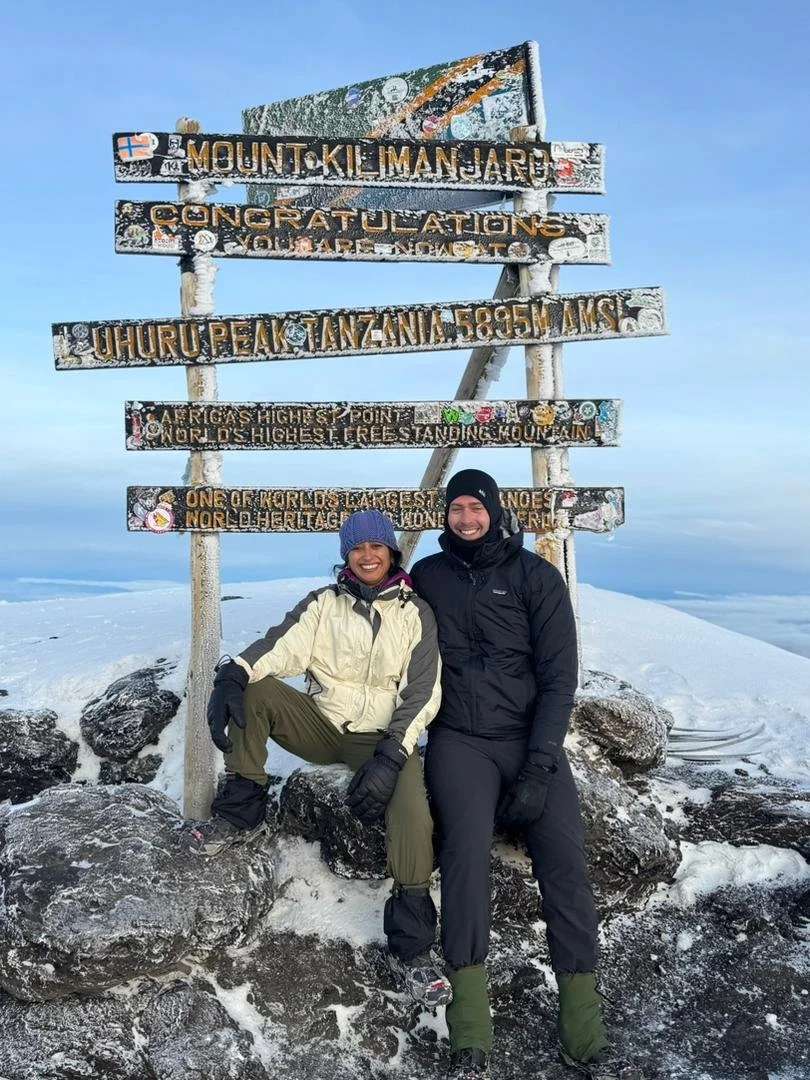
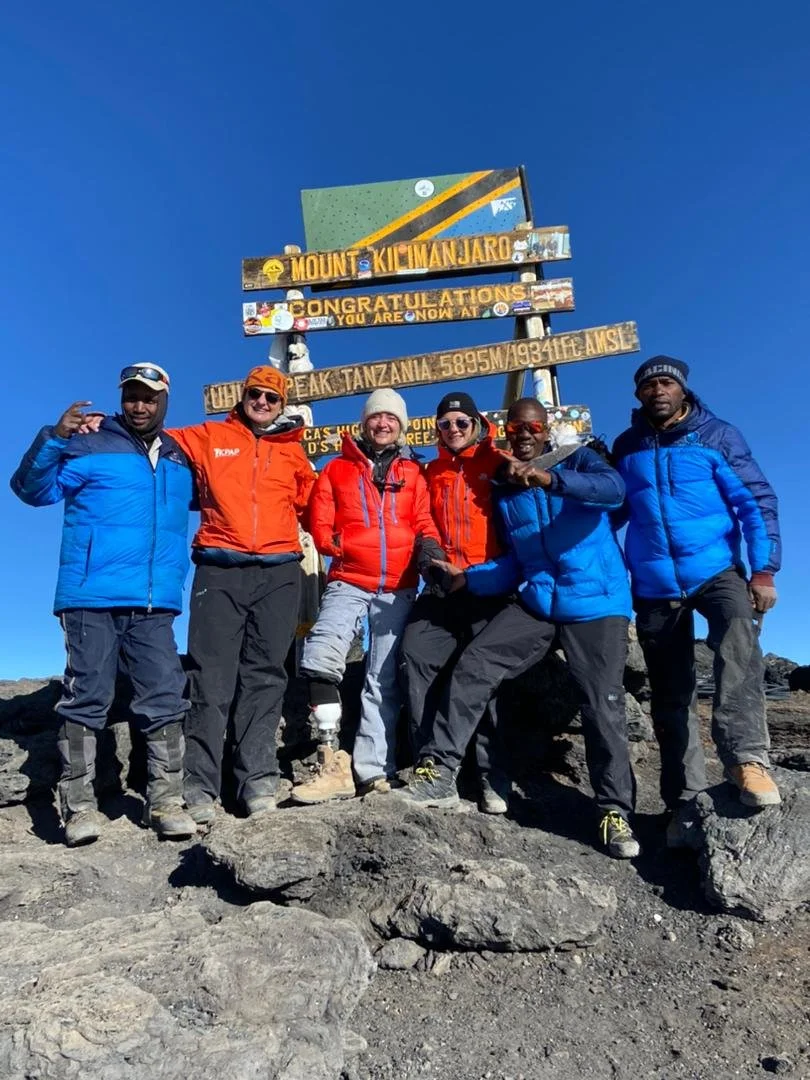
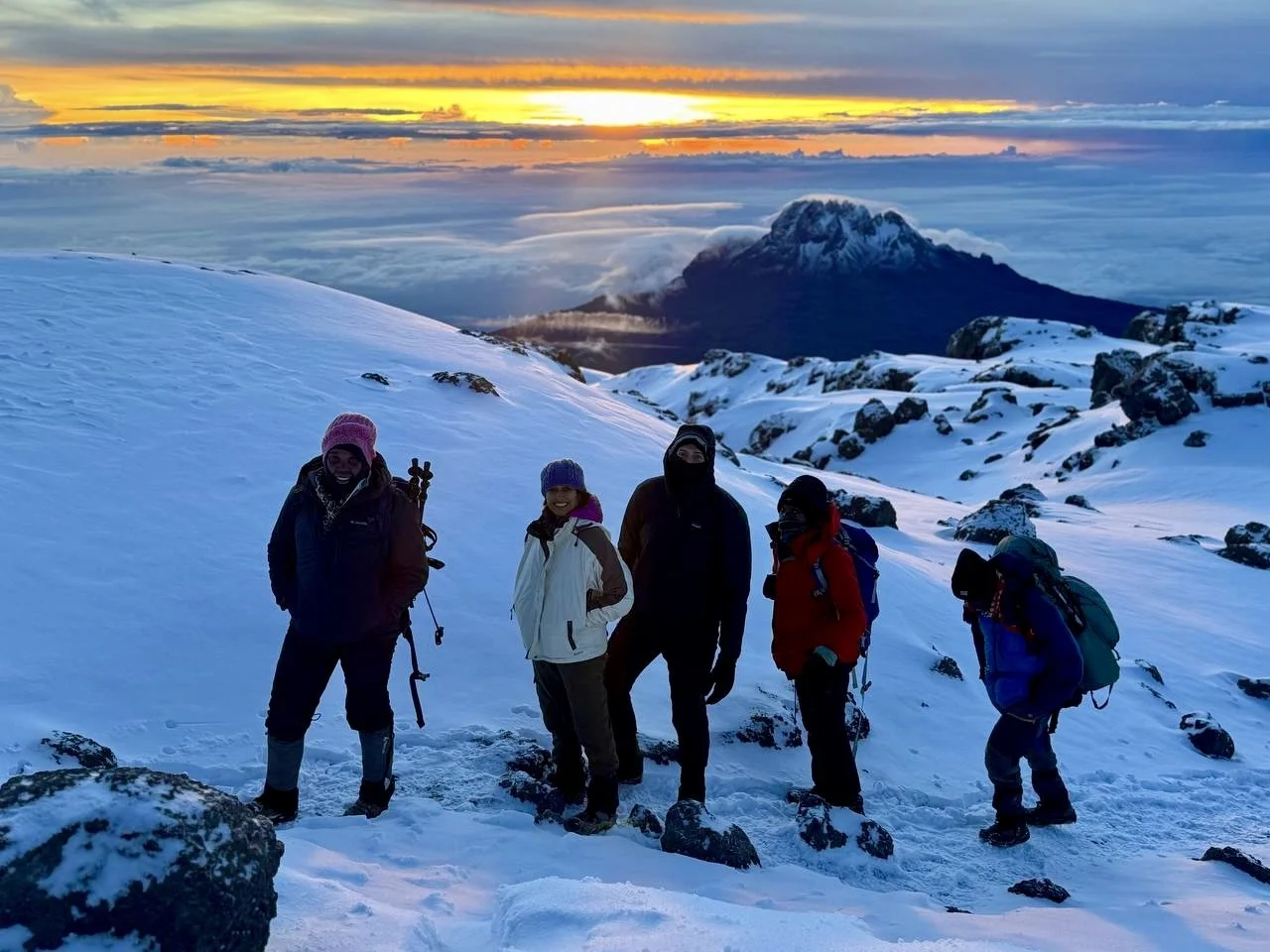
The defining day of the climb. You wake around midnight and begin the summit push by headlamp. The trail immediately steepens — a relentless series of switchbacks up loose scree and gravel. This is the most physically and mentally demanding section of the entire route. The footing is poor and the cold is severe (often −15°C to −20°C with windchill). After 5–7 hours, you reach Gilman's Point (5,685 m) on the crater rim, where sunrise over Mawenzi is one of the great sights on the African continent. From Gilman's Point, a roughly one-hour traverse along the crater rim — often across compacted snow — brings you to Uhuru Peak (5,895 m), the roof of Africa. After photos at the iconic summit sign, you descend all the way back through Kibo Huts to Horombo Huts for the night — a long but triumphant day.
Overnight: Horombo Huts — 3,720 m / 12,205 ft
-
3,720 m → 1,844 m | −1,876 m elevation | 20 km | 5–7 hours
The final descent retraces your ascent path — down through the moorland and back into the rainforest. The lower rainforest section can be slippery and muddy, especially after rain, so trekking poles and steady footing are essential. You pass through Mandara Huts without stopping and continue down to Marangu Gate, where you'll sign out, receive your summit certificate, and tip your mountain crew. Your Duma Explorer vehicle will be waiting to transfer you back to your hotel in Moshi or Arusha for a well-earned hot meal and celebration.
End: Marangu Gate — 1,844 m / 6,050 ft
Route Conditions
| Day | Highlights | Start Elevation | End Elevation | Gain / Loss | Distance | Overnight | Zone |
|---|---|---|---|---|---|---|---|
| Day 1 | Marangu Gate through montane rainforest; blue monkey sightings; muddy packed-earth trail beneath dense canopy | 1,844 m | 2,700 m | +856 m | 8 km | Mandara Huts | Rainforest |
| Day 2 | Moorland traverse with first views of Kibo and Mawenzi; giant lobelias and senecios; exposed ridgeline walking | 2,700 m | 3,720 m | +1,020 m | 12 km | Horombo Huts | Moorland |
| Day 3 | Acclimatization day; hike to Mawenzi Ridge (4,390 m) for close-up views of Mawenzi spires; return to Horombo | 3,720 m | 3,720 m | +670 m / −670 m | ~10 km | Horombo Huts | Moorland |
| Day 4 | Cross the Saddle through alpine desert; lunar landscape between Kibo and Mawenzi; dry and exposed terrain | 3,720 m | 4,700 m | +980 m | 10 km | Kibo Huts | Alpine Desert |
| Day 5 | Midnight summit push via Gilman's Point; sunrise on crater rim; traverse to Uhuru Peak (5,895 m); descend to Horombo | 4,700 m | 3,720 m | +1,195 m / −2,175 m | 22 km | Horombo Huts | Arctic |
| Day 6 | Final descent through moorland and rainforest to Marangu Gate; summit certificate and crew tipping ceremony | 3,720 m | 1,844 m | −1,876 m | 20 km | — | Rainforest |
Trail Conditions on the Marangu Route
The Marangu Route has the most developed trail infrastructure on Kilimanjaro. Because it is the oldest route and handles significant foot traffic year-round, the path is wide, well-worn, and clearly marked at every stage.
Rainforest section (Days 1 & 6): A packed-earth trail beneath dense canopy. Tree roots and rocks create uneven footing in places. After rainfall, this section becomes genuinely muddy and slippery — waterproof boots with ankle support and trekking poles are strongly recommended. Wooden planks and stone steps have been installed in the steepest sections.
Moorland section (Days 2 & 3): The trail opens to exposed ridgeline walking across rolling hills. The surface is firm and rocky with occasional muddy patches. Wind exposure increases significantly.
Alpine desert (Day 4): Dry, rocky, and dusty across the Saddle. The trail is flat-to-moderate and easy to follow, but the altitude makes even gentle grades feel strenuous. No shade, no water sources, and large temperature swings between sun and shadow.
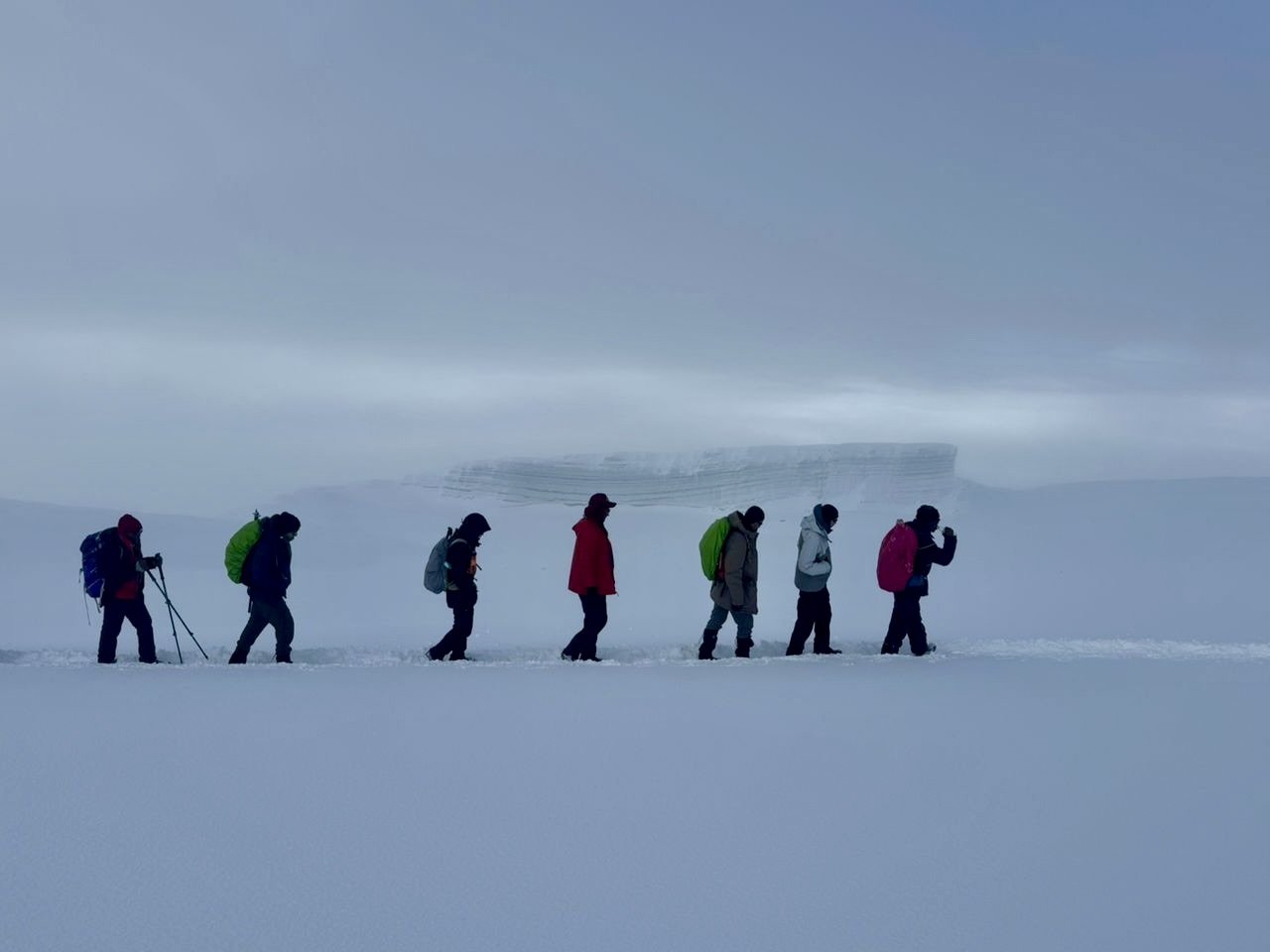
Summit push (Day 5): The most challenging section. Steep switchbacks up loose scree and gravel from Kibo Huts to Gilman's Point demand careful footing in the dark. The final traverse from Gilman's Point to Uhuru Peak crosses compacted snow and ice — conditions vary by season. Temperatures regularly drop to −15°C to −20°C with windchill. Your Duma Explorer guide will set a slow, deliberate pace (pole pole) to manage energy and oxygen at extreme altitude.
Pricing Guide
2026 Marangu Route Pricing — Published and Transparent
All prices in USD per person. Private hut upgrades available at booking — ask your Duma Explorer trip advisor for current availability.
What's Included & What's Not
Included in Your Climb
- All Kilimanjaro National Park entrance and hut fees
- WFR-certified head guide with 7+ years of Kilimanjaro experience
- Assistant guides and porters
- Professional mountain cook
- All meals on the mountain (breakfast, lunch, dinner, and snacks)
- Filtered drinking water
- Hut accommodation at Mandara, Horombo, and Kibo
- Emergency oxygen cylinder and pulse oximeter
- Daily health monitoring and vitals checks
- 1:1 staff-to-climber ratio on summit night
- Round-trip hotel-to-trailhead transport (Moshi or Arusha)
- Post-climb summit certificate
Not Included
- International flights
- Tanzania visa (available on arrival, ~$50 USD)
- Travel and evacuation insurance (required)
- Personal hiking gear and clothing
- Sleeping bag (rental available)
- Private hut upgrade fee
- Tips for mountain crew (guidelines provided)
- Alcoholic and bottled beverages
- Pre- and post-climb hotel accommodation
- Airport transfers (can be arranged)

Duma Kilimanjaro Itineraries

Lemosho Shira via Crater Route itinerary

Machame Route Itinerary
Rongai Route Itinerary

Marangu Route Itinerary
Umbwe Route Itinerary
The Northern Circuit Route Itinerary
Lemosho Shira Route Itinerary
Frequently Asked Questions
-
Marangu is often called the easiest route because of its gradual gradient and well-maintained trail, but "easiest" can be misleading. The 5-day version has only a ~30% success rate due to insufficient acclimatization time. With the recommended 6-day itinerary — which adds a critical acclimatization day at Horombo Huts — the success rate rises to approximately 65–70%. The route's real advantage is comfort: self-contained huts with beds, showers, and toilets replace tent camping entirely.
-
Marangu is the only Kilimanjaro route with permanent hut accommodation. The huts at Mandara, Horombo, and Kibo now include self-contained units with hot showers and flush toilets — a significant upgrade from shared dormitory-style facilities. Private huts sleeping up to four people can be booked in advance. Additional self-contained huts are currently being built to expand capacity. For climbers who prefer hotel-like amenities over tent camping, Marangu offers the most comfortable experience on the mountain.
-
The 5-day Marangu Route has a summit success rate of approximately 30%, one of the lowest on Kilimanjaro. However, the 6-day itinerary — which adds an acclimatization day at Horombo Huts (3,720 m) — raises the success rate to approximately 65–70%. Duma Explorer operates the 6-day itinerary and uses daily health monitoring, pulse oximetry, and emergency oxygen to maximize every climber's chance of reaching Uhuru Peak.
-
The nickname dates back decades to when soft drinks and bottled beverages were sold at the huts along the trail. Because Marangu is the oldest and most established route on Kilimanjaro — with permanent hut accommodation and a well-maintained path — small shops and provisions became a fixture at each stop. The name stuck even though the route has since evolved into a far more developed trekking experience.
-
The standard Marangu itinerary is 6 days and 5 nights, making it the shortest route on Kilimanjaro. A 5-day option exists but is strongly discouraged due to poor acclimatization and a low ~30% success rate. The 6-day schedule covers approximately 64 km (40 miles) round trip, with 4 days ascending, 1 summit night, and a final descent day.
-
The Marangu Route follows a single, well-worn trail that ascends the southeastern face of Kilimanjaro. Day 1 is a rainforest path — often muddy after rain — with a packed-earth surface and moderate tree cover. By Day 2, the trail opens onto exposed moorland with panoramic views of Kibo and Mawenzi peaks. From Horombo to Kibo Hut, the terrain shifts to dry, rocky alpine desert across the Saddle — a barren plateau between the two volcanic cones. Summit night is steep scree and loose gravel up to Gilman's Point, then a snowfield traverse to Uhuru Peak. The descent retraces the same path, which can be slippery in the lower rainforest zone.
-
Because Marangu provides hut accommodation with mattresses, you do not need to carry a tent or sleeping mat — but you will need a warm sleeping bag rated to at least −10°C (14°F). Essential items include layered clothing (base layers, insulating mid-layers, waterproof outer shell), sturdy waterproof hiking boots, a headlamp with spare batteries for the midnight summit push, trekking poles, sun protection (hat, sunscreen, sunglasses), and a daypack for summit night. Refer to our detailed packing list for more information.
-
The Marangu Route is open year-round, but the best months are January–March and June–October. These windows offer the driest conditions, clearest summit views, and the most stable trail surfaces. January to March tends to be slightly quieter, while June to October is peak season with more climbers on the mountain. April and November see the heaviest rainfall, making the rainforest section particularly muddy and the huts more crowded with climbers waiting out weather delays.
-
Marangu is the shortest route (6 days, ~64 km) while Lemosho is longer (7–8 days, ~70 km) with higher success rates (~85–90%). Marangu follows the same path up and down; Lemosho traverses the mountain with different ascent and descent routes, offering more diverse scenery. Marangu is the only route with hut accommodation — Lemosho uses tent camping. Marangu is less expensive and more direct; Lemosho provides better acclimatization and is considered the most scenic route. Both are non-technical walk-up climbs suitable for fit beginners.
-
Yes — travel and evacuation insurance is required for all Kilimanjaro climbs. Your policy must cover high-altitude trekking up to at least 6,000 m and include emergency helicopter evacuation. Duma Explorer requires proof of insurance before your climb begins. Please refer to our safety and evacuation page for more information.
Your Marangu Climb Starts here
Tell Stacy your dates, fitness level, and goals — she’ll match you with the right itinerary, build your crew, and handle every detail from trailhead to summit.