Mapping the Wildebeest Migration
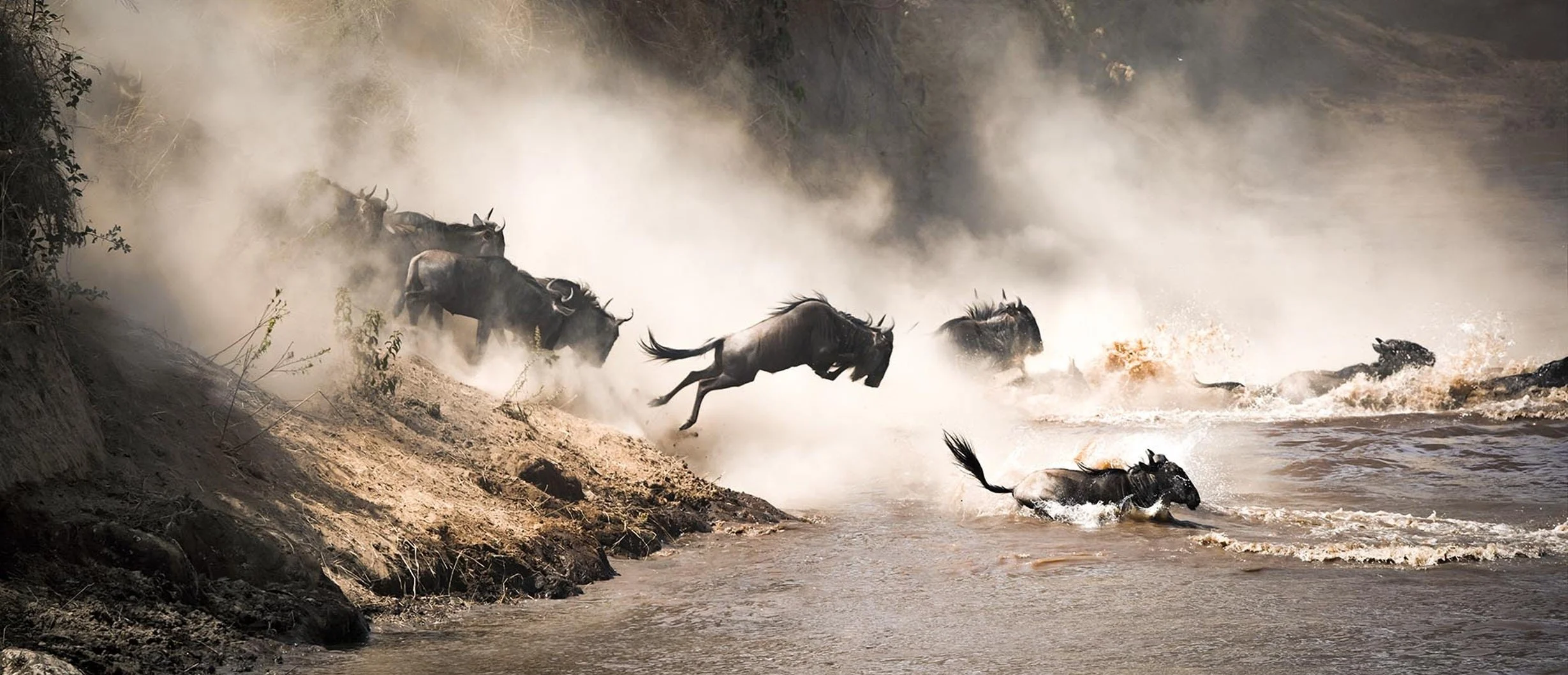
The Great Wildebeest Migration: An Overview
Each year, enormous herds of wildebeest — joined by hundreds of thousands of zebra, gazelle, and eland — undertake a continuous clockwise journey across the Serengeti-Mara ecosystem. Covering roughly 1,800 miles (2,900 km) between Tanzania's Serengeti National Park and Kenya's Maasai Mara National Reserve, this spectacle is widely considered one of the Seven Natural Wonders of the World.
The migration is driven by rainfall. As seasonal rains shift across East Africa, the herds follow, seeking fresh grazing and water. There is no true beginning or end — it is a perpetual cycle that has played out for millennia. Lions, leopards, cheetahs, hyenas, and wild dogs shadow the herds at every stage, making predator-prey encounters a constant feature of the journey.
For decades, traditional aerial surveys estimated the migration at roughly 1.3 million wildebeest, with total animal numbers (including zebra, gazelle, and eland) reported at close to two million. However, a 2025 study published in PNAS Nexus used AI-powered satellite imagery to count the herds from space — and arrived at fewer than 600,000 wildebeest across more than 4,000 km² of surveyed habitat. While many sources continue to cite the higher figures, this research suggests the true number may be significantly lower than previously believed. (See our full breakdown below.)
Wildebeest Migration Calendar: Month-by-Month
Use this table to plan when and where to see the migration. The herds remain within Tanzania for the vast majority of the year — only briefly crossing into Kenya's Maasai Mara between roughly August and October.
| Month | Location | Key Event | Weather | Game Viewing | Crowds | Season |
|---|---|---|---|---|---|---|
| January | Southern Serengeti / Ndutu | Calving begins —up to 8,000 calves born daily. Predator activity intensifies. | Short rains ending | Peak | Peak (Dec 20 –Jan 5) | Green Season |
| February | Southern Serengeti / Ndutu | Peak calving season. Highest predator-prey drama on the open plains. | Dry & warm | Peak | High | High Season |
| March | Southern / Central Serengeti | Calving winds down. Herds begin grazing northward. Breeding season starts. | Long rains begin | High | Moderate | Shoulder |
| April | Central Serengeti (Seronera) | Herds move through central plains. Lush green landscape. Fewer tourists. | Long rains (heavy) | Moderate | Low | Low Season |
| May | Western Corridor (Grumeti) | Leading herds reach the Western Corridor. Grumeti River crossings begin. | Long rains easing | High | Low | Low Season |
| June | Western Corridor / Grumeti | Major Grumeti River crossings. Crocodiles lie in ambush. Dramatic scenes. | Dry season begins | Peak | High | High Season |
| July | Northern Serengeti (Kogatende) | Herds reach the Mara River. First crossings —the iconic migration spectacle. | Dry & cool | Peak | Peak | Peak Season |
| August | Northern Serengeti & Maasai Mara | Peak Mara River crossings. Herds split between Tanzania & Kenya. | Dry & cool | Peak | Peak | Peak Season |
| September | Northern Serengeti & Maasai Mara | Continued river crossings. Some herds begin drifting back southward. | Dry & warm | Peak | High | Peak Season |
| October | Northern / Eastern Serengeti | Herds return to Tanzania. Lobo area fills. Last river crossings of the year. | Short rains begin | High | Moderate | Shoulder |
| November | Eastern / Central Serengeti | Herds move south through Loliondo and eastern plains. Rains draw them home. | Short rains | Moderate | Low | Low Season |
| December | Southern Serengeti / Ndutu | Herds arrive at southern plains. Females heavy with calves. The cycle restarts. | Short rains ending | High | Peak (Dec 20 –Jan 5) | Shoulder |
Detailed Monthly Migration Guide
January –February
The short-grass plains around Ndutu and the southern Serengeti teem with life as calving season reaches its peak. Up to 8,000 wildebeest calves are born each day over a two-to-three-week window in February. Predators —lions, cheetahs, hyenas, and jackals —concentrate here for easy hunting, creating some of the most intense wildlife viewing in Africa.
March –April
As the long rains arrive, the herds begin their northward push. The central Serengeti's Seronera Valley becomes a staging area, with massive columns of wildebeest and zebra passing through the woodland and kopje-dotted landscape. April's heavy rains keep tourist numbers low —an advantage for those who don't mind occasional showers.
May –June
The leading edge of the migration reaches the Western Corridor, where the Grumeti River presents the first major obstacle. Enormous Nile crocodiles lie in wait as thousands of wildebeest gather the courage to cross. This is a thrilling but less-visited phase of the migration, offering dramatic sightings without the crowds that gather at the Mara River later in the year.
July –September
The iconic Mara River crossings define this period. Massive herds gather on the banks —sometimes waiting for days —before plunging into the crocodile-infested waters. These crossings happen on both sides of the Tanzania-Kenya border, and can be witnessed from the northern Serengeti's Kogatende area without crossing into Kenya. This is peak safari season with the highest demand for lodges and camps.
October
The herds begin their return to Tanzania in earnest. Late-season Mara River crossings continue, and the Lobo area in the eastern Serengeti fills with animals moving south. The onset of the short rains triggers the instinct to return to the nutrient-rich southern plains where the calving cycle will begin again.
November –December
The herds sweep south through the eastern Serengeti and begin arriving at the southern short-grass plains by December. Females are heavy with calves, and the entire ecosystem shifts in anticipation of the calving season ahead. This shoulder period offers excellent game viewing with reduced visitor numbers and lower lodge rates.
How Many Wildebeest? What New AI Research Reveals
For decades, the accepted figure for the Great Wildebeest Migration has been approximately 1.3 million wildebeest, a number derived from traditional aerial survey methods. Combined with zebra, gazelle, and eland, the total was often reported as close to two million animals — and most safari guides, tourism boards, and wildlife publications continue to cite these figures today.
However, a landmark 2025 study has challenged those long-standing estimates. A team of researchers from Princeton University, the University of Oxford, and the University of Twente applied deep-learning AI models to high-resolution satellite imagery captured by Maxar Technologies, covering more than 4,000 km² of the northern Serengeti and southwestern Kenya during August 2022 and 2023. Their two complementary models — a pixel-based U-Net and an object-based YOLOv8 — were trained on a dataset of over 70,000 manually labeled wildebeest, achieving detection accuracy (F1 scores) of up to 0.83.
The result: fewer than 600,000 wildebeest were detected — less than half the traditional estimate of 1.3 million.
The study was published in PNAS Nexus and was covered by New Scientist , The Conversation , and the BBC’s Discover Wildlife , among other outlets. It represents the first time AI and satellite imagery have been used to count the migration at this scale.
What This Means for Your Safari
Whether the true number is 600,000 or 1.3 million, the Great Migration remains the largest terrestrial mammal migration on Earth — and it remains a breathtaking spectacle from the ground. The sheer density of animals during river crossings, calving season, and predator encounters is no less dramatic regardless of the overall population figure. The experience of being surrounded by the migration in the Serengeti is unchanged, and this research highlights just how much we still have to learn about one of nature’s greatest events.
Safari Planning Tips
Best Time to Visit
Every month offers a reason to visit the Serengeti. The "best" time depends on what you want to see. For calving, plan for January through March. For river crossings, target June through September. For value and solitude, consider April, May, or November — the herds are still present, but accommodations are more affordable and the parks are quieter.
How Long Should a Migration Safari Be?
We recommend a minimum of four to five days in the Serengeti to allow enough time to locate the herds and experience multiple game drives. Combining the Serengeti with the Ngorongoro Crater or Tarangire National Park makes for a well-rounded Tanzania safari.
Where to Stay
Mobile tented camps move with the herds and are the best option for migration-focused safaris. Permanent lodges in central and northern Serengeti offer more amenities but may require longer game drives to reach the herds during certain months. Owner Stacy Readal can recommend the right camps based on your travel dates.
Frequently Asked Questions
-
There is no single "best" time — the migration is a year-round event and can be seen somewhere in Tanzania's Serengeti every month of the year. For calving, visit in January through March. For the famous Mara River crossings, July through September is ideal. For fewer crowds and lower prices, March 15 - May 31, and November 1 - December 15 are excellent choices with herds still present in the western and central Serengeti.
-
Tanzania is the most reliable country for viewing the migration. The herds spend roughly ten to eleven months within Tanzania's Serengeti, only briefly entering Kenya's Maasai Mara from approximately August to October. Even during this period, large numbers remain in the northern Serengeti, and the dramatic Mara River crossings can be witnessed from the Tanzania side at Kogatende. You absolutely do not need to go to Kenya to experience the migration. -
The herds' exact location changes constantly based on rainfall. Our team at Duma Explorer monitors sighting reports and communicates with guides on the ground daily. Contact us for a real-time update on where the herds are, or consult the month-by-month table above for a general guide to typical herd positions throughout the year.
-
Traditional aerial surveys have long estimated the migration at roughly 1.3 million wildebeest, plus several hundred thousand zebra, Thomson's gazelle, and eland — totaling close to two million animals. Most tourism sources and wildlife organizations still cite these figures. However, a 2025 study published in PNAS Nexus used AI-powered satellite imagery to count the herds from space and detected fewer than 600,000 wildebeest — less than half the traditional estimate. The researchers note that some animals may have been under tree cover or outside the surveyed area, and recommend combining satellite and aerial methods going forward. Regardless of the exact count, this remains by far the largest terrestrial mammal migration on Earth.
-
The herds are shadowed by Africa's full cast of predators. Lions and cheetahs patrol the open plains, particularly during calving season. Leopards hunt along riverbanks and wooded areas. Spotted hyenas and African wild dogs take advantage of weakened or young animals. During river crossings, enormous Nile crocodiles are the primary threat. This constant predator-prey dynamic is a major reason the migration is such a compelling safari experience.
-
No wildlife sighting is ever guaranteed. The Mara River crossings are driven by herd instinct and conditions — herds may gather on the bank for hours or days before crossing, or they may turn back entirely. The crossings generally occur between July and September, with peak activity in August. To maximize your chances, plan at least four to five days in the northern Serengeti and work with an experienced guide who knows the crossing points. Duma Explorer's safari specialists can design itineraries that give you the best possible odds.
-
Calving season is often considered the migration's hidden gem — far less crowded than the river crossings but equally spectacular. It's also Duma Explorer owner Stacy Readal's favorite time to view the migration. She loves Ndutu in particular — the grass is always short, so visibility is exceptional. You don't have to drive long distances to see an abundance of wildlife, and the plains are full of newborn calves and the predators that follow them. Unlike much of the Serengeti, Ndutu also allows off-road driving, and you can experience several distinct ecosystems within a small area.
-
Costs vary depending on the season, duration, and style of accommodation. A mid-range migration safari with quality tented camps typically starts around $450–$750 per person per day, while luxury mobile camps can range from $800–$1,500+ per person per day. Low-season months (April, May, November) offer significant savings — sometimes 30–40% lower — while still providing migration viewing. Contact Duma Explorer for a personalized quote based on your travel dates and preferences.
-
For year-round access to the migration, the Serengeti is the clear choice. The herds spend the vast majority of the year within Tanzania, and the Serengeti offers every phase of the migration cycle — calving, river crossings at both the Grumeti and Mara rivers, and the dramatic predator interactions that unfold at every stage. The Serengeti is also nearly ten times the size of the Maasai Mara, which means more wilderness, more diverse terrain, and a more exclusive safari feel. The Mara is excellent for a focused August–October river crossing experience, but for the full story of the migration, Tanzania's Serengeti is unmatched.