

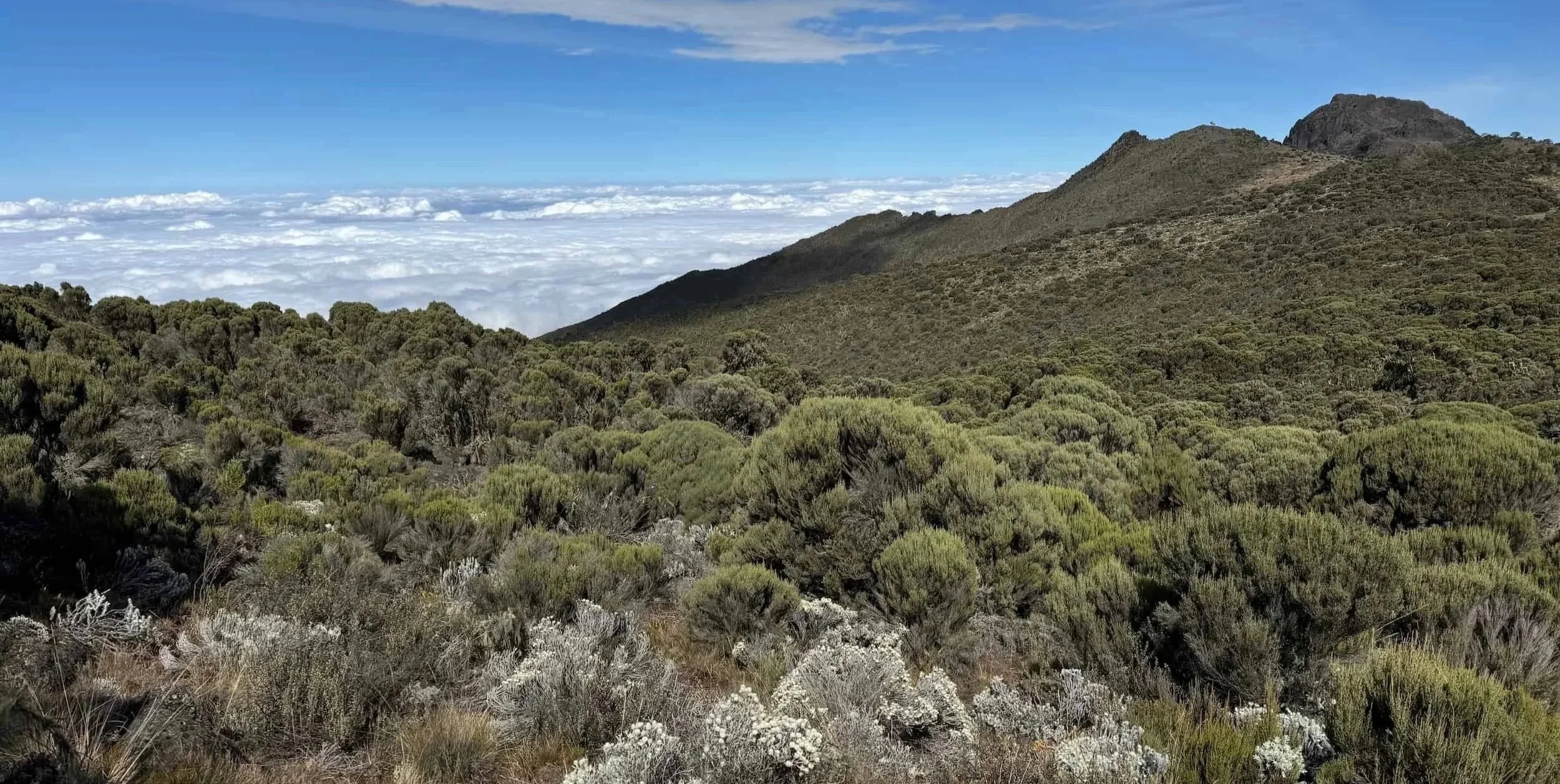
The Northern Circuit Route
Itinerary
The Complete Kilimanjaro Experience
The Northern Circuit is the only route that circles the entire mountain. It begins on the western slopes via the Lemosho route, crosses the Shira Plateau, then turns north into the remote wilderness that most Kilimanjaro climbers never see. Over the next several days, it arcs across the quiet northern and northeastern flanks before approaching the summit from the east and descending via the Mweka route on the south. By the time you finish, you’ve walked a full loop around Kilimanjaro — through its rainforest, across its high-altitude plateau, along its deserted northern slopes, over its arctic summit zone, and back down through its cloud forest.
At 9 days and approximately 90 kilometers, the Northern Circuit is the longest and most comprehensive way to climb Kilimanjaro. That extra time on the mountain translates directly into better acclimatization and the highest summit success rate of any route — approximately 95 percent industry-wide. It also means you spend several days on the rarely visited northern side, where the trails are empty, the landscape is stark and beautiful, and the views stretch into Kenya.
Duration: 9 days / 8 nights (recommended) or 8 days / 7 nights
Distance: ~90 km total — the longest route on Kilimanjaro
Summit Elevation: 5,895m / 19,341 ft
Success Rate: ~95% industry-wide | 97% with Duma Explorer
Difficulty: Moderate — no technical scrambling, no Barranco Wall
Best Months: June – October, January – February
Starting Gate: Londorossi Gate (2,100 m) — western side
Best For: Climbers who want the highest success rate, the most complete experience, and the quietest trails on Kilimanjaro
A Route That Combines the Best of Kilimanjaro
The Northern Circuit is not a single path so much as a grand traverse that stitches together elements of several routes. The first three days follow the Lemosho route through lush western rainforest and across the expansive Shira Plateau. After Shira, instead of heading south toward the Barranco Wall like Machame and Lemosho climbers, the Northern Circuit turns north into exclusive territory — the quiet, remote slopes that separate the western and eastern sides of the mountain. The summit approach joins the Rongai route from the northeast, ascending via School Hut and Gilman’s Point. The descent follows the Mweka route on the southern side, shared by Machame and Lemosho climbers.
This combination means you experience the widest possible range of Kilimanjaro’s landscapes, ecosystems, and perspectives. You see the western rainforest, the volcanic Shira Plateau, the barren northern alpine desert, the eastern approach to the summit, and the southern cloud forest — all in a single climb. No other route comes close to this breadth of experience.
No Barranco Wall
The Northern Circuit completely bypasses the Barranco Wall — the steep rock scramble that features on the Machame and Lemosho routes. By circling north after the Shira Plateau instead of heading south into the Barranco Valley, the route avoids all exposed scrambling. The approach to the summit is a steady, non-technical walk through alpine desert and scree. This makes the Northern Circuit an excellent choice for climbers who prefer to avoid exposed terrain, anyone who is less confident with scrambling, or those who simply want a different experience from the well-trodden southern approach.
The Quiet Northern Wilderness
After leaving the Shira Plateau on Day 4, you enter the most remote section of any Kilimanjaro route. The northern slopes receive far fewer climbers than the popular southern and western sides — on many days, your group will be the only people in sight. Camps like Moir, Pofu, and Third Cave see a tiny fraction of the traffic found at Barranco or Karanga on the southern routes.
The northern side of Kilimanjaro sits in a rain shadow, producing a drier, more open landscape than the western and southern slopes. Vegetation is sparser, the terrain more volcanic, and the views more expansive. On clear days from the northern traverse, you can see across the border into Kenya and the Amboseli plains — a perspective that the vast majority of Kilimanjaro climbers never experience. The quiet and the space create a genuinely wild mountain experience that feels worlds apart from the busier routes.
IN THIS GUIDE
Northern Circuit | Day-by-Day Itinerary | Route Summary | Pricing | Photos | Kilimanjaro Itineraries | FAQ
Five Worlds in Eight Days
Kilimanjaro’s Ecological Zones on the Northern Circuit Route
Montane Rainforest (2,100–2,800m)
The route begins at Londorossi Gate on the western side of Kilimanjaro, entering dense montane rainforest rich with camphorwood, podocarpus, and fig trees. Moss and ferns drape the branches, the air is humid, and the canopy is alive with colobus monkeys and tropical birds. This is the same lush forest encountered on the Lemosho route.
Heath and Moorland (2,800–4,000m)
Above the treeline, the forest gives way to rolling moorland with giant heather, lobelias, and everlasting flowers. The expansive Shira Plateau dominates Days 2 and 3 — a broad, volcanic landscape with views of Shira Cathedral and the Kibo dome rising to the east. This is where the Northern Circuit diverges from the Lemosho route and heads north.
Alpine Desert & The Northern Traverse (4,000–5,000m)
The northern traverse crosses stark, beautiful alpine desert with loose volcanic scree, hardy lichens, and virtually no other vegetation. The rain shadow creates a noticeably drier environment than the southern slopes. This zone includes the Lent Hills, Pofu Camp, and Third Cave — all exclusive to the Northern Circuit. The landscape is barren, the silence immense, and the views toward Kenya extraordinary.
Arctic / Summit Zone (5,000m+)
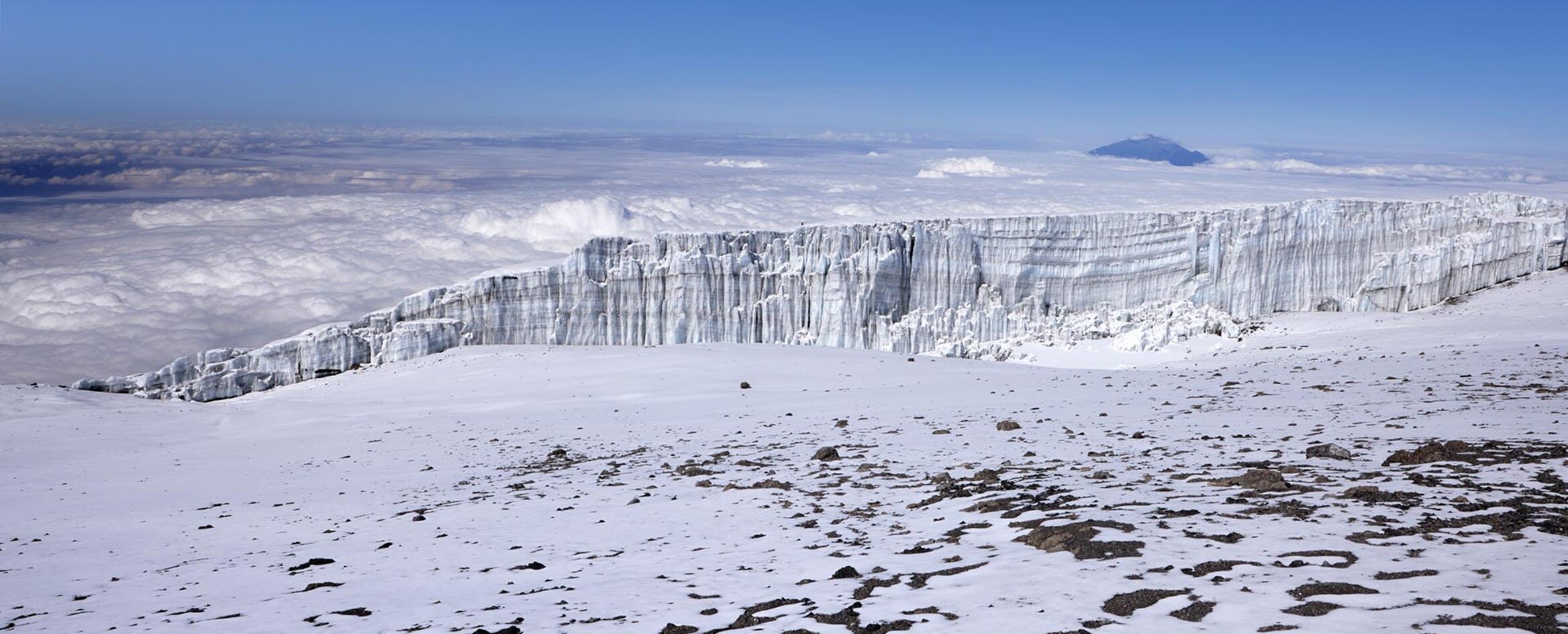
The summit zone is a world of ice, rock, and thin air. From School Hut you ascend through scree to Gilman’s Point on the crater rim, then traverse past Stella Point to Uhuru Peak at 5,895 meters. Glaciers and the volcanic crater create an otherworldly landscape at the highest point in Africa.
Superior Acclimatization — The Highest Success Rate
The Northern Circuit’s 9-day duration provides the most gradual acclimatization profile of any Kilimanjaro route. After reaching the Shira Plateau at around 3,850 meters on Day 3, you spend four full days (Days 4 through 7) between 3,800 and 4,720 meters before the summit push. This extended time at moderate altitude gives your body maximum opportunity to adapt, and it is the primary reason the Northern Circuit has the highest success rate on the mountain — approximately 95 percent industry-wide. With Duma Explorer’s WFR-certified guides, daily health monitoring, and 1:1 summit night ratio, our success rate reaches 97 percent.
Northern Circuit — 9-Day Itinerary
The 9-day Northern Circuit is the most comprehensive way to climb Kilimanjaro. Days 1 through 3 follow the Lemosho route through western rainforest and across the Shira Plateau. On Day 4 the route diverges north into exclusive Northern Circuit territory, beginning a multi-day traverse of the quiet, remote northern slopes. Days 5 and 6 arc across the drier northern and northeastern flanks with views into Kenya. Day 7 climbs to high camp at School Hut, joining the Rongai approach. Summit night and the descent via the Mweka route follow on Days 8 and 9. The route bypasses the Barranco Wall entirely.
-
2,100m to 2,650m • 5 km • 3–4 hours • Montane Rainforest
Your climb begins with a morning departure from your hotel in Moshi or Arusha. The drive to Londorossi Gate takes roughly two hours from Moshi or three hours from Arusha, following paved roads before turning onto rougher tracks that wind through farmland and forest on Kilimanjaro’s western slopes. At the gate (2,100m), your guides register the climb while porters organize gear.
Once formalities are complete, you step into Kilimanjaro’s montane rainforest — a dense, cathedral-like canopy of camphorwood, podocarpus, and fig trees. The trail is narrow, well-shaded, and alive with sound: birdsong echoes through the canopy, water drips from moss-covered branches, and black-and-white colobus monkeys crash through the upper branches. Ferns and wildflowers line the path, and the air is thick with humidity — a striking contrast to the dry, barren landscapes waiting higher on the mountain.
The gradient is gentle, making this an ideal first day to find your rhythm. Mti Mkubwa Camp (also called Forest Camp) sits in a clearing in the forest at 2,650 meters. The name means “big tree” in Swahili, and the camp is surrounded by some of the largest specimens in the forest.
Overnight: Mti Mkubwa Camp — 2,650m / 8,694 ft
-
2,650m to 3,500m • 8 km • 5–7 hours • Rainforest to Moorland
The morning begins with a continued climb through the upper rainforest, where the trees gradually thin and the canopy opens. As you gain altitude, the forest transitions into the heath and moorland zone — a dramatic shift from enclosed, humid woodland to open, sweeping landscape. Giant heather, lobelias, and everlasting flowers replace the canopy, and suddenly you can see for miles.
The trail climbs steadily toward the edge of the Shira Plateau, one of Kilimanjaro’s most distinctive features — an ancient volcanic caldera that collapsed long ago, leaving a broad, undulating highland at over 3,000 meters. As you approach Shira 1 Camp, the Kibo dome comes into full view for the first time, rising dramatically above the plateau to the east. If the weather is clear, the glaciers glint in the afternoon sun.
Shira 1 Camp sits on the western edge of the plateau at 3,500 meters, surrounded by open moorland. Evenings here offer spectacular sunsets over the western plains and some of the best stargazing on the mountain.
Overnight: Shira 1 Camp — 3,500m / 11,483 ft
-
3,500m to 3,850m • 7 km • 4–6 hours • Moorland / Shira Plateau
Today you cross the heart of the Shira Plateau, a vast volcanic landscape that feels like another planet. The terrain is open and rolling, with rocky outcrops, sparse vegetation, and sweeping views in every direction. To the south, the dramatic rock formation known as Shira Cathedral rises from the plateau — a massive buttress surrounded by steep spires and pinnacles that catches the light beautifully.
The walking is relatively gentle, with only 350 meters of elevation gain, giving your body another day to acclimatize before the higher altitudes ahead. The Kibo dome dominates the eastern horizon, growing larger with each step. By this point, you’ve been on the Lemosho route for three days — but tomorrow everything changes. From Shira 2, the Northern Circuit diverges north, leaving all other routes behind.
Shira 2 Camp is one of the busiest camps on Kilimanjaro, shared by Lemosho, Machame, and Northern Circuit climbers. Enjoy the company — from tomorrow, you’ll have the mountain largely to yourself.
Overnight: Shira 2 Camp — 3,850m / 12,631 ft
-
3,850m to 4,200m • 11 km • 5–7 hours • Alpine Desert
This is the day the Northern Circuit begins in earnest. While Machame and Lemosho climbers head south toward Lava Tower and the Barranco Wall, your route turns north into Kilimanjaro’s quiet wilderness. Within an hour of leaving Shira 2, you’ll notice the change: the trail empties, the landscape opens, and the silence deepens. You are now on exclusive Northern Circuit territory.
The trail climbs gradually through alpine desert toward Moir Camp at 4,200 meters. The Lent Hills rise nearby, and in the afternoon your guide will lead an acclimatization hike to their summit at approximately 4,600 meters, offering panoramic views across the northern slopes and toward the Kibo summit. This “climb high, sleep low” strategy is key to the Northern Circuit’s exceptional success rate.
Moir Camp is one of the most remote and beautiful campsites on Kilimanjaro, tucked into a valley surrounded by volcanic rock formations. The chances of seeing another group here are slim. As darkness falls, the Milky Way stretches overhead with an intensity that few places on earth can match.
Overnight: Moir Camp — 4,200m / 13,779 ft
-
4,200m to 4,025m • 10 km • 5–6 hours • Northern Traverse
The northern traverse continues across some of the most remote terrain on Kilimanjaro. The trail follows a broad, undulating path along the mountain’s northern flank, with the Kibo dome towering to your left and the vast plains of northern Tanzania and Kenya stretching to your right. On clear days, the views are extraordinary — you can see across the border into Kenya’s Amboseli region, with its flat-topped acacias and the shimmer of distant dust.
The northern side sits in a pronounced rain shadow, and the difference is visible everywhere. Vegetation is sparser than on the western and southern slopes, the soil more volcanic and loose, the air noticeably drier. This is Kilimanjaro’s least visited face, and the sense of remoteness is profound. The trail rises and falls gently, with a net loss of altitude that aids recovery after the previous day’s acclimatization hike.
Pofu Camp (also called Buffalo Camp) sits at 4,025 meters in a sheltered position on the northern slopes. The name comes from the Cape buffalo that occasionally wander to these altitudes. Evenings here are cold, clear, and extraordinarily quiet.
Overnight: Pofu Camp — 4,025m / 13,205 ft
-
4,025m to 3,800m • 10 km • 5–7 hours • Northern Traverse
The final leg of the northern traverse arcs eastward, curving around Kilimanjaro’s northeastern shoulder. The terrain remains stark alpine desert — volcanic scree, scattered boulders, and the occasional hardy lichen clinging to rock. Mawenzi’s jagged pinnacles grow more prominent ahead as you approach the eastern side of the mountain, a dramatic contrast to Kibo’s smooth dome.
By afternoon you reach Third Cave Camp at 3,800 meters, where the Northern Circuit joins the approach used by Rongai route climbers. Third Cave is named for the small cave formations in the rocky terrain nearby, which historically served as shelters on traditional routes up the mountain. You’ve now completed the northern loop — in the past three days you’ve walked halfway around Kilimanjaro, from west to east, across terrain that very few people ever see.
Tomorrow’s climb to School Hut will be the steepest day on the route, so tonight is a good time to rest, eat well, and prepare your summit gear.
Overnight: Third Cave Camp — 3,800m / 12,467 ft
-
3,800m to 4,720m • 7 km • 5–6 hours • Alpine Desert
Today is the steepest climbing day on the Northern Circuit, ascending 920 meters through barren alpine desert to School Hut at 4,720 meters. The trail climbs steadily, crossing loose volcanic scree with views of Mawenzi’s shattered spires to the east and the Saddle stretching between the two peaks. The air thins noticeably, and your pace slows naturally — pole pole, as your guides remind you.
School Hut sits just below the start of the summit trail, on the northeastern side of Kibo. This is the same high camp used by Rongai route climbers. The name dates back to early mountaineering on Kilimanjaro, when the hut was used as a training base. From camp, you can see the route your headlamp will illuminate in a few short hours — a steep scree slope climbing toward the crater rim.
You’ll arrive by early afternoon, eat an early dinner prepared by your cook, and try to rest before the midnight summit attempt. Your guides will brief you on what to expect and help you prepare your gear. After seven days and a full lap of the mountain, you are superbly acclimatized for the push to the top.
Overnight: School Hut — 4,720m / 15,485 ft
-
4,720m to 5,895m to 3,950m • 13 km • 12–16 hours • Arctic / Alpine Desert
You wake around midnight to hot tea and biscuits, then begin the summit push under a sky full of stars. The ascent follows a switchback trail through loose volcanic scree, climbing steadily in the darkness with headlamps illuminating the path ahead. Your guides set a slow, deliberate pace — this is where the 1:1 staff-to-climber ratio on summit night makes the biggest difference, with a dedicated guide focused entirely on your progress, breathing, and morale.
After five to six hours of climbing, you reach Gilman’s Point (5,681m) on the crater rim as dawn begins to break. From Gilman’s, you traverse the rim past Stella Point (5,756m), walking alongside Kilimanjaro’s shrinking glaciers, before the final push to Uhuru Peak (5,895m) — the roof of Africa. On a clear morning, the sunrise paints the glaciers gold and the shadow of Kilimanjaro stretches across the plains far below.
After photos and celebration at the summit sign, you descend steeply to the crater rim, then down through scree to the southern side of the mountain. The descent continues to Millennium Camp at 3,950 meters, where you’ll rest for the night. You’ve now completed the full circle — ascending from the west, traversing the north, summiting from the east, and descending toward the south.
Overnight: Millennium Camp — 3,950m / 12,959 ft
-
3,950m to 1,640m • 13 km • 4–5 hours • Moorland / Rainforest
The final day descends 2,310 meters via the Mweka route on Kilimanjaro’s southern side — the same descent path used by Machame and Lemosho climbers. This is your fourth distinct face of the mountain: you started in the western rainforest, traversed the northern desert, summited from the east, and now descend through the southern cloud forest. No other route gives you this breadth of experience.
The trail drops quickly through moorland and into dense, lush rainforest that feels worlds apart from the barren northern slopes you walked just days ago. Birdsong fills the canopy, moss drapes every branch, and the humid air is heavy with the scent of vegetation. The contrast is extraordinary — a vivid reminder of the range of ecosystems packed onto a single mountain.
At Mweka Gate (1,640m), you sign out of the park, collect your summit certificates, and say goodbye to your mountain crew. This is the traditional moment to hand over tips and thank the guides, porters, and cook who made your climb possible. Your vehicle will be waiting to drive you back to your hotel in Moshi or Arusha, where a hot shower and a cold drink await.
Overnight: Hotel in Moshi or Arusha
| Day | Highlights | Start Elevation | End Elevation | Gain / Loss | Distance | Overnight Camp | Zone |
|---|---|---|---|---|---|---|---|
| Day 1 | Drive to Londorossi Gate; trek through lush montane rainforest on the western slopes; moss-draped canopy, ferns, colobus monkeys | 2,100m | 2,650m | +550m | 5 km | Mti Mkubwa Camp | Rainforest |
| Day 2 | Forest to moorland transition; giant heather and lobelias; first views of Shira Plateau | 2,650m | 3,500m | +850m | 8 km | Shira 1 Camp | Moorland |
| Day 3 | Cross the Shira Plateau; volcanic landscape with views of Shira Cathedral; Kibo dome ahead | 3,500m | 3,850m | +350m | 7 km | Shira 2 Camp | Moorland |
| Day 4 | Leave all other routes behind; enter the quiet northern wilderness; Lent Hills acclimatization hike | 3,850m | 4,200m | +350m | 11 km | Moir Camp | Alpine Desert |
| Day 5 | Remote northern traverse; drier climate, sparser vegetation; panoramic views toward Kenya and Amboseli | 4,200m | 4,025m | +225m / –400m | 10 km | Pofu Camp | North Circuit |
| Day 6 | Continue the northern arc; volcanic scree and alpine desert; join the Rongai approach from the east | 4,025m | 3,800m | +175m / –400m | 10 km | Third Cave Camp | North Circuit |
| Day 7 | Climb toward the summit zone; cross alpine desert; views of Mawenzi and the Saddle; arrive at high camp | 3,800m | 4,720m | +920m | 7 km | School Hut | Alpine Desert |
| Day 8 | Summit night; Gilman’s Point (5,681m); Stella Point; Uhuru Peak (5,895m) — roof of Africa; descend to Millennium Camp | 4,720m | 3,950m | +1,175m / –1,945m | 13 km | Millennium Camp | Arctic |
| Day 9 | Final descent through cloud forest via Mweka route; summit certificates at Mweka Gate; drive to hotel | 3,950m | 1,640m | –2,310m | 13 km | — | Rainforest |
Route Summary Table
Pricing, Inclusions & Exclusions
Included in Your Climb
- All Kilimanjaro National Park entrance and camping fees
- WFR-certified head guide with 7+ years of Kilimanjaro experience
- Assistant guides and porters
- Professional mountain cook
- All meals on the mountain (breakfast, lunch, dinner, and snacks)
- Filtered drinking water
- Four-season mountaineering tents
- Sleeping mats
- Private toilet tent
- Emergency oxygen cylinder and pulse oximeter
- Daily health monitoring and vitals checks
- 1:1 staff-to-climber ratio on summit night
- Round-trip hotel-to-trailhead transport (Moshi or Arusha)
- Post-climb summit certificate
Not Included
- International flights
- Tanzania visa (available on arrival, ~$50 USD)
- Travel and evacuation insurance (required)
- Personal hiking gear and clothing
- Sleeping bag (rental available)
- Trekking poles (rental available)
- Tips for guides, porters, and cook
- Pre- and post-climb hotel accommodation
- Meals in town before and after the climb
- Souvenirs and personal expenses
- Optional Diamox (altitude sickness medication)
2026 Northern Circuit Pricing — Published and Transparent
All prices are per person in USD. No hidden fees or surcharges.
Contact Stacy to discuss your group size, dates, and any custom requirements.
Explore The Northern Circuit Route in Photos
Follow our camp as it moves up, and then back down, Mount Kilimanjaro’s Northern Circuit Route
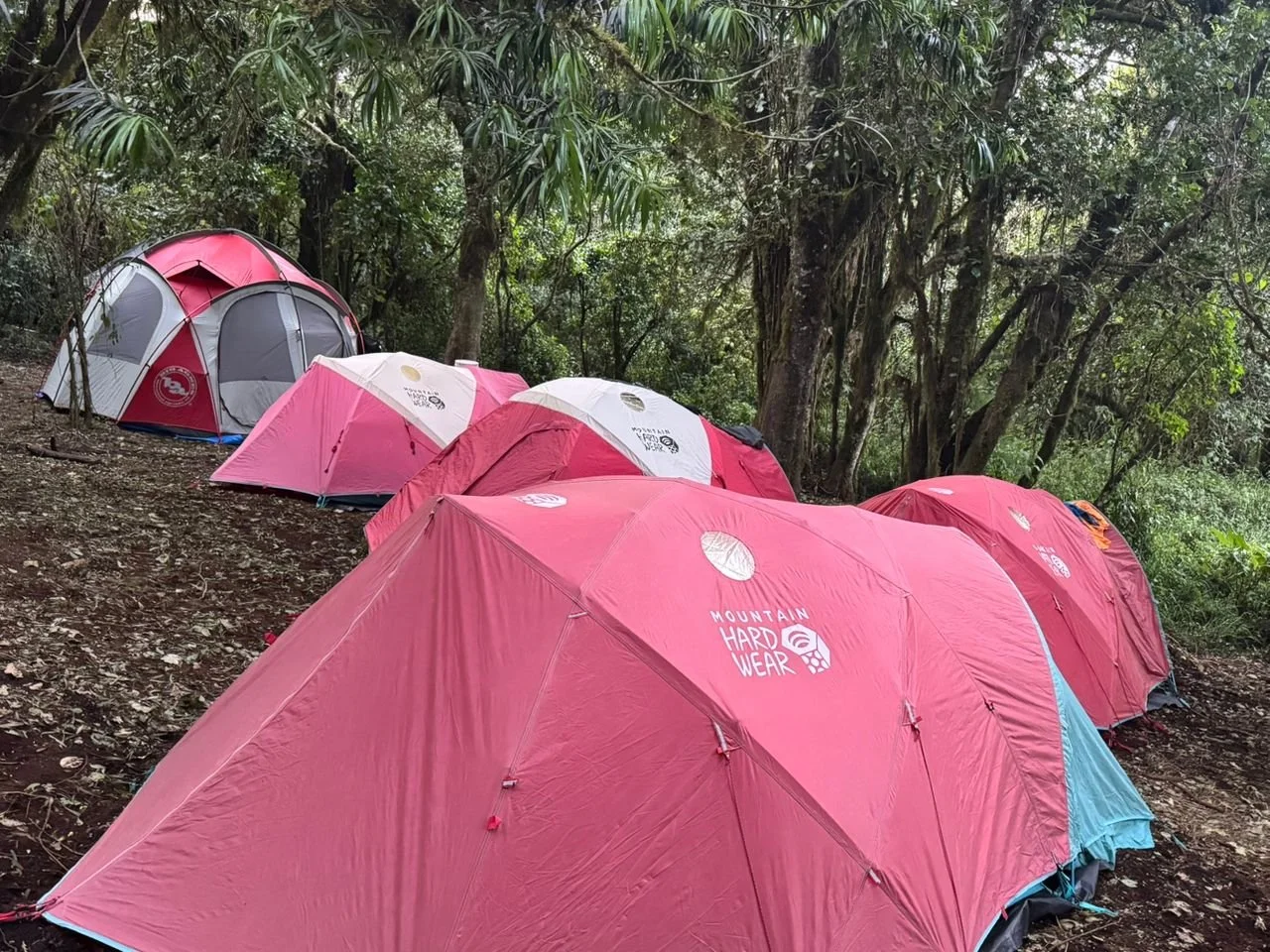
Day 1: Mti Mkubwa Camp
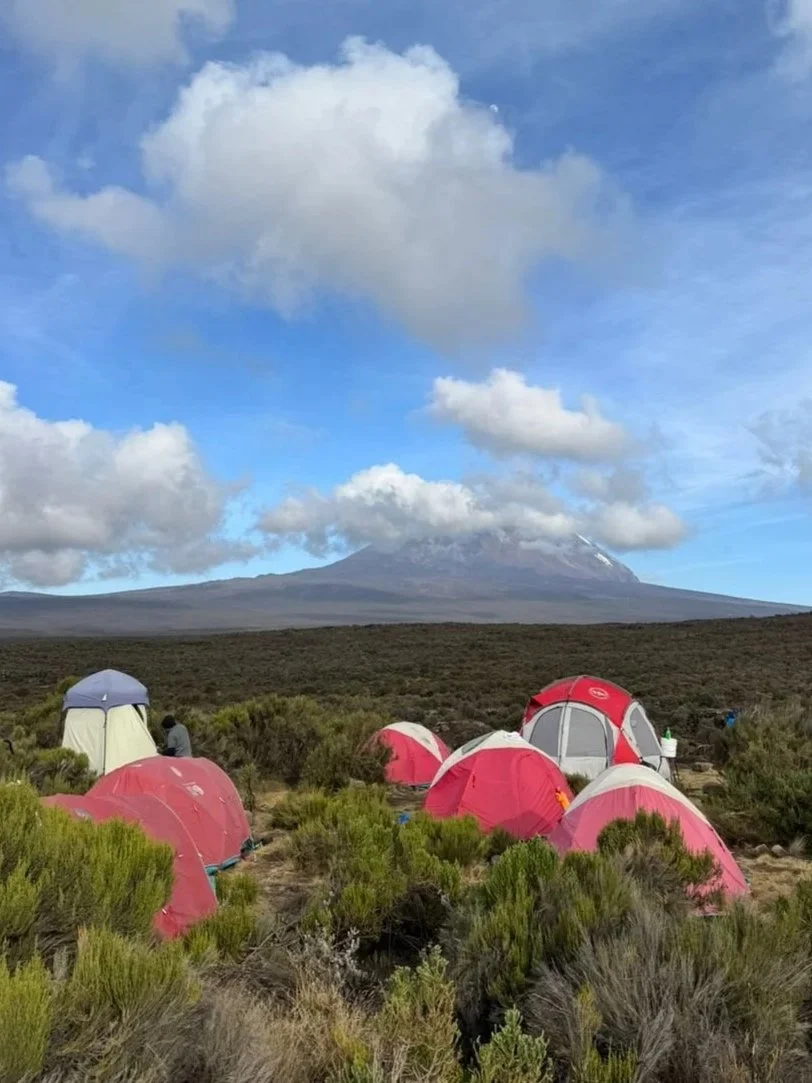
Day 2: Shira 1 Camp
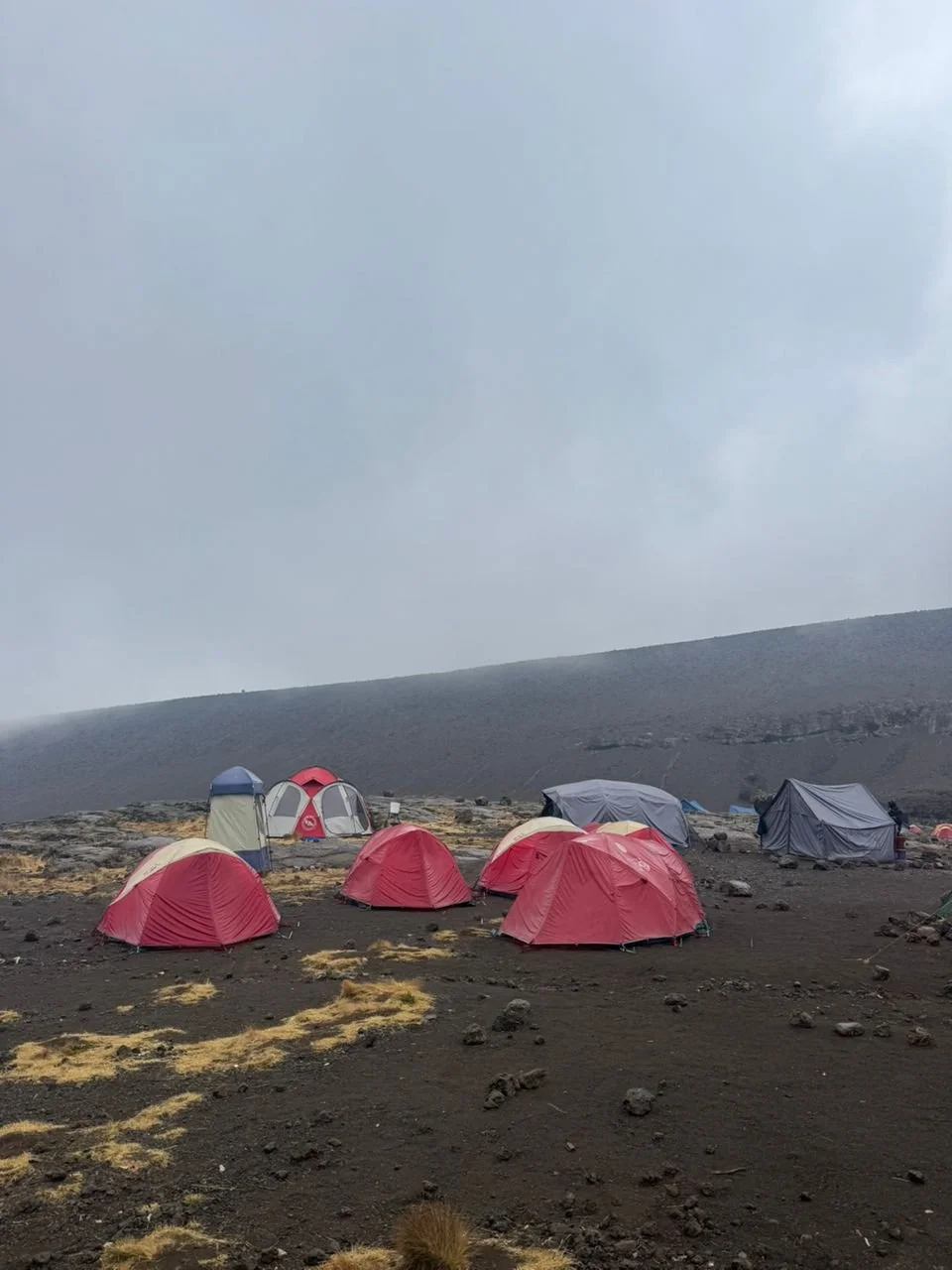
Day 3: Moir Hut
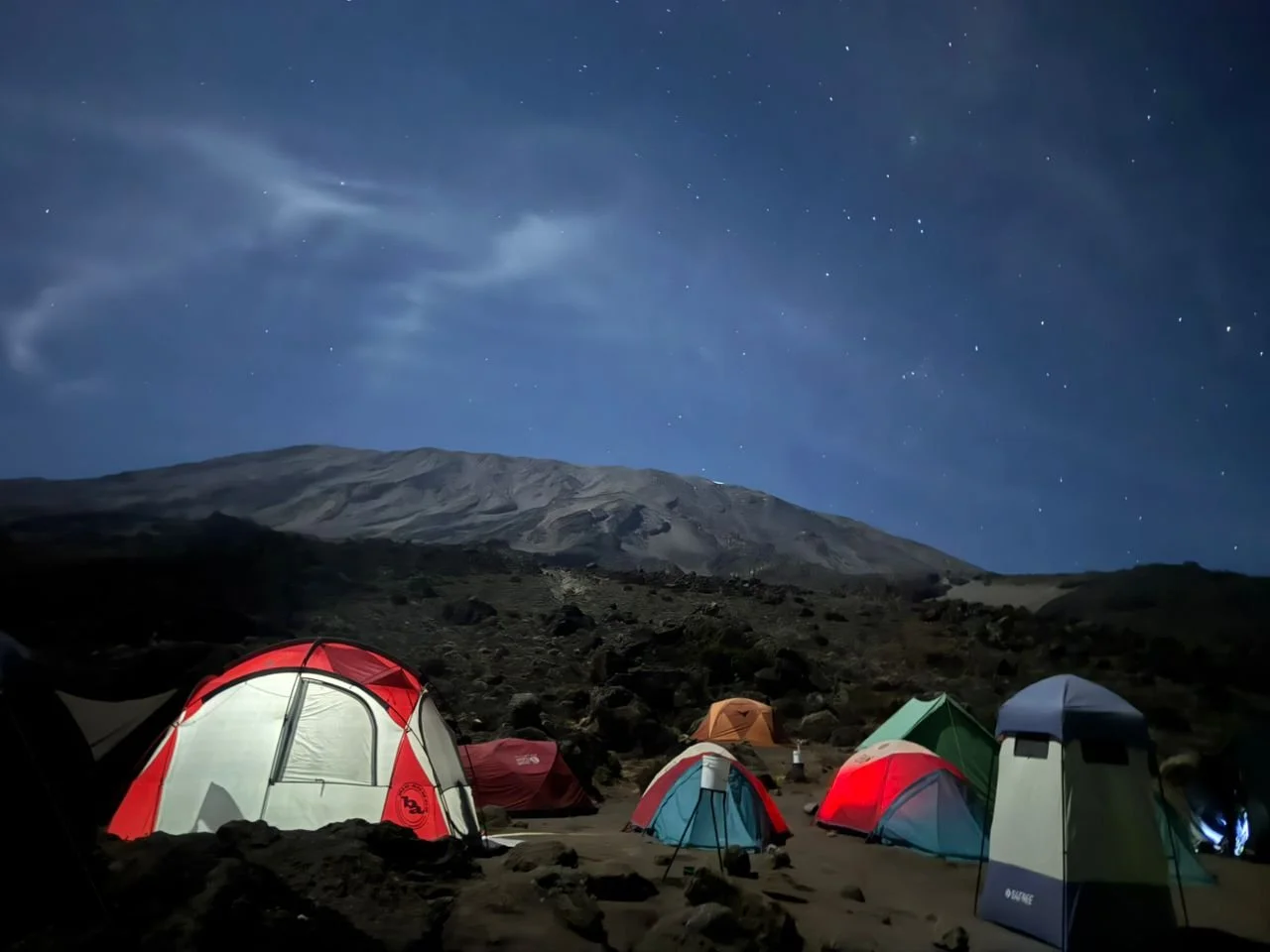
Day 4: Buffalo Camp
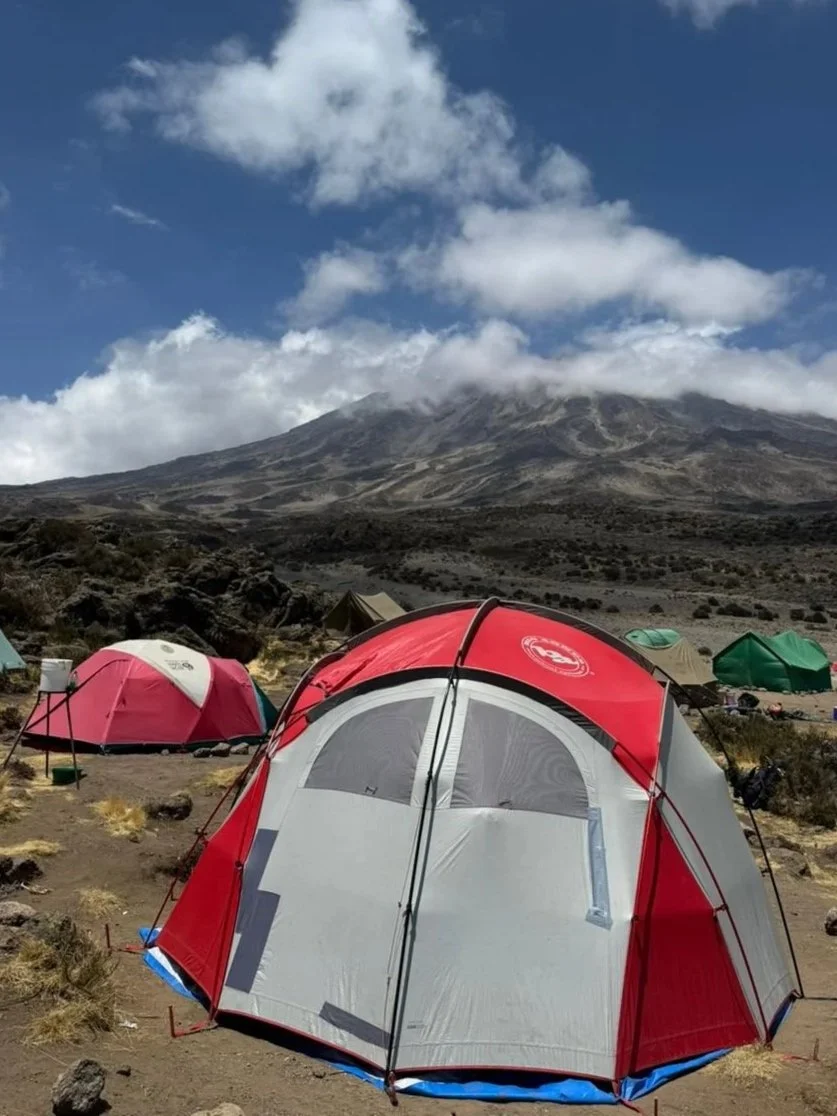
Day 5: 3rd Cave Camp
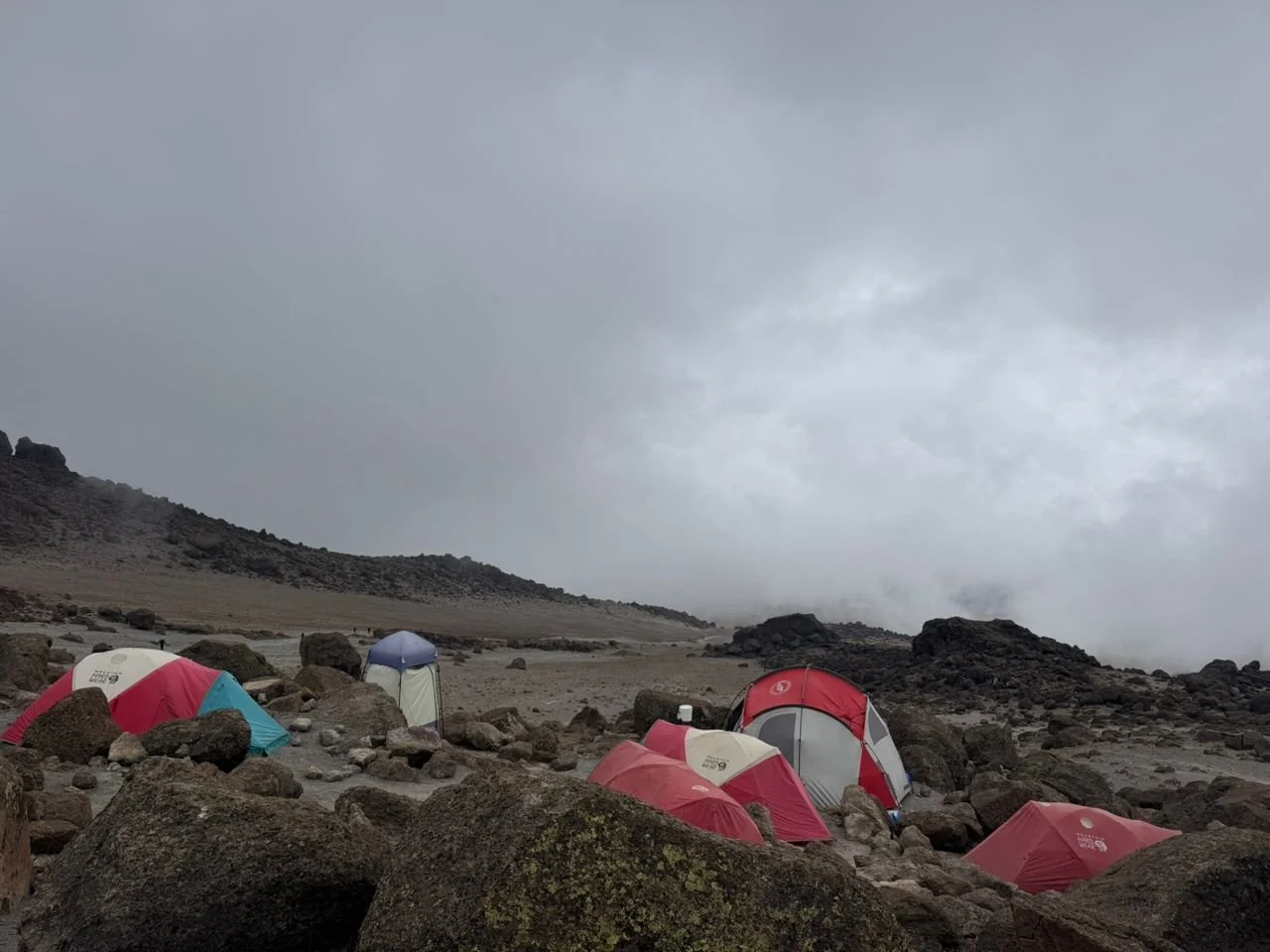
Day 6: School Hut
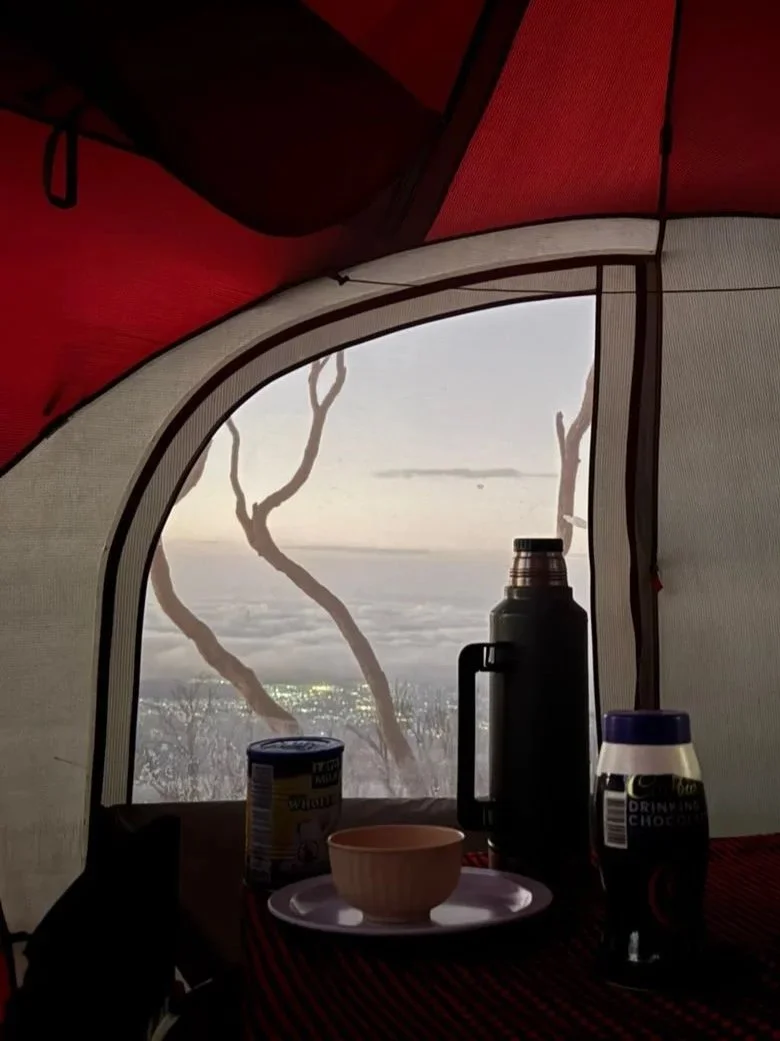
Day 7: Millennium Camp
Duma Kilimanjaro Itineraries

Lemosho Shira Route Itinerary
The Northern Circuit Route Itinerary

Machame Route Itinerary
Rongai Route Itinerary

Lemosho Shira via Crater Route Itinerary

Marangu Route Itinerary
Umbwe Route Itinerary
Northern Circuit Frequently Asked Questions
-
The Northern Circuit is the longest and most comprehensive route on Mount Kilimanjaro. It begins on the western side via Londorossi Gate (the same starting point as Lemosho), crosses the Shira Plateau, then circles the entire mountain by traversing the remote and quiet northern slopes before approaching the summit from the east. It is the only route that circumnavigates Kilimanjaro, combining elements of the Lemosho, Rongai, and Mweka routes while spending several days on the rarely visited north side. Duma Explorer recommends the 9-day itinerary for the highest possible summit success rate.
-
The Northern Circuit begins on the western slopes via the Lemosho route through rainforest and the Shira Plateau. After Shira, instead of heading south toward the Barranco Wall like most other routes, it turns north into the remote wilderness of Kilimanjaro’s northern slopes. The route then arcs eastward through Moir Camp, Pofu Camp, and Third Cave, passing through terrain that very few climbers ever see. It joins the Rongai approach from the northeast at School Hut for the summit push. The descent follows the Mweka route on the southern side. You essentially walk a full loop around the mountain, experiencing the western rainforest, the Shira Plateau, the quiet north, the eastern alpine desert, the summit, and the southern cloud forest.
-
Yes. The Northern Circuit completely bypasses the Barranco Wall. After crossing the Shira Plateau, the route heads north instead of south, meaning it never enters the Barranco Valley or encounters the famous rock scramble. This makes the Northern Circuit a strong choice for climbers who prefer to avoid exposed scrambling or who are less confident on steep, technical terrain. The approach to the summit via the northeastern side is a steady, non-technical walk.
-
The Northern Circuit shares its first three days with the Lemosho route, from Londorossi Gate through the rainforest to the Shira Plateau. After Shira 2 Camp, the route diverges north into exclusive Northern Circuit territory, including Moir Camp, Pofu Camp, and Third Cave. The summit approach from School Hut follows the same path used by the Rongai route via Gilman’s Point. The descent follows the Mweka route, which is shared with the Machame and Lemosho routes. This combination gives you the widest possible experience of Kilimanjaro’s different sides and ecosystems.
-
The 9-day Northern Circuit has the highest summit success rate of any Kilimanjaro route, with an industry average of approximately 95 percent. Duma Explorer achieves a 95 percent success rate on the Northern Circuit. The extended duration provides superior acclimatization, with multiple days spent between 3,800 and 4,200 meters before the summit push. This gradual approach gives your body maximum time to adapt to the altitude.
-
The Northern Circuit covers approximately 90 kilometers over 9 days and 8 nights. This makes it the longest route on Kilimanjaro by both distance and duration. An 8-day version is available but provides less acclimatization time. Duma Explorer recommends the 9-day itinerary for the best balance of acclimatization, summit success, and enjoyment.
-
The northern slopes of Kilimanjaro are the quietest and least visited part of the mountain. After leaving the Shira Plateau, you enter a remote alpine desert with panoramic views toward Kenya and the Amboseli plains. The vegetation is noticeably sparser than on the southern and western slopes due to the rain shadow effect. Camps like Moir, Pofu, and Third Cave see a tiny fraction of the traffic found on popular routes. On clear days you can see across the border into Kenya, with views that most Kilimanjaro climbers never experience.
-
The Northern Circuit can be climbed year-round. The long dry season from June through October offers the most stable weather and is the most popular period. January and February are also excellent months. Because the route spends several days on the drier northern side of the mountain, it handles the rainy seasons better than purely southern routes. However, the first three days on the western slopes will still encounter rain during March through May. For the driest possible experience during the wet season, consider the Rongai route instead.
-
Duma Explorer’s 2026 pricing for the 9-day Northern Circuit starts at $3,199 per person for groups of 8 or more, $3,399 per person for groups of 4 to 7, and $3,799 per person for groups of 2 to 3. The 8-day Northern Circuit starts at $2,799 for groups of 8 or more and goes up to $3,399 for 2 to 3 people. All prices include park fees, meals, camping equipment, WFR-certified guides, porters, emergency oxygen, and transport.
-
All Duma Explorer Northern Circuit climbs include park entrance and camping fees, all meals on the mountain, filtered drinking water, four-season mountaineering tents, sleeping mats, a private toilet tent, a WFR-certified head guide with at least 7 years of Kilimanjaro experience, assistant guides and porters, a professional mountain cook, emergency oxygen and pulse oximeter, daily health monitoring, a 1:1 staff-to-climber ratio on summit night, round-trip hotel-to-trailhead transport, and a post-climb summit certificate.
-
The Northern Circuit is a non-technical route with a gentle, gradual ascent profile and no exposed scrambling. Duma Explorer prioritizes safety: our WFR-certified guides monitor your vitals daily with pulse oximeters, carry emergency oxygen on every climb, and maintain a 1:1 staff-to-climber ratio on summit night. If a serious medical emergency occurs, helicopter evacuation is available through KiliMedAir, the authorized aerial rescue provider on Kilimanjaro. Designated helicopter landing zones exist at key points along the route. We strongly recommend purchasing travel insurance that explicitly covers high-altitude trekking and helicopter evacuation. Read our complete guide: Helicopter Evacuation on Kilimanjaro
Who Should Choose the Northern Circuit?
The Northern Circuit is ideal for climbers who want the most complete Kilimanjaro experience possible — the widest variety of landscapes, the best acclimatization, the quietest trails, and the highest summit success rate. It suits anyone who wants to avoid the Barranco Wall, climbers who value solitude and wilderness, and those with the time and budget for the longest route on the mountain. If you’ve already climbed a shorter route and want to return with a completely different perspective, the Northern Circuit shows you sides of Kilimanjaro that most visitors never see.
Ready to Climb?
Contact Duma Explorer to book your Northern Circuit climb. We’ll help you choose between the 8-day and 9-day itinerary, coordinate your dates, and answer every question along the way. All climbs include WFR-certified guides, emergency oxygen, daily health monitoring, and a 1:1 staff-to-climber ratio on summit night.
Your Northern Circuit Climb Starts here
Tell Stacy your dates, fitness level, and goals — she’ll match you with the right itinerary, build your crew, and handle every detail from trailhead to summit.