


Gorilla Trekking in Uganda & Rwanda
A Once-in-a-Lifetime Wildlife Experience
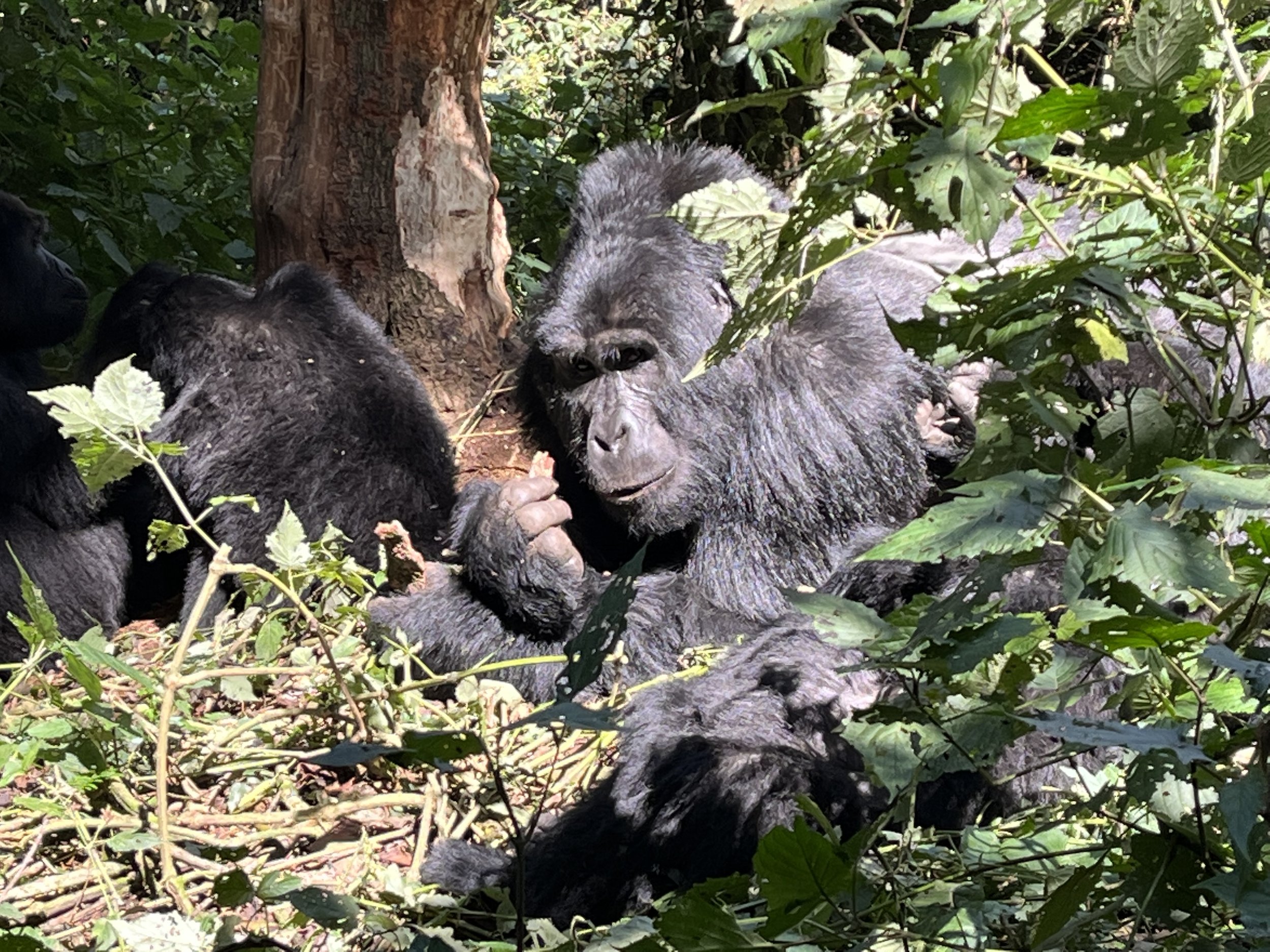
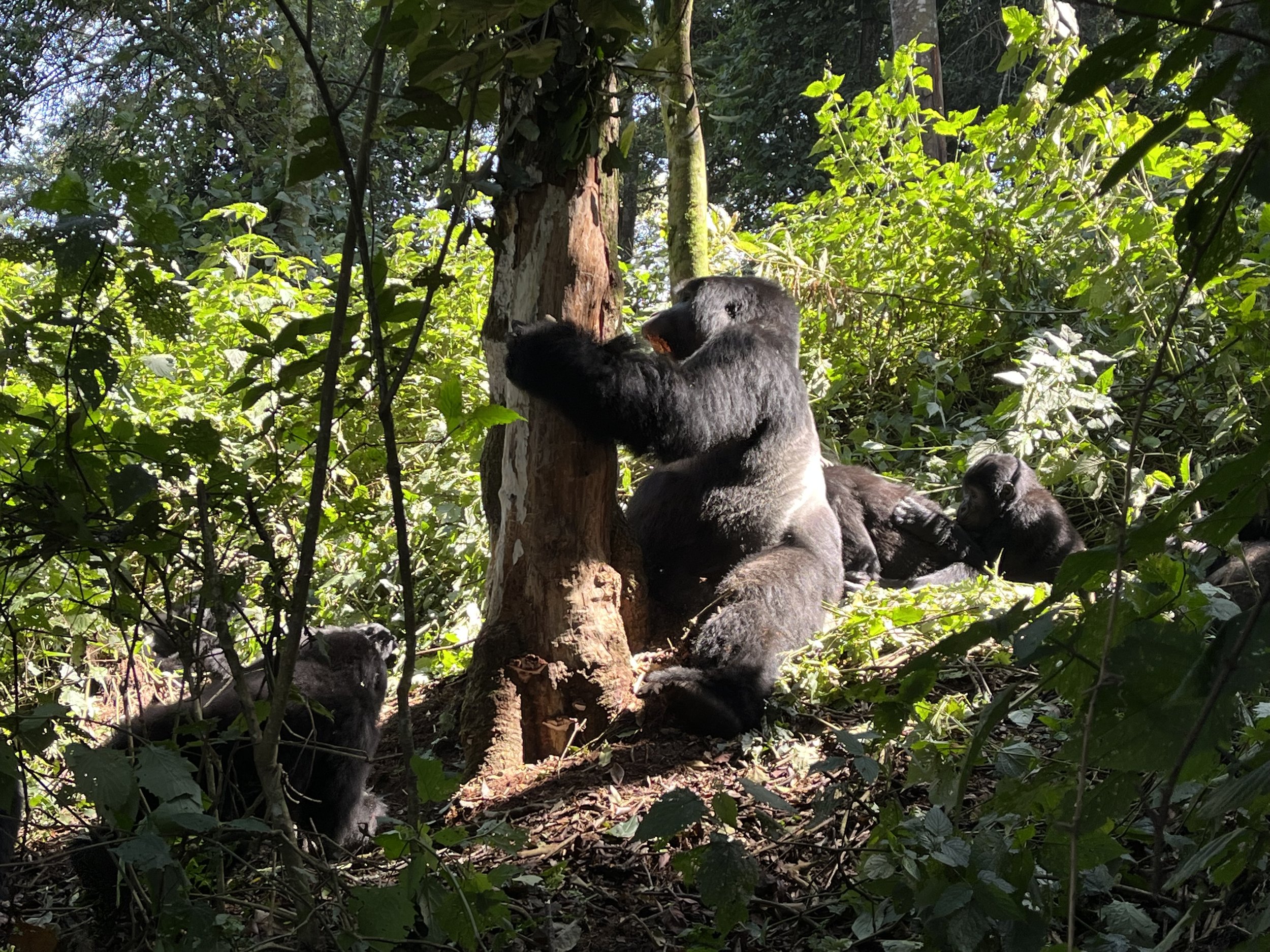
Sitting just a few feet from a wild mountain gorilla — watching a silverback tend to his family in the misty forest — is one of the most powerful wildlife encounters on Earth. Mountain gorillas are found in only two places: the Virunga volcanic range shared by Rwanda, Uganda, and the Democratic Republic of Congo, and Uganda’s Bwindi Impenetrable Forest. With roughly 1,000 individuals remaining in the wild, every trek is a privilege and a contribution to the conservation effort that brought this species back from the edge of extinction.
Both Uganda and Rwanda offer world-class gorilla trekking, but the experience, cost, and logistics differ between the two countries. This guide compares both destinations to help you decide which is the best fit for your trip — or whether to combine both for the ultimate primate adventure.
Where to Go Gorilla Trekking
Bwindi Impenetrable National Park, Uganda
Bwindi Impenetrable National Park is a UNESCO World Heritage Site spanning over 300 square kilometers of ancient, mist-draped rainforest in southwestern Uganda. It is home to roughly half of the world’s mountain gorillas, spread across four trekking sectors: Buhoma, Ruhija, Rushaga, and Nkuringo. The trekking experience in Bwindi feels wilder and more immersive than in Rwanda — the forest is denser, the terrain more varied, and the gorilla families are spread across a larger area.
The four sectors: Buhoma is the original and most-visited sector. Ruhija offers excellent birding alongside gorilla trekking. Nkuringo is the most physically demanding but dramatically scenic, with views of the Virunga volcanoes. Rushaga, in the south, has the most habituated gorilla families and is the only place in the world offering the Gorilla Habituation Experience — an extended trek of up to four hours with a semi-habituated group.
Reaching Rushaga from Kigali: Bwindi’s Rushaga sector is easily accessed from Kigali, Rwanda — a scenic 3–4 hour drive through the Rwandan highlands via the Cyanika border crossing. For travelers arriving on international flights to Kigali or combining gorilla trekking with a Rwanda visit, this is often the most convenient route into Bwindi. The southern sectors of Bwindi (Rushaga and Nkuringo) are actually closer to Kigali than to Entebbe.
Reaching Bwindi from Entebbe: From Entebbe International Airport (EBB), Bwindi is roughly 8–10 hours by road or under 2 hours by domestic flight with Aerolink to Kisoro or Kihihi airstrip. We recommend flying at least one direction to maximize your time in the field.
Volcanoes National Park, Rwanda
Volcanoes National Park protects the Rwandan side of the Virunga volcanic range and is home to roughly a dozen habituated gorilla families. Made famous by Dian Fossey’s pioneering research, the park’s bamboo-covered slopes offer a dramatic setting for trekking, with the volcanic peaks rising above the forest canopy. Treks typically begin from the park headquarters in Kinigi, and the experience is well-organized and efficient — many treks last 2–4 hours round trip, though some can take longer depending on where the gorillas are that day.
Access from Kigali: Volcanoes National Park is approximately a 2–2.5 hour drive from Kigali International Airport (KGL), making it one of the most accessible gorilla trekking destinations in Africa. Many travelers arrive in Kigali in the afternoon and head straight to the park that same day, while others spend the night in the city and drive to the park the following morning. This proximity makes gorilla trekking in Rwanda an easy add-on to a Tanzania or Kenya safari, with flights connecting Kigali to the Serengeti, Kilimanjaro, Nairobi, and the Masai Mara.
Connecting Safari Destinations with Gorilla Trekking
An Easy Add-On to Any East African Safari
One of the great advantages of gorilla trekking in this region is how easily it connects with safari destinations in Tanzania and Kenya. Kigali International Airport serves as the primary hub, with flights linking it to the Serengeti (via Mwanza on Auric Air, our preferred carrier), Nairobi, and the Masai Mara. From Kigali, both Volcanoes National Park and Bwindi’s Rushaga sector are within a few hours’ drive.
A typical combination might look like this: fly from the Serengeti to Mwanza on Auric Air, then onward to Kigali. Spend a night in Kigali, then drive to Volcanoes for gorilla trekking — or cross into Uganda for Bwindi. The same works in reverse from the Masai Mara, with flights connecting Nairobi to Kigali daily. Because gorilla trekking requires only 2–3 nights on either side, it fits naturally into a broader East African itinerary without adding significant travel days.
A note on the Auric Air route: The Auric Air flight from Mwanza to Kigali operates with a minimum of four passengers, so availability depends on demand. During low season when there are fewer travelers, flying RwandAir via Kilimanjaro International Airport is often the preferred alternative. We monitor both options and will recommend the best routing based on your travel dates and group size.
From Entebbe: Travelers starting or ending in Uganda can fly directly from Entebbe to Bwindi via Aerolink, or combine Bwindi with a Uganda safari circuit through Queen Elizabeth National Park and Kibale Forest. Entebbe also offers international connections to Nairobi and Kilimanjaro for onward travel to Tanzania or Kenya.
Gorilla Trekking Cost Comparison: Uganda vs. Rwanda
The cost of gorilla trekking varies significantly between Rwanda and Uganda, driven primarily by permit prices and accommodation choices. Here is a side-by-side comparison for foreign non-resident travelers:
| Uganda (Bwindi) | Rwanda (Volcanoes) | |
|---|---|---|
| Permit Costs | ||
| Gorilla Tracking Permit | $800 | $1,500 |
| Gorilla Habituation Permit | $1,800 | Not available |
| Low Season Gorilla Permit | $600 (Apr, May, Nov) | Not available |
| Accommodation (per person, per night) | ||
| High-End / Luxury Lodge | $400–$1,200 | $1,000–$3,000+ |
| Mid-Range Lodge | $150–$400 | $200–$500 |
| Budget Lodge | $60–$120 | $80–$150 |
| Estimated Total (3-Night Trip, Mid-Range) | ||
| Total per person | $2,000–$3,200 | $3,500–$5,000+ |
Prices are approximate and vary by lodge selection, season, and itinerary. Uganda permit prices effective July 1, 2026 per UWA. Rwanda permit prices per RDB. Green prices indicate the lower-cost option.
Lodging in Uganda: More Affordable Across the Board
Accommodations across Bwindi’s four sectors are generally less expensive than their Rwandan counterparts at every price point. Combined with the $800 gorilla permit — $700 less than Rwanda — a gorilla trekking trip to Bwindi is substantially more affordable overall. Excellent mid-range lodges are available in all four sectors, and even the higher-end properties in Bwindi tend to cost less than the top-tier options in Volcanoes. For travelers prioritizing value without sacrificing the quality of the gorilla experience itself, Uganda is the clear choice.
Low season savings: Uganda offers discounted gorilla permits during April, May, and November at $600 per person — less than half the cost of a Rwanda permit. Combined with lower accommodation rates during these months, a low-season Bwindi trek can be remarkably affordable. Rwanda does not currently offer low-season gorilla permit pricing.
Lodging in Rwanda: From Ultra-Luxury to Great Value
Rwanda’s Volcanoes National Park has attracted some of Africa’s most exclusive lodge brands. Properties like Singita Kwitonda, One&Only Gorilla’s Nest, and Bisate Lodge by Wilderness offer extraordinary luxury in a volcanic setting — but at rates that often exceed $1,500–$3,000 per person per night. When combined with Rwanda’s $1,500 gorilla permit, a high-end gorilla trekking experience in Rwanda can easily run $5,000–$8,000+ per person for just 2–3 nights.
However, Rwanda also has excellent mid-range and value options that bring the overall cost down considerably. Lodges like Sambora Kinigi Lodge, Five Volcanoes Boutique Hotel, and Ingagi Lodge offer comfortable, well-located accommodations near the park headquarters at a fraction of the luxury lodge prices. Choosing one of these properties makes gorilla trekking in Volcanoes significantly more accessible, though the $1,500 permit remains the largest single expense.
Best Time for Gorilla Trekking
Gorilla trekking is available year-round in both Rwanda and Uganda, but conditions vary by season. The dry seasons offer the best trekking conditions with drier trails, better road access, and clearer skies. The wet season months bring muddier, more challenging trails but also fewer trekkers and — in Uganda — discounted permits.
| Month | Conditions | Trail Difficulty | Crowds | Notes |
|---|---|---|---|---|
| Dry Season — Best Trekking Conditions | ||||
| January | Dry, warm | Easier | Moderate | Excellent trekking conditions in both countries |
| February | Dry, warm | Easier | Moderate | One of the best months for gorilla trekking |
| Transition — Conditions Softening | ||||
| March | Transition to wet | Moderate | Low–Moderate | Conditions begin to soften; still good trekking |
| Long Rains — Low Season (Uganda Discounted Permits) | ||||
| April | Heavy rain | Difficult (muddy) | Low | Uganda permit $600 — save $200 |
| May | Heavy rain | Difficult (muddy) | Low | Uganda permit $600 — fewest trekkers |
| Peak Dry Season — Highest Demand | ||||
| June | Dry | Easier | High | Peak season begins. Book permits well in advance |
| July | Dry | Easier | Peak | Best conditions, highest demand. Book 6–10 months ahead |
| August | Dry | Easier | Peak | Best conditions, highest demand. Most popular month |
| Transition & Short Rains | ||||
| September | Dry to wet transition | Moderate | Moderate | Excellent shoulder season with good conditions |
| October | Wet | Moderate–Difficult | Low–Moderate | Rain increases; trails muddier |
| November | Wet | Moderate–Difficult | Low | Uganda permit $600 — smaller trekking groups |
| Holiday Season — Dry Returns | ||||
| December | Dry | Easier | High | Holiday season; drier trails return. Book early |
Gorilla trekking is available year-round in both Rwanda and Uganda. Conditions apply to both Volcanoes National Park and Bwindi Impenetrable Forest. Uganda offers discounted low-season gorilla permits ($600) in April, May, and November. Rwanda does not offer seasonal permit discounts. Both Volcanoes and Bwindi’s Rushaga sector are easily reached from Kigali International Airport, making gorilla trekking a convenient 2–3 night add-on to any Tanzania or Kenya safari.
Planning tip: Because of the proximity of both Volcanoes National Park and Bwindi’s Rushaga sector to Kigali International Airport, gorilla trekking is one of the easiest extensions to add to a Tanzania or Kenya safari. A flight from the Serengeti or Masai Mara to Kigali puts you within a few hours’ drive of gorilla trekking in either country. We typically recommend adding just 2–3 nights for gorilla trekking, keeping the overall trip length manageable while adding one of the most memorable experiences in African travel.
What to Expect on a Gorilla Trek
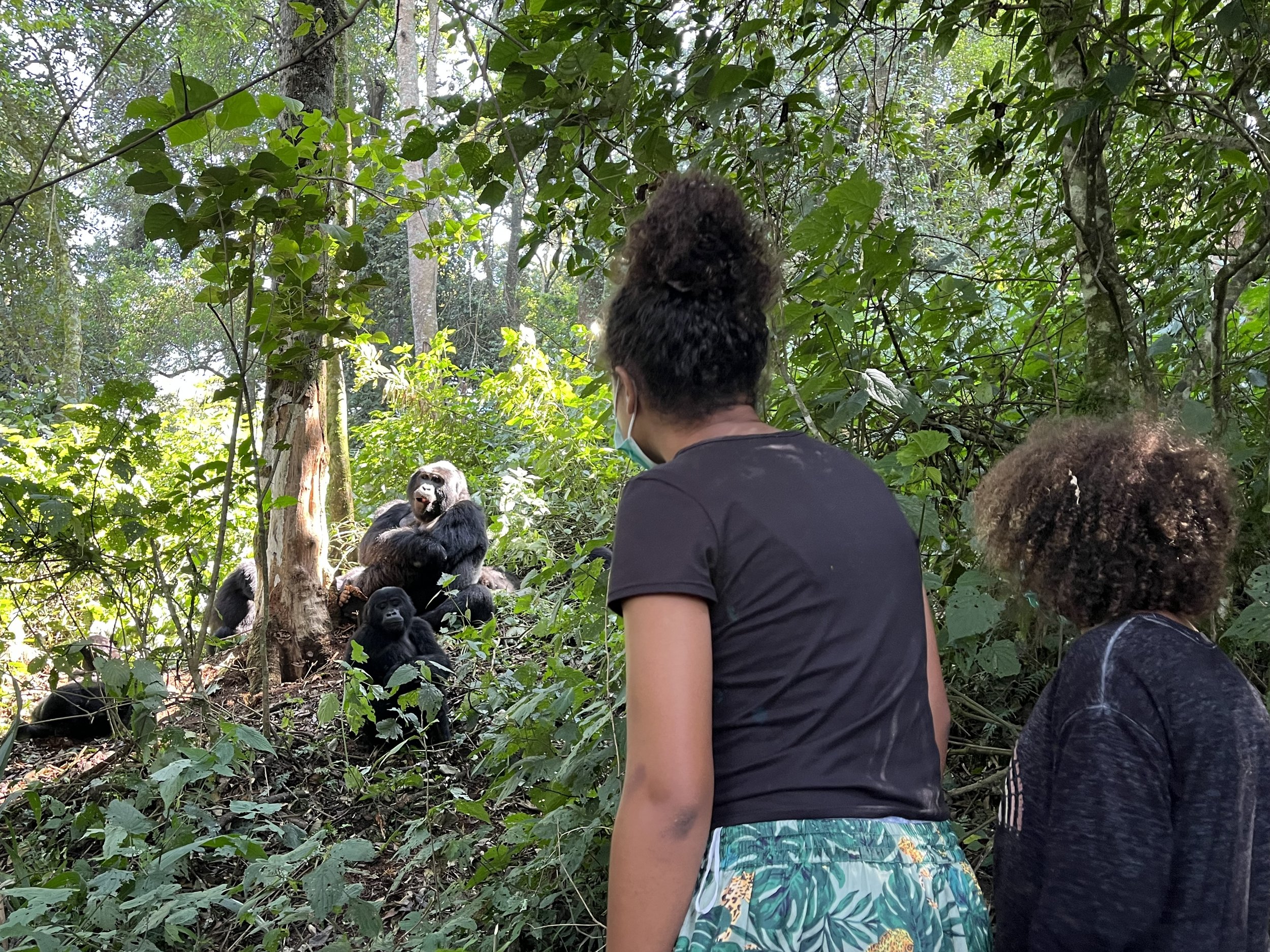
Gorilla treks begin early in the morning with a briefing at the park headquarters, where you’ll be assigned to a gorilla family and grouped with up to seven other trekkers. Trackers who have been monitoring the gorillas since dawn radio in their location, and your guide leads the group into the forest. The hike can take anywhere from one to six hours depending on where the gorillas are that day — there is no set trail, and the terrain can be steep, slippery, and densely vegetated. Porters are available (and highly recommended) to carry your bag and offer a hand on difficult sections.
Once you reach the gorilla family, you have one hour to observe them at close range. The gorillas are habituated to human presence and often go about their daily routines — feeding, playing, grooming, nursing — just feet away. It is a profoundly quiet, emotional experience. Photography is allowed (no flash), and your guide will help position you for the best views. The minimum age for gorilla trekking is 15 in both countries.
Preparing for your trek: Proper preparation makes a real difference in how much you enjoy the experience. From what to wear and pack to fitness tips and what to expect on the trail, our detailed guide covers everything you need to know. Read our complete guide on how to prepare for your gorilla trek.
The Gorilla Habituation Experience (Uganda Only)
Available exclusively in Bwindi’s Rushaga sector, the Gorilla Habituation Experience allows you to spend up to four hours with a semi-habituated gorilla family. You join researchers as they work to gradually acclimate a gorilla group to human presence — a process that takes several years. The habituation experience is deeper, longer, and more intimate than a standard trek, and is highly recommended for anyone with a strong interest in primates and conservation. Permits are $1,800 per person (effective July 2026).
Frequently Asked Questions
Is Uganda or Rwanda better for gorilla trekking?
Both offer exceptional gorilla encounters. Uganda is more affordable and offers a wilder, more immersive forest experience in Bwindi’s ancient rainforest, plus the unique Gorilla Habituation Experience. Rwanda is more convenient — closer to Kigali, shorter drive, well-organized treks. If budget is a primary consideration, Uganda is significantly less expensive. If ease of access and luxury lodging are priorities, Rwanda is hard to beat.
Can I do gorilla trekking after a Tanzania or Kenya safari?
Absolutely — and it’s one of the most popular combinations in East African travel. Flights connect the Serengeti (via Mwanza on Auric Air) and the Masai Mara (via Nairobi) to Kigali. From Kigali, both Volcanoes National Park and Bwindi’s Rushaga sector are within a few hours’ drive. We typically add 2–3 nights for gorilla trekking at the beginning or end of a safari.
How far in advance should I book gorilla permits?
We recommend booking 6–10 months in advance for peak season (June–August, December–February). Permits are limited to 8 visitors per gorilla family per day, and popular dates sell out quickly. Low season permits in Uganda (April, May, November) are generally easier to secure.
How physically demanding is the trek?
The trek involves hiking through dense forest at elevation (1,500–2,500 meters), often on steep, muddy trails with no set path. It can take 1–6 hours to reach the gorillas depending on their location. A reasonable level of fitness is recommended. Porters are available in both countries to carry your bag and assist on difficult terrain — we highly recommend hiring one.
What is the minimum age for gorilla trekking?
The minimum age is 15 in both Rwanda and Uganda. There are no exceptions to this rule.
What activities can I combine with a gorilla trek originating in Kigali?
Kigali itself offers several meaningful experiences worth building into your itinerary. A visit to the Kigali Genocide Memorial is a powerful and important stop that provides context for Rwanda’s remarkable transformation. The city’s vibrant markets — including the Kimironko Market — are worth exploring for local crafts, fabrics, and produce. Near Bwindi and Volcanoes, a Batwa cultural experience offers a fascinating encounter with the indigenous Batwa people, who were the original inhabitants of the mountain forests and share their traditional music, dance, and stories of forest life. For travelers with an extra day near Volcanoes National Park, a visit to Meza Malonga is a memorable culinary experience. Led by celebrated Congolese chef Dieuveil Malonga, the restaurant recently moved from Kigali to a Culinary Innovation Village near Musanze overlooking Rwanda’s five volcanoes. The experience begins with a boat tour on Lake Ruhondo and culminates in an intimate Afro-fusion tasting menu drawing on ingredients and techniques from across the African continent — it was named one of TIME’s World’s Greatest Places in 2025. Another popular option is the trek to Dian Fossey’s grave at the Karisoke Research Center, a moderate hike through bamboo forest to the site where the legendary primatologist is buried alongside several of the gorillas she studied.
Can I trek gorillas in both Rwanda and Uganda on the same trip?
Yes. Travelers entering Bwindi’s Rushaga sector from Kigali can easily combine gorilla trekking in both Volcanoes and Bwindi. The East Africa Tourist Visa ($100) covers Uganda, Rwanda, and Kenya, making multi-country travel straightforward. A combined itinerary typically adds 2–3 additional nights.
Start Planning Your Gorilla Trek
Whether you choose the ancient rainforests of Uganda or the volcanic slopes of Rwanda, gorilla trekking is a life-changing experience. We’ll help you choose the right destination, secure your permits, select the best lodges for your budget, and seamlessly connect your gorilla trek with a safari in Tanzania, Kenya, or Uganda. With over 20 years of experience designing custom East African itineraries, Duma Explorer is your trusted partner for this extraordinary journey.
Contact us to start planning your gorilla trekking adventure.

Silverback gorilla
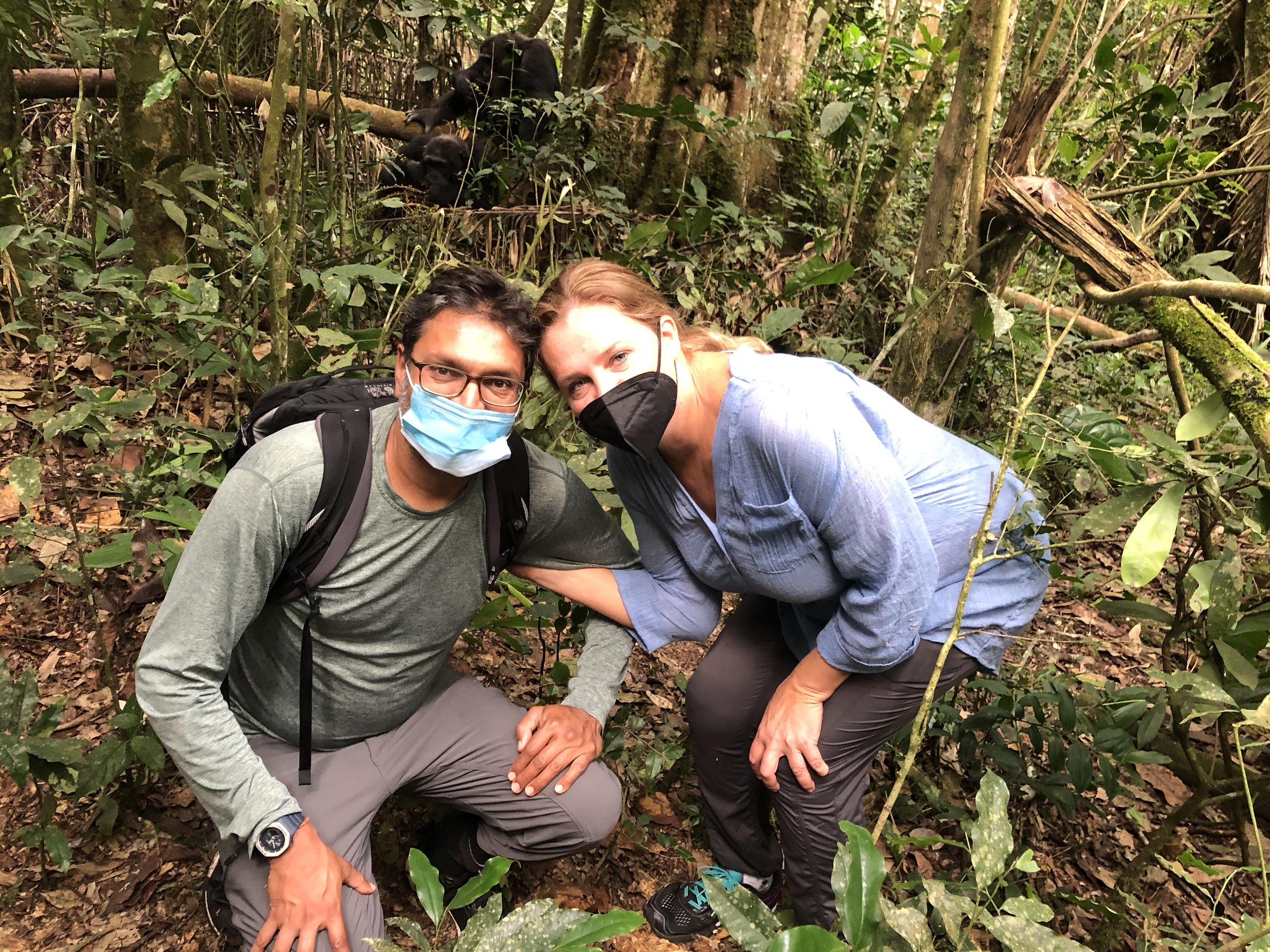
With the chimps in Kibale
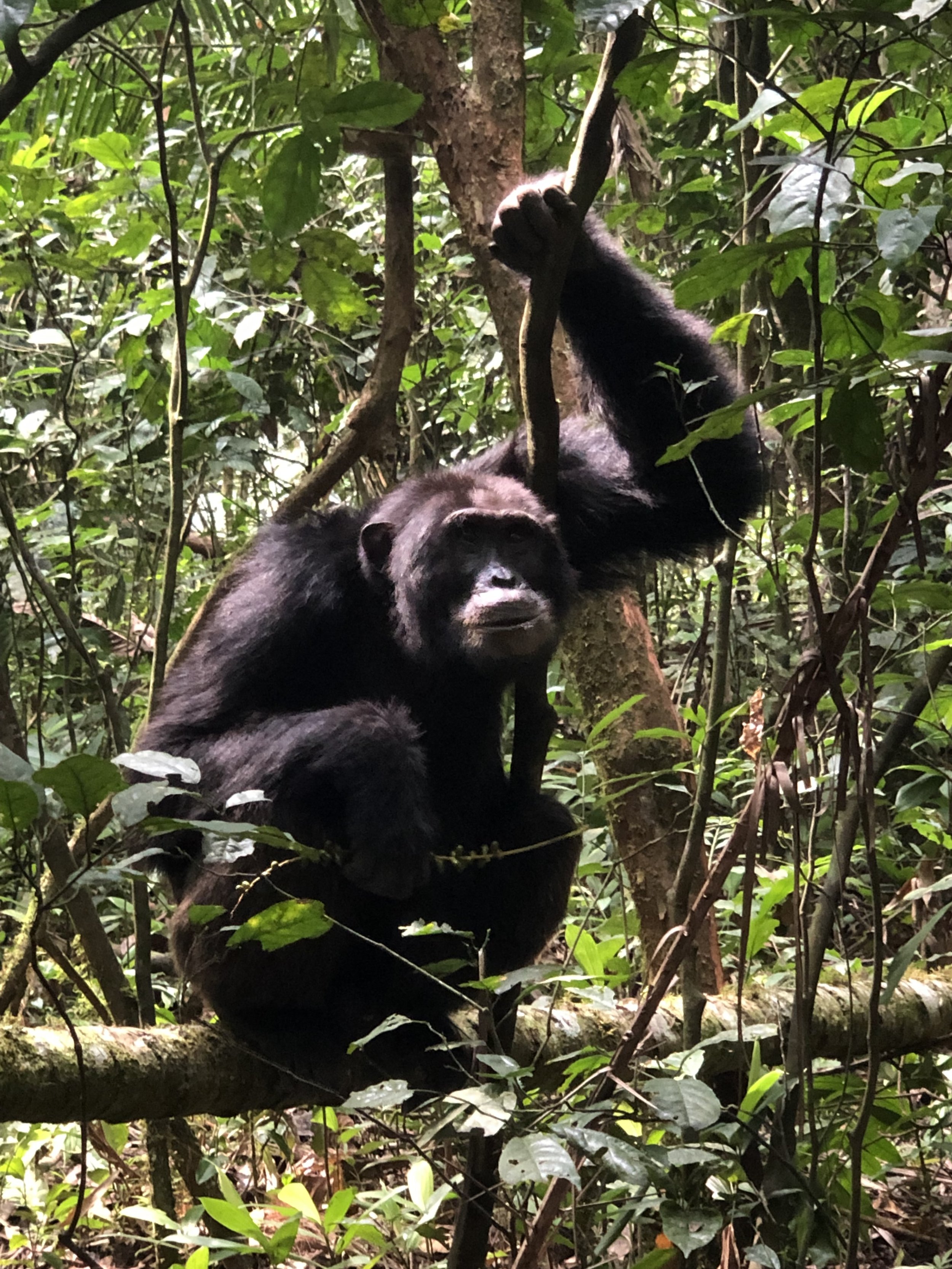
Kibale chimpanzee
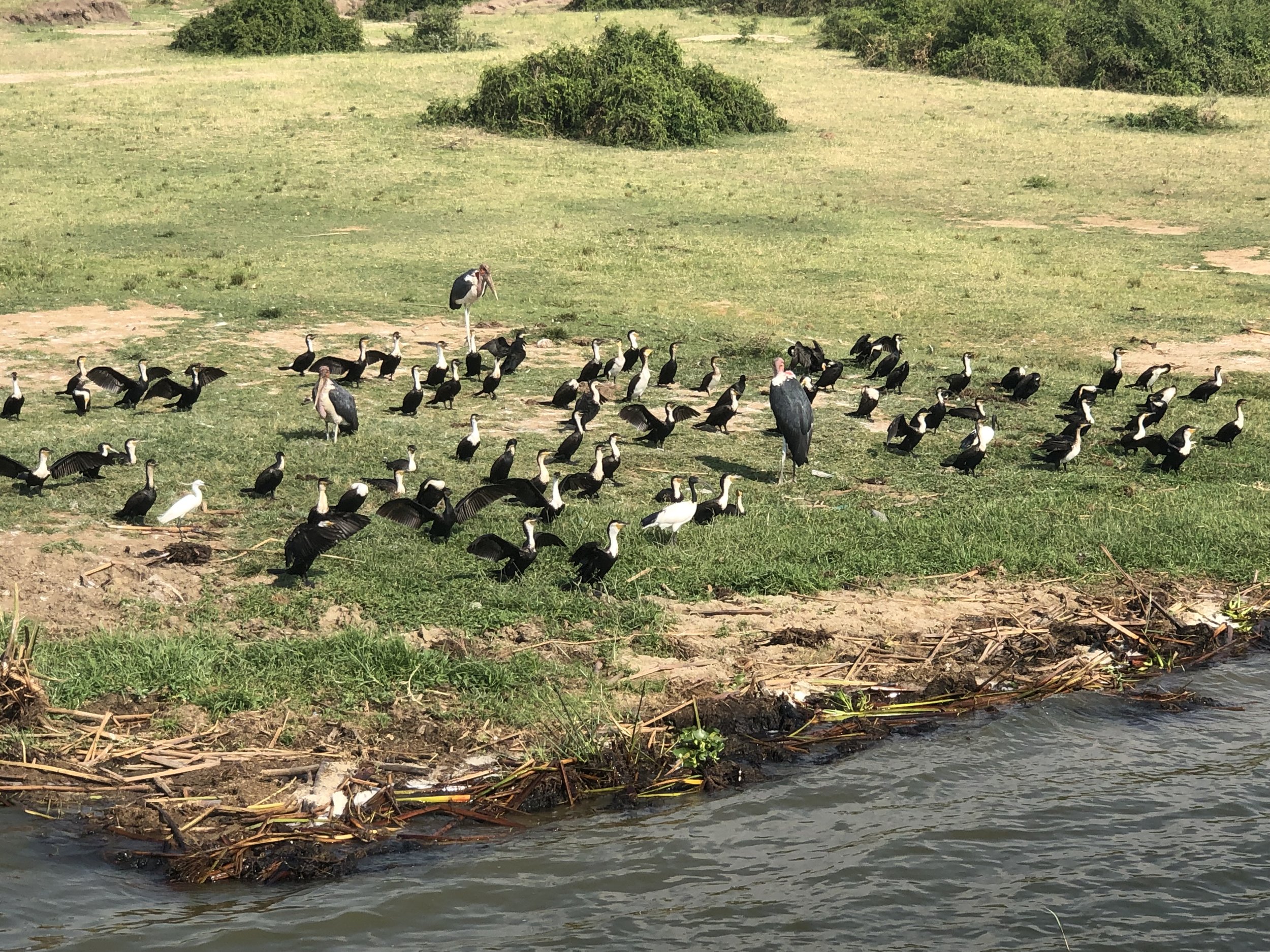
Queen Elizabeth boat safari
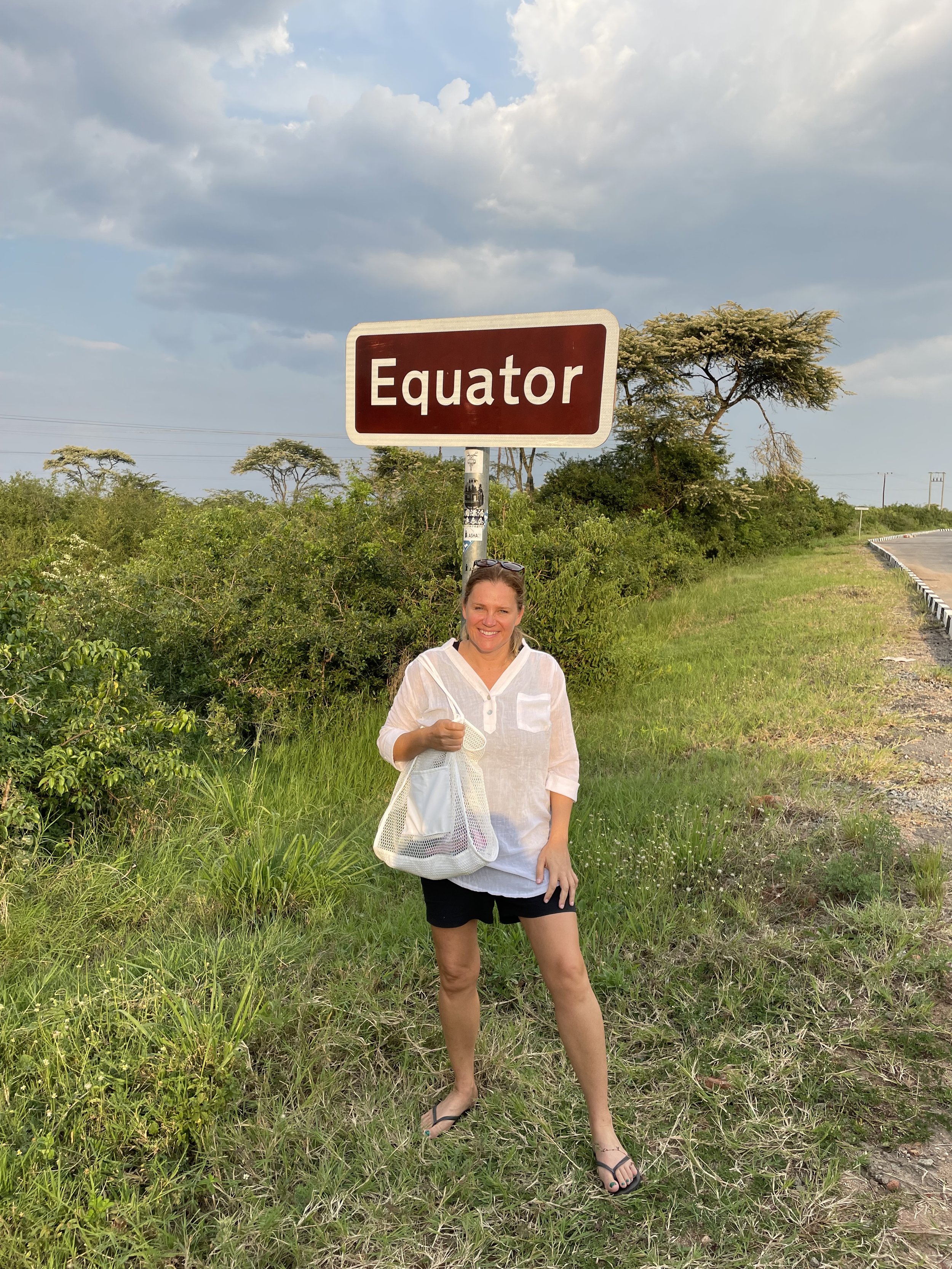
Person standing by a sign reading "Equator" with grassy surroundings and trees in the background.

A mother and infant gorilla
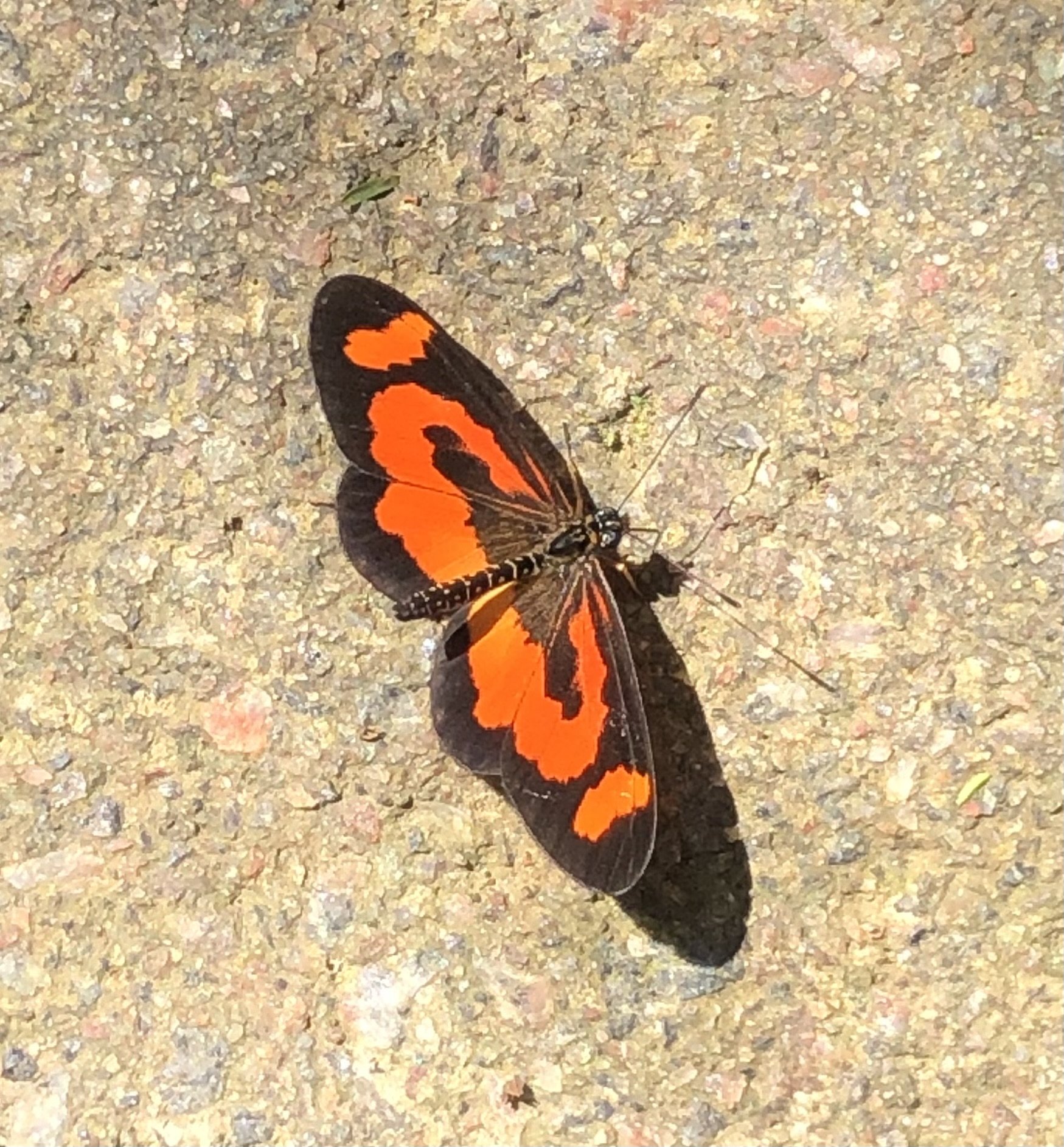
Orange and black butterfly on concrete surface
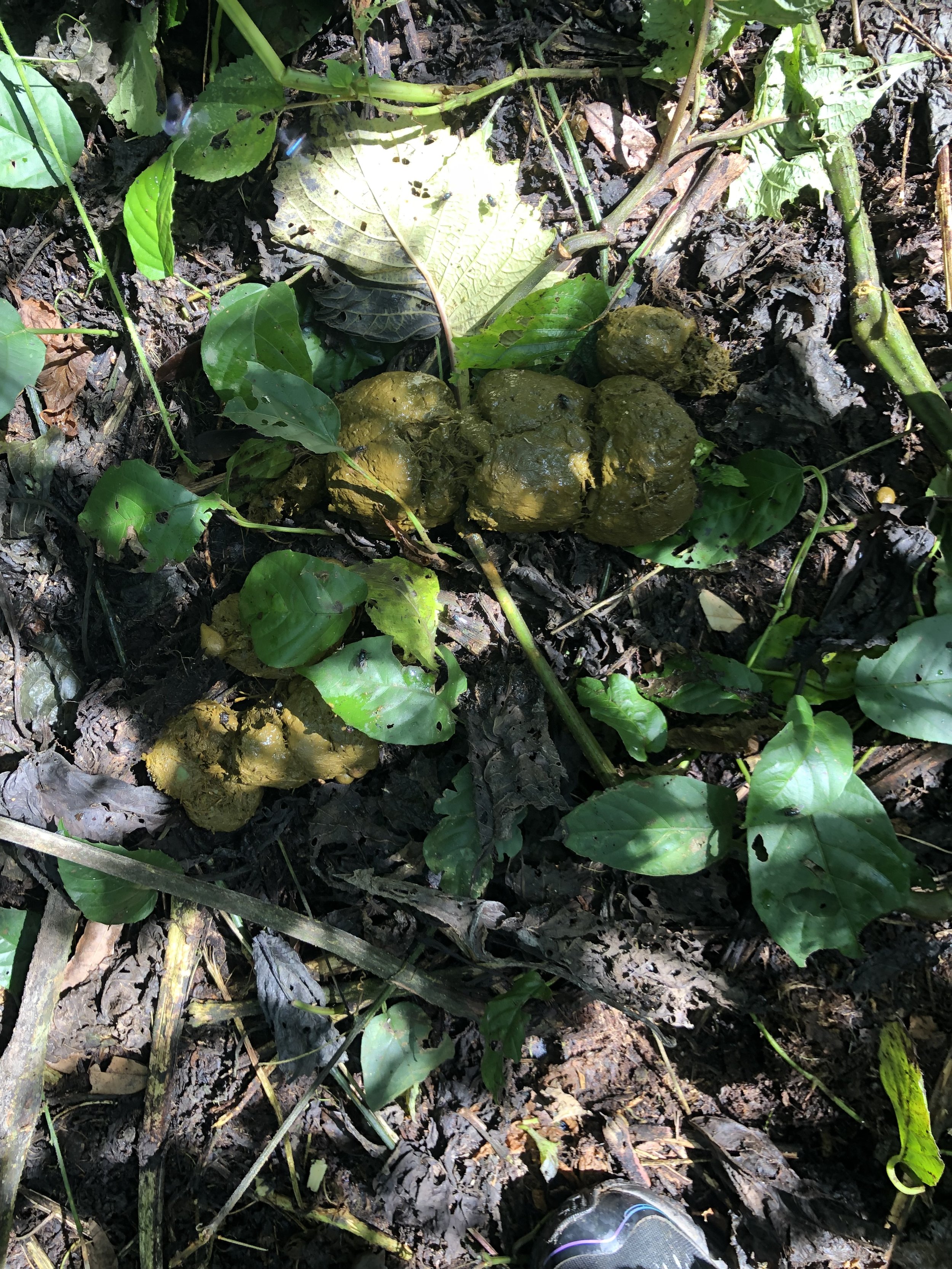
Gorilla poop!
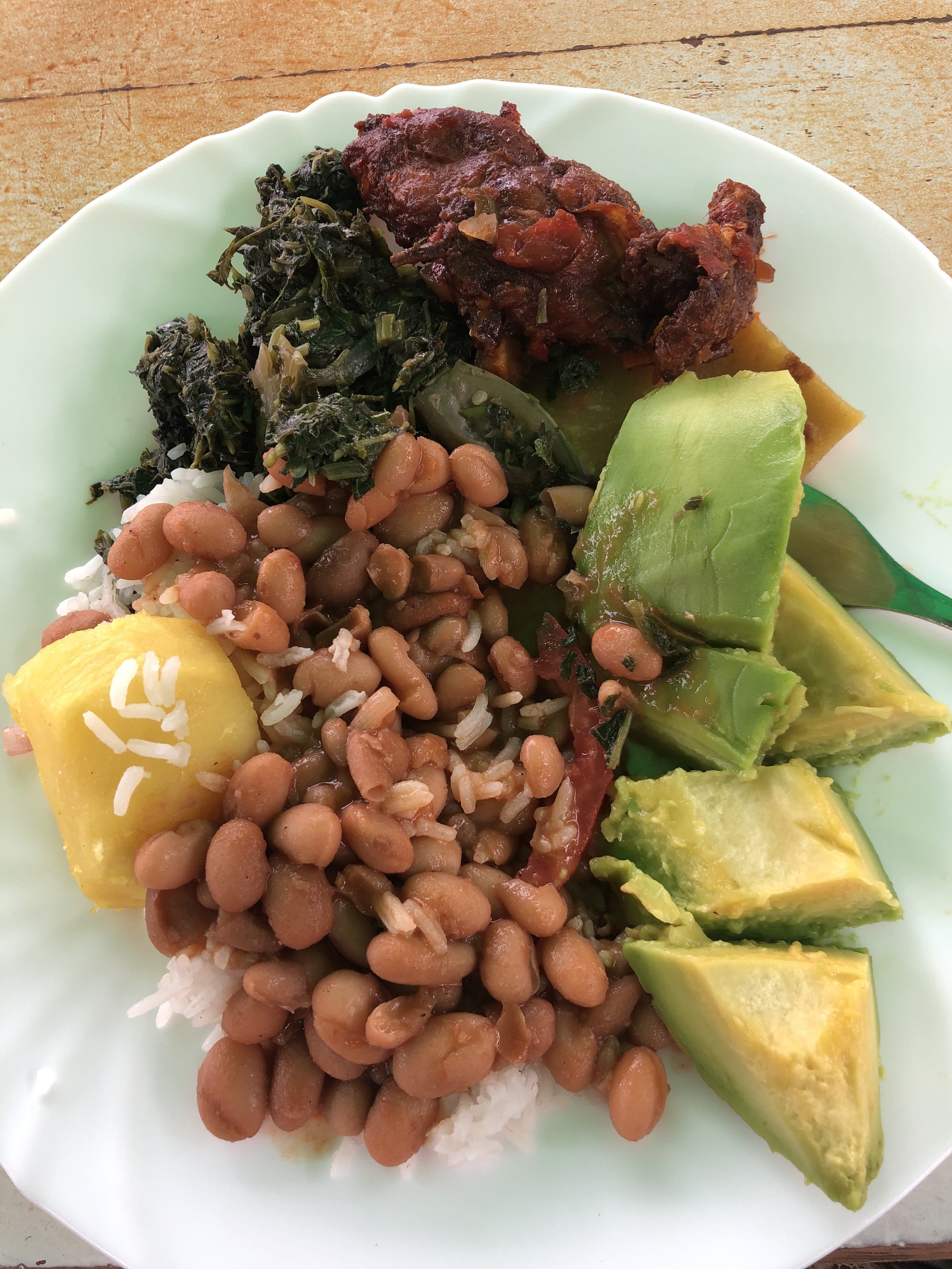
Ugandan meal
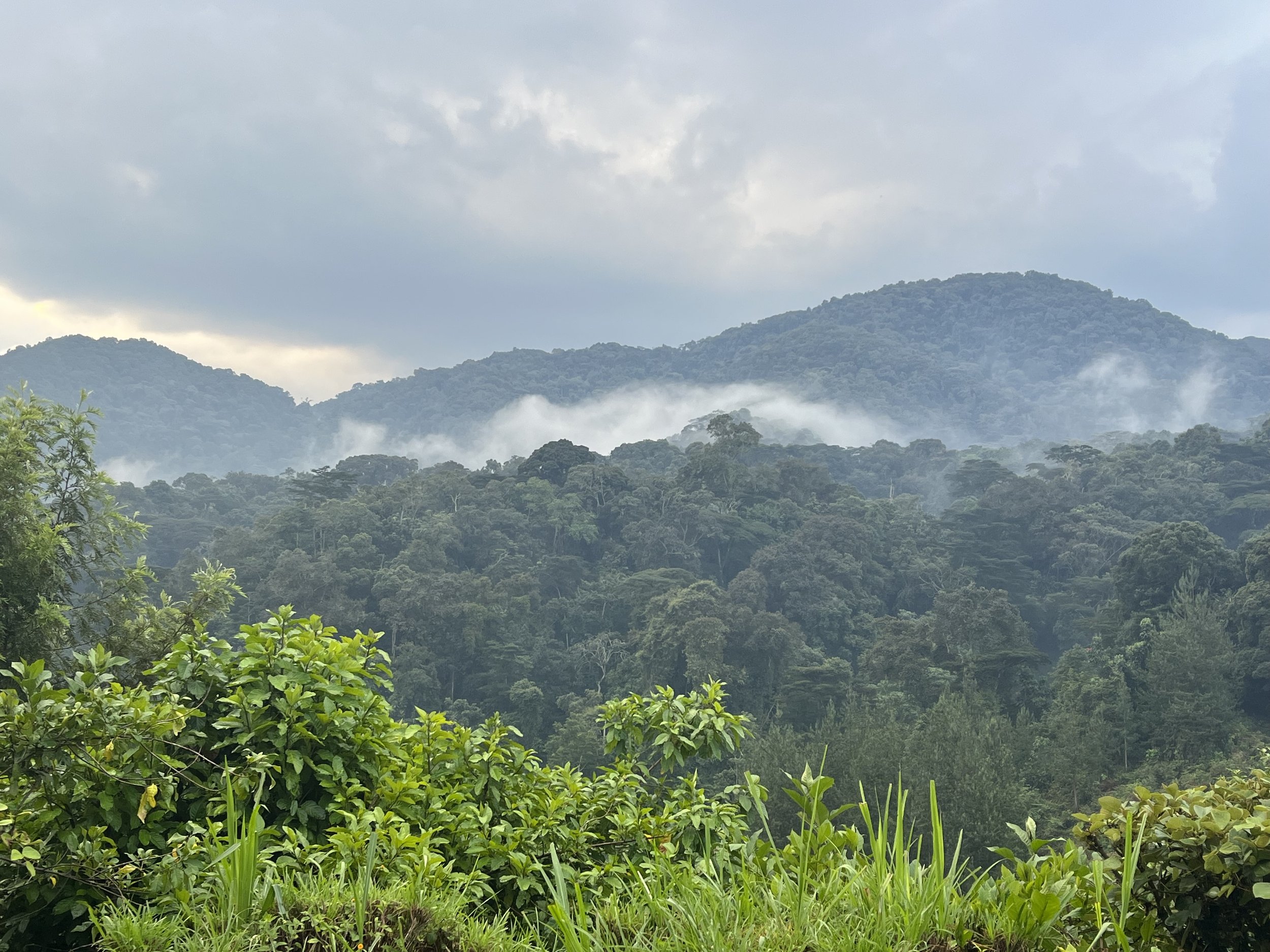
Overlooking Bwindi Impenetrable
Group of gorillas resting in a forest, surrounded by lush greenery and trees.
Giant silverback
A group of people observing gorillas in a dense forest.

Gorilla sitting in lush green forest
Purple flower among green and brown leaves
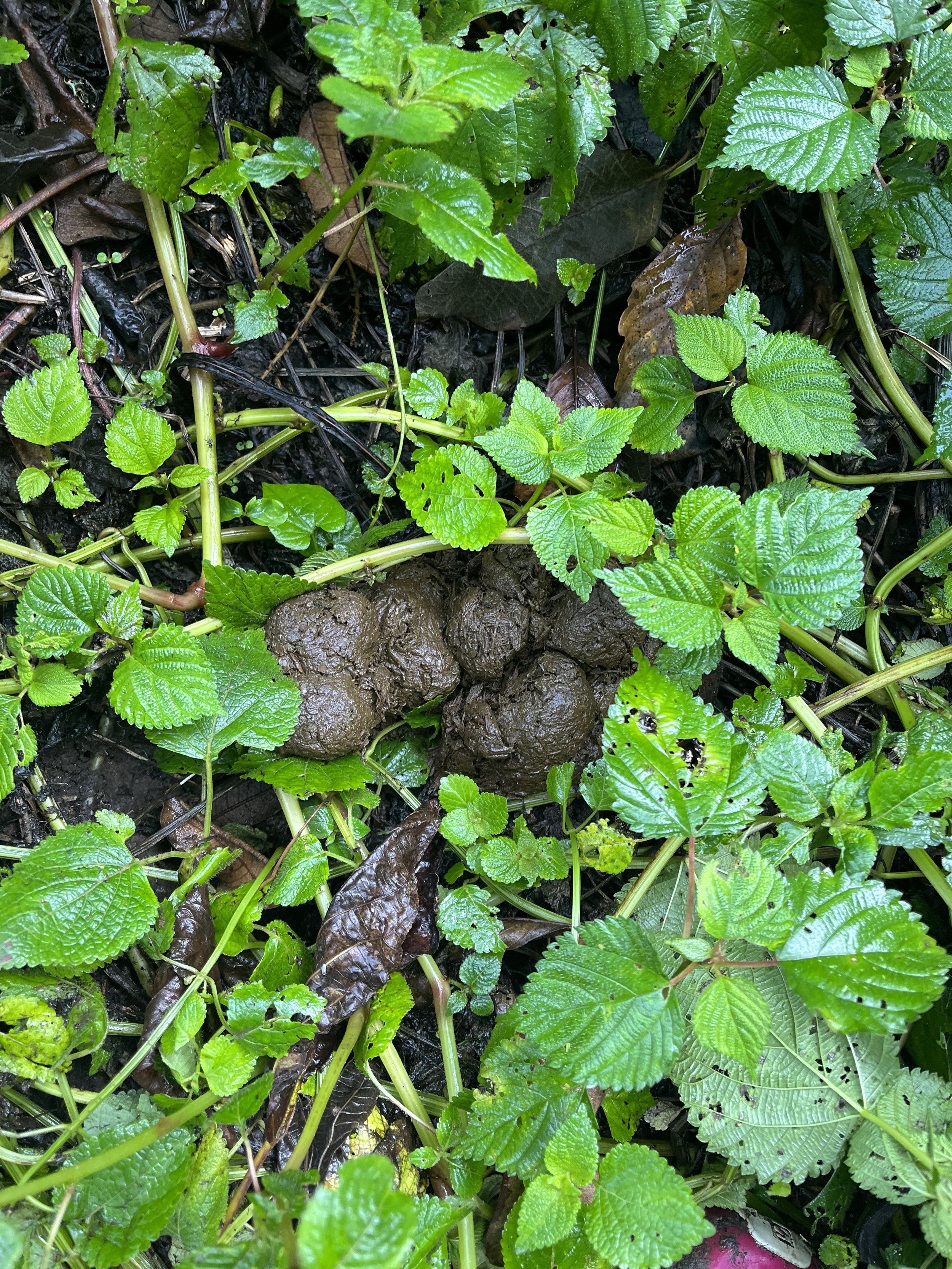
More gorilla poop!
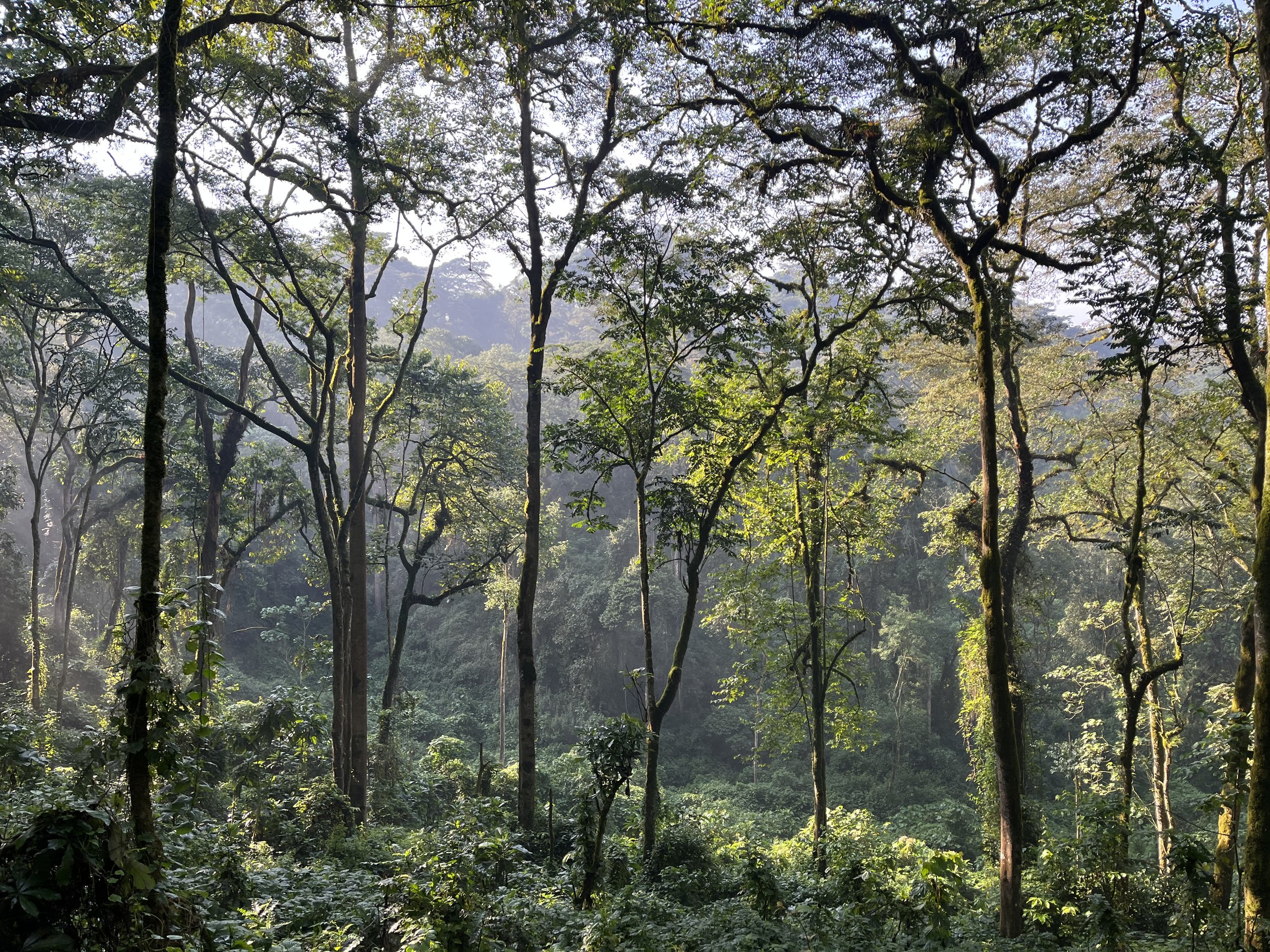
A dense tropical forest with tall trees, lush green foliage, and sunlight filtering through the canopy.

The beautiful Bwindi forest

Dense jungle with lush green foliage and towering trees
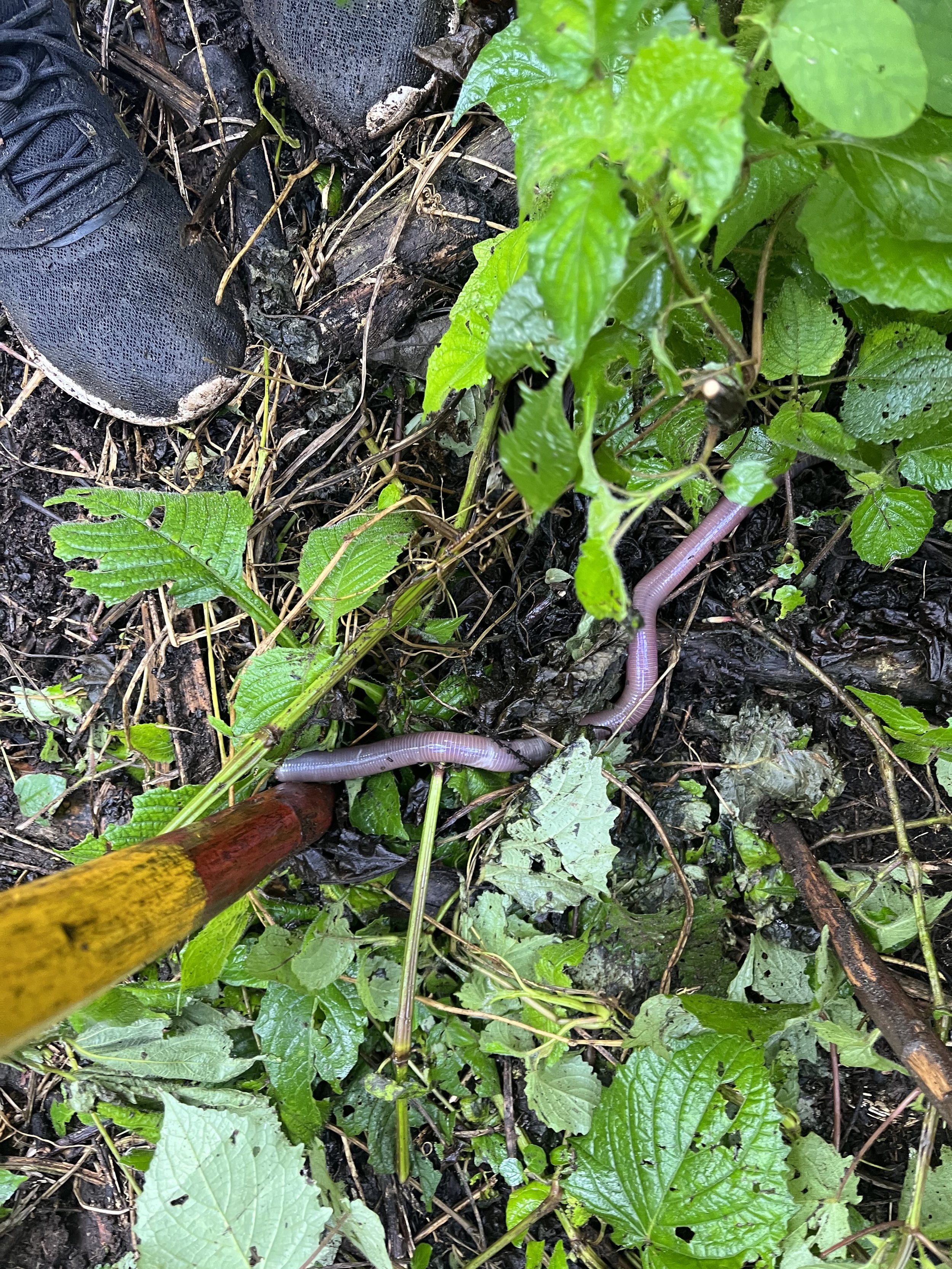
African giant earthworm - the largest segmented worm

Trekking through farmland on the way to the forest

Boat safari in Queen Elizabeth
Detailed Itinerary
-
Arrive at Entebbe Airport and transfer to your hotel. Prepare for an early flight to Kasese Airstrip near Kibale National Park.
-
Take a morning flight from Entebbe to Kasese Airstrip in Western Uganda. Meet your guide at the airstrip and drive to Kibale National Park. Have an afternoon chimp trekking experience.
It is also possible to drive from Entebbe to Kibale, but the drive takes approximately seven hours and can be quite tiring. If driving one way we highly recommend flying the other way.
-
In the morning, go on a morning walk in Bigodi Swamp. After the walk, return to the lodge for lunch. In the afternoon, go on a second chimpanzee walk. Return to your lodge for dinner and overnight. Full day habituation chimpanzee experiences are also available.
-
Continue your safari to Queen Elizabeth National Park. The highlight of Queen Elizabeth is its afternoon boat safari, which you will participate on after lunch. After the boat ride, proceed to your overnight location. See elephants, antelopes, and many bird and water species during the boat safari.
-
Depart your hotel after breakfast. Proceed to the Ishasha Wilderness for a safari game drive as you make your way to Bwindi Impenetrable National Park. Overnight inside Bwindi Forest for more upscale accommodations or near Buhoma Town for more moderately-priced options. Prepare for your morning gorilla trekking!
-
Depart your hotel at 7:30am for Bwindi’s park headquarters. Receive a detailed briefing from park rangers on the gorilla trek. You will spend up to 6 hours gorilla trekking so it is important to be prepared.
-
Depart your hotel in the morning and drive to Kihihi Airstrip. Fly from Kihihi back to Entebbe Airport. Connect to a different destination or return home.
Duma Safari & Climbing Destinations

Tanzania
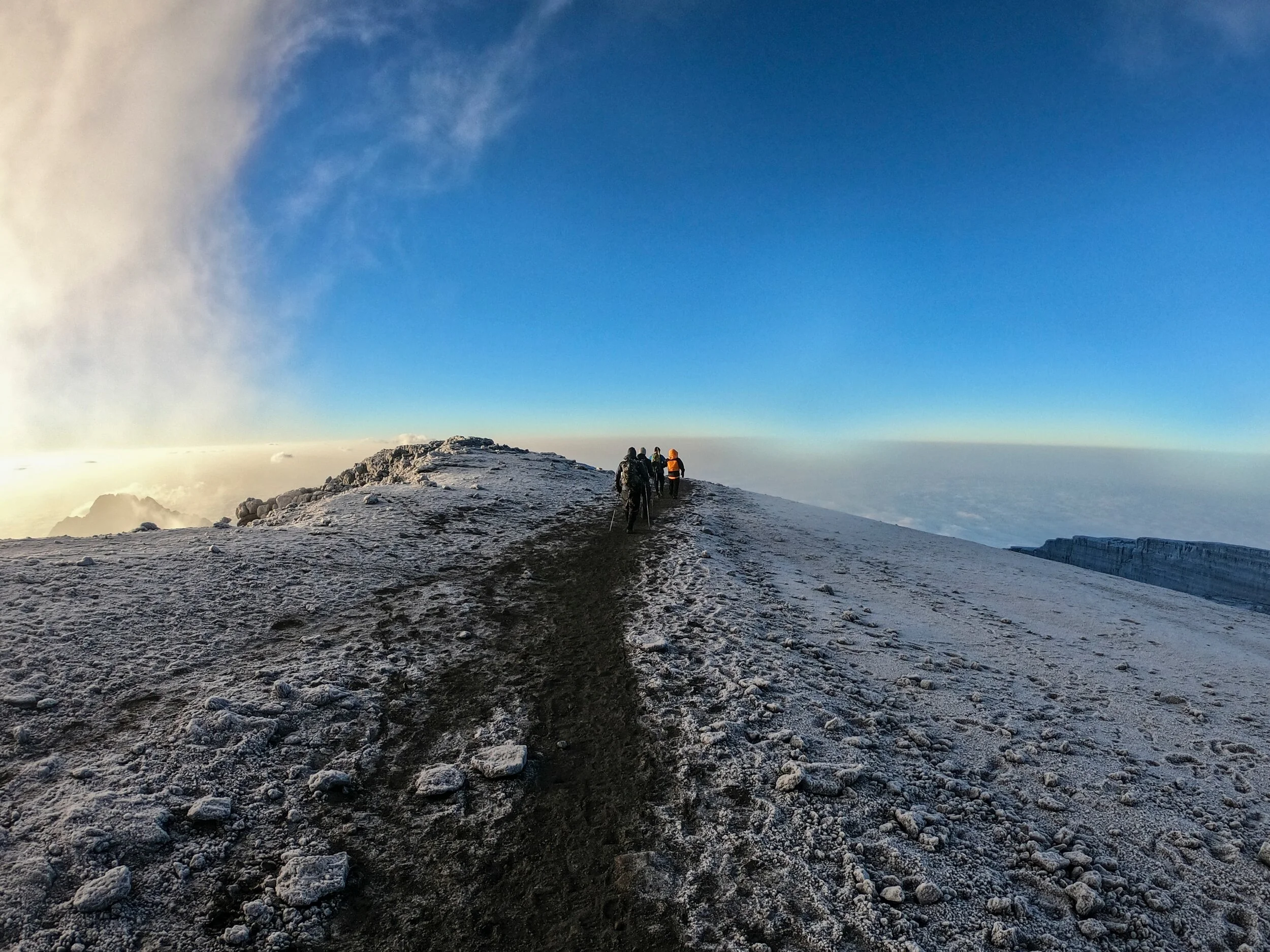
Kilimanjaro
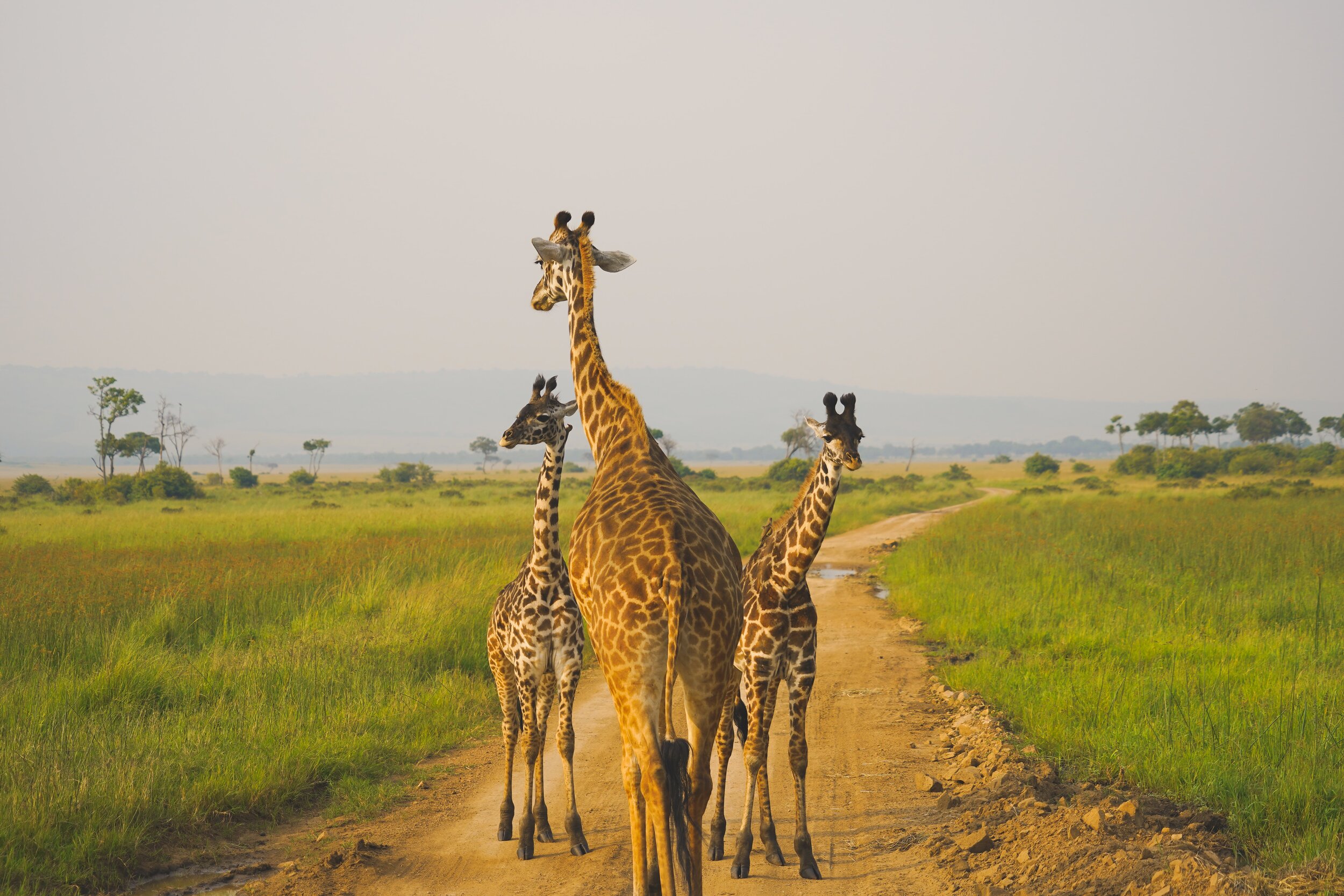
Kenya
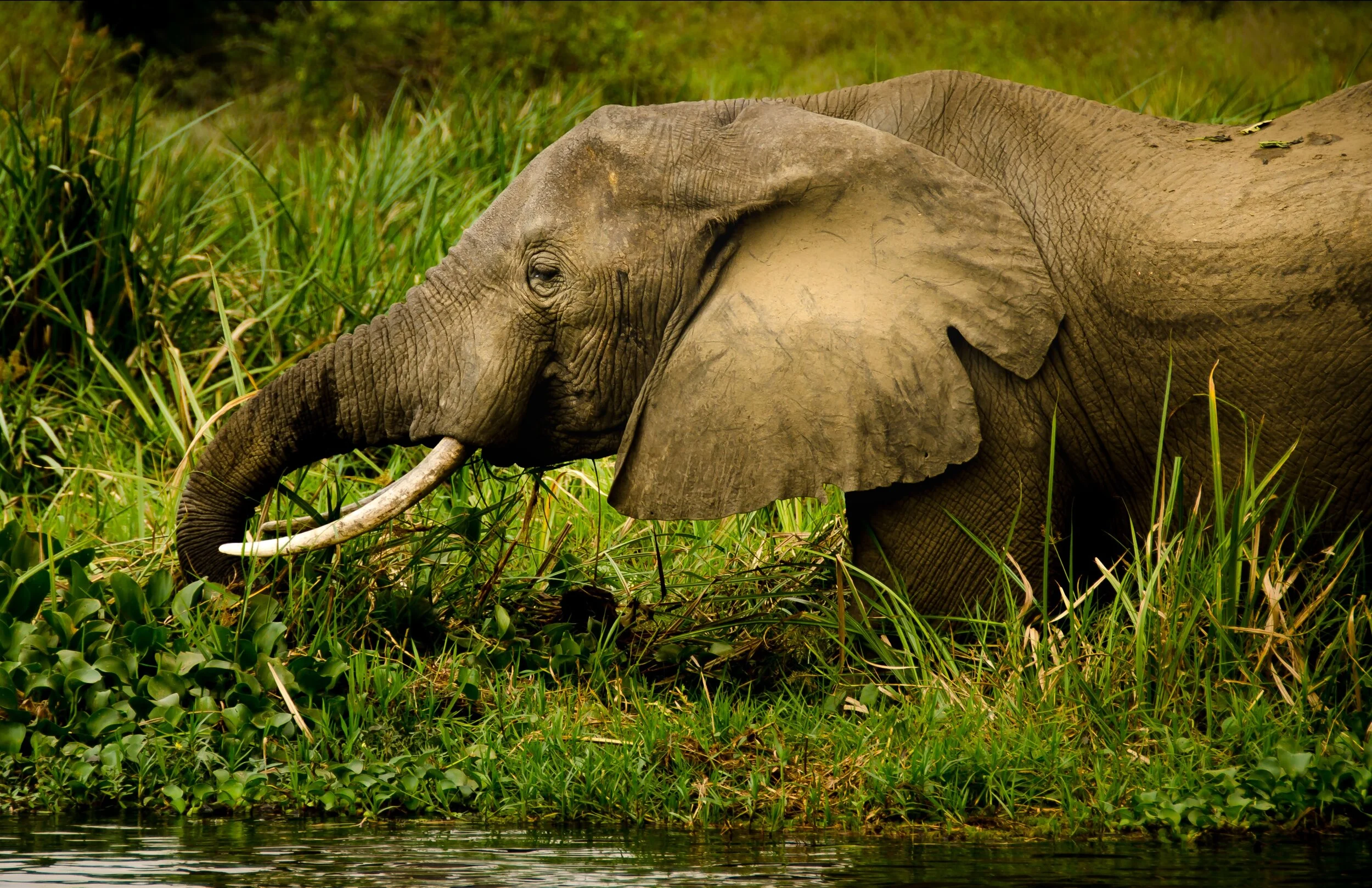
Uganda
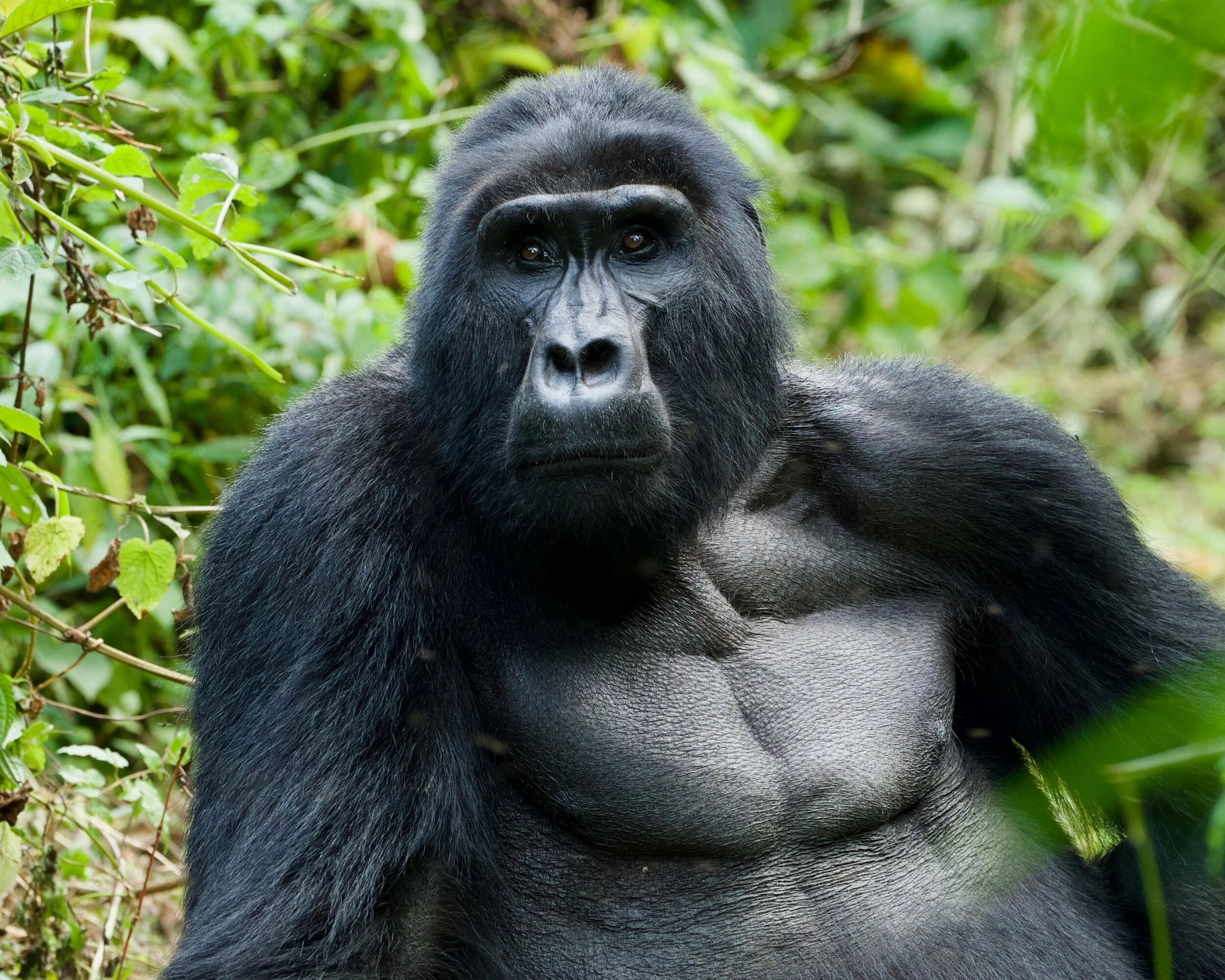
Rwanda

Swahili Coast
Duma Blog
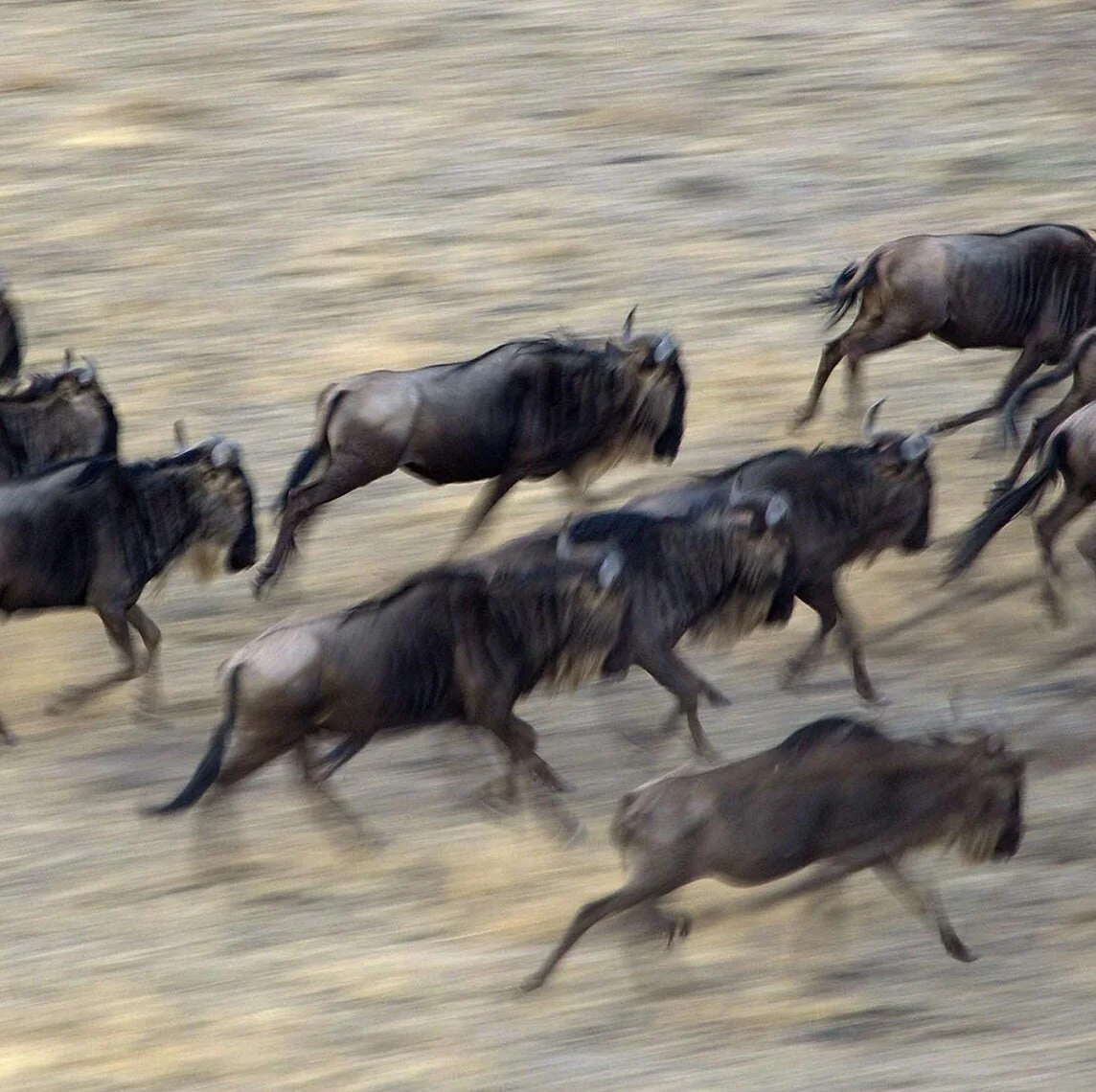
Mapping The Wildebeest Migration
The largest mammal migration in the world. Witness massive game herds and the predators that follow them.
The Great Migration is an annual event, an endless march of life, birth and death for millions of animals. It is known as one of the Seven Wonders of the Natural World. Each year, nearly two million wildebeest, zebra, and other antelope gather their young, and trek north from Tanzania's Southern Serengeti ecosystem to Kenya's Maasai Mara National Reserve. They search for greener pastures, following the rainfall. The Great Migration is a unique happening as no other migrations feature such a high number of wildlife, except perhaps butterflies and smaller birds.