The Old Fort of Zanzibar (Ngome Kongwe in Swahili) is the oldest standing building in Stone Town, and in 2026 it is closed for a major renovation. Built by Omani Arabs between 1698 and 1701, it has served as a fortress, a prison, a railway terminus, a ladies' tennis club and, since the 1990s, Zanzibar's best-loved cultural venue. Below we cover its history, the festivals it hosts, why it matters, and what the current renovation means for travelers planning a Zanzibar trip.
What is the history of the Old Fort in Zanzibar?
The Old Fort was built by Busaidi Omani Arabs in 1698–1701 on the site of a Portuguese church, and pieces of that church are still visible in the courtyard walls. The Omanis had just driven the Portuguese out of Zanzibar, and the fort was meant to defend the island against them and against a rival Omani group. Over the next three centuries the building changed roles many times.
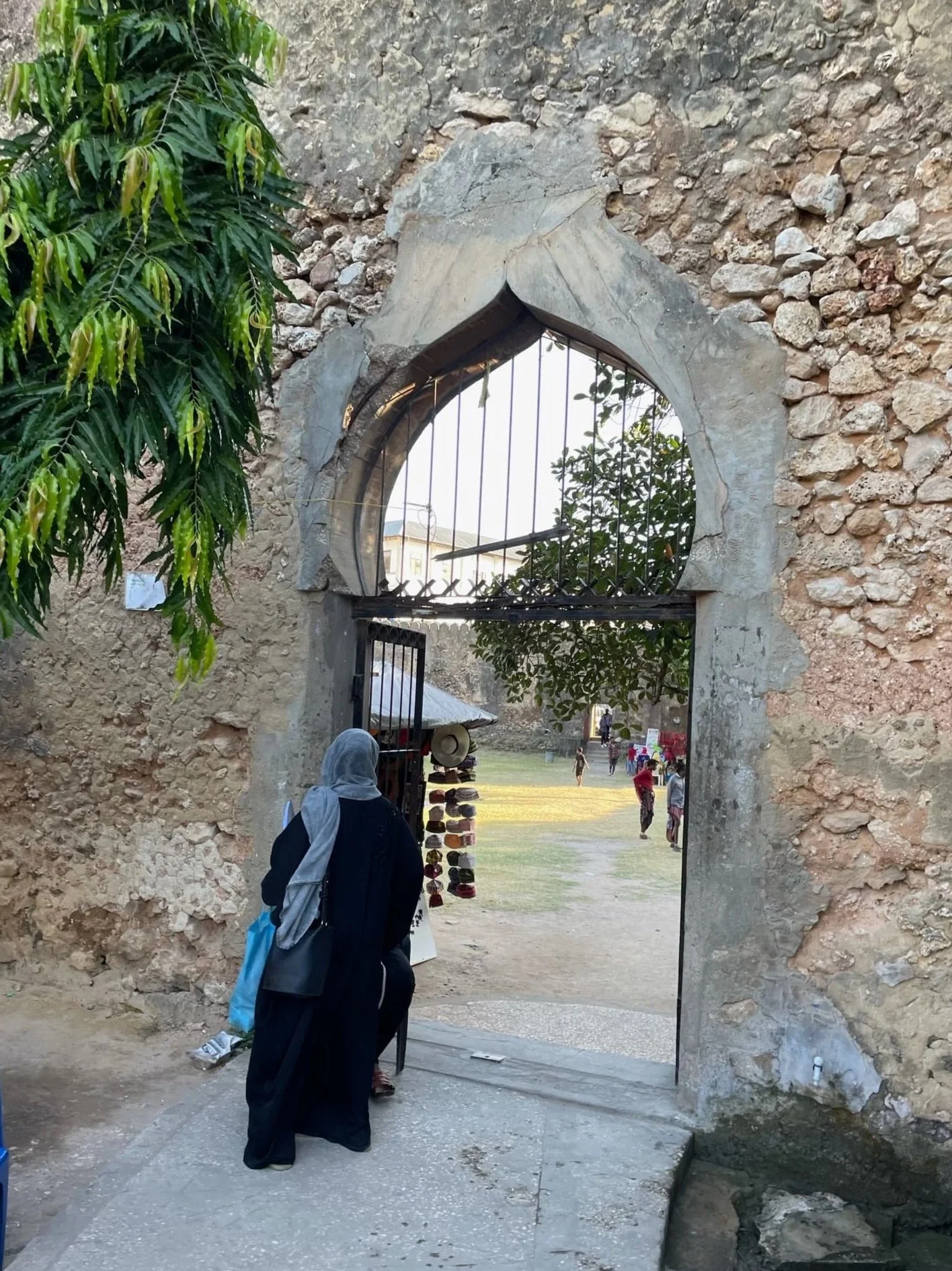
The image shows the Old Fort’s courtyard entrance gate before the 2026 renovation.
| Year | What happened at the Old Fort |
|---|---|
| 1598 | Portuguese build a large church on the site |
| 1698–1701 | Omani Arabs build the fort around the Portuguese church |
| 1800s–early 1900s | Used as a prison under late Omani rule and the British protectorate (from 1890) |
| 1905–c.1930 | Terminus of the Zanzibar railway line to Bububu |
| 1946–1948 | Sea-facing entrance rebuilt; courtyard used as a ladies' tennis club, gatehouse designed as the Ladies Club headquarters |
| After 1964 | Fell into disuse and disrepair following the Zanzibar Revolution |
| 1990s | Open-air amphitheater added (1994) and major restoration (1997); reopened as a cultural center |
| 2026 | Closed in January for renovation under a $12 million heritage restoration agreement |
Sources disagree slightly on a few dates, such as when the railway closed (1928 or 1930) and when the ladies' club started (1946 or 1948).
What events are held at the Old Fort?
The Old Fort's open-air amphitheater is the main stage for Zanzibar's two biggest cultural festivals, along with smaller performances throughout the year.
Sauti za Busara (February): one of East Africa's best-known music festivals, bringing hundreds of African artists to the fort over several nights.
Zanzibar International Film Festival (ZIFF, mid-year, usually June or July): running since 1997, with evening screenings in the amphitheater under the stars.
Taarab and traditional dance: evening taarab music, Zanzibar's blend of Swahili, Arab and Indian sound, plus dance performances on some afternoons.
Crafts and food: before the renovation, the courtyard held craft stalls, small shops and a café, and entry to the courtyard was free.
Why is the Old Fort historically significant?
The Old Fort marks the moment Zanzibar's power shifted from Portugal to Oman, which set the island on course to become the capital of an Omani sultanate and a hub of Indian Ocean trade. Its walls hold layers of that story: Portuguese church remains, Omani battlements, colonial-era additions and a modern amphitheater.
The oldest building in Stone Town: it predates the House of Wonders, the Sultan's Palace and most of the old town's coral-stone houses.
Part of a World Heritage Site: Stone Town was inscribed on the UNESCO World Heritage List in 2000 as an outstanding example of a Swahili trading town, and the fort is one of its anchor landmarks.
A living cultural space: unlike many historic forts, it is still used, hosting the festivals, music and crafts that keep Zanzibari culture visible to locals and visitors alike.
Is the Old Fort in Zanzibar open? Renovation and reopening
The Old Fort closed for refurbishment in early January 2026. As of mid-2026 it was still under renovation, and no official reopening date had been announced. The work is being carried out by Infinity Developments in partnership with the Revolutionary Government of Zanzibar.
The 2026 heritage agreement. In February 2026, the government and Infinity Developments of Dubai signed a $12 million public-private agreement to restore the Old Fort, the High Court Museum, and several historic bathhouses, including the Hamamni Persian Baths. The deal covers conservation, infrastructure upgrades, better visitor facilities and new cultural programming.
What the new Old Fort will include. Earlier plans announced in late 2024 describe a refreshed cultural and tourism hub with:
landscaped gardens with native plants and water features
revamped museum spaces with better lighting and interactive displays
an upgraded courtyard and auditorium for concerts, conferences and art fairs
more food and drink stalls, plus retail space for local crafts
a tourist information center and ticket booth
Shopkeepers who previously worked inside the fort are to be relocated to a new area nearby. The plan to transform the fort has also drawn public debate in Zanzibar, and officials have offered assurances about its future.
What this means for travelers. Until the fort reopens, you can still see its walls from outside and enjoy the nearby Forodhani Gardens and waterfront. If seeing the fort or a festival there matters to you, ask your safari planner to confirm its status close to your travel dates.
Visiting the Old Fort on a Tanzania safari and Zanzibar trip
Stone Town is an easy add-on after a Serengeti or Ngorongoro safari, with short flights from Arusha and the parks to Zanzibar. Plan at least half a day in Stone Town to see the Old Fort area, the House of Wonders, Forodhani Gardens and the old town's carved doors. If you want to catch Sauti za Busara in February or ZIFF mid-year, book early, since Stone Town hotels fill quickly during festivals.
Frequently asked questions
Is the Old Fort in Zanzibar open in 2026? No. It closed for renovation in January 2026, and no reopening date had been announced as of mid-2026.
Who is renovating the Old Fort? Infinity Developments, under a public-private partnership with the Revolutionary Government of Zanzibar. A $12 million agreement signed in February 2026 covers the fort and several other heritage sites.
When was the Old Fort built? Between 1698 and 1701, by Omani Arabs, on the site of a Portuguese church built in 1598.
What is the Old Fort called in Swahili? Ngome Kongwe, meaning "old fort."
What festivals take place at the Old Fort? Sauti za Busara music festival (February) and the Zanzibar International Film Festival (mid-year), plus taarab music and dance performances.
Is the Old Fort a UNESCO World Heritage Site? It is part of the Stone Town of Zanzibar World Heritage Site, inscribed in 2000.