Kilimanjaro Success Rate 2026: By Route, Days & Tips
TL;DR
The overall Kilimanjaro success rate sits between 65% and 80% across all routes and operators, but that average hides enormous variation. Climbers on 5-day routes summit as little as 27% of the time, while those on 8 or 9-day itineraries reach Uhuru Peak at rates above 90%. The single biggest factor in your control is how many days you spend on the mountain. Altitude sickness, not fitness, is the primary reason people fail.
Comparing routes to find the right fit? Check out our Kilimanjaro route comparison for a side-by-side breakdown.
Quick Answer: What Is the Kilimanjaro Success Rate? The Kilimanjaro success rate ranges from roughly 65% to 80% overall, but your actual odds depend heavily on route choice and itinerary length. Climbers on 5-day routes may summit only 27% to 35% of the time, while 8 or 9-day routes like the Northern Circuit and Lemosho often exceed 90% success rates. The biggest factor affecting summit success is acclimatization time, not fitness level. Routes with gradual ascents and “climb high, sleep low” profiles dramatically improve outcomes by reducing altitude sickness risk. For the best chance of reaching Uhuru Peak: - Choose a 7-day minimum itinerary (8 days preferred) - Select a reputable operator with certified guides - Walk slowly (“pole pole”) - Prioritize acclimatization over speed - Train for endurance, not athletic performance alone
What “Kilimanjaro Success Rate” Actually Means
The Kilimanjaro success rate is the percentage of registered climbers who reach Uhuru Peak, the true summit at 5,895 meters (19,341 feet). That distinction matters more than most people realize.
Kilimanjaro has three recognized summit points. Gilman’s Point sits at 5,681 meters on the crater rim, and Stella Point is at 5,756 meters. Both earn you a certificate, but neither is the top. Uhuru Peak is still another 45 minutes to an hour beyond Stella Point, and that final stretch, at extreme altitude while exhausted, is where many climbers turn around.
Some operators count Stella Point arrivals as “summits” in their statistics. This inflates their numbers. When evaluating any success rate claim, the first question to ask is: does this mean Uhuru Peak, or just the crater rim?
Success means signing the register book at Uhuru Peak. Anything else is a partial summit.
The Overall Number, and Why It’s Misleading
The only official statistic comes from the Kilimanjaro National Park Authority (KINAPA), published in 2006. It reported an average summit success rate of 45% across all routes. That figure is nearly 20 years old, and KINAPA has not released updated data since.
Modern estimates from operators and industry observers put the overall Kilimanjaro success rate between 65% and 80%. Roughly 35,000 people attempt the climb each year, with an estimated 25,000 to 30,000 reaching the top.
But here’s the problem with averages: they blend 5-day budget Marangu climbs (where success rates can drop to 27%) with 9-day Northern Circuit itineraries (where rates exceed 90%). Quoting a single number for the whole mountain is like quoting a single average temperature for the entire year. It tells you almost nothing about what you’ll actually experience.
Your individual odds depend on choices you haven’t made yet: which route, how many days, which operator, and how you prepare. The overall statistic is a starting point, not a prediction.
Success Rate by Route and Duration
Duration is the single strongest predictor of whether you’ll summit. Each additional day above five adds roughly 8 to 10 percentage points to your odds, because your body needs time to produce more red blood cells and adapt to thinner air.
Here’s how the routes compare:
|
Route |
Typical Duration |
Estimated Success Rate |
|---|---|---|
|
Northern Circuit |
8-9 days |
90-95% |
|
Lemosho |
8 days |
~90% |
|
Lemosho |
7 days |
~85% |
|
Machame |
7 days |
85%+ |
|
Machame |
6 days |
~73% |
|
Rongai |
7 days |
~80% |
|
Rongai |
6 days |
~70% |
|
Marangu |
6 days |
50-65% |
|
Marangu |
5 days |
~30% |
|
Umbwe |
6-7 days |
60-70% |
Several patterns stand out. The Lemosho route and Northern Circuit dominate the top of the table because they offer long approaches with excellent “climb high, sleep low” profiles. That acclimatization principle, hiking to a higher elevation during the day and then descending to sleep, is the mechanism behind the numbers. Routes that build this into their itinerary give your body repeated altitude exposure without the stress of sleeping at the highest point you reached.
The Rongai route approaches from the north and offers a steadier, more gradual ascent. The Umbwe route is the steepest and most direct, which explains its lower success rate even at 6 to 7 days.
Marangu’s reputation as the “easiest” route is misleading. It’s the only route with hut accommodation, which makes it feel more comfortable. But its acclimatization profile is poor, especially at 5 days, and the success rate reflects that reality.
Kilimanjaro Success Rate by Route (2026 Comparison)
|
Route |
Days |
Estimated Summit Success Rate |
Difficulty |
Best For |
|---|---|---|---|---|
|
Northern Circuit |
8–9 |
90–95% |
Moderate |
Highest summit odds |
|
Lemosho |
8 |
~90% |
Moderate |
Best overall balance |
|
Lemosho |
7 |
~85% |
Moderate |
Strong acclimatization |
|
Machame |
7 |
85%+ |
Moderate-Challenging |
Experienced hikers |
|
Machame |
6 |
~73% |
Challenging |
Faster itineraries |
|
Rongai |
7 |
~80% |
Moderate |
Quieter route |
|
Rongai |
6 |
~70% |
Moderate |
Dry-season climbs |
|
Marangu |
6 |
50–65% |
Moderate |
Hut accommodation |
|
Marangu |
5 |
~30% |
Challenging due to altitude |
Budget climbers |
|
Umbwe |
6–7 |
60–70% |
Difficult |
Experienced trekkers |
What Drives Success (and Failure)
Altitude Sickness Is the Primary Adversary
Acute Mountain Sickness (AMS) is the number one reason people fail on Kilimanjaro. Not poor fitness. Not bad weather. The air at Uhuru Peak contains roughly 50% less oxygen than at sea level, and no amount of training can fully prepare your body for that deficit.
Practitioners on forums and blogs consistently emphasize this point. One experienced guide with over 45 Kilimanjaro summits has said that “the right acclimatization strategy, not raw fitness, is what separates successful climbers from those forced to turn back.” His first personal climb was a 5-day route where only 3 of 8 climbers summited. He now runs exclusively 8-day or longer itineraries.
Excessive fitness can actually be a problem. Ultra-marathoners and competitive athletes often climb too fast, confident in their cardiovascular capacity. But altitude doesn’t care about your VO2 max. Physiological adaptation takes time regardless of how strong your heart and lungs are.
Route Duration
This is the factor you have the most control over, and it has the largest impact on your Kilimanjaro summit success rate. Going from a 5-day itinerary to an 8-day one can nearly double your odds. It’s the single most important decision in the planning process.
Operator Quality
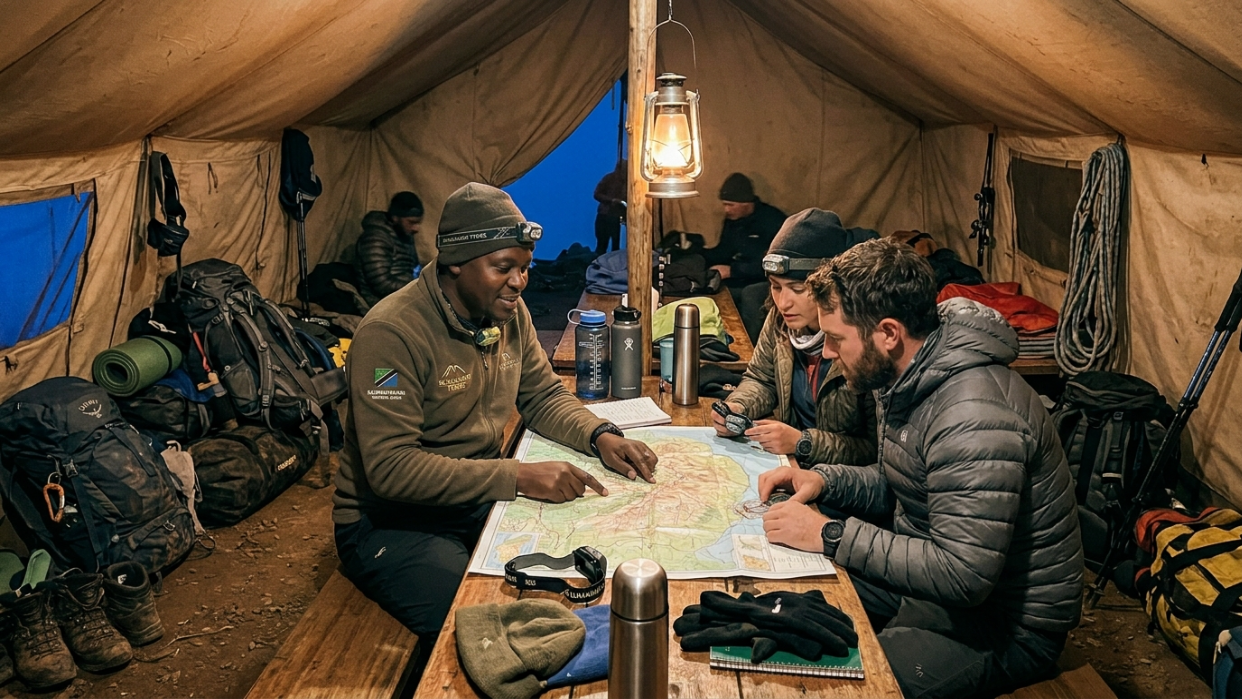
The gap between budget and premium operators is enormous. Budget operators (those cutting corners on guides, food, and safety equipment) see success rates in the 50 to 70% range. Reputable operators with professional guides and proper itineraries report 85 to 95%.
Premium operators increasingly use twice-daily pulse oximetry readings to track oxygen saturation trends. As one mountain safety expert explained, “Most budget operators wait for you to say you feel sick. By then, it’s often too late.” Monitoring the trend line of a climber’s oxygen levels lets experienced guides adjust pace or hydration on day three, before symptoms become dangerous.
Other differentiators include Wilderness First Responder (WFR) certified guides, proper nutrition at altitude, and adequate porter-to-climber ratios. Porter welfare matters too: well-treated, well-equipped porters move camp efficiently, which means your tent is ready and your food is hot when you arrive exhausted. It all connects.
Understanding key training and preparation terms before your climb helps you make sense of what operators are actually offering.
Physical and Mental Preparation
While fitness isn’t the primary factor, being unprepared physically makes everything harder. Twelve or more weeks of training with hiking, cardio, and weighted pack work builds the endurance you need for summit night, which typically starts around 1 AM and lasts 10 to 14 hours in sub-zero temperatures.
The mental toll of summit night is universally underestimated. Blog accounts from climbers describe the psychological grind of walking slowly in the dark, at altitude, in extreme cold, for hours on end. One travel writer noted she “probably would have come down on a stretcher” if not for her guide’s intervention. Having the right gear and layering system matters here: if you’re freezing and miserable, the mental game gets much harder.
Season and Weather
Kilimanjaro has two main climbing seasons: January through March and June through October, aligned with Tanzania’s dry periods. During the rainy season, the Kilimanjaro success rate drops from the typical 75 to 80% range down to about 60%.
That said, season matters less than route selection. The rainy season penalty is roughly 15 percentage points, while going from 5 days to 8 days adds 30 or more points. Don’t obsess over timing at the expense of choosing the right route and duration.
Age
Climbers aged 50 to 65 have only slightly lower success rates (60 to 68% on average) than those under 30 (70 to 75%). Older climbers who choose 8-day or longer routes achieve success rates above 85%. Age is far less of a barrier than most people assume, as long as the itinerary allows enough acclimatization time.
Why Most People Fail to Summit Kilimanjaro
Most climbers who fail to summit Kilimanjaro turn around because of altitude-related issues rather than lack of fitness. The mountain’s rapid elevation gain exposes trekkers to oxygen levels roughly half of what they experience at sea level.
The most common reasons climbers fail include:
Altitude Sickness (AMS)
Symptoms include:
-
Headaches
-
Nausea
-
Dizziness
-
Loss of appetite
-
Fatigue
-
Difficulty sleeping
AMS is responsible for the majority of failed summit attempts.
Choosing a Route That’s Too Short
Many climbers underestimate how important acclimatization is. Five-day itineraries do not give the body enough time to adjust to altitude.
Climbing Too Fast
Guides use the phrase “pole pole” because pacing directly affects oxygen efficiency and acclimatization success.
Poor Hydration and Nutrition
Dehydration worsens altitude symptoms and increases fatigue during summit night.
Inadequate Gear
Cold temperatures, poor layering systems, and low-quality boots can force climbers to descend before reaching Uhuru Peak.
Why Operator-Claimed Success Rates Vary So Much
This is a topic most Kilimanjaro content avoids. It shouldn’t be.
There are no independently verified success rate statistics for Kilimanjaro. The KINAPA data is from 2006. Every number you see from modern operators is self-reported and unaudited. As one prominent climbing resource puts it: “All today’s statistics have been collected by the mountain operators, not by an unbiased and unprejudiced public authority.”
This creates a real ethical tension. Operators face a dilemma: push guides to take unnecessary risks getting sick clients to the summit (to protect the success rate number), or maintain high safety standards and accept a lower reported rate. Any good operator chooses the latter.
When evaluating an operator’s claimed summit success rate, ask three questions:
-
Does “summit” mean Uhuru Peak, or Stella Point? Some operators count Stella Point arrivals.
-
Which routes does the rate cover? An operator running only 8-day Lemosho trips will naturally report higher rates than one also running 5-day Marangu climbs.
-
Does the operator prioritize safety over statistics? An honest operator will turn a sick climber around rather than risk a fatality to protect their percentage.
The most trustworthy signal isn’t a number. It’s transparency about what the operator does to maximize your safety and success: guide certifications, acclimatization protocols, 1:1 summit-day support, and proper equipment.
Best Kilimanjaro Route for Summit Success
Choosing the right route is the single most important planning decision for Kilimanjaro.
Best Overall Route: Lemosho (8 Days)
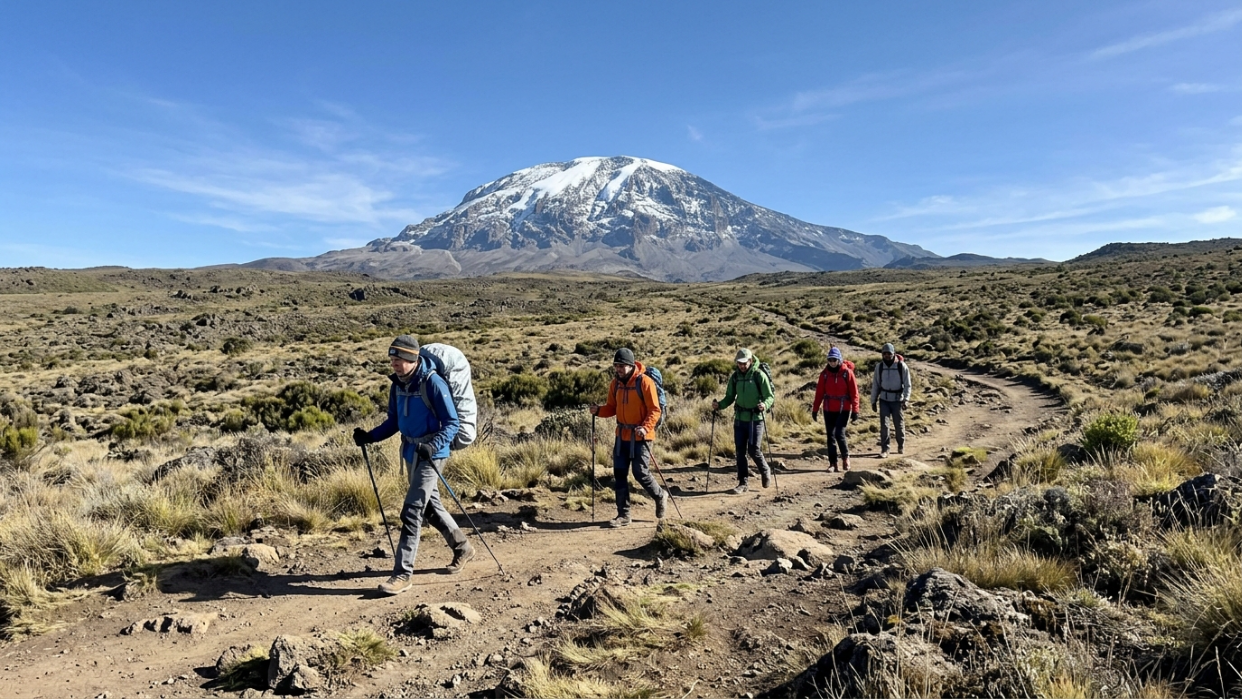
The 8-day Lemosho route combines:
-
Excellent acclimatization
-
Scenic variety
-
Lower crowd density
-
High summit success rates
It is widely considered the best route for first-time climbers serious about reaching Uhuru Peak.
Highest Success Rate: Northern Circuit
The Northern Circuit offers the highest average success rate because it includes the longest acclimatization period on the mountain.
Best Budget Route: Machame 7-Day
The Machame route balances affordability and strong acclimatization, making it one of the most popular choices.
Route to Avoid for Summit Odds: Marangu 5-Day
Despite its reputation as the “Coca-Cola Route,” the 5-day Marangu itinerary has one of the lowest success rates on Kilimanjaro.
How to Maximize Your Kilimanjaro Success Rate
These are the factors within your control, ranked by impact:
Choose a 7-day route minimum (8 is better). This is non-negotiable advice. The data is overwhelming. If budget allows, an 8 or 9-day itinerary on the Lemosho or Northern Circuit gives you the best odds. See our detailed guide to the Lemosho route for itinerary specifics.
Prioritize routes with climb-high, sleep-low profiles. The Lemosho, 7-day Machame, and Northern Circuit all include altitude gains during the day followed by descents to sleeping camps.
Select an operator with experienced, certified guides. Look for WFR-trained crew, pulse oximetry protocols, proper nutrition at altitude, and KPAP partnership (which verifies fair porter treatment). These aren’t luxury extras. They directly affect your summit odds.
Train for at least 12 weeks. Focus on hiking with a weighted pack, sustained cardio, and stair climbing. The goal isn’t peak athletic performance. It’s building the endurance to keep walking for 14 hours on summit night.
Hydrate aggressively. Three to four liters per day on the mountain. Dehydration worsens AMS symptoms and makes everything harder.
Discuss Diamox with your doctor. Studies show acetazolamide reduces AMS symptoms by roughly 50%, which indirectly increases success rates by 5 to 10% on 7-day or longer routes. It’s not a substitute for proper acclimatization, and it shouldn’t be treated as one, but it’s a useful tool when combined with the right itinerary.
Respect the “pole pole” pace. “Pole pole” means “slowly, slowly” in Swahili. Walking slower than feels natural is one of the hardest adjustments for fit climbers to make, and one of the most important. Your guides will set the pace. Trust them.
A repeat climber shared on a popular trekking blog that he failed on a 6-day Machame with a budget operator, then summited on an 8-day Lemosho with a premium operator. The combination of more days and better support was the difference. That compound effect, duration plus operator quality, shows up over and over in first-person accounts.
Safety Context
The Kilimanjaro death rate is approximately 0.03%, with 3 to 10 fatalities per year among roughly 30,000 climbers. The most common cause of death is High-Altitude Pulmonary Edema (HAPE), accounting for 76% of fatalities in one study.
These numbers are low, but they aren’t zero. Choosing an operator with proper safety protocols, experienced guides, and the willingness to turn clients around when necessary is the most effective way to mitigate risk. A good operator doesn’t just increase your chances of reaching the summit. They decrease your chances of a medical emergency.
Planning a Kilimanjaro climb and want to compare all the route options? Or considering combining your climb with a safari or beach extension?
Kilimanjaro Success Rate by Number of Days
|
Duration |
Average Success Rate |
Recommendation |
|---|---|---|
|
5 Days |
27–35% |
Not recommended |
|
6 Days |
50–73% |
Acceptable minimum |
|
7 Days |
80–85% |
Recommended |
|
8 Days |
90%+ |
Best balance |
|
9 Days |
90–95% |
Highest success rates |
Why Extra Days Matter
Each additional acclimatization day allows the body to adapt to lower oxygen levels. Longer itineraries reduce AMS symptoms and dramatically improve summit odds.
Frequently Asked Questions
What is the current Kilimanjaro success rate?
Modern estimates put the overall Kilimanjaro success rate between 65% and 80% across all routes. The only official KINAPA figure (45%) dates to 2006 and is considered outdated. The real range spans from about 27% on 5-day routes to over 90% on 8 or 9-day itineraries.
Which Kilimanjaro route has the highest success rate?
The Northern Circuit (8 to 9 days) has the highest estimated success rate at 90 to 95%, followed closely by the 8-day Lemosho route at approximately 90%. Both routes offer extended acclimatization and climb-high, sleep-low profiles.
Does fitness level determine if you’ll summit Kilimanjaro?
Fitness helps with endurance, especially on summit night, but it is not the primary determinant. Altitude sickness is the number one reason climbers fail, and it affects people regardless of fitness level. Highly fit athletes sometimes fare worse because they climb too fast.
Is the 5-day Marangu route worth it?
The 5-day Marangu has a success rate of roughly 30%, making it the least likely path to the summit. The 6-day option improves odds to 50 to 65%, but that’s still well below what 7 or 8-day routes on other paths offer. The hut accommodation is comfortable, but the acclimatization profile is poor.
Does Diamox increase your chances of summiting?
Studies indicate Diamox (acetazolamide) reduces AMS symptoms by about 50% and may improve success rates by 5 to 10% on longer routes. It should be discussed with your doctor beforehand and used as a supplement to, not a replacement for, proper acclimatization through route duration and pacing.
How reliable are operator-claimed success rates?
Not very. All modern Kilimanjaro success rate data is self-reported by operators with no independent verification. Some operators inflate numbers by counting Stella Point arrivals as summits or by only reporting rates for their longest routes. Ask specifically what “summit” means and which itineraries the rate covers.
Does the rainy season affect the success rate?
Yes, but less than you might think. Rainy season success rates drop to around 60%, compared to 75 to 80% in dry season. That’s a meaningful difference, but choosing a longer route has a much larger impact than choosing the perfect season.
Are older climbers less likely to summit?
Only slightly. Climbers aged 50 to 65 average 60 to 68% success rates compared to 70 to 75% for those under 30. Older climbers who choose 8-day or longer routes achieve success rates above 85%, essentially closing the gap entirely. The key is allowing enough acclimatization time.
Is Kilimanjaro Harder Than Everest Base Camp?
Kilimanjaro is physically shorter than the Everest Base Camp trek but often harder from an altitude perspective because climbers gain elevation much faster with less acclimatization time.
Can Beginners Climb Kilimanjaro?
Yes. Kilimanjaro is a non-technical climb that beginners can complete successfully with proper training, a longer itinerary, and a reputable guide company.
What Percentage of Climbers Reach Uhuru Peak?
On quality 7 to 9-day itineraries, roughly 80% to 95% of climbers reach Uhuru Peak, depending on the route and operator.
Is Kilimanjaro Dangerous?
Kilimanjaro is generally safe when climbed with experienced guides, but altitude sickness can become serious if ignored. Proper acclimatization and pacing are essential.