East Africa Best Time to Visit (2026): Season-by-Season
TL;DR
The best time to visit East Africa depends on what you want to do, but June through October is the safest all-purpose window for safaris, Kilimanjaro climbs, gorilla trekking, and beach holidays. January and February offer a second excellent window with fewer crowds. April and May are the wettest months and best avoided unless you’re on a tight budget. East Africa’s seasons are defined by rainfall, not temperature, and understanding terms like “long rains,” “shoulder season,” and “calving season” is the key to planning the right trip.
Direct Answer: Best Time to Visit East Africa If you're looking for the best overall time to visit East Africa, choose June through October. This period offers:
- Peak wildlife viewing in Kenya and Tanzania - Excellent Great Migration river crossing opportunities - Ideal conditions for climbing Kilimanjaro - Dry trails for gorilla trekking in Uganda and Rwanda - Sunny beach weather in Zanzibar
For travelers seeking fewer crowds and lower prices, January through February is the best alternative, especially for Serengeti calving season safaris and Kilimanjaro climbs.
|
Travel Goal |
Best Months |
|---|---|
|
Overall East Africa Trip |
June–October |
|
Great Migration Crossings |
July–September |
|
Serengeti Calving Season |
January–March |
|
Kilimanjaro Climbing |
January–February, June–October |
|
Gorilla Trekking |
June–September, December–February |
|
Zanzibar Beaches |
June–October, January–February |
|
Budget Travel |
November, Early June |
Most travelers researching the best time to visit East Africa run into the same problem. Every guide throws around terms like “Masika,” “green season,” “shoulder month,” and “crossing season” without stopping to explain what they actually mean or how they connect to each other. The result is confusion, especially for anyone trying to stitch together a multi-country trip that combines safaris, a Kilimanjaro climb, gorilla trekking, or beach time in Zanzibar.
This glossary fixes that. Every timing-related term you’ll encounter while planning an East Africa trip is defined below, with exact month windows, the activities each term applies to, and what it actually means for your booking decisions.
If you’re already thinking about routes, costs, and logistics, start with East Africa safari itineraries to see how these seasonal windows translate into real trip plans.
Season Foundations: How East Africa’s Climate Actually Works
Why There’s No “Summer” or “Winter”
East Africa sits on the equator. Nairobi, Arusha, Kampala, and Kigali all fall within a few degrees of latitude zero. The practical consequence: temperatures barely change throughout the year. Daytime highs hover between 25°C and 30°C in most safari destinations, and the sun rises and sets at roughly the same time every day.
Seasons in East Africa are defined entirely by rainfall. When someone asks about the best time for East Africa, they’re really asking: when does it rain, and how does that rain affect wildlife, roads, and access?
ITCZ (Inter-Tropical Convergence Zone)
This is the atmospheric engine behind everything. The ITCZ is a band of low pressure near the equator where trade winds from the northern and southern hemispheres collide, creating rising air and heavy rainfall. As this band migrates north and south with the sun’s position, it passes over East Africa twice a year, producing two distinct rainy seasons.
Why it matters for your trip: The double pass of the ITCZ is the reason East Africa has two wet periods and two dry periods, not the single wet/dry cycle you find in southern Africa. Every seasonal term below traces back to this pattern.
Dry Season (Long): June to October
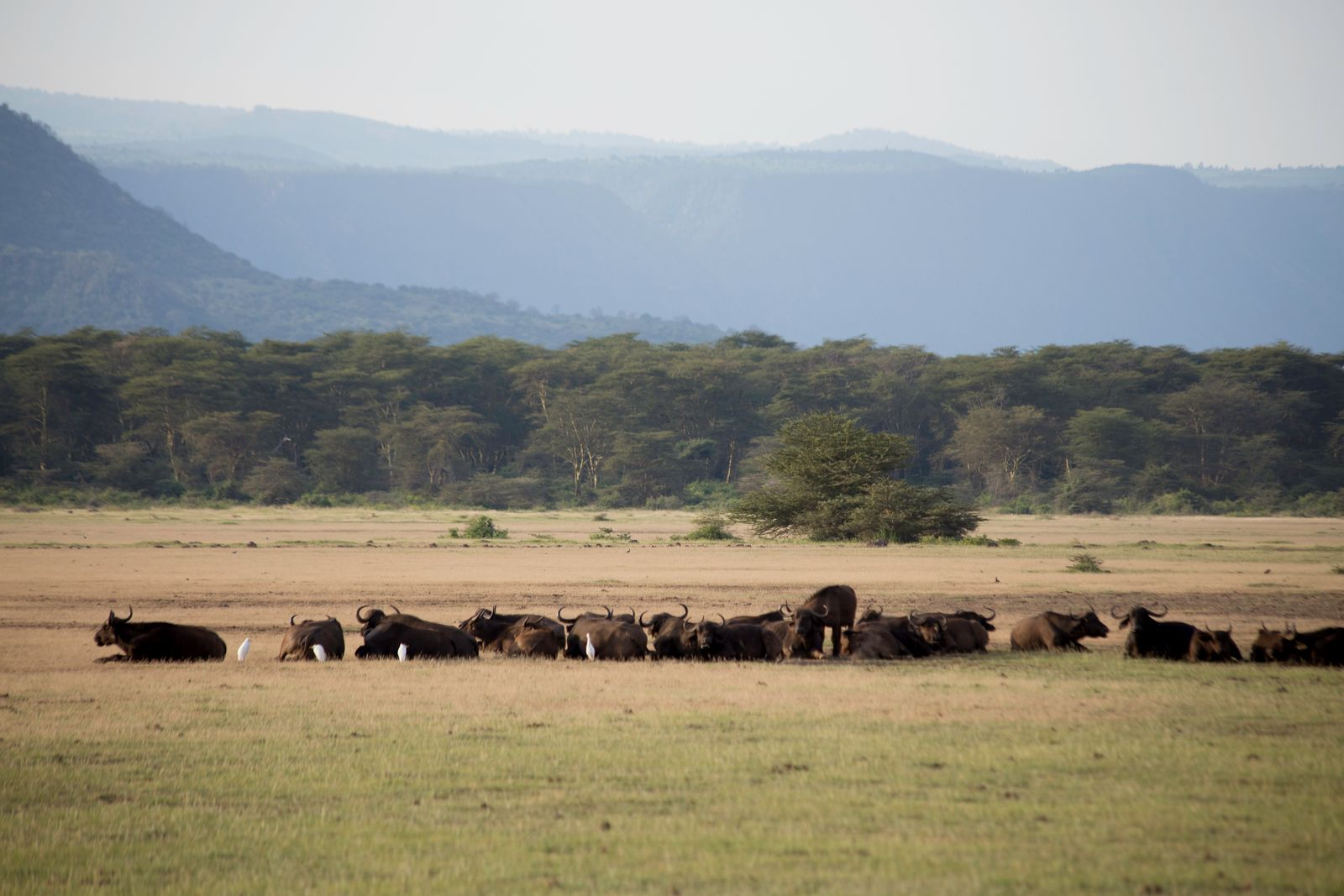
The long dry season is the backbone of East Africa’s high season. Rainfall drops to near zero across Kenya, Tanzania, Uganda, and Rwanda. Vegetation thins out, water sources shrink, and animals concentrate around rivers and permanent waterholes. Predators exploit this, frequently ambushing prey at drinking spots, which makes for exceptional wildlife viewing.
Applies to: Safaris (all countries), Kilimanjaro climbs, gorilla trekking, Zanzibar beach holidays.
What this means for your trip: This is the single best all-purpose window for an East Africa visit. Every major activity aligns. The trade-off is that everyone knows this, so prices are highest and popular camps book out months in advance.
Dry Season (Short): January to February
A brief dry spell between the two rainy seasons. January and February are warm, sunny, and surprisingly good for wildlife. In the southern Serengeti and Ndutu area, this overlaps with the wildebeest calving season, creating some of the most dramatic safari viewing of the year.
Applies to: Calving-season safaris, Kilimanjaro climbs, gorilla trekking, Zanzibar (hot but clear).
What this means for your trip: January and February are the underrated second window. Crowds are lighter than July through September. Kilimanjaro is warmer at altitude, making for more comfortable nights. Gorilla permits are easier to secure. Practitioners on travel forums frequently call this the “insider’s window” because it delivers near-peak experiences without peak-season congestion.
Long Rains (Masika): Mid-March to May
“Masika” is the Swahili term for the long rains. This is the heaviest sustained rainfall East Africa receives, typically starting in mid-March and running through May. April is the wettest month across most of Kenya and Tanzania. Some bush roads become impassable, and a number of safari lodges close entirely during this period.
Applies to: All activities are affected. April and May should be avoided for first-time visitors to East Africa, as conditions are genuinely difficult.
What this means for your trip: This is the one window where the recommendation is clear. Unless you have a specific reason (birding, budget, or returning to a park you already know well), skip April and May.
Short Rains (Vuli): November to December
The Swahili “Vuli” refers to the shorter, lighter rainy season. Rain tends to fall in brief afternoon showers rather than all-day downpours. The bush greens up quickly, migratory birds arrive, and the air clears of dust.
Applies to: Safari (still viable, especially early November and late December), birding, budget travelers.
What this means for your trip: November is genuinely underrated. Visitor numbers drop, lodge rates fall, and wildlife doesn’t disappear just because it rained for an hour after lunch. Late December picks up again due to holiday travel, but early November can be a sweet spot.
Green Season: An Alternate Name for the Wet Months
“Green season” is a marketing term used by lodges and operators to rebrand the rainy months (primarily March through May, sometimes extended to include November). The name isn’t dishonest. The rains do transform dry, dust-colored parks into vivid green spaces, and the photographic quality of light improves dramatically with cloud texture and washed air.
Why it exists as a separate term: Lodges want to attract visitors year-round, so they emphasize the genuine benefits of wet-season travel: lush scenery, newborn animals, migratory birds in breeding plumage, and far fewer vehicles at each sighting.
What this means for your trip: Green season pricing can be 30 to 50 percent lower than peak season. Wildlife concentrations in certain areas (southern Serengeti during calving, Ngorongoro Crater year-round) remain excellent. But road conditions and unpredictable downpours require flexibility. This is a strong option for repeat visitors or photographers willing to trade convenience for atmosphere.
Shoulder Season: June and October
Shoulder months sit at the edges of the long dry season. June marks the transition from wet to dry. October marks the transition from dry to the short rains. Both months consistently deliver strong wildlife viewing with meaningfully lower prices and fewer tourists than the July-through-September peak.
What this means for your trip: Multiple experienced safari guides and operators describe shoulder months as the best value-to-experience ratio in East Africa. Game viewing is excellent (vegetation is still thinning in June, water sources are at their lowest in October), and you’ll share sightings with far fewer vehicles. If your dates are flexible, targeting June or October is the smartest move for a first safari.
High Season
High season in East Africa typically refers to two windows: July through September (the peak of the long dry season and the Mara River crossing period) and the last two weeks of December through early January (holiday travel plus the start of calving season). Lodges charge top rates, popular camps sell out, and the Masai Mara and northern Serengeti can feel crowded at river crossing points.
For a detailed breakdown of how seasonality affects costs, see East Africa safari prices explained.
Low Season
Low season corresponds to the long rains (April through May) and, to a lesser extent, November. Lodge rates drop significantly. Some properties close altogether, particularly in remote areas where road access becomes unreliable. The cheapest time to go on safari is April through May, but conditions are challenging enough that most travelers are better served by a shoulder month.
Wildlife and Migration Terms
Great Migration
The Great Migration is the continuous, year-round circular movement of roughly 1.5 million wildebeest, 400,000 zebra, and 200,000 gazelle through the Serengeti-Mara ecosystem. It is not a single event with a start date and end date. The herds follow rainfall and fresh grazing in a roughly clockwise loop, and the exact timing shifts by two to four weeks every year depending on when and where rain falls.
This is the single most important concept to grasp when planning the best time for East Africa safaris: there is no single “migration month.” There is a migration location for every month, and being in the right place matters more than being in the right month.
For a complete month-by-month breakdown, read the full wildebeest migration guide.
Calving Season: January to March
Over 500,000 wildebeest calves are born in a concentrated six-to-eight-week burst on the short-grass plains of the southern Serengeti and Ndutu area. At its peak, thousands of calves are born daily. This massive pulse of vulnerable newborns draws lions, cheetahs, hyenas, and jackals into the open, creating some of the most intense predator-prey interactions visible anywhere on Earth.
What this means for your trip: Calving season is the best time for East Africa safari photography if predator action is your priority. The southern Serengeti plains are flat and open, giving unobstructed sightlines. Ndutu-area camps book out quickly for January and February, so plan 6 to 12 months ahead.
Western Corridor Movement: April to June
After calving, the herds begin moving northwest toward the Western Corridor of the Serengeti, massing around the Grumeti River. The first river crossings of the year happen here, typically in June. June is notable because it represents excellent value: the migration is present, the dry season is beginning, and prices haven’t yet hit their July-through-September peak.
River Crossing Season: July to September
This is what most people picture when they think of the Great Migration: hundreds of thousands of wildebeest plunging into crocodile-filled rivers. The major crossings occur at the Mara River in the northern Serengeti and Kenya’s Masai Mara, with August often considered the peak crossing month. September continues to produce crossings along with very strong predator sightings as weakened animals become easy targets.
Critical caveat: No operator can guarantee you’ll witness a crossing on a specific date. Crossings are triggered by herd pressure, water levels, and unpredictable group behavior. The herds sometimes approach a crossing point, stand at the edge for hours, then turn around and walk away. Spending three to four days in the crossing zone during July through September gives you strong odds, but guarantees don’t exist.
Resident Wildlife
Not all East African wildlife migrates. Parks like Ngorongoro Crater, Tarangire (outside migration months), Lake Manyara, and Queen Elizabeth in Uganda support large populations of resident animals year-round. The Big Five are present in Ngorongoro Crater every day of the year regardless of season.
What this means for your trip: If migration timing doesn’t work for your schedule, a safari focused on resident wildlife parks still delivers exceptional viewing. This is especially relevant for travelers visiting during the short rains or early green season.
Activity-Specific Timing Windows
Safari Season (Tanzania)
The best time for a Tanzania safari is during the dry seasons: June to October and January to February. The northern circuit (Tarangire, Ngorongoro, Serengeti) is the most popular route and works well in both windows. The southern circuit (Selous/Nyerere, Ruaha) follows a slightly different pattern, with the best viewing from June through November.
Thick vegetation conceals wildlife during wetter months, while sparser, drier conditions make animals easier to spot. Animals also gather around shrinking water sources, concentrating sightings.
Explore Tanzania safari itineraries and costs to see how these seasonal windows shape real routes.
Safari Season (Kenya)
Kenya’s prime safari window mirrors Tanzania’s: July through October for the Masai Mara (overlapping with river crossings), and January through February as a secondary window. Amboseli is best from June through October for clear views of Kilimanjaro behind elephant herds. Laikipia and the northern conservancies work well year-round due to their private management structures.
For detailed Mara planning, see the Maasai Mara safari guide.
Kilimanjaro Climbing Season
Two climbing windows align with the two dry seasons. The long dry (June through October) is the most popular, with clear skies and the best summit views, but trails are busier. The short dry (January through early March) is warmer at altitude, which means more comfortable nights in camp and fewer climbers on the mountain.
Both windows offer strong summit success rates. The choice between them often comes down to personal preference: do you want cooler, drier conditions with more company (June through October), or warmer nights with quieter trails (January through February)?
For a detailed month-by-month breakdown, read the Kilimanjaro climbing timing guide.
Gorilla Trekking Season (Uganda and Rwanda)
The best time for gorilla trekking is generally the dry seasons: June through September and December through February, when forest trails are firmest and weather is most predictable. But mountain gorillas can be tracked year-round because their movements aren’t driven by seasons. They live in montane forests at 2,000 to 4,000 meters elevation and move based on food availability, not rainfall patterns.
Here’s a counter-intuitive detail that most guides miss: during the wet season, bamboo shoots on the lower slopes are at their peak. Gorilla families tend to stay in these bamboo forests at lower elevations, which often means your hike is only one to one and a half hours rather than the three to four hours common during dry months. Practitioners on safari forums report that some of their best gorilla encounters happened during “off-peak” wet months precisely because of this shorter approach.
Permit timing matters more than weather. Popular gorilla families sell out 12 to 18 months in advance, especially for June through September. Book permits before finalizing flights.
For permit logistics and pricing, see the Bwindi gorilla trekking guide.
Zanzibar Beach Season
The best time to visit Zanzibar is June through October, when the island has cool, dry weather and ideal beach conditions. January and February are a strong alternative if you prefer hotter temperatures (averaging 34°C) and fewer tourists. April and May are firmly low season, with persistent rain and many beachfront lodges closing.
For divers and snorkelers, March, October, and November offer the best underwater visibility with warm seas and little wind.
Safari-beach combo timing: The June through October Zanzibar window aligns perfectly with Tanzania’s peak safari season and the Great Migration crossing period. Combining a week-long Serengeti safari with a few days on Zanzibar is one of the most popular East Africa itineraries for good reason. Read the Zanzibar month-by-month guide for more detail.
Birding Season
Tanzania alone has over 1,000 bird species, making it a year-round birding destination. But the best birding runs from November through April, exactly opposite of peak safari season. Approximately 160 migratory species arrive from Europe and northern Asia during December through February, and wet-season residents display breeding plumage during the rains. The green, rain-washed environment also creates dramatically better conditions for bird photography.
For park-specific recommendations, see the Tanzania birding guide.
Planning and Budget Terms
Peak Season Rates
Expect lodge and camp rates to be 20 to 50 percent higher during July through September and the last two weeks of December compared to the rest of the year. Some exclusive camps charge holiday surcharges on top of already elevated high-season pricing. Domestic flights within Tanzania and Kenya also become more expensive and less available during peak months.
Low Season Rates
April and May offer the lowest accommodation rates across East Africa. Some lodges discount by 30 to 50 percent. Others close entirely, especially in areas with poor road access during heavy rain. November sometimes qualifies for shoulder or low-season rates depending on the property.
Booking Window
For peak-season migration safaris (July through September in the northern Serengeti or Masai Mara), book 6 to 12 months in advance. The best camps have limited capacity and fill quickly. For gorilla trekking permits in Uganda and Rwanda, 12 to 18 months of lead time is wise, particularly for the most sought-after gorilla families. Kilimanjaro climbs during peak months (January, February, July, August) also benefit from early booking to secure preferred routes and dates.
Regional Exceptions Worth Knowing
Kidepo Valley’s Inverted Season (Northern Uganda)
Virtually all of East Africa follows the two-rainy-season pattern described above. The major exception is northern Uganda. Kidepo Valley National Park has only one rainy season, starting in April and peaking in July and August with sudden afternoon thunderstorms. This is the opposite of the rest of East Africa, where July and August are bone dry. If you’re combining a Kidepo visit with other East African destinations, plan accordingly. More on Uganda’s parks and logistics is available in the Uganda destinations guide.
Climate Change and Shifting Patterns
Seasons in East Africa are becoming less predictable. The long and short rains in Kenya and Tanzania are no longer as regular as they once were. Rains arrive late or early, which throws the wildebeest migration calendar out of sync and makes rigid trip planning riskier. Experienced operators monitor real-time rainfall data and adjust itineraries based on current herd locations rather than relying solely on historical averages. This flexibility is one of the strongest arguments for working with an operator who has boots on the ground in East Africa rather than booking entirely on your own.
Multi-Activity Overlap: When Everything Aligns
For travelers planning to combine multiple experiences, the best time for East Africa depends on which activities you want to stack. Here’s how the windows overlap:
June through October is the universal sweet spot. Safaris in Tanzania and Kenya are at their peak. Kilimanjaro conditions are ideal. Gorilla trekking trails are dry. Zanzibar weather is perfect. Every major East Africa experience works in this window.
January through February is the smart alternative. Calving season offers world-class safari viewing in the southern Serengeti. Kilimanjaro is warmer and quieter. Gorilla permits are more available. Zanzibar is hot but sunny. Crowds are a fraction of what you’ll find in August.
April and May should be avoided for all activities unless budget is the primary concern and you accept meaningful rain risk.
November is the wild card. Visitor numbers are low, some lodges offer shoulder-season rates, the migration is still active as herds move south, and migratory birds are arriving. It’s not the safest recommendation for a first-timer, but repeat visitors and flexible travelers can find real value here.
For help combining these windows into a single cohesive itinerary, read how to fit multiple experiences into one trip.
Month-by-Month Guide to East Africa
This section will target dozens of long-tail searches.
January
-
Excellent safari conditions
-
Serengeti calving season begins
-
Great weather in Zanzibar
-
Ideal Kilimanjaro climbing conditions
-
Moderate crowds
February
-
Peak calving season
-
Strong predator sightings
-
Excellent beach weather
-
One of the best overall months
March
-
Transition month
-
Increasing rainfall
-
Good safari value before long rains
April
-
Peak long rains
-
Lowest prices
-
Challenging road conditions
May
-
Continued heavy rainfall
-
Best budget deals
-
Limited lodge availability due to seasonal closures
June
-
Dry season begins
-
Excellent safari conditions
-
Lower crowds than July and August
July
-
Peak safari season
-
Great Migration reaches northern Serengeti
-
Strong Kilimanjaro conditions
August
-
Peak river crossing season
-
Highest visitor numbers
-
Best overall wildlife viewing
September
-
Continued migration activity
-
Excellent weather across East Africa
-
Often considered the best all-around month
October
-
Excellent wildlife viewing
-
Fewer tourists
-
Outstanding shoulder-season value
November
-
Short rains begin
-
Lower prices
-
Excellent birding opportunities
December
-
Short rains taper off
-
Holiday crowds increase
-
Good safari and beach conditions
Best Time to Visit East Africa by Travel Style
|
Traveler Type |
Best Months |
|---|---|
|
First-Time Visitors |
June–October |
|
Luxury Safari Travelers |
July–September |
|
Budget Travelers |
November, Early June |
|
Wildlife Photographers |
January–March, July–September |
|
Birdwatchers |
November–April |
|
Honeymooners |
June–October, January–February |
|
Families |
June–August |
|
Repeat Safari Visitors |
October, November |
Best Time to Visit Each East African Country
Kenya
Best months: July–October and January–February.
Highlights:
-
Masai Mara migration
-
Amboseli elephant viewing
-
Clear views of Mount Kilimanjaro
Tanzania
Best months: June–October and January–March.
Highlights:
-
Serengeti migration
-
Ngorongoro Crater wildlife
-
Zanzibar beach extensions
Uganda
Best months: June–September and December–February.
Highlights:
-
Gorilla trekking
-
Chimpanzee tracking
-
Queen Elizabeth National Park safaris
Rwanda
Best months: June–September and December–February.
Highlights:
-
Gorilla trekking
-
Volcanoes National Park
-
Kigali city visits
Frequently Asked Questions
What is the single best month to visit East Africa?
If forced to pick one month, September offers the strongest combination of factors. The Mara River crossings are still happening, predator activity is high as weakened animals fall behind the herds, Kilimanjaro has clear skies, gorilla trails are dry, and prices begin easing from the August peak. October is a close second with even lower prices.
Is it worth visiting East Africa during the rainy season?
It depends on which rainy season. The short rains (November through December) are manageable, with brief afternoon showers that rarely ruin a full game drive. The long rains (April through May) are genuinely difficult, with sustained downpours that close roads and reduce visibility. For budget-conscious travelers willing to accept some rain, November is a far better bet than April.
How far in advance should I book an East Africa trip?
For a July through September safari or a peak-season Kilimanjaro climb, 6 to 12 months is the standard recommendation. For gorilla trekking permits, 12 to 18 months provides the best selection. Shoulder-season travel (June, October) requires less lead time, but popular lodges still fill up 4 to 6 months out.
Can I see the Great Migration any time of year?
Yes. The migration is a continuous loop, and wildebeest are always somewhere in the Serengeti-Mara ecosystem. The key is being in the right location for the right month. Calving happens in the south (January through March), the Western Corridor fills in April through June, river crossings occur in the north (July through September), and the herds return south from October through December.
What’s the best time for East Africa on a budget?
November and the first half of June offer the best balance of low prices and good conditions. April and May have the cheapest rates, but conditions are poor enough that the savings often aren’t worth it. Lodge rates during shoulder months can be 20 to 30 percent below peak-season pricing with minimal sacrifice in experience quality.
Does climate change really affect trip planning?
It does. Weather patterns across East Africa have become less predictable in recent years. The long rains sometimes arrive in February or extend into June. The short rains occasionally fail entirely. This means fixed-date plans carry more risk than they used to, and working with an operator who tracks conditions in real time and can adjust your route accordingly has become more important, not less.
Is East Africa safe to visit year-round?
From a safety standpoint, yes. The seasonal considerations are about comfort, wildlife viewing quality, and road access, not personal safety. Political stability varies by region (always check current travel advisories for specific countries), but the major safari circuits in Tanzania, Kenya, Uganda, and Rwanda operate safely throughout the year.
When should I visit East Africa to avoid crowds?
The quietest months with good conditions are June (early dry season, before European summer holidays drive numbers up), October (end of dry season, just before the short rains), and January through mid-February (short dry season, between the holiday rush and spring break). April and May are the quietest of all, but for the wrong reasons.
Is June or October better for an East Africa safari?
Both are excellent shoulder-season months. June offers greener landscapes after the rains, while October provides excellent wildlife concentrations around remaining water sources. October is usually slightly warmer and drier.
What is the cheapest month to visit East Africa?
April is typically the cheapest month due to heavy rainfall and reduced visitor demand. Many lodges offer discounts of 30–50% compared to peak-season rates.
What is the best month to see the Great Migration river crossings?
August is generally considered the best month for Mara River crossings, although crossings can occur from July through September depending on rainfall patterns.
What is the hottest month in East Africa?
February is typically the hottest month across much of East Africa, particularly in lowland areas and coastal destinations like Zanzibar.
What is the worst time to visit East Africa?
April is usually considered the most challenging month because it coincides with the peak of the long rains, leading to muddy roads, reduced visibility, and occasional lodge closures.
Ready to turn this timing knowledge into an actual trip plan? Explore East Africa safari itineraries, routes, and costs to see how these seasonal windows shape real multi-destination adventures.