Mkomazi National Park Safari Guide 2026: Costs & Tips
TL;DR
Mkomazi National Park is Tanzania’s underrated, arid wilderness covering 3,234 km² along the Kenyan border. It’s home to roughly 30% of Tanzania’s black rhino population, a successful wild dog breeding program, and Sahel-zone antelope species found nowhere else in the country. Park entry costs just $30 per day (compared to $70+ for the Serengeti), and you might share the entire park with fewer than 10 other vehicles.
Most people researching a Tanzania safari will spend hours comparing the Serengeti, Ngorongoro Crater, and Tarangire. Mkomazi National Park barely registers. That’s partly what makes it special, and partly why the terminology around it feels unfamiliar. Words like “nyika,” “mbugas,” and “Sahel Biosphere” appear on operator websites without explanation, and the park’s unique conservation story (involving a British lion man’s protégé, critically endangered rhinos, and an elephant population that rebounded from 11 to 500) gets reduced to bullet points.
This glossary exists to fix that. Every term you’ll encounter while researching a Mkomazi National Park safari is defined below, with honest context about what to actually expect on the ground.
If you’re weighing Mkomazi against other parks, our Tanzania safaris guide covers the full northern circuit and beyond.
Quick Answer: Is Mkomazi National Park Worth Visiting? Mkomazi National Park is worth visiting for travelers seeking solitude, black rhino encounters, rare antelope species, and one of Tanzania's least-crowded safari experiences. Unlike the Serengeti or Ngorongoro, Mkomazi focuses on conservation, wilderness, and unique wildlife such as gerenuk, lesser kudu, fringe-eared oryx, and African wild dogs. Most visitors spend 1–2 days here as an extension to a northern Tanzania safari or Kilimanjaro trip.
Mkomazi at a Glance
|
Category |
Details |
|---|---|
|
Location |
Northeastern Tanzania |
|
Size |
3,234 km² |
|
Entry Fee |
$30/day |
|
Best Time |
June–October |
|
Famous For |
Black rhinos, wild dogs, rare antelope |
|
Days Needed |
1–2 days |
|
Crowds |
Extremely low |
|
Big Five Experience |
Limited |
|
Best For |
Repeat safari visitors and conservation travelers |
The Park: Geography and Place Names
Mkomazi National Park
A national park in northeastern Tanzania straddling the Same District (Kilimanjaro Region) and Lushoto District (Tanga Region). It was established as a game reserve in 1951 and upgraded to full national park status in 2006. The park covers 3,234 km² of arid bush, ancient baobab trees, and rocky inselbergs. It shares an unfenced border with Kenya’s Tsavo West National Park, making it part of one of Africa’s largest continuous protected areas.
What matters for safari planning: Mkomazi is remote, lightly visited, and dramatically different in character from the lush Serengeti grasslands. The wildlife is present but spread across a vast landscape, and the experience rewards patience over spectacle.
Meaning of “Mkomazi”
The name comes from the Pare language. “Mko” means wooden spoon or scoop, and “Mazi” means water. Together, the name roughly translates to “little water” or “scooping water.” This etymology signals the park’s defining trait: aridity. Water is scarce, seasonal, and shapes everything from animal behavior to vegetation patterns.
Greater Tsavo-Mkomazi Ecosystem
Mkomazi and Kenya’s Tsavo National Park form a single ecological unit spanning approximately 43,000 km². This is one of the largest protected ecosystems on Earth. Elephants, zebras, and other large mammals move freely between the two countries depending on seasonal rainfall. For travelers comparing a Tanzania vs. Kenya safari, Mkomazi is the literal meeting point of both countries’ wildlife systems.
Sahel Biosphere
Mkomazi is the southernmost extension of the Somali semi-arid belt and the Sahel Biosphere, the biogeographic region that stretches from the edge of the Sahara Desert into East Africa. This positioning means several species found in Mkomazi exist nowhere else in Tanzania. If you’ve done a standard northern circuit safari and seen the usual cast of plains game, Mkomazi introduces an entirely different ecological vocabulary: desert-adapted antelope, arid-zone birds, and scrubby vegetation that looks more like northern Kenya than the Serengeti.
Nyika Bush
“Nyika” is a Swahili term for arid bush steppe, the scrubby, grey-green semi-desert landscape that defines Mkomazi’s visual identity. Competitor safari destinations feature golden grasslands and riverine forests. Mkomazi offers thorny scrub, scattered baobabs, and isolated rocky hills. The nyika is not conventionally beautiful in the way the Serengeti is. It’s stark, quiet, and compelling in a different register.
Acacia-Commiphora Woodland
The dominant vegetation type across the park. Acacia trees (thorny, flat-topped, and adapted to drought) grow alongside Commiphora shrubs, which belong to the myrrh family. This woodland is sparse enough to allow some visibility but thick enough to hide shy antelope species, which is exactly what happens during game drives.
Mbugas
In Swahili, mbugas are shallow depressions or seasonal flood plains that collect water during the rains, then dry into grassland during the dry season. In Mkomazi, the mbugas interrupt the endless bush with open stretches of savannah and umbrella acacias. These are your best bet for spotting plains game, since animals congregate in and around these clearings for grazing.
Pare Mountains and Usambara Mountains
Two mountain ranges framing Mkomazi’s southern boundary. The Pare Mountains run northwest to southeast, while the ancient Usambara Mountains rise to the south. Together with views of Mount Kilimanjaro to the northwest, they give Mkomazi a dramatic scenic backdrop that photographs particularly well during the wet season, when thunderclouds pile up behind the peaks.
Zange Gate
The main entrance to Mkomazi National Park, located on the northwestern edge near the town of Same. Most accommodation clusters around this gate, and it serves as the starting point for game drives, walking safaris, and trips to the rhino sanctuary. The Rhino Visitor Centre sits a short distance from Zange Gate.
Dindira Dam
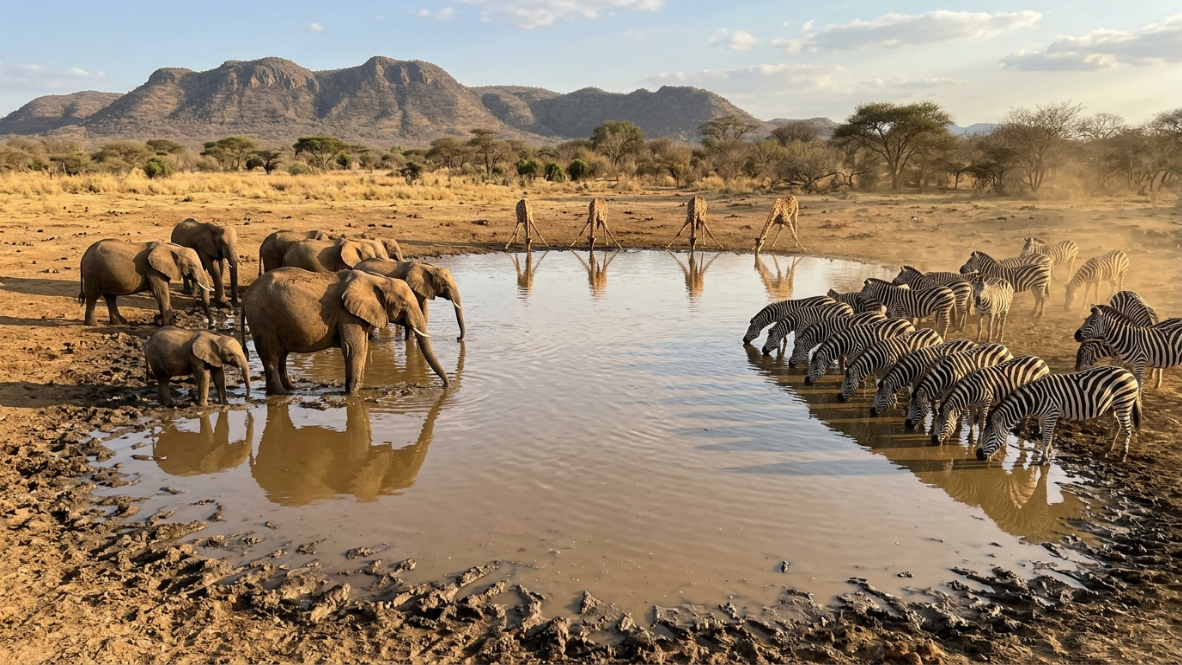
The park’s primary water source and single most important wildlife viewing location. Large mammals, including elephants, zebras, giraffes, and antelope, concentrate here, especially during the dry season when other water sources dry up. Shorter walking safaris also route past Dindira Dam, where reptiles and waterbirds can be found.
What Makes Mkomazi Different From Other Tanzania Parks?
Most Tanzania safari destinations focus on wildlife density. Mkomazi focuses on rarity and solitude.
While the Serengeti delivers massive herds and predator sightings, Mkomazi offers wildlife species unavailable in most other Tanzanian parks. It is also one of the few places where visitors can see black rhino conservation efforts firsthand.
How Mkomazi Compares to Popular Tanzania Parks
|
Park |
Best Known For |
Visitor Numbers |
Wildlife Density |
Rhino Viewing |
|---|---|---|---|---|
|
Mkomazi |
Rhinos, wild dogs, rare antelope |
Very Low |
Moderate |
Excellent |
|
Serengeti |
Migration and predators |
Very High |
Excellent |
Rare |
|
Ngorongoro |
Big Five |
High |
Excellent |
Occasional |
|
Tarangire |
Elephants |
Moderate |
High |
None |
|
Ruaha |
Predators |
Low |
High |
None |
Wildlife and Conservation
Black Rhino Sanctuary (Mkomazi Rhino Sanctuary)
The centerpiece of any Mkomazi National Park safari. The park is one of very few places in Tanzania where you can see black rhinos, and the rhinos here represent roughly 30% of Tanzania’s total black rhino population. Tourist access to the sanctuary opened in 2021.
There are two distinct sanctuary areas, and almost no travel website explains the difference:
Kisima Rhino Reserve is a private, VIP-access experience. Guests view black rhinos from a ground-level hide, creating an intimate and rare encounter. This experience costs $200 per person and is located 67 km from the main camp, requiring a dedicated half-day excursion.
Mbula Rhino Reserve is managed by TANAPA (Tanzania National Parks Authority) and is open to the public. It holds a smaller number of rhinos but offers near-guaranteed sightings. Visitors here can also observe the wild dog breeding program.
The conservation backstory makes these numbers more meaningful. In the 1960s, more than 400 black rhinos roamed Mkomazi. By the late 1980s, poaching had reduced that number to zero. The reintroduction program, driven by Tony Fitzjohn and the George Adamson Wildlife Preservation Trust, has slowly rebuilt a viable breeding population, with the long-term goal of reaching 50 individuals whose offspring will strengthen wild populations across Tanzania.
African Wild Dog (Lycaon pictus)
Also called painted wolves or hunting dogs. Critically endangered, with fewer than 6,600 remaining in the wild across Africa. Mkomazi hosts one of the continent’s longest-running wild dog breeding programs, which has successfully released approximately 200 dogs into the ecosystem. The breeding program operates within the rhino sanctuary enclosures, and both the rhinos and captive wild dogs are held behind fences for their own security. Free-roaming wild dog packs do sometimes pass through the broader park, though sightings are uncommon.
Gerenuk
The gerenuk is a gazelle unlike any other. It has an absurdly slender neck, an alien-looking head, and a signature behavior: standing upright on its hind legs to reach acacia leaves that no other browser can access. It looks like a creature designed by committee. Mkomazi is the only national park in Tanzania where gerenuks can be reliably found, making them one of the park’s strongest wildlife draws for returning safari visitors.
One experienced traveler wrote in a first-hand account that “the big excitement was spotting the Gerenuk and the Fringe Eared Oryx, which was the first for me.” For anyone who has already ticked off the Big Five, Mkomazi’s Sahel antelope trio offers genuinely new sightings.
Lesser Kudu
A spiral-horned, vertically striped antelope that inhabits thick Acacia-Commiphora bush. Lesser kudus are shy, elusive, and rarely seen in other Tanzanian parks. They browse in dense cover and bolt at the slightest disturbance, making a sighting in Mkomazi something to genuinely celebrate. Their presence is another result of the park’s Sahel Biosphere connection.
Beisa Oryx (Fringe-eared Oryx)
A large, powerful antelope with long, swept-back horns and bold facial markings. Herds of fringe-eared oryx can sometimes be spotted on Mkomazi’s open plains, though they are skittish. Like the gerenuk and lesser kudu, the oryx is a Mkomazi exclusive for Tanzania, a species you simply cannot find in the Serengeti or Ngorongoro.
Vulturine Guineafowl
Mkomazi is the only place in Tanzania where you’re likely to see the vulturine guineafowl, a ground bird with an electric cobalt chest, a bare blue face, and elongated hackle feathers. It looks more like an art piece than a game bird. For anyone interested in birding in Tanzania, Mkomazi records over 450 bird species, and the vulturine guineafowl alone justifies a visit.
Tony Fitzjohn (1945–2022)
The conservation story of Mkomazi is inseparable from Tony Fitzjohn. A British conservationist who spent 18 years working alongside the legendary George Adamson (of “Born Free” fame) at Kenya’s Kora reserve, Fitzjohn was invited to Tanzania in 1989 to rehabilitate what was then a devastated game reserve. By the 1980s, Mkomazi had lost more than 50% of its natural vegetation and nearly all of its large mammals.
Fitzjohn spent the next three decades rebuilding. The elephant population grew from 11 individuals in 1989 to approximately 500 today. He established the black rhino breeding sanctuary and the wild dog program. In 2006, he was awarded an OBE (Order of the British Empire) for his conservation work. He died in May 2022. Tanzania has announced plans to build a museum in his honor at the park, a testament to his role in transforming Mkomazi from a poacher-ravaged reserve into a functioning national park.
George Adamson Wildlife Preservation Trust (GAWPT)
The charitable organization that has funded and supported Mkomazi’s rehabilitation since 1989, when the Tanzanian Department of Wildlife invited GAWPT and Tony Fitzjohn to lead habitat restoration, infrastructure development, endangered species programs, and community outreach. The trust operates in both the UK and the USA and remains central to ongoing conservation efforts at the park.
Rafiki wa Faru
Swahili for “Friend of the Rhino.” This is an environmental education program developed by the Mkomazi Rhino Sanctuary in partnership with Save The Rhino International. Children from 14 villages surrounding the park learn about rhinos, wildlife conservation, and the ecosystem they live alongside. The program exists to build local support for conservation and reduce the poaching pressure that nearly wiped out Mkomazi’s rhinos in the first place.
TANAPA (Tanzania National Parks Authority)
The government body that manages all of Tanzania’s national parks, including Mkomazi. TANAPA sets entry fees, manages the Mbula Rhino Reserve, and oversees park infrastructure. When you see “TANAPA fees” in safari quotes, this refers to the mandatory per-person, per-day charges for entering any national park.
Animals You Are Most Likely to See in Mkomazi
Many travelers arrive expecting Serengeti-style game viewing. Mkomazi rewards a different approach. Large predators are present but uncommon, while antelope, elephants, giraffes, and unique dry-country species are far more reliable sightings.
Common Wildlife Sightings
|
Animal |
Sighting Chance |
|---|---|
|
Giraffe |
Very High |
|
Zebra |
Very High |
|
Elephant |
High |
|
Buffalo |
High |
|
Eland |
High |
|
Gerenuk |
High |
|
Lesser Kudu |
Moderate |
|
Fringe-Eared Oryx |
Moderate |
|
Black Rhino |
Very High (Sanctuary) |
|
Lion |
Low |
|
Leopard |
Low |
|
Cheetah |
Low |
|
African Wild Dog |
Rare |
Safari Activities
Game Drive
The primary way to explore Mkomazi. Guided game drives in a 4x4 vehicle typically depart during cooler hours (early morning or late afternoon) when predators and other animals are most active. The park’s vast acacia bush means sightings require sharp eyes and patience.
Here is where honest expectations matter. Practitioners on TripAdvisor consistently report that Mkomazi’s animals are notably shy. One reviewer explained: “Mkomazi was previously a game reserve, a place for hunting, and as a result, the animals here are very shy of vehicles. Most often, when you see them, you will just catch a glimpse of the hind ends as they run away.” Another noted: “Wildlife is well spread, bit shy, don’t expect any close-ups, apart from giraffes, but large herds of zebra, eland and buffalo filling up the plains are impressive.”
This is the trade-off. You will not get the close-range lion sightings of the Serengeti. You will get herds of plains game against a stark, mountain-framed landscape with possibly no other vehicle in sight. One visitor reported encountering only two other vehicles across three full days. According to Altezza Travel, at peak season you might see up to 10 vehicles in the entire 3,234 km² park.
Planning a Mkomazi game drive as part of a larger trip? Our guide to private Tanzania safari options covers routing and costs for custom itineraries.
Walking Safari
Walking safaris last 2 to 3 hours and are available to guests aged 12 and above. Shorter walks meander around Dindira Dam, where you can spot reptiles, waterbirds, and the occasional large mammal coming to drink. Longer, more strenuous routes depart from Zange Gate and cover contrasting terrain, from open mbugas to thick nyika bush.
Walking in Mkomazi feels fundamentally different from a vehicle-based safari. The scale of the landscape becomes personal. You hear insects, smell dust, and register the heat in a way that’s impossible through a car window.
Night Drive
After 20:00, guided night drives lasting 2 to 3 hours explore the park with spotlights. Nocturnal species, including genets, civets, bush babies, and various owl species, emerge after dark. Mkomazi’s dry, open terrain makes night drives particularly productive since there’s less vegetation to hide behind.
Rhino Tracking
A guided 4x4 excursion into one of the two rhino sanctuaries (Kisima or Mbula). At Kisima, this means reaching a ground-level hide where you observe rhinos at close range for $200 per person. At Mbula, the TANAPA-managed option, sightings are near-guaranteed since the reserve holds a smaller, more confined population. Either way, the experience ranks among the rarest wildlife encounters available in Tanzania.
Birding Safari
With over 450 recorded species, Mkomazi is a serious birding destination. The vulturine guineafowl is the headline act, but the park also supports martial eagles, secretary birds, pygmy falcons, and various hornbill species. The mix of Sahel-zone specialists and East African woodland birds creates a species list that overlaps surprisingly little with what you’d find in the Serengeti or Ngorongoro.
Cultural Safari
The Pare, Sambaa, and Maasai communities living around Mkomazi’s boundaries have deep connections to the landscape. Cultural visits, sometimes combined with conservation education at the Rafiki wa Faru center, offer context about how local communities and wildlife coexist. In 2025, African People & Wildlife launched new efforts to train local elephant guardians and fit elephants with GPS collars in the Greater Mkomazi landscape, an active example of community-based conservation. For more on how these visits work, see our guide on cultural safari ethics and etiquette.
Seasons and Timing
Dry Season (June to October)
The best time to visit Mkomazi for wildlife viewing. Vegetation thins out, improving visibility through the nyika bush. Water becomes scarce across the park, concentrating large mammals around Dindira Dam and other remaining water points. Temperatures are warm but manageable, and dust is a constant companion.
This window also overlaps with peak wildebeest migration timing in the Serengeti, making it possible to combine both parks in a single trip (though they serve very different purposes).
Wet Season (November to May)
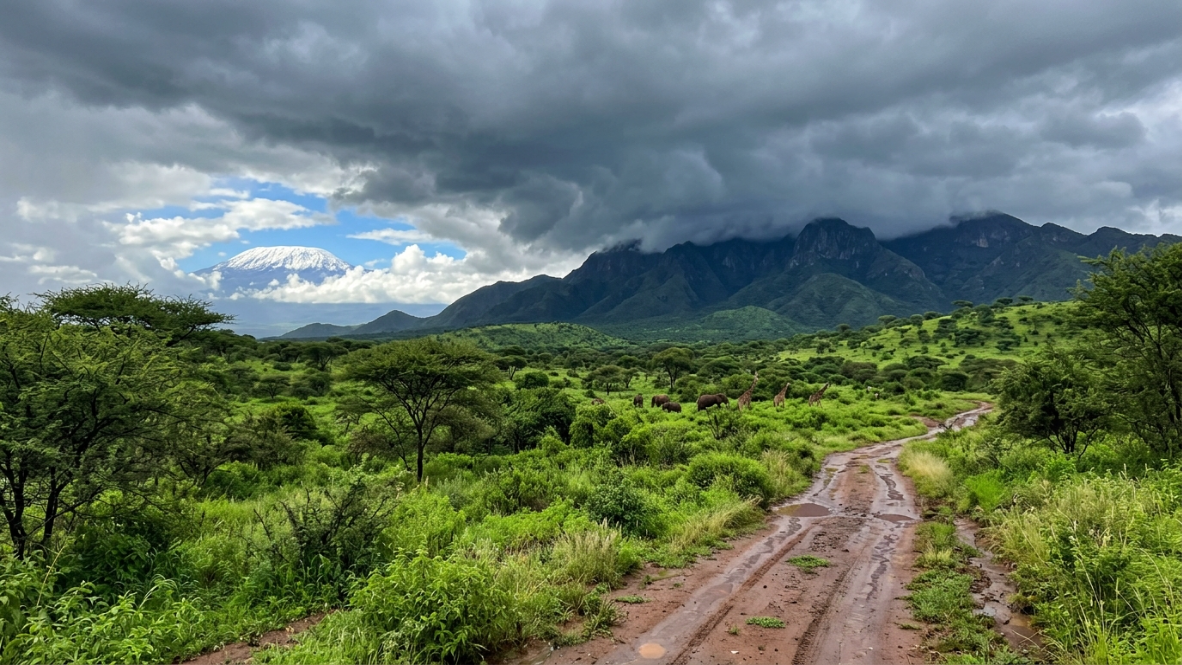
The scenery peaks during the rains. Thunderclouds stack up behind the Pare Mountains, the bush turns green, and clear post-rain air offers striking views of Mount Kilimanjaro. This is also when elephants migrate into Mkomazi from Kenya’s Tsavo West National Park, swelling the park’s large mammal population.
The trade-off: roads can become difficult, vegetation is thicker (making sightings harder), and some campsites may be inaccessible. But for photographers and anyone who values landscapes over guaranteed animal encounters, wet season Mkomazi is compelling.
Tsavo-Mkomazi Migration Corridor
Not a formal “great migration” in the Serengeti sense, but a seasonal movement of elephants, zebras, and other large mammals across the unfenced border between Kenya’s Tsavo West and Mkomazi. This corridor is one of the reasons the Greater Tsavo-Mkomazi Ecosystem matters so much ecologically. It’s also why Mkomazi’s elephant recovery, from 11 animals in the late 1980s to roughly 500 today, has been possible. The elephants were never fully gone; they had retreated north into Kenya and are now returning.
Costs and Logistics
TANAPA Entry Fee
Mkomazi’s park entry fees for non-East African adults are approximately $30 per person per day. Children aged 5 to 15 pay $10. East African Community citizens pay TZS 5,000.
For context, this is a fraction of what the major parks charge. The Serengeti costs $70 to $83 per adult per day. Even Tarangire runs $53 to $59. Mkomazi’s lower fees make it one of the most affordable national park safari experiences in Tanzania. For a complete breakdown of how safari costs add up, see our East Africa safari cost guide.
Concession Fee
An additional per-night charge for staying in accommodation within the park boundaries. For non-East African adults, the concession fee at Mkomazi is $25 per night; children pay $10. This is separate from the daily entry fee and applies on top of your accommodation costs.
Campsite Types and Fees
Mkomazi offers two categories of campsite:
Public campsites cost $35 per person per night and provide basic services (water, shared toilet facilities). The main public campsite is near Zange Gate.
Special campsites cost $59 per person per night. These are secluded spots, such as Dindira and Maore, with no other campers and no facilities. You bring everything, including your own water. The appeal is total solitude in a landscape that already feels empty.
Getting to Mkomazi
The park sits approximately 120 km from Moshi (2.5 to 3 hours by road) and about 140 km from Kilimanjaro International Airport (JRO). The nearest town is Same, which has basic supplies and fuel but limited services. Access is primarily by road via the Zange Gate. A small airstrip near Same can handle private charter flights for those willing to pay for the convenience.
This proximity to Kilimanjaro makes Mkomazi a natural 1 to 2 day add-on for travelers arriving for a Kilimanjaro climb or departing after one. For help with visa requirements and border logistics, we have a separate guide.
Sample Mkomazi Safari Itineraries
1-Day Mkomazi Safari
Best for travelers based in Moshi or Kilimanjaro.
-
Early departure from Moshi
-
Morning game drive
-
Rhino sanctuary visit
-
Lunch inside the park
-
Afternoon wildlife viewing
-
Return to Moshi
2-Day Mkomazi Safari
Ideal for most visitors.
Day 1:
-
Arrival and afternoon game drive
-
Overnight at Mkomazi Wilderness Retreat
Day 2:
-
Sunrise game drive
-
Rhino sanctuary excursion
-
Walking safari
-
Departure
3-Day Mkomazi Safari
Best for photographers and birders.
-
Multiple game drives
-
Rhino sanctuary visit
-
Walking safari
-
Night drive
-
Extended birding sessions
-
Scenic photography opportunities
Typical Mkomazi Safari Cost Breakdown
The total cost of a Mkomazi safari depends on transportation, accommodation, guide services, and park fees.
Estimated Per Person Costs
|
Expense |
Budget |
Mid-Range |
Luxury |
|---|---|---|---|
|
Park Entry |
$30 |
$30 |
$30 |
|
Accommodation |
$35–60 |
$150–300 |
$500+ |
|
Guide & Vehicle |
$100–200 |
$200–350 |
Included |
|
Rhino Experience |
Optional |
Optional |
Often Included |
|
Total Daily Cost |
$165–290 |
$380–680 |
$700+ |
Where to Stay
Accommodation inside Mkomazi is extremely limited. This is a feature of the park, not a failure of development.
Mkomazi Wilderness Retreat
The primary high-end lodging option inside the park, located near Zange Gate. This luxury camp sits beside a waterhole where animals come to drink, and it serves as the base for rhino sanctuary excursions and guided game drives. Expect small-scale, intimate hospitality rather than a large lodge setup.
Babu’s Camp
The only other semi-permanent tented camp inside the park. Options beyond these two properties are essentially limited to camping.
Public and Special Campsites
For self-sufficient travelers, the public campsite near Zange Gate and special campsites at Dindira and Maore offer the most immersive (and affordable) way to experience a Mkomazi National Park safari. Special campsites are entirely private, meaning you’ll have your patch of bush to yourself, but you’ll need to be fully self-contained.
Pros and Cons of Visiting Mkomazi National Park
Advantages
-
Extremely low visitor numbers
-
Affordable park fees
-
Black rhino sanctuary access
-
Rare antelope species unavailable elsewhere in Tanzania
-
Strong conservation focus
-
Excellent birding opportunities
-
Easy add-on from Kilimanjaro
Disadvantages
-
Wildlife is more dispersed than in northern circuit parks
-
Predator sightings are uncommon
-
Limited accommodation options
-
Roads can be challenging during rainy seasons
-
Not ideal as a first safari destination
Who Mkomazi Is For (and Who It Isn’t For)
One seasoned traveler put it bluntly in a widely-cited blog post: “This is not a park for everyone. People with great expectations will be disappointed. It will appeal to those wanting to be in nature and having no demands to see the Big 5.”
Another TripAdvisor reviewer captured the right framing: “Mkomazi is not the most famous park in Tanzania, nor is it the largest and not with the greatest diversity of animal population, but perhaps the most surprising park. Worth a visit, because you don’t drive into traffic jams of animal-hunting safari jeeps.”
Mkomazi is ideal for:
-
Repeat Tanzania visitors who’ve already done the Serengeti and Ngorongoro and want something genuinely different
-
Conservation-minded travelers drawn to the rhino sanctuary and wild dog program
-
Birders chasing Sahel-zone species (vulturine guineafowl, pygmy falcon) unavailable elsewhere in Tanzania
-
Photographers who value empty landscapes and atmospheric light over close-up animal portraits
-
Kilimanjaro climbers looking for a 1 to 2 day safari add-on without a long transfer
-
Budget-conscious travelers attracted to $30/day park fees
Mkomazi is not ideal for:
-
First-time safari visitors expecting Big Five density and guaranteed close encounters
-
Families with young children who need stimulation from frequent, dramatic sightings
-
Anyone on a short trip who can only visit one or two parks (the northern circuit parks simply deliver more wildlife per hour)
If you’re weighing how to fit Mkomazi into a bigger trip, our guide on combining multiple East Africa experiences walks through the logistics of multi-destination itineraries.
Suggested Mkomazi Combinations for a Tanzania Safari
Because Mkomazi requires only 1–2 days, most travelers combine it with other destinations.
Best Safari Combinations
|
Combination |
Recommended Days |
|---|---|
|
Mkomazi + Tarangire |
4–5 Days |
|
Mkomazi + Serengeti |
6–8 Days |
|
Mkomazi + Ngorongoro |
5–7 Days |
|
Mkomazi + Kilimanjaro |
2–4 Days |
|
Mkomazi + Tsavo West |
4–6 Days |
For travelers interested in conservation-focused safaris, Mkomazi pairs particularly well with Tarangire because both parks experience lower visitor pressure than the Serengeti.
Frequently Asked Questions
Is a Mkomazi National Park safari worth it?
It depends on what you’re looking for. If you want solitude, a powerful conservation story, and rare Sahel-zone wildlife (gerenuk, lesser kudu, fringe-eared oryx), Mkomazi delivers something no other Tanzanian park can. If you want dense wildlife viewing and guaranteed Big Five sightings, stick with the northern circuit.
How much does it cost to enter Mkomazi National Park?
Non-resident adults pay approximately $30 per day. Children aged 5 to 15 pay $10. Add a $25 per night concession fee if you’re staying inside the park. This makes Mkomazi one of Tanzania’s most affordable parks, less than half the cost of a Serengeti entry fee.
Can you see rhinos at Mkomazi?
Yes. The Mkomazi Rhino Sanctuary holds roughly 30% of Tanzania’s total black rhino population. The Mbula reserve offers near-guaranteed sightings through the TANAPA-managed public program. The Kisima reserve provides a VIP ground-level hide experience for $200 per person. Tourist access opened in 2021.
How do you get to Mkomazi National Park?
Most visitors drive from Moshi (approximately 2.5 to 3 hours, 120 km) or from Kilimanjaro International Airport (approximately 140 km). The main entrance is Zange Gate, near the town of Same. Private charter flights can land at a small airstrip near Same.
What is the best time to visit Mkomazi?
The dry season (June to October) offers the best wildlife viewing, as animals concentrate around remaining water sources and vegetation thins out. The wet season (November to May) brings dramatic scenery, elephant migration from Tsavo, and views of Kilimanjaro, but tougher road conditions and harder sightings.
How many days do you need at Mkomazi?
One to two full days is sufficient for most visitors. That allows a game drive, a rhino sanctuary visit, and either a walking safari or a night drive. Mkomazi works best as an add-on to a longer Tanzania itinerary rather than a standalone destination.
Is Mkomazi safe?
Yes. The park is managed by TANAPA and follows standard Tanzanian national park safety protocols. All activities (game drives, walking safaris, night drives) are guided. The wildlife is generally shy and avoids vehicles, which actually makes close animal encounters less common, not more dangerous.
What animals can you see at Mkomazi?
The park has 78 recorded mammal species and 450+ bird species. Highlights include black rhinos (in the sanctuary), African wild dogs (in the breeding program), elephants, giraffes, zebras, buffalo, eland, lesser kudu, gerenuk, fringe-eared oryx, and vulturine guineafowl. Predators (lions, leopards, cheetahs) are present but rarely seen due to the thick bush and shy animal behavior.