Safari Booking Mistakes: 12 Costly Errors to Avoid (2026)
TL;DR
The average safari costs over $11,000 per person, making booking errors genuinely expensive. The most common safari booking mistakes include choosing operators on price alone, misunderstanding what’s included in quotes (budget an extra 40-60% above the quoted price for hidden costs), ignoring seasonality, and cramming too many parks into too few days. This guide covers 12 specific mistakes with real dollar figures, practitioner-sourced warnings, and a concrete checklist to protect your investment.
Planning a Tanzania or East Africa safari? Start with our complete safari planning guide for realistic itineraries and pricing.
Quick Answer: What Are the Biggest Safari Booking Mistakes? The most expensive safari booking mistakes are choosing an operator based only on price, misunderstanding what is included in quotes, booking during the wrong season, failing to verify operator credentials, and waiting too long to reserve lodges or permits.
For most travelers, the safest approach is: - Book 12-18 months ahead for peak season - Verify TATO, KATO, or equivalent membership - Request a fully itemized quote - Budget 40-60% above the base price - Purchase travel insurance within 14 days of your first deposit - Spend at least 2-3 nights in each major park - Confirm guide qualifications and vehicle type before paying
These seven steps eliminate the majority of costly safari planning mistakes.
At-a-Glance: The 12 Safari Booking Mistakes
|
# |
Mistake |
What It Costs You |
How Preventable |
|---|---|---|---|
|
1 |
Ignoring seasonality and migration timing |
Dream sighting missed entirely |
Highly, with research |
|
2 |
Choosing an operator on price alone |
Poor guides, unsafe vehicles, ruined trip |
Highly |
|
3 |
Not understanding what’s in your quote |
$800-$1,200+ in surprise fees |
Completely, by asking |
|
4 |
Cramming too many parks into too few days |
Exhaustion, hours driving, fewer sightings |
Completely |
|
5 |
Failing to vet the operator |
Scam losses of $2,000-$10,000+ |
Highly |
|
6 |
Booking too late for peak season |
Sold-out lodges, inferior alternatives |
Completely |
|
7 |
Skipping proper travel insurance |
$20,000-$500,000 evacuation bills |
Completely |
|
8 |
Overpacking or packing wrong |
Excess baggage fees, prohibited drones confiscated |
Completely |
|
9 |
Not securing permits early enough |
Missed gorilla trekking, wasted trip days |
Completely |
|
10 |
Making payments without safeguards |
Total loss to fraud |
Highly |
|
11 |
Having unrealistic wildlife expectations |
Disappointment despite a great trip |
Mostly |
|
12 |
Ignoring group size and vehicle type |
Cramped, obstructed game drives |
Completely |
Why Safari Booking Mistakes Are So Costly
A safari is not a beach vacation where a wrong hotel choice means a slightly smaller pool. The stakes are fundamentally different. You’re spending months of savings on a trip to remote wilderness areas where logistics are complex, pricing is opaque, and recovery from errors is often impossible once you’re on the ground.
The numbers reinforce the point. Internal data from travel insurance provider Squaremouth shows the average safari trip costs over $11,000 per person. A single wrong decision, whether it’s entering a park at the wrong hour, choosing a bargain operator who farms out your booking, or arriving during the wrong month, can easily waste $2,000 or more. Some mistakes cost far more than that.
What follows are the 12 most consequential safari planning mistakes, drawn from years of ground-level operations in East Africa and backed by real cost data.
Safari Booking Mistakes by Financial Impact
Google loves ranking tables.
Most Expensive Safari Mistakes Ranked
|
Mistake |
Potential Cost |
|---|---|
|
No travel insurance |
$20,000-$500,000+ |
|
Fraudulent operator |
$2,000-$10,000+ |
|
Wrong migration timing |
Entire safari experience lost |
|
Hidden fees in quote |
$800-$1,200+ |
|
Last-minute booking |
20%-50% higher costs |
|
Gorilla permit delays |
Lost permit opportunity |
|
Wrong park entry timing |
$100-$150+ |
|
Excess luggage |
$50-$500+ |
1. Ignoring Seasonality and Migration Timing
Best understood as: The “I assumed the wildebeest would be there” mistake.
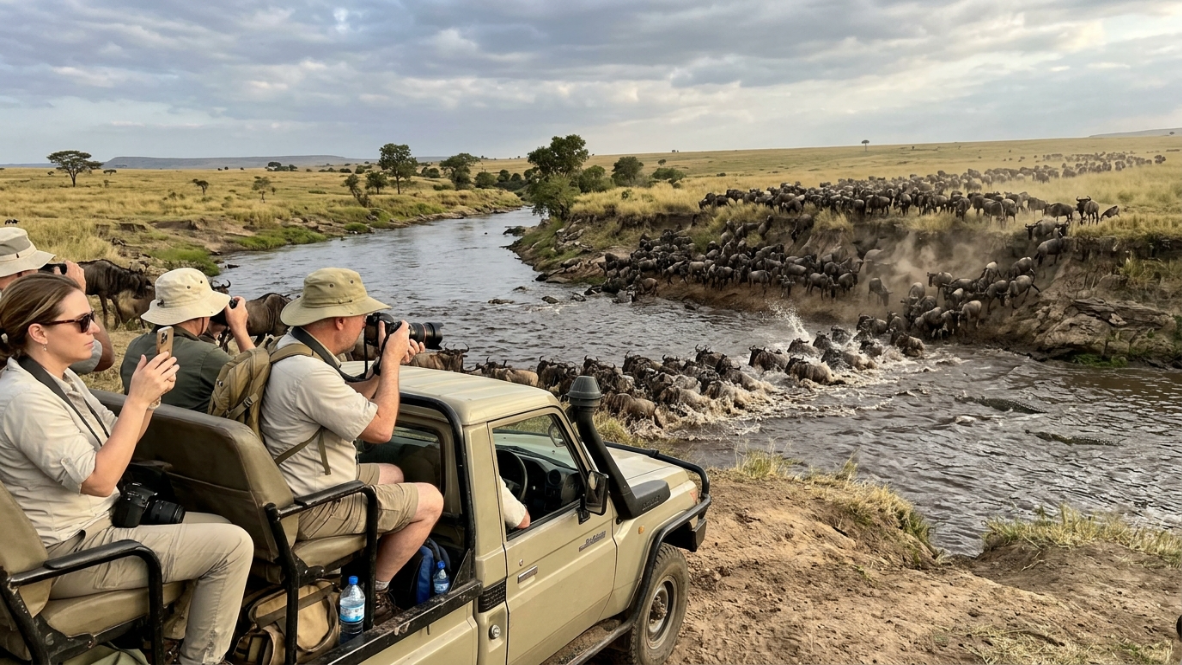
The Great Wildebeest Migration is a continuous, year-round cycle driven by rainfall. It is not a single event you can schedule around. The herds move through the Serengeti ecosystem following the rains, and those rains have become increasingly unpredictable in recent years. The general month-by-month patterns published online are guidelines, not guarantees.
Any operator who promises you’ll see a Mara River crossing on a specific date is someone to walk away from. You cannot fly in for two nights, witness a crossing, and fly out. Nature simply does not accommodate that kind of itinerary. For a deeper breakdown of when and where to see the Migration, proper positioning across the year matters more than picking the “right” month.
What experienced operators actually do is monitor migration reports in real time and adjust camp placements to maximize probability. The difference between a good operator and a bad one here is not luck. It’s preparation and flexibility.
The overcrowding problem is real and growing. In 2025, the most famous Mara River crossing points saw dozens of vehicles jammed in for the same view, with some drivers edging dangerously close to the banks. Choosing less-trafficked areas of the Serengeti during peak season, or timing visits to shoulder months, often produces better experiences than following the crowd.
Key seasonal reference points:
-
June to October: Dry season across East Africa, peak wildlife viewing in the Serengeti and Masai Mara
-
January to March: Calving season in the southern Serengeti (Ndutu area)
-
November to April: Best birding season, with migratory species present
-
July to September: Peak season, highest prices, most crowded
To understand how seasons differ between Tanzania and Kenya, it’s worth comparing both countries before locking in dates.
2. Choosing an Operator Based on Price Alone
Best understood as: The “you get what you pay for” mistake, with a twist most people don’t know about.
Two safaris can look identical on paper, same parks, same number of nights, same accommodation tier, and feel completely different on the ground. The cheapest option often means inexperienced guides, poorly maintained vehicles, uncomfortable accommodations, hidden fees, or unsafe operations.
Cheaper tours frequently pack more people into a single vehicle. The best operators limit game drive vehicles to between two and eight guests. Budget operators may put 15 people in one vehicle for a three-hour drive.
But the most under-discussed problem is what practitioners on TripAdvisor forums call the “freelance guide issue.” Tourism is booming in Northern Tanzania, and there’s no standardized system of guide qualification the way there is in Kenya or Zimbabwe. Even otherwise reputable companies sometimes employ freelance guides of mixed quality rather than turn away business during busy periods.
Here’s how it works: when a company has already booked all their regular guides and receives another request, do they turn the booking away or farm it out to a freelance? The guest has absolutely no way of knowing if the person in the company vehicle, wearing the company shirt, is a full-time employee with years of training or someone hired for a week. This problem has been flagged by experienced safari-goers and operators alike, yet almost no booking advice mentions it.
Questions to ask before booking:
-
Are your guides full-time employees or freelance?
-
What guide training and certifications do they hold?
-
What is the maximum number of guests per vehicle?
-
How old are your safari vehicles, and what maintenance schedule do they follow?
A guide certified by the Tanzania Tourist Guide Association with a decade of field experience costs more than a recently licensed guide. The price difference between operators reflects that cost, even if the itinerary descriptions look the same.
3. Not Understanding What’s Actually Included in Your Quote
Best understood as: The “$2,000 surprise” mistake.
Safari pricing in East Africa is notoriously opaque. Budget an additional 40-60% above your quoted price for costs that many operators don’t include upfront. A $2,000 safari typically requires $800 to $1,200 extra for park fees, tips, activities, and unexpected expenses.
Commonly omitted costs in Tanzania:
|
Fee |
Amount |
|---|---|
|
Serengeti entry |
$82.60 per adult per 24 hours |
|
Serengeti concession fee (lodge/camp stays) |
$70.80 per person per night |
|
Ngorongoro Crater entry |
$82.60 per person |
|
Ngorongoro Crater descent fee |
~$250 per vehicle |
|
Tarangire / Lake Manyara / Arusha NP entry |
$59 per person |
|
Tanzania tourist visa |
$50 for most nationalities |
|
Tipping (guide) |
$20-$30 per person per day |
|
Tipping (lodge staff) |
$10-$15 per person per day |
For a week-long safari, tips alone can run $200 to $300 per person.
There’s also a trap that only ground operators tend to know about: Tanzania’s 24-hour park rule. TANAPA park permits are valid for exactly 24 hours from the time of entry. Enter the Serengeti at 10 AM on Day 1, and your permit expires at 10 AM on Day 2. Enter at the wrong time, and you’ll pay an extra $100 to $150 in fees for a second permit. A good operator plans entry times to avoid this entirely. A careless one costs you money.
What to ask: Request a fully itemized quote and specifically ask whether park fees, crater descent, conservation levies, and tips are included. For a transparent breakdown of safari costs, understanding what each line item means makes it much harder for operators to hide charges.
For visa specifics, our East Africa visa guide covers the latest requirements and fees.
Safari Costs Most Travelers Forget to Budget For
Many first-time safari travelers focus on accommodation and game drives while overlooking secondary expenses that can significantly increase total trip costs.
Common Hidden Safari Expenses
|
Expense Category |
Typical Cost |
|---|---|
|
Guide tipping |
$20-$30 per day |
|
Lodge staff tipping |
$10-$15 per day |
|
Alcoholic drinks |
$5-$15 each |
|
Laundry services |
$3-$10 per item |
|
Bush flight baggage fees |
Variable |
|
Visa fees |
$50-$100 |
|
Travel insurance |
$100-$600+ |
|
Optional balloon safari |
$550-$700+ |
A realistic safari budget includes these expenses from the beginning rather than treating them as unexpected add-ons.
4. Cramming Too Many Parks Into Too Few Days
Best understood as: The “I want to see everything” mistake.
Safari distances look manageable on a map but feel enormous on the ground. The Serengeti alone covers roughly 30,000 square kilometers. Roads in national parks are unpaved, slow, and bumpy. Travelers who don’t research distances and logistics end up spending more hours driving between parks than actually watching wildlife.
Plan an itinerary with a series of one-night stays, and you’ll do nothing more than travel from place to place. You won’t get a real sense for any destination, and you’ll feel rushed the entire time. Fewer destinations with longer stays almost always deliver better sightings and a more meaningful experience.
Recommended pacing:
-
Minimum per major park: 2-3 nights
-
Sweet spot for first-time visitors: 7 to 10 days total
-
Solid baseline itinerary: Tarangire (2 nights) → Serengeti (3 nights) → Ngorongoro (1-2 nights)
Travelers considering a Zanzibar beach extension should build that into the total timeline rather than stealing days from the safari portion. Our guide on combining safari and beach explains how to structure this without rushing either experience.
For those weighing multi-country options, see our East Africa itinerary guide for properly paced routes across Tanzania, Kenya, Uganda, and Rwanda.
5. Failing to Vet the Operator Thoroughly Enough
Best understood as: The “it looked legitimate online” mistake.
Fraudsters set up professional-looking websites and social media pages claiming to be licensed tour operators. They promise incredible safaris at attractive prices, collect deposits, and disappear. Some scammers copy the names of reputable operators or create nearly identical websites. A real company might be “Authentic Africa Safaris” while a scammer creates “Authentic African Safaris.”
Red flags:
-
No physical office address or named contact person
-
No registration with tourism boards (TTB in Tanzania, KTB in Kenya, UTB in Uganda)
-
Pushy sales tactics and pressure to send money quickly
-
Poorly written communications with vague itinerary details
-
Promises of “guaranteed sightings” (no ethical operator makes this claim)
-
Review patterns showing bursts of overly polished reviews posted in a short time frame, with no guides mentioned by name
Verification checklist:
-
Confirm the company is registered with TATO (Tanzania Association of Tour Operators) or KATO (Kenya Association of Tour Operators)
-
Verify the legal business name, registration number, and physical address you can map
-
Check membership in a recognized industry body’s public directory
-
Request a written, dated itinerary on company letterhead with full inclusions and exclusions
-
Ensure park fees, conservation levies, and taxes are itemized separately
-
Read reviews across multiple platforms, looking for specific guide names and detailed trip descriptions
A good operator values long-term trust, not quick transactions. Thorough vetting takes an hour of research but can save thousands.
6. Booking Too Late for Peak Season
Best understood as: The “I thought I could figure it out later” mistake.
Peak season in East Africa runs from July through September. During these months, the best lodges and camps sell out far in advance, and the vehicles and guides of all reliable operators may already be fully committed. Book too late, and the only options left may be disreputable outfits that more experienced travelers have already avoided.
Booking lead times by experience type:
|
Experience |
Recommended Lead Time |
|---|---|
|
Peak season safari (July-September) |
12-18 months |
|
Northern Serengeti Migration camps |
12+ months |
|
Premium lodges (e.g., exclusive-use properties) |
12-24+ months |
|
Gorilla trekking permits (Uganda/Rwanda) |
6-12 months |
|
Shoulder season safari (October-November, March-May) |
6-9 months |
Some high-end properties get booked over two years in advance. Specific room types at top lodges are often spoken for more than a year out. Even for shoulder season travel, waiting until the last minute limits choices significantly.
When Should You Book a Safari?
Safari Booking Timeline
|
Travel Period |
Recommended Booking Window |
|---|---|
|
Peak Season (Jul-Sep) |
12-18 months |
|
Great Migration River Crossings |
12-18 months |
|
Luxury Lodges |
12-24 months |
|
Gorilla Trekking |
6-12 months |
|
Shoulder Season |
6-9 months |
|
Green Season |
3-6 months |
Booking early provides access to better guides, better room categories, and often lower rates than waiting until availability becomes limited.
7. Skipping Travel Insurance or Buying the Wrong Policy
Best understood as: The “$100,000 gamble” mistake.
On a trip costing $11,000 or more per person, skipping travel insurance is a genuinely reckless decision. But buying the wrong policy is almost as bad.
Medical evacuation from a remote safari area costs between $20,000 and $50,000 without coverage. The CDC notes that evacuation costs can exceed $100,000 from remote regions, and some sources cite bills over $500,000 for evacuations from locations like Mount Kilimanjaro. Most U.S. health insurance plans offer no or very limited coverage for medical care abroad. Medicare doesn’t cover healthcare outside the U.S. at all.
What the right policy includes:
-
Medical evacuation coverage: At least $250,000, which covers most scenarios
-
Trip cancellation: Essential given the high upfront costs
-
Pre-existing condition waiver: Many plans waive pre-existing conditions if purchased within 14-21 days of your first deposit
The timing detail matters. Buy the policy weeks or months after your first deposit, and you may lose the pre-existing condition waiver entirely.
8. Overpacking or Packing the Wrong Gear
Best understood as: The “I brought everything just in case” mistake.
If your safari includes domestic flights on bush planes (common for reaching the Serengeti or remote camps), luggage limits are strict: typically 15 to 20 kilograms including hand luggage. These limits are enforced. Excess baggage fees are high and represent one of the most common hidden safari costs.
Common packing errors:
-
Bringing heavy hiking boots for game drives (comfortable closed shoes or lightweight trail shoes are fine for everything except Kilimanjaro climbs)
-
Packing drones, which are prohibited in most national parks and can be confiscated at park gates
-
Bringing large camera equipment without knowing how to use it
-
Wearing bright white or neon clothing instead of neutral, earth-toned colors
-
Packing rigid, hard-shell suitcases that don’t fit in bush plane cargo holds (soft duffel bags are required by most charter flights)
Pack light, pack neutral, pack soft-sided.
9. Not Securing Permits Early Enough
Best understood as: The “I assumed permits would be available” mistake.
Gorilla trekking permits in Uganda and Rwanda are strictly limited because wildlife authorities control visitor numbers to protect the gorillas. During peak travel seasons, permits sell out months in advance. Waiting too long to reserve permits is one of the most frustrating safari booking mistakes because by the time you realize the problem, it’s too late to fix.
Only book permits through recognized operators or directly through the wildlife authority: UWA (Uganda Wildlife Authority) in Uganda and RDB (Rwanda Development Board) in Rwanda. For a detailed breakdown of permit costs and booking rules, understanding the process early is the only way to secure your spot.
The Ngorongoro Crater presents a different permit issue. The crater descent fee (around $250 per vehicle, separate from the per-person entry fee) can dramatically inflate costs if it wasn’t included in your original quote. This isn’t a permit that sells out, but it’s a cost that catches many travelers off guard. See Mistake #3.
10. Making Payments Without Safeguards
Best understood as: The “wire transfer to a stranger” mistake.
After deposits and advance payments is when most safari scams take place. Once a fraudster accepts payment, they stop all communication. Tracking someone down in a foreign country after the fact is nearly impossible.
Deposit payments are standard practice among East African tour operators. All of the largest reputable companies require advance payments to confirm bookings. The issue isn’t deposits themselves. It’s how and where you send the money.
Payment safety rules:
-
Always pay into a company bank account, never an individual’s personal account
-
Use secure payment methods: credit cards, PayPal, or other verified gateways that offer dispute resolution
-
Insist on a signed contract before any money changes hands
-
Keep all communication in writing for proof
-
Be wary of wire-only payment requirements with no alternative options
-
Question 100% upfront payment demands. A 25-50% deposit is standard; full payment before any service delivery is unusual for reputable operators
Credit cards offer the strongest buyer protection. If an operator only accepts wire transfers to a personal account, that’s a clear warning sign regardless of how professional the website looks.
What Influences Wildlife Sighting Success?
Many travelers assume wildlife sightings are purely luck, but several factors strongly influence success rates.
Key Factors Affecting Safari Sightings
-
Guide experience
-
Number of game drive days
-
Season and rainfall
-
Time of day
-
Vehicle mobility
-
Park choice
-
Group size
A highly experienced guide over four days often produces significantly better wildlife viewing than a budget safari with an inexperienced guide over the same period.
11. Having Unrealistic Wildlife Expectations
Best understood as: The “I want to see the Big Five in one morning” mistake.
You cannot schedule a leopard. Safari brochures and Instagram feeds create expectations that reality doesn’t always match on any given day. A leopard sighting might happen in the first hour or not at all during a three-day stay. That’s wildlife. Multiple days in the bush dramatically increase the odds of exceptional sightings, but nothing is certain.
Guide quality is the single biggest variable in wildlife sighting success. An experienced guide who knows a specific territory, who can read tracks and animal behavior, who has spent years building knowledge of individual animals and their territories, will consistently find more wildlife than someone with basic training. This is another reason why the price-only approach (Mistake #2) backfires. The guide is the trip.
How to set realistic expectations:
-
Plan at least 2-3 full game drive days per major park
-
Treat each day as its own experience rather than a checklist
-
Trust your guide’s knowledge of the area
-
Understand that “bad weather” days sometimes produce the most dramatic wildlife behavior
-
Remember that the animals you didn’t expect to care about (wild dogs, bat-eared foxes, lilac-breasted rollers) often become trip highlights
12. Ignoring Group Size and Vehicle Type
Best understood as: The “I didn’t ask about the vehicle” mistake.
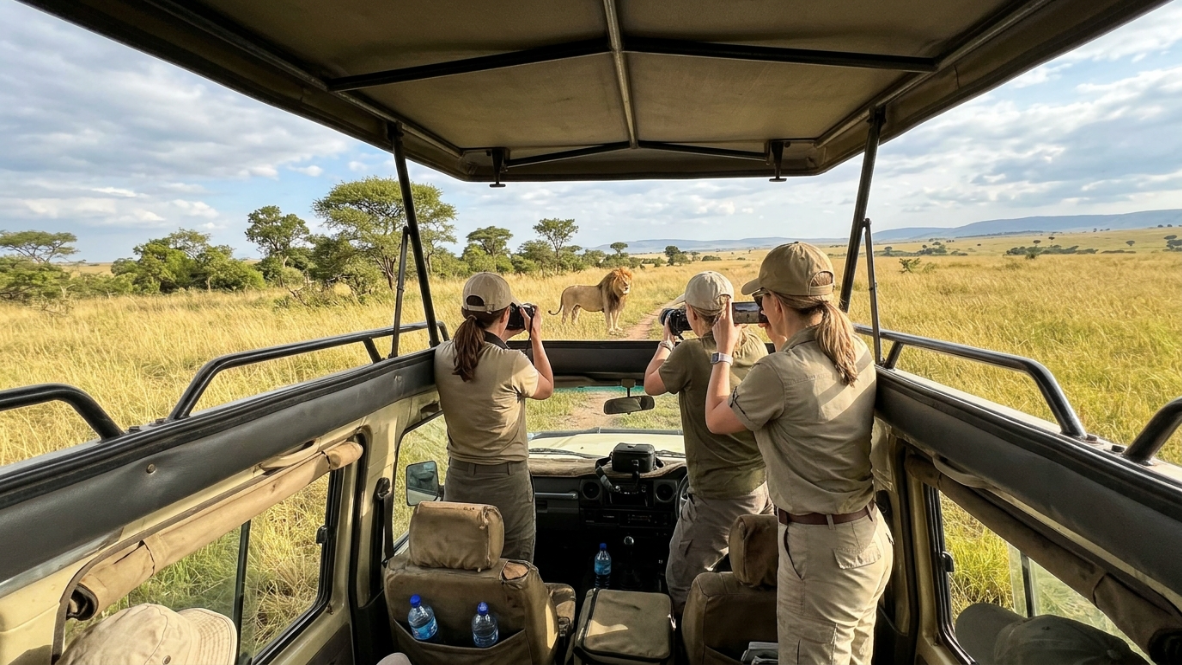
The difference between a private pop-top Land Cruiser with four guests and a minibus with 15 passengers is enormous. Both technically qualify as “safari vehicles.” Both might appear in the same price category from different operators. The experience they deliver is worlds apart.
A pop-top (or pop-up roof) vehicle allows everyone to stand, see over the brush, and photograph without obstruction. A minibus with fixed windows and a small roof hatch forces passengers to take turns looking out. More people per vehicle also means more noise, more competition for window seats, and less flexibility on timing. If one person spots a cheetah kill and the group wants to stay, but three others are bored, the guide has to compromise.
Private vehicles solve most of these problems. Your guide works for you, moves at your pace, and stays as long as you want at a sighting. The cost difference between shared and private is meaningful but often worth every dollar. For a side-by-side comparison, our guide on shared vs. private safaris breaks down when each option makes sense.
Questions to ask:
-
How many guests will share the vehicle?
-
What type of vehicle is used (Land Cruiser, Land Rover, minibus)?
-
Does the vehicle have a pop-top/pop-up roof?
-
Is the vehicle exclusively mine, or shared with other bookings?
Your Pre-Booking Checklist
Before committing money to any safari, work through this list:
-
Seasonality: Have you matched your travel dates to the wildlife experience you want?
-
Operator vetting: Is the company registered with TATO, KATO, or an equivalent body? Can you verify a physical address?
-
Quote transparency: Have you received a fully itemized quote with park fees, crater fees, conservation levies, visa costs, and tipping guidance all listed?
-
Itinerary pacing: Are you spending at least 2-3 nights per major park?
-
Booking timeline: For peak season, are you booking 12-18 months out?
-
Insurance: Do you have a policy with at least $250,000 in medical evacuation coverage, purchased within 14-21 days of your first deposit?
-
Permits: Are gorilla trekking permits or other limited-access experiences secured?
-
Payment security: Are you paying into a verified company account with a signed contract?
-
Luggage: Are you within the 15-20 kg limit for bush flights?
-
Vehicle and guide: Do you know the vehicle type, maximum guest count, and whether your guide is a full-time employee?
-
Expectations: Have you accepted that wildlife is wild, and flexibility matters more than a checklist?
Ready to plan an East Africa safari without the mistakes? Explore private Tanzania safari options for transparent pricing, fully itemized quotes, and experienced full-time guides.
Frequently Asked Questions
How far in advance should I book a safari?
For peak season travel (July through September), book 12 to 18 months ahead. Premium lodges and the best operators fill their capacity early. For shoulder season, 6 to 9 months is usually sufficient. Gorilla trekking permits should be secured at least 6 months out, sometimes earlier for peak periods.
What’s a realistic budget for a Tanzania safari?
A mid-range private safari in Tanzania typically starts around $350-$500 per person per day for a well-run operation, including most costs. Budget an extra 40-60% above the base quote if park fees, tips, and extras aren’t included. For a detailed cost breakdown, comparing what different price points actually buy is the best way to set expectations.
How do I know if a safari operator is legitimate?
Check registration with TATO (Tanzania) or KATO (Kenya). Verify the physical office address. Look for detailed reviews on TripAdvisor and SafariBookings that mention specific guides by name. Ask for a signed contract and itemized quote on company letterhead before paying anything.
Is travel insurance really necessary for a safari?
Yes, without question. Medical evacuation from a remote area can cost $20,000 to $100,000 or more. Most U.S. health plans provide no coverage abroad. Buy a policy with at least $250,000 in evacuation coverage within 14-21 days of your first deposit to qualify for pre-existing condition waivers.
What’s the 24-hour park rule in Tanzania?
Tanzania national park permits (issued by TANAPA) are valid for exactly 24 hours from the time of entry. If your guide enters the Serengeti at the wrong time of day, you may need to purchase a second permit, costing an extra $100-$150 per person. A competent operator plans entry timing to avoid this.
Can I book a safari after arriving in Tanzania?
Technically yes, but it’s risky. During peak season, reliable operators are fully booked, and last-minute options are often the operators that experienced travelers have already rejected. Booking on arrival also means less time to vet the company, negotiate terms, and secure the best accommodations.
What should I do if an operator guarantees specific wildlife sightings?
Be skeptical. No ethical operator guarantees sightings of specific animals. Wildlife is unpredictable. Operators can position you in the right areas at the right times to maximize probability, but guarantees are a red flag that suggests the operator is more interested in closing a sale than being honest about the experience.
How do I avoid the freelance guide problem?
Ask directly: “Are all your guides full-time employees, or do you use freelance guides during busy periods?” A reputable operator will answer honestly. If the answer is that they sometimes use freelancers, ask what vetting and training standards those freelance guides must meet. Transparency on this question is itself a good sign.