Remote Tanzania Safaris 2026: 8 Parks & Operator Guide
TL;DR
Tanzania’s southern and western circuits, parks like Ruaha, Katavi, Mahale, and Nyerere, deliver world-class wildlife in near-total solitude. But the operator you choose matters far more here than on the well-trodden northern circuit. Limited flight schedules, tiny camps with 12 beds or fewer, and zero margin for logistical errors mean your safari company needs genuine ground operations in Tanzania, certified guides, and deep experience coordinating bush flights and remote camp bookings. This guide covers how to vet operators for these trips and profiles the eight remote destinations worth building an itinerary around, with costs ranging from $450 to $2,000+ per person per day.
Quick Answer: What Are the Best Remote Tanzania Safaris? For travelers seeking fewer crowds and a more exclusive wildlife experience, the best remote Tanzania safari destinations are:
|
Park |
Best For |
Crowd Level |
|---|---|---|
|
Ruaha National Park |
Predators and first remote safari |
Low |
|
Nyerere National Park |
Boat safaris and wild dogs |
Low |
|
Katavi National Park |
Ultimate wilderness |
Extremely Low |
|
Mahale Mountains |
Chimpanzee trekking |
Very Low |
|
Saadani National Park |
Beach and safari combination |
Low |
|
Udzungwa Mountains |
Hiking and primates |
Very Low |
|
Kitulo Plateau |
Flowers and birding |
Near Zero |
Most travelers choose either:
-
Ruaha + Nyerere (7–8 days)
-
Katavi + Mahale (10–11 days)
-
Ruaha + Zanzibar (8–10 days)
Remote Tanzania safaris typically cost between $450 and $2,000+ per person per day depending on flight requirements, camp exclusivity, and park location.
Why Your Operator Matters More on Remote Safaris
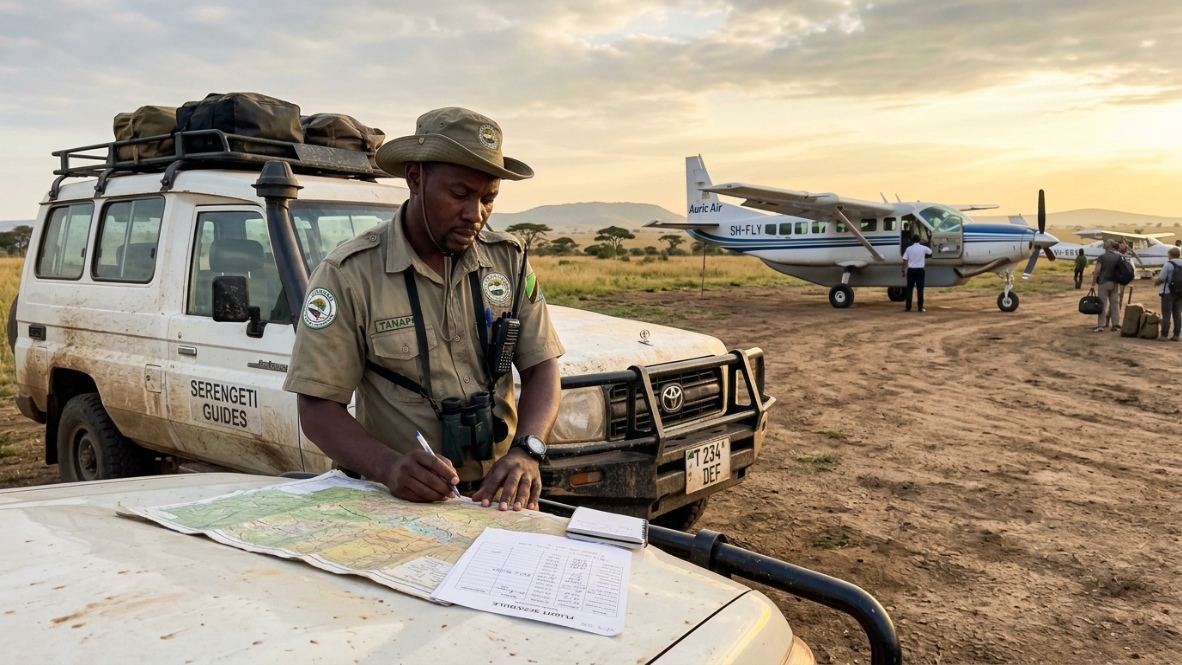
Most first-time safari visitors fly into Arusha and head straight for the northern circuit: Serengeti, Ngorongoro Crater, Tarangire. Dozens of operators run these routes competently. The logistics are well-established, camps are plentiful, and if something goes wrong, alternatives are nearby.
Remote Tanzania safaris are a different proposition entirely. Bush flights to Katavi operate twice a week. Mahale is accessible only by boat. Camps hold a dozen guests at most. A missed connection or a booking error doesn’t mean switching to another lodge down the road. It means losing days of your trip.
Practitioners on Fodor’s travel forums consistently cite vehicle congestion at Ngorongoro and the central Serengeti as the primary motivation for heading south or west. One experienced traveler put it bluntly: “We’ve sat and watched leopard in a tree and lions at a kill with no-one else there.” But that solitude comes with logistical complexity that separates capable operators from those simply reselling packaged itineraries.
The operator you select determines whether a remote safari unfolds seamlessly or unravels at the first disruption. This is the single most important decision you’ll make.
For a full overview of Tanzania’s safari landscape, see our Tanzania safaris guide.
Remote Tanzania vs Northern Circuit Safaris
Many travelers wonder whether they should choose the famous Northern Circuit or Tanzania's remote southern and western parks.
|
Factor |
Northern Circuit |
Remote Parks |
|---|---|---|
|
Wildlife Density |
Excellent |
Excellent |
|
Crowds |
High in peak season |
Very Low |
|
Accessibility |
Easy |
Moderate |
|
Safari Cost |
Lower |
Higher |
|
Luxury Camps |
Excellent |
Excellent |
|
Walking Safaris |
Limited |
Outstanding |
|
Boat Safaris |
Rare |
Available in Nyerere |
|
Chimpanzee Trekking |
No |
Mahale |
|
Wild Dog Sightings |
Rare |
Excellent |
What to Look for When Choosing a Remote Safari Operator
Not every company advertising remote Tanzania safaris has the infrastructure to actually deliver them. Here’s what separates operators who belong in these parks from those who don’t.
Ground Operations in Tanzania
This is non-negotiable. An operator with a local team in Tanzania (not just a sales office abroad that subcontracts to whoever is available) can respond in real time when a bush flight is delayed, a camp has a last-minute issue, or weather forces a reroute. Ask directly: do you have your own staff and vehicles in-country, or do you broker through a local partner?
Operators with dual offices (one in the traveler’s home market for planning, one in Tanzania for execution) offer the best of both worlds: easy communication during the booking process and on-the-ground responsiveness during the trip.
Guide Qualifications and Training
In remote parks, your guide isn’t just pointing out animals. They’re navigating roads that wash out seasonally, managing walking safaris with armed rangers, and making judgment calls far from backup. Ask operators:
-
What certifications do your safari guides hold? Look for advanced training programs like EcoTraining or FGASA (Field Guides Association of Southern Africa) qualifications. These signal a commitment to wildlife interpretation that goes beyond basic species identification.
-
What safety credentials do your guides carry? For mountain and walking safari contexts, Wilderness First Responder (WFR) certification indicates serious emergency preparedness.
-
How long have your guides worked in these specific parks? Remote park guiding requires intimate knowledge of seasonal road conditions, animal movement patterns, and camp-specific logistics that generalist guides may lack.
Practitioners on Reddit report that guide quality is the single factor most correlated with trip satisfaction, more than camp luxury or even wildlife density. One user noted that their guide’s ability to read animal behavior and position their vehicle correctly made the difference between watching a hunt unfold and missing it entirely.
Licensing, Sustainability, and Ethical Operations
Tanzania requires safari operators to hold a valid TALA (Tourism Agent Licensing Authority) license. Beyond that baseline, look for:
-
KPAP (Kilimanjaro Porters Assistance Project) partnership if your trip includes any trekking component. This verifies fair porter treatment, including proper wages, gear, and load limits.
-
Travelife Certification, an internationally recognized sustainability standard. Very few Tanzania operators hold this (reportedly only six in the country).
-
Carbon offset programs and community partnerships that demonstrate investment beyond the safari vehicle.
These aren’t marketing badges. They’re verifiable commitments that reflect how an operator treats its staff and its environment, both of which affect your experience directly.
Demonstrated Experience with Remote Itineraries
Ask potential operators how many remote southern or western circuit trips they’ve run in the past year. Request sample itineraries. A company that primarily runs northern circuit trips and occasionally tacks on Ruaha is different from one that designs Katavi-Mahale combinations routinely.
Look for operators who can speak in specifics: which camps they prefer and why, how they handle the twice-weekly flight schedule to Katavi, what their contingency plan is if weather delays a boat transfer to Mahale.
Review Footprint and Third-Party Validation
Reviews matter, but where and how many matters more. A handful of five-star reviews on one platform tells you less than hundreds across TripAdvisor, SafariBookings, and Google. Look for:
-
Consistency over years, not just a burst of recent reviews
-
Specific mentions of remote parks (not just Serengeti and Ngorongoro)
-
Awards like TripAdvisor Travelers’ Choice sustained over multiple years
-
SafariBookings ratings, which tend to attract serious safari travelers who compare operators carefully
At-a-Glance Comparison: Remote Tanzania Safari Destinations
|
Destination |
Size |
Visitor Level |
Key Species |
Main Activity |
Best Season |
Access |
Budget Range |
|---|---|---|---|---|---|---|---|
|
Ruaha |
20,226 km² |
Low |
Lion, wild dog, kudu |
Game drives, walking |
Jun–Oct |
Daily flights from DAR |
$$–$$$ |
|
Nyerere (Selous) |
30,893 km² |
Low-moderate |
Wild dog, elephant, hippo |
Boat safari, walking |
Jun–Oct |
30 min from DAR |
$$–$$$ |
|
Katavi |
4,471 km² |
Extremely low |
Hippo, buffalo, lion |
Game drives, walking |
Jun–Nov |
2x/week flights |
$$$ |
|
Mahale Mountains |
1,613 km² |
Very low |
Chimpanzees |
Trekking, kayaking |
Jun–Oct |
Boat only |
$$$$ |
|
Saadani |
1,062 km² |
Low |
Elephant, green turtle |
Game + boat + beach |
Jun–Aug, Jan–Feb |
30 min from DAR or ZNZ |
$–$$ |
|
Kitulo Plateau |
413 km² |
Near zero |
Orchids, blue swallow |
Hiking, birding |
Dec–Apr |
Drive from Mbeya |
$ |
|
Udzungwa Mountains |
1,990 km² |
Very low |
Kipunji monkey, primates |
Hiking only |
Jun–Oct |
Drive from Mikumi |
$ |
Key: $ = under $450/person/day | $$ = $450–$800 | $$$ = $850–$1,500 | $$$$ = $1,500+
1. Duma Explorer: An Operator Built for Remote Tanzania Safaris
Best for: Travelers who want a single, vetted operator to handle every moving part of a remote Tanzania safari, from bush flights and camp selection to multi-park logistics and real-time problem solving.
Remote safaris involve far more coordination than a standard northern circuit loop. Flights operate on limited schedules, camps hold a dozen guests at most, and delays in one leg can cascade through an entire itinerary. Duma Explorer (operating locally as Alika Africa) checks every box outlined in the vetting criteria above, and does so with a track record spanning over two decades.
How it measures up against the criteria:
-
Ground operations: Founded in 2002 with dual offices in Arusha and the San Francisco Bay Area. The Tanzania-based team (Alika Africa) handles vehicles, guides, and in-country logistics directly, not through subcontractors.
-
Guide qualifications: Safari guides undergo EcoTraining refreshers and are being enrolled in FGASA Level 1 certification (a 55-day NQF2 program launching December 2025). Kilimanjaro guides hold Wilderness First Responder credentials. This level of training investment is uncommon among Tanzania-based operators.
-
Licensing and ethics: KPAP founding partner for verified porter welfare. Travelife Certified for sustainability (one of only six operators in Tanzania). Carbon offsets through Carbon Tanzania covering over 155,000 liters of diesel.
-
Remote itinerary experience: Owner Stacy Readal has spent 15+ years based in Tanzania, speaks fluent Swahili, and personally designs itineraries across every park on this list, including Ruaha, Nyerere, Katavi, Mahale, and Saadani. She knows specific camps, guides, and seasonal positioning intimately.
-
Review footprint: 600+ five-star reviews across platforms, TripAdvisor Travelers’ Choice from 2020 through 2025, and a 5.0/5 rating on SafariBookings (86 reviews under Alika Africa). Featured in Forbes, Wall Street Journal, Washington Post, and Travel + Leisure.
What a remote itinerary looks like:
Duma Explorer designs private southern circuit trips (typically Nyerere plus Ruaha over 7 to 8 days) and western wilderness itineraries (Katavi plus Mahale over 10 to 11 days), with optional extensions to Zanzibar, Saadani, or gorilla trekking in Uganda and Rwanda. Starting price guides on their site show a 5-day safari from roughly $2,000 per person, scaling up with remoteness and camp tier.
Real-world perspective: Practitioners on Reddit who have booked through Duma Explorer cite high responsiveness from Stacy during the planning process, smooth in-country logistics, and thoughtful timing advice for experiences like the Great Migration. One user described a honeymoon itinerary that included a hot-air balloon over the Serengeti coordinated seamlessly alongside remote southern parks. Reddit’s gorilla trekking threads also highlight the risk of permit scams when booking independently, reinforcing the value of working with a verified operator for multi-country logistics.
Explore their private safari options and routes to see how custom remote itineraries come together.
2. Ruaha National Park
Best for: Your first remote Tanzania safari, with serious predator action and daily flight access.
At 20,226 km², Ruaha is Tanzania’s largest national park and the largest protected area in East Africa. Despite that size, only about one-third of the park is used for tourism, leaving the majority completely untouched.
Why it belongs on this list:
-
Home to an estimated 10% of the world’s lion population, one of four remaining cheetah populations in East Africa, and the third-largest wild dog population on the continent
-
More than 570 bird species recorded, making it one of Africa’s premier birding destinations
-
Sits at a rare ecological crossover where East and Southern African fauna overlap. You can see sable antelope, Grant’s gazelle, greater kudu, and lesser kudu alongside typical East African species
-
Only 11 camps and lodges in the entire park
What to ask your operator about Ruaha:
A good operator should be able to recommend specific camps based on your priorities (photography, walking safaris, fly camping) and explain the differences between river-front and plateau locations. They should know which camps offer open-sided vehicles, which are better for photography than the enclosed pop-up roof land cruisers common on the northern circuit. Forum users on Fodor’s flag this as a major advantage of southern parks.
Access and logistics:
Scheduled light aircraft flights connect Ruaha to Dar es Salaam (1.5 hours) and Arusha (2 hours), with connecting flights from Nyerere and other southern parks. This makes Ruaha the most accessible of Tanzania’s truly remote parks.
Activities:
Game drives are the primary activity, but select camps (Ikuka, Jongomero, Kichaka) offer walking safaris and fly camping. Hot-air ballooning is available at around $550 per person.
Best timing:
Peak game viewing runs from June to October when animals concentrate around water sources. May and November offer shoulder-season value with significant savings on accommodation. Birding peaks from December to April when migrants are present and the bush is green.
Tradeoffs:
-
Roads can be challenging in the wet season (February through April)
-
Less predictable big-cat sighting density than the central Serengeti
-
Longer flight time from Arusha compared to northern circuit parks
3. Nyerere National Park (Formerly Selous)
Best for: Easiest entry point to a remote safari, with unique boat safaris on the Rufiji River.
Nyerere became Tanzania’s largest national park in 2019 when the northern section of the Selous Game Reserve was designated separately. At 30,893 km², it’s roughly the size of Belgium.
Why it belongs on this list:
-
One of the best places in Africa to see endangered African wild dogs. These painted wolves thrive in the park’s expansive woodlands.
-
Holds the largest elephant population in Tanzania, along with large numbers of rare black rhino
-
The Rufiji River system creates a watery wilderness that supports boat safaris, an activity unavailable in most other Tanzanian parks
What to ask your operator about Nyerere:
Boat safaris depend on water levels, which vary seasonally. Your operator should know exactly when water levels support the best boat experiences and which camps have the strongest boat safari programs. They should also be transparent about conservation challenges: some areas of the former Selous have experienced poaching pressure, though active efforts are underway. An operator willing to discuss these realities honestly is one worth trusting.
Access and logistics:
A 30-minute internal flight from Dar es Salaam. This is the shortest transfer of any remote Tanzania safari destination, which makes it practical even for shorter itineraries.
Activities:
Boat safaris on the Rufiji at sunset, watching elephants cross between islands and hippos surface around you, rank among East Africa’s most distinctive wildlife experiences. Walking safaris, fly camping, and catch-and-release fishing round out the options.
Best timing:
June through October for optimal game viewing. The dry season concentrates wildlife around the river and its tributaries.
Tradeoffs:
-
Higher tourist numbers than Katavi or Mahale (though still far below northern circuit levels)
-
Boat safaris depend on water levels, which vary seasonally
Pairing suggestion: A classic southern circuit itinerary combines Nyerere (3 to 4 nights) with Ruaha (3 to 4 nights), possibly followed by a few days on Zanzibar. For help deciding between coastal options, see our guide on Zanzibar vs. mainland Tanzania.
4. Katavi National Park
Best for: Safari connoisseurs who want the most exclusive wilderness experience in East Africa.
This is where remote Tanzania safaris reach their extreme. Katavi received just 1,557 international visitors in 2022, out of roughly 900,000 total visitors registered across all Tanzania National Parks that year. For comparison, the Serengeti draws over 600,000 annually.
Why it belongs on this list:
-
Only 3 permanent camps in the entire park: Mbali Mbali Katavi Lodge, Chada on the Chada Plain, and Foxes on the Katuma Plain. Each accommodates a maximum of 12 guests.
-
Herds of buffalo often number in the thousands. Elephant populations regularly appear in the hundreds.
-
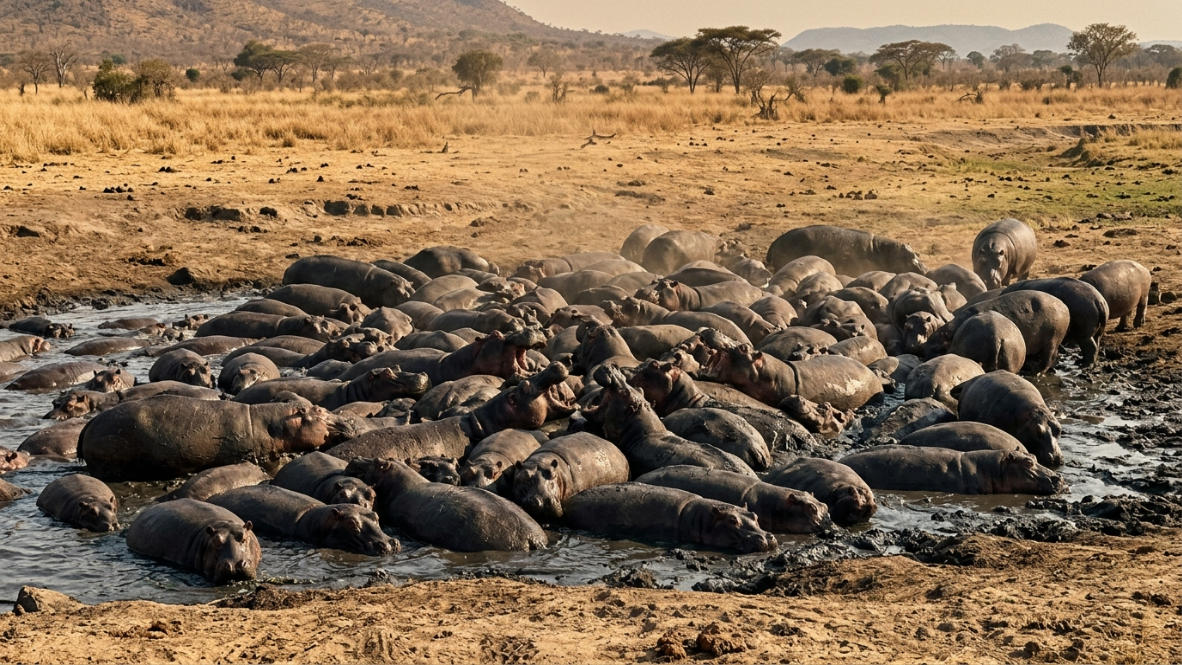
Katavi’s most singular wildlife spectacle is its hippos. During the dry season, the Katuma River becomes one of the only water sources in the area, and arguably the biggest herds of hippos anywhere on the continent pack into its shrinking pools.
Why operator selection is critical here:
With only three camps, twice-weekly flights, and 12 beds per camp, Katavi leaves zero room for booking errors. Your operator needs established relationships with these properties and the ability to secure allocations well in advance. Ask how far ahead they typically book Katavi, and what their contingency plan is if your preferred camp is full. An operator who says “we’ll figure it out closer to the date” is the wrong operator for this park.
Pricing:
Expect $1,000 to $2,000+ per person per day at Katavi’s camps, reflecting the ultra-remote logistics. Internal bush flights average around $300 per adult one-way. For a broader breakdown, consult our East Africa safari cost guide.
Best timing:
The dry season from June to November is when the spectacle peaks. As water sources shrink, animals concentrate in staggering numbers along the Katuma River.
Tradeoffs:
-
Twice-weekly flight access limits scheduling flexibility
-
Expensive. There’s no budget option here.
-
Very few camps means availability books out well in advance during peak season
-
Limited activities compared to parks with water systems (no boat safaris)
5. Mahale Mountains National Park
Best for: Chimpanzee trekking in a setting so remote it feels like the edge of the world.
Concealed beneath a vast canopy of forest on the shores of Lake Tanganyika (Africa’s longest and deepest lake) live around 1,000 chimpanzees. One famous community, the M Group, has been habituated by Japanese researchers who have studied these mountains for over 50 years.
Why it belongs on this list:
-
Mahale is the only location in Africa where chimpanzees and lions are known to live side by side
-
The park can only be accessed by boat because there are no roads leading in or out. Flights land at a lakeside airstrip, then guests transfer by boat.
-
Lake Tanganyika offers freshwater beach relaxation, kayaking, and snorkeling between trekking days
Why operator expertise matters here:
Mahale’s boat-only access adds weather dependency that your operator must plan around. The best operators build buffer days into Mahale itineraries and know the lake’s weather patterns well enough to time transfers safely. They’ll also manage chimp permit bookings (currently $150 per person) and set realistic expectations: sightings are likely thanks to habituation, but never guaranteed.
Pricing:
-
Chimpanzee permits: $150 per person
-
Full Mahale tours typically run $2,000 to $6,000 per person
-
Greystoke Mahale (the iconic camp) ranges from $760 per person per night in the green season to $1,435 in peak season
Best timing:
June to October, the dry season. Trails are easier to navigate and chimp groups tend to stay at lower elevations, making them easier to locate.
The ultimate pairing:
Combining Katavi with Mahale creates what many experienced operators consider one of the finest week-long safaris available anywhere. The contrast is extraordinary: dry-season plains teeming with megafauna, followed by lush tropical forest alive with primates. For strategies on combining multiple experiences in one trip, we have a dedicated planning guide.
Tradeoffs:
-
Among the most expensive safari experiences in Tanzania
-
Boat-only access adds time and weather dependency
-
Chimpanzee sightings are not guaranteed (though habituation makes them likely)
-
Limited to one or two camps, so availability is tight
If you’re drawn to primate trekking, Mahale pairs thematically with gorilla trekking in Uganda for a multi-country great ape itinerary.
6. Saadani National Park
Best for: Travelers who want a remote coastal safari where the bush meets the Indian Ocean beach.
Saadani is the only national park on the coast of East Africa and the only wildlife sanctuary on the continent to boast an Indian Ocean beachfront. That alone makes it unlike anything else on this list.
Why it belongs on this list:
-
Covering 1,062 km², the park hosts both marine and mainland flora and fauna
-
The beaches form one of the last major green turtle breeding sites on mainland Tanzania
-
Visitor numbers are low, providing a far more personalized, private experience than the northern circuit
Activities:
Game drives, boat safaris on the Wami River (crocodiles and hippos), walking safaris, beach relaxation, historical village tours, and snorkeling on offshore sandbanks. The diversity of activities sets Saadani apart from pure bush destinations.
Best timing:
June to August and January to February offer the best combination of dry weather and wildlife visibility.
Honest tradeoffs (and this matters):
-
Wildlife density is not comparable to the Serengeti or even Nyerere. Animals here are less habituated.
-
You may not see a pride of lions every day. But when you do, it feels like a true wilderness discovery.
-
Infrastructure is limited compared to more established parks
Saadani works best as part of a broader itinerary. A 5 to 7 day beach-and-bush combination with Zanzibar provides a coastal safari experience that most visitors to Tanzania never consider.
7. Kitulo Plateau National Park
Best for: Botanists, birders, and hikers looking for something completely different from a traditional safari.
Locals call the Kitulo Plateau “Bustani ya Mungu,” the Garden of God. Botanists have dubbed it the Serengeti of Flowers. It was the first national park in tropical Africa established primarily for the conservation of its extraordinary flora.
Key facts:
-
350 species of vascular plants, including 45 varieties of terrestrial orchids
-
Perched at around 2,600 meters (8,500 ft) between the Kipengere, Poroto, and Livingstone Mountains
-
Critical habitat for the endangered blue swallow and Denham’s bustard
-
Orchids bloom spectacularly from November to April
Tradeoffs:
-
This is not a big-game safari destination. There are no lions, elephants, or large herds.
-
There is no accommodation inside the park. Visitors stay in Mbeya (nearest airport: Songwe).
-
Access requires a drive from Mbeya, and roads can be rough in the wet season
Kitulo pairs naturally with Ruaha on a southern highlands loop for travelers who want variety. It’s a niche destination, but for the right person, it’s unforgettable. For serious birders planning a remote Tanzania safari with avian priorities, our birding safari guide covers optimal parks and seasons.
8. Udzungwa Mountains National Park
Best for: Hikers and primate enthusiasts who want a walking-only wilderness experience.
Known as the Galápagos of Africa for its rich biodiversity, Udzungwa is home to numerous endemic species, including rare monkeys and birdlife. Unlike any other park on this list, no vehicles are allowed. You explore entirely on foot.
Key facts:
-
A highlight is the climb to Sanje Waterfall, which plunges over 170 meters through the forest canopy
-
The park was the site of the discovery of Rungwecebus kipunji, an entirely new species of monkey first identified in 2003
-
Rich endemic birdlife and primate populations make it a research hotspot
Access:
The park is accessible by road from Mikumi, making it a natural add-on to a driving southern circuit itinerary.
Tradeoffs:
-
No vehicles, no camps inside the park, and limited infrastructure
-
Not a big-game destination
-
Requires reasonable fitness for the hiking trails
-
Accommodation options in nearby towns are basic
For travelers already visiting Mikumi or Ruaha by road, Udzungwa adds a distinctive forest and mountain dimension to what might otherwise be a savanna-heavy itinerary.
Bonus: Remote Corners of the Serengeti
Even the Serengeti has quiet zones, if you know where to look, and if your operator knows where to position you.
The southern Serengeti around the Ndutu area during the December to March calving season offers a very different experience from the crowded central valley. Mobile tented camps set up in locations that change with the herds, placing you in areas that day-trip vehicles from lodges simply cannot reach. An operator with deep seasonal knowledge will time your arrival to match herd movements rather than relying on a fixed camp location. For details on seasonal positioning, see our guide on when and where to see the Migration.
The far western corridor during the river-crossing months (June to July) also sees fewer visitors than the Mara River crossings to the north. This is where operator expertise becomes a genuine competitive advantage: the difference between a crowded crossing point and a private one often comes down to your guide’s knowledge and willingness to explore.
“Remote” doesn’t always mean flying to a different park. Sometimes it means being in the right place within a famous one, and that depends entirely on who’s planning your trip.
Typical Remote Tanzania Safari Budget Examples
The examples below illustrate realistic trip budgets excluding international airfare.
|
Trip Type |
Length |
Estimated Cost Per Person |
|---|---|---|
|
Nyerere Fly-In Safari |
4 Days |
$1,800–$3,500 |
|
Ruaha Fly-In Safari |
5 Days |
$2,500–$5,500 |
|
Nyerere + Ruaha |
8 Days |
$4,500–$9,000 |
|
Katavi + Mahale |
10 Days |
$8,000–$15,000+ |
|
Luxury Multi-Park Safari |
12–14 Days |
$10,000–$20,000+ |
Actual costs vary based on camp category, season, charter flights, and group size.
How Much Do Remote Tanzania Safaris Cost?
Remote safaris cost more than standard northern circuit trips. The reasons are straightforward: bush flights, smaller camps with higher per-guest costs, and parks that charge premium entry fees.
|
Tier |
Cost Per Person Per Day |
What You Get |
|---|---|---|
|
Mid-range |
$450–$800 |
Comfortable lodges, private vehicle and guide, all meals, park fees |
|
Luxury fly-in |
$850–$1,500+ |
Premium camps (8 to 12 guests max), bush flights, specialist guiding |
|
Ultra-remote (Katavi/Mahale) |
$1,000–$2,000+ |
Tiny camps, twice-weekly access, near-total exclusivity |
Internal bush flights average around $300 per adult one-way, and this cost adds up quickly on multi-park itineraries. Park entry fees run $53 to $83 per day depending on the park.
A note on pricing transparency: When comparing operators, ask for itemized quotes that separate park fees, accommodation, transport, guide fees, and bush flights. Some operators bundle everything into a single per-day rate, which makes comparison difficult. Others quote low headline rates that exclude flights, park fees, or transfers. A trustworthy operator will break costs down clearly and explain what drives the total. For a detailed breakdown of what drives safari pricing, our East Africa cost guide covers everything from park fees to tipping norms.
Shoulder-season travel in May, early June, or November often yields significant savings on accommodation while still delivering excellent wildlife viewing. This is one of the most effective ways to make remote safaris more accessible without compromising on the experience.
How to Plan a Remote Tanzania Safari: A Step-by-Step Approach
Planning remote safaris involves more moving parts than a standard northern circuit trip. Here’s a practical framework.
Step 1: Start with Your Operator, Not Your Itinerary
For remote trips, the operator should come first. Vet them using the criteria outlined above: ground operations in Tanzania, guide certifications, sustainability credentials, specific experience with your target parks, and a strong multi-year review footprint.
Working with an operator that has ground operations in Tanzania makes a meaningful difference. When a bush flight is delayed or a connection needs rearranging, having a local team that can respond in real time matters far more than it does on a straightforward Serengeti loop.
Step 2: Set Your Priorities and Timeline
Tell your operator what matters most: big cats, primates, solitude, walking safaris, photography. Let them build the park selection and sequencing around that, not the other way around. Remote parks have distinct strengths, and a good operator will match destinations to your interests rather than running a one-size-fits-all itinerary.
Step 3: Book Early for Peak Season
-
Book 6 to 12 months ahead for July through October. Katavi and Mahale camps have 12 beds each. They fill fast.
-
Consider shoulder seasons. May, early June, and November offer excellent wildlife with lower rates and better availability.
-
Build in buffer days. Remote logistics can shift. Adding a night in Dar es Salaam or Arusha on either end protects against cascading delays.
Step 4: Combine Strategically
-
Nyerere plus Ruaha is the classic southern circuit (7 to 8 days)
-
Katavi plus Mahale is the ultimate western wilderness (10 to 11 days)
-
Saadani plus Zanzibar creates a unique bush-and-beach combination
-
For multi-country trips, a capable operator can coordinate gorilla trekking in Uganda or Rwanda before or after your Tanzania safari
Exploring private safari options and routes is a good starting point for understanding how custom itineraries come together.
Red Flags When Evaluating Remote Safari Operators
Alongside knowing what to look for, know what should give you pause:
-
No physical office in Tanzania. If every aspect of ground handling is subcontracted, accountability gaps emerge when problems arise in remote locations.
-
Vague answers about guide qualifications. An operator who can’t name specific training programs or certifications their guides hold is likely not investing in guide development.
-
No references or reviews mentioning remote parks. A company with hundreds of Serengeti reviews but none mentioning Katavi or Ruaha may not have meaningful experience with these destinations.
-
Unusually low pricing. Remote safaris have hard cost floors (bush flights, small-camp rates, premium park fees). An operator quoting dramatically below market may be cutting corners on guide quality, vehicle maintenance, or staff welfare.
-
Reluctance to provide itemized quotes. Transparency about what’s included and what isn’t is a basic indicator of trustworthiness.
-
No sustainability credentials or ethical commitments. In remote areas where tourism has an outsized impact on local communities and conservation, operators should be able to articulate how they contribute beyond the economic transaction.
Conservation: Why Your Visit (and Your Operator Choice) Matters
There’s a conservation case for choosing remote parks that goes beyond personal preference. Tourism revenue is critical for protecting these ecosystems. Ruaha’s elephant population declined from an estimated 34,000 in 2009 to roughly 15,836 by 2015, largely due to poaching. The camps and lodges that operate in these parks fund anti-poaching patrols, employ local communities, and create economic incentives to protect rather than exploit wildlife.
Your choice of operator affects this equation directly. Companies with verified sustainability practices (Travelife Certification, KPAP partnership, carbon offset programs) channel more of your spend toward conservation and community welfare. When you choose a remote Tanzania safari through a responsible operator, you’re funding the frontlines of species conservation in places where every visitor dollar carries outsized weight.
Frequently Asked Questions
Are remote Tanzania safaris suitable for first-time safari goers?
Yes. The conventional wisdom that southern and western Tanzania is “only for experienced safari-goers” is outdated. Multiple operators report that first-timers who explored these parks had wonderful experiences. The wildlife is spectacular, the guiding is intimate, and the only real difference from the northern circuit is logistical: smaller planes, smaller camps, and more deliberate planning. A capable operator handles those logistics entirely, so your experience on the ground feels seamless regardless of the complexity behind it.
How do I choose between operators for a remote safari?
Prioritize operators with their own ground team in Tanzania, certified guides (look for EcoTraining, FGASA, or WFR credentials), sustainability certifications (Travelife, KPAP), and a multi-year review track record that specifically mentions remote parks. Ask for itemized quotes, sample itineraries for your target parks, and references from travelers who’ve done similar trips.
How do I get to remote parks like Katavi and Mahale?
By light aircraft. Scheduled bush flights connect Arusha and Dar es Salaam to parks like Ruaha (daily), Katavi (twice weekly), and Mahale (twice weekly, plus boat transfer). Internal flights average around $300 per adult one-way. There are no practical road routes to the most remote western parks.
What is the best time of year for a remote Tanzania safari?
June through October is peak season across most remote parks, with dry conditions concentrating wildlife around water sources. May, early June, and November are shoulder months that offer significant savings with still-excellent game viewing. Kitulo Plateau is the exception, with its orchid bloom peaking from December to April.
How many nights should I spend in remote parks?
A minimum of 3 nights per park is standard for remote destinations, and operators recommend this for Katavi and Mahale specifically to justify the flight logistics and cost. For Ruaha and Nyerere, 3 to 4 nights each works well on a combined southern circuit itinerary.
Can I combine a remote safari with Zanzibar or the northern circuit?
Absolutely. Connecting flights link the southern and western parks to Zanzibar and Arusha. A common structure is Nyerere plus Ruaha (7 to 8 days) followed by Zanzibar (3 to 4 days). For travelers wanting both circuits, a longer trip can include the Serengeti and Ngorongoro before flying south, though this typically requires 12+ days. See our guide on fitting multiple experiences into one trip for itinerary ideas.
Is it safe to do walking safaris in remote parks?
Walking safaris in parks like Ruaha and Nyerere are conducted with armed rangers and experienced guides. They are among the most rewarding activities available on a remote Tanzania safari, offering a sensory depth that game drives simply cannot match. Camps that offer walking safaris select routes carefully and follow strict safety protocols. Your operator’s guide training standards directly affect the quality and safety of this experience.
What wildlife can I see in remote parks that I can’t see in the Serengeti?
Ruaha offers sable antelope, greater and lesser kudu, and an ecological crossover of East and Southern African species found nowhere else in Tanzania. Nyerere is one of the best places in Africa for wild dog sightings. Mahale has habituated chimpanzees. Udzungwa hosts the kipunji monkey, one of Africa’s rarest primates. These species are either absent or very rarely seen on the northern circuit.
How far in advance should I book a remote safari?
For peak season (July through October), booking 6 to 12 months ahead is wise, especially for tiny camps like those in Katavi and Mahale. Shoulder-season availability is more forgiving, but the most popular camps still fill 3 to 6 months out. Starting the operator vetting process even earlier gives you time to compare quotes, check references, and make a confident decision.
Which remote Tanzania safari park has the fewest tourists?
Katavi National Park is generally considered Tanzania's least-visited major safari park, receiving only a tiny fraction of the visitors seen in Serengeti National Park each year.
Is a fly-in safari worth it in Tanzania?
For remote parks such as Ruaha, Katavi, Mahale, and Nyerere, fly-in safaris are often worth the added cost because they dramatically reduce travel time and maximize wildlife-viewing days.
Can you see the Big Five in remote Tanzania?
Yes. Ruaha and Nyerere support populations of lion, leopard, elephant, buffalo, and black rhino, although sightings vary by park and season.
What is the most exclusive safari destination in Tanzania?
Katavi National Park is widely regarded as Tanzania's most exclusive safari destination due to its tiny visitor numbers, limited camp capacity, and highly remote location.
Is Mahale better than gorilla trekking?
Mahale and gorilla trekking offer different experiences. Mahale focuses on habituated chimpanzees in a lakeside rainforest setting, while gorilla trekking centers on mountain gorillas in Uganda or Rwanda.