Luxury Tanzania Safari Cost 2026: $700–$1,500 a Day
TL;DR
A luxury Tanzania safari costs $700 to $1,500 per person per day, with ultra-luxury options running $1,500 to $3,000+. The best experiences combine world-class lodges in the Serengeti and Ngorongoro with private conservancy access, hot-air balloon flights, and expert guiding. Book 12 to 18 months ahead for peak-season camps, or travel April through May for rates that drop by half. This guide covers pricing, the top lodges, seasonal timing, and the planning decisions that separate a good safari from an unforgettable one.
A luxury Tanzania safari is not really about thread counts or infinity pools, though you will find both. The difference between a $500-a-night experience and a $2,500-a-night experience usually comes down to three things: the quality of your guide, the intelligence of your lodge’s location relative to wildlife, and the kind of access you get (off-road driving, night safaris, walking safaris). Everything else is just decoration.
Most safari content online stays vague about pricing and sidesteps the honest tradeoffs between lodges. This guide does neither. Below you will find specific nightly rates, lodge-level comparisons, a month-by-month migration calendar, and the kind of practitioner insights that only surface in forums and trip reports.
For a broader overview of Tanzania safari planning, including itinerary shapes and cost tiers, see our complete Tanzania safaris guide.
Luxury Tanzania Safari: Quick Answer A luxury Tanzania safari in 2026 typically costs $700 to $1,500 per person per day, while ultra-luxury safaris range from $1,500 to $3,000+ per day. Most travelers spend:
|
Safari Type |
7-Day Cost Per Person |
|---|---|
|
Mid-Range |
$3,000–$5,500 |
|
Luxury |
$5,000–$10,000 |
|
Ultra-Luxury |
$10,000–$20,000+ |
The best luxury safari experiences combine:
-
Serengeti National Park
-
Ngorongoro Crater
-
Private conservancies such as Grumeti or Mwiba
-
Expert private guides
-
Fly-in transfers
-
Optional Zanzibar beach extensions
For first-time luxury travelers, a 7–10 day Northern Circuit itinerary offers the best balance of wildlife, comfort, and value.
Key takeaway: Guide quality and lodge location matter more than luxury amenities. A well-positioned camp with an exceptional guide will outperform an expensive lodge in the wrong area.
At-a-Glance Comparison: Top Luxury Tanzania Safari Lodges
|
Lodge / Experience |
Starting Rate (per person/night) |
Best For |
Location |
Night Drives |
Private Vehicle Included |
|---|---|---|---|---|---|
|
Duma Explorer Custom Safari |
From ~$400–$1,200+ (varies by lodge/itinerary) |
Bespoke itinerary design, multi-country trips, guide quality |
Northern Circuit, Serengeti, Ngorongoro, Zanzibar, Uganda/Rwanda |
✅ (in conservancies) |
✅ |
|
Singita Sasakwa |
$2,250+ |
Ultra-luxury, total exclusivity |
Grumeti Private Reserve |
✅ |
✅ |
|
Mwiba Lodge |
$2,250+ |
Privacy, calving season |
Southern Serengeti concession |
✅ |
✅ |
|
Four Seasons Serengeti |
$900–$1,500 |
Families, brand reliability |
Inside Serengeti NP |
❌ |
❌ (extra cost) |
|
Sayari Camp |
$900–$1,500 |
Mara River crossings |
Northern Serengeti |
❌ |
Usually |
|
&Beyond Ngorongoro Crater Lodge |
$900–$1,500 |
Dramatic crater rim setting |
Ngorongoro rim |
Limited |
Usually |
|
Serengeti Bushtops |
$900–$1,500 |
Honeymoons, romance |
Central Serengeti |
❌ |
Usually |
|
The Highlands Ngorongoro |
$700–$1,200 |
Design lovers, active travelers |
Ngorongoro highlands |
Limited |
Usually |
|
Hot-Air Balloon Safari |
$599 per flight |
Signature add-on |
Serengeti (4 launch sites) |
N/A |
N/A |
|
Private Conservancy Safari |
Varies by camp |
Exclusivity, flexibility |
Grumeti, Mwiba, Klein’s |
✅ |
✅ |
|
Safari + Zanzibar Extension |
$200–$800/night (beach) |
Complete luxury circuit |
Serengeti + Zanzibar |
N/A |
N/A |
Why Tanzania Is Considered Africa's Premier Luxury Safari Destination
Tanzania consistently ranks among Africa's top luxury safari destinations because it combines:
-
The Great Migration
-
The Serengeti ecosystem
-
Ngorongoro Crater
-
Low visitor density outside peak areas
-
Private conservancies
-
Fly-in luxury camps
-
Easy Zanzibar extensions
Unlike many safari destinations where wildlife viewing is concentrated into a few reserves, Tanzania offers a complete ecosystem ranging from elephant-rich Tarangire to predator-heavy Serengeti plains.
Tanzania vs Other Luxury Safari Destinations
|
Destination |
Best For |
Luxury Level |
Crowds |
|---|---|---|---|
|
Tanzania |
Migration + variety |
Excellent |
Moderate |
|
Kenya |
Conservancy safaris |
Excellent |
Higher |
|
Botswana |
Exclusivity |
Exceptional |
Very Low |
|
South Africa |
Value luxury |
Excellent |
Moderate |
|
Zambia |
Walking safaris |
High |
Very Low |
What a Luxury Tanzania Safari Actually Costs in 2026
Pricing transparency is the single biggest gap in safari content online. Most articles say “costs vary.” Here is what they actually are.
Daily Rate Tiers
|
Tier |
Per Person Per Day |
What You Get |
|---|---|---|
|
Mid-range |
$450–$800 |
Comfortable tented camps, private vehicle, en-suite bathrooms |
|
Luxury |
$700–$1,500 |
Premium lodges, private guide, fly-in transfers, gourmet dining |
|
Ultra-luxury |
$1,500–$3,000+ |
Private conservancy access, butler service, infinity pools, exclusive experiences |
Total Trip Costs
A 7 to 10 day luxury Tanzania safari typically costs between $5,000 and $20,000 per person. A 7-day mid-range Serengeti and Ngorongoro itinerary runs around $3,200, while a luxury version starts above $6,500. Ultra-luxury fly-in itineraries should be budgeted at $6,000 to over $10,000 per person for seven days.
For a full breakdown of pricing across East Africa, including what drives costs up and where you can save, check our safari cost guide with prices explained.
The Hidden Costs Nobody Mentions Until You Ask
Park fees are non-negotiable and add up fast. The adult conservation fee for most Northern Circuit parks is $60 per person per day. The Ngorongoro Crater charges a separate vehicle descent fee of $295. A typical 7-day Northern Circuit safari for two adults generates roughly $760 in park fees alone, before you spend a dollar on lodging.
Concession fees apply to in-park lodges: $59 per person per night in Serengeti and Ngorongoro, $47.20 in Tarangire and Manyara.
Internal flights average around $300 per adult one-way. A multi-park fly-in itinerary with three flights can add $900 to $1,800 per person.
Tipping runs $15 to $25 per person per day for all staff combined. Your guide typically receives $15 to $20 per day, and lodge staff collectively receive $5 to $10 per day.
International agent markup is the cost most people never see. Larger international travel agents and safari companies based in the US or UK can add 30% to 300% onto base prices. Booking through an operator with direct ground operations in Tanzania eliminates this middleman layer.
What Factors Increase Luxury Safari Costs?
Many travelers assume luxury safari pricing is based on accommodations alone. In reality, five variables drive most of the cost.
1. Private Guides and Vehicles
Private game drives can increase costs by $300–$800 per day but dramatically improve flexibility.
2. Fly-In Transfers
Bush flights save time but often add $300–$600 per person per flight.
3. Conservancy Access
Private reserves command premium pricing because they allow:
-
Night drives
-
Walking safaris
-
Off-road wildlife viewing
-
Lower vehicle density
4. Seasonal Demand
Rates during migration crossing season can be 50–100% higher than low-season pricing.
5. Lodge Exclusivity
A 10-room camp costs significantly more to operate than a 70-room lodge, which is reflected in nightly rates.
Best Luxury Tanzania Safari Experiences by Traveler Type
Not every luxury traveler wants the same experience.
|
Traveler Type |
Recommended Option |
|---|---|
|
First-Time Safari |
Four Seasons Serengeti |
|
Honeymooners |
Serengeti Bushtops |
|
Families |
Four Seasons Serengeti |
|
Photographers |
Sayari Camp |
|
Ultra-Luxury Travelers |
Singita Sasakwa |
|
Privacy Seekers |
Mwiba Lodge |
|
Active Travelers |
The Highlands |
|
Repeat Safari Visitors |
Private Conservancy Safari |
|
Safari + Beach Travelers |
Zanzibar Extension |
The 11 Best Luxury Tanzania Safari Experiences
1. Duma Explorer Custom Luxury Safari
Best for: Bespoke itinerary design, guide quality, and multi-country East Africa trips
Duma Explorer (operating locally in Tanzania as Alika Africa) is a dual US-Tanzanian safari operator that designs custom luxury safaris across Tanzania’s Northern Circuit, the Serengeti, Ngorongoro, Zanzibar, and beyond into Kenya, Uganda, and Rwanda. What sets Duma Explorer apart from most operators on the market is a combination that is surprisingly rare: owner-led trip design by someone who has lived in Tanzania for 15 years and speaks fluent Swahili, paired with a locally owned ground operation that controls vehicles, guides, and logistics directly.
-
Pricing: Custom safaris start from roughly $2,000 per person for a 5-day Northern Circuit itinerary and scale up to $6,000+ per person for 13-day multi-experience trips including safari, Kilimanjaro, and beach. Lodge selection ranges from comfortable mid-range camps to ultra-luxury properties like those featured elsewhere on this list.
-
Key features: Private 4x4 vehicle and driver-guide on every safari, curated lodge and camp selection across all price tiers, park fees and in-country transfers included, itineraries tailored around migration timing and client priorities
-
Guide credentials: Safari guides trained through EcoTraining with a FGASA Level 1 certification program rolling out from late 2025. Kilimanjaro guides carry Wilderness First Responder certification and average 15+ years of mountain experience.
-
Sustainability: KPAP founding partner (verified fair porter treatment), Travelife Certified (one of only six operators in Tanzania), carbon offsets through Carbon Tanzania
-
Breadth: One operator can coordinate Serengeti safaris, Kilimanjaro climbs (multiple routes, private and small-group), gorilla trekking in Uganda or Rwanda, Maasai Mara extensions, and Zanzibar or Swahili Coast beach stays
Tradeoffs:
-
Not the cheapest option; pricing reflects guide training, safety standards, and sustainability commitments
-
Credit card payments carry an approximate 4% surcharge
-
The dual branding (Duma Explorer in the US, Alika Africa in Tanzania) can create initial confusion for first-time researchers
Practitioners on Reddit have shared positive experiences booking through Duma Explorer, citing high responsiveness from founder Stacy Readal, well-timed Serengeti itineraries, and standout moments like hot-air balloon flights arranged seamlessly into their trips. The operator holds Tripadvisor Travelers’ Choice awards from 2020 through 2025 and carries over 600 five-star reviews across platforms, with a perfect 5.0/5 rating on SafariBookings. For travelers who want a luxury safari planned by someone with deep local knowledge and direct control over the ground operation, Duma Explorer is the strongest starting point.
2. Singita Sasakwa Lodge
Best for: Ultra-luxury travelers, honeymoons, and total exclusivity
Perched on Sasakwa Hill in the private Grumeti Reserve, Singita Sasakwa feels more like a grand Edwardian estate than a traditional safari camp. Nine private cottages and a villa each have their own infinity pool. Because the lodge sits on a private reserve rather than inside the national park, guests can do things that are impossible in the Serengeti proper: off-road driving, night drives, guided bush walks, and even horseback safaris.
-
Pricing: $2,250+ per person per night (high season)
-
Capacity: 9 cottages plus 1 villa
-
Key features: Private conservancy with controlled vehicle access, off-road tracking, night drives, walking safaris, tennis court, horseback safaris, dedicated butler service
-
Migration relevance: Grumeti River crossings happen in June and July, earlier and less crowded than the famous Mara River crossings
Tradeoffs:
-
The price is extreme, even by ultra-luxury standards
-
Specific cottages get blocked out 18+ months ahead by returning guests, so booking lead times are the longest of any property in Tanzania
-
Located in the western corridor, not ideal for the July through October Mara River crossings
Practitioners on safari forums consistently note that Singita’s guiding team is among the best in East Africa, which matters more than the architecture. The combination of private conservancy access and guide quality is what justifies the price.
3. Mwiba Lodge
Best for: Privacy seekers and calving season (January through March)
Mwiba Lodge is a hidden gem set within a 125,000-acre private concession in the Southern Serengeti ecosystem. Built among massive ancient coral formations overlooking a rocky river gorge, it feels genuinely remote. The lodge is famous for its “private safari” ethos: every booking includes a dedicated vehicle and guide, which is particularly valuable during the calving season when roughly 8,000 wildebeest are born daily and predator action is constant.
-
Pricing: $2,250+ per person per night
-
Capacity: Approximately 10 rooms
-
Key features: Private vehicle and guide included in every booking, off-road driving, night drives, walking safaris, proximity to Ndutu calving grounds
-
Best timing: January through March for calving season
Tradeoffs:
-
Among the most expensive lodges in Tanzania
-
Remote location means longer transfer times
-
Not positioned for the Mara River crossings (that is a Northern Serengeti experience)
For travelers who want complete privacy and are visiting during calving season, Mwiba is hard to beat. The concession model means you will rarely see another vehicle.
4. Four Seasons Safari Lodge Serengeti
Best for: Families and travelers who want global-brand reliability
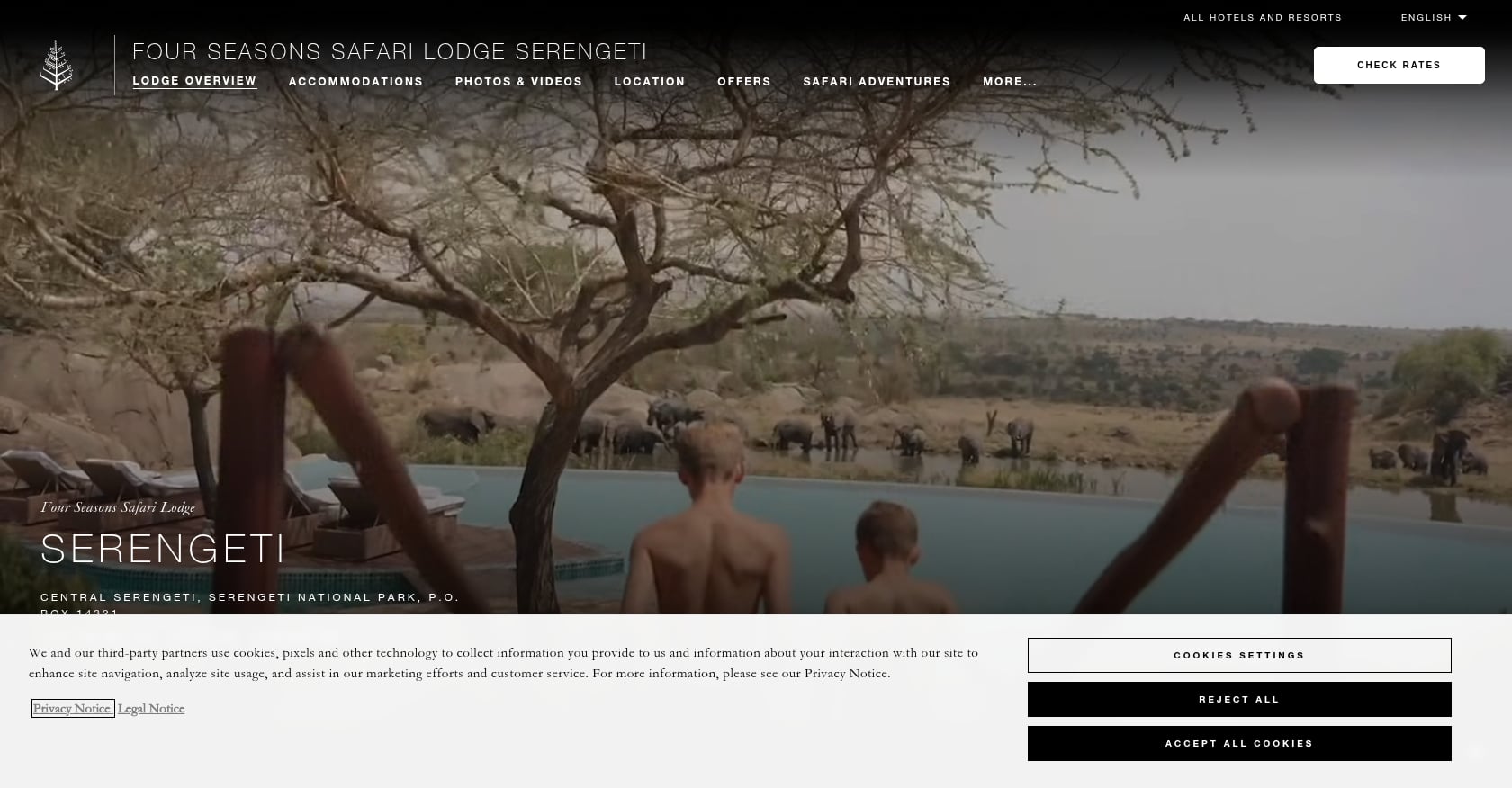
The Four Seasons brings a familiar luxury hotel experience into the Serengeti. With 77 guest rooms, suites, and villas, it offers amenities that are genuine rarities in the bush: air conditioning, high-speed internet, a dedicated kids’ club, and a world-class spa. For families or travelers who are new to safari and prefer the reliability of a known brand, this is the premier choice.
-
Pricing: $900–$1,500+ per person per night (varies by season and room type)
-
Capacity: 77 rooms
-
Key features: Air conditioning, Wi-Fi, kids’ club, full-service spa, restaurant with Serengeti views, watering hole viewing deck
-
Private vehicle: Available at extra cost (not included)
Tradeoffs:
-
By far the largest property on this list, which means less intimacy
-
Located inside the national park, so no off-road driving, no night drives
-
The lodge’s size can make the experience feel more hotel-like than safari-like
-
Private guide and vehicle cost extra
Discussions on TripAdvisor forums frequently highlight the Four Seasons as the safest bet for safari first-timers, particularly families with young children who need the structure and amenities a smaller camp simply cannot provide.
5. Sayari Camp
Best for: Witnessing the Mara River crossings (July through October)
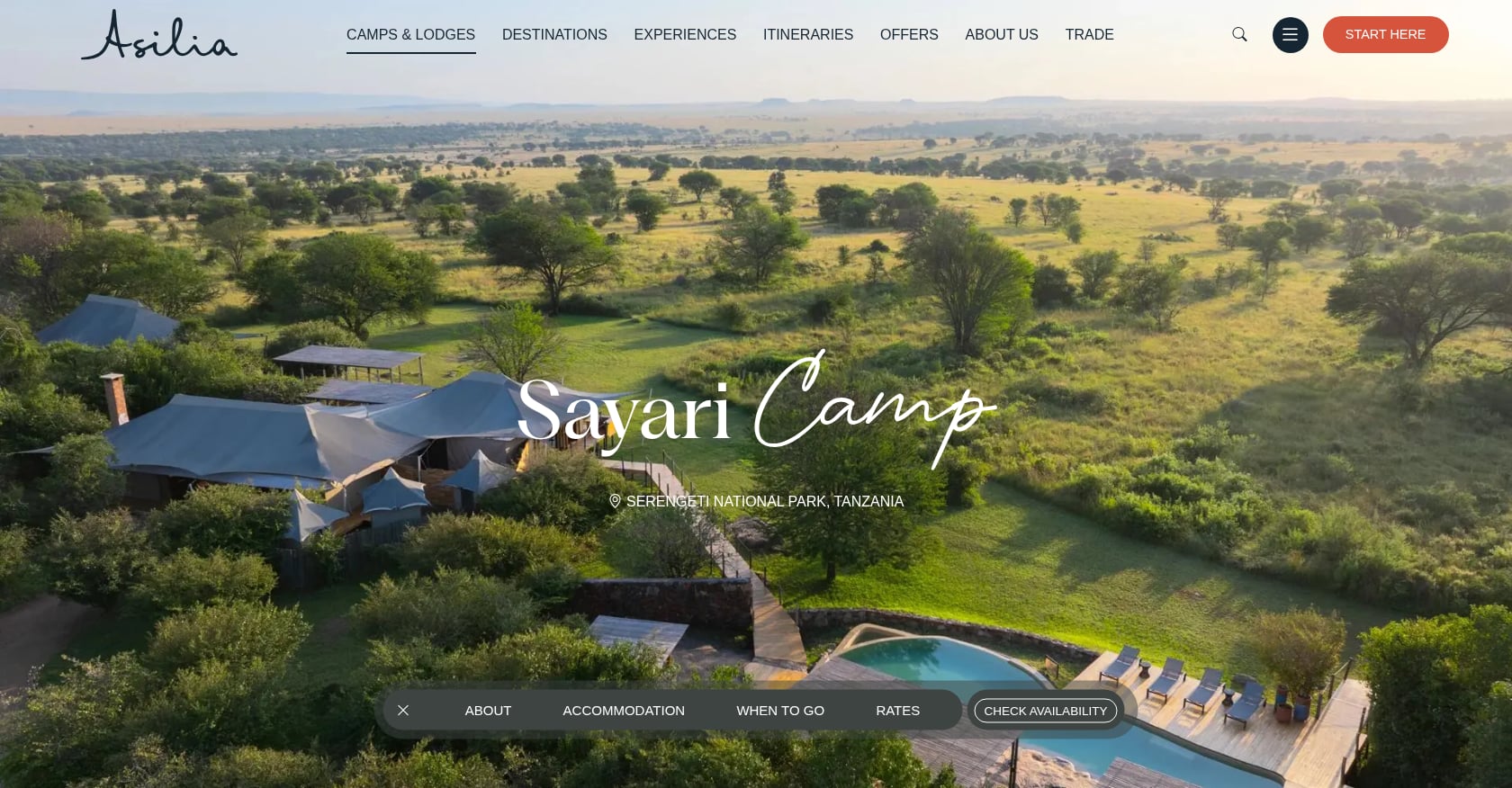
Sayari Camp is the gold standard for travelers who want to see the Great Migration’s most dramatic chapter. Located in the remote Northern Serengeti, it sits just 15 minutes from the Mara River, where roughly 1.5 to 2 million wildebeest attempt treacherous crossings between July and October. The guiding here is consistently rated as excellent.
-
Pricing: $900–$1,500 per person per night
-
Capacity: 15 tents
-
Key features: Prime location for river crossings, bright airy tents, walking safaris available, excellent guiding reputation
-
Best timing: July through October
Tradeoffs:
-
Inside the national park, so no night drives or off-road driving
-
Fills up for the July through October crossing season by the previous September; you need to book 12+ months ahead
-
The remote Northern Serengeti location means longer drive or fly-in transfers
To learn more about when and where to see the Great Migration, including the calving season alternative, read our dedicated migration guide.
6. &Beyond Ngorongoro Crater Lodge
Best for: The most dramatic lodge setting in Africa
At 2,300 meters elevation on the volcanic rim of the Ngorongoro Crater, this lodge occupies one of the most breathtaking hotel locations in the world. The rim is often wreathed in mist, and the view down into the crater, 600 meters below and 20 kilometers across, is genuinely vertiginous. The lodge features geodesic domes with fireplaces and panoramic views, blending Maasai-inspired design with baroque opulence.
-
Pricing: $900–$1,500 per person per night
-
Capacity: 30 suites across three camps
-
Key features: Crater rim location, private butler for each suite, fireplace, panoramic views, guided crater floor game drives
-
Best timing: Year-round (the crater is not migration-dependent)
Tradeoffs:
-
The crater floor itself gets crowded with vehicles, particularly midday
-
Night drives are limited due to conservation regulations
-
The lodge’s style is polarizing; some guests find the interior design over the top
-
Elevation means cool, sometimes cold temperatures, not the warm bush experience many expect
The Ngorongoro Crater is home to one of the densest concentrations of wildlife in Africa, including a stable population of black rhino. A luxury Tanzania safari that skips the crater misses something irreplaceable.
7. Serengeti Bushtops
Best for: Honeymoons and romantic getaways
Serengeti Bushtops combines the romance of classic tented safaris with luxurious touches that cater specifically to couples. Each tent comes with its own hot tub and offers sweeping views over the Serengeti plains. The camp’s small size creates an intimate atmosphere that larger properties cannot replicate.
-
Pricing: $900–$1,500 per person per night
-
Capacity: 12 tents
-
Key features: Private hot tub in every tent, all-inclusive (premium drinks included), romantic bush dinners, Serengeti views from every tent
-
Best timing: June through October for dry season; year-round for atmosphere
Tradeoffs:
-
Inside the national park, so no night drives or off-road driving
-
Central Serengeti location is great for general game viewing but not optimized for either the river crossings (north) or calving (south)
-
Not ideal for families with young children
For couples planning a honeymoon safari, Bushtops pairs beautifully with a beach extension. Read our guide on how to combine a safari with a Zanzibar honeymoon for itinerary ideas.
8. The Highlands at Ngorongoro
Best for: Design lovers and active travelers
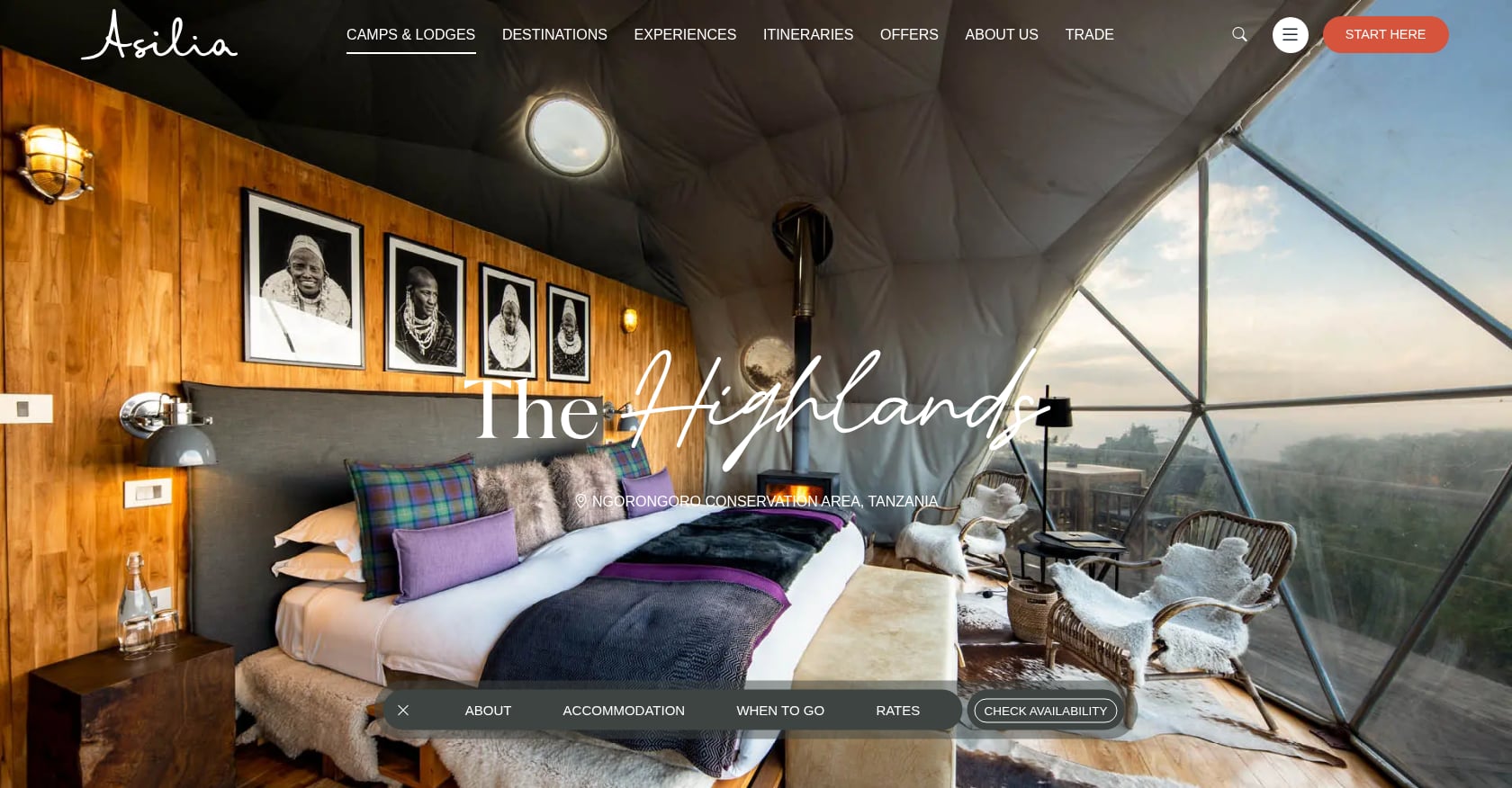
The Highlands offers a modern, design-forward take on the classic safari lodge. Dome-shaped suites with glass walls sit on the forested slopes of the Ngorongoro highlands, surrounded by wild buffalo and elephant. What sets this camp apart from other Ngorongoro options is its emphasis on active experiences: guided hikes to the Empakaai Crater and Olmoti Crater offer off-the-beaten-path exploration that most safari itineraries miss entirely.
-
Pricing: $700–$1,200 per person per night
-
Capacity: 8 dome suites
-
Key features: Architectural dome suites, Empakaai and Olmoti crater hikes, mountain biking, proximity to Ngorongoro Crater floor drives
-
Best timing: Year-round
Tradeoffs:
-
Not a traditional safari camp; wildlife viewing happens on separate game drives to the crater floor
-
High elevation means cool to cold conditions, especially at night
-
Limited capacity means early booking is essential
If you are interested in adding Tanzania birding to your itinerary, the Empakaai Crater hike is one of the best birding walks in northern Tanzania, with flamingos covering the crater lake.
9. Hot-Air Balloon Safari Over the Serengeti
Best for: A once-in-a-lifetime signature experience
A hot-air balloon safari is the single most popular add-on for luxury Tanzania safari travelers, and for good reason. Floating over the Serengeti at dawn, watching herds of wildebeest and zebra spread across the plains below, provides a perspective that no game drive can match.
-
Pricing: $575 to $599 per person (includes transfer from your lodge, the flight, champagne on landing, and a full bush breakfast)
-
Duration: 1 to 2 hours of flight time
-
Logistics: Flights launch daily at 6:00 AM from four sites within the Serengeti
-
Booking lead time: 8 to 10 months in advance; balloon safaris are almost fully booked year-round
Tradeoffs:
-
Weather cancellations happen, though refunds are standard
-
The $599 price tag is per person, which adds significantly for families or groups
-
Early morning pickup (around 4:30 AM) means sacrificing a morning game drive
-
The experience is brief relative to its cost
Practitioners on Reddit consistently describe the balloon safari as their single most memorable moment in Tanzania. One traveler noted that seeing the scale of the Serengeti from above, something you simply cannot grasp from a vehicle, was worth every dollar.
10. Private Conservancy Safari
Best for: Exclusivity, flexibility, and experiences impossible inside national parks
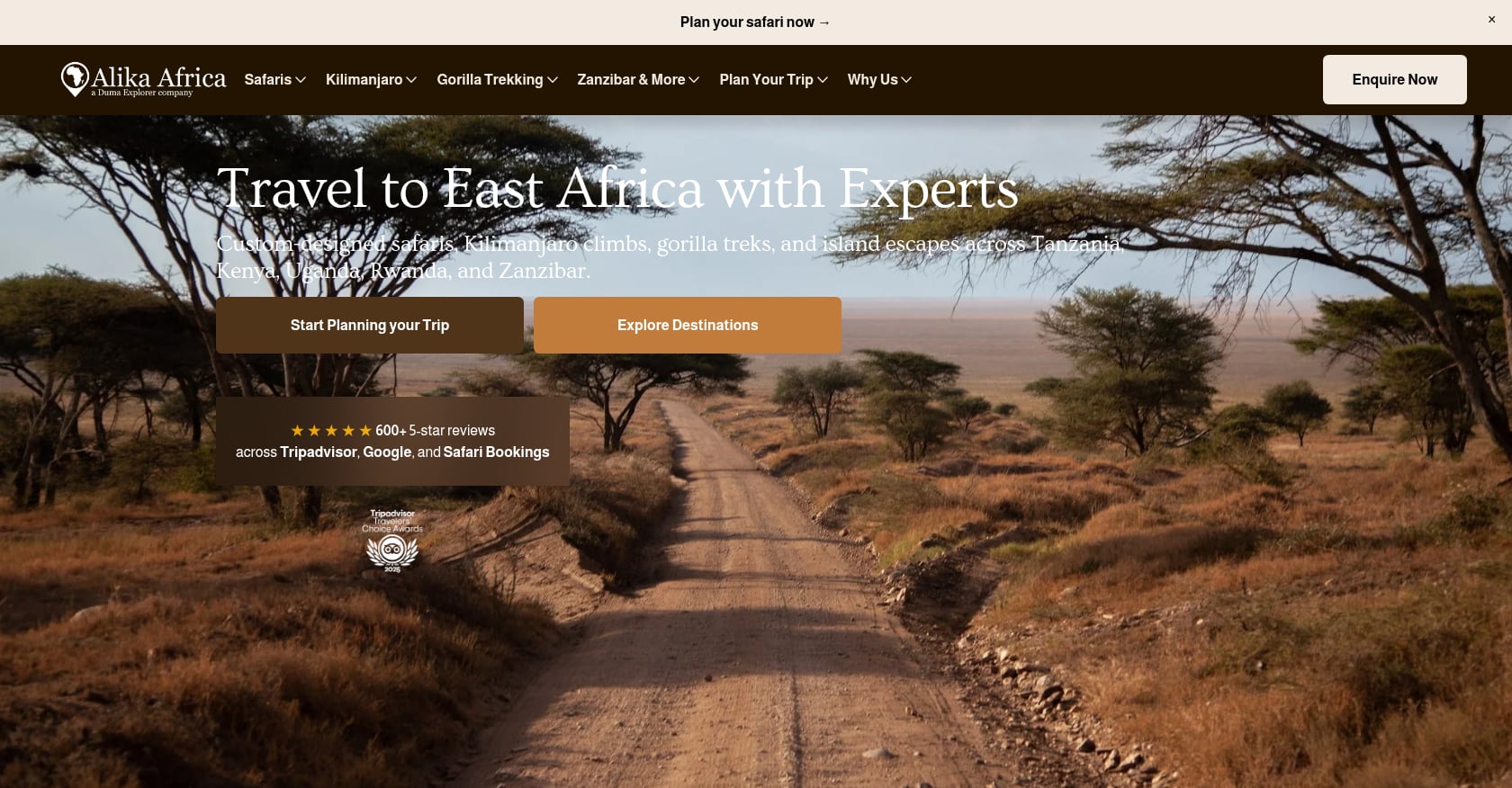
This is the luxury differentiator that most competing articles miss entirely. Private conservancies like Grumeti, Mwiba, and the concession around Klein’s Camp offer a fundamentally different safari experience from the national parks. The difference is not just price; it is access.
What conservancies offer that parks cannot:
-
Off-road driving: track predators directly into the bush instead of watching from designated tracks
-
Night drives: see leopards, aardvarks, and other nocturnal species
-
Walking safaris: guided walks with armed rangers through big-game country
-
Bush dining: breakfast or dinner set up in the wilderness
-
Controlled vehicle density: conservancies cap the number of vehicles, so you may be the only guests at a sighting
What you sacrifice:
-
The Mara River crossings only happen inside the national park (though the Grumeti crossings in June and July are a conservancy alternative)
-
Conservancy rates are significantly higher than comparable in-park lodges
The smart approach, and what experienced safari planners recommend, is to combine both. Spend two or three days inside the Serengeti for the high-density wildlife spectacles, then retreat to a private conservancy for quiet, night drives, and walking safaris.
To understand the differences between private and shared safari options, including when a private guide is worth the premium, see our comparison guide.
11. Safari Plus Zanzibar Beach Extension
Best for: The complete luxury circuit
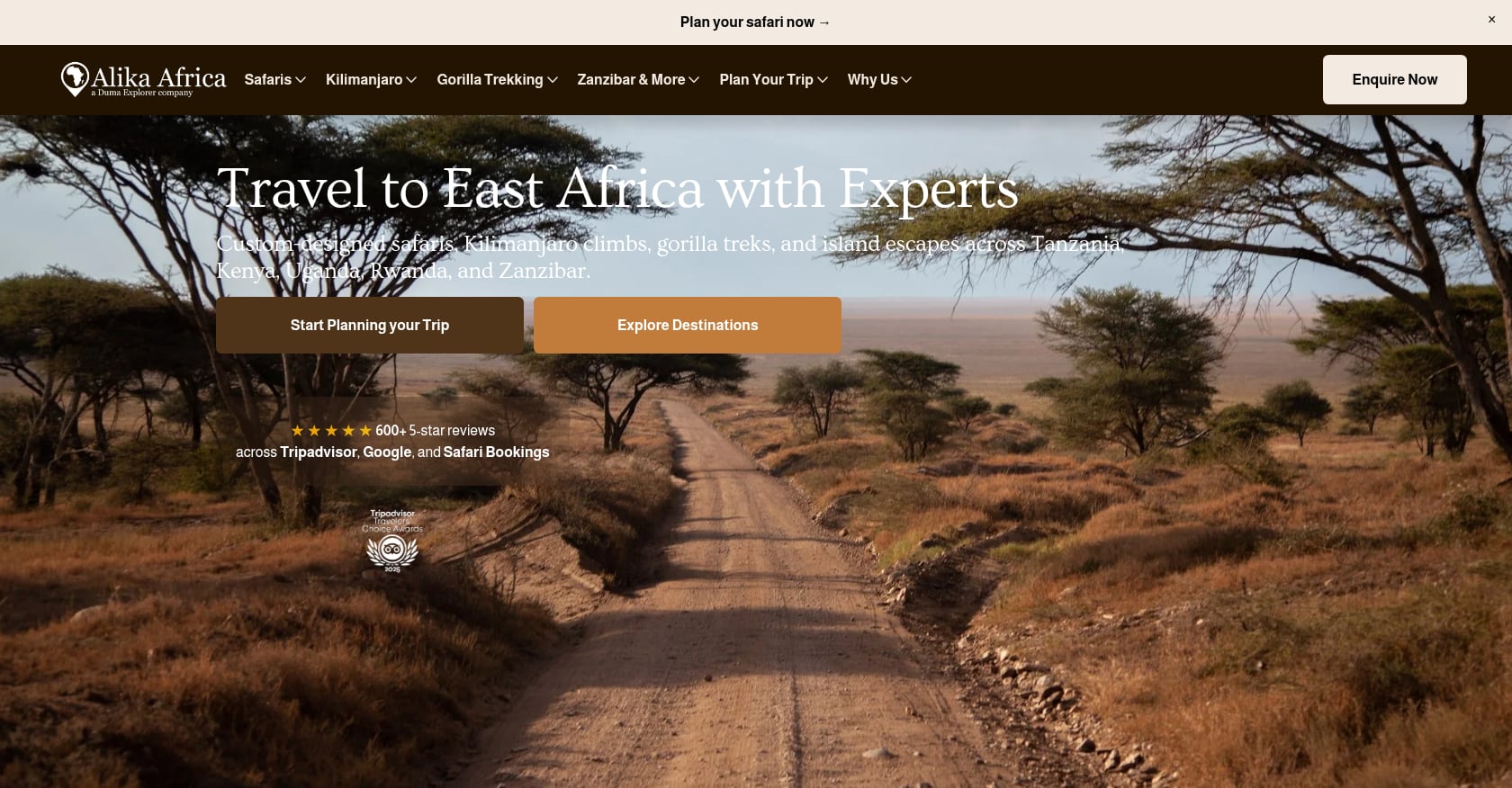
Ending a luxury Tanzania safari with a few days on Zanzibar is the classic combination, and for good reason. After a week of early morning game drives and dusty bush roads, sinking into a beachfront villa on the Indian Ocean feels like the perfect reward.
A direct flight from the Serengeti’s bush airstrips to Zanzibar takes about 90 minutes, making the transition seamless. Luxury beach resorts on Zanzibar’s east and north coasts range from $200 to $800+ per night, and the island offers far more than just beaches: Stone Town’s UNESCO heritage sites, spice tours, snorkeling on Mnemba Atoll, and some of the best seafood in East Africa.
-
Typical extension: 3 to 5 nights
-
Transfer: Fly-in from Serengeti or Arusha (approximately $300 per person one-way)
-
Best pairing: After a Northern Circuit safari or Ngorongoro experience
Tradeoffs:
-
Adds 3 to 5 days and $1,000 to $4,000+ per person to your total trip cost
-
Zanzibar’s weather does not always align with peak safari season (check conditions for your dates)
-
Some travelers find the shift from bush to beach jarring rather than complementary
For help deciding whether to extend to the coast, read our guide on safari or beach and how to decide.
When to Go: Timing Your Luxury Safari by Month
Timing is the second most important decision after choosing your lodge. The Great Migration is a continuous cycle, every month offers something different, but the experience varies dramatically depending on when you travel.
Month-by-Month Migration Calendar
|
Month |
Where the Herds Are |
What to Expect |
|---|---|---|
|
Jan–Mar |
Southern Serengeti / Ndutu |
Calving season: ~8,000 births per day, intense predator action |
|
Apr–May |
Central / Western Serengeti |
Long rains; herds moving north; lowest prices of the year |
|
Jun–Jul |
Western Corridor / Grumeti |
Grumeti River crossings; fewer crowds than August |
|
Jul–Oct |
Northern Serengeti / Mara River |
Peak crossings; peak prices; highest demand |
|
Nov–Dec |
Eastern Serengeti heading south |
Herds returning; short rains; shoulder pricing |
Every year, roughly 1.5 to 2 million wildebeest, along with hundreds of thousands of zebras and gazelles, travel in a clockwise circuit across the Serengeti ecosystem. There is no “wrong” time to visit, but the experience you get in January (newborn calves and hunting cheetahs) is completely different from the experience in August (crocodile-filled river crossings).
Booking Lead Times for Luxury Camps
The single mistake luxury safari planners see most often: clients wait too long to book. Small camps of 8 to 15 tents sell out 12 to 18 months in advance for peak dates. Sayari Camp fills for the July through October crossing weeks by the previous September. Singita’s most requested cottages get blocked 18+ months out by returning guests.
If your dates are flexible, you have more options. But if you are targeting a specific week at a specific camp, start planning at least a year ahead.
The Low-Season Value Play
Premium luxury lodges have highly seasonal pricing, and the savings in low season are substantial. In April and May, rates at some of the best lodges drop to roughly half of their peak-season prices. The rains are real (expect afternoon downpours), but the Serengeti is lush and green, the herds are present, and you will share sightings with far fewer vehicles.
National Parks vs. Private Conservancies: The Luxury Buyer’s Dilemma
This distinction is critical for luxury Tanzania safari planning, yet most articles either skip it or focus on Kenya. Here is the Tanzania-specific breakdown.
|
Factor |
National Park (e.g., Serengeti) |
Private Conservancy (e.g., Grumeti, Mwiba) |
|---|---|---|
|
Off-road driving |
Must stay on designated tracks |
Track predators into the bush |
|
Night drives |
Prohibited |
Available |
|
Walking safaris |
Very limited |
Standard offering |
|
Vehicle density |
No visitor caps; can get crowded |
Controlled access, very low traffic |
|
Migration crossings |
Mara River crossings (Jul–Oct) |
Grumeti crossings (Jun–Jul) only |
|
Price |
Lower lodge rates |
Significantly higher |
The national parks have the spectacle. The conservancies have the intimacy. The best luxury itineraries combine both: two or three days in the national park for the iconic wildlife concentrations and migration crossings, followed by two or three days in a private conservancy for night drives, walking safaris, and the quiet that makes you feel like the only people in Africa.
Luxury Tanzania Safari Booking Checklist
Before placing a deposit, ask your safari operator these questions:
Wildlife Experience
-
Is a private vehicle included?
-
Are guides employed directly?
-
How many years of experience do guides have?
-
Are walking safaris available?
Pricing
-
Are park fees included?
-
Are internal flights included?
-
Are concession fees included?
-
Are drinks included?
Logistics
-
What is the luggage limit on bush flights?
-
What happens during flight delays?
-
What evacuation coverage exists?
Accommodation
-
How many rooms does the camp have?
-
Is air conditioning available?
-
Is Wi-Fi reliable?
How to Choose the Right Luxury Safari Operator
Not all safari operators are equal, and the differences matter more at the luxury level where the price tag is higher and the expectations are steeper.
What Actually Matters
Guide quality is the single biggest differentiator. Multiple practitioners in online safari communities emphasize this point repeatedly: a great guide at a mid-range camp will outperform a mediocre guide at an ultra-luxury lodge. Ask about guide training, certifications (FGASA, EcoTraining, Wilderness First Responder), years of experience, and whether guides are employees or freelancers.
Lodge location relative to wildlife matters more than amenities. The most sought-after Serengeti lodges are positioned in the northern Serengeti between July and October for the Mara River crossings, and in the Ndutu-adjacent area between December and March for calving season. A $900-a-night camp in the right spot beats a $2,000-a-night lodge in the wrong one.
Sustainability credentials are increasingly a luxury signal. Many of the top lodges now operate on 100% solar power and support community conservation projects. For a growing segment of luxury travelers, verified sustainability (Travelife certification, carbon offsets, community partnerships) is a deciding factor.
Local Operator vs. International Agent
The markup reality is worth understanding. International travel agents and safari companies based in the US or UK can add 30% to 300% onto base prices. A dual-footprint operator with offices in both the US and Tanzania can offer direct access to ground logistics without that middleman inflation.
When evaluating operators, ask: Do they own or directly operate the ground logistics in Tanzania? Do they employ their own guides, or subcontract? Can you communicate directly with the trip designer, or are you going through layers of sales staff?
Explore private Tanzania safari options, operators, and costs for a deeper look at what different operator models actually deliver.
Building Your Ideal Luxury Itinerary
The Classic 7-Day Northern Circuit
This is the most popular luxury Tanzania safari route, and it works because the parks complement each other perfectly.
-
Days 1–2: Tarangire National Park (elephant herds, baobab forests, excellent birding)
-
Day 3: Ngorongoro Crater (full day on the crater floor, black rhino, dense wildlife)
-
Days 4–6: Serengeti National Park (migration viewing, big cats, endless plains)
-
Day 7: Fly out from Serengeti to Arusha or Kilimanjaro airport
Budget $5,000 to $10,000+ per person depending on lodge tier and whether you fly between parks or drive.
The 10 to 14 Day Multi-Experience Trip
For travelers who want the full East Africa experience, the luxury itinerary extends to include gorilla trekking in Uganda or Rwanda, a Kilimanjaro trek, or a Zanzibar beach finish. This is where working with a single operator who handles multi-country logistics becomes essential.
For ideas on combining multiple East Africa experiences into one trip, including safari, gorilla trekking, and beach, see our planning guide.
One Misconception Worth Correcting
“Tented camp” does not mean budget. Some of the highest-rated luxury camps in Tanzania, Singita, Sayari, Bushtops, are tented. The canvas walls are the point. They put you closer to the sounds of the bush at night, and the service behind those walls is often better than what you will find at permanent lodges. The real differentiator is how remote the location feels and what level of service sits behind it, not whether the roof is made of thatch or canvas.
Frequently Asked Questions
Is a luxury Tanzania safari worth the cost?
Yes, but only if the money goes to the right things. A luxury safari that delivers a skilled private guide, a lodge in the right location for the season, and conservancy access will fundamentally change the quality of your wildlife experience. A luxury safari that simply offers a nicer room with a worse location will not. Prioritize guide quality and location over amenities.
How far in advance should I book?
For peak-season dates (July through October for river crossings, January through March for calving), book 12 to 18 months in advance. Small camps with 8 to 15 tents fill fastest. If you are flexible on dates or willing to visit in shoulder or low season (April through May, November), you can sometimes book 6 to 9 months out and still find availability.
What is included in a luxury safari package?
Most luxury packages include accommodations, all meals and drinks (some or all alcohol), two game drives per day with a shared or private vehicle, park fees, and laundry. Ultra-luxury packages typically add a private vehicle and guide, fly-in transfers, walking safaris, and night drives (in conservancies). Always confirm whether park fees, conservancy fees, and internal flights are included or extra, as these can add $1,000+ per person.
Is Tanzania or Kenya better for a luxury safari?
Tanzania offers larger, wilder parks with lower vehicle density (outside peak season) and the full Great Migration circuit. Kenya’s Maasai Mara has the advantage of a well-established conservancy model and is excellent for the July through October crossing season. Many luxury travelers do both. For a detailed comparison, read our Tanzania vs. Kenya safari guide.
What is the best time of year for a luxury Tanzania safari?
There is no single best time. June through October is dry season with excellent game viewing and migration crossings. January through March offers calving season with intense predator activity and fewer crowds. April and May is low season with rain but dramatically lower prices. The “best” time depends on which experience you prioritize.
Do I need travel insurance for a luxury safari?
Absolutely. Comprehensive travel insurance covering medical evacuation is non-negotiable. A medical evacuation from the Serengeti can cost $50,000 or more. Most luxury operators require proof of insurance before departure.
Can I combine a luxury safari with Mount Kilimanjaro?
Yes, though the experiences are very different physically. Many travelers do a safari first (less strenuous, allowing acclimatization to altitude in Ngorongoro) and then tackle Kilimanjaro, or vice versa. Allow at least one rest day between the two.
How do I avoid overpaying for a luxury Tanzania safari?
Work with an operator that has direct ground operations in Tanzania rather than a chain of international middlemen. Ask for an itemized quote that separates park fees, concession fees, flights, and lodge costs. Compare rates against published rack rates from the lodges themselves. And consider low-season travel, when the same camps that charge $2,000+ per night in August may drop to $1,000 or less in April.
Planning a luxury Tanzania safari involves dozens of decisions, from lodge selection to migration timing to operator choice. Getting those decisions right is the difference between a good trip and the trip of a lifetime.
Ready to start building your itinerary? Explore East Africa safari itineraries, routes, and costs for detailed route options, or reach out to start designing a custom luxury safari tailored to your dates and priorities.