Maasai Safari Tanzania: 2026 Guide to Terms, Costs & Ethics
TL;DR
The Maasai are an Eastern Nilotic pastoralist people who live across northern Tanzania’s safari circuit, and you will encounter their culture, language, and history at nearly every stop. This glossary defines the Maa language terms, cultural concepts, and planning vocabulary you need before visiting. It covers everything from the age-set system and UNESCO-listed rites of passage to village visit costs, the ethics of cultural tourism, and the ongoing Ngorongoro land-rights crisis that directly affects safari travel.
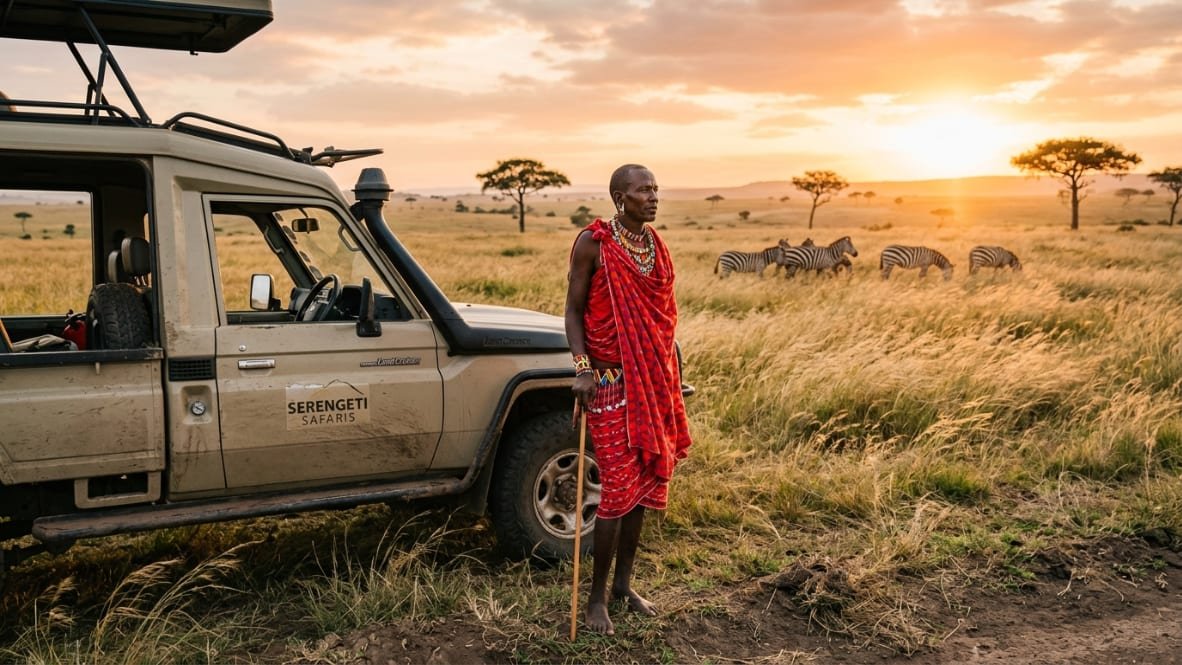
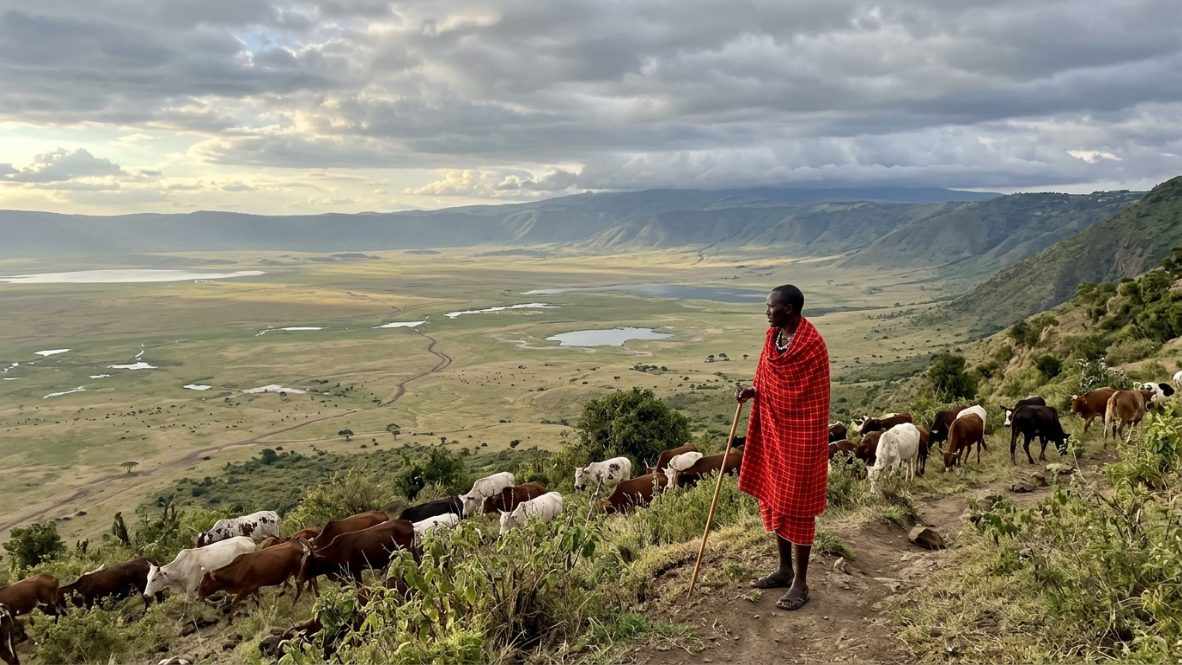
On your first game drive through Ngorongoro or the Serengeti, you’ll see them. A figure wrapped in red cloth, walking among grazing cattle with a staff in hand, moving through the same grass where lions hunt. The Maasai are not a backdrop to your Tanzania safari. They are the reason the Serengeti has its name, the reason Ngorongoro has its unique conservation model, and a living culture whose vocabulary you will hear from your guide, your camp staff, and the communities along every stretch of the northern circuit.
This glossary exists because the terms come fast and without context. Your guide mentions a “boma.” The brochure promises a “moran dance.” Someone at the lodge says “shuka” like you should already know. Meanwhile, you’re trying to figure out whether a village visit is worth the money or just a tourist trap, and nobody has explained the Ngorongoro eviction crisis that made international headlines.
A quick note on spelling: “Maasai” with the double-a reflects the pronunciation in the Maa language and is the spelling preferred by the community itself. “Masai” is an older colonial-era spelling that still appears on maps, signs, and hotel names. This article uses “Maasai” throughout.
For a broader look at cultural tourism across Tanzania’s 120+ ethnic groups, see the companion cultural safaris Tanzania glossary.
Quick Answer: What Is a Maasai Safari in Tanzania? A Maasai safari in Tanzania combines traditional wildlife viewing with opportunities to learn about Maasai culture, language, history, and pastoral life. Most visitors encounter Maasai communities while traveling through the Northern Safari Circuit, including Ngorongoro, Serengeti, Lake Manyara, and areas around Lake Natron.
A typical Maasai cultural experience may include: - Visiting a traditional boma (homestead) - Learning about cattle-based pastoralism - Watching an adumu (jumping dance) demonstration - Meeting elders and community leaders - Exploring Maasai beadwork traditions - Learning basic Maa language phrases
Costs generally range from $25–$75 per person for a village visit, though community-run cultural experiences and overnight programs may cost significantly more.
For travelers seeking the most authentic experiences, community-run visits in Lake Natron, Monduli, and Longido are often recommended over high-volume tourist villages near major safari gateways.
Maasai Safari at a Glance
|
Topic |
Quick Answer |
|---|---|
|
Best Areas |
Lake Natron, Ngorongoro, Monduli, Longido |
|
Typical Cost |
$25–$75 per person |
|
Duration |
1–3 hours |
|
Language |
Maa, Swahili, English |
|
Photography |
Ask permission first |
|
Ethical Choice |
Community-run tourism |
|
Best Combined With |
Serengeti and Ngorongoro safaris |
The Maasai: Who They Are
Maasai (Maa-sai)
An Eastern Nilotic pastoralist people living across northern Tanzania and southern Kenya. The Tanzanian Maasai population is estimated at around 430,000, while Kenya’s 2019 census counted approximately 1.19 million. They comprise 14 tribal groups, including the Kisongo, Purko, Loita, and Mataputo, and are concentrated in Tanzania’s Manyara and Arusha regions, which happen to overlap almost perfectly with the main safari circuit.
Maa
The native language of the Maasai people. Maa is a Nilotic language related to Dinka, Kalenjin, and Nuer. It’s also spoken by the Samburu of Kenya and several other groups. Most Maasai today speak Swahili and English as well, so you won’t face a language barrier on safari. But Maa words are woven into the geography, culture, and daily conversation of northern Tanzania, and you’ll hear them constantly.
Nilotic
A linguistic and ethnic classification tracing roots to the Nile Valley region of East Africa. Knowing this term helps you understand why the Maasai share cultural and linguistic similarities with groups as far away as South Sudan. When your guide says the Maasai are “Nilotic, not Bantu,” this is what they mean: a distinct migration history and cultural lineage.
Pastoralist
A livelihood built around raising and herding livestock, primarily cattle, goats, and sheep. The Maasai are semi-nomadic pastoralists, meaning they move seasonally with their herds. This is not a relic of the past. Pastoralism remains the economic foundation of Maasai life and is central to the land-rights conflicts travelers should understand.
Maasailand
The traditional territory spanning northern Tanzania and southern Kenya along the Great Rift Valley. At its peak in the mid-19th century, Maasailand stretched from Mount Marsabit in the north to Dodoma in the south. Colonial treaties in 1904 and 1911 dramatically reduced this territory. Today, most of Tanzania’s famous national parks and conservation areas sit on land that was historically Maasailand.
If you’re planning a Tanzania safari itinerary, understanding this history adds real depth to the places you’ll visit.
Why the Maasai Matter to Tanzania Safaris
Many travelers assume Maasai culture is simply an optional add-on to a wildlife safari. In reality, the Maasai have shaped much of northern Tanzania's cultural and geographic landscape.
Their historical territory once covered much of what is now:
-
Serengeti National Park
-
Ngorongoro Conservation Area
-
Lake Manyara region
-
Loliondo
-
Lake Natron
Many place names used by travelers today come from Maa language origins, including Serengeti itself, derived from the word “siringet,” meaning endless plains.
Understanding Maasai history provides important context for modern conservation policies, wildlife management, cultural tourism, and current land-rights debates across northern Tanzania.
Daily Life and Social Structure
Boma (enkang)
A family homestead or compound enclosed by a circular fence of thorn branches. Inside, you’ll find multiple dwellings, a central area for livestock, and the daily rhythm of Maasai life. When safari brochures advertise a “Maasai village visit,” they mean a visit to a boma. The thorn fence isn’t decorative; it protects cattle from predators at night, which should tell you something about what it means to live alongside wildlife rather than just photograph it.
Manyatta (emanyatta)
This term has two meanings, and both come up on safari. First, it refers to an individual dwelling within a boma, a small, low structure built from a frame of sticks plastered with mud and cow dung. Second, “manyatta” also describes the isolated camp where morans (warriors) live during their training period, separate from the main community. Context will tell you which meaning applies.
Enkaji
A traditional Maasai house, built and maintained by women. This is worth knowing because it highlights a gender dynamic that surprises many visitors: women are the builders. They construct the frame from branches, seal it with mud and dung, and repair it regularly. The houses are small, dark inside, and designed to be semi-permanent, reflecting the Maasai’s historically mobile lifestyle.
Shuka
The distinctive red (or checked) cloth wrap worn by Maasai men and women. You’ll recognize it immediately: it’s the most visually iconic element of Maasai identity. Red is the most symbolically important color, associated with bravery and strength, though blue, purple, and multicolored patterns are also common. The shuka is not a costume. It’s daily clothing, and you’ll see it on herders, schoolchildren, and elders throughout the northern circuit.
Age-set (olporror)
This is the foundation of Maasai social and political organization, and understanding it unlocks everything else. An age-set is a permanent grouping of males who are initiated together during the same period. Once formed, the group stays together for life, moving through a hierarchy of grades lasting approximately 15 years each: junior warriors, senior warriors, junior elders, and senior elders. A new age-set forms every 10 to 15 years. Women become members of their husband’s age-set.
Moran (pl. morani / ilmurran)
The warrior class. Young men roughly between ages 15 and 30 who have passed through the Enkipaata ceremony. Morani are the most visible Maasai figures for tourists: tall, with long ochre-tinted hair, beaded jewelry, and the confidence of people who spent years living in the bush. They are the ones who perform the jumping dance. But “warrior” can be misleading. The moran stage is a training period for leadership, not a permanent identity.
Elder (olpayian)
A senior decision-maker who has passed through the moran grades and completed the Olng’esherr ceremony. Elders govern community life, settle disputes, and control resources. In Maasai society, age equals authority. When you visit a boma, the elder is usually the person who greets your group and sets the terms of the visit.
Oloiboni (laibon)
A spiritual leader and diviner. The oloiboni advises on ceremonies, blesses cattle, and guides community decisions on matters like migration routes and conflict resolution. This role is hereditary, passed from father to son. You’re unlikely to meet an oloiboni on a standard village visit, but the role is essential to understanding Maasai governance.
Cattle
Central to identity, wealth, diet, and spirituality. A Maasai man’s status is measured by his cattle and children. The traditional diet centers on milk, blood, and meat from cattle. Most importantly, the Maasai belief system holds that their god Enkai entrusted all cattle on earth to the Maasai. This belief isn’t a quaint footnote; it has driven centuries of conflict, migration, and resilience.
Enkai (Engai)
The Maasai supreme deity, associated with rain, fertility, and the sun. Enkai has two aspects: Enkai Narok (the benevolent black god, associated with rain and growth) and Enkai Na-nyokie (the vengeful red god, associated with drought and famine). Prayer to Enkai is part of daily life and all major ceremonies.
Ceremonies and Rites of Passage
Enkipaata
The pre-circumcision induction ceremony for boys, typically ages 14 to 16. Enkipaata marks the entry point into the age-set system. It’s held every 10 to 15 years, coinciding with the formation of a new olporror. During the ceremony, boys are gathered from across the region, their heads are shaved, and they begin the process that will eventually make them morani. This is not something you’ll witness on a tourist visit; it’s a deeply private, community-wide event.
Eunoto
The shaving ceremony marking the transition from moran to junior elder, held approximately eight years after Enkipaata. During Eunoto, the warriors’ long, ochre-tinted hair is shaved by their mothers, a powerful and emotional act that symbolizes the end of warrior life. After Eunoto, men are permitted to marry and begin taking on adult responsibilities within the community.
Olng’esherr
The meat-eating ceremony that marks the end of moranism and the beginning of elderhood. This is the final step in the male rite-of-passage sequence. After Olng’esherr, a man enters the elder class and gains full decision-making authority.
These three rites, Enkipaata, Eunoto, and Olng’esherr, were inscribed on UNESCO’s Urgent Safeguarding List in 2018. The “urgent” designation is significant. It means these traditions are genuinely at risk of disappearing due to modernization, land loss, and government policies that disrupt the pastoral lifestyle these ceremonies depend on.
Adumu (aigus)
The famous “jumping dance” that appears in every Tanzania travel brochure. Warriors compete to jump as high as possible from a standing position, without letting their heels touch the ground. In authentic Maasai life, adumu is reserved for special ceremonial occasions. The version performed at tourist villages is a demonstration, not a daily event. Knowing this doesn’t make it less impressive to watch, but it does help calibrate your expectations.
Emutai
A historical period of catastrophe spanning roughly 1883 to 1902. A combination of rinderpest (cattle plague), smallpox, drought, and inter-clan warfare devastated the Maasai population and wiped out much of their livestock. The emutai is essential context for understanding Maasai resilience and why land and cattle remain so deeply connected to survival.
Maasai on the Northern Safari Circuit
The Maasai aren’t separate from the safari experience. They’re woven into every major stop on the northern circuit route.
Northern Circuit
The main Tanzania safari route: Arusha to Tarangire, Lake Manyara, Ngorongoro, and the Serengeti. This is the path most first-time visitors take, and Maasai communities are present throughout. You’ll pass through Maasai grazing areas between parks, see herders walking cattle alongside the road, and have multiple opportunities for cultural encounters.
Ngorongoro Conservation Area (NCA)
Unique in all of Africa. Unlike national parks, which prohibit human habitation, the NCA was established with an explicit dual mandate: wildlife conservation and Maasai pastoral rights. It’s a UNESCO World Heritage Site where Maasai pastoralists were supposed to continue living alongside wildlife. That dual mandate is now under severe strain (see the land-rights section below), but the NCA remains the only major African protected area that was designed to accommodate indigenous residents.
Serengeti
The name comes from the Maa word “siringet,” meaning “endless plains.” The park was carved from historical Maasailand, and the Maasai were relocated when it was gazetted as a national park in 1951. When you stand on the Serengeti plains watching the Great Migration, you’re standing on land the Maasai named and once called home.
Oldupai Gorge (Olduvai)
The archaeological site between Ngorongoro and the Serengeti, famous as the “Cradle of Mankind.” Almost every source you’ll read calls it “Olduvai,” but that’s a colonial-era misspelling. “Oldupai” is the correct Maasai name, derived from the wild sisal plant (Sansevieria) that grows in the gorge. Your guide may use either name.
Mto wa Mbu
A multi-ethnic town near Lake Manyara that serves as a common safari lunch stop. While it’s not exclusively Maasai, it offers a broader cultural encounter. Walking tours here introduce you to several ethnic groups, banana beer brewing, and local farming, which can provide useful contrast to a Maasai-focused visit.
Lake Natron
A remote, alkaline lake near the Tanzanian-Kenyan border. Practitioners on forums and review sites consistently identify this area as one of the best locations for a genuine Maasai cultural encounter. The reason is simple: the Maasai villages near Lake Natron are permanent settlements, not tourist-rotation camps. Visitors who include Lake Natron in their itinerary report a noticeably more authentic experience.
Loliondo
A district adjacent to the Serengeti where a major Maasai land dispute has been ongoing since the early 2000s. In 2022, approximately 1,500 square kilometers of village land were formally annexed to create a game reserve. Around 70,000 Maasai were affected. This is not abstract politics; it directly shapes the human geography of the safari circuit.
Maasai Safari Costs in Tanzania (2026)
Travelers frequently ask how much a Maasai cultural experience costs and whether the fees directly support local communities.
Typical Maasai Cultural Experience Prices
|
Experience Type |
Typical Cost |
|---|---|
|
Basic village visit |
$25–$50 per person |
|
Premium village visit |
$50–$75 per person |
|
Community-run cultural tour |
$50–$150 per person |
|
Overnight cultural experience |
$150–$500+ per person |
|
Luxury cultural immersion programs |
$800–$2,500+ per night |
What Your Fee Usually Covers
-
Community entry fees
-
Guide services
-
Cultural demonstrations
-
Village maintenance
-
Community development projects (varies by operator)
Before booking, ask:
-
Who receives the money?
-
Is the community managing the experience?
-
How much stays within the village?
These questions often reveal more about authenticity than the itinerary itself.
The Cultural Visit: Planning Terms
This is where the Maasai safari Tanzania experience gets practical, and where most travelers have the most questions. The terminology below will help you plan and evaluate what you’re being offered.
Cultural Safari
A safari itinerary that intentionally includes community or heritage visits alongside wildlife viewing. The key word is “intentionally.” A cultural safari treats the Maasai visit (or visits to other communities) as a designed part of the trip, not a 20-minute roadside add-on between parks. The difference shows up in how much time is allocated, which communities are visited, and whether the operator has a genuine relationship with the host village.
For travelers considering this approach, private Tanzania safari options offer the flexibility to build cultural stops into the itinerary rather than relying on fixed-route stops.
Village Fee
A per-person or per-vehicle fee paid to enter a Maasai village for a cultural visit. Prices range widely. Some operators quote $25 per person as a tip to the village head. Others charge $50 to $75 per person as admission. Multi-day cultural safari packages at premium camps can run $800 to $2,500 per person per night.
The cost confusion is real. One traveler on TripAdvisor described being quoted $50 admission but asked $75 on arrival, with additional donations and bead purchases totaling another $150, calling the experience “a hustle.” Knowing the typical price range in advance helps you set boundaries.
For a fuller breakdown of what things cost on safari, the East Africa cost guide covers pricing across the region.
Beadwork (esidai)
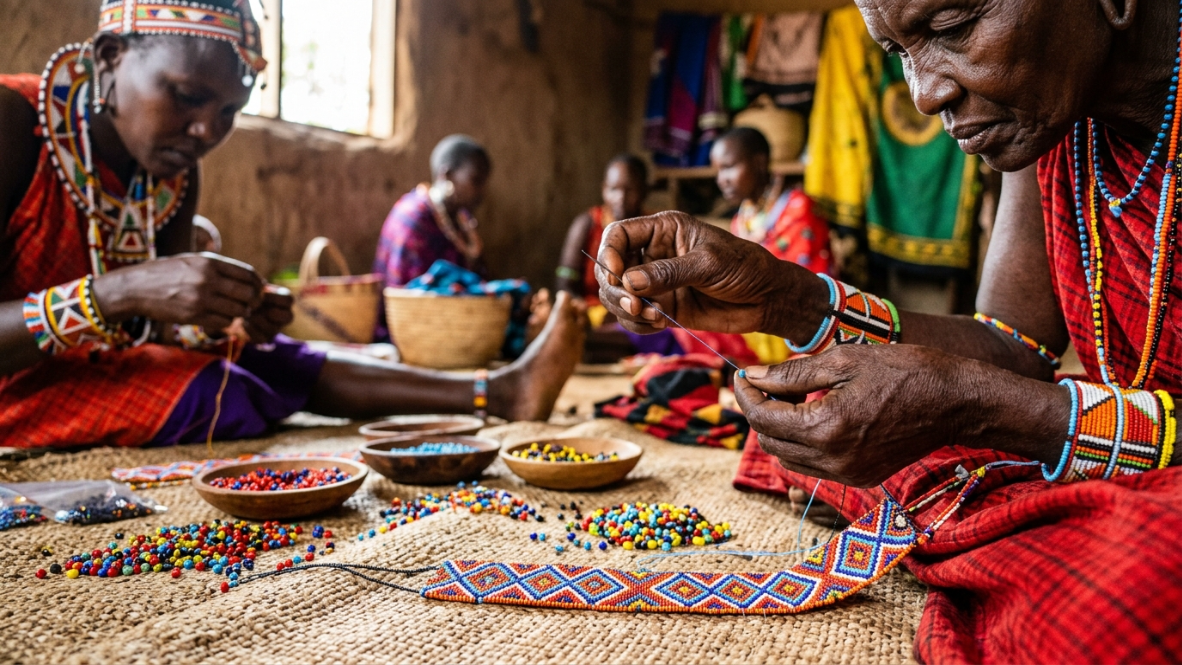
Maasai jewelry-making is a sophisticated tradition, not just a souvenir category. Colors and patterns indicate age, marital status, and social position. Red symbolizes bravery, blue represents energy and the sky, white stands for purity, and green signals the land. Women are the beadworkers, and the craft carries genuine cultural significance. At tourist villages, beadwork sales are typically the primary income source for the women.
Craft Market
The selling area at the end of most village visits. Prices here are typically marked up significantly compared to Arusha town markets. One TripAdvisor user noted that items were “1/4 the price” in town. Rather than viewing this as a rip-off, it helps to think of purchases as direct community support, with the understanding that you’re paying a premium for the context, not just the object.
Photography Permission
Always required before photographing individuals. Some elders consider cameras intrusive. Always ask through your guide, and accept a “no” gracefully. Many morani are comfortable being photographed and will even pose, but the decision belongs to the individual.
Rotation System
This is one of the most important terms for understanding what you’re actually experiencing during a Maasai village visit on the northern circuit. Tourist-circuit villages (especially near the Ngorongoro crater rim) operate on a rotation: one clan hosts tourists for a period, then swaps with another.
One operator on a travel advice site explained it plainly: the camp is temporary, and the community that hosts you rotates every few weeks, giving each group a small window to earn money. This explains why the village can feel “purpose-built,” because it partially is. But the people and the culture are real. Understanding the rotation system helps you hold two truths at once: the visit is staged in structure, and genuine in the humans you’re meeting.
Fortress Conservation
A conservation model that treats local communities as obstacles to be removed from protected areas. This term comes up in academic and advocacy contexts, but it directly applies to the Maasai safari Tanzania experience. The Ngorongoro evictions, the Serengeti relocations, the Loliondo land seizures, all reflect fortress conservation thinking. When your guide says the Maasai “used to live here,” this is the framework behind that displacement.
Community-Run Tourism
Cultural experiences managed and controlled by the community itself, not by outside operators. Multiple sources, from ethical travel organizations to practitioner operators, identify this as the single most important indicator of whether a visit is genuinely beneficial. Green flags include: the community sets the price, community members lead the tour, and there’s no intermediary operator taking a cut.
How to Choose an Ethical Maasai Cultural Experience
Not all cultural tourism experiences benefit Maasai communities equally.
Positive Signs
-
Community-owned tourism programs
-
Transparent pricing
-
Local guides leading visits
-
Small group sizes
-
Revenue shared with community projects
-
Opportunities for meaningful conversation
Warning Signs
-
Pressure to purchase souvenirs
-
Photography without consent
-
Extremely rushed visits
-
Unclear fee structures
-
Large bus groups rotating through villages
Questions to Ask Your Safari Operator
-
Is the experience community-run?
-
How are village fees distributed?
-
Are local guides employed?
-
How many visitors arrive per day?
-
Can guests spend extended time with community members?
Travelers who ask these questions are more likely to support tourism that benefits Maasai families directly.
Maa Phrases for Safari
Most interactions on safari happen in Swahili or English. But knowing even two or three Maa words signals respect, and Maasai people notice.
Sopa — Hello. The most common general greeting.
Yeyo — Mother. A respectful way to address elder women.
Supai / Takwenya — How are you? / A common response greeting.
Ashe — Thank you.
Ashe oleng — Thank you very much.
Enkare — Water. Useful and practical.
Emuata — Let’s go.
You won’t become conversational in Maa during a safari. That’s fine. The point is acknowledgment. When you greet someone in their language, you’re telling them you know this is their home, not just your vacation destination.
For general East Africa travel terms beyond Maa, there’s a broader glossary covering Swahili and safari vocabulary.
The Land-Rights Context
This section exists because travelers need it. The Ngorongoro eviction crisis has been covered by Human Rights Watch, Amnesty International, the European Parliament, and the Oakland Institute. It directly affects where and how you experience Maasai culture on safari, and ignoring it would make this glossary incomplete.
Ngorongoro Evictions / “Voluntary Relocation”
Since 2022, the Tanzanian government has been relocating Maasai from the Ngorongoro Conservation Area, citing environmental and conservation grounds. The government describes these as “voluntary relocations.” Human Rights Watch and other watchdogs have documented the downsizing of essential public services, including schools and health centers, within the NCA, making life increasingly difficult for the estimated 100,000 Maasai who lived there.
In August 2024, over 40,000 Maasai staged a historic mobilization, blocking the Ngorongoro-Serengeti highway and stranding safari land cruisers. In December 2024, President Samia Suluhu Hassan met with Maasai leaders and ordered a stop to evictions. However, as of early 2026, government commissions have recommended that evictions continue, describing the long-standing Maasai presence as an “environmental pressure.”
Loliondo Game Controlled Area
Approximately 1,500 square kilometers of village land adjacent to the Serengeti, formally annexed for a game reserve in 2022. The annexation affected dozens of villages and has been challenged by civil society organizations both within Tanzania and internationally.
Maasai International Solidarity Alliance (MISA)
A coalition of international organizations advocating for Maasai land rights. MISA coordinates campaigns, amplifies Maasai voices, and connects the local land-rights struggle to global indigenous rights frameworks.
Pastoral Women’s Council (PWC)
A Tanzanian membership organization supporting over 25,000 pastoralist women in Ngorongoro, Longido, and Monduli districts. The PWC focuses on education, healthcare access, and political representation for Maasai women, who bear disproportionate burdens during displacement.
The glossary isn’t an advocacy piece. But successive conservation measures have each added restrictions on the Maasai, and the current government push to remove tens of thousands of people from Ngorongoro is driven by a combination of conservation goals, luxury tourism expansion, and trophy hunting concessions. As a traveler, you benefit from understanding this context. It helps you make informed choices about which operators you support and how you engage with Maasai communities.
How This Connects to Your Safari
Understanding these terms before you travel transforms the experience. Instead of watching a “warrior dance” at a roadside village and wondering what just happened, you’ll know about adumu, the age-set system, the rotation model, and why that red shuka means what it means. Instead of feeling vaguely uncomfortable about the Ngorongoro visit, you’ll understand the eviction crisis and be able to ask your guide real questions.
Cultural encounters work best when they’re integrated into your itinerary by someone with genuine local relationships, not bolted on as a 30-minute photo stop. The difference between a rushed village visit and a meaningful cultural exchange often comes down to how the trip was designed in the first place.
If you’re ready to start building an itinerary that treats Maasai culture with the depth it deserves, East Africa safari planning is a good place to begin shaping a route.
Or if you’re thinking about combining safari, culture, coast, and more into one East Africa trip, the pieces can fit together better than you might expect.
Maasai Village Visit vs Community-Run Cultural Experience
|
Feature |
Tourist Village Visit |
Community-Run Experience |
|---|---|---|
|
Duration |
30–90 minutes |
Several hours or longer |
|
Group Size |
Large |
Small |
|
Community Control |
Limited |
High |
|
Learning Opportunity |
Basic |
Deep |
|
Revenue Retained Locally |
Varies |
Usually higher |
|
Authenticity |
Mixed |
Generally stronger |
Neither option is automatically good or bad. The difference is often determined by who controls the experience and how tourism revenue is distributed.
Frequently Asked Questions
Is a Maasai village visit on safari worth it?
It depends on the visit. Tourist-circuit villages near Ngorongoro crater operate on a rotation system and can feel staged. Practitioners on TripAdvisor and travel forums regularly call these “tourist traps,” and one operator candidly admitted the experience “has become less authentic.” However, community-run visits in areas like Lake Natron or off-the-beaten-path Maasai communities offer something more genuine. The key is how the visit is arranged, and whether the community controls the experience.
How much does a Maasai village visit cost?
Expect to pay $25 to $75 per person for a standard village visit, depending on location and whether it’s arranged through your camp or independently. Some operators include the cost in the safari price. Beyond the entry fee, you may be encouraged to buy beadwork and crafts. Budget an additional $20 to $50 for purchases if you’re inclined. Be aware that prices can shift on arrival; knowing the range in advance helps you set expectations.
What is the difference between “Maasai” and “Masai”?
“Maasai” with the double-a reflects the actual pronunciation in the Maa language and is the spelling preferred by the Maasai community. “Masai” is a colonial-era simplification that persists on maps, hotel names, and older publications. Use “Maasai” when writing or speaking.
What should I know about the Ngorongoro eviction situation before visiting?
The Tanzanian government has been relocating Maasai from the Ngorongoro Conservation Area since 2022, citing conservation pressures. Human Rights Watch, the European Parliament, and multiple international organizations have criticized the process. As a visitor, you won’t be prevented from visiting Ngorongoro, but understanding the context helps you engage more thoughtfully with what you see.
Can I photograph Maasai people during a village visit?
Always ask permission through your guide before photographing individuals. During organized village visits, photography is generally expected (it’s part of the arrangement), but individual consent still matters. Some elders and women may decline. Accept that gracefully. Outside of organized visits, photographing Maasai people without asking is considered disrespectful.
What are the UNESCO-listed Maasai rites of passage?
Enkipaata (pre-circumcision induction), Eunoto (the shaving ceremony marking the transition from warrior to elder), and Olng’esherr (the meat-eating ceremony ending moranism). UNESCO inscribed all three on its Urgent Safeguarding List in 2018 because they are genuinely at risk of disappearing.
Where is the most authentic Maasai cultural experience in Tanzania?
Multiple operators and experienced travelers point to Lake Natron and remote areas outside the main tourist circuit. The villages near Lake Natron are permanent settlements, not rotation camps set up for tourist traffic. Off-circuit villages in Monduli and Longido districts are also cited as more authentic alternatives, though they require more planning to access.
What Maa words should I learn before a Maasai safari in Tanzania?
Start with “Sopa” (hello), “Ashe” (thank you), and “Ashe oleng” (thank you very much). Even these three words signal respect and willingness to engage. Most Maasai people you’ll meet also speak Swahili and English, so communication won’t be a problem, but the effort matters.