

Family Safari Africa Packages 2026: A Parent's Glossary
TLDR
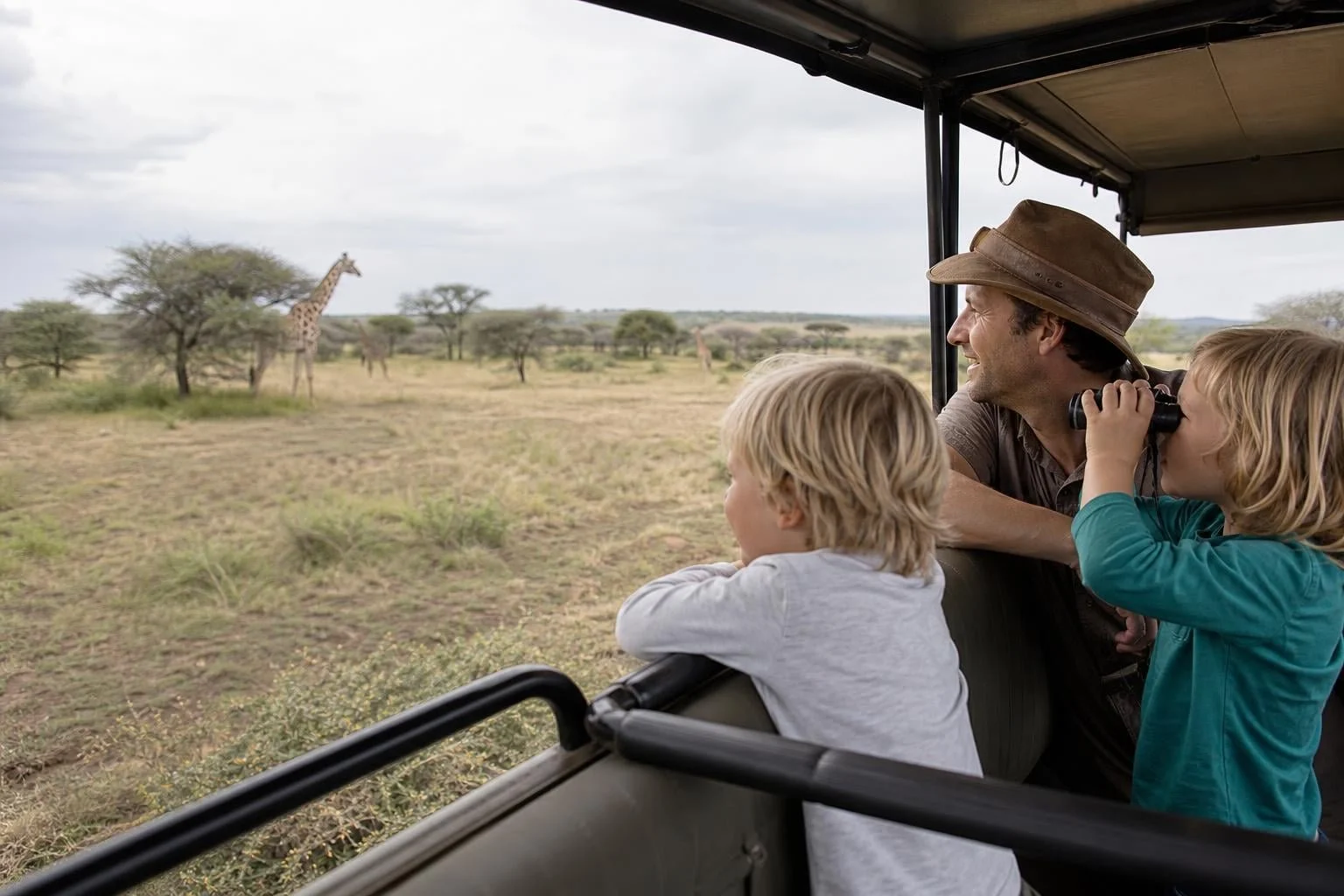
Family safari Africa packages vary wildly in what they include, what they cost, and whether they actually work for children. The right package depends on your youngest child’s age, whether the vehicle is private or shared, which fees are bundled into the quote, and how much downtime is built into the itinerary. This glossary breaks down every term parents encounter while comparing safari quotes, from park fees and concession fees to family suites and walking safari age limits.
Why Safari Package Terms Matter for Families
Two family safari packages can look identical on paper, both seven days in Tanzania, both listing Serengeti and Ngorongoro, and differ by thousands of dollars. The reason is usually buried in the language of the quote.
One package includes park fees, a private vehicle, family suites, and internal flights. The other excludes all of those. Both say “family-friendly.” Both show a per-person price. But the experiences would be completely different for a family with young children.
Practitioners on Reddit report that quote opacity is one of the biggest pain points when booking African safaris. Multiple threads in r/safaris warn travelers to confirm whether quotes include park fees, Ngorongoro crater fees, concession fees, vehicle type, and actual accommodation names before comparing prices.
This glossary exists to fix that problem. It explains what each term in a family safari Africa package means, what it changes for your children, what it changes for the price, and what to ask before you book.
Comparing private safari options and routes? Start with our private Tanzania safari guide for route breakdowns and cost context.
Quick Answer If you're comparing family safari Africa packages, prioritize these five factors before looking at price:
|
Priority |
Why it Matters |
|---|---|
|
Youngest child's age |
Determines which lodges, activities, and vehicles are suitable. |
|
Private vs shared vehicle |
The biggest difference in flexibility and overall family experience. |
|
Included fees |
Park fees, concession fees, crater fees, and flights can change total cost by thousands of dollars. |
|
Accommodation type |
Family suites and interconnecting rooms are much more practical than standard rooms. |
|
Itinerary pace |
Children enjoy safaris more with fewer hotel changes and regular downtime. |
Families often compare packages based on the headline price, but the better comparison is how much flexibility, safety, and child-friendly planning each package includes.
What Is a Family Safari Package?
A family safari package bundles some or all of the following: itinerary planning, guide, vehicle, accommodation, meals, park fees, transfers, domestic flights, permits, and age-appropriate activities. The word “package” can mean anything from a fixed group departure to a fully custom private itinerary.
The critical distinction is this: a package labeled “family” should change the itinerary, not just the marketing. A genuine family safari Africa package adjusts pacing, room configurations, guide selection, drive length, and activity choices around children. If the only difference from an adult itinerary is a discounted child rate, that is not a family package. That is a regular safari with kids added.
Types of packages families will encounter
Private safari. Arranged only for your family with a dedicated vehicle and guide. You control the schedule.
Shared safari (join-in safari). Unrelated travelers share a vehicle, guide, and schedule. Cheaper, but less flexible. Young children can slow down the group, and other guests may make your family feel rushed.
Tailor-made (custom) safari. Built around your dates, children’s ages, interests, lodge preferences, pace, and budget. This is what most families comparing Africa safari packages should aim for if the budget allows.
Small-group safari. A scheduled departure with a capped group size. Better than a large bus tour, but still less flexible than a private family trip.
For a deeper comparison of how shared and private safaris differ in cost and experience, see our private vs. group safari guide.
Family Safari Package Types at a Glance
|
Package Type |
Best For |
Flexibility |
Budget |
|---|---|---|---|
|
Private Safari |
Families with young children |
Excellent |
$$$$ |
|
Tailor-made Safari |
Families wanting customization |
Excellent |
$$$$ |
|
Shared Safari |
Older children and budget travelers |
Low |
$$ |
|
Small Group Safari |
Independent families |
Moderate |
$$$ |
|
Fly-in Safari |
Families with limited vacation time |
High |
$$$$ |
|
Drive-in Safari |
Budget-conscious families |
Moderate |
$$ |
Start With Age: The Youngest-Child Rule
Most family safari content talks about destinations first. That is backwards. The youngest traveler’s age should be the first planning filter because it determines vehicle choice, lodge eligibility, activity access, drive length, health planning, and cost.
A safari that works beautifully for a 14-year-old can be miserable for a 4-year-old. Plan around the youngest child, then add experiences for older kids and adults on top.
Family safari age-fit matrix
Ages 0 to 4. Best with private vehicles, short game drives, lodge-based stays with pools, flexible meals, and a beach extension. Avoid shared vehicles, unfenced camps without strong family protocols, and itineraries with many one-night stays. Key terms to understand: private vehicle, fenced camp, family suite, child policy, downtime day.
Ages 5 to 8. Short-to-medium game drives work well. Northern Tanzania circuits (Tarangire, Ngorongoro, Lake Manyara) or Kenya’s Maasai Mara can be paced for this age group with 2 to 3 bases, cultural activities, and pool time. Many families find ages 6 to 11 an especially rewarding window for safari, though younger children work fine with private pacing. Key terms: child rate, game drive, family tent, interconnecting room, bush breakfast.
Ages 9 to 12. Longer wildlife days become feasible. Serengeti and the Mara open up. Balloon safaris may be possible (one major Serengeti operator lists a minimum age of 7 at $599 per person, excluding park fees). Walking safaris are only permitted for those above age 12 in Tanzania per TANAPA regulations. Key terms: fly-in safari, mobile camp, concession fee, walking safari.
Ages 13 to 17. Migration-focused itineraries, photography, walking safaris, and multi-country add-ons become realistic. Gorilla trekking in Rwanda requires a minimum age of 15, with permits at $1,500 for foreign visitors, a one-hour viewing window, and groups capped at eight. Key terms: gorilla permit, private guide, conservancy, night drive.
For families with teens interested in gorilla trekking, check the detailed breakdown of gorilla trekking age limits by country and park.
Package Type Glossary
Fly-in safari
An itinerary using small aircraft (bush planes) to move between parks or camps. Saves hours of driving and avoids exhausting transfer days. The trade-offs: higher cost, strict luggage limits (usually soft-sided bags only, 15 to 20 kg), and fixed flight schedules. One family travel blogger who took young children across Tanzania specifically advised packing soft bags for internal flights because hard suitcases may not fit.
Ask before booking: Are internal flights included in the quoted price? What is the weight limit per person, including carry-on?
Drive-in safari
An itinerary using road transfers between parks. Lower cost, more scenery, easier luggage handling. But long, bumpy transfer days can drain young children. For families with kids under 8, it helps to limit driving days to 3 to 4 hours when possible, or break long drives with lunch stops and short walks.
Bush-and-beach package
A safari paired with beach time, often Zanzibar, the Swahili Coast, Diani (Kenya), or similar. This is not filler. For families, beach time prevents burnout after early starts and bumpy roads. A Memphis Tours family guide suggests that 3 to 6 safari days may be enough for many families before adding beach or city time.
For families planning a Zanzibar extension, our Zanzibar family travel glossary covers everything from kid-friendly beaches to food and activities.
Migration safari
An itinerary timed around the Great Wildebeest Migration, typically in Tanzania’s Serengeti or Kenya’s Maasai Mara. Migration safaris can involve remote mobile camps and longer drives. Best suited to families with children aged 9 and up who can handle variable conditions and early starts.
Multi-generational safari
A package designed for grandparents, parents, and children traveling together. Requires careful attention to room configurations, walking distances, medical access, pacing for different fitness levels, and enough private time for each generation.
Accommodation Glossary
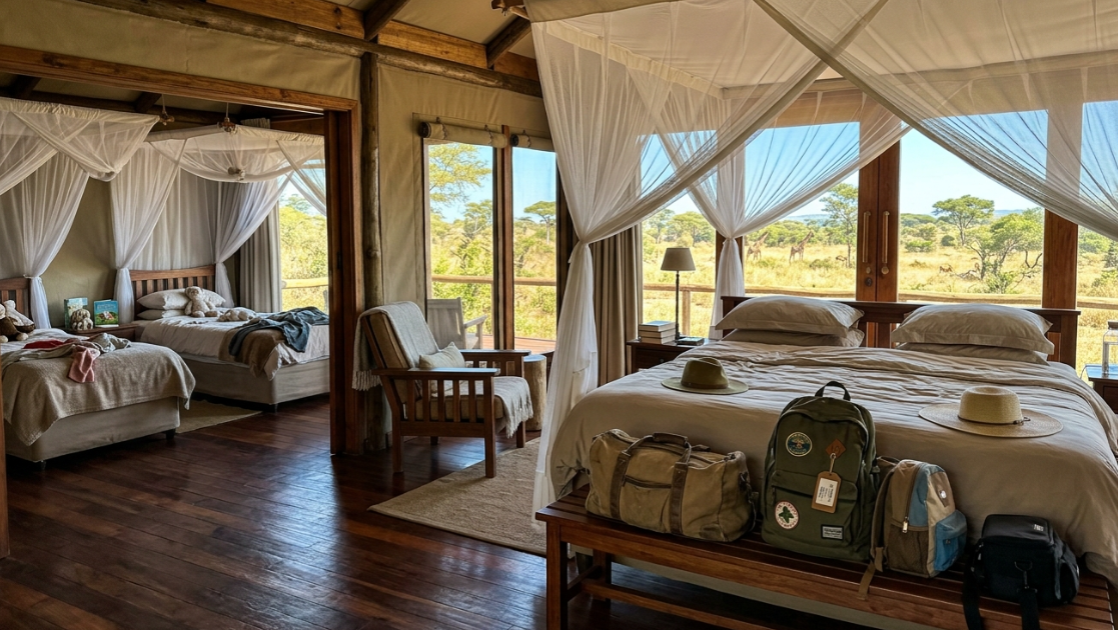
A lodge that “accepts children” is not the same as a lodge that is good for families. The distinction matters enough to break down.
Family suite
A room, tent, or villa designed to sleep parents and children together or in connected spaces. Ask whether it is one room with extra beds, two separate bedrooms, interconnecting units, or a standalone villa. The layout affects sleep quality, privacy, and supervision.
Interconnecting rooms
Two rooms or tents with an internal connecting door. Useful for older children and teens. Critical for parents who do not want kids in a separate standalone tent at a camp where wildlife walks through at night.
Fenced camp
A camp with a physical barrier limiting wildlife from entering guest areas. More reassuring for families with younger children, though supervision is still needed. Common in parts of South Africa and some East African lodges.
Unfenced camp
A camp where wildlife can move freely through the property. Authentic and exciting, but families need strict escort rules, nighttime supervision, and a clear briefing on camp safety. An experienced family safari blogger notes that parents should check whether a property is fenced, has a pool, and has child-friendly safety features before booking.
Mobile camp
A temporary or semi-mobile camp that may move seasonally to follow wildlife patterns, especially migration routes. Excellent for wildlife positioning but sometimes fewer facilities than permanent lodges. Check for pool access, family tent availability, electricity, and minimum ages.
Permanent tented camp
A camp with canvas-style safari rooms fixed in place, usually with en-suite bathrooms, running water, and more comfort than mobile setups. A good middle ground between lodge comfort and safari atmosphere.
Lodge
A more permanent structure with rooms, pool, dining area, and fixed facilities. Often the easiest option for younger children because of the familiar hotel-like setup, reliable hot water, and on-site amenities.
Junior ranger program
A lodge-run child activity program involving animal tracks, scat identification, bird-watching, insect study, conservation lessons, and wildlife ID games. When well-run, this is a genuine signal that a property cares about family guests rather than merely tolerating them.
The key question to ask any lodge: Does this property actively welcome children, or does it merely allow them? Properties that welcome children have family room configurations, flexible meal times, child-safe layouts, babysitting options, and guides comfortable with kids. Properties that merely allow children may have none of these.
Vehicle and Guide Glossary
For families, the guide and vehicle setup often matter more than the lodge category. A high-end lodge with rigid shared game drives may be worse for a six-year-old than a mid-range lodge with a flexible private guide.
Private vehicle
A vehicle reserved only for your family. This is often the single most important upgrade in a family safari Africa package. A private vehicle lets the family control drive length, return-to-camp timing, bathroom stops, snack breaks, and how long to stay at sightings.
Practitioners on Reddit consistently frame private vehicles as essential for families with young kids. One discussion in r/FATFamilyTravel summarized the consensus: families with younger children work best with private vehicle game drives, camps that understand family travel, shorter drive options, and guides who are good with kids.
Position: If the budget allows, families with children under 10 should usually prioritize a private vehicle before upgrading to a fancier lodge. The vehicle is the family’s control system for the entire trip.
Shared vehicle
A vehicle shared with other guests, typically at the lodge or on a group safari. Cheaper, but another family’s schedule dictates your day. A tired toddler cannot cut a shared game drive short without affecting everyone else.
Pop-up roof vehicle
A 4x4 with a roof that opens so passengers can stand for wildlife viewing. Standard in East Africa. Good visibility for kids, but remind them not to lean out or stand on seats unsafely.
Open-sided vehicle
A safari vehicle with open sides, common in Southern African private reserves. Excellent visibility but often carries stricter child age rules (some properties require age 6 or older).
Driver-guide
A guide who both drives and interprets wildlife, ecology, culture, and logistics. In East Africa, this is the standard setup. The guide’s personality and experience with children matters enormously. Ask your operator to match the family with a guide who enjoys working with kids.
Game drive
A guided wildlife-viewing drive, usually early morning or late afternoon. Young kids rarely need the longest possible drive. Shorter drives with high-quality sightings and downtime back at camp tend to produce better family experiences than marathon sessions.
Full-day game drive
A long wildlife day with a packed lunch, often used in Serengeti or Ngorongoro Crater. Great for older kids and teens, risky for toddlers unless the family is unusually road-hardy and the vehicle is private.
Night drive
A wildlife drive after dark, usually permitted in private conservancies or specific areas, not in all national parks. Exciting for older kids. Check age rules and whether the child can stay quiet and follow instructions in the dark.
Activity Glossary
Walking safari
A guided safari on foot. TANAPA’s walking safari guidelines restrict participation to people above age 12, require armed park rangers and professional guides, and cap walking groups at four clients. Not for young children. Excellent for teens who want something more active than vehicle-based wildlife viewing.
Balloon safari
A hot-air balloon flight over a safari area, usually at sunrise. Expensive and early, but memorable. Age minimums vary by operator. One prominent Serengeti operator requires a minimum age of 7 on the date of flight.
Gorilla trekking
A guided trek to see habituated mountain gorillas. Rwanda sets the minimum age at 15, charges $1,500 per foreign visitor permit, limits viewing to one hour, and caps each gorilla group visit at eight people. Uganda gorilla permits are $800 for foreign non-residents per the Uganda Wildlife Authority’s current tariff. Only relevant for families with older teens.
For details on permit booking and rules, see our Uganda gorilla permits guide.
Cultural visit
A visit to a local community, market, farm, village, or cultural site. Best when interactive and ethical, not staged or high-pressure. Useful for breaking up game-drive days and engaging younger children who may tire of sitting in a vehicle.
Beach extension
Coastal or island time added after the safari portion. In East Africa, this typically means Zanzibar or the Swahili Coast after a Tanzania safari, or Diani Beach after a Kenya safari. SafariBookings recommends combinations like Nyerere National Park plus Zanzibar as an 8-day family structure, with Zanzibar activities beyond the beach including spice tours, Stone Town, snorkeling, and dhow sailing.
Cost and Quote Glossary
This is where family safari Africa packages get confusing fast. Two seemingly similar quotes can differ by 30% or more depending on what is bundled and what is excluded.
Park fee (conservation fee)
A government fee for entering protected areas, usually charged per person per 24-hour period. TANAPA lists non-resident conservation fees of $70.80 for Serengeti National Park and $53.10 for Tarangire and Lake Manyara on its official tariff page. For a family of four spending multiple days across multiple parks, these fees add up quickly.
Child rate
A reduced rate for children, based on age bands that vary by park authority and property. TANAPA says children under 5 enter national parks free and child rates apply for ages 5 to 15. But child discounts are not always obvious in bundled quotes. Practitioners on Reddit note that operators often fold child costs into per-person totals, making it hard to see whether discounts were actually applied.
Ask: Can you show me an itemized breakdown with child rates separated?
Concession fee
A fee tied to staying inside or using a protected area or concession zone. This can materially change a quote and is sometimes hidden in package totals. Ask explicitly whether it is included.
Crater service fee
A vehicle-related fee for descending into Ngorongoro Crater. This is separate from the Ngorongoro Conservation Area entry fee and can add a meaningful amount to Tanzania safari pricing. If your itinerary includes a crater game drive, confirm this fee is in the quote.
Single supplement
An added cost when one traveler occupies a room alone. Relevant for solo parents, families with odd rooming needs, grandparents on a multi-generational trip, or teens who want their own space.
Full board
Usually means breakfast, lunch, and dinner are included. Drinks, laundry, park fees, premium activities, and tips may still be excluded.
All-inclusive
A broader inclusion term, but not universal. Some “all-inclusive” properties include house wines, local beers, laundry, and select activities. Others exclude premium spirits, spa treatments, park fees, and special excursions. Always ask for specifics.
Land-only price
The package price excluding international flights. Most family safari packages in Africa are quoted land-only. Confirm separately whether domestic flights within the country are included.
Private vehicle supplement
An extra cost charged when a family books sole use of a vehicle. Some packages include a private vehicle by default. Others charge it as an add-on. For families, this is often the most important line item to clarify.
For a full breakdown of safari cost components, see our East Africa safari cost guide.
Common Mistakes Parents Make When Comparing Safari Packages
Many first-time safari travelers unknowingly compare packages that include very different services.
Common mistakes include:
-
Comparing prices before checking whether park fees are included
-
Assuming "family-friendly" automatically means private game drives
-
Booking shared vehicles with toddlers
-
Choosing too many one-night stays
-
Ignoring domestic flight baggage limits
-
Not confirming family room configurations
-
Forgetting to ask about medical evacuation coverage
-
Planning long driving days for young children
Avoiding these mistakes usually saves more money than simply choosing the cheapest package.
The Quote Transparency Test
Before comparing any two family safari Africa packages, make sure each quote answers these questions:
-
Are all park and conservation fees included?
-
Are concession or camping fees included?
-
Is the Ngorongoro Crater vehicle fee included (if applicable)?
-
Is the safari vehicle private or shared?
-
Are all accommodations named, not just described as “similar” or “equivalent”?
-
Are rooms confirmed as family rooms, triples, or interconnecting, not merely requested?
-
Are child rates applied, and can you see them itemized?
-
Are internal flights included?
-
Are airport transfers included?
-
Are drinks, laundry, tips, visas, and insurance excluded?
-
Is medical evacuation cover included or separately recommended?
-
What is the cancellation policy?
-
What happens if a child gets sick and the family misses a game drive or domestic flight?
-
Are dietary needs handled?
-
Is the itinerary paced for the youngest child?
This is not a theoretical exercise. Reddit safari planning threads are full of travelers who received quotes that looked affordable until they realized park fees, crater fees, or a private vehicle were not included.
To avoid the most common comparison mistakes, our guide to costly safari booking errors walks through real-world examples.
Health, Safety, and Insurance Terms
Family safari articles often bury medical logistics in disclaimers. For parents taking children to remote wildlife areas, these terms deserve the same attention as lodge selection and vehicle type.
This glossary is not medical advice. Families should consult a travel medicine clinician for child-specific malaria prevention, vaccines, and medications.
Malaria prophylaxis
Prescription medicine taken to reduce malaria risk. The CDC states that malaria transmission occurs in all areas of Tanzania below 1,800 meters and recommends prescription malaria prevention for certain Tanzania itineraries. The CDC also notes that malaria is among the most serious life-threatening infections acquired by pediatric international travelers and that children are at particular risk without prophylaxis.
Medical evacuation insurance
Insurance covering emergency transportation from a remote area to a high-quality hospital. The CDC says medical evacuation can otherwise cost more than $100,000. The U.S. State Department adds that Tanzania’s ambulance services are unreliable throughout the country and that supplemental medical evacuation insurance is strongly recommended.
For families, this is not optional. Safari camps are remote. The nearest well-equipped hospital may be hours away by road or require an emergency flight.
For comprehensive coverage guidance, see our safari travel insurance guide.
Yellow fever certificate
Proof of yellow fever vaccination, sometimes required for entry depending on your travel route. Direct travel from the United States to Tanzania does not require yellow fever vaccine, but travel from countries with yellow fever risk (including airport transits over 12 hours) does.
Wildlife briefing
An orientation given at the start of a safari or upon arrival at a camp, covering animal safety, camp rules, escort protocols, and what to do if wildlife enters the camp area. For families, this briefing should include children old enough to understand basic instructions.
Best Family Safari Package Types by Family Profile
Families with toddlers or preschoolers
Best setup: Short private safari, lodge-based, pool access, flexible meals, beach extension. Two to three bases maximum.
Avoid: Long shared game drives, many one-night stays, unfenced camps without strong family protocols, early starts every single day.
Families with kids aged 5 to 8
Best setup: Private Northern Tanzania or Kenya safari with 2 to 3 bases, shorter game drives, cultural activities, junior ranger programs, pool time, and a beach add-on.
Avoid: Overly ambitious migration chasing or itineraries that pack five parks into seven days.
Families with kids aged 9 to 12
Best setup: Serengeti and Mara become more feasible. Balloon safaris may be possible. Walking safaris open up at age 12. Longer wildlife days work if balanced with occasional downtime.
Avoid: Too many passive lodge days when kids want action. This age group benefits from photography, tracking, and interactive wildlife experiences.
Families with teens
Best setup: Migration-focused itineraries, photography opportunities, walking safaris, multi-country extensions, gorilla or chimpanzee trekking if the teen is 15 or older.
Avoid: Treating teens like small children. Build in autonomy, interest-based activities, and time with the guide to pursue their own wildlife curiosity.
Multi-generational families
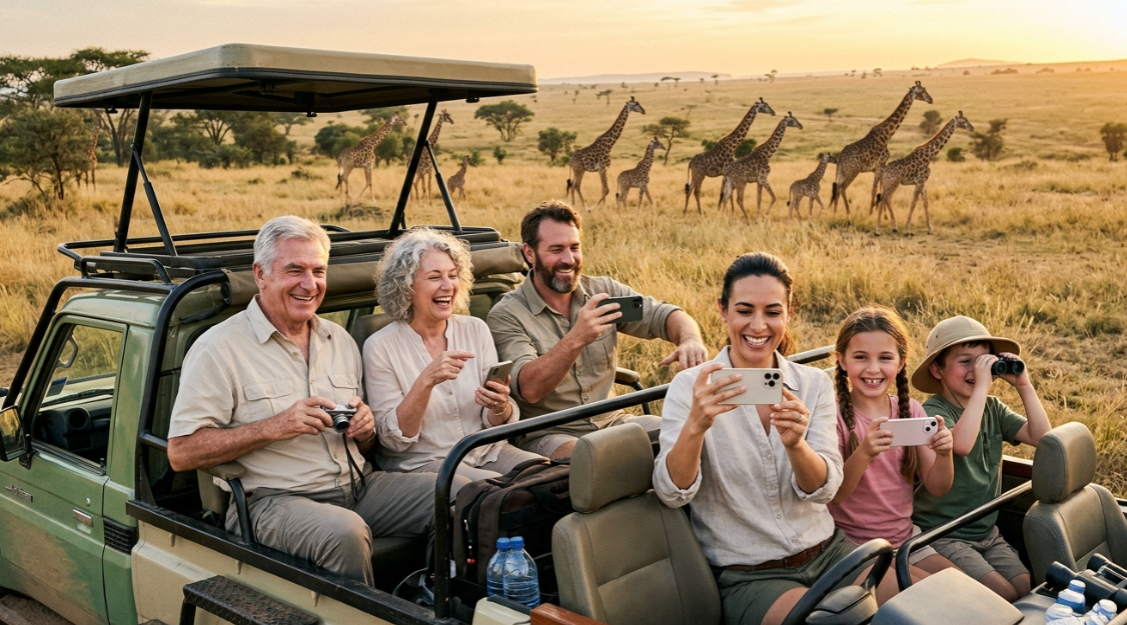
Best setup: Private vehicle (essential for varying energy levels), slower pacing, accessible lodge rooms, shorter walking distances, optional activities so grandparents can rest while kids explore.
Avoid: Remote camps with difficult access if anyone has mobility limitations. Medical evacuation planning becomes even more important.
Ready to match your family’s ages and interests to the right East Africa route? Explore our breakdown of East Africa safari itineraries for route options across Tanzania, Kenya, Uganda, and Rwanda.
Family Safari Package Comparison by Destination
|
Destination |
Best Age |
Vehicle Style |
Beach Extension |
Overall Family Rating |
|---|---|---|---|---|
|
Tanzania |
All ages |
Mostly private |
Excellent |
⭐⭐⭐⭐⭐ |
|
Kenya |
5+ |
Mostly private |
Excellent |
⭐⭐⭐⭐⭐ |
|
South Africa |
Young children |
Mixed |
Limited |
⭐⭐⭐⭐ |
|
Botswana |
Older children |
Private |
No |
⭐⭐⭐⭐ |
|
Uganda |
Teens |
Private |
No |
⭐⭐⭐ |
|
Rwanda |
Teens |
Private |
No |
⭐⭐⭐ |
East Africa vs. Southern Africa for Family Safari Packages
Tanzania and Kenya
Classic savannah wildlife, the Serengeti and Maasai Mara, and easy safari-plus-beach combinations (Tanzania plus Zanzibar, Kenya plus Diani). Private vehicle and guide itineraries are standard in East Africa. Families should plan for malaria prevention, longer road transfers on drive-in itineraries, and fee structures that require careful quote checking. Tanzania is the strongest destination for families wanting Serengeti, Ngorongoro, Tarangire, and a Zanzibar beach extension in one trip.
South Africa
Easier logistics, malaria-free reserve options (parts of the Eastern Cape, Madikwe), and lodge-based children’s programs. A good fit for a first safari with very young children. But many South African lodges have stricter age policies, often not allowing children under 6 or 8 on shared game drives, and some are not ideal for children under 12.
Botswana
Spectacular wilderness, water-based safari, and private concessions. Best suited to older children and teens because of higher price points, remote logistics, and camps with stricter age rules. A strong option for families willing to invest in a premium, uncrowded wildlife experience.
Uganda and Rwanda
Best for families with teens 15 and older who want gorilla trekking. More active hiking, higher permit costs, and limited availability. Works well as an add-on to a Tanzania or Kenya safari rather than a standalone family trip.
For families weighing Tanzania against other options, our best time to visit East Africa guide helps align school holidays with wildlife seasons.
Family Safari Planning Timeline
|
Before Departure |
What to Do |
|---|---|
|
12 months |
Choose destination and travel season |
|
9 months |
Book safari and flights |
|
6 months |
Check passport validity |
|
4 months |
Visit travel clinic |
|
2 months |
Buy travel insurance |
|
1 month |
Confirm luggage rules |
|
1 week |
Reconfirm flights and transfers |
FAQs
What is included in a family safari Africa package?
Usually some combination of accommodation, meals, safari vehicle, driver-guide, park fees, transfers, and planning. But inclusions vary significantly. Always ask whether park fees, concession fees, domestic flights, drinks, laundry, tips, visas, and insurance are included. Two packages at the same headline price can have very different actual costs once exclusions are factored in.
What is the best age for a family safari in Africa?
There is no single best age. Ages 6 to 11 are often a sweet spot because children can follow instructions, stay engaged on game drives, and remember the experience. But toddlers work with private vehicles and flexible pacing, and teens unlock more active experiences like walking safaris, photography, and gorilla trekking. The key is matching the package to the age, not searching for a universal “right” age.
Can toddlers go on safari?
Yes, with the right setup. The package should use private vehicles, short drives, family-friendly lodges with pools, flexible meal times, and built-in downtime. Many East African operators accommodate young children on game drives without hard age limits, though individual lodge and activity rules vary. The trip will look different from an adult safari, and that is fine.
Is a private vehicle worth it for a family safari?
Almost always, especially with children under 10. A private vehicle lets the family control drive length, snack stops, bathroom breaks, return-to-camp timing, and sighting priorities. It turns a potentially stressful group experience into a flexible family adventure. If the budget forces a choice between a fancier lodge and a private vehicle, choose the vehicle.
Do children pay park fees in Tanzania?
TANAPA says children under 5 enter free and child rates apply for ages 5 to 15. Conservation fees are valid for 24 hours from the time of entry. Ask your operator to show how child rates are applied in the quote, because bundled per-person pricing can obscure whether discounts were actually factored in.
Are walking safaris suitable for children?
Not for young children. TANAPA restricts walking safaris in Tanzania national parks to people above age 12, requires armed park rangers and professional guides, and caps groups at four clients. For teens who meet the age requirement, walking safaris are one of the most engaging and memorable safari activities available.
Do we need travel insurance for a family safari?
Yes. At minimum, families should carry travel health insurance and medical evacuation insurance. Safari camps are in remote areas where the nearest quality hospital may require an emergency flight. The CDC notes that medical evacuation can cost more than $100,000 without insurance. Trip cancellation insurance is also worth considering given the cost of most Africa family safari packages.
What is a bush-and-beach family safari?
A package combining wildlife viewing with a coastal or island stay, usually to give children and parents recovery time after early starts, long drives, and intense wildlife days. In East Africa, this commonly means a Tanzania safari followed by time on Zanzibar or the Swahili Coast. Far from being a luxury add-on, beach time is often the difference between a family that finishes the trip energized and one that finishes it exhausted.
Choosing the Right Family Safari Africa Package
The best family safari package is not the cheapest or the most luxurious. It is the one that matches the youngest child’s attention span, uses a private vehicle for flexible pacing, builds in real downtime, and makes every fee transparent before the deposit is paid. Compare packages on those criteria, and the right choice tends to become clear.
Planning a custom family safari in East Africa? Duma Explorer designs private, family-paced safaris across Tanzania, Kenya, Uganda, Rwanda, and Zanzibar, built around your children’s ages and your family’s priorities. Explore East Africa safari itineraries and costs to start shaping your trip.