

Where to Go Gorilla Trekking in 2026: Rwanda, Uganda, DRC
TLDR
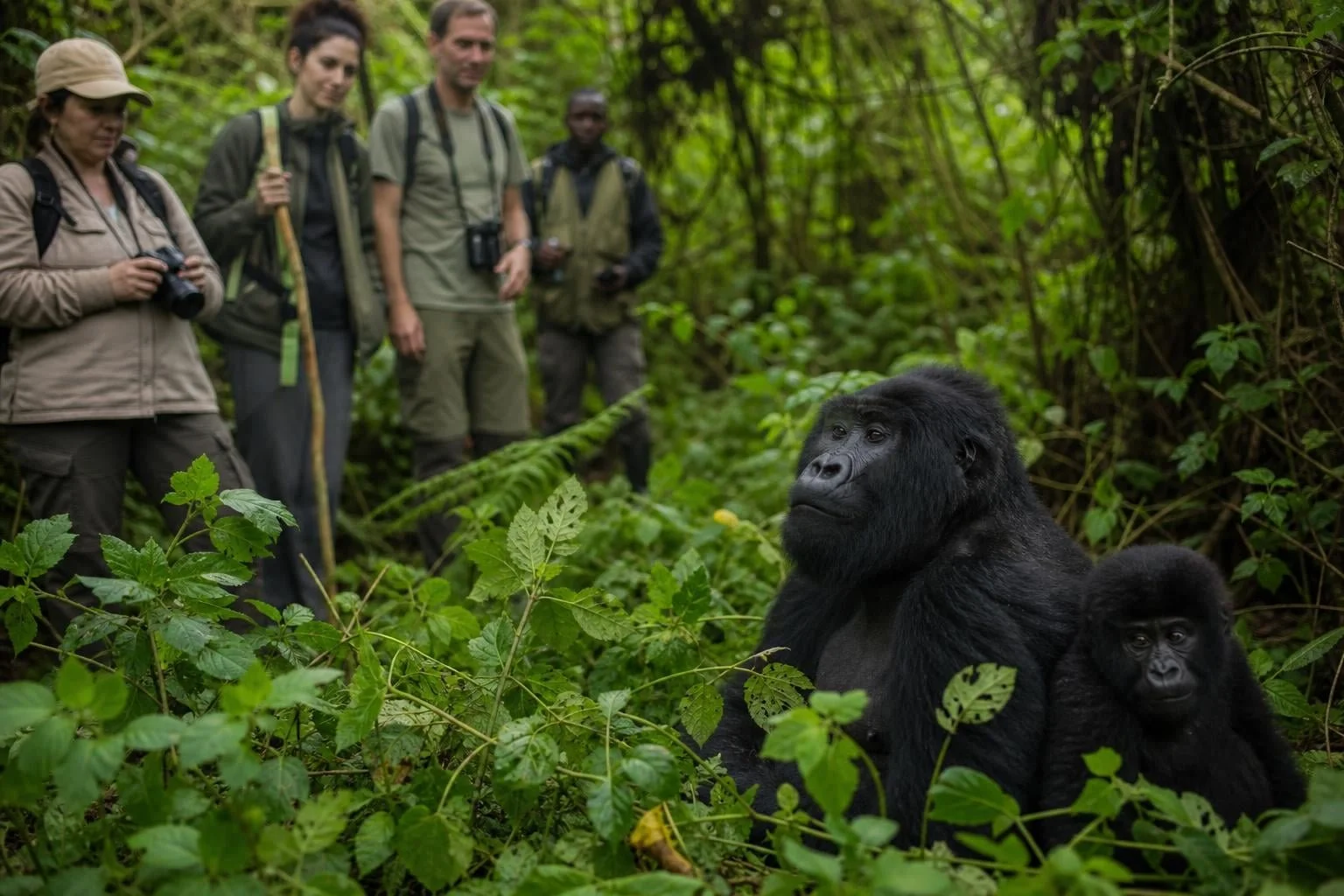
Mountain gorillas live in only three countries: Rwanda, Uganda, and the Democratic Republic of Congo. The best places to go gorilla trekking are Volcanoes National Park (Rwanda), Bwindi Impenetrable National Park (Uganda), and Mgahinga Gorilla National Park (Uganda). Rwanda is the simplest choice for short, high-end trips, while Uganda offers lower permit costs and deeper rainforest immersion. DRC’s Virunga is biologically extraordinary but carries serious advisory risk for most travelers in 2026.
Quick Answer: Which Country Should You Choose for Gorilla Trekking? If you only need a simple recommendation:
|
If you want... |
Choose |
|---|---|
|
The easiest trip with luxury lodges |
Rwanda (Volcanoes National Park) |
|
The best value for money |
Uganda (Bwindi Impenetrable National Park) |
|
The quietest trekking experience |
Uganda (Mgahinga Gorilla National Park) |
|
The longest gorilla encounter |
Uganda (Gorilla Habituation Experience) |
|
A short trip from an international airport |
Rwanda |
|
A longer East Africa safari itinerary |
Uganda |
|
The lowest travel risk in 2026 |
Rwanda |
|
The cheapest permit |
Uganda |
For most first-time visitors, Rwanda is the easiest option, while Uganda offers the best overall value. The Democratic Republic of Congo is biologically exceptional but is not recommended for most leisure travelers because of current travel advisories.
The Four Parks Where You Can Go Gorilla Trekking
Mountain gorilla habitat covers roughly 792 square kilometers split across two ecosystems: the Virunga Massif (shared by Rwanda, Uganda, and DRC) and the Bwindi-Sarambwe area (shared by Uganda and DRC). No other place on earth has wild mountain gorillas.
Four national parks issue permits:
-
Volcanoes National Park in Rwanda
-
Bwindi Impenetrable National Park in Uganda
-
Mgahinga Gorilla National Park in Uganda
-
Virunga National Park in DRC
For most travelers, the practical decision is Rwanda versus Uganda. DRC’s Virunga belongs in the conversation biologically, but current government advisories make it a specialist-only choice. The sections below break down each destination, the terminology that shapes your decision, what permits actually cover, and which park fits your trip.
Compare Rwanda vs Uganda in our full side-by-side gorilla trekking guide.
Gorilla Trekking Locations at a Glance
|
Country |
National Park |
Gorilla Population |
Best For |
Airport |
|---|---|---|---|---|
|
Rwanda |
Volcanoes |
Virunga population |
Luxury, short trips |
Kigali |
|
Uganda |
Bwindi |
Nearly half the world's mountain gorillas |
Value, biodiversity |
Entebbe/Kisoro |
|
Uganda |
Mgahinga |
Virunga population |
Quiet trekking |
Kigali or Kisoro |
|
DRC |
Virunga |
Virunga population |
Specialist expeditions |
Goma |
How to Choose the Best Gorilla Trekking Destination
Many travelers spend too much time comparing permit prices without considering travel time, hiking difficulty, and the type of trip they want.
The best destination usually depends on five factors:
Budget
Uganda generally offers the lowest permit cost.
Time Available
Rwanda is ideal for two- or three-day trips because Volcanoes National Park is only a few hours from Kigali.
Fitness
Rwanda's volcanic terrain is often considered easier than Bwindi's dense rainforest.
Wildlife Goals
Uganda combines gorillas with chimpanzees, classic safaris, and birding.
Luxury vs Adventure
Luxury travelers usually prefer Rwanda, while adventure travelers often choose Uganda.
Gorilla Trekking Glossary: Terms That Shape the Decision
A handful of terms come up in every gorilla trekking conversation. Understanding them before choosing a park saves confusion later.
Gorilla trekking (or gorilla tracking). A guided hike to locate a habituated gorilla family and observe it for a limited time. The two terms are used interchangeably across East Africa.
Habituated gorilla family. A gorilla group gradually accustomed to limited human presence through years of careful, controlled exposure. Only habituated families receive tourist visitors. Rwanda typically has 12 habituated tourist groups. Bwindi has more.
Gorilla permit. The official government authorization for a specific trek on a specific date. Rwanda issues permits through its RDB booking portal at US$1,500 for foreign adults. Uganda’s UWA listed permits at US$800 for foreign non-residents through June 2026 (verify UWA’s current tariff for dates after that).
Permit-only price. The government fee for the trek day alone. This does not include lodging, meals, transport, porter fees, tips, or operator services. Practitioners on Reddit consistently flag this misunderstanding. One traveler in r/travel explained that Rwanda’s US$1,500 is “only the government permit,” not the cost of the trip. This distinction matters enough to highlight separately in the permit section below.
One-hour rule. Standard gorilla trekking allows a maximum of roughly one hour observing the gorillas once contact is made.
Eight-person rule. Conservation guidelines cap tourist visits at about eight visitors per gorilla group per day. Rwanda typically issues 96 permits daily: eight for each of its 12 habituated groups.
Gorilla family allocation. The morning assignment of trekkers to a specific gorilla family. You can request an easier or harder trek. But gorillas are wild and they move. A commenter in r/FATSafari noted that requests carry weight but “there are no guarantees.”
Sector. In Bwindi, a trekking area or trailhead such as Buhoma, Ruhija, Rushaga, or Nkuringo. Each offers different terrain, altitude, and lodge options. For a breakdown, see our guide to Bwindi’s gorilla trekking sectors.
Gorilla habituation experience. A longer option available only in Uganda’s Bwindi. Instead of one hour, you spend up to four hours with a gorilla troop still being accustomed to human presence. UWA’s 2024-2026 tariff listed this at US$1,500 for foreign non-residents, matching Rwanda’s standard permit price but offering four times the gorilla time.
Virunga Massif. The transboundary volcanic mountain ecosystem spanning Rwanda, Uganda, and DRC. Three of the four gorilla parks sit within it.
Where to Go Gorilla Trekking: Quick Comparison
|
Factor |
Rwanda: Volcanoes NP |
Uganda: Bwindi |
Uganda: Mgahinga |
DRC: Virunga |
|---|---|---|---|---|
|
Best for |
Short, polished, luxury trips |
Value, rainforest immersion, longer itineraries |
Quieter Virunga-style trek, golden monkeys |
Specialist travelers only |
|
Permit price |
US$1,500 (foreign adult) |
US$800 (FNR, 2024-2026; verify current) |
Same as Bwindi |
Varies; check park directly |
|
Trek feel |
Volcanic slopes, bamboo forest, streamlined |
Dense, humid, steep rainforest |
More open volcanic terrain |
Volcanic forest, 1-2.5 hrs hiking each way |
|
Logistics |
2-3 hours from Kigali |
8-10 hours from Entebbe; domestic flights available |
Southwestern Uganda or Kigali access |
Requires DRC entry; safety-driven logistics |
|
2026 U.S. advisory |
Level 3 (Volcanoes NP excluded from border zone) |
Level 4 |
Level 4 (same as Bwindi) |
Level 4 |
|
Minimum age |
15 |
15 |
15 |
15 |
For a closer look at how altitude differs between parks, see our gorilla trekking altitude guide.
Best for Short, Polished Trips: Rwanda’s Volcanoes National Park
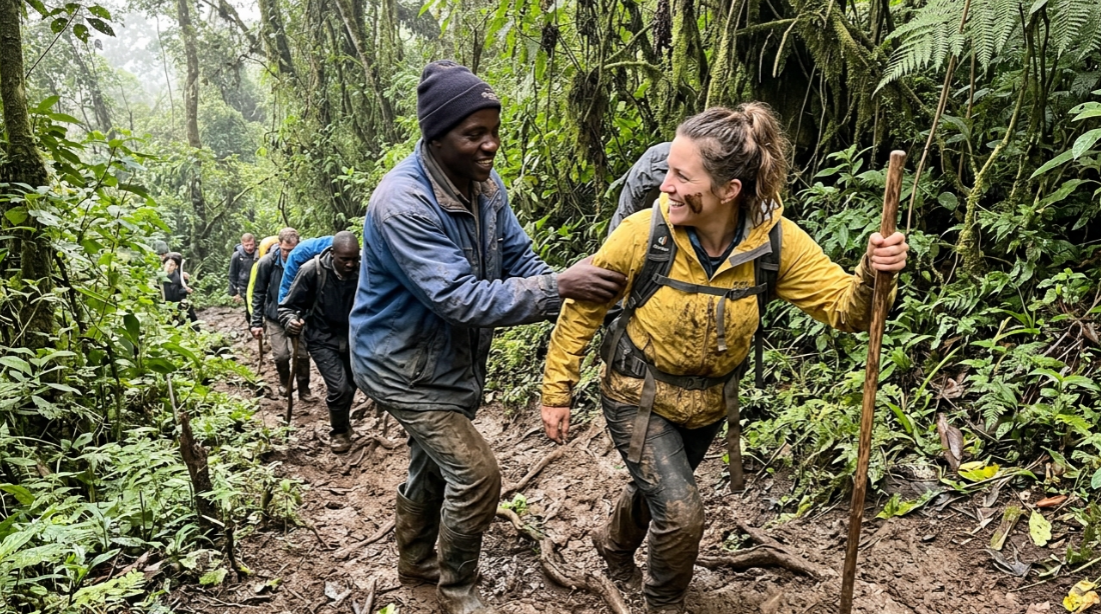
Rwanda is the most common answer when people ask where to go gorilla trekking, and for good reason. Volcanoes National Park sits just two to three hours from Kigali by road. The park protects montane ecosystems on the Virunga volcanic slopes, with a mix of evergreen and bamboo forest, grassland, and heath.
The infrastructure is well organized. Morning briefings, group allocation, and ranger-guided hikes run smoothly. High-end lodges sit close to park headquarters. For travelers who want gorilla trekking as a focused two or three-day experience rather than a week-long expedition, Rwanda delivers that efficiently.
Rwanda’s official foreign visitor permit costs US$1,500. The minimum age is 15. If you fail to track because of gorilla group movement, you may receive another chance or a full refund. Those who track all day but fail to locate a family receive a 75% refund.
Here is a detail most guides miss: Rwanda is actively expanding Volcanoes National Park by 37.4 square kilometers, a 23% increase, with a US$300 million investment and a new 6,620-hectare buffer zone. That expansion directly grows mountain gorilla habitat.
Safety note for Rwanda
The U.S. State Department’s June 2026 advisory rates Rwanda at Level 3 (“Reconsider Travel”), but specifically states that Volcanoes National Park is not included in the 10-kilometer DRC-border “Do Not Travel” zone. The advisory recommends using RDB-sanctioned treks with licensed guides. Always check the current advisory before finalizing travel.
Best for Value and Rainforest Immersion: Uganda’s Bwindi
If the best place to go gorilla trekking for you depends on budget, biodiversity, or adventure, Bwindi is likely your answer.
Bwindi is a UNESCO World Heritage Site covering over 32,000 hectares in southwestern Uganda. It contains more than 160 tree species, over 100 fern species, and a striking concentration of Albertine Rift endemics across habitats ranging from 1,160 to 2,706 meters. UNESCO’s assessment is direct: Bwindi is home to almost half the world’s mountain gorilla population.
The trekking experience here differs from Rwanda. The forest is denser, more humid, and often steeper. Trails push through thick undergrowth. Some treks last an hour, others six or more. The word “impenetrable” in the park’s name is not marketing.
Uganda’s official UWA tariff for July 2024 through June 2026 listed gorilla tracking permits at US$800 for foreign non-residents. That rate included the guide fee, park entrance for the day, and a community development contribution. Because that tariff period ended June 30, 2026, check UWA’s current pricing before booking.
See Uganda gorilla trip pricing for a full cost breakdown.
Bwindi also offers something Rwanda does not: the gorilla habituation experience. This lets a small group spend up to four hours with a gorilla family still being habituated. Under the 2024-2026 tariff, it was priced at US$1,500 for foreign non-residents, matching Rwanda’s one-hour permit but offering dramatically more time.
Why Uganda beyond gorillas
Uganda adds chimp trekking in Kibale, tree-climbing lions in Queen Elizabeth National Park, Murchison Falls, serious birding, and Lake Bunyonyi. Travelers who want a broader primate-and-wildlife itinerary find Uganda far more varied than a Rwanda-only trip. Practitioners on LinkedIn who specialize in East Africa ground operations consistently position Uganda as the stronger choice for longer, multi-experience journeys.
Safety note for Uganda
As of June 2026, the U.S. State Department rates Uganda at Level 4 (“Do Not Travel”) due to crime, health concerns including Ebola, terrorism, and unrest. This is a significant advisory level. Many experienced operators continue to run gorilla treks in Bwindi, but travelers should review the current advisory, consult their insurer, and make an informed decision.
The Overlooked Option: Mgahinga Gorilla National Park
Most guides discussing where to go gorilla trekking focus on Bwindi and Volcanoes while barely mentioning Mgahinga. That’s a gap worth filling.
Mgahinga Gorilla National Park sits in Uganda’s portion of the Virunga Massif, the same volcanic ecosystem as Rwanda’s Volcanoes National Park. It is smaller and less visited, with a more open volcanic feel compared to Bwindi’s dense canopy. Experienced safari planners describe Mgahinga’s terrain as quieter, with a different mood from both Bwindi’s jungle intensity and Volcanoes’ organized flow.
Travelers on Reddit have called Mgahinga a “secret tip” because it provides a Virunga-style ecosystem at Uganda permit pricing, with golden monkey trekking as an add-on. One user in r/AfricaTravel specifically recommended it over both Volcanoes and Bwindi for people who value a less obvious experience. That is anecdotal, not a guarantee, but it reflects a real pattern in traveler feedback.
Mgahinga falls under Uganda’s permit system. Pricing and booking mirror Bwindi. The same Uganda advisory applies.
What About DRC’s Virunga National Park?
Any honest answer to where to go gorilla trekking must include Virunga. It is a UNESCO World Heritage Site spanning 790,000 hectares, with habitats from lowland swamps to Rwenzori snowfields above 5,000 meters. Treks are led by Virunga Rangers and local pisteurs, typically require one to two and a half hours of hiking each way, and visitors are provided surgical masks near the gorillas.
The park’s official tourism site currently says Virunga is welcoming tourists. But the U.S. State Department rates DRC at Level 4 “Do Not Travel” due to crime, unrest, terrorism, kidnapping, and health risks, specifically highlighting active fighting in North and South Kivu. The UK FCDO advises against all travel to both provinces and warns that routes, borders, and airports can change at short notice.
The correct position is not “Virunga is closed” and not “Virunga is fine.” It is: biologically extraordinary, but advisory risk is currently the deciding factor. For most leisure travelers, especially those based in the U.S. or UK, Virunga should not be the default recommendation in 2026.
How Permits Work, and What They Do Not Include
This section matters more than it might seem. The single biggest planning confusion is treating the permit price as the trip price.
A gorilla permit covers the park entry, the guided trek, and approximately one hour with the gorillas. That’s it. It does not cover transport to the park, accommodation, meals, porter fees, tips, flights, visas, or travel insurance. For a complete look at Uganda permit booking rules, see our dedicated guide.
Current permit prices
-
Rwanda (foreign adult): US$1,500 via RDB
-
Uganda (foreign non-resident, 2024-2026 tariff): US$800 via UWA (verify current tariff)
-
Uganda gorilla habituation (FNR, 2024-2026): US$1,500
-
Rwanda (foreign resident): US$500
-
East African citizens: US$200 (Rwanda) or 300,000 UGX (Uganda)
Permit price vs. trip price
The permit is one line item. A realistic gorilla trekking trip also includes round-trip international flights, in-country transport (driver, vehicle, fuel, or domestic flights), accommodation, all meals, porter fees (typically US$10-20 per trek), tips for guides and lodge staff, visa fees, and travel insurance.
When travelers compare US$800 to US$1,500 and stop there, they miss the full picture. Overall trip costs can narrow depending on accommodation choices, travel routes, and whether gorillas are combined with other activities.
Booking safely
Reddit threads about gorilla trekking scams show real travelers losing money through unofficial channels. One r/travel poster asked why their operator quoted US$1,700 for a permit officially listed at US$1,500. Book through official RDB or UWA portals, or through a vetted operator who provides permit confirmation numbers, exact dates, and clear cancellation terms.
Trek Difficulty, Group Assignment, and Fitness
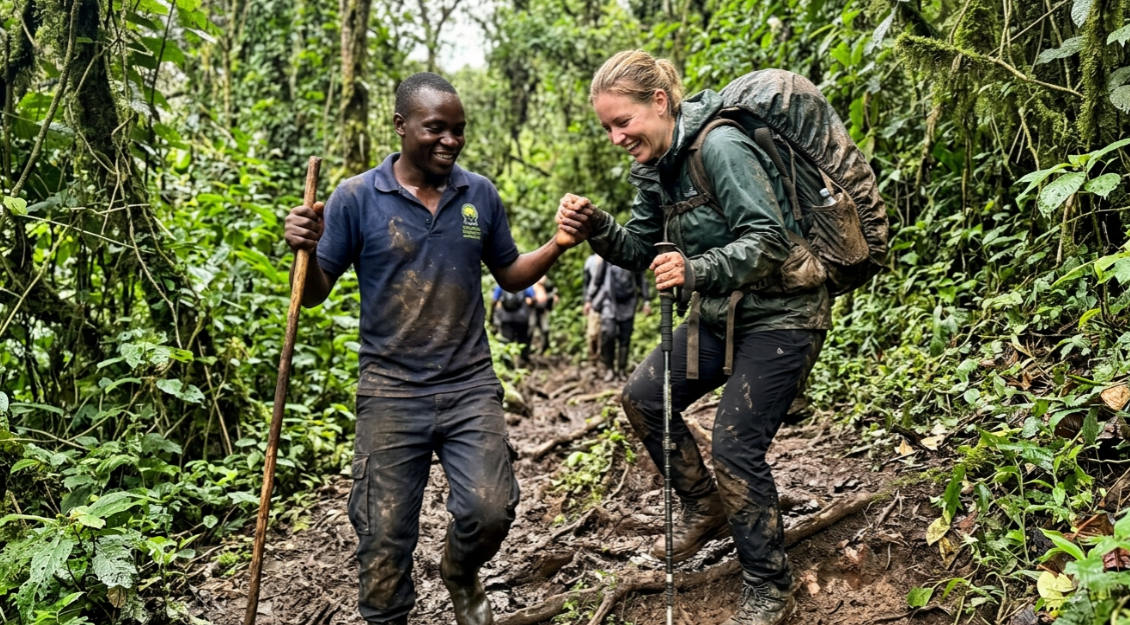
Gorilla trekking is not a flat nature walk. But it is also not mountaineering. Difficulty varies by day, park, and where the gorillas happen to be.
Rwanda is generally considered easier. The volcanic slopes tend to be more predictable, and treks often run shorter. Bwindi is physically harder: steeper terrain, denser vegetation, more mud. Mgahinga falls somewhere between.
But gorillas move. A “short trek” can turn into five hours if the family relocated overnight. Conversely, some groups feed close to trailheads and the hike is done in 30 minutes. No guide can predict this with certainty. For a realistic assessment of what the day demands, read our gorilla trekking fitness guide.
Hire a porter
This advice comes up in nearly every experienced traveler discussion. Porters carry your daypack, help on muddy slopes, and provide a steadying hand on steep descents. The fee is modest, and it directly supports local communities. Travelers on Reddit and in luxury travel forums consistently recommend hiring one even if you are fit, both for comfort and because it channels income to people living near the parks.
Rules and Responsible Gorilla Trekking
Mountain gorillas improved from Critically Endangered to Endangered on the IUCN Red List in 2018 after decades of conservation work. Their population grew from about 680 individuals in 2008 to over 1,000 by 2018. That progress is real, but threats remain: poaching, civil unrest, and human-introduced diseases including respiratory infections and Ebola.
Every rule exists to protect that recovery.
-
Minimum age: 15 years, across all parks
-
Group size: Maximum eight visitors per gorilla family per day
-
Time limit: Approximately one hour with the gorillas
-
Distance: Stay at least seven meters from the gorillas
-
Health: Do not trek if you are sick; gorillas are susceptible to human diseases
-
Behavior: No flash photography, keep voices low, no eating near gorillas, follow ranger instructions completely
For detailed guidance, read our gorilla trekking safety rules.
The ethics question surfaces in nearly every traveler forum. Some worry tourism feels intrusive. The counterargument, supported by conservation data, is that controlled tourism creates the economic incentive for habitat protection, funds anti-poaching patrols, and provides employment through guiding, portering, and lodge work. The community development contribution built into Uganda’s permit price reflects this model directly.
Combining Gorillas with Tanzania, Kenya, Kilimanjaro, or Zanzibar
Many travelers asking where to go gorilla trekking are actually planning a broader East Africa trip. Gorillas fit naturally into multi-country itineraries, but the sequencing matters. Permit dates, lodge availability, and flight routes lock the schedule, so the gorilla component should be planned alongside everything else rather than tacked on afterward.
Common pairings include:
-
Tanzania safari plus Rwanda gorillas: Fly from the Serengeti or Arusha to Kigali, trek gorillas for two or three days, then continue to Zanzibar. Rwanda’s proximity to Kigali makes this efficient.
-
Tanzania safari plus Uganda gorillas: A longer route that opens up Bwindi, chimp trekking, and Uganda’s broader wildlife parks. Better value on permits, more adventure, more days needed.
-
Kilimanjaro plus safari plus gorillas: An ambitious East Africa trip combining a mountain climb, game drives, and primate trekking. Requires careful pacing and recovery days.
-
Safari plus gorillas plus Zanzibar: The classic wildlife-then-beach arc.
Browse East Africa itinerary ideas with route options and cost context.
If you are stitching together multiple countries, an experienced operator reduces coordination risk considerably. Permit timing, border logistics, domestic flights, and lodge bookings across Tanzania, Kenya, Uganda, and Rwanda require someone who handles those connections daily. Before you go, check our gorilla trekking packing list to make sure you have the right gear for mud, rain, and altitude.
Rwanda vs Uganda: Which Is Better?
|
Category |
Rwanda |
Uganda |
|---|---|---|
|
Permit Price |
Higher |
Lower |
|
Driving Time |
Short |
Long |
|
Luxury Lodges |
Excellent |
Excellent |
|
Hiking Difficulty |
Easier |
Harder |
|
Gorilla Time |
1 hour |
1 hour (4-hour habituation available) |
|
Safari Combination |
Limited |
Extensive |
|
Best Value |
No |
Yes |
|
Best for First Timers |
Yes |
Yes (if budget matters) |
What Is the Best Time of Year for Gorilla Trekking?
Although gorilla trekking operates year-round, the dry seasons are generally the most popular.
|
Season |
Conditions |
Recommendation |
|---|---|---|
|
June–September |
Drier trails, busiest season |
Excellent |
|
December–February |
Dry with pleasant weather |
Excellent |
|
March–May |
Wettest months |
Good but muddy |
|
October–November |
Short rains |
Good |
Many travelers assume gorilla trekking only happens during the dry season, but permits are available throughout the year.
How to Decide: Matching the Park to Your Trip
After weighing destinations, permits, difficulty, and rules, here is the simplest way to choose where to go gorilla trekking.
You want the easiest, most polished experience: Rwanda’s Volcanoes National Park. Short drive from Kigali, top-tier lodges, streamlined operations. You pay more for the permit but save time and planning energy.
You want better value and more adventure: Uganda’s Bwindi. Lower permit cost, denser rainforest, more habituated groups, and the option for a four-hour habituation experience.
You want something quieter: Mgahinga. Virunga-style volcanic terrain, fewer visitors, golden monkey trekking, Uganda pricing.
You want the broadest wildlife itinerary: Uganda, combined with chimp trekking, Queen Elizabeth, Murchison Falls, and birding.
You are combining gorillas with a Tanzania or Kenya safari: Either Rwanda or Uganda works. Rwanda pairs more efficiently with shorter trips. Uganda pairs better with longer East Africa circuits.
You have teens in the family: Both Rwanda and Uganda set the minimum age at 15.
The hour with the gorillas is short. But for many travelers, it is the most memorable wildlife hour of their lives.
See gorilla trekking costs broken down by permit, transport, lodging, and total trip budget.
Is Gorilla Trekking Safe?
Place after the Safety sections.
Include:
-
Rangers carry firearms for wildlife protection.
-
Gorilla attacks are extremely rare.
-
Mountain gorillas are naturally calm.
-
Most risks come from hiking, slippery trails, altitude, and travel logistics rather than gorillas themselves.
-
Follow ranger instructions at all times.
Frequently Asked Questions
Where is the best place to go gorilla trekking?
Rwanda’s Volcanoes National Park for short, luxury trips with simple logistics. Uganda’s Bwindi for value, rainforest immersion, and longer itineraries. Mgahinga for a quieter experience at Uganda pricing. DRC’s Virunga only for risk-tolerant travelers who have carefully reviewed current government advisories.
Is Uganda or Rwanda better for gorilla trekking?
Rwanda is easier and more polished. Uganda is usually better value and more varied. The right answer depends on budget, available time, fitness, and whether gorillas are a standalone trip or part of a bigger East Africa adventure.
How much does a gorilla trekking permit cost?
Rwanda’s official foreign visitor permit is US$1,500. Uganda’s was listed at US$800 for foreign non-residents through June 2026 (verify UWA’s current tariff). These are permit-only prices and do not include lodging, transport, meals, tips, or other trip costs.
Can you go gorilla trekking in DRC?
Virunga National Park’s official site says it is welcoming visitors. However, the U.S. State Department rates DRC at Level 4 “Do Not Travel,” and the UK FCDO advises against all travel to North and South Kivu. Most leisure travelers should choose Rwanda or Uganda instead.
How old do you have to be to go gorilla trekking?
The minimum age is 15 across all gorilla trekking parks.
How long do you spend with the gorillas?
Standard treks allow a maximum of approximately one hour once your group locates the gorilla family. Uganda’s gorilla habituation experience extends this to up to four hours.
Does the gorilla permit include transport or accommodation?
No. The permit covers park entry, the guided trek, and gorilla viewing time. Transport, lodging, meals, porter fees, tips, and everything else are separate costs.
Should I hire a porter for gorilla trekking?
Yes. Porters carry your daypack, help on steep and muddy terrain, and the fee (typically US$10-20) directly supports community members who live near the parks. Even fit hikers benefit from having one.