

Visit Pangani Tanzania 2026: Beaches, History & Saadani
TL;DR
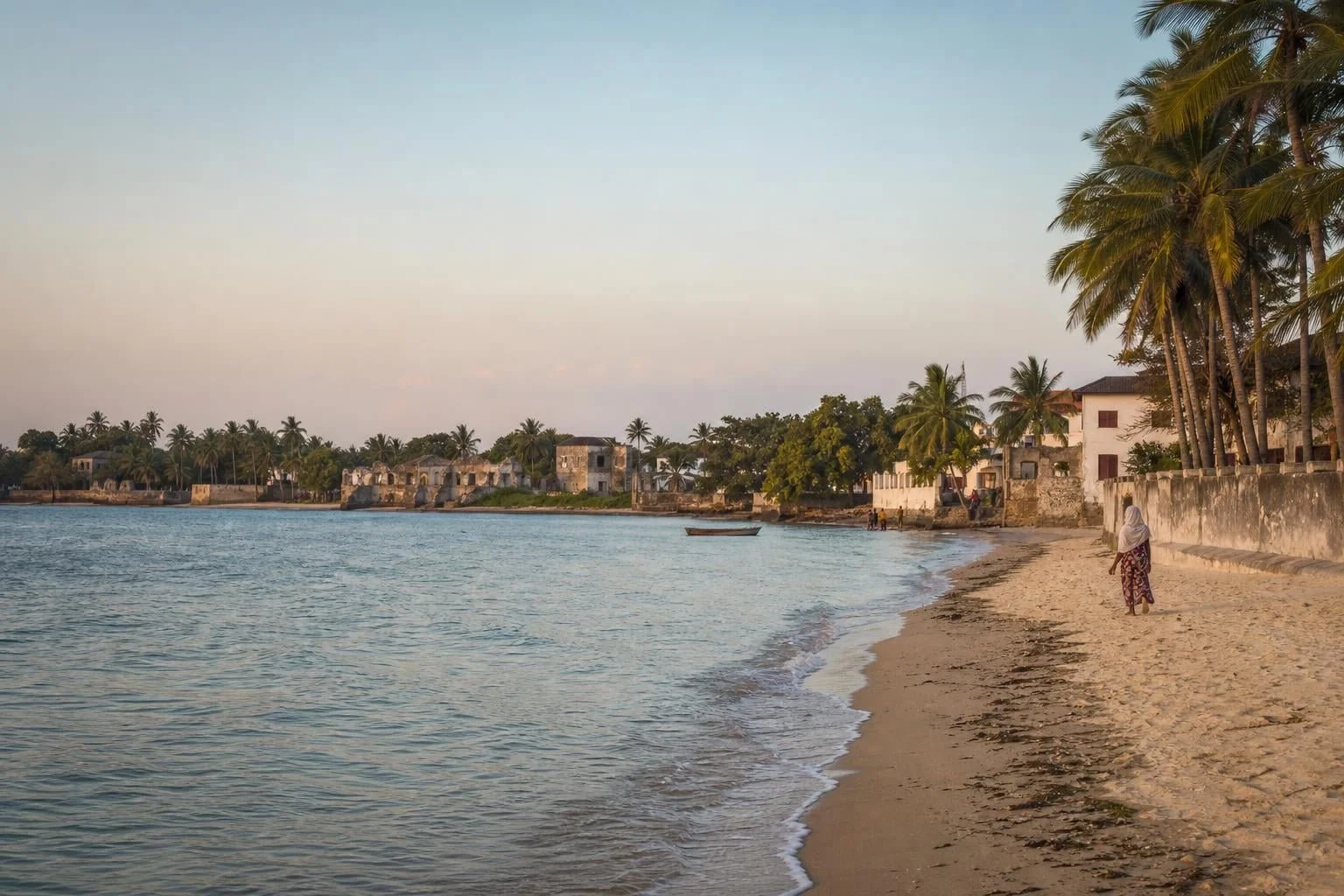
Pangani is a historic Swahili coast town in northeastern Tanzania, sitting where a 500 km river born on Mount Kilimanjaro meets the Indian Ocean. It offers quiet beaches, turtle conservation, colonial-era ruins, and proximity to Saadani National Park, making it an uncrowded mainland alternative to Zanzibar. The dry season from June to October is the best time to visit. Most travelers pair it with a northern circuit safari or Kilimanjaro climb as a beach and bush extension.
Pangani Tanzania remains one of the least understood destinations on the East African coast. Most travelers have heard of Zanzibar. Many know Bagamoyo. But Pangani, a town that may have been trading with the Roman Empire two thousand years ago, barely registers on the typical safari itinerary.
That’s a mistake. This small town at the mouth of a river that starts on Kilimanjaro’s glaciers packs more history per square kilometer than almost anywhere else in Tanzania. It also happens to sit next to some of the country’s most beautiful, empty beaches and the only national park in East Africa that borders the Indian Ocean.
This glossary covers everything you need to know about Pangani: the geography, the layered history, the beaches, the wildlife, and the practical logistics of actually getting there. Whether you’re adding a beach extension after a Tanzania safari or planning a standalone coastal trip, this is your reference.
What Makes Pangani Tanzania Worth Visiting? Pangani is one of Tanzania's most underrated coastal destinations, combining historic Swahili culture, uncrowded Indian Ocean beaches, turtle conservation projects, river wildlife, and easy access to Saadani National Park. Unlike Zanzibar, Pangani offers a quieter and more authentic experience with fewer tourists, making it ideal for travelers interested in history, nature, snorkeling, and beach relaxation.
Pangani is best for: -Travelers wanting quiet beaches instead of busy resorts - Safari visitors looking for a beach extension - History lovers interested in Swahili and colonial heritage - Birdwatchers and wildlife enthusiasts - Snorkelers visiting Maziwe Island Marine Reserve - Families looking for a slower-paced destination
Pangani Tanzania at a Glance
|
Feature |
Details |
|---|---|
|
Country |
Tanzania |
|
Region |
Tanga Region |
|
Coast |
Indian Ocean |
|
Distance from Tanga |
53 km |
|
Distance from Dar es Salaam |
320 km |
|
Best Time to Visit |
June–October |
|
Famous For |
Beaches, Swahili history, turtles |
|
Closest National Park |
Saadani National Park |
|
Airport |
Mashado Airstrip |
|
Ferry Required |
Yes (to Ushongo Beach) |
|
Typical Stay |
2–4 nights |
Geography and Place Terms
Pangani Town
The capital of Pangani District in Tanzania’s Tanga Region. The town sits roughly 45 km south of Tanga city, right where the Pangani River empties into the Indian Ocean. Sometimes called “The Pearl of Tanzania,” it’s a small, walkable settlement with a population of around 10,000. The historic center still features local, Indian, Arab-Omani, German, and British architectural elements side by side, a physical record of every power that controlled this coast.
Pangani District
The administrative district containing Pangani town and surrounding areas. It falls within the Tanga Region of northeastern Tanzania and includes coastal stretches, river wetlands, and the northern reaches of what was once a vast trading network.
Tanga Region
The broader region of northeastern Tanzania where Pangani sits. Tanga city, the regional capital, serves as the nearest major urban center (53 km by road). The region stretches from the Kenyan border south along the coast and inland toward the Usambara Mountains.
Pangani River (Mto Pangani / Ruvu River)
This is the defining geographic feature of Pangani Tanzania. Also known as the Ruvu River, it rises on the slopes of Mount Kilimanjaro and flows southeast for approximately 500 km before entering the Pemba Channel of the Indian Ocean at Pangani town. The river’s basin covers roughly 43,650 km², making it one of Tanzania’s most significant waterways. The river supports hippo and crocodile populations, irrigates agricultural land, and generates hydroelectric power at Pangani Falls.
Pemba Channel
The strait of the Indian Ocean separating mainland Tanzania from Pemba Island. Pangani town faces directly onto this channel, which is known for strong currents and rich marine biodiversity. Historically, the channel was a major dhow sailing route connecting the mainland coast to Zanzibar and Pemba.
Swahili Coast
The broader coastal strip running from southern Somalia to Mozambique, of which Pangani is a part. The Swahili Coast is defined by its distinctive Bantu-Arab cultural fusion, centuries of Indian Ocean trade, and coral-stone architecture. Pangani, along with Bagamoyo and Kilwa, sits within the Swahili cultural traditions that shaped this entire coastline.
History and Cultural Terms
This section is where Pangani Tanzania separates itself from every other beach destination on the coast. The history here is genuinely extraordinary.
Rhapta
A lost trading port described in the Periplus of the Erythraean Sea, a 1st-century Greek guide to the trade ports of Arabia, Eastern Africa, and India. Some historians and archaeologists believe Pangani may have been the site of Rhapta, which would make it one of the oldest documented trading settlements in East Africa. No conclusive proof exists, but the geographic alignment and archaeological evidence make the theory credible. None of the other pages currently ranking for Pangani Tanzania even mention this connection.
Zanjian Period
Archaeological fieldwork conducted in 2010 and 2012 found major Swahili sites in Pangani Bay directly overlying older Zanjian sites, with no recognizable break in cultural materials. The Zanjian traditions found here are considered a cradle of what later became Swahili culture. This means Pangani isn’t just a Swahili coast town; it may be one of the places where Swahili civilization itself took shape.
Slave and Ivory Trade Route
Pangani served as a station on the caravan route from Lake Tanganyika for exporting enslaved people and ivory. The town’s name itself may derive from the Swahili word “panga” (to arrange), possibly alluding to the gathering and arranging of enslaved people before transport. By the 19th century, Pangani was a significant departure point where human cargo and tusks were loaded onto dhows bound for Zanzibar and beyond.
Abushiri Rebellion (1888)
The first major uprising against German colonial expansion in East Africa started right here in Pangani. When Emil von Zelewski, the German administrator, hauled down the Sultan of Zanzibar’s flag and raised the German East Africa Company flag over the town, it triggered an armed revolt. An Arab leader named Abushiri ibn Salim united local hostility to German colonization, and the rebellion spread along the coast. In December 1889, Abushiri was captured and hanged in Pangani by German forces. The rebellion’s suppression opened the door to full German colonial control of the territory.
German Boma and Kikokwe German Fort
After putting down the Abushiri Rebellion, the Germans made Pangani a seat of regional administration. Colonial-era structures still stand, including the German Boma (administrative headquarters) and the Kikokwe German Fort, which faces the Pemba Channel. These buildings are part of the historical town walking tour and offer tangible evidence of the colonial period. Anyone interested in the intersection of cultural tourism and ethics will find Pangani’s colonial sites thought-provoking.
Sisal and Dr. Richard Hindorf
Pangani is the birthplace of sisal cultivation in Africa. In 1892, a German botanist named Dr. Richard Hindorf planted the first sisal seedlings here. The crop went on to become one of Tanzania’s most important exports for decades. The original plantation area can still be visited.
The Decline
After the end of German colonial rule in 1916, trade routes shifted away from Pangani. The town lost its commercial importance and gradually became the quiet, slightly forgotten place it is today. That decline is precisely what preserved its character. Where Dar es Salaam modernized and Zanzibar became a tourist hub, Pangani stayed still.
Beaches and Natural Attractions
Ushongo Beach
The primary beach destination near Pangani Tanzania, located approximately 12 to 20 km south of town. Ushongo is a long, uncrowded stretch of white sand backed by coconut palms, with only a small fishing settlement nearby. Getting there requires crossing the Pangani River by ferry (more on that in the logistics section).
Practitioners on TripAdvisor report that “if you don’t want to go to touristic overcrowded Zanzibar, you should definitely visit the beautiful beaches of Ushongo.” Guests reviewing accommodations on Booking.com describe finding “a genuine Tanzanian coast experience, and a little corner of natural Paradise” with food “way better than what we found on Zanzibar.”
For travelers weighing their options, our guide to Zanzibar vs. mainland Tanzania breaks down the comparison in detail.
Pangani Beach
The beach area directly adjacent to Pangani town itself, north of the river. Less developed than Ushongo but closer to the historical sites. Suitable for travelers who want to combine beach time with town exploration without the ferry crossing.
Mkoma Bay
A quieter bay area south of Ushongo, even more remote and less developed. Appeals to travelers seeking maximum solitude.
Maziwe Island Marine Reserve
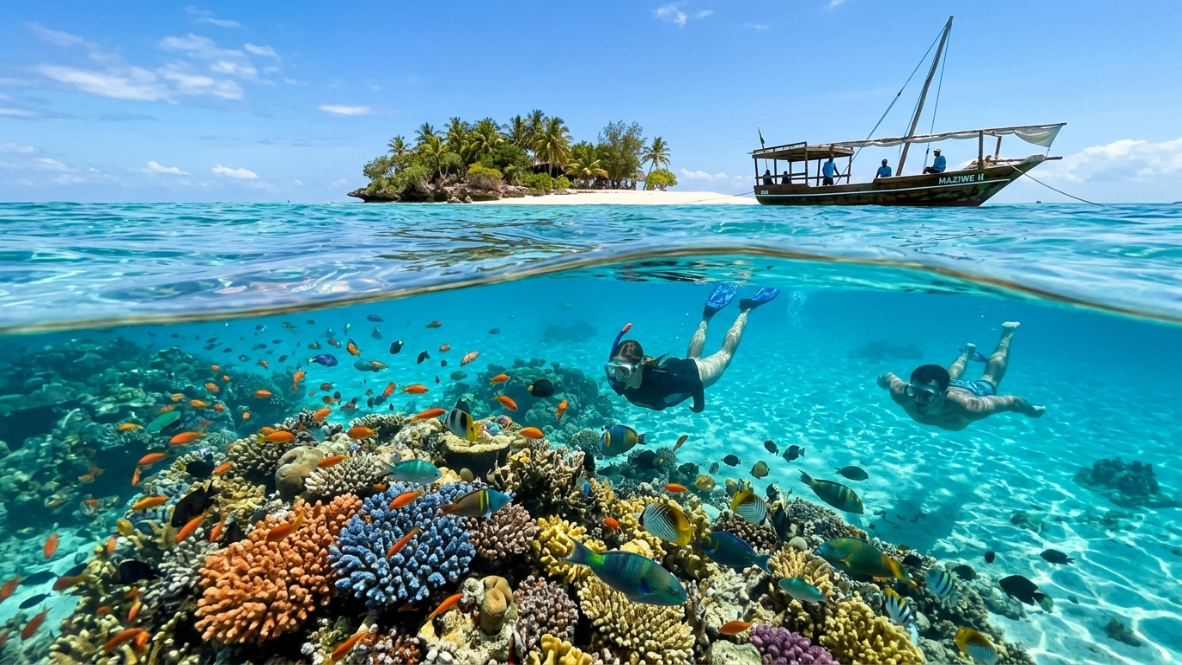
An uninhabited, protected island roughly 8 km southeast of Pangani, part of the Tanga Marine Reserves System. It became a nature reserve in 1975, making it one of Tanzania’s oldest marine protected areas. The island supports nearly 400 species of fish, 35 genera of hard and soft corals, plus sponges and algae.
Here’s the remarkable part: the island has been shrinking. Historical photographs from 1912 show a densely vegetated island. Today, erosion has reduced it to a sandbar that sometimes disappears completely at the highest tides. Despite this, the surrounding reef remains vibrant. One traveler on TripAdvisor described the snorkeling as “amazing,” noting it takes about an hour by motorized boat to reach from the mainland.
For context on how this compares to other snorkeling in the region, see this Zanzibar snorkeling guide.
Pangani Falls
A waterfall on the Pangani River, notable less for its scenic beauty than for its hydroelectric significance. The falls provide electricity for Tanga, Dar es Salaam, Arusha, and Moshi. Not a typical tourist stop, but worth understanding as part of the river’s importance to the broader region.
Pangani River Cruise
One of the signature activities in the area. Boat trips on the Pangani River and its wetlands pass through mangrove-lined channels and open stretches where hippos and crocodiles can be spotted. The river attracts a wide range of bird species, including African fish eagles, various herons, and kingfishers. For birding enthusiasts especially, the river cruise is a highlight.
Pangani vs Zanzibar
|
Pangani |
Zanzibar |
|---|---|
|
Very few tourists |
Popular international destination |
|
Quiet beaches |
Busy beaches |
|
Authentic fishing villages |
Large tourism industry |
|
Lower prices |
Higher accommodation costs |
|
Easier to combine with Saadani |
Easier to combine with Stone Town |
|
Minimal nightlife |
Active nightlife |
|
Turtle conservation |
Spice tours and historical sites |
Who Should Choose Pangani?
Choose Pangani if you prefer peaceful beaches, authentic Swahili culture, wildlife experiences, and fewer crowds.
Choose Zanzibar if you want luxury resorts, nightlife, shopping, and a wider range of restaurants.
Wildlife and Marine Life
Green Sea Turtle (Chelonia mydas)
The most common nesting species in Tanzania, with some of its most important nesting sites found in Pangani District. The beaches south of the river serve as critical nesting habitat.
Friends of Maziwe Turtle Conservation Program
A community-based conservation effort that has relocated more than 330 turtle nests and released over 60,000 baby turtles into the ocean. The program monitors nesting sites, protects eggs from predators and poaching, and releases hatchlings at safe times. Visitors can sometimes participate in or observe releases, making this one of the more meaningful wildlife encounters available on the Tanzanian coast.
Hawksbill Turtle
A second, rarer sea turtle species found in the waters around Pangani and Maziwe Island. Critically endangered globally, the hawksbill benefits from the same conservation efforts protecting green turtles in the area.
African Fish Eagle
A common sight along the Pangani River, this raptor is often heard before it’s seen, with a distinctive, ringing call. One of the key birding draws on river cruises.
Hippo and Crocodile
Both species inhabit the lower reaches of the Pangani River. Hippo pods are regularly seen on boat safaris, and Nile crocodiles bask on the riverbanks. This is unusual for a coastal destination and adds a safari-like element that beaches alone can’t offer.
Humpback Whale and Dolphin
Humpback whales pass through the Pemba Channel during their migration (typically July to September), and dolphins are seen year-round in the waters off Pangani. Neither is guaranteed, but both are possible.
Coral Reef
The reefs surrounding Maziwe Island and along the coastline support the marine biodiversity that makes snorkeling and diving worthwhile here. The 35 genera of hard and soft corals create habitat for the 400+ fish species documented in the marine reserve.
Nearby Destinations
Saadani National Park
The only wildlife sanctuary in East Africa that directly borders the Indian Ocean. Located southeast of Pangani District, the park covers 1,062 sq km and offers game drives where you can see giraffes, buffalo, wildebeest, antelope, and zebra with the ocean as a backdrop. The pairing of Saadani and Pangani is the foundation of what travelers call a “beach and bush” itinerary: morning game drives, afternoon on the sand, boat safaris on the Wami River.
This combination is one of the most compelling reasons to visit this stretch of coast. If you’re designing a broader trip, our guide to East Africa safari itineraries shows how Pangani and Saadani fit into multi-week routes.
Tanga
Tanzania’s second-largest port city and the nearest urban center to Pangani (53 km by road). Tanga offers its own colonial architecture, the Amboni Caves, and practical services like ATMs, hospitals, and bus connections. Most overland travelers pass through Tanga on the way to Pangani.
Bagamoyo
Another historic Swahili coast town, located about 250 km south of Pangani. Together with Pangani and Zanzibar, Bagamoyo forms a historic triangle of slave trade and Swahili culture. Travelers with a strong interest in history sometimes visit both towns.
Zanzibar
The famous spice island sits roughly 60 km offshore from the Pangani coast. The MV Ali Choba sails several times weekly between Ushongo/Pangani and Zanzibar Island (Kendwa), making it possible to combine both destinations. Pangani is not trying to be Zanzibar. It’s quieter, less polished, and cheaper. The sand is clean, the crowds are absent, but there’s no nightlife to speak of. This is a sleepy, working coastline where fishing boats outnumber sunbathers.
For travelers deciding between the two, that contrast is the point. Those wanting the best time to visit Zanzibar should know that the same dry-season window applies to Pangani.
Activities and Experiences
Historical Town Tour
A walking tour through Pangani’s historic center covering the German Boma, Kikokwe Fort, old slave trade buildings, the Indian quarter, and Arab-Omani architecture. Typically led by a local guide and lasting two to three hours. This is the single best way to understand the layers of history compressed into this small town.
Snorkeling and Diving
Primarily centered on Maziwe Island Marine Reserve, where the coral reefs and clear water create good visibility. Diving operators are limited compared to Zanzibar, so arrangements should be made in advance. The boat trip out to Maziwe takes about an hour.
Deep-Sea Fishing
The Pemba Channel’s strong currents make for productive fishing waters. Species include marlin, sailfish, kingfish, and tuna. Fishing trips can be arranged through local lodges.
Cycling Tour
A popular way to explore the Pangani countryside, passing through villages, coconut plantations, and sisal fields. Flat terrain makes it accessible for most fitness levels.
Village Tour and Coconut Processing
Community-based tourism options include visits to local villages where you can see coconut processing, fishing operations, and daily coastal life. These tours put money directly into local communities.
Dhow Sailing
Traditional wooden sailing vessels (dhows) can be hired for sunset cruises or transport along the coast. The dhow is the defining watercraft of the Swahili Coast, unchanged in basic design for centuries.
Climate and Logistics
Climate Overview
Pangani Tanzania has a tropical climate (Köppen classification As) with an average temperature of approximately 25.7°C (78.3°F) year-round. Rainfall averages about 1,271 mm per year. Humidity is consistently high.
Long Rains (Masika)
The heavier rainy season, running from March through May. April is the wettest month. Many lodges close or reduce services during this period, and some roads become difficult.
Short Rains (Vuli)
A lighter rainy season from October through December. Rain tends to fall in shorter bursts, and travel remains feasible though less predictable.
Dry Season (June to October)
The best time to visit Pangani. Warm, pleasant weather with minimal rainfall. July is the driest month, with roughly 40 mm of precipitation. This window also coincides with the best time to visit East Africa more broadly, making it easy to combine Pangani with a safari or Kilimanjaro climb.
Pangani Ferry
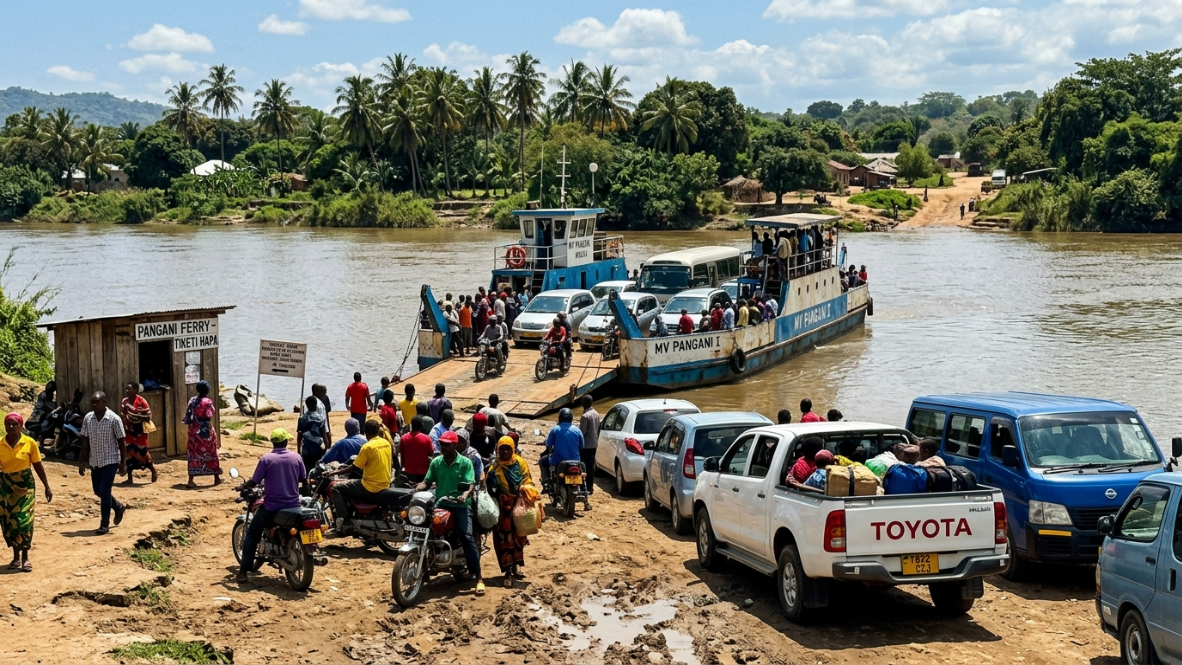
The ferry crossing the Pangani River is the only way to get a vehicle to Ushongo Beach and the lodges south of the river. Forum contributors on TripAdvisor report the ferry costs about $3 per car and 15 cents per person. The last ferry departs at approximately 6:00 to 6:30 PM. Missing it means staying on the north side of the river overnight, so plan accordingly. This is the single most important logistical detail for anyone visiting Ushongo.
Mashado Airstrip
A small airstrip just south of Pangani town served by Coastal Aviation with daily flights. This is the fastest way in from Dar es Salaam, Zanzibar, or the northern safari circuit.
Dalla-Dalla
Local minibus transport used throughout Tanzania. About five buses daily connect Pangani to Tanga (approximately 1.5 hours). From Dar es Salaam, the drive takes five to six hours by road. For travelers new to East African transport, our travel safety guide covers what to expect.
Accommodation Terms
Banda
A traditional beach hut, often with thatched roof and basic amenities. Bandas at Ushongo Beach start from around $25 per night and offer the most authentic, stripped-down coastal experience.
Lodge
Mid-range to upscale accommodation, typically with en-suite bathrooms, restaurant, and organized activities. Several lodges along Ushongo Beach offer packages that include meals and excursions.
Tented Camp
Canvas-walled accommodation common in the Saadani National Park area. Combines bush atmosphere with reasonable comfort, usually including proper beds, mosquito nets, and private bathroom facilities.
Beach Resort
The top end of Pangani accommodation, with prices reaching $500+ per night. These properties offer full-service dining, spa treatments, and curated activity programs. Even at this level, the vibe remains quiet and personal rather than large-scale resort.
Putting It Together: Pangani as Part of a Bigger Trip
Pangani Tanzania makes the most sense not as a standalone destination but as part of a broader East African itinerary. The most natural pairings are:
After a northern circuit safari. Spend a week in the Serengeti, Ngorongoro, and Tarangire, then fly or drive to Pangani for three to five days of coast time and a Saadani game drive.
After a Kilimanjaro climb. The coast is a natural recovery spot after a week at altitude. Pangani is reachable in a day from Moshi or Arusha.
Combined with Zanzibar. The weekly boat service between Ushongo and Zanzibar’s Kendwa beach makes a two-coast trip feasible. Start with Pangani’s quiet, then transition to Zanzibar’s energy.
For help designing a trip that includes Pangani, Saadani, and other East African highlights, plan a complete safari itinerary with expert guidance.
Frequently Asked Questions
Is Pangani Tanzania worth visiting?
Yes, especially for travelers who value history, quiet beaches, and genuine local culture over tourist infrastructure. Pangani won’t suit anyone looking for nightlife or luxury shopping, but for nature, snorkeling, turtle conservation, and colonial-era architecture, it’s one of Tanzania’s most underrated spots.
How do I get to Pangani from Dar es Salaam?
The drive takes five to six hours via the coastal road. Alternatively, Coastal Aviation operates daily flights to Mashado Airstrip just south of town. From Tanga, it’s about 53 km by road with regular bus service.
What is the best time to visit Pangani?
The dry season from June to October offers the best weather, with warm temperatures around 25.7°C and minimal rain. July is the driest month. Avoid April, which is the peak of the long rains.
Can I combine Pangani with a safari?
Absolutely. Pangani pairs naturally with Saadani National Park (the only coastal wildlife sanctuary in East Africa) and works well as a beach extension after a northern circuit safari or Kilimanjaro climb.
How does Pangani compare to Zanzibar?
Pangani is quieter, cheaper, and far less developed. The beaches are comparable in beauty but nearly empty. There’s no nightlife, limited shopping, and fewer accommodation options. For travelers who found Zanzibar too crowded or too commercial, Pangani is the antidote.
Is the Pangani ferry reliable?
It runs regularly during daylight hours, with the last departure around 6:00 to 6:30 PM. The cost is minimal (about $3 per car, 15 cents per person). Just don’t arrive after dark expecting to cross.
What can I do at Maziwe Island?
Snorkeling is the main activity. The marine reserve supports nearly 400 fish species and 35 genera of coral. The boat ride from Pangani takes about an hour. The island itself is barely above water at high tide, but the underwater scenery is the draw.
Is Pangani safe for tourists?
Pangani is a small, quiet town with a welcoming local population. Standard East African travel precautions apply: safeguard valuables, arrange transport through trusted operators, and avoid walking alone at night. For broader safety guidance, check our East Africa travel safety guide.
How many days should I spend in Pangani?
Most visitors spend between two and four days exploring the historic town, beaches, river cruises, and nearby marine reserve. Travelers combining Pangani with Saadani National Park often stay four to five days.
Can you swim in Pangani?
Yes. Ushongo Beach offers calm conditions for swimming during most of the year, although tides and currents vary. Always ask local accommodations about current conditions before entering the water.
Is Pangani expensive?
No. Pangani is generally more affordable than Zanzibar, with lower accommodation prices and inexpensive local restaurants. Luxury resorts are available but budget travelers can comfortably visit as well.
Is Pangani suitable for families?
Yes. Families often enjoy the quiet beaches, boat trips, turtle conservation programs, and relaxed atmosphere. It is not a nightlife destination.
Can you visit Pangani without a safari?
Absolutely. While many visitors combine Pangani with Tanzania's northern safari circuit, the town also works as a standalone beach and cultural destination.