

Best Time for a Tanzania Honeymoon in 2026 | When to Go
TL;DR
The best time for a Tanzania honeymoon is June through October (dry season) or January through February (calving season). September stands out as a sweet spot, with dry safari conditions, uncrowded Zanzibar beaches, and slightly lower prices than the July/August peak. Avoid April and May, when heavy rains close lodges and muddy park roads.
The two strongest windows for a Tanzania honeymoon are June through October and January through February. The first gives you reliable dry weather across both the Serengeti and Zanzibar. The second puts you in the southern Serengeti for the wildebeest calving, one of the most dramatic wildlife spectacles anywhere, paired with warm Indian Ocean water.
September deserves special attention. The weather is just as settled as July and August, but school-holiday crowds thin out, rates drop slightly, and Zanzibar feels polished without being packed. If your wedding date gives you flexibility, September is the month to target.
April and May are the months to avoid. Heavy long rains make park roads difficult, some lodges shut down entirely, and Zanzibar’s east coast gets battered by wind and rain.
The rest of this guide defines every seasonal and planning term you’ll encounter while building your itinerary, from monsoon names to migration patterns to pricing tiers, all in the context of honeymoon decisions.
If you already know your dates, Duma Explorer designs custom honeymoon itineraries around each couple’s travel window and priorities.
What Is the Best Time for a Tanzania Honeymoon? The best time for a Tanzania honeymoon is June through October for dry weather, reliable safari conditions, and excellent Zanzibar beach conditions. January and February are the best alternative for couples who want the wildebeest calving season in the southern Serengeti. For the best balance of wildlife, weather, crowds, and price, September is one of the strongest overall choices. If seeing the Great Migration is your priority, choose January to March for calving in the southern Serengeti or July to October for potential Mara River crossings in the northern Serengeti. If beach weather matters most, January, February, June, July, August, September, and much of October generally offer stronger conditions than the main rainy seasons. For most couples, the decision comes down to three questions: Do you want the Great Migration? How important is guaranteed-looking dry weather? And how much are you willing to pay for peak-season travel?
Tanzania Honeymoon Timing at a Glance
|
If you want... |
Best time |
Why |
|---|---|---|
|
Best overall balance |
September |
Excellent safari conditions, good Zanzibar weather, and fewer crowds than July/August |
|
Dry-season safari + beach |
June–October |
Reliable safari conditions and generally favorable Zanzibar beach weather |
|
Wildebeest calving |
January–February |
Peak calving activity in the southern Serengeti and Ndutu area |
|
Mara River crossings |
July–September |
Best window for potential northern Serengeti crossings |
|
Lower prices |
June, October, November |
Shoulder or lower-demand periods can offer better value |
|
Warmest Zanzibar water |
January–March |
Warm Indian Ocean conditions for swimming and snorkeling |
|
Lowest prices |
April–May |
Main rainy season brings substantial discounts but significant weather and access trade-offs |
|
Fewer crowds |
January–February or November |
Lower visitor pressure than July–September |
Best overall recommendation: If you have flexibility and want a classic safari-and-Zanzibar honeymoon without the highest peak-season pressure, September is a particularly strong choice.
Month-by-Month Quick Reference Table
|
Month |
Season |
Safari |
Zanzibar |
Migration / Wildlife Highlight |
Crowds |
Price |
Best For |
|---|---|---|---|---|---|---|---|
|
January |
Short dry |
Excellent |
Warm, generally favorable |
Calving begins in southern Serengeti |
Moderate |
Mid |
Calving + beach |
|
February |
Short dry |
Excellent |
Warm, generally favorable |
Peak calving |
Moderate |
Mid |
Calving + beach |
|
March |
Long rains begin |
Variable |
Increasing rain |
Calving period can continue |
Low |
Low |
Green landscapes |
|
April |
Long rains |
Wettest period |
Heavy rain |
Migration movement continues |
Very low |
Lowest |
Budget/value |
|
May |
Long rains |
Wet |
Heavy rain |
Herds move toward western Serengeti |
Very low |
Lowest |
Budget/value |
|
June |
Dry season begins |
Good–excellent |
Generally dry |
Migration moves west/north |
Moderate |
Mid-high |
Shoulder season |
|
July |
Peak dry |
Excellent |
Dry |
Northern Serengeti / possible crossings |
High |
Peak |
Safari + crossings |
|
August |
Peak dry |
Excellent |
Dry |
Northern Serengeti / possible crossings |
Highest |
Peak |
River-crossing season |
|
September |
Late dry |
Excellent |
Dry |
Northern Serengeti / possible crossings |
Moderate-high |
High |
Best overall balance |
|
October |
Late dry |
Very good |
Warm; rain may increase later |
Northern / eastern Serengeti |
Moderate |
Mid-high |
Shoulder season |
|
November |
Short rains |
Variable |
Short rains |
Migration begins moving south/east |
Low-moderate |
Mid-low |
Value + fewer crowds |
|
December |
Short rains |
Variable |
Variable |
Herds return toward southern Serengeti |
Moderate |
Mid |
Holidays + green scenery |
Important: Great Migration timing is weather-dependent, not calendar-locked. The herds can arrive earlier or later than the typical seasonal pattern depending on rainfall and grazing conditions. Treat the month-by-month migration locations above as planning guidelines rather than guaranteed positions.
What Is the Best Month for a Tanzania Honeymoon?
September is one of the best overall months for a Tanzania honeymoon because it combines excellent safari conditions with generally favorable Zanzibar beach weather while avoiding some of the highest July and August demand.
Why September is a strong choice
-
Safari: Dry conditions make wildlife easier to spot, while the northern Serengeti can offer opportunities to see the Great Migration.
-
Zanzibar: The island is generally dry and warm, making it well suited to beach time, swimming, snorkeling, and diving.
-
Crowds: September can be less crowded than the July and August peak.
-
Pricing: Rates may be more favorable than the busiest weeks of the peak season, although luxury properties and migration-focused camps can still command premium prices.
-
Honeymoon experience: Couples can combine several days of safari with a relaxed Zanzibar stay without moving between radically different weather conditions.
September is not automatically the best month for every couple. January and February can be better if seeing the calving season is your priority, while July through August may be better if your primary goal is a potential Mara River crossing.
Tanzania’s Season Calendar: Core Terms Defined
Understanding Tanzania’s seasons is the single most important step in choosing the best time for a Tanzania honeymoon. The country doesn’t have a simple summer/winter split. Instead, it cycles through four distinct periods that directly affect wildlife, road conditions, lodge availability, and beach weather.
Dry Season (June to October)
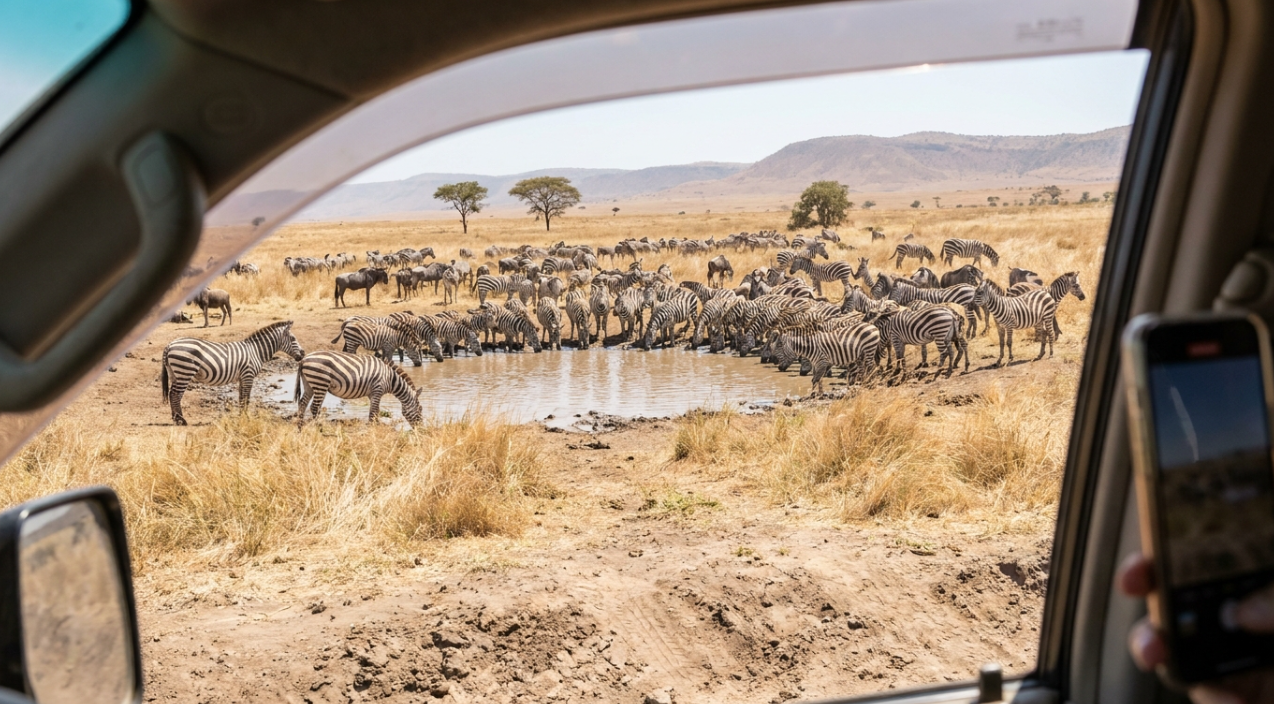
The primary recommended window for honeymoon travel. Rainfall is unusual across both the mainland parks and Zanzibar. Daytime temperatures range from 20°C to 30°C, with June being the coolest month and October the warmest. Animals concentrate around shrinking water sources, making them easier to spot. Park roads stay firm and passable.
This is when the classic safari-plus-beach honeymoon works best. For a deeper breakdown of Tanzania’s safari seasons, including park-by-park conditions, that guide covers the full picture.
Long Rains / Masika (March to May)
The Swahili word Masika refers to the heavy rainy season that dominates March through May. These are not afternoon showers. Sustained rainfall turns park roads muddy and impassable in places, and some lodges close entirely during this period. The landscape turns spectacularly green, but the practical trade-offs for honeymooners are significant: fewer operating lodges, limited wildlife visibility in thick vegetation, and Zanzibar’s roughest sea conditions.
Multiple operators and experienced safari planners recommend avoiding April and May for honeymoon travel entirely.
Short Rains / Vuli (November to December)
Vuli brings lighter, less predictable rainfall. November typically sees afternoon thunderstorms that clear quickly, while December dries out toward the end of the month. Travel is possible during this period, and the landscape is lush and photogenic. But the unpredictability makes it a gamble for honeymoon couples who want guaranteed clear skies for their once-in-a-lifetime trip.
That said, November and early December offer real value. Crowds are thin, rates drop, and the Serengeti’s short grass plains begin attracting the returning migration herds.
Short Dry Season (January to February)
This brief dry window sits between the two rainy periods and creates the second strong honeymoon window. The southern Serengeti comes alive with the wildebeest calving, and Zanzibar’s weather is warm with generally dry conditions through mid-February.
Green Season
An operator pricing term rather than a formal meteorological season. “Green season” typically refers to March through May (sometimes extending into early June and late November), when lodges lower rates to attract visitors during the wetter months. For detailed pricing breakdowns, including what green-season discounts look like in practice, that guide covers the numbers.
Safari Timing Terms Every Honeymoon Planner Should Know
Great Migration
Every year, approximately 1.5 million wildebeest, 400,000 zebra, and 200,000 gazelle travel a continuous clockwise circuit through the Serengeti-Mara ecosystem, driven by rainfall and the promise of fresh grazing. This is not a single event but a year-round movement. Where you need to be depends entirely on when you travel:
-
January to March: Ndutu and Southern Serengeti (calving)
-
April: Southwestern Serengeti
-
May to June: Western Serengeti
-
July to October: Northern Serengeti (river crossings)
-
November: Eastern Serengeti
-
December: Southeastern Serengeti
A critical point that many first-time planners miss: the Great Migration is not a schedule. It follows the rain, and the rain follows its own rules. Booking your honeymoon for “migration season” without matching your travel dates to the right part of the Serengeti is one of the most common planning mistakes. Our Great Migration safari guide maps this in more detail.
Calving Season
The migration year begins on the short-grass plains of the Southern Serengeti and Ndutu area. Between late January and mid-March, approximately 500,000 wildebeest calves are born in a concentrated burst of new life. At peak, around 8,000 calves arrive every single day.
For honeymooners, this period offers some of the most dramatic predator action anywhere in Africa. Lions, cheetahs, and hyenas follow the herds, and the open terrain means sightings happen at close range. Practitioners on TripAdvisor forums consistently praise the January/February calving season, with one experienced traveler noting: “This year we went in January and I have to say we had some of the best game viewing we have ever had.”
The calving season also tends to cost less than the July/August peak, making it an attractive option for couples who want world-class wildlife without peak-season pricing.
River Crossing Season
The most photographed moment of the Great Migration. Between July and October, the herds gather along the banks of the Mara River in the northern Serengeti before plunging across in chaotic, dramatic crossings. Crocodiles patrol the water. The tension of a crossing, with thousands of wildebeest surging into the current, is genuinely unforgettable.
Past Duma Explorer clients have described the Mara River crossing as “the most memorable experience of my life.” The trade-off: this is peak season, with the highest prices and the most vehicles at popular crossing points.
Northern Circuit
The classic Tanzania safari route that most honeymoon itineraries follow: Tarangire National Park, the Ngorongoro Crater, and the Serengeti, sometimes with Lake Manyara added. This circuit concentrates the country’s most iconic wildlife and landscapes into a manageable 5 to 10 day loop. For a look at how the Northern Circuit fits into a full itinerary, that guide walks through routing and park sequencing.
Mobile Tented Camp
Camps that physically relocate to follow the migration herds through the Serengeti. They set up in the southern plains during calving season and move north for the river crossings. For honeymooners, mobile camps offer an experience that fixed lodges simply cannot match: you’re positioned exactly where the action is, often in remote areas with very few other visitors.
Fly-in Safari
Domestic flights between parks (typically on small bush planes carrying 6 to 12 passengers) that replace long overland drives. A fly-in safari between Arusha, the Serengeti, and Zanzibar can save a full day of driving in each direction. For a 10 to 14 day honeymoon where every day counts, flying between parks is often worth the additional cost.
Zanzibar Weather Terms: Why They Matter for Beach Planning
Most Tanzania honeymoons combine safari with a Zanzibar beach extension, so getting the island’s weather right is just as important as the mainland conditions. Zanzibar’s climate is driven by two monsoon systems that dictate wind, rain, temperature, and sea conditions.
Kusi Monsoon (Southeast Trade Winds, June to October)
The Kusi brings dry air and calm seas from the Indian Ocean, creating Zanzibar’s best beach and diving conditions. Daytime temperatures hover between 25°C and 30°C, dropping to a pleasant 20°C at night. Rainfall averages just 50 to 100mm per month. Dive visibility at sites like Mnemba Atoll reaches 20 to 30 meters during this period.
This alignment is significant: Zanzibar’s dry season overlaps almost perfectly with the peak safari season on the mainland, a combination that competitors like the Maldives and Seychelles cannot offer. It is what makes the best Tanzania honeymoon timing so straightforward for couples wanting both experiences.
For a complete picture of Zanzibar’s weather patterns and how they affect specific beaches, that seasonal guide covers wind, tides, and regional differences across the island.
Kaskazi Monsoon (Northeast Winds, November to March)
The Kaskazi brings warmer, more humid conditions. November marks the start of the short rains, while January and February are generally warm and dry enough for beach time. Water temperatures peak during this period, making February and March the warmest months for swimming and snorkeling.
March onward brings increasing moisture, and by April the east coast of Zanzibar gets heavy rain and rough seas.
Tidal Variation
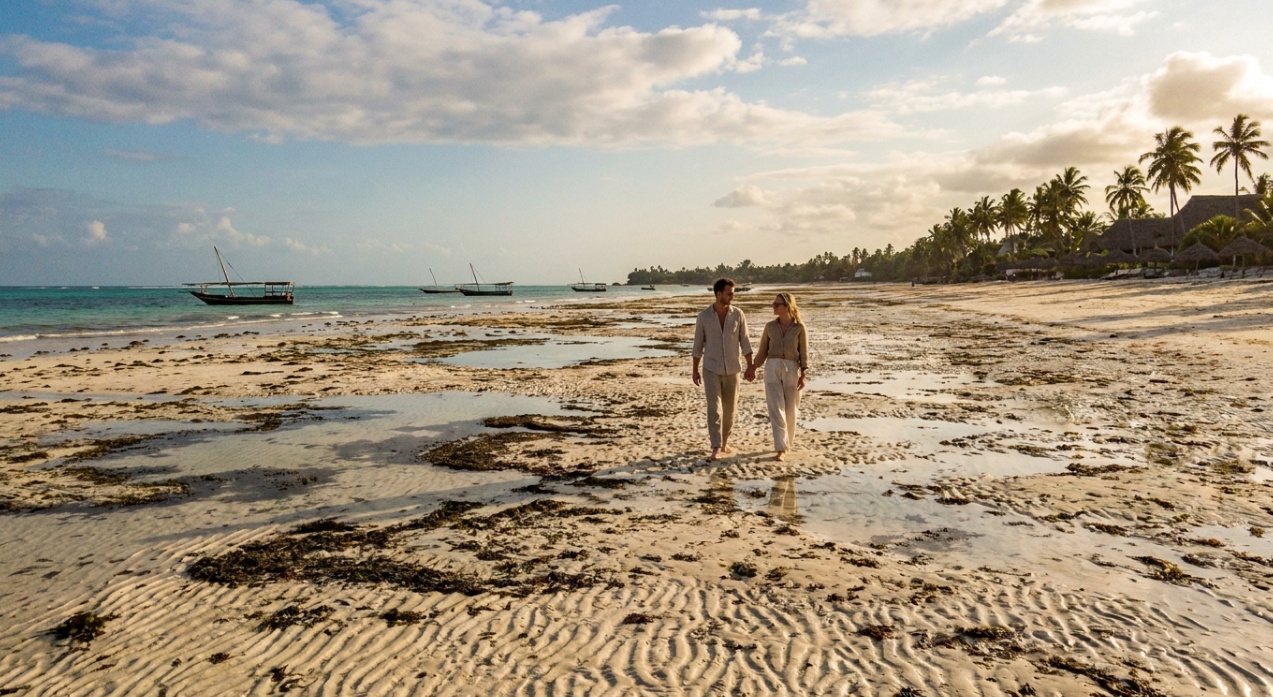
Zanzibar’s east coast experiences dramatic tidal shifts. At low tide, the water can recede hundreds of meters from shore, exposing sand flats and seaweed. This is not a weather issue but a geographic one, and it catches many honeymoon couples off guard. The north and west coasts (Nungwi, Kendwa) have much less tidal variation and maintain swimmable water at all times, which is why these areas are popular for honeymoon stays.
For honeymooners planning island activities, our guide to Zanzibar excursions and day trips covers what’s available and when conditions are best.
When Is the Worst Time for a Tanzania Honeymoon?
For most honeymoon couples, April and May are the most challenging months because they coincide with Tanzania's main long-rain season. Heavy rainfall can make some safari roads difficult, reduce accessibility in certain areas, and lead some seasonal properties to close.
That does not mean Tanzania cannot be visited during April or May. These months can offer lush scenery, fewer tourists, and lower accommodation rates. They are simply less predictable for couples whose priority is reliable safari and beach weather.
Months to reconsider based on your priorities
-
April–May: Best avoided if reliable weather is your top priority.
-
November: Worth considering for lower prices and fewer crowds, but expect some rain.
-
December: Travel can work well, but holiday demand can increase prices and crowds.
-
July–August: Excellent for safari, but less suitable if you dislike peak-season crowds and prices.
Pricing and Booking Terms
Peak Season (July to September)
The highest-demand period for both safari and Zanzibar. Prices run 30 to 50% higher than shoulder-season rates. July and August see the Great Migration crossing the Mara River, driving demand up significantly. September remains excellent for wildlife viewing at somewhat lower cost, which is one reason it stands out for honeymooners.
Honeymoon budgets for a 10 to 13 night trip typically range from $3,500 to $15,000+ per person, depending on accommodation level, whether you fly between parks, and how many days you spend on safari versus the beach. For a full breakdown of what a Tanzania honeymoon costs at different tiers, that pricing guide covers the numbers in detail.
Shoulder Season (June, October, Early November)
The edges of the dry season, where conditions are still good but demand (and prices) ease. Experienced safari planners often recommend these months for couples who want quality without peak-season premiums. One travel advisor featured in Travel+Leisure specifically suggested that “the period of May through June, or late October, will have smaller crowds.” Shoulder-season savings typically run 12 to 15% on a full safari package.
Green Season Pricing
During the long rains (March to May), rates for premium luxury lodges can drop to half of what they charge in peak months. You can expect savings of 20 to 30% in low season on a full safari package. The question is whether those savings offset the weather and access trade-offs, and for most honeymoon couples, they don’t.
How Far in Advance Should You Book a Tanzania Honeymoon?
The ideal booking window depends on your travel month, accommodation preferences, and whether you want to follow the Great Migration.
|
Travel period |
Suggested planning window |
Why |
|---|---|---|
|
July–September |
12–18 months |
Peak demand and limited small camps |
|
January–February |
9–12 months |
Calving season and popular southern Serengeti camps |
|
June |
6–12 months |
Strong shoulder-season demand |
|
October |
6–12 months |
Good weather with growing demand |
|
November–December |
4–9 months |
More availability, except holiday dates |
|
April–May |
2–6 months |
Lower demand and greater availability |
If your honeymoon depends on a specific camp, room category, private vehicle, or migration location, book earlier than the general window suggests. Accommodation availability can become the limiting factor even when flights and other parts of the itinerary remain available.
Lead Time and Advance Booking
Small tented camps with just 8 to 15 rooms sell out 12 to 18 months in advance for peak dates. This is not marketing hype. Popular camps in the northern Serengeti fill for July through October crossing weeks by the previous September.
Multiple travelers on forums emphasize that privacy on a honeymoon depends as much on camp selection as on season. Small tented camps with 6 to 10 rooms deliver an intimacy that larger lodges cannot match regardless of month. But those intimate properties book first.
If your wedding is in spring and you’re planning a summer honeymoon, start the planning process immediately after getting engaged.
Park Fees and Concession Fees
Every visitor to Tanzania’s national parks pays daily park fees, which are set by the Tanzania National Parks Authority (TANAPA). These fees are typically included in packaged safari pricing but represent a meaningful portion of the total cost. Concession fees are additional charges for operating within private concession areas that border national parks, areas that offer fewer vehicles and more exclusive wildlife viewing.
Honeymoon-Specific Terms
These terms come up repeatedly in honeymoon safari planning and are worth understanding before you start comparing itineraries and lodges.
Bush Dinner / Private Dinner
A private outdoor dinner set up in the bush, usually under the stars and away from camp. Staff prepare a multi-course meal at a dedicated site, often with lanterns, candles, and a personal chef. This is one of the signature honeymoon experiences in the Serengeti and is offered by most premium camps. It’s typically arranged by your safari operator and included in honeymoon packages or available as an add-on.
Private Game Drive
A game drive with just your guide and your vehicle, no other guests. On a private honeymoon safari, this is standard. On a group safari, it’s an upgrade. The difference matters enormously for couples: you control the pace, the stops, how long you watch a leopard in a tree, and when you head back to camp.
To understand the full trade-offs, the private vs. group safari comparison breaks down costs and experience differences.
Concession / Private Conservancy
Areas of private land bordering or integrated with national parks, operated under agreement with local communities or the government. Vehicle numbers are strictly limited, and off-road driving and night drives (not permitted in national parks) are often allowed. For honeymooners, a concession property means fewer vehicles at sightings, more flexibility with your schedule, and a sense of having the wilderness to yourselves.
Balloon Safari
A hot-air balloon flight over the Serengeti at dawn, typically followed by a champagne breakfast in the bush. This is repeatedly mentioned by honeymoon couples as a highlight of their trip. The flights operate year-round (weather permitting) from several launch sites in the central and northern Serengeti. Expect to pay $500 to $600 per person.
Dhow Cruise
A sunset sail on a traditional wooden sailing vessel off the coast of Zanzibar. Dhow cruises typically include drinks and sometimes dinner, and they’re one of the most popular romantic activities on the island. They run best during calm sea conditions, making the dry-season months (June to October) and January to February the most reliable times.
For couples who want to add a different kind of coastal experience, the Swahili Coast travel guide covers alternatives to Zanzibar like Pangani and Saadani.
Best Time for a Tanzania Honeymoon by Travel Priority
Best time for safari and Zanzibar
June through October is the strongest overall period for couples who want to combine a Tanzania safari with a Zanzibar beach stay. Dry-season conditions generally make both parts of the trip easier to plan.
Best time for the Great Migration
Choose January to March if you want the wildebeest calving season in the southern Serengeti, or July to October if you want to target the northern Serengeti and potential Mara River crossings.
Best time for fewer crowds
January and February are strong choices for couples who want excellent wildlife viewing without the visitor levels typically associated with July and August. November can also offer lower visitor numbers, although rainfall becomes less predictable.
Best time for a honeymoon on a budget
Consider June, October, or November for a balance between favorable conditions and potentially lower prices. April and May can be substantially cheaper, but the main rainy season creates greater weather and road-access risks.
Best time for Zanzibar beaches
June through October and January through February are generally the strongest windows for combining a safari with beach time. Zanzibar's weather varies by coast, so the best beach location also depends on wind, tides, and the activities you want to do.
Best time for a romantic, private safari
January, February, June, October, and November can be attractive for couples prioritizing privacy and lower visitor density. Choosing a small camp or private concession can make a larger difference to the honeymoon experience than choosing a specific month.
Common Timing Mistakes Honeymoon Planners Make
Booking April or May without understanding the long rains. Green-season pricing is tempting, but the Masika rains are real. Road closures, lodge closures, and rough seas on Zanzibar make this the worst time for a Tanzania honeymoon.
Choosing northern Serengeti in January. The migration is in the south during January and February. If you’re visiting during calving season, you need to be in the Ndutu area or southern Serengeti plains, not the Mara River region.
Ignoring Zanzibar’s east-coast wind patterns. The Kusi winds that bring dry weather also create choppier conditions on the east coast. Honeymooners staying at east-coast properties during June to October should expect windier beaches than the north coast.
Waiting too long to book peak-season small camps. If you want a 10-room tented camp in the northern Serengeti during August, you need to be booking 12 to 18 months out. Waiting until six months before your trip means the most intimate properties will already be full.
Assuming “dry season” means zero rain. Even during the dry season, brief afternoon showers can occur, especially in October. Dry season means dramatically less rainfall, not an absolute guarantee of cloudless skies. Check the Tanzania packing guide for what to bring regardless of season.
Skipping the e-visa application. Tanzania requires an e-visa for most nationalities. Processing times vary, so apply well before departure rather than assuming you can get a visa on arrival without delays.
How to Choose Your Tanzania Honeymoon Dates
Start with the experience you care about most:
Want the best overall combination of safari and Zanzibar?
→ Choose September.
Want to see wildebeest calving?
→ Choose January or February and focus your safari on the southern Serengeti/Ndutu area.
Want to try to see a Mara River crossing?
→ Choose July through September and stay in the northern Serengeti.
Want lower prices and fewer visitors?
→ Consider June, October, or November, depending on your tolerance for changing weather.
Want the warmest possible Zanzibar beach experience?
→ Consider January or February.
Want to avoid the main rainy season?
→ Avoid planning around April and May if reliable weather is essential.
Can't choose between safari and beach?
→ Build the itinerary around your safari priority first, then choose the Zanzibar coast and dates that best complement it.
Frequently Asked Questions
Is October a good month for a Tanzania honeymoon?
October is a strong shoulder-season choice. Wildlife viewing remains excellent as animals still cluster around water sources. Zanzibar is warm and dry early in the month, though short rains can arrive by late October. Pricing runs lower than July through September, and crowds thin noticeably. The main risk is a slightly earlier onset of the Vuli rains, which varies year to year.
Can we do a Tanzania honeymoon in November or December?
You can, but it’s a calculated bet. November brings the short rains, which means afternoon showers and greening landscapes. Early December is similar, but conditions improve toward the end of the month. Crowds are low and rates are favorable. If you’re comfortable with some unpredictability in exchange for value and privacy, these months can work. Just avoid planning Zanzibar’s east coast during November’s rainiest weeks.
How far in advance should we book a honeymoon safari?
For peak-season travel (July to September), aim for 12 to 18 months in advance, especially if you want small, intimate tented camps. Shoulder-season trips (June, October) can sometimes be arranged 6 to 9 months out. Calving-season travel (January to February) is less competitive than the crossing season but still benefits from booking 9 to 12 months ahead.
Is January or July better for a safari and Zanzibar honeymoon?
Both months are excellent but offer different experiences. January puts you in the southern Serengeti for the calving season, with warm Zanzibar weather and moderate pricing. July places you in the northern Serengeti for potential river crossings, with Zanzibar’s driest conditions. July is peak season with higher prices and more visitors. January is quieter and less expensive. For many honeymoon couples, January offers the better overall value.
What does “green season” mean for honeymoon pricing?
Green season is an industry term for the wetter months (primarily March to May) when lodges reduce rates to attract guests. Savings can reach 50% off peak-season prices at premium properties. The trade-off is rain, limited access to some areas, and fewer operating camps. Most honeymoon planners find the weather risk too high for a once-in-a-lifetime trip, though late November and early June, which some operators also classify as green or shoulder season, can offer savings with better conditions.
Do we need to see the Great Migration for a good honeymoon safari?
No. The Serengeti, Ngorongoro Crater, and Tarangire are rich with resident wildlife year-round. The Big Five, tree-climbing lions, cheetahs, elephants, and hundreds of bird species are present regardless of where the migration herds happen to be. The migration is spectacular if your timing aligns, but it is not a prerequisite for an extraordinary honeymoon safari.
What information should we have ready when planning our honeymoon?
A good starting point includes your preferred travel dates (or wedding date if you’re still flexible), total trip length, approximate budget per person, how you’d split time between safari and beach, whether you’re set on seeing the Great Migration, any must-do experiences (balloon safari, diving, dhow cruise), and your accommodation style preference (tented camp vs. lodge, private vs. small group).
What is the cheapest month for a Tanzania honeymoon?
April and May often have the lowest accommodation rates because they fall during the main rainy season, but the savings come with greater weather and accessibility trade-offs. For couples who want a better balance of price and safari conditions, June, October, and November can be more attractive alternatives.
Is September better than July for a Tanzania honeymoon?
For many couples, yes. September combines excellent dry-season safari conditions with strong Zanzibar weather and can have less peak-season pressure than July and August. However, July may be preferable if seeing the Great Migration in the northern Serengeti is the primary goal.
Is February a good month for a Tanzania honeymoon?
Yes. February is one of the strongest months for couples who want to combine safari and Zanzibar. The southern Serengeti and Ndutu area can offer exceptional calving-season wildlife viewing, while Zanzibar is typically warm and suitable for beach activities. Rainfall can become more variable toward the end of the month.
How many days should you spend in Tanzania for a honeymoon?
A typical Tanzania honeymoon can work well with approximately 10 to 14 nights, depending on how much time you want to divide between safari and Zanzibar. A common structure is several nights on safari followed by several nights on the beach, with domestic flights used when they meaningfully reduce long overland transfers.
Is Tanzania good for a honeymoon outside the dry season?
Yes. Tanzania can be an excellent honeymoon destination outside the main dry season, particularly for couples who value lower prices, fewer visitors, lush landscapes, or specific wildlife experiences. The main trade-off is greater weather uncertainty during the rainy periods.
Which is better for a honeymoon: Tanzania safari or Zanzibar?
They offer different experiences rather than competing ones. A Tanzania safari provides wildlife and adventure, while Zanzibar adds beaches, swimming, snorkeling, diving, and relaxation. For couples with enough time, combining both is one of the strongest ways to structure a Tanzania honeymoon.
Duma Explorer designs custom Tanzania honeymoon itineraries that match your travel dates to the right parks, the right camps, and the right Zanzibar beaches. If you’re starting to plan, reach out with your dates and priorities.
Plan My Tanzania Honeymoon