

Zanzibar Honeymoon Extension 2026: Every Term You Need

TL;DR
A Zanzibar honeymoon extension is a beach segment (typically 3 to 5 nights) added after a Tanzania safari or Kilimanjaro climb. Couples fly from the mainland in 1 to 3 hours and decompress on the Indian Ocean coast. This glossary defines every term, fee, and planning concept you’ll encounter while designing yours, from ZIC mandatory insurance to the Tidal Paradox that explains why Zanzibar’s priciest honeymoon resorts sit on tidal beaches.
A Zanzibar honeymoon extension is not a separate trip. It is the final chapter of an East Africa adventure, a beach segment stitched onto the end of a Tanzania safari or Kilimanjaro climb. The typical structure runs like this: 5 to 10 days of game drives or summit attempts on the mainland, a short domestic flight, then 3 to 5 nights recovering on Zanzibar’s Indian Ocean coastline before flying home.
Practitioners on Reddit consistently report that the best safari honeymoons are structured with the active portion first and the beach recovery last. That sequencing matters. You arrive in Zanzibar tired, dusty, and exhilarated, and you leave rested.
The problem is that planning a Zanzibar honeymoon extension introduces dozens of unfamiliar terms. What is ZIC insurance? What does “bush-to-beach” actually mean? Why are the most expensive resorts on beaches where the tide disappears for half the day? This glossary answers all of it.
For a full planning walkthrough covering itinerary structures, accommodation tiers, and cost bands, see the companion safari and Zanzibar honeymoon guide.
What Is a Zanzibar Honeymoon Extension? A Zanzibar honeymoon extension is a 3- to 5-night beach stay added to a Tanzania safari, Kilimanjaro climb, or other East Africa itinerary. Most couples fly from the mainland to Zanzibar, stay on the island’s north, east, southeast, or south coast, and then fly home from Zanzibar. The main planning decisions are which coast to choose, how tides affect swimming, what mandatory fees apply, and whether to book a 3-, 4-, or 5-night stay.
How a Zanzibar Honeymoon Extension Works
A typical Zanzibar honeymoon extension follows a simple sequence:
-
Complete the active portion of the trip. This may be a Tanzania safari, Kilimanjaro climb, or another East Africa adventure.
-
Fly to Zanzibar. Couples can often fly directly from a mainland safari airstrip or connect through Arusha or Dar es Salaam.
-
Choose a Zanzibar coast. North-coast beaches prioritize easier swimming, while many east and southeast coast properties emphasize privacy, villas, marine activities, and a quieter atmosphere.
-
Stay for 3 to 5 nights. Three nights works for a short recovery stay; four or five nights gives couples more time for excursions and unstructured beach time.
-
Fly home from Zanzibar. This avoids returning to mainland Tanzania simply to catch an international flight.
The key planning principle is to match the coast, hotel and number of nights to how you want to spend the final part of the honeymoon—not simply to choose the resort with the best photographs.
Quick-Reference Table: Zanzibar Honeymoon Terms at a Glance
|
Term |
What It Means |
Why It Matters |
|---|---|---|
|
Bush-to-beach |
Safari followed by Zanzibar beach time |
The classic Tanzania honeymoon structure |
|
Zanzibar honeymoon extension |
Beach segment added to a larger East Africa trip |
Usually 3–5 nights |
|
ZIC insurance |
Mandatory Zanzibar travel insurance for foreign non-residents |
Required even if you have separate travel insurance |
|
Infrastructure tax |
Zanzibar tax charged to hotel guests |
Adds to the accommodation cost |
|
Hotel levy |
Zanzibar levy on taxable hotel and tourism services |
May already be incorporated into quoted prices |
|
Tidal zone |
Coast where the sea retreats substantially at low tide |
Especially important on the east and southeast coasts |
|
Tidal Paradox |
Luxury properties located on tide-dependent beaches |
Privacy and villa design can matter more than all-day swimming |
|
Fly-in extension |
Reaching Zanzibar by air from the mainland |
Saves time compared with road-and-ferry travel |
|
Banda |
Traditional Zanzibar-style bungalow or cabin |
The term does not by itself indicate luxury level |
|
Half-board |
Breakfast and dinner included |
Common at honeymoon resorts |
|
Plunge pool |
Small private pool attached to a villa or suite |
Useful when the beach is tide-dependent |
|
Structural privacy |
Privacy created by resort size, layout and villa spacing |
Often more meaningful than an adults-only label |
|
Masika |
Long rainy season, generally March–May |
Lower prices but less predictable weather |
|
Vuli |
Short-rain period, generally November–December |
Transitional weather period |
|
Kaskazi |
Northeast monsoon season |
Influences wind and sea conditions |
|
Kusi |
Southeast monsoon season |
Important for east-coast wind and water activities |
|
Shoulder season |
Period between peak and low season |
Can offer lower rates and better availability |
|
Dhow cruise |
Traditional sailing excursion |
Popular sunset honeymoon activity |
|
Mnemba Atoll |
Protected marine area near Mnemba Island |
Major snorkeling and diving destination |
|
Sandbank picnic |
Private meal on an exposed sandbank |
Tide-dependent romantic experience |
Getting There: Logistics Terms
Bush-to-Beach
The standard way to describe a combined safari and Zanzibar honeymoon itinerary. The “bush” refers to the mainland safari parks (Serengeti, Tarangire, Ngorongoro), and the “beach” refers to the Zanzibar extension that follows. Almost every operator structures honeymoon trips this way, with the active portion first and relaxation last.
A 14-day Tanzania itinerary is one of the most common formats for bush-to-beach honeymoons.
Fly-In Extension
A Zanzibar honeymoon extension reached by domestic flight rather than by road transfer and ferry. This is the standard for honeymoons because it saves roughly a full day of travel in each direction. The alternative (driving from Arusha to Dar es Salaam, then catching a ferry) takes 8+ hours each way and is rarely worth it for couples with limited time.
Domestic Flight Routes to Zanzibar
Three main gateways connect the mainland to Zanzibar:
|
Route |
Flight Time |
Approximate Cost |
Airlines |
|---|---|---|---|
|
Arusha → Zanzibar |
~1 hour 15 min |
$127–$236 round trip |
Auric Air, Precision Air, Air Tanzania, and others (8 airlines total) |
|
Serengeti → Zanzibar |
2–3 hours |
$250–$600 one way |
Coastal Aviation, Auric Air, ZanAir, Regional Air |
|
Dar es Salaam → Zanzibar |
~30 minutes |
$50–$120 one way |
Multiple carriers |
Auric Air markets its Serengeti connection as a “Safari-to-Sea” flight that gets couples from the bush to the Indian Ocean in under 2 hours. Couples flying from the Serengeti pay more but avoid the backtrack to Arusha entirely.
Abeid Amani Karume International Airport (ZNZ)
Zanzibar’s main international airport, located about 5 km south of Stone Town. This is where all domestic and international flights arrive. Most resorts arrange private transfers from ZNZ, and you should confirm this with your accommodation before arrival. Transfer time to the north coast (Nungwi) is about 60 to 75 minutes. To the east coast (Paje/Bwejuu), expect 45 to 60 minutes.
Airstrip
Small landing strips inside Serengeti National Park and other safari areas. The most commonly used are Seronera (central Serengeti) and Kogatende (northern Serengeti, near the Mara River crossings). When you book a fly-in extension to Zanzibar directly from safari, your flight departs from one of these airstrips rather than a full airport. Expect gravel runways and small propeller aircraft.
Charter Flight vs. Scheduled Flight
Scheduled flights operate on fixed timetables and routes, much like a small regional airline. Charter flights are private, booked exclusively for your party, with flexible departure times but higher cost. Most couples take scheduled flights to Zanzibar. Charters only make sense for groups of 4+ or when timing doesn’t align with the schedule.
Connecting a Serengeti safari to Zanzibar beach time involves coordinating flights, transfers, and hotel check-in timing. Duma Explorer handles these logistics as part of a custom honeymoon itinerary.
Entry Requirements and Fees
ZIC Insurance (Zanzibar Insurance Corporation Mandatory Policy)
Since October 1, 2024, every foreign non-resident entering Zanzibar must purchase a $44 travel insurance policy from the Zanzibar Insurance Corporation before arrival. This applies to both adults and children and is required regardless of any private travel insurance you already carry.
After purchasing, you receive a QR code that must be presented at immigration upon arrival. The coverage is valid for up to 92 days from entry and allows unlimited trips within that period. Budget $88 per couple on top of everything else.
For broader insurance planning, including medical evacuation coverage for the safari portion of your trip, see this safari travel insurance guide.
Infrastructure Tax
Zanzibar's infrastructure tax is charged on hotel guests and varies according to the accommodation category. The Zanzibar Revenue Authority currently lists rates ranging from US$1 to US$5 per person per day, depending on the hotel category, with a US$10 per-person-per-day rate for qualifying accommodation located on small islands.
This is separate from the hotel's room rate and should be checked when comparing quotes. Some properties may incorporate government charges into their published pricing, while others may show them separately.
For a honeymoon budget, ask the hotel or tour operator for the all-in nightly rate, including taxes, levies and mandatory fees.
Tanzania e-Visa
Required for most nationalities. Standard fee is $50, except for U.S. nationals who pay $100. This covers entry to both mainland Tanzania and Zanzibar. You apply online before travel and receive an electronic visa linked to your passport. Full details on the application process are covered in the Tanzania visa requirements guide.
Between the visa ($50–$100 per person) and ZIC insurance ($44 per person), expect roughly $100 to $150 in mandatory entry fees per person before your trip begins.
International Airport and Ticket Charges
International airfare to and from Zanzibar can include government taxes, airport charges, safety fees and carrier-imposed charges. These are normally incorporated into the ticket price rather than collected separately from travelers at the airport.
For budgeting purposes, compare the final ticket price, rather than adding a standalone “flight tax” unless the airline or booking provider explicitly identifies one.
Yellow Fever Certificate
Required if you are arriving from (or transiting through) a country with risk of yellow fever transmission. This includes Kenya, Uganda, Rwanda, and Ethiopia, all common transit points for East Africa trips. Get vaccinated at least 10 days before travel. The certificate is valid for life.
Marine Conservation Fees
Zanzibar charges conservation entry fees for certain marine conservation and protected areas. The amount depends on the specific area rather than applying as one universal “Blue Economy Levy.”
For many marine conservation areas, non-East African Community visitors pay US$10 per adult per day and US$5 for children aged 5–15 under the fee structure introduced in September 2025. The Mnemba Special Area has a separate tariff, with non-EAC visitors paying US$25 per adult and US$10 per child.
These charges may be incorporated into the price of a snorkeling or marine excursion, so ask the operator whether conservation fees are already included.
Because Zanzibar's marine fees have changed in recent years, confirm the current rate when booking rather than relying on an older excursion price.
Zanzibar Honeymoon Fees to Budget for in 2026
|
Fee or Requirement |
Typical Amount |
Who Pays |
When It Applies |
|---|---|---|---|
|
ZIC mandatory insurance |
US$44 per adult |
Foreign non-residents |
Zanzibar entry |
|
ZIC child policy |
US$22 |
Children aged 3–17 |
Zanzibar entry |
|
Tanzania ordinary visa |
US$50 |
Most eligible visitors |
Tanzania entry |
|
Tanzania multiple-entry visa |
US$100 |
U.S. passport holders visiting for tourism |
Tanzania entry |
|
Infrastructure tax |
US$1–$5/person/day |
Hotel guests |
Accommodation |
|
Small-island infrastructure rate |
US$10/person/day |
Qualifying small-island accommodation |
Accommodation |
|
Marine conservation fee |
Often US$10/adult/day |
Non-EAC visitors |
Applicable protected marine areas |
|
Mnemba Special Area fee |
US$25/adult |
Non-EAC visitors |
Mnemba Special Area |
|
International departure charges |
May be incorporated into airfare |
International passengers |
Departure |
Important: Fees and eligibility can change. Confirm the amount applicable to your nationality, hotel and excursion at the time of booking.
Which Zanzibar Coast Is Best for a Honeymoon?
There is no single best Zanzibar coast. The right choice depends on whether you prioritize easy swimming, privacy, sunsets, snorkeling, nightlife or water sports.
|
Coast |
Best For |
Swimming |
Atmosphere |
Main Trade-Off |
|---|---|---|---|---|
|
North: Nungwi |
Easy swimming, sunsets, activities |
Excellent throughout most tides |
Lively |
More developed and busier |
|
North: Kendwa |
Swimming with a calmer feel |
Excellent throughout most tides |
Relaxed but developed |
Less secluded than boutique east-coast properties |
|
Northeast: Matemwe |
Snorkeling and Mnemba access |
Tide-dependent |
Quiet and romantic |
Swimming requires attention to tide |
|
East: Pongwe/Kiwengwa |
Boutique resorts and quieter beaches |
Tide-dependent |
Relaxed |
Ocean access changes with the tide |
|
Southeast: Paje/Bwejuu/Dongwe |
Privacy, villas and kitesurfing |
Tide-dependent |
Quiet to moderately active |
Large tidal range |
|
South: Kizimkazi |
Seclusion and nature |
Tide-dependent |
Very quiet |
Fewer dining and resort choices |
|
Stone Town |
Culture, history and a one-night stop |
Limited beach swimming |
Urban and historic |
Not a traditional beach-honeymoon base |
The simple rule
Choose Nungwi or Kendwa if swimming whenever you want is a priority. Choose the east or southeast coast if you value privacy, villa design, snorkeling or kitesurfing and are comfortable planning around the tides. Choose Stone Town for culture rather than beach time.
Zanzibar Geography for Honeymooners
The coast you choose matters more than the resort you pick. This is the single most important planning decision for a Zanzibar honeymoon extension, and it’s the one most couples get wrong.
North Coast: Nungwi and Kendwa
The north coast faces northwest, making it the only part of Zanzibar where you can swim at any tide. Beaches at Nungwi and Kendwa are the least affected by Zanzibar’s dramatic tidal swings, so the water stays accessible all day. Sunsets here drop directly into the ocean rather than behind the island.
The trade-off: Nungwi and Kendwa are the most popular stretches of coast, which means more foot traffic, more beach vendors, and larger resorts. These beaches are beautiful, but they sell the beach experience above all else. Couples who want effortless swimming and a livelier atmosphere should choose the north.
East Coast: Matemwe, Pongwe, Kiwengwa
The east coast sits in a significant tidal zone. At low tide, the water recedes hundreds of meters, exposing seaweed farms and tidal pools. Swimming becomes impossible during low tide windows (which shift daily). The compensation: smaller boutique properties, fewer tourists, and a quieter atmosphere. Matemwe and Pongwe are particularly popular with honeymooners seeking seclusion without the premium of the southeast.
Southeast Coast: Paje, Bwejuu, Dongwe
This is where the Tidal Paradox lives. The southeast coast experiences some of the most extreme tidal shifts on the island, with water receding over a kilometer twice daily. And yet, Zanzibar’s most exclusive honeymoon properties are here: Baraza, The Palms, Xanadu.
Why? Because the northwest resorts sell the beach, but the east coast resorts sell the villa. When the tide is out, couples retreat to private plunge pools, spa treatments, and in-villa dining. The beach becomes a vast, empty expanse rather than a crowd of tourists. This is a feature, not a flaw, for honeymooners who value privacy over constant ocean access.
Tidal Paradox
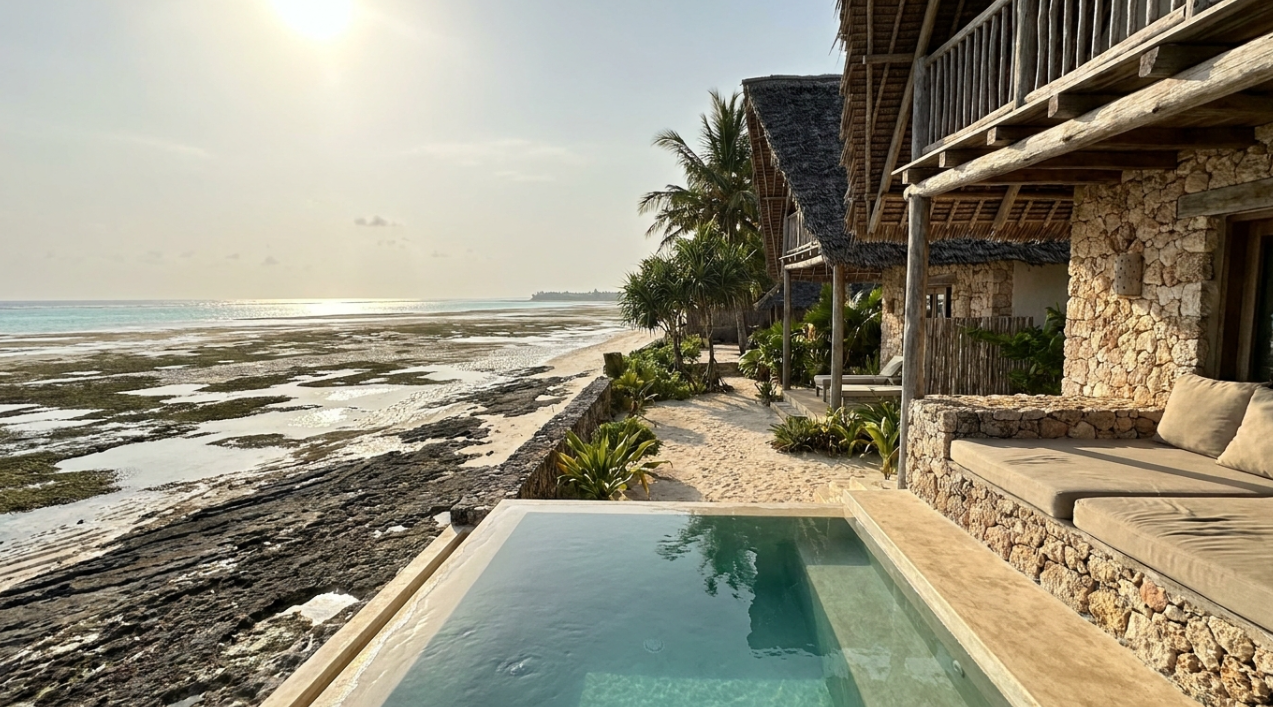
“Tidal Paradox” is a useful way to describe a common Zanzibar honeymoon trade-off: some of the island’s most private and villa-focused resorts sit on beaches where the ocean retreats dramatically at low tide.
The important distinction is that a tide-dependent beach is not necessarily a bad honeymoon beach. Couples choosing these properties are often buying privacy, spacious villas, pools, spa facilities and a quieter atmosphere rather than guaranteed swimming throughout the day.
If swimming at any hour is essential, prioritize the north coast. If privacy and a villa-centered experience matter more, an east or southeast coast property may be a better fit.
South Coast: Kizimkazi
The quietest part of the island. Kizimkazi is known for dolphin encounters (bottlenose and spinner dolphins frequent the channel) and has very few resorts. It suits couples who want near-total isolation but doesn’t have the dining or activity options of the north or east. For ethical dolphin tour options in this area, see the Zanzibar dolphins guide.
Stone Town
Zanzibar’s UNESCO World Heritage capital. A dense maze of narrow streets, carved wooden doors, spice markets, and rooftop restaurants. TripAdvisor reviewers consistently recommend spending one night here to experience the culture and history, then moving on to the beach. Stone Town is beautiful but busy, with limited beach access. One night is sufficient for most honeymooners, and it works well as a first or last night when flights align.
Mnemba Island
A tiny private island (roughly one kilometer wide) off Zanzibar’s northeast coast, hosting a single ultra-luxurious lodge operated by &Beyond. Mnemba offers supreme privacy and world-class marine life. The surrounding atoll is a protected marine reserve and one of the Indian Ocean’s best snorkeling and diving sites. Mnemba suits couples who prioritize marine life above everything else and have the budget to match. Day trips to Mnemba Atoll for snorkeling are available from the main island without staying at the lodge.
Seasons and Weather Terms
Timing a Zanzibar honeymoon extension means matching your dates to both the mainland safari circuit and Zanzibar’s weather patterns. For a deeper look at mainland timing, see the guide on the best time for a Tanzania safari.
Dry Season (June to October)
Peak season for both safari and Zanzibar. The simplest combination runs June through October, when the mainland parks and Zanzibar are both in peak form. Warm days, minimal rain, calm seas. This is also the busiest and most expensive period. September and early October offer the best balance of dry weather and thinner crowds for a more intimate honeymoon experience.
Short Dry Season (January to February)
The secondary peak and an excellent window for honeymooners. January to February pairs the wildebeest calving season in the Serengeti’s Ndutu area with Zanzibar’s secondary dry period. Fewer tourists than June through October, warmer temperatures, and a more intimate feel.
Masika (Long Rains: March to May)
Zanzibar’s wet season. April is the wettest month, averaging 229.7 mm of rainfall across 18 rainy days. Hotel rates drop by roughly 30% compared to peak season, making this the cheapest time for a Zanzibar honeymoon extension. The trade-off is real: overcast skies, rough seas, and some activities (like diving and snorkeling) become unreliable. Some smaller properties close entirely during masika.
Vuli (Short Rains: November to December)
A shorter, less intense rainy period. Rain typically arrives in brief afternoon bursts rather than all-day downpours. November is transitional, but December picks up as a busy tourist month thanks to holiday travel. Prices are moderate compared to full peak season.
Kaskazi and Kusi (Monsoon Winds)
The two monsoon seasons that shape conditions on Zanzibar’s coasts. Kaskazi (northeast monsoon, November to March) brings warmer temperatures and calmer waters on the east coast. Kusi (southeast monsoon, June to September) brings cooler winds that churn up the east coast but leave the north coast calm. These wind patterns directly affect snorkeling visibility and kitesurfing conditions. If diving or water sports are a priority for your extension, the wind season should influence your coast selection.
For detailed month-by-month conditions, see the Zanzibar weather and seasons guide.
Accommodation Terms
Zanzibar Collection
An umbrella resort brand comprising four properties: Baraza Resort & Spa, The Palms, Breezes Beach Club, and Zawadi Hotel. Guests at any Zanzibar Collection property can use the spa and dive facilities at the others. This is useful for honeymooners because it means booking a small, intimate property like The Palms (6 villas) while still having access to the larger resort infrastructure of Baraza (30 villas) next door.
Banda
A traditional thatched-roof beach cabin or bungalow. The term appears frequently in Zanzibar accommodation listings. A banda can range from a basic wooden structure with a mosquito net to an architecturally designed villa with air conditioning and a private terrace. The word alone doesn’t indicate quality. Always check what’s actually included.
All-Inclusive vs. Half-Board vs. B&B
Three meal plan options you’ll encounter when booking Zanzibar accommodations:
|
Plan |
What’s Included |
Best For |
|---|---|---|
|
All-inclusive |
All meals, most drinks, sometimes activities |
Remote resorts where there are no nearby restaurants (Mnemba, south coast properties) |
|
Half-board |
Breakfast and dinner |
Most honeymoon resorts, gives you freedom for lunch at beach bars or on excursions |
|
B&B (Bed & Breakfast) |
Breakfast only |
Budget stays or Stone Town hotels where you want to eat out |
Half-board is the most common default at mid-range and luxury honeymoon resorts in Zanzibar.
Private Plunge Pool
A small pool (typically 2 to 4 meters) attached to an individual villa or suite. This is the single most requested honeymoon amenity in Zanzibar. Properties like Kilindi, Baraza, and several boutique east coast resorts include private plunge pools in their villa categories. If this matters to you, confirm it’s included in your specific room category, not just available at the property.
Adults-Only vs. Structural Privacy
This distinction trips up a lot of honeymooners. An “adults-only” label means no children are allowed, but it says nothing about the scale of the property. A 200-room adults-only resort can feel more crowded and less romantic than a 9-villa family-friendly property where you simply never encounter other guests.
The couple who books a 200-room resort because it filtered “adults-only” will spend their honeymoon navigating crowds at the pool and buffet. The couple who books a 9-villa property with a private plunge pool will spend it alone. For honeymoons, structural privacy (the physical design and scale of the resort) matters more than the adults-only filter.
Honeymoon Package / Honeymoon Amenity
Most Zanzibar resorts offer some form of honeymoon recognition: a fruit platter on arrival, a bottle of sparkling wine, flower petals on the bed, a complimentary couples’ massage, or a private dinner setup. The specifics vary enormously. Some packages are marketing labels attached to the standard room rate. Others include genuine upgrades like room category bumps or included excursions.
The key: making sure your operator communicates the honeymoon to the hotel in advance. Verified Duma Explorer client reviews from 2025 note that hotels informed of the honeymoon occasion provided “a small treat” on arrival, a detail that depends entirely on the operator flagging it ahead of time.
Activities and Experiences
For detailed logistics, pricing, and booking tips on all of these, see the full Zanzibar excursions and day trips guide.
Dhow Cruise
A sunset sail on a traditional wooden dhow, the single-masted sailing vessel that has plied East African waters for centuries. Most dhow cruises last 1 to 2 hours, depart from Nungwi or Stone Town, and include drinks and snacks. This is one of the most popular honeymoon activities in Zanzibar and is available at virtually every coast.
Spice Tour
A half-day guided walk through spice plantations in Zanzibar’s interior. You’ll see (and taste) clove, vanilla, cinnamon, cardamom, nutmeg, black pepper, and turmeric growing in their natural state. Zanzibar’s historical identity as the “Spice Islands” makes this a cultural essential. Tours typically run 2 to 3 hours and cost $20 to $40 per person. For a detailed breakdown of what to expect, see the spice tour glossary.
Mnemba Atoll Snorkeling
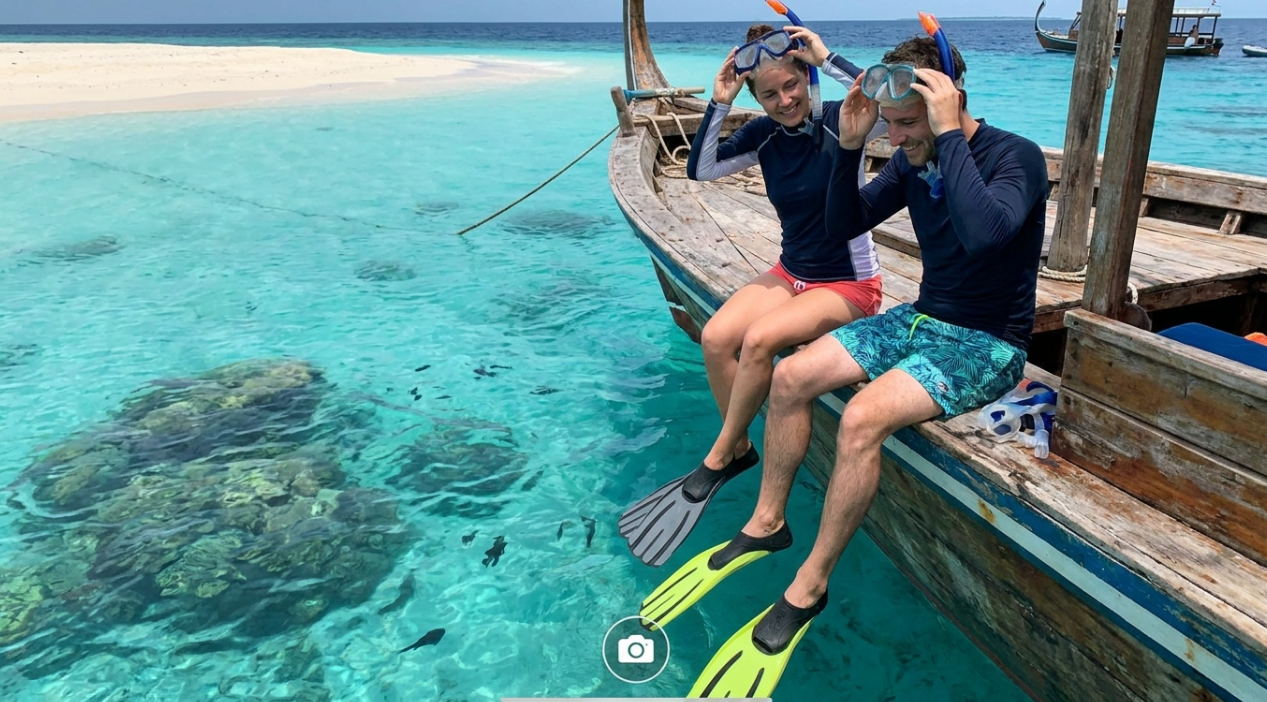
A day trip by boat to the protected marine reserve surrounding Mnemba Island. You don’t need to stay at the private island lodge to snorkel here. Expect to see sea turtles, reef fish, dolphins, and (seasonally) whale sharks. This is widely regarded as the best snorkeling in Zanzibar. Trips depart from Matemwe or Muyuni beach on the main island and cost $30 to $70 per person depending on the operator.
Prison Island (Changuu Island)
A short boat ride from Stone Town, Prison Island is home to a colony of Aldabra giant tortoises and the ruins of a 19th-century quarantine station. The visit takes about 2 hours including the boat transfer. It’s a light, easy excursion that pairs well with a Stone Town afternoon.
Sandbank Picnic
A private lunch arranged on an exposed sandbar during low tide. Your boat drops you on a strip of white sand in the middle of the ocean with a prepared meal, drinks, and nothing else. This is one of the most photographed honeymoon experiences in Zanzibar and can be arranged through most mid-range and luxury resorts.
The Rock Restaurant
An iconic restaurant built on a tiny rock formation offshore at Michamvi, on the east coast. At low tide, you walk to it. At high tide, a boat ferries you across. Known more for the setting than the food, though the seafood is solid. Reservations are essential, especially during high season.
Jozani Forest
Zanzibar’s only national park, home to the rare Zanzibar red colobus monkey. A guided walk takes about 45 minutes. It’s a good option for couples who want a brief nature experience between beach days.
Forodhani Gardens Night Market
A nightly food market on Stone Town’s waterfront. Vendors grill seafood, Zanzibar pizza, sugarcane juice, and local snacks from sunset onward. Lively, cheap, and a memorable sensory experience. It’s the best casual dinner option in Stone Town.
Kitesurfing (Paje)
Paje, on the east coast, is one of East Africa’s premier kitesurfing spots thanks to consistent winds and the vast tidal flats that create shallow, safe water for beginners. Several schools offer lessons ($60 to $100 for a 2-hour session). Not traditionally a honeymoon activity, but popular with active couples.
Planning Terms
Extension
In safari and travel-industry language, an “extension” is a segment added to the core trip. A Zanzibar honeymoon extension specifically refers to beach nights appended to a mainland itinerary. The extension is typically the last component of the trip, meaning you fly home from Zanzibar rather than returning to the mainland.
Bush-and-Beach
A synonym for bush-to-beach, used by some operators to describe the combination of safari (bush) and coastal (beach) segments in one trip. The terms are interchangeable.
Fly-In Safari
A safari where you travel between parks by light aircraft rather than by road. Relevant to the Zanzibar extension because a fly-in safari means your final game drive can end at an airstrip, and you board a plane directly to Zanzibar without a long road transfer back to Arusha. This saves an entire day of travel and is the most efficient way to structure a Serengeti-to-Zanzibar honeymoon.
Shoulder Season
The weeks between peak and off-peak seasons, typically early June, late October, and parts of November. Shoulder season offers better availability, lower prices, and decent weather, making it an attractive option for couples who can’t travel in the absolute peak window. Expect savings of 15 to 25% on accommodation compared to full peak rates.
Lead Time / Advance Booking
How far ahead you need to book. For peak-season Zanzibar honeymoon extensions (June through October), plan to book 6 to 8 months in advance. Small properties like The Palms (6 villas) and Mnemba Island sell out early. January and February also require advance planning due to limited capacity at top properties. Shoulder and off-peak seasons offer more flexibility.
How Many Nights Should a Zanzibar Honeymoon Extension Be?
The best length depends on how much of your honeymoon you want to spend recovering versus exploring.
|
Length |
Best For |
What You Can Realistically Do |
|---|---|---|
|
3 nights |
Short safari or Kilimanjaro recovery |
Resort time + one major excursion |
|
4 nights |
Most couples |
Beach time + snorkeling/dhow cruise + optional Stone Town |
|
5 nights |
Relaxed honeymoon |
Two or three excursions plus multiple unstructured beach days |
|
6–7+ nights |
Slow beach honeymoon |
Best if Zanzibar itself is a major part of the trip |
Best overall choice: 4–5 nights
For most couples, four or five nights is the best balance. It provides enough time to recover from a safari or climb without turning the extension into another highly scheduled part of the honeymoon.
If Zanzibar is primarily a recovery stop, three nights can be enough. If the beach experience is one of the main reasons for the trip, five nights or more makes more sense.
Honeymoon Extension Ideal Length
Three nights is the minimum for a Zanzibar honeymoon extension, enough to unwind and fit in one or two excursions. Four to five nights is the sweet spot: enough time to settle into the pace, explore Stone Town for a day, take a dhow cruise or snorkeling trip, and still have pure beach days. More than five nights risks feeling too static after the variety of a safari. Reddit post-climb advice often suggests 2 to 3 nights for Kilimanjaro recovery, but honeymoon-focused trips benefit from the extra time.
Cost Framework
A Zanzibar honeymoon extension does not have a single price. The total depends on accommodation tier, length of stay, coast, flights, and meal plan.
Daily Cost Bands
|
Tier |
Per Person Per Day |
What You Get |
|---|---|---|
|
Budget |
$40–$90 |
Basic guesthouse, B&B, fan cooling, shared beach access |
|
Mid-range |
$120–$250 |
Boutique hotel, half-board, air conditioning, possibly a pool |
|
Luxury |
$300–$600+ |
Private villa, plunge pool, full-service resort, half-board or all-inclusive |
For a couple doing a 4-night mid-range Zanzibar honeymoon extension, expect a total of roughly $1,800 to $2,600 including accommodation, meals, domestic flights, and a couple of excursions. Luxury extensions can easily double that figure.
For a comprehensive breakdown of what affects the total, explore the Tanzania honeymoon cost guide.
Hidden Costs to Budget For
-
ZIC insurance: $88 per couple
-
Tanzania visa: $100–$200 per couple (varies by nationality)
-
Infrastructure tax: $2–$20 per couple per night
-
Domestic flights: $250–$600 per couple (Arusha route) or $500–$1,200 (Serengeti route)
-
Excursions: $30–$100 per person per activity
-
Tips at resort: 10% of bill if not included
Visitor Growth Context
Zanzibar now receives over 900,000 international visitors annually. January 2026 alone saw over 100,000 arrivals, a 19.2% increase over the previous year. This growth means peak-season availability is tighter than it was even two or three years ago, reinforcing the importance of advance booking for honeymoon-quality properties.
Safety and Practical Notes
Zanzibar is stable, fully operational, and one of the safer destinations in East Africa in 2026. No travel restrictions or unusual incidents currently affect visitors. The U.S. State Department rates Tanzania at Level 3 (“Reconsider Travel”) as of late 2025, but this is the standard country-level advisory and is not specific to Zanzibar.
Standard precautions apply: dress modestly outside beach areas (Zanzibar is predominantly Muslim), use hotel-arranged or pre-booked transfers rather than unlicensed taxis, and secure valuables in your room safe. For detailed safety advice, see the Zanzibar safety glossary.
Frequently Asked Questions
How many nights should a Zanzibar honeymoon extension be?
Four to five nights is the sweet spot for most couples. Three nights works if time is tight, especially after a Kilimanjaro climb where the priority is recovery rather than exploration. More than five nights can feel slow after the variety of a safari. The ideal length also depends on whether you want to include a Stone Town night and multiple excursions.
Can you fly directly from the Serengeti to Zanzibar?
Yes. Airlines including Coastal Aviation, Auric Air, ZanAir, and Regional Air operate flights between Serengeti airstrips (Seronera, Kogatende) and Zanzibar. Direct flights take about 2 to 3 hours and cost $250 to $600 per person one way. This eliminates the need to backtrack to Arusha and saves a full day of travel.
Do you need ZIC insurance even if you already have travel insurance?
Yes. The Zanzibar Insurance Corporation policy is mandatory for all foreign non-residents, regardless of any existing private coverage. It costs $44 per person and must be purchased before arrival. You’ll receive a QR code that immigration checks on entry.
What is the difference between the north coast and east coast for honeymooners?
The north coast (Nungwi, Kendwa) offers consistent swimming at any tide, sunset views over the ocean, and a more social atmosphere. The east and southeast coasts (Paje, Bwejuu, Dongwe) experience dramatic tidal shifts but host Zanzibar’s most exclusive, privacy-focused resorts. North coast sells the beach. East coast sells the villa. The right choice depends on whether effortless swimming or total seclusion matters more to you.
When is the best time for a Zanzibar honeymoon extension?
June through October aligns both the mainland safari circuit and Zanzibar in peak conditions. January to February is the best alternative, pairing the Serengeti calving season with Zanzibar’s secondary dry period and fewer crowds. Avoid April and early May if weather reliability matters.
How much does a Zanzibar honeymoon extension cost for a couple?
A 4-night mid-range extension runs roughly $1,800 to $2,600 for two, including accommodation, meals, domestic flights, and basic excursions. Luxury extensions with private villas and plunge pools can reach $4,000 to $6,000+ for the same duration. Budget $88 per couple for ZIC insurance and $100 to $200 for visas on top of that.
Is a Zanzibar honeymoon extension only for safari couples?
No. While the classic pairing is safari followed by beach, Zanzibar extensions also work after Kilimanjaro climbs, gorilla trekking in Uganda or Rwanda, and multi-country East Africa itineraries. The structure is the same: active adventure first, beach recovery last.
Ready to connect your safari or Kilimanjaro climb with Zanzibar beach time? Build your safari and Zanzibar honeymoon with a trip designer who knows the logistics, the properties, and the coasts firsthand.