

Safari Private vs Group: 2026 Costs, Pros & When to Choose
TL;DR
A private safari gives your party exclusive use of a vehicle and guide with full itinerary flexibility, starting around $350 per person per day. A group joining safari puts you in a shared vehicle with strangers at fixed dates and routes, saving 30 to 50% on costs. The right choice depends on your budget, group size, travel style, and season. At four or more travelers, private safari costs approach group rates per person.
The safari private vs group question is the most consequential decision in planning an East Africa trip. It affects your daily cost, how much wildlife you see, whether you can linger at a leopard sighting or must move on, and even how many bags you can bring.
Most comparison articles recycle the same five bullet points without defining terms or showing real math. This guide takes a different approach. Every term below is defined with context, 2026 pricing data, and practitioner insights from operators, forums, and photographers who have lived the trade-offs firsthand.
Whether you’re a solo backpacker, a couple on a honeymoon, or a family of five, the framework here will help you book with confidence.
→ Already leaning toward a private trip? Explore private Tanzania safari options with route and cost details.
Which is better: private safari or group safari? A private safari is better for travelers who want flexibility, exclusive use of a vehicle, and personalized guiding, typically costing $350–$500 per person per day. A group joining safari is better for budget travelers who don’t mind sharing a vehicle with strangers on fixed itineraries, costing around $200–$250 per person per day. If you are traveling as a group of four or more, a private safari often becomes cost-competitive with group tours due to shared vehicle costs.
Core Definitions: What “Private” and “Group” Actually Mean
The terms “private safari” and “group safari” sound simple. In practice, they cover at least four distinct travel formats, and confusing them is one of the most common booking mistakes travelers make.
Private Safari
A private safari means your party, whether that’s two people or ten, has exclusive use of a dedicated 4x4 vehicle and professional driver-guide. The itinerary is tailor-made. You decide when to start each morning, how long to spend watching a cheetah hunt, and which parks to visit in what order.
Typical inclusions: Accommodations, all meals, private vehicle, driver-guide, park and conservation fees, and airport transfers. Mid-range private safaris in Tanzania run $350 to $500 per person per day (PPPD) all-inclusive, with budget options starting around $350 and luxury packages exceeding $600.
A seven-day mid-range private safari typically costs $2,500 to $3,500 per person excluding international flights.
Group Joining Safari (Shared-Seat Safari)
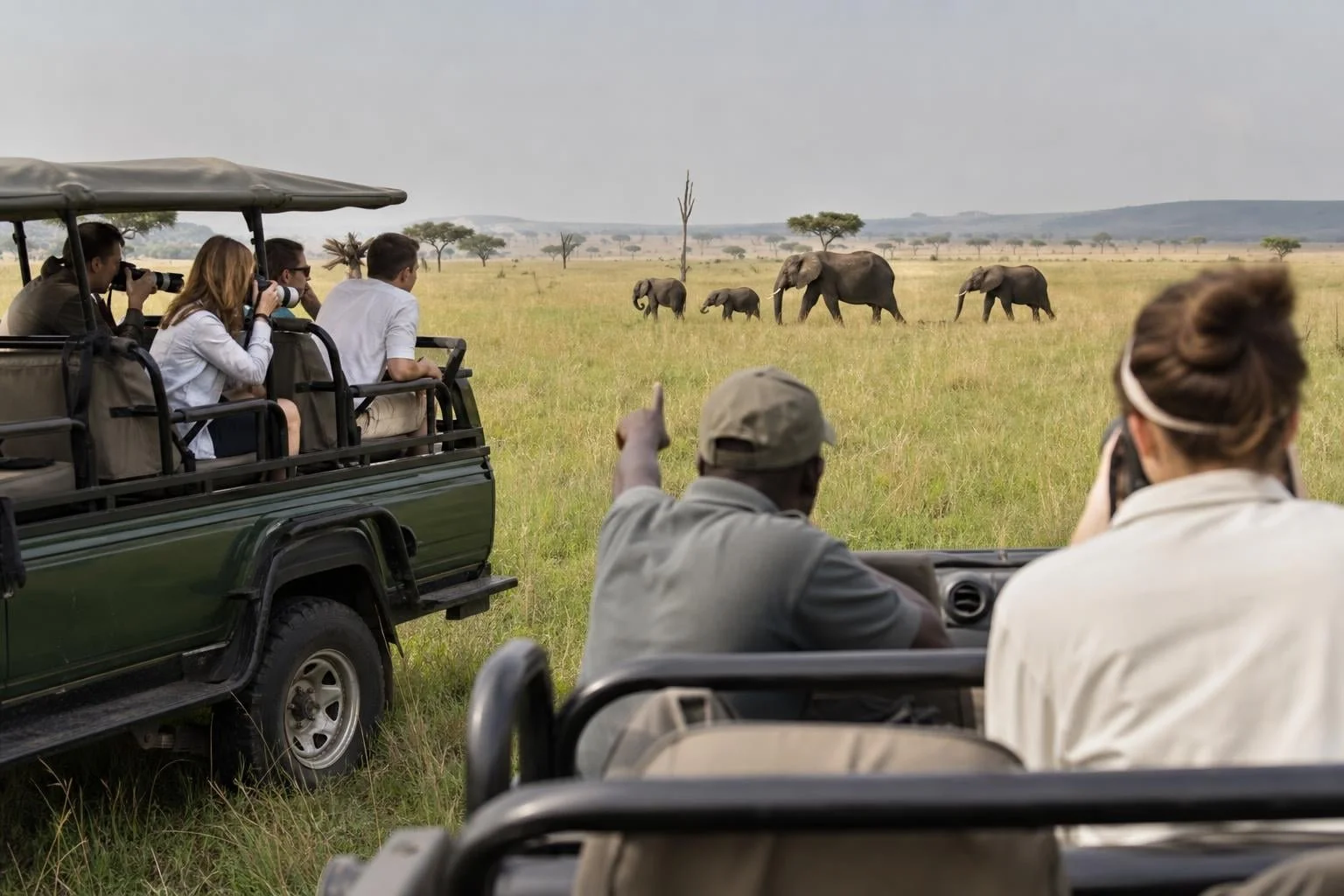
A group joining safari is a shared-seat travel model. You buy one seat in a Land Cruiser alongside strangers, splitting fixed costs like fuel, guide fees, and per-vehicle charges. Itineraries are locked. Daily timings are fixed. You cannot customize.
Group sizes typically run four to seven passengers, depending on whether the format is budget camping (max six) or ensuite accommodations (max seven). Everyone gets a window seat in the standard configuration.
Budget camping joining safaris of four to five days cost $800 to $1,200 total, or roughly $200 to $250 PPPD. That’s a 30 to 50% savings over private.
Most passengers on joining safaris are young adults in their 20s and 30s, often backpackers or solo travelers on tight budgets.
For a deeper breakdown of how these shared formats work, see this group Tanzania safari guide.
Fixed-Departure Escorted Tour
Companies like G Adventures and Intrepid run branded group tours with pre-set itineraries, confirmed departure dates, set group sizes, and international booking infrastructure. These are more structured and predictable than local joining safaris, with standardized accommodation quality and a tour leader in addition to the local driver-guide.
The key difference from a joining safari: you know exactly who is organizing the trip, what the refund policy looks like, and what accommodation standard to expect. The trade-off is price. Escorted tours cost more than local joining safaris because of the overhead.
Private Small-Group Safari
This is the format most couples and families actually book, and it causes the most confusion. A private small-group safari means your own party (friends, family, travel companions) books a dedicated vehicle and guide. You share costs internally but have full flexibility over the itinerary.
This is not a “group safari” in the industry sense. You are not joining strangers. The term “group” refers only to the size of your own party.
Understanding these four formats is the foundation of the safari private vs group decision. Everything that follows builds on these distinctions.
|
Factor |
Private Safari |
Group Joining Safari |
|---|---|---|
|
Cost per person per day |
$350–$500 |
$200–$250 |
|
Itinerary |
Fully flexible |
Fixed |
|
Vehicle use |
Exclusive |
Shared |
|
Guide attention |
Dedicated |
Shared |
|
Group size |
2–10 (your party only) |
4–7 strangers |
|
Luggage flexibility |
High |
Strict limits |
|
Photography access |
Ideal |
Limited |
|
Best for |
Families, couples, photographers |
Solo travelers, budget trips |
Cost and Pricing Terms
PPPD (Per Person Per Day)
The standard quoting unit for Tanzania safaris. When an operator quotes “$350 PPPD,” that means the total trip cost divided by the number of travelers divided by the number of safari days. This is how you compare operators on equal footing.
Always confirm what a PPPD quote includes. Some operators exclude park fees, tips, or drinks. Others bundle everything. Without clarity on inclusions, a $300 quote can actually be more expensive than a $400 one.
For a full breakdown of how safari pricing works, the budget safari cost glossary walks through every fee category.
Conservation Fee / Park Entry Fee
The adult conservation fee for most Northern Circuit parks (Serengeti, Tarangire, Lake Manyara) is $60 per person per day. This is fixed by the Tanzanian parks authority. It does not change whether you are on a private safari or a group joining trip.
For a standard Northern Circuit itinerary, park fees alone account for 25 to 35% of your total spend. That’s a major chunk of your budget that is identical across formats.
Crater Descent Fee: The Best Private vs Group Math Example
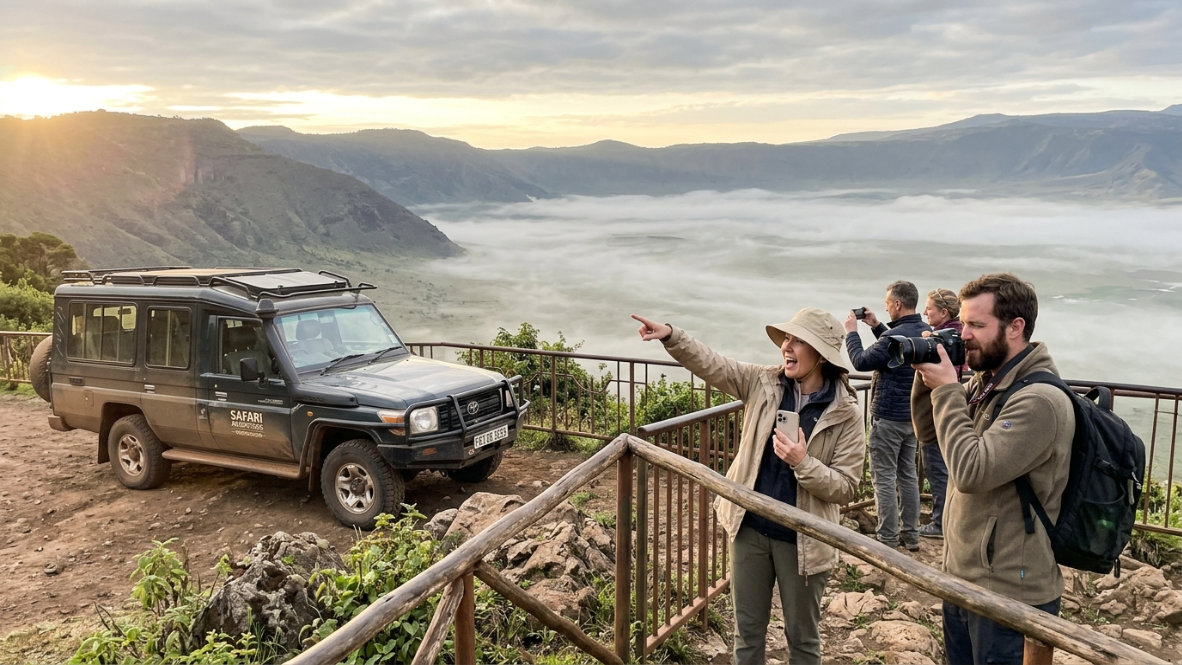
The Ngorongoro Crater descent fee is a per-vehicle charge levied by the Ngorongoro Conservation Area Authority. The 2026 rate is approximately $295 per vehicle per trip down to the crater floor.
Here’s where the safari private vs group cost difference becomes visceral:
-
Group joining safari with six passengers: $295 ÷ 6 = roughly $49 per person
-
Private safari for two: $295 ÷ 2 = $147.50 per person
That single fee, for a single activity on a single day, costs a couple three times what it costs a group passenger. Multiply this dynamic across vehicle rental, fuel, and guide salary for an entire trip, and you see why joining safaris cost 30 to 50% less.
Solo Supplement
Many lodges and tented camps charge a solo supplement when one traveler occupies a double room alone. This typically adds 30 to 50% to the accommodation cost. Solo travelers choosing private safaris face this on top of already paying 100% of the vehicle cost themselves. It’s a significant hidden expense.
The Vehicle Cost Truth
The safari vehicle is the single largest variable cost, and it’s almost identical whether two people or six people sit in it. A private Land Cruiser with driver-guide costs $250 to $350 per day. For a couple, that’s $125 to $175 each. For a group of six, it’s $42 to $58 each.
This math is the entire economic engine behind joining safaris. The wildlife is the same. The parks are the same. You’re splitting the vehicle.
Real Cost Breakdown Example (7-Day Safari in 2026)
|
Cost Component |
Private (2 people) |
Group (6 people) |
|---|---|---|
|
Vehicle & guide |
$150/day pp |
$50/day pp |
|
Park fees |
$60/day pp |
$60/day pp |
|
Accommodation |
$120–$250 |
$100–$180 |
|
Total per day |
$350–$500 |
$200–$250 |
What this means in practice
A private safari is not “expensive for no reason”—you are paying for exclusivity of a fixed-cost vehicle. Group safaris reduce price mainly by splitting transport costs, not by reducing wildlife access.
Vehicle and Logistics Terms
Safari Vehicle
Most safaris in Tanzania’s Northern Circuit use modified 4x4 Toyota Land Cruisers with pop-up roofs for wildlife viewing. Standard configuration seats six passengers across three rows. Some operators squeeze a seventh passenger into the front seat. Customized stretch vehicles add an extra row and hold up to eight.
Window Seat Guarantee
Group size matters, but what matters more is whether every passenger gets a window seat during game drives. A window seat means unobstructed views and the ability to photograph without leaning across someone else. Reputable operators guarantee window seats for all passengers by capping vehicles at six.
When a seventh passenger rides in front, or when vehicles are overloaded, the window seat guarantee breaks down. This is worth confirming before booking any group safari.
Luggage Limits
Group joining safaris almost universally restrict passengers to one duffel bag or backpack per person. As one Tanzanian operator notes, extra luggage causes “great inconvenience to fellow travelers” and congests the vehicle.
Private safaris have no such constraint in practice. With a dedicated vehicle, your bags go in the back and nobody else is affected. For travelers who need camera gear, child supplies, or just prefer not to live out of a single bag, this is a meaningful difference. Check the safari packing list to plan what you actually need.
Game Drive Flexibility and Timing
On a private safari, your guide starts when you want, stays as long as you want at a sighting, and adjusts the route based on real-time animal movement. If a pride of lions is hunting at 6:30 AM, you’re there.
On a group joining safari, daily timings are fixed. Practitioners on travel forums describe a common frustration: passengers staying at different accommodations get picked up sequentially, adding 20 to 40 minutes of extra driving before and after every game drive. One operator explained that if a new passenger is starting their first day from Moshi or Arusha, the three-hour drive can push an 8 AM start to 11 AM, effectively cutting the morning game drive in half.
Experience and Quality Terms
Guide Attention: Dedicated vs. Shared
On a private safari, your guide is working for you alone. That means personalized briefings, answers to every question, and the freedom to teach at your pace. If your kids want to learn about dung beetles for 20 minutes, the guide can oblige.
On a group joining safari, the guide balances competing interests. As Safari Junkie observes, “group members have different expectations, interests that might not suit you. The group has to come to an agreement about everything, from stops along the game drives, what to focus on. Someone will want to see lions hunting, you might want to spend more time at the hippo pool.”
Itinerary Customization
Private safaris are fully flexible. Want to skip Lake Manyara and add an extra day in the Serengeti? Done. Want to arrive at Ngorongoro Crater at gate opening to beat crowds? Your call.
Group joining safaris follow a fixed itinerary on fixed dates. The route is set before you book. You conform to the group, not the other way around.
For ideas on how to structure a flexible route, browse safari itineraries and routes with real examples.
Add-On Activities
Private safari travelers can add activities like Maasai village visits, trips to Olduvai Gorge, balloon safaris, or walking safaris at extra cost, built into the itinerary wherever it makes sense.
Group joining safaris restrict this. Because the entire group must stick to the same schedule, optional add-ons that don’t interest everyone simply don’t happen. If you’ve been dreaming about a specific experience, a cultural safari visit or a balloon flight at dawn, private is the only way to guarantee it.
Photography Considerations
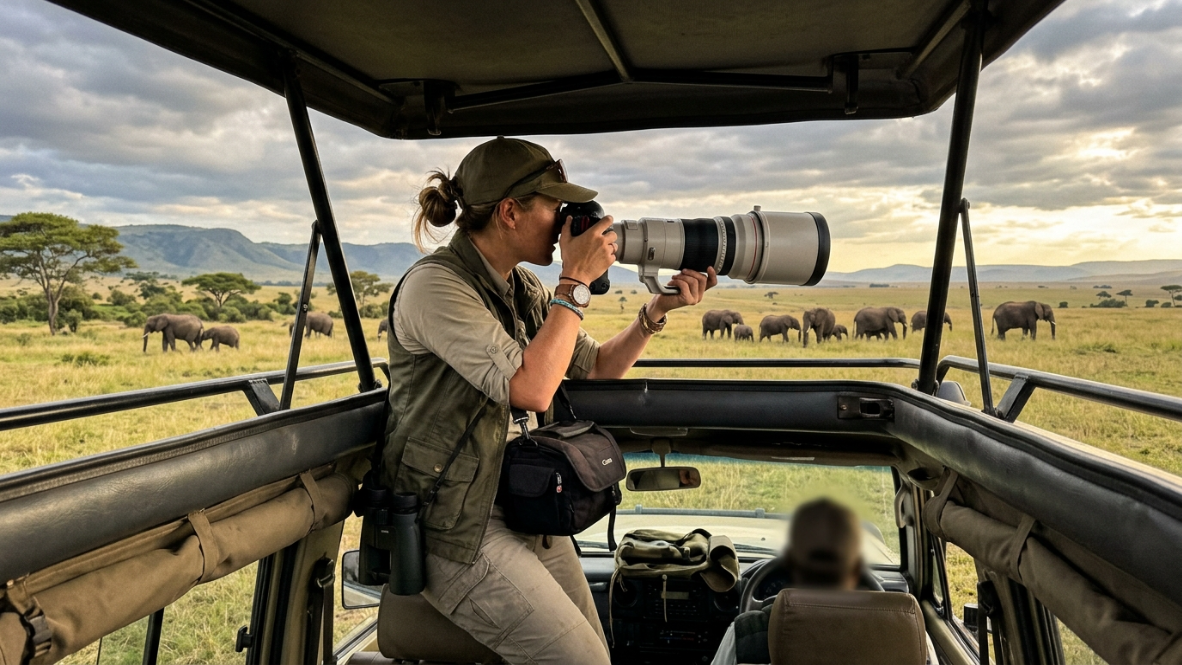
For serious wildlife photographers, private vehicles are not a luxury. They are a tool. As one photography tour operator puts it: “If you’ve ever been crammed in next to six other people, elbow-to-elbow, while trying to swing a 500mm lens out the side window as a leopard disappears into the bush, you know exactly what I mean.”
Private vehicle
ographers on dedicated tours typically limit vehicles to three or four passengers, giving each person two window positions and room to maneuver long lenses.
Is a Private Safari Worth It?
A private safari is worth it if:
-
You want to control your daily schedule
-
You are interested in photography or wildlife behavior
-
You are traveling with children or older family members
-
You want fewer time constraints at sightings
A group safari is worth it if:
-
You are traveling solo on a budget
-
You want a social travel experience
-
You prefer fixed planning with no decision-making
Decision Framework: Which Format Fits Your Trip?
No single format is universally better. The right choice depends on who you are, what you want, and how much you can spend. Here is a clear framework.
By Traveler Profile
|
Traveler Profile |
Recommended Format |
Why |
|---|---|---|
|
Couples (honeymoon, anniversary) |
Private |
Full flexibility, romantic pace, exclusive guide. Pair it with a honeymoon beach extension for the full experience. |
|
Families with children |
Private |
Kids need flexible stop schedules, bathroom breaks, nap-friendly timing. Group safaris have rigid schedules that don’t accommodate young children. |
|
Solo travelers on a budget |
Group joining |
The shared-seat model makes Tanzania accessible at prices rivaling almost any world-class destination. |
|
Wildlife photographers |
Private (non-negotiable) |
Vehicle positioning, patience at sightings, and lens space require a dedicated vehicle. |
|
Multi-generational groups (4-6 people) |
Private |
At four or more travelers, private costs drop 20 to 30% per person because vehicle and guide costs split further. At this size, private becomes cost-competitive with group joining. |
|
Social travelers |
Group joining or escorted tour |
Built-in social environment, campfire bonding, and shared storytelling with fellow travelers. |
|
First-timers with limited budget |
Group joining (verify the operator) |
Lowest entry point to the experience, but requires careful vetting. |
The 4-Person Break-Even Rule
Group size is one of the biggest cost levers in the safari private vs group equation. A party of four sharing a private vehicle pays 20 to 30% less per person than a couple on the same private itinerary, because the vehicle and guide fees spread across more people. At four travelers, a private safari often costs the same per person as a group joining seat with mid-range accommodations.
If you can assemble four people, go private. The cost difference evaporates and the experience difference does not.
Seasonality of Group Departures
Group joining safaris in Tanzania are generally available on select dates between June and October and December to February, the peak and shoulder seasons. If you plan to travel during the green season (March through May or November), group joining departures may not exist at all.
This is a practical constraint many travelers overlook. Green season travelers effectively must book private, regardless of budget preference. Check when to visit East Africa to match your dates with available formats.
The $200/Day Red Flag
One experienced operator who stopped offering joining safaris shared this warning: “Anyone that offers solo travelers or couples safaris for under $200 a day is operating as a joining safari whether they indicate it or not. Most tour companies will tell you this if you ask but might omit this information if you don’t ask.”
If a quote seems too low for a “private” safari, ask directly whether you will share a vehicle with other travelers. For more warning signs, see common safari booking mistakes.
Common Confusion Points
“Group Safari” Does Not Mean Traveling With Your Group
This catches people constantly. In safari industry terminology, “group safari” means joining strangers. If you and five friends book a dedicated vehicle, that’s a private small-group safari. The naming is counterintuitive, and operators don’t always clarify it.
“Budget Safari” Often Means Joining Without Saying So
Many operators market “budget safaris” without disclosing that the format is shared-seat joining. The low price is the tell. Budget camping with a private vehicle cannot realistically cost $150 to $200 PPPD once you account for vehicle rental, fuel, guide salary, and park fees. If the math doesn’t add up, it’s because you’ll be sharing.
Hybrid Approaches Exist
Some operators offer combination packages where you start with a group tour and switch to private game drives later in the trip. This can work well for budget-conscious travelers who want at least a few days of exclusive vehicle time, perhaps at a highlight destination like the Serengeti or Ngorongoro. It’s a genuine middle ground worth asking about.
Same Parks, Same Animals
The lions, elephants, and wildebeest do not care whether your vehicle is private or shared. The wildlife is identical. What changes is your ability to find it (flexible timing and a dedicated guide help), how long you can watch it, and how comfortably you experience it.
→ Ready to plan a custom itinerary? See private Tanzania safari routes and costs for a starting point.
Quick Cost Comparison: Private vs Group Safari (2026)
|
Factor |
Private Safari (2 travelers) |
Group Joining Safari (6 travelers) |
|---|---|---|
|
PPPD (mid-range) |
$350 to $500 |
$200 to $250 |
|
7-day trip total per person |
$2,500 to $3,500 |
$800 to $1,200 (budget camping, 4-5 days) |
|
Ngorongoro crater fee per person |
~$148 |
~$49 |
|
Vehicle cost per person per day |
$125 to $175 |
$42 to $58 |
|
Park fees per person per day |
$60 (same) |
$60 (same) |
|
Itinerary flexibility |
Full |
None |
|
Luggage limit |
Flexible |
One bag |
|
Guide exclusivity |
Dedicated |
Shared |
The Joining Safari Experience: What Practitioners Actually Report
TripAdvisor forums reveal a recurring pattern with joining safaris that deserves honest coverage. One solo traveler described the booking process: after emailing ten operators, they were quoted $550 for three days, only to have the itinerary change to four days at $1,400 upon replying. “I can only afford $650 max,” they wrote. This bait-and-switch dynamic is not universal, but it’s common enough that solo travelers should treat initial quotes as opening positions, not firm offers.
Time management is another real issue. Because group joining safaris pick up passengers from different accommodations, the first game drive of the day often starts later than advertised. One operator explained that when a passenger joins from Moshi or Arusha, a three-hour transfer can push the group’s start from 8 AM to 11 AM. The afternoon drive will still be solid, but “the long wait in the morning can absolutely ruin the day for some people.”
None of this means joining safaris are bad. For the right traveler, they’re excellent value. But going in with eyes open matters.
Frequently Asked Questions
Is a private safari worth the extra cost?
For couples, families, photographers, and anyone who values flexibility, yes. The ability to control your schedule, linger at sightings, and have a dedicated guide transforms the quality of the experience. For solo budget travelers or social travelers in their 20s, a group joining safari delivers the core wildlife experience at a fraction of the price.
How many people are on a group joining safari?
Most group joining safaris in Tanzania cap at six passengers in a standard Land Cruiser (budget camping) or seven with ensuite accommodations. All passengers should have a window seat. If an operator puts more than seven people in a vehicle, that’s a red flag.
Can I do a private safari on a budget?
Yes. Budget private safaris start around $350 PPPD with basic but comfortable camping accommodations. If you travel with four or more people, the per-person cost drops significantly because vehicle and guide fees are split. For a detailed look at cost categories, see the East Africa safari cost guide.
Are group joining safaris available year-round?
No. In Tanzania, joining safaris concentrate during peak season (June through October) and shoulder season (December through February). During the green season (March through May, November), departures are scarce or nonexistent because traveler volume drops too low to fill vehicles consistently.
What if I’m a solo traveler who wants a private safari?
It’s entirely possible, just more expensive. You’ll pay the full vehicle cost yourself plus any solo supplement at lodges. Expect to pay roughly double the per-person rate of a couple on the same itinerary. Some travelers find a travel companion online to split costs, effectively creating a private small-group safari for two.
Can I combine a group safari with private days?
Yes. Some operators offer hybrid packages where you join a group for part of the trip and switch to a private vehicle for key highlights. This is a smart approach if budget is tight but you want private time at, say, the Ngorongoro Crater or a specific section of the Serengeti.
Do private and group safaris visit the same parks?
Absolutely. The Northern Circuit (Tarangire, Lake Manyara, Serengeti, Ngorongoro) is standard for both formats. The difference is not where you go but how you experience it: your pace, your guide’s attention, your ability to detour, and how much time you spend at each location.
How do I spot an undisclosed joining safari?
Any quote under $200 per person per day for a solo traveler or couple should prompt the question: “Will I share a vehicle with other travelers?” Reputable operators will tell you honestly. If the answer is vague, assume it’s a joining safari regardless of how it’s marketed.
Is a private safari safer than a group safari?
Both private and group safaris are equally safe because they follow the same park rules and use similar vehicles and licensed guides.
Do private safaris guarantee better wildlife sightings?
No. Wildlife sightings depend on season and location, not safari type. However, private safaris allow more time at sightings, which improves your experience.
Why are group safaris cheaper?
Group safaris are cheaper because travelers share the cost of the vehicle, fuel, and guide instead of paying for them individually.
Can I switch from group to private safari mid-trip?
Yes, many operators allow hybrid itineraries where you upgrade to private game drives for specific parks or days.