

Quick Summary
A bush dinner in Tanzania is an outdoor safari dining experience where a lodge or safari camp sets up a temporary restaurant in the wilderness. Guests enjoy a freshly prepared multi-course meal or barbecue under the African night sky, usually with lanterns, a campfire, and staff overseeing the experience. Depending on the property, a bush dinner may cost approximately $50–$285 per person as an add-on or be included in a luxury safari package. Experiences vary by camp, location, menu, and safety arrangements.
A bush dinner turns an ordinary safari evening into something you won’t stop talking about for years. Instead of eating in a lodge dining room, you’re driven to a secluded spot in the wilderness where a full dining setup has been arranged during the afternoon: proper tables, glassware, cutlery, lanterns or candles, a campfire, and a chef cooking over live flames. Armed rangers or Maasai askaris maintain a quiet perimeter. You eat a multi-course meal under a sky with more stars than you’ve ever seen.
The experience is available across Tanzania’s major parks, from the Serengeti’s open plains to the Ngorongoro Crater rim. But not all bush dinners are created equal. The difference between an average one and an extraordinary one comes down to which camp you’re staying at and how seriously they treat the production. That distinction matters more than most travelers realize.
What is a bush dinner in Tanzania? A bush dinner in Tanzania is a specially arranged outdoor meal served in a designated wilderness location during a safari. A lodge or camp transports dining equipment, food, and staff to the site, where guests enjoy dinner beneath the stars, often accompanied by a campfire and traditional entertainment. Bush dinners are available at selected properties in destinations such as the Serengeti, Tarangire, and the Ngorongoro highlands. Prices and inclusions depend on the camp and safari package.
If you’re building a luxury Tanzania safari itinerary, a bush dinner is one of those experiences worth planning around rather than leaving to chance.
What Is a Bush Dinner?
A bush dinner is a proper evening meal served in the open air, in a remote location away from the main camp or lodge. It is not a casual picnic. The setup involves a temporary field kitchen where a chef prepares fresh hot food, a dining table with real linens and glassware, comfortable safari-style chairs (often with Maasai blankets draped over the backs for warmth), a bar area with wines, beers, and soft drinks, and a dedicated team of staff including a chef, waiter, and security.
The evening usually begins just before sunset. You arrive at the spot to find a crackling bonfire and a bar set up for sundowners. You sip a gin and tonic or a glass of South African wine while the sky shifts through orange, pink, and deep purple. As darkness falls, lanterns illuminate the dining area. Courses are served one at a time, often over two to three hours.
Many bush dinners also include cultural elements: Maasai warrior dances, traditional singing, or storytelling around the fire after the meal.
The key distinction from normal lodge dining is the setting. You’re eating in the actual wilderness, not in a building that happens to have a view of it.
What Happens During a Bush Dinner in Tanzania?
A bush dinner is usually organized as an evening experience that combines a scenic game-drive stop, outdoor dining, and time around a campfire. The exact schedule depends on the camp, location, and season, but most experiences follow a similar sequence.
1. Arrival at the Bush Dinner Location
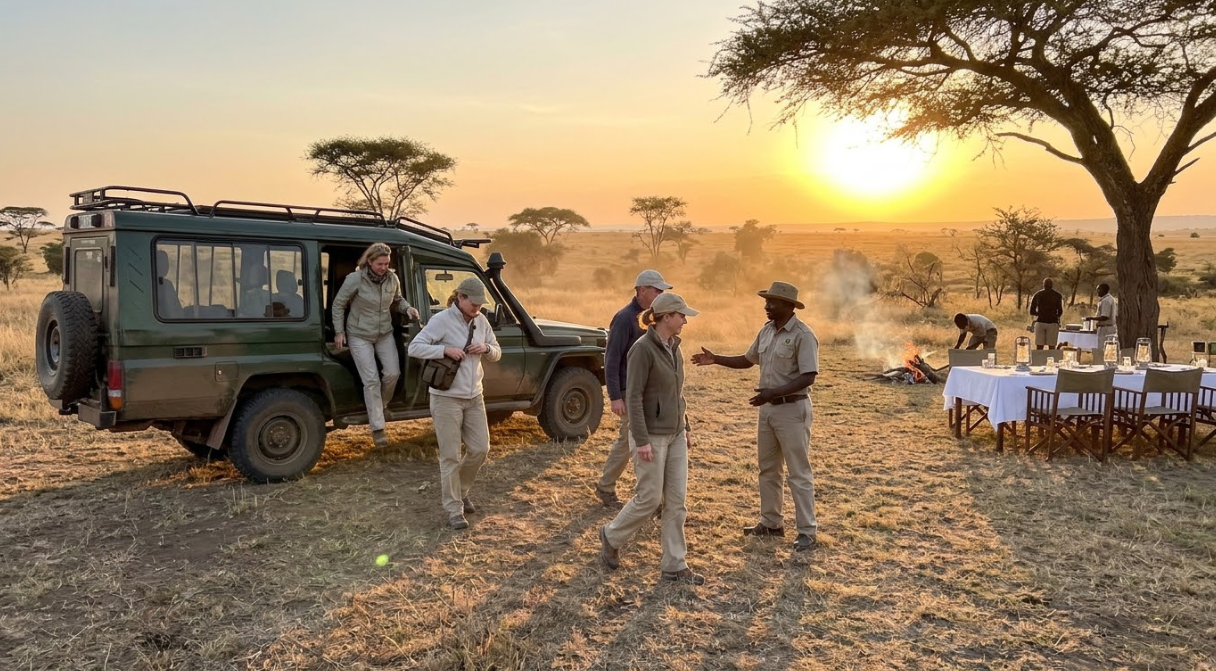
Guests travel to a designated outdoor dining area, either by safari vehicle or on foot with an authorized guide, depending on the property. Staff prepare the location in advance, arranging tables, chairs, lanterns, a temporary kitchen, and a campfire.
Some camps use permanent bush dining sites, while others transport the equipment to a suitable location for each booking.
2. Sundowners Around the Campfire
The evening often begins with drinks and light refreshments as the sun sets. Guests can enjoy the changing colors of the African landscape, take photographs, and relax before dinner.
Depending on the camp, sundowners may include wine, beer, cocktails, soft drinks, and small snacks.
3. Dinner Is Prepared and Served
Once darkness falls, guests sit down for dinner. The menu may include grilled meat, fish, chicken, vegetables, salads, traditional Tanzanian dishes, and dessert.
Some properties offer a multi-course plated dinner, while others organize a barbecue or buffet. The cooking arrangement and menu depend on the camp.
4. Entertainment and Time Around the Fire
Some bush dinners include Maasai singing, dancing, storytelling, or other cultural entertainment. Other properties keep the atmosphere quieter, allowing guests to enjoy the wilderness sounds and conversation.
After dinner, guests may have coffee or drinks around the fire before returning to their accommodation with the camp's staff or guide.
5. Return to Camp or Lodge
The experience concludes with an arranged return to the property. Guests should follow staff instructions throughout the evening and avoid walking away from the designated dining area independently.
Typical duration: Allow approximately two to three hours, although the actual schedule varies by property and the activities included.
Bush Dinner vs. Sundowner, Bush Breakfast, and Boma Dinner
Safari lodges offer several outdoor dining experiences, but they serve different purposes. A sundowner is primarily about enjoying drinks at sunset, while a bush dinner is a full evening meal in a wilderness setting.
|
Experience |
Typical Time |
Duration |
What Is Included |
Main Purpose |
|---|---|---|---|---|
|
Sundowner |
Late afternoon to sunset |
45–90 minutes |
Drinks and light snacks |
Enjoy sunset views |
|
Bush breakfast |
Morning |
60–90 minutes |
Breakfast, coffee, and refreshments |
Outdoor morning dining |
|
Bush lunch |
Midday |
Around 60–90 minutes |
Packed or freshly prepared lunch |
Dining during a game drive |
|
Bush dinner |
Evening |
2–3 hours |
Multi-course dinner or barbecue, drinks, and campfire |
Wilderness dining experience |
|
Boma dinner |
Evening |
2–3 hours |
Communal barbecue or buffet |
Social dining at camp |
Times and inclusions are indicative and vary by property.
What Is the Difference Between a Bush Dinner and a Boma Dinner?
A bush dinner takes place at a designated outdoor location away from the main lodge or camp, often in a secluded part of the surrounding wilderness. The dining equipment, food, and staff are brought to the location.
A boma dinner typically takes place within an enclosed or designated dining area at a lodge or camp. It often features communal seating, a central fire, and traditional barbecue-style food.
The main difference is the setting. A bush dinner emphasizes dining in a remote wilderness location, while a boma dinner focuses on a communal outdoor dining atmosphere at the property.
What Food Is Served at a Tanzania Bush Dinner?
Menus vary by lodge, but most bush dinners serve three to five courses that blend international cooking with Tanzanian flavors. A typical progression:
Starters: Fresh soups, salads, grilled vegetables, or samosas.
Main courses: Grilled beef, chicken, lamb, or freshly caught fish. Many camps feature nyama choma (Tanzanian grilled meat), pilau (spiced rice), ugali, chapati, fried ndizi (plantain), and Swahili-spiced fish cooked directly over the fire.
Desserts: Tropical fruits, homemade cakes, or chocolate creations.
Drinks: A full safari bar with wines (often South African selections), local beers, spirits, and soft drinks.
Vegetarian, vegan, and special dietary requirements can usually be accommodated with advance notice. This is worth mentioning to your safari operator during planning, not on the day itself, so the camp can prepare properly.
At properties like Serengeti Serena Safari Lodge, the bush dinner includes a five-course meal prepared on charcoal BBQ with meat, fish, poultry, vegetarian choices, salads, fruit, desserts, and a full bar. It begins with sundowners around the campfire and includes traditional marimba music.
Sample Tanzania Bush Dinner Menu
Although every camp has its own kitchen and menu, a typical bush dinner may combine international safari cuisine with traditional Tanzanian dishes.
Here is an illustrative example of what guests might be served:
|
Course |
Example Dishes |
|---|---|
|
Welcome drinks |
South African wine, local beer, cocktails, and soft drinks |
|
Starter |
Fresh vegetable soup, garden salad, or Tanzanian samosas |
|
Main course |
Grilled beef, roast chicken, or Swahili-spiced fish |
|
Side dishes |
Pilau rice, chapati, grilled vegetables, or plantain |
|
Vegetarian option |
Vegetable curry, grilled vegetables, or lentil dishes |
|
Dessert |
Fresh tropical fruit, homemade cake, or chocolate dessert |
|
After-dinner drinks |
Coffee, tea, and selected beverages |
This is a sample menu rather than a standard menu followed by every lodge.
Can Bush Dinner Accommodate Special Dietary Requirements?
Most established safari properties can arrange vegetarian, vegan, and other dietary options when informed in advance. Guests with food allergies, gluten intolerance, religious dietary requirements, or other restrictions should notify their safari operator before arrival.
Because bush dinners use temporary kitchens or prearranged food stations, the camp may have fewer ingredients and preparation facilities than its main restaurant. Advance notice gives the chef time to prepare suitable alternatives.
Where Can You Experience a Bush Dinner in Tanzania?
Bush dinners can be arranged at selected safari lodges and camps across Tanzania. The setting depends on the property's location, available dining areas, operating arrangements, and local permissions.
The Serengeti, Tarangire, and Ngorongoro highlands offer different landscapes for outdoor dining, while the southern safari circuit provides opportunities for a quieter wilderness experience.
Serengeti National Park
The Serengeti offers an iconic setting for an African bush dinner. Its open grasslands, scattered rocky outcrops, and expansive night skies create an atmospheric backdrop for outdoor dining.
Some properties arrange dinners on scenic plains or at dedicated hilltop dining locations. For example, Serengeti Serena Safari Lodge describes an experience featuring sundowners, a campfire, Maasai entertainment, and a five-course charcoal barbecue.
The Serengeti is particularly appealing to honeymooners, couples, and travelers who want to combine a classic wildlife safari with a special evening dining experience.
Ngorongoro Conservation Area
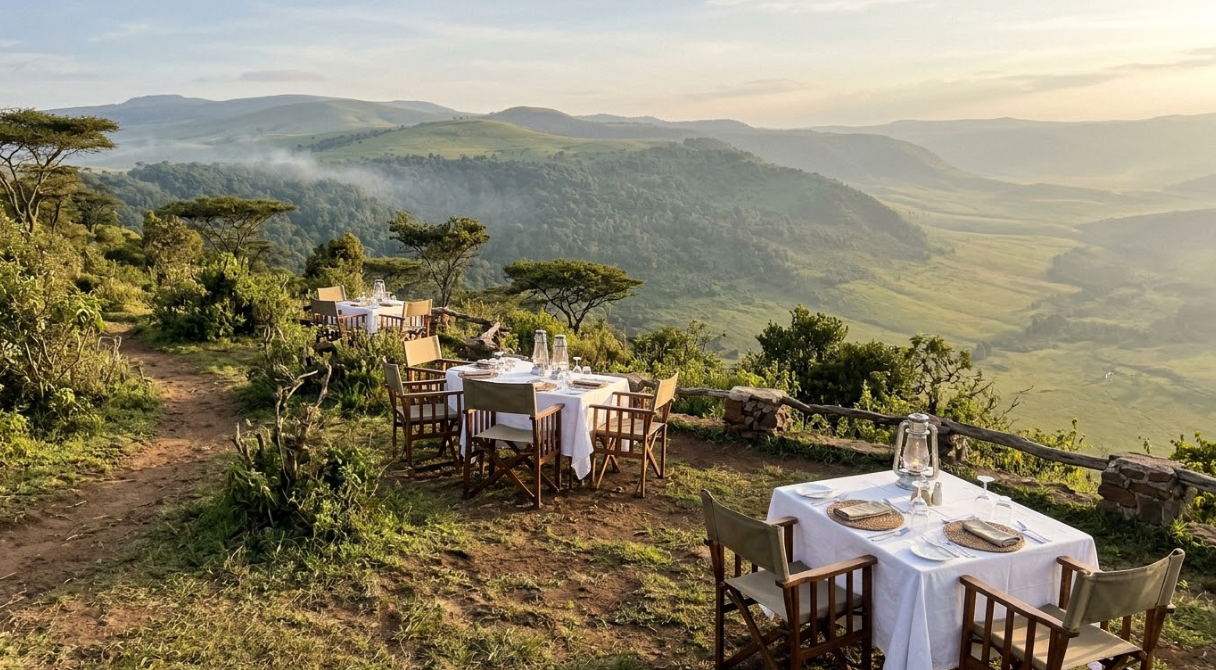
The Ngorongoro highlands offer a cooler and more elevated setting than the Serengeti plains. Depending on the lodge, outdoor dining may take place near the crater rim or in a designated area overlooking the surrounding landscape.
Evenings can be chilly, particularly during the cooler months, so warm clothing is useful.
When booking, confirm whether the experience takes place inside the property grounds or at a separate authorized location.
Tarangire National Park
Tarangire is known for its baobab trees, seasonal wildlife concentrations, and elephant populations. These features create a distinctive atmosphere for outdoor safari dining.
Selected camps may arrange dinners in designated outdoor locations surrounded by the park's woodland and savanna landscapes.
The setting can appeal to travelers looking for a quieter alternative to the busier northern safari destinations.
Nyerere National Park
Nyerere National Park offers a different landscape, characterized by river systems, woodland, and expansive wilderness areas.
Some properties in the southern circuit arrange outdoor dining experiences as part of a wider safari stay. However, availability depends on the lodge and its facilities.
Guests should confirm whether a bush dinner is offered as a regular activity or needs to be arranged privately.
Ruaha National Park
Ruaha provides a remote safari atmosphere, with rugged landscapes, baobab trees, river valleys, and relatively low visitor concentrations in many areas.
An outdoor dinner at a suitable camp can complement a safari focused on wildlife viewing and time in the wilderness.
Because properties are spread across a large area and experiences differ, travelers should ask about dining arrangements before selecting accommodation.
Booking tip: A park's reputation for wildlife does not guarantee that every lodge offers bush dinners. Ask your safari operator to confirm the specific property's experience, location, availability, and price before booking.
How Much Does a Bush Dinner Cost in Tanzania?
A bush dinner in Tanzania can cost approximately $40 to $285 per person, based on published examples from selected safari properties. The final price depends on the lodge, menu, group size, beverages, entertainment, and whether the experience is shared or privately arranged.
Some luxury safari packages may include outdoor dining as part of the accommodation experience, while other properties charge separately.
Tanzania Bush Dinner Price Examples
The following examples illustrate the variation in published prices:
|
Safari Property |
Published Price |
Minimum Group |
Experience |
|---|---|---|---|
|
Mbuzi Mawe Serena Camp |
$40 per person |
6 guests |
Outdoor bush dinner |
|
Serengeti Serena Safari Lodge |
$65 per person |
8 guests |
Five-course charcoal barbecue |
|
Kirawira Serena Camp |
$75 per person |
4 guests |
Bush barbecue dinner |
|
Four Seasons Safari Lodge Serengeti |
$285 per person |
Confirm with property |
Torchlit wilderness barbecue |
Prices are published property examples, not guaranteed 2026 quotes. Confirm current rates, taxes, minimum group sizes, and availability before booking.
What Determines the Cost of a Bush Dinner?
Several factors influence the final price:
1. Type of dining experience
A shared group barbecue generally costs less than a private, specially arranged dining experience with dedicated staff and a customized menu.
2. Number of guests
Some properties have minimum group sizes. A dinner arranged for a small private group may have a different pricing structure from a larger shared experience.
3. Food and beverages
The menu, premium wines, champagne, cocktails, and other drinks can affect the overall cost.
4. Location and logistics
Transporting staff, furniture, food, lighting, and kitchen equipment to a remote dining location requires additional preparation and coordination.
5. Entertainment and special arrangements
Maasai cultural performances, private table settings, photography, flowers, and special celebration arrangements may be charged separately.
Is a Bush Dinner Included in a Luxury Tanzania Safari?
Sometimes. Some high-end properties include certain outdoor dining experiences in their accommodation or meal packages, while others charge an additional fee.
Do not assume that a luxury room rate automatically includes a private bush dinner. Ask your operator to confirm whether the experience is complimentary, optional, or subject to a minimum group size.
For a broader understanding of your travel budget, see our Tanzania safari cost guide.
Is a Bush Dinner in Tanzania Safe?
A bush dinner can be a safely managed safari activity when it is organized by an established property using an approved dining location, trained staff, and appropriate wildlife-safety procedures. However, guests are still dining in a natural environment where wild animals may be present.
Unlike a restaurant, a bush dinner takes place outdoors, so following the instructions of the camp staff and safari guide is essential.
What Safety Measures Are Used?
Safety arrangements vary by property, but may include:
-
Site selection: Staff choose a designated dining location appropriate for the activity and surrounding wildlife conditions.
-
Trained personnel: Guides, camp staff, and designated security personnel oversee the experience.
-
Wildlife monitoring: Staff remain alert to animal movements and may change or cancel the arrangement if conditions become unsuitable.
-
Controlled guest movement: Guests are instructed to remain within the designated dining area and follow staff guidance.
-
Return arrangements: The camp organizes the journey back to the lodge or tented camp.
Some properties use armed rangers or Maasai security personnel, but this should not be assumed for every bush dinner.
What Should Guests Do During a Bush Dinner?
For a safe experience:
-
Follow the guide's instructions at all times.
-
Do not walk away from the dining area independently.
-
Never approach, feed, or attempt to photograph wildlife at close range.
-
Keep children close to responsible adults.
-
Avoid unnecessary noise or sudden movements if staff identify nearby wildlife.
-
Follow any instructions to leave the dining area or return to the vehicle.
What Happens If Wildlife Approaches?
The response depends on the animal, its behavior, the location, and the property's safety procedures. Staff may ask guests to remain seated, move to a vehicle, or leave the dining area.
A bush dinner should never continue simply to preserve the experience if staff believe conditions are unsafe.
The most important precaution is to book through a safari operator that can explain the property's actual safety arrangements rather than assuming every camp follows identical procedures.
What to Wear to a Bush Dinner in Tanzania
The best clothing for a Tanzania bush dinner is smart-casual safari wear with comfortable layers. You do not need formal evening attire, but changing out of dusty game-drive clothes can make the experience feel more special.
Temperatures can drop after sunset, particularly in the Ngorongoro highlands and during cooler months.
Clothing Recommendations for Men
-
Lightweight trousers or chinos
-
A casual button-down shirt or polo
-
A fleece, sweater, or lightweight jacket
-
Comfortable closed-toe shoes
Clothing Recommendations for Women
-
A casual dress, trousers, or smart outdoor separates
-
A light cardigan, sweater, or jacket
-
Comfortable closed-toe shoes
-
A scarf or additional layer for cooler evenings
What Should You Bring?
|
Item |
Why It Is Useful |
|---|---|
|
Warm jacket |
Evening temperatures can drop |
|
Insect repellent |
Helps protect against insect bites |
|
Closed-toe shoes |
Useful for uneven outdoor ground |
|
Small flashlight |
Helpful when returning to accommodation |
|
Camera or phone |
For photographs of the setting |
|
Personal medication |
For individual medical needs |
Do You Need Formal Clothing?
No. Most bush dinners are relaxed outdoor dining experiences. Smart-casual clothing is sufficient, and comfort should take priority over dressing formally.
If your dinner is part of a honeymoon, anniversary, or proposal, you may want to bring one slightly dressier outfit for photographs.
Best Season for a Bush Dinner in Tanzania
The dry season from June through October is ideal for bush dining. The weather is predictable, skies are clear, and the lack of humidity makes evening temperatures perfect for sitting outside. This is also the period with the best stargazing, since there’s minimal cloud cover.
The shoulder months of November and early December can work well too, with the added benefit of lower visitor numbers and greener scenery.
March through May (the long rains) is risky. Heavy afternoon and evening storms can force cancellations, and muddy ground makes remote setups impractical. Some camps stop offering bush dinners entirely during this period.
For more detail on how seasons affect your overall trip, the best time for Tanzania safari guide covers wildlife patterns, weather, and crowd levels month by month.
What Happens If It Rains During a Bush Dinner?
Because bush dinners take place outdoors, weather conditions can affect whether the experience goes ahead as planned.
Light cloud cover or cooler temperatures may not prevent a dinner from taking place. However, heavy rain, thunderstorms, strong winds, or unsuitable ground conditions can make an outdoor dining setup impractical.
Some lodges have covered dining spaces or alternative arrangements, while others may move the dinner to the main restaurant or postpone it.
Can a Bush Dinner Be Cancelled Because of Weather?
Yes. A property may change or cancel a bush dinner when weather conditions or other operational circumstances make the original arrangement unsuitable.
Before booking, ask your safari operator:
-
Does the lodge have a covered alternative?
-
Can the dinner be rescheduled?
-
Is the additional charge refundable if the experience is cancelled?
-
Will the property arrange an alternative dining experience?
Which Months Are Suitable for Outdoor Dining?
The dry season, particularly June through October, often provides favorable conditions for outdoor dining in many northern Tanzania safari destinations.
However, conditions vary by location and year. The greener months can also offer attractive landscapes and quieter safari experiences, although rain may require greater flexibility.
The best approach is to confirm the property's seasonal operating arrangements rather than assuming bush dinners are available every evening.
How to Arrange a Bush Dinner on Your Tanzania Safari
The easiest way to arrange a bush dinner is to request it through your safari operator when planning your itinerary. This gives the operator time to select a suitable property, confirm availability, and organize any special arrangements.
Not every lodge offers bush dinners, and some properties require advance reservations or a minimum number of participants.
1. Request the Experience During Itinerary Planning
Tell your safari operator that a bush dinner is important to you. This allows them to recommend camps that offer the experience rather than relying on availability after you arrive.
If you are visiting several national parks, ask which accommodation properties offer the most suitable outdoor dining arrangements.
2. Confirm the Price and Inclusions
Ask whether the experience is included in your accommodation rate or charged separately.
Confirm whether the price covers:
-
Food and dessert
-
Alcoholic and non-alcoholic beverages
-
Transport to the dining location
-
Private or shared dining arrangements
-
Cultural entertainment, if available
3. Share Dietary Requirements
Inform the camp about allergies, vegetarian or vegan preferences, and other dietary restrictions before arrival.
This is particularly important when the meal is prepared at a temporary outdoor kitchen.
4. Arrange Special Celebrations
If you are planning a honeymoon, proposal, birthday, or anniversary, tell your operator in advance.
Depending on the property, additional arrangements may include:
-
Private dining tables
-
Flowers and special decorations
-
Champagne or selected wines
-
Customized menus
-
Photography arrangements
These services may involve additional charges.
5. Confirm the Schedule Before the Dinner
Ask when the experience begins, how long it lasts, how you will reach the dining area, and what happens if weather conditions change.
This helps you plan the rest of your game-drive schedule without rushing the evening.
Bush Dinner Booking Checklist
Before confirming, make sure you know:
-
The property offers bush dinners during your travel dates.
-
The experience is available on your preferred evening.
-
The price and minimum group size are confirmed.
-
Food and drinks are included or clearly itemized.
-
Dietary requirements have been communicated.
-
Private dining arrangements are confirmed, if requested.
-
Weather alternatives and cancellation terms are understood.
Planning ahead makes it easier to include the experience naturally in your Tanzania safari itinerary.
Duma Explorer’s team can match you with camps where the bush dinner is a genuine highlight, not an afterthought. Mention it when requesting your custom itinerary.
What Makes a Good Bush Dinner in Tanzania?
Not all bush dinners offer the same experience. Two safari camps in the same national park can provide completely different dining arrangements, menus, service levels, and atmospheres.
The quality depends more on the property's organization and attention to detail than on the destination alone.
Here are the main things to consider when choosing a bush dinner.
1. Location and Atmosphere
The setting should feel connected to the surrounding wilderness. Some camps use open savanna locations, while others arrange dining beneath trees or at scenic viewpoints.
Look for a property that selects its dining location carefully and creates a comfortable atmosphere without disturbing wildlife.
2. Food Quality and Menu Selection
A memorable bush dinner should offer more than a basic barbecue. Consider the variety of dishes, freshness of ingredients, preparation methods, and availability of dietary alternatives.
Ask whether the meal is served as individual courses, a buffet, or a barbecue.
3. Table Setup and Lighting
Lanterns, candles, proper table settings, comfortable seating, and a well-organized dining area can make a significant difference.
The lighting should create an inviting atmosphere while remaining appropriate for the natural surroundings.
4. Staff and Service
The experience depends on the people organizing it. A well-coordinated team prepares the dining area, serves food efficiently, responds to guest requirements, and manages the evening's schedule.
5. Wildlife Safety and Organization
A quality experience should include clear guest instructions, an appropriate dining location, and staff who understand the property's wildlife-safety procedures.
Guests should never be encouraged to approach animals or leave the designated dining area.
6. Privacy and Group Size
Some properties arrange shared dinners, while others offer private dining for couples, families, or small groups.
If privacy matters, ask whether the dinner is exclusive to your party or shared with other lodge guests.
Questions to Ask Before Booking
Before selecting a camp, ask your safari operator:
-
Is the bush dinner private or shared?
-
Is the experience included in the accommodation rate?
-
Is it a plated dinner, barbecue, or buffet?
-
What drinks are included?
-
Is there a minimum number of guests?
-
Can the menu accommodate dietary requirements?
-
What happens if the weather is unsuitable?
A well-organized bush dinner should combine good food, attentive service, an appropriate setting, and responsible wildlife management. These details matter more than simply choosing a famous national park.
Responsible Bush Dining and Wildlife Conservation
A responsible bush dinner should minimize its impact on the surrounding environment. Although the experience creates a temporary dining area, it should not disrupt wildlife movements or leave unnecessary waste behind.
Responsible safari properties follow practices designed to protect the natural environment.
Leave No Trace
Dining equipment, food packaging, and other materials should be removed after the experience. Food waste should be collected and disposed of according to the property's environmental procedures.
Guests should never leave rubbish behind or discard food into the surrounding wilderness.
Avoid Feeding Wildlife
Wild animals should never be encouraged to approach dining areas or vehicles for food. Feeding wildlife can change natural behavior and create potential safety problems.
Respect the Natural Environment
Camps should use appropriate designated locations and follow applicable park or conservation-area requirements.
Guests should avoid disturbing animals, damaging vegetation, or making unnecessary noise.
Support Responsible Safari Operators
When selecting a safari operator, ask how its partner camps manage waste, wildlife interactions, and outdoor dining arrangements.
A memorable bush dinner should allow guests to enjoy the wilderness without compromising the environment that makes the experience possible.
Who Should Include a Bush Dinner in Their Tanzania Safari?
A bush dinner can suit different types of safari travelers, although the ideal arrangement depends on the group's preferences, budget, and accommodation.
Couples and Honeymooners
For couples, a bush dinner offers an opportunity to enjoy a private or intimate evening outside the normal lodge dining environment.
Some properties can arrange romantic table settings, flowers, special menus, and drinks for anniversaries or proposals.
Travelers planning a Tanzania honeymoon safari should ask about private dining options when choosing accommodation.
Families with Children
Families can enjoy bush dinners when the property permits children to participate and suitable arrangements are available.
However, parents should check minimum age requirements, dining schedules, and the property's safety procedures. Younger children may find a shorter outdoor dining experience more comfortable.
For accommodation recommendations, see our guide to family-friendly safari lodges in Tanzania.
Friends and Private Safari Groups
A bush dinner can be a memorable group activity, particularly after a day of wildlife viewing.
Larger groups should confirm minimum guest numbers, table arrangements, menu options, and whether the dinner can accommodate everyone at one location.
Luxury Safari Travelers
Luxury camps may offer more elaborate dining arrangements, including private tables, multi-course meals, premium beverages, and dedicated service.
However, the level of luxury varies by property. Always confirm the specific inclusions before booking.
Pairing a Bush Dinner with Other Safari Experiences
A bush dinner works well as part of a broader evening sequence. Common pairings:
-
Sundowner then bush dinner: Start with cocktails at a scenic viewpoint, then drive to the dinner site as darkness falls. This creates a natural three-hour evening arc.
-
Bush dinner and night drive: Some camps in concession areas (outside national park boundaries, where night activities are permitted) combine a bush dinner with a night game drive afterwards.
-
Bush dinner and cultural performance: Maasai dancing, drumming, or storytelling around the campfire after dinner. This is common at camps in the Serengeti and Tarangire.
For private guide safaris, your guide can coordinate timing so the bush dinner fits seamlessly into the day’s rhythm rather than feeling like a separate event.
Frequently Asked Questions
Can families with children do a bush dinner?
Yes, most camps welcome families. Children generally find the experience exciting rather than frightening, since the campfire, lanterns, and outdoor cooking create an adventurous atmosphere. Some camps set minimum age requirements (usually around 6 to 8 years), so confirm with your operator. For family-friendly safari lodges in Tanzania, bush dinner policies vary by property.
Is a bush dinner the same as a boma dinner?
No. A boma dinner happens within the camp grounds, usually around a central fire pit in an enclosed area. It’s communal and social. A bush dinner takes place away from camp in a remote wilderness setting, is often private to your group, and involves a fully transported dining setup.
Can I do a bush dinner on a budget safari?
It’s possible but less common. Budget safaris using public campsites rarely include bush dinners. Mid-range lodges may offer them as an add-on for $50 to $150 per person. If a bush dinner is important to you, it’s worth allocating budget for at least one or two nights at a property that offers the experience.
Do I need to tip at a bush dinner?
Tipping the bush dinner team is appreciated but not always expected separately from your overall camp tips. At many lodges, tips are pooled. If the experience is exceptional, a small additional tip for the chef and waiter is a generous gesture. The Tanzania safari tipping guide covers standard amounts.
Can a bush dinner be arranged for a proposal or anniversary?
Absolutely. This is one of the most popular special-occasion experiences on a Tanzania safari. Camps can arrange private table settings, champagne, flowers, and even a photographer at some properties. The key is advance planning. Tell your operator during the itinerary design phase, not a day before. For honeymoon and proposal planning, this is often the centerpiece moment.
What wildlife might I hear or see during a bush dinner?
It depends on the location and season. In the Serengeti, you may hear hyenas calling, lions roaring in the distance, or wildebeest moving across the plains. In Tarangire, elephants sometimes browse within earshot. You’re unlikely to see large predators at close range (the fire and ranger presence keep them away), but the sounds of the African night are part of what makes the experience unforgettable.
How long does a bush dinner last in Tanzania?
A Tanzania bush dinner typically lasts around two to three hours, although the duration depends on the camp and dining arrangements. The experience may include sundowners, a multi-course meal or barbecue, and time around a campfire before guests return to their accommodation.
What time does a bush dinner usually start?
Most bush dinners begin around sunset or shortly afterward. The exact starting time depends on the season, location, and property's schedule. Guests may arrive earlier for sundowners before dinner is served.
Are drinks included in a Tanzania bush dinner?
It depends on the property. Some camps include selected alcoholic and non-alcoholic beverages, while others charge separately for premium wines, champagne, cocktails, or other drinks. Confirm the beverage inclusions before booking.
Can I book a private bush dinner in the Serengeti?
Yes. Selected Serengeti properties offer private or specially arranged outdoor dining experiences. Availability, minimum group sizes, and prices vary by property. Ask whether the dinner is exclusive to your group or shared with other guests.
Is a bush dinner available throughout the year?
Not necessarily. Some camps offer bush dinners seasonally or subject to weather and operating conditions. Rain, strong winds, and other circumstances may affect availability. Confirm the property's arrangements for your travel dates.
Do all Tanzania safari lodges offer bush dinners?
No. Bush dinners are not a standard inclusion at every safari lodge or camp. Some properties offer them as optional activities, others include selected dining experiences in their packages, and some do not provide them at all. Check directly with your safari operator or accommodation provider.
Is a bush dinner worth the extra cost?
It can be worthwhile for travelers who enjoy outdoor dining, special occasions, and distinctive safari experiences. Whether it justifies the additional cost depends on the price, food quality, privacy, setting, and what is included. If your accommodation already includes a comparable experience, paying separately may not be necessary.
A bush dinner is worth building into your Tanzania safari if the setting, the camp, and the timing align. It transforms an evening from pleasant to extraordinary. The difference between hoping you’ll get one and knowing you will comes down to planning.
Request a custom Tanzania safari itinerary and let Duma Explorer build the right bush dinner moment into your trip.