

Tanzania Safari Tipping Guide 2026: How Much to Tip
TL;DR
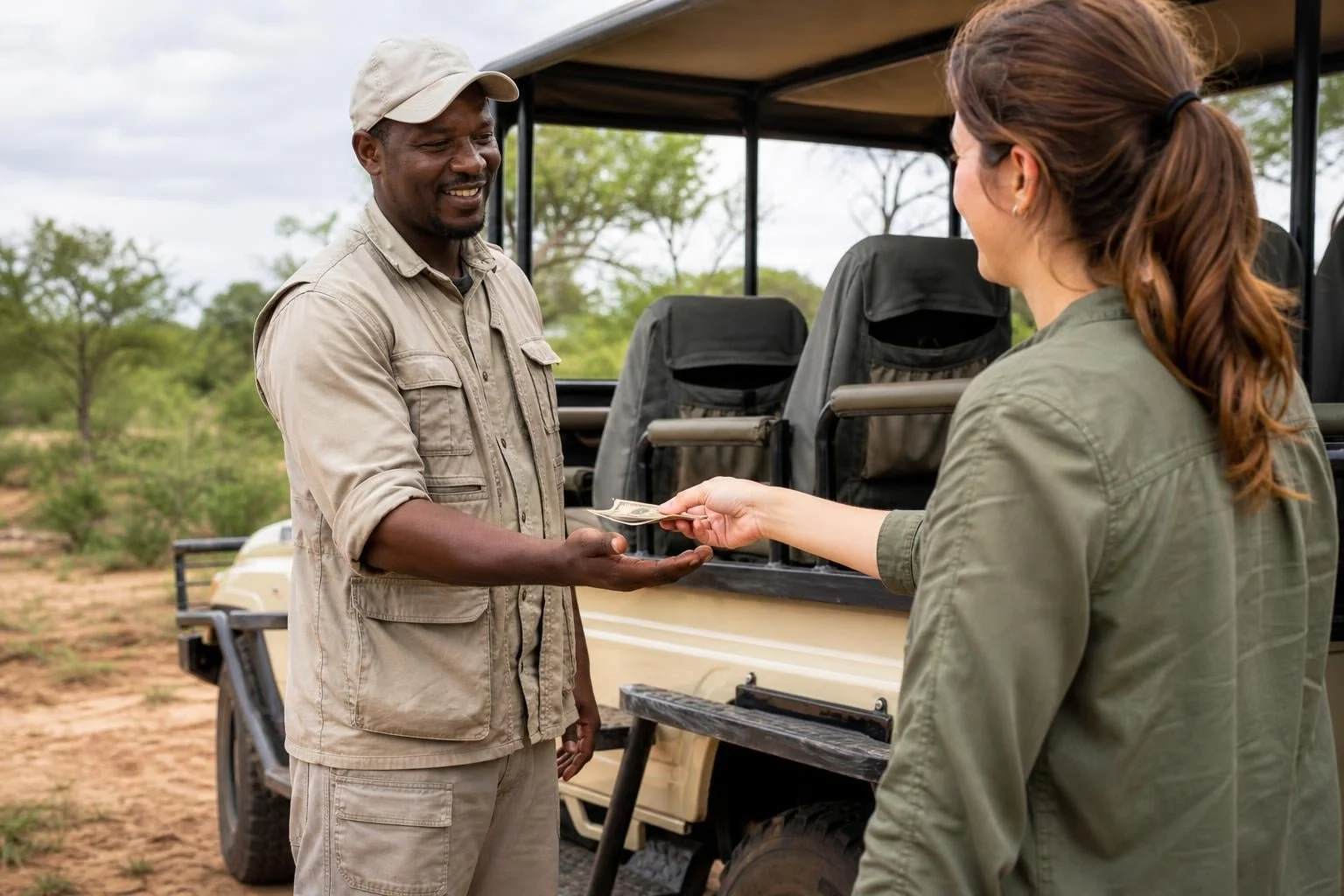
Budget $20 to $30 per person per day to cover tips for your safari guide, lodge staff, and incidental services in Tanzania. Bring crisp US dollar bills from 2009 or newer in small denominations. Tip your driver-guide directly at the end of the safari, and use the lodge tip box for camp staff. For Kilimanjaro climbs, budget $300 to $350 per climber for a 7-day route.
Planning a safari with Duma? We send a tipping sheet with every itinerary.
See Tanzania safari itineraries → https://www.dumaexplorer.com/tanzania
Get a custom quote → https://www.dumaexplorer.com/contact-us
Tipping anxiety is real. You’ve spent months planning a once-in-a-lifetime trip, and now you’re wondering whether you’ll accidentally insult your guide or overpay the wrong person. The good news: Tanzania safari tipping follows clear, well-established customs. Once you understand the system, the stress disappears.
This guide defines every tipping term you’ll encounter, gives concrete dollar amounts for each role, and explains the cultural and economic context behind the practice. Whether you’re heading to the Serengeti, climbing Kilimanjaro, or adding a Zanzibar beach extension, you’ll know exactly how much cash to pack and who it goes to.
For a broader view of what your entire trip will cost, see the Tanzania safari cost breakdown.
Quick Answer: How Much Should You Tip on a Tanzania Safari?
If you're wondering how much to tip on a Tanzania safari, budget $20–30 per person per day for guides and lodge staff combined.
Most travelers tip:
Service
Typical Tip
Safari guide
$10–20 per person/day (group) or $15–25 per person/day (private)
Lodge tip box
$5–15 per person/day
Airport transfer
$2–10
Askari (night guard)
$2–5
Wildlife tracker
$5
Kilimanjaro climb
$300–350 per climber for a 7-day trek
Bring clean US dollar bills from Series 2009 or newer, carry plenty of $1, $5, $10 and $20 bills, and tip your safari guide on the final day while using the lodge tip box for camp staff.
Tanzania Safari Tipping at a Glance
Situation
What Most Travelers Do
Group safari
Tip guide $10–20 per person/day
Private safari
Tip guide $15–25 per person/day
Luxury lodge
Use the communal tip box
Camping safari
Tip guide and cook separately
Kilimanjaro climb
Follow KPAP recommendations
Zanzibar resort
Tip the staff pool plus tour guides separately
Cash currency
USD preferred
Best bill sizes
$1, $5, $10, $20
How Tipping Works in Tanzania: The Basics
Tipping is customary in Tanzania but not mandatory. Nobody will chase you out of a lodge for skipping it. That said, tips are deeply woven into how the safari industry compensates its workers, and choosing not to tip has real consequences for the people who made your trip memorable.
Safari guide base salaries in Tanzania typically range from $200 to $500 per month. Tips can represent 30 to 50 percent of a guide’s total earnings. That gap between base pay and livable income is not an accident. One operator explains candidly that staff actually prefer the tipping system because it allows them to earn a livable wage while staying below the tax threshold. If tips were folded into salaries, the operator would need to charge guests significantly more to cover deductions and overhead.
Context matters here. Tanzania’s gross national income sits at roughly $2.49 per person per day, according to Expert Africa’s economic analysis. A $10 to $20 daily tip from a tourist far exceeds the national daily average. That’s not a reason to feel guilty. It’s a reason to understand that your tip carries real weight.
Why Cash, Not Cards
Tipping by card is not common on safari. Some lodges technically allow it, but card tips often pass through accounting systems and may not reach staff quickly. Cash remains the easiest and most direct method. This is true across the industry, from budget camping safaris to luxury tented camps.
Key Tipping Terms: A Safari Glossary
These are the terms that cause the most confusion. Understanding them before you arrive removes guesswork at the moment it matters.
Askari
The night guard at safari camps who protects the property from wildlife while guests sleep. Askaris work the least desirable shift, all night, every night, and they are almost never included in the lodge tip pool. Practitioners on forums report that tipping the askari $2 to $5 directly per night is a meaningful gesture that most travelers overlook entirely.
Direct Tipping
Handing a tip personally to a specific individual. This is the standard method for safari guides, driver-guides, and any staff member whose personal service you want to recognize. Use an envelope, say “Asante” (thank you in Swahili), and hand it over with your right hand. The left hand is considered impolite in Tanzanian culture.
Driver-Guide
The person who both drives and guides on a Tanzania safari. On most safaris, especially private ones, this is a single individual rather than two separate roles. They are the most important person you will tip and the one whose knowledge, driving skill, and bush instincts define your experience.
Helping Porter
A Kilimanjaro porter who carries an additional duty such as serving as your waiter, washing dishes, or servicing the toilet tent. Helping porters warrant a slightly larger tip than standard porters because of their extra workload.
Kirunje
This is a critical term that almost no tipping guide defines. Kirunje is the practice where extra porters show up at the Kilimanjaro tipping ceremony who did not actually work on your climb. They appear during the celebration hoping to receive a share of the tips. Reputable operators prevent this by using crew manifests and tip distribution reports, but it’s worth knowing the term so you can ask your operator about their safeguards. For more on Kilimanjaro-specific terminology, that resource covers the mountain vocabulary in depth.
KPAP (Kilimanjaro Porters Assistance Project)
The independent organization that advocates fair treatment of porters and is responsible for many of the improved working conditions on Mount Kilimanjaro. KPAP-compliant operators pay minimum wages, limit load weights, and require tip distribution reports so every crew member receives their fair share.
Per Guest Per Day (PGPD)
The standard unit used to calculate safari tips across East Africa. When a source says “$15 per guest per day,” it means each person in the vehicle or lodge tips that amount for each day of the safari. This is the framework the entire industry uses.
Pooled Tips
Tips distributed equally among all back-of-house staff. This is the standard model at lodges and tented camps. Kitchen workers, housekeepers, mechanics, gardeners, and other behind-the-scenes staff all receive an equal share from the communal tip box.
Safari Cook
On camping safaris, the dedicated cook who prepares all your meals in bush conditions. They are tipped separately from porters on Kilimanjaro climbs and separately from the driver-guide on camping safaris.
Series 2009+ Rule
Bring US dollar bills from Series 2009 or newer. The series year is printed below the portrait on the bill. Tanzanian banks and exchange bureaus refuse pre-2009 notes due to past counterfeiting issues. This catches travelers off guard constantly, and practitioners on Reddit confirm that even slightly worn older bills get rejected.
Tip Box (Staff Tip Box)
A shared tipping container, usually located at reception, that lodges and tented camps use to collect gratuities for the entire support team. Dropping your tip in the box rather than tipping individuals is the preferred method at most properties because it ensures fair distribution across the whole team.
Tip Distribution Report
A document each crew member signs after a Kilimanjaro climb, confirming they received their share of tips. KPAP-compliant operators review these reports after every climb to verify fairness. Ask your operator whether they use them.
Tipping Ceremony
On Kilimanjaro, the tipping ceremony is an important and often joyful custom that happens on the last night on the mountain or after descending. Amidst singing and dancing, climbers present their mountain crew with tips. It’s a communal celebration, not an awkward handoff.
Who to Tip and How Much: Quick Reference Table
The numbers below represent the widely accepted ranges across Tanzania’s safari industry. Your actual tip should reflect the quality of service, the length of your trip, and your own budget.
RoleGroup Safari (per person/day)Private Safari (per person/day)NotesSafari guide / driver-guide$10–$20$15–$25Or $30–$50 per vehicle per day on private safarisLodge / camp staff (tip box)$5–$15$5–$15Dropped in the staff tip box at receptionWildlife tracker / spotter$5$5At camps that employ dedicated trackersNight askari (camp guard)$2–$5$2–$5Tip directly, not through the tip boxPersonal butler (luxury camps)N/A$15Tip separately from the main tip boxTransfer / airport driver$2–$10 per transfer$2–$10 per transferDepends on distance and complexityRestaurant waiter (Arusha, etc.)10–15% of the bill10–15% of the billAt standalone restaurants in town
Most travelers set aside $20 to $30 per person per day to comfortably cover guides, drivers, and lodge staff across their trip. For a 7-day safari, that translates to roughly $150 to $350 per person in total tipping cash.
The distinction between group and private safaris matters here. Tipping norms shift depending on whether you’re sharing a vehicle with strangers or have a dedicated guide to yourself. For a deeper comparison, see the guide on private vs. group safari decisions.
Typical Tanzania Safari Tipping Budget
Below are realistic examples of how much travelers usually spend on tips.
Trip Type
Length
Estimated Tips
Budget group safari
4 days
$80–120
Mid-range safari
6 days
$140–220
Luxury private safari
7 days
$200–350
Safari + Kilimanjaro
14 days
$500–700
Kilimanjaro Tipping: A Separate System
Tipping on Kilimanjaro operates differently from safari tipping. The mountain crew is larger (often 8 to 12 people for just two climbers), the amounts are standardized by KPAP guidelines, and the entire process culminates in the tipping ceremony.
KPAP-Recommended Daily Rates
Crew RoleTip Per Day (USD)Lead guide$20Assistant guide$12Cook$12Porter$6
For a typical 7-day Machame Route climb with a crew of 10 (one guide, one assistant guide, one cook, and seven porters), budget approximately $700 to $900 in total tips. That works out to roughly $300 to $350 per climber.
How the Ceremony Works
On the final evening of the trek (or after descending to the gate), the crew gathers for the tipping ceremony. There’s singing, dancing, and genuine warmth. Climbers present tips to the lead guide, who distributes them to the team, or in some cases, climbers hand envelopes directly to each crew member.
Watch for Kirunje
As noted in the glossary above, kirunje is the practice where unauthorized porters appear at the tipping ceremony. The best defense is booking with an operator that maintains crew manifests and requires signed tip distribution reports. If you’re researching Kilimanjaro routes, the Machame route guide covers logistics and crew expectations in detail.
Currency and Cash Rules
Getting your cash right before departure is one of the simplest ways to reduce Tanzania safari tipping stress.
What to Bring
US dollars are the preferred tipping currency throughout Tanzania. Bring bills from Series 2009 or newer. The series year is printed on the front of the bill, just below the portrait. Older bills will be refused by banks, exchange counters, and often by lodge staff who know they can’t deposit them.
Bills should be clean and uncreased. Torn, marked, or heavily wrinkled notes get rejected. This is not an exaggeration. Practitioners on travel forums report being turned away at multiple exchange points for bills with small pen marks.
Denominations to Pack
No competitor tipping guide provides a specific denomination breakdown. Here is a practical packing list for a 7-day safari:
DenominationQuantityPurpose$1 bills10–15Luggage porters, small services$5 bills15–20Daily lodge tip box, transfer drivers, trackers$10 bills10–15Guide tips, larger lodge contributions$20 bills5–8Guide final tips, specialty roles
Total cash to budget: $150 to $350 per person. If you’re also climbing Kilimanjaro, add another $300 to $350 per climber.
Tanzanian shillings (TZS) are useful for small local purchases and tipping in towns, but USD remains standard for all safari and lodge tipping. There are no ATMs inside national parks, so get your cash sorted before entering the bush. For a complete gear and preparation checklist, the East Africa packing list covers what to bring beyond just cash.
Right-Hand Etiquette
Always hand tips with your right hand. In Tanzanian culture, the left hand is considered impolite for exchanges. A simple “Asante” as you hand over the envelope goes a long way.
When and How to Tip
Timing matters. Getting it wrong creates awkwardness that’s easy to avoid.
End of Stay, Not Daily
The standard practice is to tip your safari guide at the end of the safari, not after each game drive. If you’re staying at multiple lodges over a multi-day trip, tip the lodge staff tip box on your last morning at each property.
The Envelope Method
Place your tips in labeled envelopes (one for the guide, one for each tip box, one for any individual staff you want to recognize separately). This keeps things organized, especially on trips that span multiple camps. Some travelers label envelopes by day and role before even leaving home.
Never Leave Cash on the Bed
This is a common mistake. Do not leave cash on the bed when you leave your room or tent. Safari staff who find loose cash will assume it was forgotten and radio the driver or guide to return. It creates confusion and delays. Use the tip box or hand the envelope to a specific person.
Ask About the Lodge Policy
Some lodges prefer all tips go through the communal box. Others allow direct tipping of specific housekeepers or waitstaff. A quick question at check-in clears it up. For insights into how luxury Tanzania safari lodges handle these systems, that guide has useful detail.
Common Tipping Mistakes to Avoid
Tipping for Animal Sightings
This is one of the most damaging mistakes a tourist can make, and it’s worth stating plainly. When guests give bigger tips for finding specific animals, it incentivizes guides to drive off-trail, crowd animals, and do whatever they can to help customers get “the perfect shot.” This is one of the biggest drivers of unethical safari behavior in Tanzania. Tip for professionalism, knowledge, and effort, not for whether a leopard happened to be in a tree.
Overtipping to the Point of Economic Distortion
Expert Africa makes a compelling argument that excessive tips can throw out the balance of the local economy. If a camp assistant ends up earning more than a park ranger thanks to massive tourist tips, it removes the incentive for rangers to pursue that harder, more critical work. One contributor on travel forums noted that many kids now say they want to be safari guides rather than teachers or doctors, not because they love wildlife but because “rich tourists will give me big tips.” Generosity is good. Reckless generosity has unintended consequences.
Bringing Old or Worn US Bills
Already covered, but worth repeating. Pre-2009 series bills and damaged notes will be refused. Check every bill before you leave home.
Not Budgeting Enough Cash
There are no ATMs in the Serengeti or Ngorongoro. If you run out of small bills on day three of a seven-day safari, you’re stuck. Pack more than you think you’ll need. Leftover cash converts easily at the airport. To avoid other common planning errors, the guide on costly safari booking mistakes is worth a read.
Tipping Through One Person Without Transparency
If you hand a lump sum to one staff member and ask them to distribute it, there’s no guarantee it reaches everyone fairly. Use the tip box for lodge staff, and tip your guide directly. On Kilimanjaro, insist on a tip distribution report.
Zanzibar and Extension Tipping
If your Tanzania safari includes a beach extension, tipping norms shift slightly.
At Zanzibar beach resorts, the tip box system works the same way as safari lodges. Budget $10 to $15 per guest per day for the staff pool. Spice tour guides expect $5 to $10 per person. Dive and snorkel guides are typically tipped 10 to 15 percent of the excursion cost.
For gorilla trekking extensions in Uganda or Rwanda, porters who carry your daypack on the trek are tipped $5 to $15 per porter. The trek guide receives $10 to $20 per person. These amounts are separate from any safari tipping. For more on what gorilla trekking in Uganda costs, that resource breaks down the full picture, including permit fees.
Zanzibar-specific budgeting, including accommodation and activity pricing, is covered in the Zanzibar costs and budgets guide.
The Ethics of Tanzania Safari Tipping
Tipping in Tanzania is not just about generosity. It’s about understanding the economic system you’re participating in. A guide who earns $300 a month in base salary and supplements that with $150 to $250 in monthly tips is earning a solid livelihood by local standards. Your tip isn’t charity. It’s a meaningful part of a compensation structure that keeps safari costs accessible while rewarding good service.
The best operators provide tipping guidance before your trip, use transparent distribution systems, and pay fair base wages. When choosing who to book with, ask about their tipping policies, whether they partner with organizations like KPAP, and how they ensure back-of-house staff benefit from guest generosity.
Planning your Tanzania safari tipping in advance, packing the right denominations, and understanding who to tip and when will let you focus on what actually matters: the wildlife, the landscapes, and the people who bring it all together.
Ready to start planning? Explore private Tanzania safari options to see how routes and costs come together.
Frequently Asked Questions
How much should I tip my Tanzania safari guide per day?
The widely accepted range is $10 to $20 per person per day on a group safari and $15 to $25 per person per day on a private safari. Some travelers tip a flat $30 to $50 per vehicle per day on private trips. The high end is appropriate for exceptional service, not the baseline expectation.
Do I tip in US dollars or Tanzanian shillings?
US dollars are the standard tipping currency for safari guides, lodge staff, and Kilimanjaro crews. Bring bills from Series 2009 or newer in small denominations ($1, $5, $10, $20). Tanzanian shillings work for small tips in towns and local restaurants but are not the norm on safari.
What is a tip box at a safari lodge?
A tip box is a shared tipping container at lodge reception where guests deposit gratuities for the entire support team. The money is divided equally among kitchen staff, housekeepers, gardeners, mechanics, and other behind-the-scenes workers. It’s the fairest and most efficient way to tip lodge staff.
How much should I budget for Kilimanjaro tips?
For a 7-day climb with a crew of about 10, budget $700 to $900 in total tips (roughly $300 to $350 per climber). KPAP guidelines suggest $20 per day for the lead guide, $12 per day for assistant guides and cooks, and $6 per day for porters.
Should I tip more if my guide finds rare animals?
No. Tipping based on specific sightings incentivizes guides to drive off-trail, crowd animals, and prioritize spectacle over ethics. Tip for your guide’s professionalism, knowledge, safety awareness, and effort throughout the trip.
When do I give tips on a multi-lodge safari?
Tip the lodge staff tip box on your last morning at each property. Tip your safari driver-guide at the very end of the safari, on the final day. If you had different guides at different camps, tip each one when their service ends.
What is kirunje on Kilimanjaro?
Kirunje is the practice where unauthorized porters appear at the tipping ceremony hoping to receive a share of tips despite not having worked on your climb. Reputable operators prevent this by maintaining crew manifests and requiring signed tip distribution reports.
Can I tip by credit card on safari?
Technically some lodges allow it, but it’s uncommon and unreliable. Card tips may go through accounting systems and not reach staff quickly or directly. Cash remains the safest and most appreciated method across Tanzania’s safari industry.