

Kilimanjaro Food A–Z Guide 2026: Meals, Menus & Tips
TL;DR
Kilimanjaro food is professionally prepared by mountain chefs who cook three hot meals a day plus afternoon tea and snacks, all from a tent kitchen at extreme altitude. Climbers burn 3,000 to 6,000 calories daily but lose 30 to 40 percent of their appetite due to thin air, making food strategy critical to summit success. This glossary covers every term and concept you need to understand, from box lunches to summit night snacks that won’t freeze solid at minus 20°C.
Most people planning a Kilimanjaro climb worry about altitude sickness, fitness, and gear. Food rarely tops the list. But once you understand that your body will burn through 4,000 to 6,000 calories a day while your appetite drops by a third, the stakes become clear. What you eat on Kilimanjaro, when you eat it, and how it’s prepared directly affects whether you reach the summit.
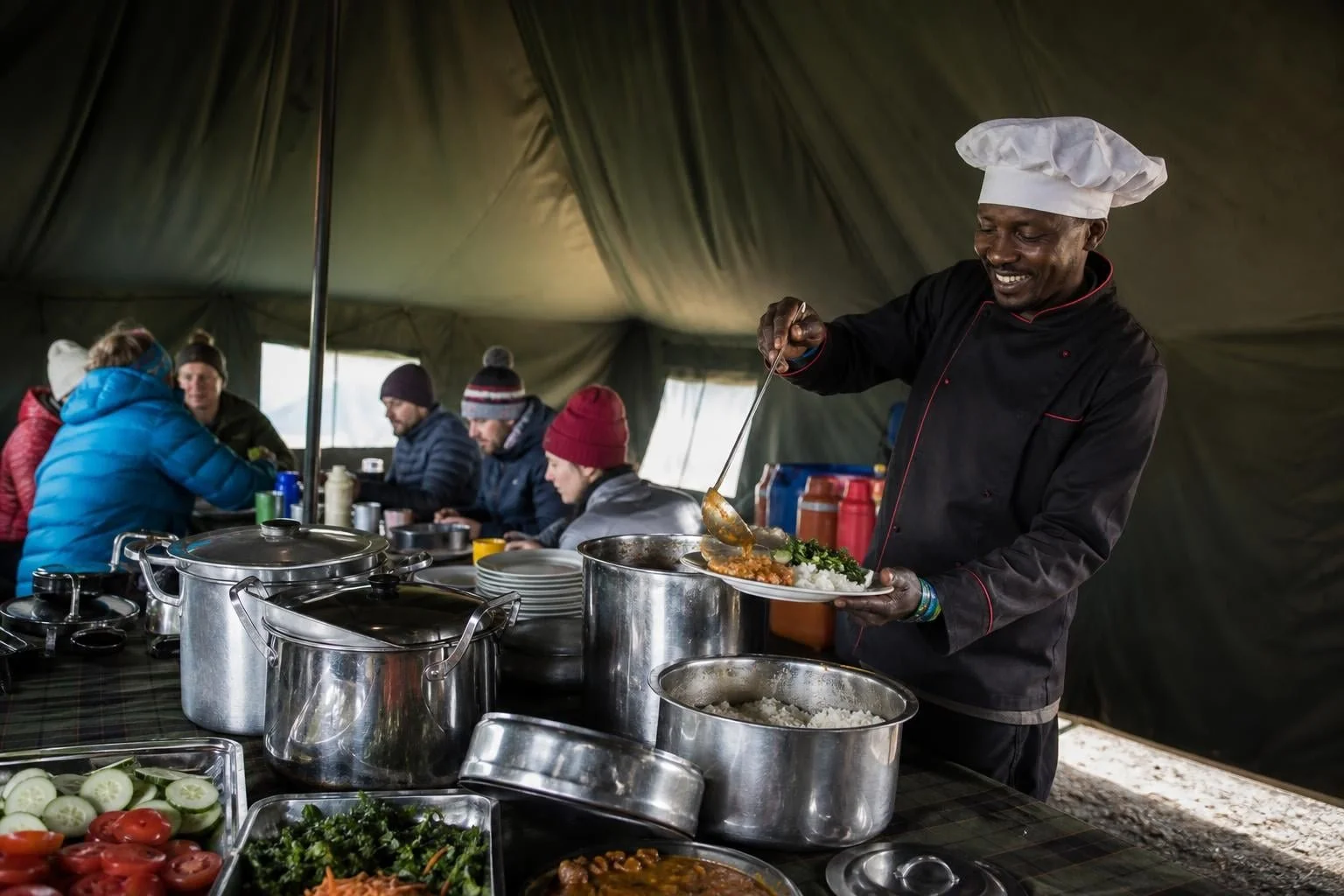
The good news: Kilimanjaro food is far better than most climbers expect. Professional mountain chefs prepare hot three-course dinners in tent kitchens at 4,600 meters. The less good news: altitude changes everything about cooking, eating, and digestion.
This glossary breaks down every food-related term and concept you’ll encounter while planning and climbing Kilimanjaro, organized A to Z for quick reference.
Wondering which route suits you best? Compare all Kilimanjaro routes to see what each climb includes.
What Food Do You Eat on Kilimanjaro? Food on Kilimanjaro consists of three hot meals per day, afternoon tea with snacks, and optional personal snacks carried by each climber. Most trekking companies serve high-carbohydrate meals such as porridge, rice, pasta, potatoes, soup, eggs, vegetables, chicken, beef, fish, and fruit because carbohydrates are easier to digest at high altitude. Drinking 3 to 5 liters of purified water daily and eating regularly despite reduced appetite are among the most important factors for maintaining energy and improving summit success.
Typical daily menu:
|
Meal |
Typical Foods |
|---|---|
|
Breakfast |
Porridge, eggs, toast, pancakes, fruit, tea |
|
Lunch |
Soup or packed lunch with sandwich, fruit and snacks |
|
Afternoon Tea |
Popcorn, biscuits, fruit, tea |
|
Dinner |
Soup, rice/pasta/potatoes, vegetables, meat or fish, dessert |
|
Summit Night |
Porridge, tea, biscuits, energy gels, gummies |
Quick Numbers: Kilimanjaro Food by the Data
|
Metric |
Value |
|---|---|
|
Daily calorie burn (trekking days) |
3,000 to 6,000 kcal |
|
Summit day calorie burn |
Up to 7,000 kcal |
|
Appetite reduction at altitude |
30 to 40% |
|
Typical weight loss during trek |
2 to 10 lbs |
|
Daily water intake target |
3 to 5 liters |
|
Boiling point at Uhuru Peak (5,895m) |
~80°C (vs 100°C at sea level) |
|
Summit night temperatures |
-15°C to -25°C |
|
Meals served per day |
3 + afternoon tea + snacks |
What Does Food Cost on Kilimanjaro?
Many users search this.
Include:
|
Food Item |
Included? |
|---|---|
|
Breakfast |
Yes |
|
Lunch |
Yes |
|
Dinner |
Yes |
|
Afternoon Tea |
Yes |
|
Drinking Water |
Yes |
|
Snacks |
Usually No |
|
Alcohol |
No |
|
Soft Drinks |
Usually No |
Nearly all guided Kilimanjaro climbs include every meal and drinking water in the tour price. Climbers are responsible only for personal snacks, energy gels, sports drinks, and beverages purchased before or after the trek.
A Typical Day of Eating on Kilimanjaro
Before jumping into the glossary, here’s what a standard day looks like in the mess tent:
|
Time |
Meal |
Example Foods |
|---|---|---|
|
6:30 to 7:00 AM |
Breakfast |
Porridge, scrambled eggs, toast, pancakes, sausages, fresh fruit, tea/coffee/hot chocolate |
|
12:00 to 1:00 PM |
Lunch (at camp) |
Hot soup, rice or pasta dish with vegetables, fruit |
|
12:00 to 1:00 PM |
Lunch (on trail) |
Box lunch: sandwich, boiled egg, fruit, biscuits, juice packet |
|
3:30 to 4:00 PM |
Afternoon tea |
Popcorn, biscuits, fresh fruit, hot drinks |
|
6:30 to 7:00 PM |
Dinner |
Soup starter, carb-heavy main (rice/pasta/potatoes with chicken, beef, or fish), vegetables, dessert |
Sample 7-Day Kilimanjaro Menu
People search for this constantly.
Example:
|
Day |
Breakfast |
Lunch |
Dinner |
|---|---|---|---|
|
1 |
Eggs, toast, fruit |
Soup, rice, chicken |
Pasta, vegetables |
|
2 |
Pancakes |
Box lunch |
Beef stew, potatoes |
|
3 |
Oatmeal |
Soup |
Rice, fish |
|
4 |
Eggs |
Pasta |
Chicken curry |
|
5 |
Porridge |
Box lunch |
Potato stew |
|
Summit |
Porridge |
Snacks |
Recovery lunch |
|
Final |
Buffet breakfast |
— |
— |
Now, the full glossary.
The A-to-Z Glossary of Kilimanjaro Food Terms
Afternoon Tea
The mid-afternoon break served after you arrive at camp, typically between 3:30 and 4:00 PM. Expect hot tea, coffee, or hot chocolate alongside popcorn, biscuits, and fresh fruit. It sounds quaint, but afternoon tea serves a real purpose: it replenishes calories burned during that day’s hike and delivers fluids at a time when many climbers forget to drink. Practitioners on Reddit frequently mention afternoon tea as one of the most welcome surprises of the trek.
Altitude Appetite Loss
The frustrating paradox at the heart of Kilimanjaro nutrition. As you climb higher, your body needs dramatically more fuel, but low oxygen suppresses your hunger. Research shows appetite can drop by 30 to 40 percent in the first challenging days at altitude. The body is adjusting to thin air, and climbers must push through and keep eating even when nothing sounds appealing. This is why Kilimanjaro cooks prioritize comfort foods and familiar flavors over complex cuisine. If porridge and toast go down easier than an omelet, that’s what matters.
Boiling Point (at Altitude)
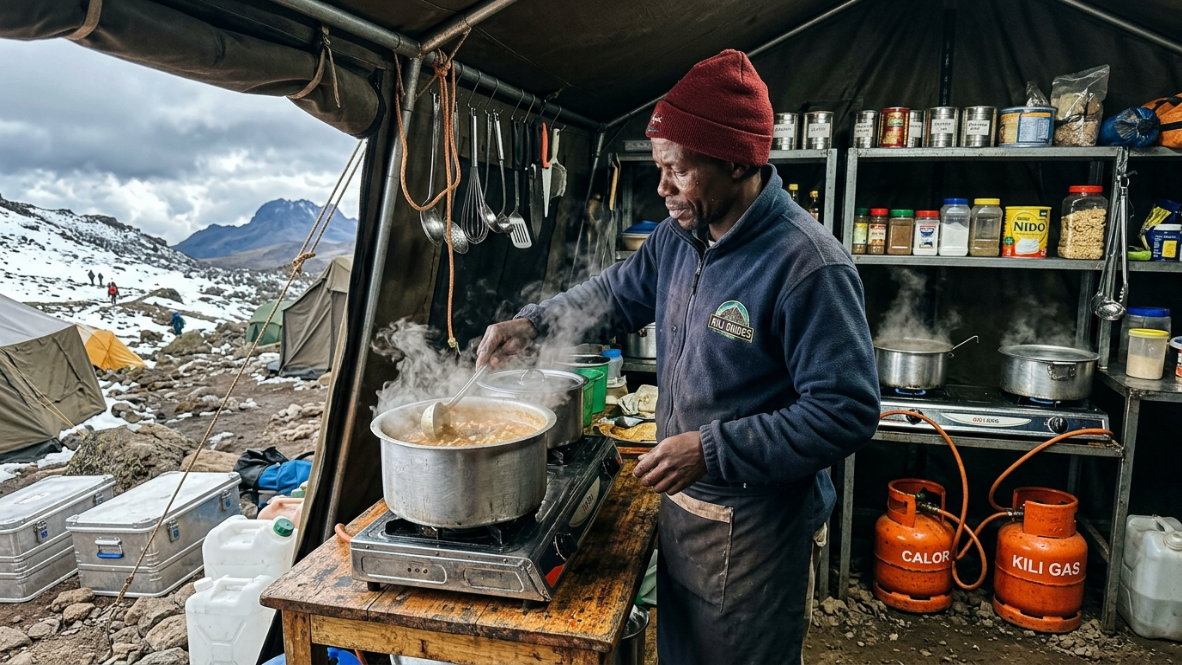
Water boils at 100°C at sea level. At Uhuru Peak (5,895 meters), it boils at roughly 80°C. This single fact reshapes everything about high-altitude cooking. A three-minute egg can take ten minutes to set. Fried food burns on the outside while staying raw inside. Bread rises twice as fast, then collapses into a dense, gooey mess. Mountain chefs learn to work around these physics through years of experience, adjusting cook times, using tightly sealed lids to prevent water from boiling off, and modifying recipes for lower boiling temperatures. Altitude zones affect cooking conditions in ways most climbers never consider.
Box Lunch (Packed Lunch)
A cold meal packed in a cardboard box, carried in your daypack on long hiking days when stopping at a camp kitchen isn’t practical. A typical box lunch includes a sandwich, boiled egg, piece of fruit, biscuits, and a juice packet. On shorter hiking days when you reach camp by midday, lunch is served hot in the mess tent with soup and a cooked main course. Most operators decide the format based on each day’s route and schedule.
Calorie Deficit
The gap between what you burn and what you manage to eat. Climbers burn anywhere from 3,000 to 6,000 calories on regular trekking days, and up to 7,000 calories on summit day. Even with three meals, afternoon tea, and personal snacks, most people can’t fully close that gap. The result: climbers typically lose 2 to 10 pounds during a Kilimanjaro trek, though much of this weight is regained quickly through rehydration and normal eating after descent. The goal isn’t to match every calorie burned, but to minimize the deficit enough to maintain energy for the summit push. Steeper routes with longer summit days burn even more. The Umbwe route, for example, is Kilimanjaro’s steepest climb and demands exceptional fueling discipline.
Carb-Loading
The strategy of eating carbohydrate-rich meals both before and during the climb. At high altitude, the body prefers carbohydrates because they require less oxygen to metabolize than fats or protein. They provide more energy per breath and are easier to digest. This is why dinner plates above 4,000 meters are heavy on rice, pasta, and potatoes with smaller protein portions. Pre-climb carb-loading should start 2 to 3 days before departure, focusing on pasta, rice, bread, oats, and starchy vegetables. On the mountain, the cooks handle it for you.
Cook (Mountain Chef)
The dedicated crew member who prepares every meal on the mountain. This is arguably the most underappreciated role on a Kilimanjaro expedition. Mountain cooks wake before dawn to boil drinking water for the day’s hike. They go to sleep after every climber and porter has been fed. They prepare substantial cooked breakfasts and three-course dinners using gas stoves in a tent at altitudes where physics works against them.
One climber’s review captures the general sentiment: “The food was phenomenal. I’ve been on a few multi-day treks and could hardly believe they could make the food that good.” The cook’s skill directly affects morale, energy, and summit chances. When evaluating operators, the quality and experience of the kitchen crew matters as much as the guides.
Dietary Accommodations
Pre-arranged meal modifications for specific dietary needs. Good operators cater to vegetarian, vegan, gluten-free, halal, Hindu, Jain, kosher, and custom-planned diets. The key is early communication. Climbers should notify their operator well in advance about any food allergies, dietary restrictions, or preferences. Vegan trekkers can typically meet the cook during the pre-climb briefing to discuss and finalize a menu that meets their needs. While options aren’t as extensive as a restaurant kitchen, experienced mountain chefs can accommodate most requirements if given proper notice.
Electrolytes
Minerals like sodium, potassium, and magnesium that your body loses through sweat and the increased respiration rate that comes with altitude. Plain water alone doesn’t replace them. Climbers should pack electrolyte tablets (brands like Nuun or GU Hydration are popular) or powdered sports drink mixes. Adding electrolytes to at least some of your daily water intake helps maintain hydration more effectively than water alone. Avoid overdoing caffeine or alcohol, as both pull water from the body.
Energy Gels and Chews
Quick-absorb, sugar-based supplements that are particularly useful on summit night. When solid food feels impossible to eat at 5,000+ meters in freezing temperatures, products like GU gels or Clif Bloks deliver fast-acting carbohydrates in a form that’s easy to consume. They don’t freeze as hard as bars, they’re lightweight, and they provide a quick energy boost when you need it most. Pack 4 to 6 for summit night specifically.
Food Safety
The hygiene protocols that prevent gastrointestinal illness on the mountain. A combination of exhaustion, altitude, and dietary changes makes climbers more susceptible to traveler’s diarrhea and stomach bugs. Professional mountain chefs adhere to strict practices: wearing uniforms and disposable gloves during meal preparation, working in dedicated cook tents, and using only purified water for cooking and drinking. Climbers should stick to cooked foods and avoid raw vegetables or salads washed in untreated water. Choosing a reputable trekking company with experienced, food-safety-trained cooks is the single best prevention measure.
Gas Cylinders
Portable fuel canisters used by mountain cooks instead of open fires. All cooking on Kilimanjaro is done with gas stoves, not wood. This protects the mountain’s ecosystem and provides a more controllable heat source, which is critical when cooking at altitude where everything behaves differently. The shift to gas cooking has been standard practice for decades and is enforced by park regulations.
Hydration
Drinking 3 to 5 liters of water daily is essential for acclimatization and preventing altitude sickness. Before the climb, aim for about 2 liters daily to establish good hydration. On the mountain, push toward 4 to 5 liters, spread throughout the day rather than consumed in large volumes at once. All drinking water is sourced from mountain springs, collected from streams and rivers, then boiled, cooled, and purified before use. This practice is standard across all operators on Kilimanjaro. Carry a water bottle you can sip from frequently rather than relying solely on mealtimes to hydrate.
Kitchen Tent (Cook Tent)
The separate tent where all food preparation happens, distinct from the mess tent where climbers eat. The kitchen tent contains gas stoves, cooking equipment, insulated cool bags for food storage, and the chef’s workspace. Food is stored in insulated bags to maintain freshness, and all water used in cooking is filtered or treated with purification tablets. Climbers rarely see inside the kitchen tent, but it’s the operational heart of every camp.
KPAP (Kilimanjaro Porters Assistance Project)
An NGO that monitors porter welfare on Kilimanjaro, including food standards. KPAP guidelines require operators to provide porters with three adequate meals per day plus access to hot drinks, proper tents, ground sheets, and appropriate sleeping space. This matters because on cheap tours, porters, the people carrying your food, gear, and tent, are sometimes given minimal or inadequate food themselves. The lower the cost of a climb, the higher the probability that porter treatment standards are being cut. Choosing a KPAP-partnered operator ensures that the crew feeding you is also being properly fed.
Macronutrients
The three categories of fuel your body uses: carbohydrates, protein, and fat. On Kilimanjaro, the balance shifts with altitude. Below 4,000 meters, meals include a more even mix. Above 4,000 meters, carbohydrates dominate because they’re metabolized more efficiently with less available oxygen. Protein portions shrink at higher camps because protein is harder to digest when oxygen is thin. Your mountain chef manages this ratio automatically through menu design, which is why meals get starchier as you climb higher.
Mess Tent (Dining Tent)
The communal tent where climbers sit on camping chairs at a folding table for meals. It’s the social hub of camp life, the place where you share stories from the day’s hike, warm up with hot drinks, and actually sit down after hours of walking. Mess tents are set up and broken down by porters at every campsite. The quality varies by operator. Some provide basic shelters while others set up proper dining spaces with tablecloths and condiments.
Midnight Snack (Pre-Summit Meal)
The meal served around 11:00 PM before the summit push, which typically begins between midnight and 1:00 AM. This is your last hot food before Uhuru Peak. Expect porridge, biscuits, and plenty of hot tea. Eat as much as you can stomach, even if anxiety and altitude have killed your appetite. The calories consumed here will carry you through 6 to 8 hours of climbing in extreme cold and thin air.
Personal Snacks
Self-supplied treats carried in your daypack for between-meal fuel. The best advice comes from experienced climbing operators: if deciding between high nutritional value or great taste, choose great taste. It’s more important that a snack is appealing at altitude than technically “good” for you. The provided meals handle your core nutritional needs.
Limit quantities to 1 to 1.5 of each snack type per day of climbing. People who bring three or four types per day end up with a big bag of leftovers. Best categories: energy bars, trail mix, dried fruit, gummies or candy, jerky, and electrolyte tablets. See our complete packing list for specific snack quantity guidance.
Porridge
The standard Kilimanjaro breakfast base. Warm, high-carb, and easy to digest even when altitude has dulled your appetite. Most mornings start with porridge alongside eggs, toast, and fruit. It’s not glamorous, but it’s the single most reliable way to get calories into your body early in the day. Some operators offer oatmeal with honey, cinnamon, or brown sugar to make it more palatable.
Pre-Climb Nutrition
What you eat in the days and weeks before your climb matters more than most people realize. For 2 to 3 days before departure, focus on a carb-rich diet to fill your body’s glycogen stores. Longer term, aim for 1.2 to 1.5 grams of protein per kilogram of body weight each day from sources like chicken, fish, beans, lentils, and eggs. Prioritize antioxidant-rich fruits and vegetables and fiber-rich whole grains. Start this dietary shift as soon as you know you’re going to climb. Training and nutrition work together, and our Kilimanjaro training glossary covers the fitness side of that equation.
Purified Water
Mountain stream water that has been boiled, filtered, or chemically treated before being used for drinking, cooking, and brushing teeth. Every reputable operator on Kilimanjaro follows this protocol. The cook boils water each morning for the day’s hike, then cools it for climbers to fill their bottles. Some operators also use filtration systems or purification tablets as a backup. Never drink directly from streams, even if the water looks crystal clear.
Summit Night Snacks
Freeze-resistant foods chosen specifically for the minus 15°C to minus 25°C conditions of summit night. This is where Kilimanjaro food strategy gets tactical. Most foods turn rock-hard at these temperatures. Chocolate bars become frozen bricks (climbers have literally chipped teeth trying to bite them). Protein bars are nearly as bad.
What actually works: cookies and biscuits stay relatively soft even when frozen. Gummy candies remain chewable. Dried fruit holds up well. Energy gels and chews are designed to stay pliable in cold. Pack these in an interior jacket pocket where body heat helps keep them accessible. One YouTube climber walkthrough noted that keeping gels inside a base layer pocket was the difference between being able to eat and going without fuel for hours.
Foods to Avoid on Kilimanjaro
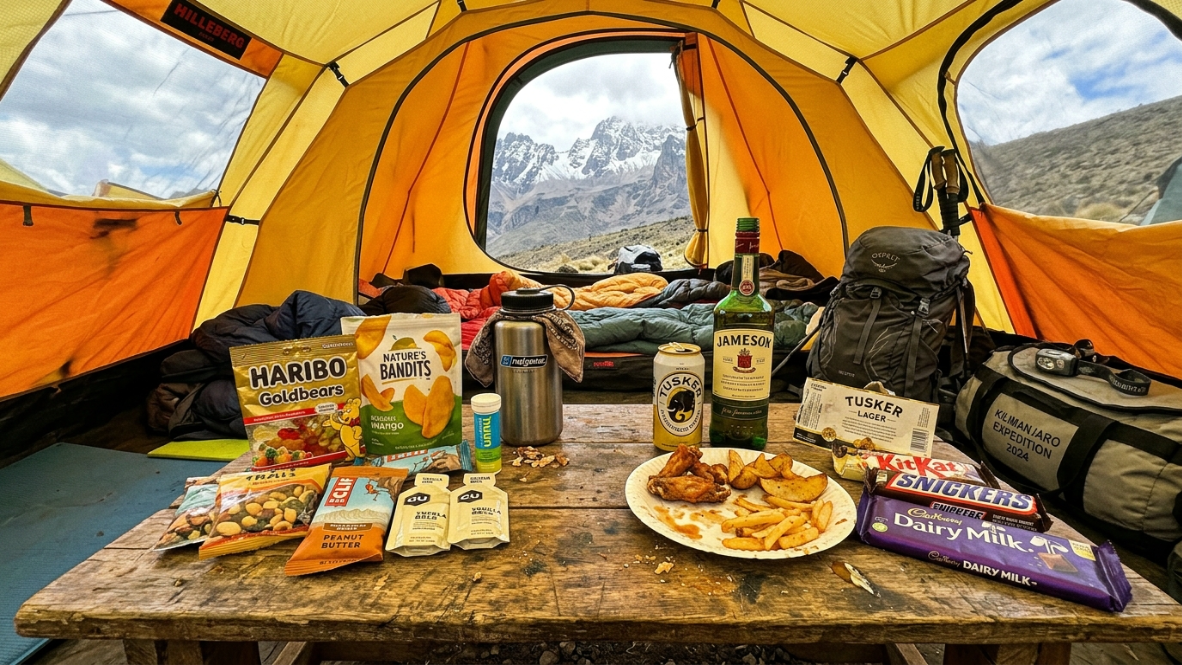
Example
|
Avoid |
Why |
|---|---|
|
Heavy fried foods |
Hard to digest |
|
Alcohol |
Dehydration |
|
Excess caffeine |
Can worsen dehydration |
|
Large protein-heavy meals |
Slower digestion |
|
New supplements |
May upset stomach |
Thermos
An essential summit night item. Filled with hot sweet tea or honey-water by the cook before your midnight departure, a thermos keeps liquid drinkable when water bottles and hydration bladders freeze solid. At minus 20°C, exposed water turns to ice within an hour or two. A good thermos with hot, sugary liquid provides both hydration and quick-acting calories. Bring one that holds at least 500ml, and insulate water bottles as a backup.
Three-Course Dinner
The standard evening meal format on Kilimanjaro: a soup starter, a carbohydrate-and-protein main course, and fruit or dessert. Dinner is the most substantial meal of the day and the one that consistently surprises climbers with its quality. Mains rotate between rice, pasta, and potato dishes served with chicken, beef, or fish alongside cooked vegetables. The soup course is strategic: warm liquid aids hydration while the calories from the broth add up. Dessert is often fresh fruit or a simple cake.
Ugali
Traditional Tanzanian stiff maize porridge, sometimes served on the mountain as a side dish or dinner starch. It’s made by cooking maize flour in boiling water until it forms a thick, solid mass, then eaten by hand with stews or vegetables. Ugali is a cultural staple across East Africa and provides dense carbohydrate fuel. Not every operator serves it, but encountering it on the mountain is a connection to the local food tradition. For more on Tanzanian food culture, the Zanzibar food guide covers the coastal culinary side of the country.
Water Purification Tablets
Chemical treatments (typically chlorine dioxide or iodine-based) added to water as an alternative or supplement to boiling. Mountain crews primarily rely on boiling, but purification tablets serve as a reliable backup, especially on days when fuel or time is limited. Some climbers carry their own tablets for peace of mind. They’re lightweight, cheap, and provide an extra layer of safety for anyone with a sensitive stomach.
Why Kilimanjaro Food Quality Depends on Your Operator
Not all Kilimanjaro food is created equal. The quality of meals, the skill of the cook, the freshness of ingredients, and the hygiene standards all depend on which operator you book with. Budget operators cut costs somewhere, and food is often the first place they do it, followed by porter treatment.
A reputable operator employs experienced mountain chefs, sources fresh ingredients in Moshi or Arusha before each climb, stores food in insulated cool bags, and follows strict hygiene protocols. They also feed their porters properly, with three full meals a day plus hot drinks as required by KPAP standards.
The connection between food quality and summit success isn’t abstract. Climbers who eat well acclimatize better, sleep better, and have more energy for the summit push. Those stuck with bland, insufficient meals face an uphill battle (literally) with less fuel in the tank.
Explore Lemosho route details to see what a fully supported Kilimanjaro climb includes.
Frequently Asked Questions
Is the food on Kilimanjaro good?
Yes, and it consistently surprises climbers. Professional mountain chefs prepare hot, multi-course meals from scratch in tent kitchens. Breakfasts include eggs, porridge, toast, and fresh fruit. Dinners feature soup starters, carb-heavy mains with protein, and dessert. Climber reviews across operators regularly describe the food as far exceeding expectations for a mountain expedition.
Can I get vegetarian or vegan food on Kilimanjaro?
Absolutely. Most reputable operators accommodate vegetarian, vegan, gluten-free, halal, kosher, and other dietary needs. The key is notifying your operator well in advance. Vegan climbers can usually meet the cook during the pre-climb briefing to discuss specific menu adjustments.
What snacks should I bring for a Kilimanjaro climb?
Bring 1 to 1.5 of each snack type per day: energy bars, trail mix, dried fruit, gummy candies, jerky, and electrolyte tablets. Choose taste over nutritional perfection, because if it’s not appetizing at altitude, you won’t eat it. Avoid chocolate bars and protein bars for summit night, as they freeze solid. Energy gels, gummies, and cookies hold up much better in extreme cold.
How many calories do you burn climbing Kilimanjaro?
Regular trekking days burn 3,000 to 6,000 calories depending on the route’s steepness, your pace, and pack weight. Summit day can burn up to 7,000 calories. Even with three meals, afternoon tea, and snacks, most climbers operate at a calorie deficit, which is why losing 2 to 10 pounds during the trek is normal.
Is the water safe to drink on Kilimanjaro?
All drinking water on the mountain is sourced from local springs and streams, then boiled, cooled, and sometimes filtered or treated with purification tablets before use. This is standard practice for every operator. Do not drink directly from streams. The cook prepares boiled water each morning for the day’s hike.
Why do meals become more carb-heavy at higher altitude?
At high altitude, the body metabolizes carbohydrates more efficiently than fats or protein because carbs require less oxygen per calorie produced. They also digest more easily when the GI system is stressed by thin air. Mountain chefs deliberately shift toward heavier rice, pasta, and potato portions above 4,000 meters.
What do you eat on summit night?
Before the midnight departure, the cook serves a hot pre-summit meal (porridge, biscuits, hot tea) around 11:00 PM. During the climb itself, you rely on personal snacks (gummies, cookies, dried fruit, energy gels) kept in interior pockets to prevent freezing, plus hot sweet tea from a thermos. Solid meals resume after summiting and descending to a lower camp.
Does the timing of my climb affect food quality?
Seasonal conditions affect food storage and preparation. Colder months mean ingredients freeze more quickly, and cooking takes longer at altitude. Wetter seasons can complicate camp logistics. Choosing the right month affects many aspects of your climb, including the food experience.