Zanzibar Food Guide 2026: 15 Must-Try Dishes & Where to Eat
TL;DR
Zanzibar’s food is shaped by centuries of Indian Ocean trade, blending Swahili, Indian, Arab, and Portuguese flavors into something you won’t find anywhere else in East Africa. Street food costs as little as $1 per item, mid-range restaurant meals run $6 to $12, and the best dishes live at night markets and local holes-in-the-wall rather than resort dining rooms. This guide covers 15 must-try dishes with prices, where to eat them, and practical tips for navigating everything from Forodhani Gardens to Ramadan iftar feasts.
The Zanzibar Food Takeaway: What to Eat & What it Costs
If you only have 24 hours, the three non-negotiable dishes are Zanzibar Pizza (street food), Urojo (island-style soup), and Pweza wa Nazi (octopus coconut curry). In 2026, expect to pay $1–$3 for street snacks and $10–$20 for a mid-range restaurant dinner. The best local flavor is found at Lukmaan Restaurant and the Forodhani Gardens Night Market.
Why Zanzibar Food Is Unlike Anything Else in East Africa
For centuries, Zanzibar sat at the center of Indian Ocean trade routes. Omani sultans, Indian merchants, Portuguese colonizers, and Bantu farmers all passed through, and each group left something in the kitchen. The result is a cuisine that doesn’t exist on the Tanzanian mainland, or anywhere else in Africa for that matter.
Zanzibari food is defined by what the island provides: fresh seafood pulled from warm coastal waters, tropical fruits ripening year-round, and staples like cassava, plantains, and coconut. But the real signature comes from the spices. Cloves, cardamom, cinnamon, black pepper, and turmeric grow on the island itself, and they find their way into nearly every dish. If you’ve been exploring Tanzania’s cultural heritage on a mainland safari, the food shift when you arrive in Zanzibar is immediate and welcome.
The difference between Zanzibar and mainland Tanzania shows up on the plate.Mainland meals tend toward ugali (maize porridge) with grilled meat. Zanzibar’s food leans on coconut milk, tamarind, and layered spice blends that feel closer to coastal India or Oman than to Arusha. Travelers coming off a safari, where lodge meals are often Western-influenced and standardized, find Zanzibar’s independent food scene a genuine culinary reset.
At-a-Glance: 15 Must-Try Zanzibar Foods
| Dish | Type | Price (USD) | Best For | Where to Try | Vegetarian / Vegan |
|---|---|---|---|---|---|
| Zanzibar Pizza | Street food | $1.20 – $2 | First night in Stone Town | Forodhani Gardens | Available (veggie/sweet versions) |
| Urojo (Zanzibar Mix) | Street food / soup | $1 – $2 | Adventurous eaters | Stone Town back alleys | No (usually) |
| Pilau | Rice dish | $2 – $3 | Everyday comfort food | Lukmaan Restaurant | Available |
| Biryani | Rice dish | $3 – $5 | Special occasion meals | Lukmaan; Ramadan iftars | Available |
| Pweza wa Nazi | Seafood curry | $8 – $15 | Seafood lovers | Fisherman’s; beach restaurants | No |
| Samaki wa Kupaka | Grilled fish | $10 – $20 | Sit-down dinners | The Rock Restaurant | No |
| Mishkaki | Street food | $0.80 – $1.60 | Quick snacks | Forodhani; street vendors | No |
| Chips Mayai | Street food | $1 – $2 | Late-night cravings | Any local diner | Vegetarian |
| Mandazi | Breakfast pastry | $0.30 – $0.50 | Morning with tea | Street carts, mornings | Vegan |
| Nyama Choma | Grilled meat | $5 – $10 | Casual group dinners | Local joints outside tourist areas | No |
| Kisamvu | Side dish | $2 – $4 | Cultural immersion | Cooking classes; Lukmaan | Vegan |
| Wali wa Nazi | Side dish | $1 – $2 | Pairs with everything | Everywhere | Vegan |
| Vitumbua | Breakfast snack | $0.30 – $0.50 | Morning street food | Stone Town morning stalls | Vegan |
| Samosas | Snack | $0.50 – $1 | Anytime snacking | Every market and stall | Available |
| Zanzibar Chocolate | Sweet snack | $0.50 – $1 | Edible souvenir | Street vendors | Vegan |
Zanzibar Food Cheat Sheet: Dietary & Safety
| Category | Best Dish Options | SEO / Practical Tip |
|---|---|---|
| Vegan / Plant-Based | Kisamvu, Wali wa Nazi, Vitumbua, Mandazi | Ask for "Hamna nyama" (No meat). |
| Gluten-Free | Wali wa Nazi, Grilled Seafood (ensure no flour rub), Fresh Fruit | Most street snacks use wheat flour. |
| Best Value ($) | Chips Mayai, Mishkaki, Samosas | Stick to back-alley stalls for $1 deals. |
| Food Safety | Hot-off-the-grill Mishkaki, Fresh Sugarcane Juice | Avoid pre-plated seafood at Forodhani. |
What Zanzibar Food Actually Costs
Almost no Zanzibar food guide includes real prices, which leaves travelers guessing. Here’s what to expect in 2025:
Street food snacks (Zanzibar pizza, mishkaki, samosas): $0.50 to $3 per item
Local restaurant lunch (pilau, biryani, chips mayai with a drink): $5 to $10
Mid-range restaurant dinner (seafood curry, grilled fish, coconut rice): $15 to $30
Fine dining (The Rock, Emerson on Hurumzi): $30 to $60+
Average daily food spend: roughly $30 per person for travelers mixing street food and restaurants
Most street vendors and smaller restaurants accept cash only in Tanzanian shillings. Mid-range and upscale restaurants increasingly take cards. Bring small bills (1,000 and 2,000 TZS notes) for market stalls. For the full picture of what a Zanzibar trip costs beyond food, see our Zanzibar cost guide.The 15 Foods
1. Zanzibar Pizza
Best for: Your first night in Stone Town, when you’re jet-lagged but hungry.
Zanzibar pizza has nothing to do with Italian pizza. It starts as a ball of dough that gets stretched thin, piled with your choice of fillings (chicken, beef, onion, egg, cheese, mayonnaise, chili sauce), then folded into a square and pan-fried on a flat griddle until crispy. Sweet versions with Nutella and banana exist too.
Street food format, cooked to order in about 3 minutes
The dough is closer to a stuffed crepe than any bread you’d associate with pizza
Savory versions are the move; sweet ones can be cloying
Price: 3,000 to 5,000 TZS ($1.20 to $2)
Where to try it: Forodhani Gardens Night Market, specifically the “Mr. Mango” stall that travelers consistently recommend
Good to know: Every Forodhani stall makes these, and quality varies. Stick with the stalls that have the longest lines of locals, not the ones with the most aggressive vendors calling to you in English.
2. Urojo (Zanzibar Mix)
Best for: Adventurous eaters who want the single dish that best represents Zanzibar’s food identity.
This tangy, soup-like street food combines a turmeric-infused mango broth with fritters (bhajia), boiled potatoes, hard-boiled eggs, and spiced meat or seafood. It gets topped with coconut chutney, chili sauce, and tamarind. It’s called “Zanzibar Mix” because the whole multicultural history of the island seems to be in one bowl.
The broth is sour and warming, not what most visitors expect
Textures range from crunchy (fritters) to soft (potatoes) to chewy (meat)
Considered genuine comfort food by Zanzibaris, not a tourist novelty
Price: $1 to $2 at street stalls
Where to try it: Small local stalls in Stone Town's back alleys near the heart of Stone Town; also at Forodhani
Good to know: Practitioners on Reddit’s Zanzibar community frequently name urojo as the single dish that surprised them most. The flavor profile is unlike anything in Western food, so approach it with an open mind. If you don’t like sour or tangy, this one may challenge you.
3. Pilau
Best for: A cheap, filling lunch that locals eat every day.
Pilau is spiced rice cooked directly in the meat broth so every grain absorbs the flavor. The spice mix, heavy on cloves, cardamom, cinnamon, black pepper, and cumin, came to Zanzibar with Omani traders. Every Friday, pilau and biryani appear on the table in most Zanzibari homes, a tradition with deep cultural and religious roots.
The rice should be deeply golden and aromatic, not white
Served with a side of kachumbari (fresh tomato and onion salad) and sometimes a banana
Easily the best value-for-money meal on the island
Price: 5,000 to 8,000 TZS ($2 to $3) at local restaurants
Where to try it: Lukmaan Restaurant in Stone Town, a local institution that consistently gets recommended by both residents and travelers
Good to know: Pilau at tourist-oriented restaurants tends to be milder and less interesting. The best versions come from the places with Swahili-only menus and plastic chairs.
4. Biryani
Best for: Friday lunches, celebrations, and Ramadan iftars.
Biryani looks similar to pilau but the technique is different. The rice and curry are cooked separately, then layered together so the flavors meld during a final slow steam. This extra step makes it a celebration dish, common at weddings, religious holidays, and Friday gatherings.
Richer and more complex than pilau, with distinct layers visible in the serving
Typically chicken, goat, or beef
During Ramadan, biryani appears everywhere as part of iftar spreads
Price: $3 to $5 at local restaurants; higher at upscale spots
Where to try it: Lukmaan Restaurant; also widely available during Ramadan evenings across Stone Town]
Good to know: Reddit users in Zanzibar travel threads consistently put biryani near the top of their must-eat lists, often rating it above the more famous Zanzibar pizza. If you only have time for one rice dish, pick biryani over pilau.
5. Pweza wa Nazi (Octopus in Coconut Curry)
Best for: Seafood lovers who want the signature Zanzibar food experience.
Tender octopus simmered in creamy coconut milk with lime juice, curry, cardamom, garlic, and cinnamon. This is arguably the most distinctly Zanzibari dish on the island, connecting the ocean to the spice farms in a single plate. The octopus is caught by local spear-fishermen wading the tidal flats at low tide. Zanzibar’s octopus fisheries support an estimated 7,300 individuals, roughly 30% of them women, so ordering this dish directly supports coastal livelihoods.
The coconut curry should be thick, not watery
Best paired with wali wa nazi (coconut rice) to soak up the sauce
Quality depends entirely on how fresh the octopus is and how long it was cooked
Price: $8 to $15 at mid-range restaurants
Where to try it: Fisherman’s Seafood & Grill (rated 4.8 stars from over 2,100 reviews on TripAdvisor); beach restaurants in Nungwi and Jambiani
Good to know: Overcooked octopus turns rubbery. At Forodhani, the pre-grilled octopus skewers sit around for a while and can be tough. For pweza wa nazi, order it at a sit-down restaurant where it’s cooked fresh.
6. Samaki wa Kupaka (Grilled Fish in Coconut Sauce)
Best for: A proper sit-down dinner with a view.
A whole fish (usually red snapper or kingfish) grilled over charcoal, then simmered in a coconut milk sauce infused with turmeric, garlic, and chili. This is the signature Swahili coast fish preparation, found from Mombasa to Mozambique but perfected in Zanzibar.
The fish is typically served whole, head and tail included
The coconut sauce is lighter than the pweza wa nazi curry
Pairs well with a cold Kilimanjaro beer or fresh passion fruit juice
Price: $10 to $20 depending on the restaurant
Where to try it: The Rock Restaurant in Michamvi Pingwe (book well ahead, it’s literally on a rock formation in the ocean); Emerson on Hurumzi for a rooftop dinner with live taarab music
Good to know: The Rock Restaurant is about 45 minutes from Stone Town and is accessible only by foot at low tide or by boat at high tide. It’s as much a photo opportunity as a meal, and the food is solid if not extraordinary. For pure flavor, smaller beach restaurants in Jambiani or Paje along Zanzibar’s best beaches often do this dish better.
7. Mishkaki (Meat Skewers)
Best for: Grabbing something quick while walking through Stone Town in the late afternoon.
Chunks of beef or chicken marinated in a blend of spices and sauce, threaded onto sticks, and grilled over charcoal to a slight char. You’ll smell these before you see them. By mid-afternoon, alleyways throughout Stone Town fill with smoke from mishkaki vendors setting up for the evening.
Usually beef or chicken; occasionally goat
Served with a squeeze of lime and sometimes a chili dipping sauce
The ultimate grab-and-go Zanzibar street food
Price: 2,000 to 4,000 TZS ($0.80 to $1.60) per skewer
Where to try it: Forodhani Gardens; street vendors throughout Stone Town
Good to know: At Forodhani, agree on the price per skewer before the vendor starts grilling. Some travelers on TripAdvisor report vendors quoting one price and charging another, especially to tourists who look uncertain.
8. Chips Mayai (French Fry Omelette)
Best for: Late-night comfort food after a long day.
French fries folded into an omelette, served with kachumbari (tomato and onion salad), chili sauce, and mayo. Nothing fancy. Nothing pretending to be fancy. This is the dish every Zanzibari eats when they’re hungry and in a hurry, and it shows up on virtually every local menu.
The ultimate Tanzanian fast food, loved across the country
Vegetarian-friendly (no meat, just eggs and potatoes)
Best eaten fresh, when the fries are still crispy inside the egg
Price: $1 to $2
Where to try it: Any local diner or street stall; also at Forodhani Gardens
Good to know: Chips mayai is one of those dishes that Reddit travelers consistently rave about despite its simplicity. One thread on the Zanzibar subreddit called it “the sleeper hit” of Zanzibari food. Don’t skip it because it sounds ordinary.
9. Mandazi (Swahili Doughnuts)
Best for: Breakfast with spiced tea, ideally before 8 AM.
Triangular pieces of deep-fried dough, lightly sweetened, flavored with cardamom or coconut milk. They’re the Swahili coast’s answer to a doughnut, though less sweet and more bread-like. Always paired with chai, they’re the way most Zanzibaris start the day.
Available from street carts starting at dawn
The cardamom flavor is subtle but present
They go stale quickly, so eat them within an hour of buying
Price: $0.30 to $0.50 for two or three pieces
Where to try it: Morning street carts around Stone Town, especially near Darajani Market
Good to know: Mandazi are best before about 9 AM, when they’re freshest. By midday the ones sitting on vendor trays have hardened. If they don’t give slightly when you squeeze, move on to the next cart.
10. Nyama Choma (Grilled Meat)
Best for: A casual evening meal away from the tourist circuit.
Slow-grilled goat, beef, or chicken, this is a staple across all of East Africa. In Zanzibar, the marinades incorporate local spice blends that make it taste noticeably different from mainland versions. The meat is typically ordered by weight and grilled fresh.
Usually served with ugali or chips and kachumbari
The Zanzibari version uses more aromatic spices than the mainland style
This is a social dish, ordered with friends around a communal plate
Price: $5 to $10 for a serving
Where to try it: Local “nyama choma joints” outside the tourist areas; ask your hotel staff for their favorite spot
Good to know: Nyama choma spots catering to locals often don’t have English menus. Point at what other tables are eating, or use basic Swahili: “nyama ya mbuzi” (goat) or “nyama ya ng’ombe” (beef).
11. Kisamvu (Cassava Leaves in Coconut Milk)
Best for: Travelers who want to eat what Zanzibari families actually eat at home.
Cassava leaves pounded with garlic, onion, chili, and salt, then boiled and finished with rich coconut milk. This is a daily staple in Zanzibari households but almost never appears on tourist food lists. It’s the kind of dish you’d eat sitting on a mat in someone’s living room, and the flavor is deeper and more interesting than it sounds.
Vegan by default
The coconut milk gives it a creamy, slightly sweet finish
One of the best examples of the food gap between what tourists eat and what locals eat
Price: $2 to $4 as a side at local restaurants
Where to try it: Cooking classes like Mamas of Zanzibar, where you prepare it from scratch starting at the local market; also at Lukmaan Restaurant
Good to know: If you take a Zanzibari cooking class, kisamvu will almost certainly be on the menu. That’s the best context to try it, surrounded by the cultural explanation that makes the dish meaningful.
12. Wali wa Nazi (Coconut Rice)
Best for: Accompanying literally every other dish on this list.
Rice cooked in coconut milk instead of water. Simple, foundational, and omnipresent. This is the default starch in Zanzibar, replacing the ugali that dominates the mainland. The coconut gives it a subtle sweetness and richness that elevates whatever it’s served alongside.
Vegan
Appears on every restaurant menu, local and upscale alike
The quality varies more than you’d expect; good wali wa nazi should be fluffy, not gummy
Price: $1 to $2 as a side
Where to try it: Everywhere on the island. You’ll eat this daily.
Good to know: After several days in Zanzibar, you may get tired of coconut in everything. That’s normal. The island’s cuisine runs on coconut milk the way French cooking runs on butter.
13. Vitumbua (Coconut Rice Pancakes)
Best for: A light morning snack alongside Zanzibari coffee.
Small, slightly sweet pancakes made from rice flour, coconut milk, and cardamom, cooked in a special round mold that gives them their distinctive shape. They’re eaten for breakfast or as an afternoon snack, and they pair perfectly with a cup of kahawa.
Vegan
The texture is denser than a Western pancake, almost like a rice cake
Usually sold in bags of five or six from morning vendors
Price: $0.30 to $0.50 for several pieces
Where to try it: Morning street stalls in Stone Town, often from the same vendors selling mandazi
Good to know: Vitumbua are best when still warm. The cardamom and coconut flavors fade as they cool. Buy them from vendors who are actively cooking, not from a pre-made stack.
14. Samosas
Best for: Anytime snacking between meals.
The Zanzibar version of samosas reflects the island’s Indian heritage but uses local spice blends that set them apart. Filled with spiced minced meat or vegetables, wrapped in a thin pastry, and deep-fried until golden. They’re sold at every market, food stall, and street corner.
Vegetable samosas are widely available and fully vegetarian
The pastry should be thin and crispy, not thick and doughy
Often sold alongside bhajia (chickpea-battered fritters)
Price: $0.50 to $1 each
Where to try it: Darajani Market, Forodhani Gardens, or any food stall in Stone Town
Good to know: Samosas that have been sitting in a display case for hours will be soggy. Look for vendors frying them fresh. The oil should be hot and the samosas should sizzle when they go in.
15. Zanzibar Chocolate (Sesame Bars)
Best for: An edible souvenir to bring home.
Despite the name, Zanzibar chocolate contains no chocolate. It’s a dense, chewy bar made from toasted sesame seeds bound with rich honey, cut into small diamond-shaped pieces. Locals call it “chocolate” as a term of endearment for the island’s favorite sweet, and travelers describe it as highly addictive once they try it.
Vegan
Small, portable, and shelf-stable, which makes it a great gift
The honey and sesame combination is simple but satisfying
Price: $0.50 to $1 for a small bag
Where to try it: Street vendors throughout Stone Town and Darajani Market
Good to know: The quality depends on the freshness of the sesame and the quality of the honey. If a piece tastes stale or overly hard, try a different vendor. The good stuff should be slightly chewy, not rock-solid.
Zanzibar Drinks Worth Trying
The Zanzibar food experience extends well beyond solid meals. Four beverages deserve attention:
Kahawa (Arabic-style Coffee): Tiny cups of black, intensely flavored coffee spiced with cardamom, served by mobile vendors who carry ornate brass coffee pots. Jaws Corner in Stone Town is the most famous spot, a gathering place where locals debate politics over coffee for about $0.25 a cup.
Sugarcane Juice: Freshly pressed through a hand-cranked wooden machine, sometimes spiked with ginger or a squeeze of lime. Sold from carts throughout Stone Town. Roughly $0.50 per glass.
Tangawizi Tea: Ginger-spiced tea, strong and warming, the beverage of choice in the evening. Most restaurants serve it, and it pairs well with mandazi.
Fresh Tropical Juice: Mango, passionfruit, tamarind, and watermelon juices are available year-round, though mango peaks in April and December and lychee appears in May. A glass of fresh juice costs $1 to $2 at most spots.
Where to Eat in Zanzibar
Street Food
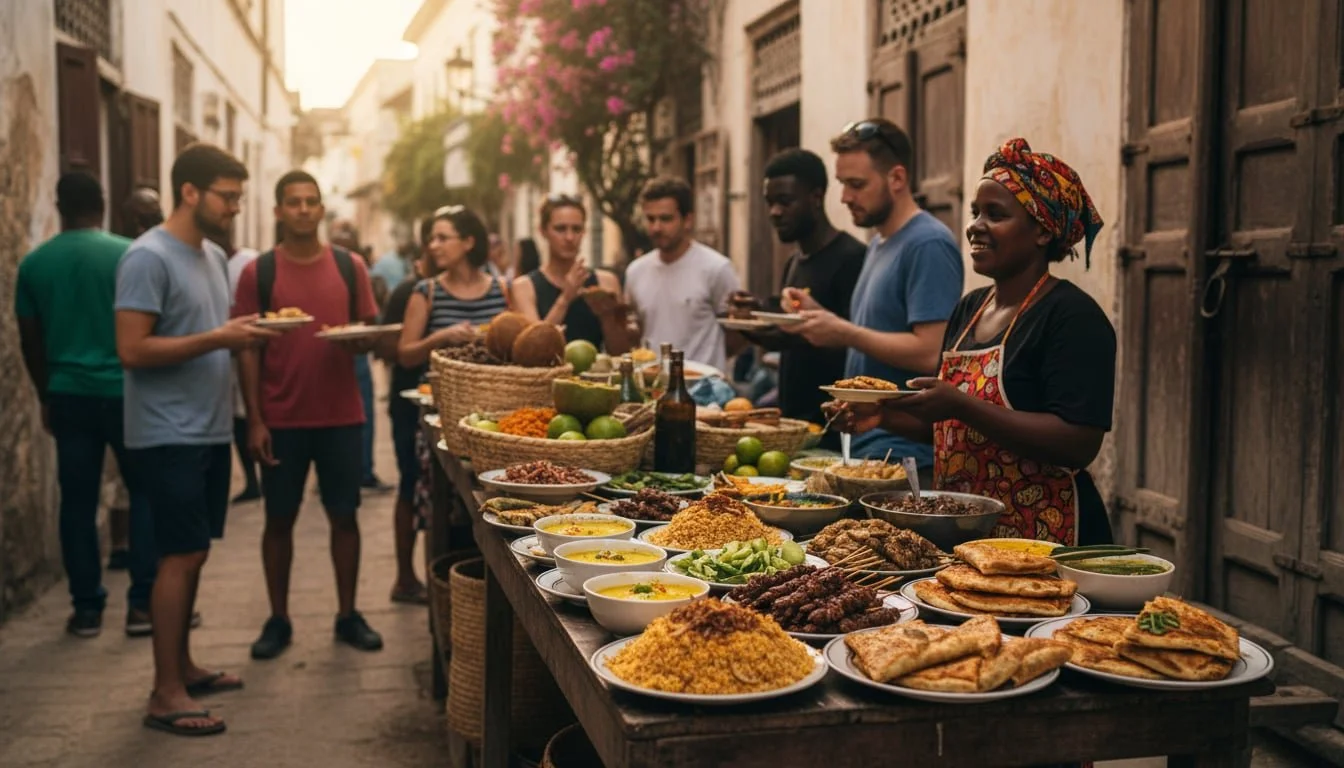
Forodhani Gardens Night Market is the flagship. It opens nightly around 6 PM in Stone Town's waterfront park, with dozens of vendors cooking Zanzibar pizza, mishkaki, urojo, sugarcane juice, and grilled seafood. It's a quintessential Stone Town experience and the single best place to sample multiple Zanzibar foods in one evening.
Darajani Market is where locals shop for raw ingredients. It’s more chaotic and less tourist-friendly, but some prepared food stalls serve excellent samosas and pilau at rock-bottom prices.
Local Restaurants
Lukmaan Restaurant in Stone Town is the go-to for affordable, authentic Swahili food. Buffet-style, with a rotating daily menu of pilau, biryani, curries, and stews. Expect to spend $3 to $5 for a full meal. The Passing Show Restaurant is another local institution nearby.
Mid-Range and Fine Dining
Emerson on Hurumzi offers a set Swahili dinner on a rooftop terrace with views over Stone Town and live taarab music. Book in advance. The Rock Restaurant in Michamvi Pingwe serves seafood on a rock formation in the Indian Ocean, accessible by foot at low tide or by boat at high tide. Fisherman’s Seafood & Grill in Nungwi holds the top TripAdvisor rating at 4.8 stars from over 2,100 reviews.
Beyond Stone Town
Beach restaurants in Nungwi, Paje, and Jambiani serve fresh-catch seafood daily, often grilled within hours of being pulled from the water.If you're staying at one of Zanzibar's beach resorts, venture outside the resort for at least a few meals. The food is better and a fraction of the price.
Food Experiences Worth Booking
Spice Farm Tours take you to working plantations where cloves, cardamom, vanilla, and cinnamon grow. You’ll taste spices at the source and learn how they end up in the dishes you’ve been eating. Around $20 to $30 per person.
Cooking Classes with operations like Mamas of Zanzibar, located outside Stone Town, teach traditional Zanzibari dishes in the founder’s home, beginning with a trip to the local market. Expect to cook pilau, coconut curry, and kisamvu. Classes typically run $30 to $50 per person.
Stone Town Food Walking Tours are guided evening walks through alleys and markets, typically lasting 2 to 3 hours and covering 6 to 8 food stops. A good option if you want to hit multiple Zanzibar food highlights in one night with a local guide who can translate and negotiate.
5 Things I Wish I Knew Before Eating in Stone Town
The "Tourist Tax" at Forodhani: Vendors at the night market often have "tourist menus." Always ask the price in Shillings before they start cooking to ensure you get the local rate.
Friday is Biryani Day: Don't look for the best Biryani on a Tuesday. It is a traditional Friday lunch; go to Lukmaan or Passing Show early (12:30 PM) before they sell out.
Tipping Culture: Tipping isn't mandatory at street stalls, but in sit-down restaurants, a 10% tip is highly appreciated by the local staff.
The Coffee "Clink": When you hear a vendor clinking porcelain cups in the street, that is the Kahawa (spiced coffee) man. It costs pennies—try it at least once.
Dry Island vs. Wet Island: While Zanzibar is a Muslim society, many tourist restaurants serve alcohol. However, local spots (like Lukmaan) are strictly "dry." Plan your evening accordingly!
Practical Tips for Eating in Zanzibar
Food Safety
At Forodhani, eat items cooked fresh in front of you. Avoid pre-cooked seafood that’s been sitting under heat lamps, especially octopus skewers. Ask prices before ordering at market stalls. Drink bottled water and skip ice unless you’re at an established restaurant.
Dining Etiquette
Eating with the right hand is customary in local settings. Meals are often communal, with food placed on shared platters reflecting the island’s culture of togetherness. Most restaurants provide a basin for washing hands before and after eating.
Ramadan Considerations
During Ramadan, many local restaurants close during daylight hours. But this is actually one of the most food-rich times to visit Zanzibar. Iftar feasts featuring dates, spiced rice, seafood, and sweet treats appear nightly, and the evening atmosphere in Stone Town becomes electric. Resort restaurants stay open for tourists year-round.
Vegetarian Options
Zanzibar’s food scene is seafood and meat-heavy, but vegetarian travelers have solid options. Kisamvu, wali wa nazi, mandazi, vegetable samosas, vitumbua, and chapati are all meat-free. The spice-forward cooking style means even simple vegetable dishes carry big flavor. Most restaurants can prepare vegetable curries on request.
From Safari to Spice Island: Planning Your Food Journey
If you’re combining a Tanzania safari itinerary with time in Zanzibar, the food transition is one of the trip’s quiet highlights. After days of lodge-provided meals on the Serengeti or in the Ngorongoro Crater, where menus are designed for international guests and tend toward safe, Western-influenced dishes, Zanzibar’s independent food scene hands you control of what you eat, where, and how much you spend.
A typical safari-plus-beach combination allows 3 to 5 days on the island, which is enough to work through this entire food list if you’re ambitious. Prioritize Forodhani on your first evening, book a cooking class for day two, and leave the rest for spontaneous discovery.
For travelers building a trip that spans multiple experiences, from wildlife viewing to mountain trekking to coastal eating, a guide on fitting multiple experiences into one East Africa trip covers the logistics of combining these pieces. And for those still in the early planning stages, the complete East Africa trip planning guide walks through timing, budgets, and how to structure a trip that includes both safari and Zanzibar.
Ready to pair the wildlife with the food? Our Safari & Zanzibar Beaches itineraries are built to combine both, or contact us for a custom plan.
Frequently Asked Questions
-
Zanzibar pizza is the most recognized dish among international visitors, largely because of its presence at Forodhani Gardens Night Market. But among locals and food-focused travelers, urojo (Zanzibar Mix) and pweza wa nazi (octopus in coconut curry) are considered more representative of the island’s cuisine.
-
Street food runs $0.50 to $3 per item. A full meal at a local restaurant costs $5 to $10. Mid-range restaurant dinners range from $15 to $30. The average daily food budget for travelers eating a mix of street food and restaurants is roughly $30 per person.
-
Zanzibar food is aromatic and well-spiced, but not typically burn-your-mouth spicy. The spice profile leans toward warming flavors like cardamom, cinnamon, and cloves rather than raw chili heat. Chili sauce is usually served on the side so you can adjust.
-
Yes, for the most part. Stick to items cooked fresh in front of you, avoid seafood that’s been sitting out, and confirm prices before ordering. Experienced travelers on TripAdvisor note that some vendors can be pushy or quote higher prices to tourists, so a quick price check before committing helps.
-
Vegetarians won’t struggle. Kisamvu (cassava leaves in coconut milk), wali wa nazi (coconut rice), mandazi, vegetable samosas, vitumbua, and chapati are all widely available and meat-free. The coconut and spice-forward cooking style means vegetarian Zanzibar food is genuinely flavorful, not an afterthought.
-
Both work. A guided food walking tour on your first evening gives you a framework, introduces key dishes, and removes the intimidation of ordering at Swahili-only stalls. After that, explore independently. The best Zanzibar food discoveries happen when you follow the smoke from a mishkaki grill down an alley you hadn’t planned to enter.
-
No. Stick to bottled or filtered water. Avoid ice at street stalls and smaller restaurants. Established mid-range and upscale restaurants typically use filtered water for ice, but when in doubt, order drinks without it.