

Kilimanjaro Oxygen: Do You Need It to Climb? (2026 Guide)
TL;DR
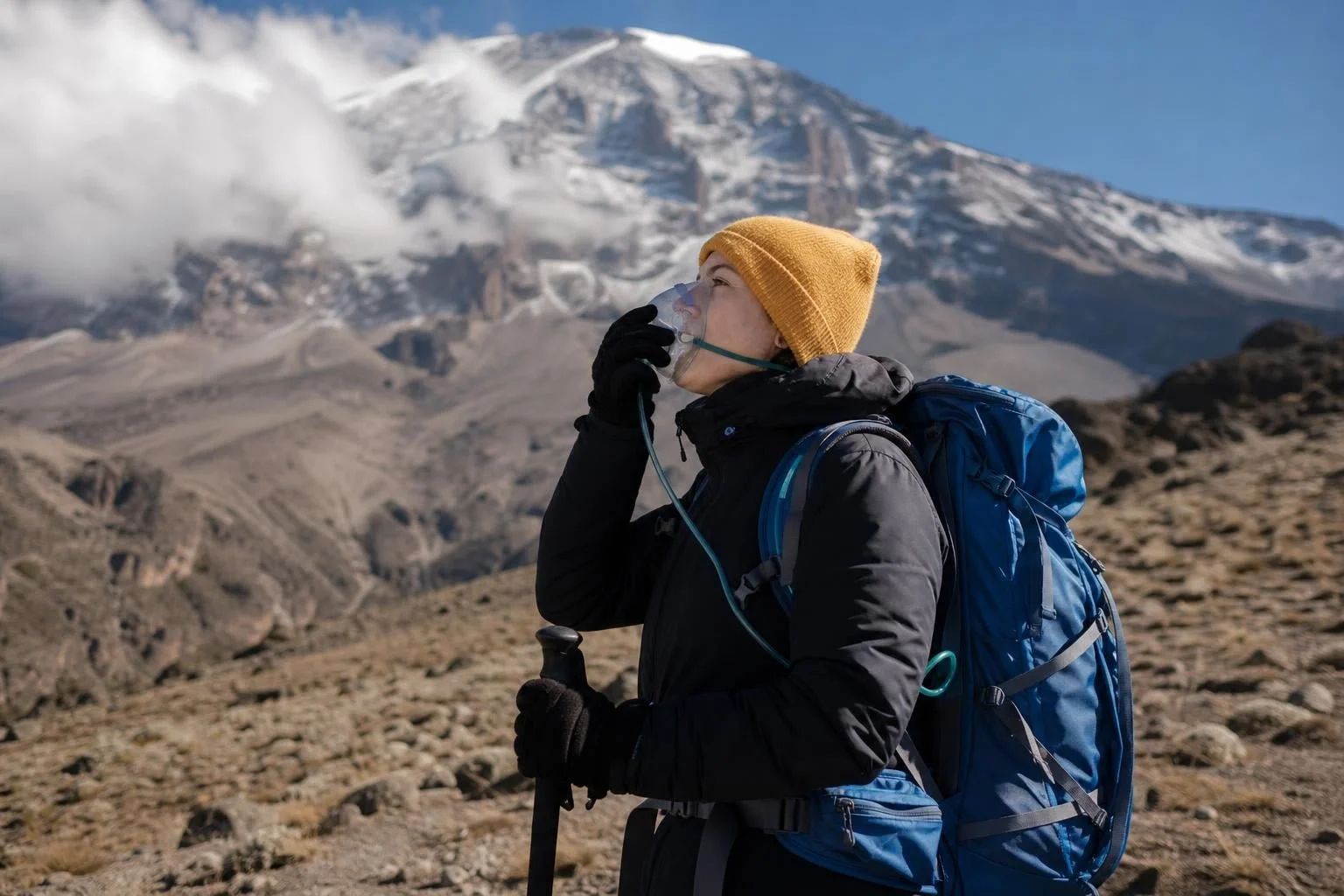
At Kilimanjaro’s summit (5,895 meters), each breath delivers roughly half the oxygen your body receives at sea level, not because there’s less oxygen in the air, but because atmospheric pressure drops by about 50%. Supplemental oxygen is not needed to climb Kilimanjaro and can actually be dangerous if used to push higher. Responsible operators carry emergency oxygen for evacuation scenarios only. Understanding how oxygen works at altitude, and how your body adapts, is the single most important piece of pre-climb knowledge you can have.
Do You Need Oxygen to Climb Kilimanjaro? No, most climbers do not need supplemental oxygen to summit Kilimanjaro. At 5,895 meters (19,341 feet), the air contains the same 20.9% oxygen as at sea level, but atmospheric pressure is much lower, so each breath provides fewer oxygen molecules. Proper acclimatization, a slow ascent, symptom monitoring, and timely descent are more important than carrying oxygen for routine climbing. Emergency oxygen may be used to stabilize a seriously ill climber during evacuation. The key takeaway: Oxygen is an emergency treatment for altitude illness, not a substitute for acclimatization or a tool for safely climbing higher.
TL;DR
-
You normally do not need supplemental oxygen to climb Kilimanjaro. Most trekkers can acclimatize naturally during a properly paced ascent.
-
Kilimanjaro's summit is 5,895 meters (19,341 feet). Oxygen still makes up about 20.9% of the atmosphere, but atmospheric pressure is much lower, reducing the amount of oxygen available with each breath.
-
Acclimatization matters more than supplemental oxygen. Slower ascent, adequate rest, and additional days on the mountain give your body more time to adapt.
-
Emergency oxygen is different from climbing oxygen. Oxygen can be an important treatment for serious altitude illness while arranging or carrying out descent.
-
Do not use oxygen to mask worsening symptoms and continue ascending. Serious symptoms such as confusion, loss of coordination, severe breathlessness at rest, or signs of HAPE/HACE require immediate medical attention and descent.
-
Ask operators about their emergency protocols. A reputable operator should have a clear plan for altitude illness, descent, emergency oxygen, communications, and evacuation.
Kilimanjaro Oxygen at a Glance
|
Question |
Short Answer |
|---|---|
|
Do you need supplemental oxygen to climb Kilimanjaro? |
No, not routinely. |
|
How high is Kilimanjaro? |
5,895 m (19,341 ft) |
|
Does the percentage of oxygen change? |
No. It remains about 20.9%. |
|
What changes at altitude? |
Atmospheric pressure and oxygen partial pressure decrease. |
|
Can your body acclimatize naturally? |
Yes, if the ascent gives your body enough time to adapt. |
|
Is emergency oxygen useful? |
Yes. It may help treat serious altitude illness while descent or evacuation is arranged. |
|
Is oxygen a replacement for descent? |
No. Descent remains the primary treatment for serious altitude illness. |
|
Should oxygen be used to keep climbing despite symptoms? |
No. Oxygen should not be used to mask serious symptoms so a climber can continue ascending. |
|
What is more important than carrying oxygen? |
Appropriate ascent rate, acclimatization, symptom monitoring, and a reliable descent plan. |
Why Oxygen Matters on Kilimanjaro
Here’s a fact that surprises most people planning a Kilimanjaro climb: the percentage of oxygen in the air at the summit is exactly the same as at the beach. It’s 20.9% at sea level, and it’s 20.9% at 19,341 feet. What changes is the atmospheric pressure pushing that oxygen into your lungs. At the top of Kilimanjaro, barometric pressure falls to roughly 50 kiloPascals compared to 101 kiloPascals at sea level. The result? Each breath contains about half as much usable oxygen.
This distinction matters because it shapes everything from how your body acclimatizes to whether supplemental oxygen makes any sense on this mountain. Misunderstanding the science leads to bad decisions, and bad decisions at altitude can kill.
This guide defines every Kilimanjaro oxygen term you’ll encounter during research and on the mountain itself, from the physics of thin air to the SpO2 thresholds your guides will use to decide if you keep climbing or turn around. For broader safety terminology beyond oxygen, see our Kilimanjaro safety glossary.
Planning a Kilimanjaro climb with safety as a priority? Explore our Kilimanjaro route comparison guide to find the route that gives you the best acclimatization profile.
The Science: How Altitude Affects Oxygen on Kilimanjaro
Atmospheric (Barometric) Pressure
The weight of the air column above you. At sea level, this pressure is about 101 kiloPascals (kPa). At Kilimanjaro’s summit, it drops to approximately 50 kPa. This reduction means air molecules are spread farther apart. You’re breathing in the same mix of gases, but fewer molecules per breath. This is the root cause of every oxygen-related challenge on the mountain.
Partial Pressure of Oxygen (PO2)
The portion of total atmospheric pressure contributed by oxygen alone. Since oxygen makes up 20.9% of the atmosphere, PO2 at sea level is roughly 21 kPa (20.9% of 101 kPa). At Kilimanjaro’s summit, PO2 drops to about 10.5 kPa. This is the number that actually determines how much oxygen crosses from your lungs into your bloodstream. When climbers say there’s “less oxygen” at altitude, they’re really talking about lower PO2.
Oxygen Availability
A practical way of describing PO2 in everyday terms. At the summit of Kilimanjaro, there is approximately 49% less available oxygen than at sea level. Think of it this way: if your lungs were a bucket being filled with oxygen molecules, each scoop at the summit catches roughly half as many molecules as a scoop at sea level. The bucket is the same size, but the air is thinner.
Hypoxia
The medical term for insufficient oxygen reaching your body’s tissues. On Kilimanjaro, every climber experiences some degree of hypoxia above roughly 3,000 meters. Mild hypoxia causes shortness of breath and fatigue. Severe hypoxia impairs judgment, coordination, and consciousness. It’s the physiological trigger behind altitude sickness in all its forms.
How Your Body Responds: Acclimatization Terms
Acclimatization
Your body’s process of adapting to reduced oxygen availability. It happens through several mechanisms that kick in at different speeds. Almost immediately, you breathe deeper and faster, and your heart rate increases. Over days, your blood thickens as your body produces more red blood cells. Your essential organs eventually receive adequate oxygen, but these changes take time. Rushing the process is the primary reason climbers get sick.
A Queen’s University cardiologist who summited Kilimanjaro documented this process firsthand, noting that oxygen saturations dropped from over 95% at sea level to 87% and 83% by the time the climbing party reached Barafu base camp at 4,673 meters. The body was adapting, but not instantly.
Ventilatory Response
The increase in breathing rate and depth triggered by low oxygen. This is your body’s first and fastest adaptation. Within hours of arriving at altitude, you’ll notice you’re breathing harder even while sitting still. This response is normal and beneficial. It’s your respiratory system compensating for lower PO2.
Erythropoiesis
The production of new red blood cells, stimulated by altitude exposure. Your kidneys detect low oxygen levels and release a hormone called erythropoietin (EPO), which tells your bone marrow to produce more oxygen-carrying red blood cells. This process takes days to weeks, which is why longer climbs have significantly higher success rates. The extra red blood cells improve your blood’s oxygen-carrying capacity.
Pole Pole
Swahili for “slowly, slowly.” This isn’t just a charming local expression. It’s the fundamental climbing philosophy on Kilimanjaro. Walking slowly reduces your body’s oxygen demand, giving your acclimatization mechanisms time to work. Experienced guides will slow you down even when you feel strong. Trust them. The pace that feels embarrassingly slow at 3,000 meters is the pace that gets you to the summit.
Climb High, Sleep Low
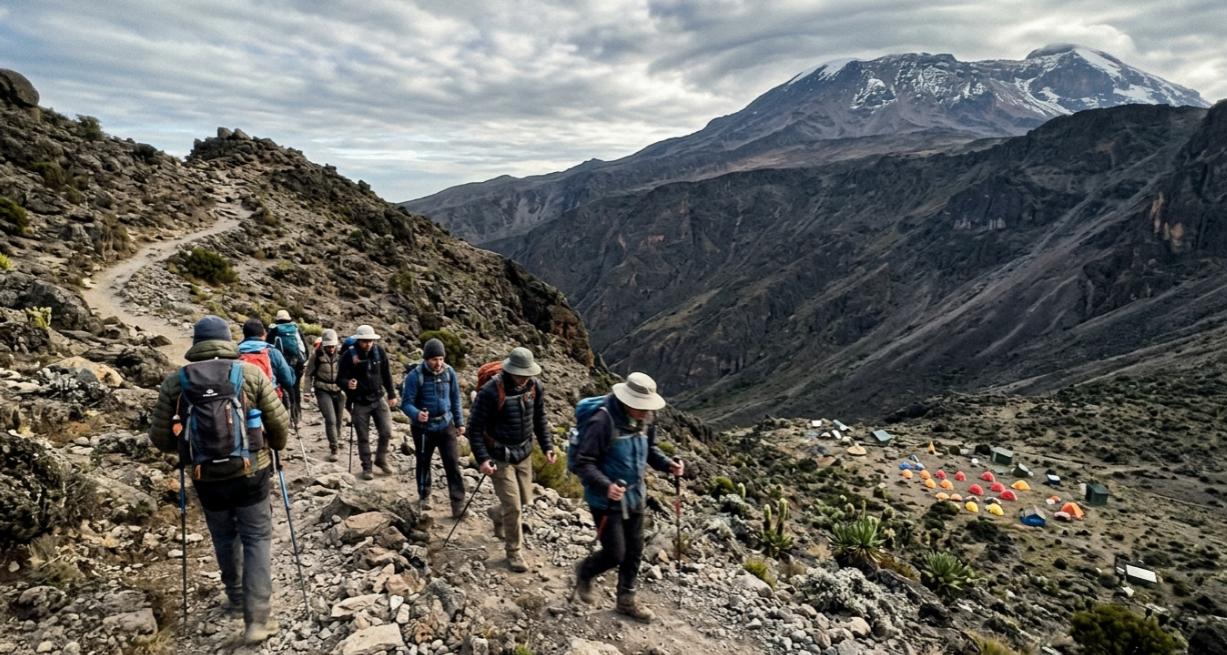
The acclimatization strategy built into routes like the Lemosho, Machame, and Northern Circuit. Climbers ascend to a higher elevation during the day, then descend to sleep at a lower camp. This exposes the body to lower oxygen levels during the day while letting it recover at night. The Lemosho route is particularly effective at this because its itinerary naturally incorporates multiple climb-high-sleep-low opportunities.
Altitude Sickness: The Oxygen-Deprivation Spectrum
Altitude sickness exists on a spectrum, from a bad headache to life-threatening brain swelling. Understanding where you are on that spectrum determines whether you keep climbing, wait, or go down immediately.
Acute Mountain Sickness (AMS)
The most common form of altitude illness. Symptoms include headache, nausea, fatigue, dizziness, and poor sleep. A study published in PubMed found that the incidence of AMS among Finnish Kilimanjaro trekkers on the Marangu route was 75%. That number is consistent with broader estimates that more than 75% of trekkers experience at least some mild symptoms.
Mild AMS does not automatically mean an immediate evacuation, but it does mean the climber should stop ascending and be monitored. If symptoms worsen or fail to improve, descent may be necessary.
The most important rule is simple: do not continue ascending while altitude-illness symptoms are getting worse.
Severe symptoms or neurological changes require much more urgent action. Confusion, altered mental status, difficulty walking or loss of coordination can indicate HACE. Severe breathlessness, especially at rest, persistent cough, chest tightness, or rapidly worsening respiratory symptoms can indicate HAPE. Both conditions require immediate medical attention and descent.
How Serious Are HAPE and HACE on Kilimanjaro?
HAPE and HACE are medical emergencies, but precise mountain-wide percentages are difficult to establish because not every altitude-related illness or death is captured in the same way.
A two-year review of climbers treated at a major referral hospital in the Kilimanjaro region found that HAPE was the most common serious altitude-related diagnosis among patients presenting for care. Among 21 deceased climbers who underwent postmortem evaluation, HAPE was identified as the cause of death in 16 cases (76%), while combined HAPE/HACE accounted for another 3 cases (14%).
These figures come from a hospital and postmortem cohort, not from every person who climbs Kilimanjaro, so they should not be presented as the percentage of all Kilimanjaro deaths.
The practical takeaway is more important than the exact percentage: HAPE and HACE can become life-threatening quickly, and suspected cases require urgent descent and medical treatment.
High Altitude Cerebral Edema (HACE)
Swelling of the brain caused by fluid leakage from blood vessels at altitude. Symptoms include severe headache unresponsive to medication, confusion, loss of coordination (ataxia), irrational behavior, and eventually loss of consciousness. HACE accounts for approximately 15 to 25% of fatalities on Kilimanjaro. Treatment is immediate descent, supplemental oxygen, and dexamethasone. HACE can progress from first symptoms to incapacitation in hours.
To put fatality statistics in context: approximately 50,000 people ascend Kilimanjaro every year. According to recorded statistics, on average 3 to 10 people die annually. The numbers are low, but every death is preventable with proper monitoring and willingness to descend.
Lake Louise Scoring System (LLSS)
The standardized diagnostic tool guides use to assess AMS severity. Originally developed in 1991 and revised in 2018, the LLSS uses a questionnaire covering headache, gastrointestinal symptoms, fatigue, and dizziness. A total score of 3 to 5 indicates mild AMS. A score of 6 or more indicates severe AMS. Mild AMS is common and doesn’t necessarily mean you need to descend, but it does mean your guide should be monitoring you closely.
When Should You Descend on Kilimanjaro?
The decision to descend should be based on symptoms, severity, progression, and the overall clinical picture rather than one pulse-oximeter number.
Stop Ascending
If you develop symptoms consistent with acute mountain sickness, do not continue ascending until the symptoms have improved. Your guide should monitor you and determine whether additional rest, treatment, or descent is appropriate.
Descend Urgently
Urgent descent is warranted when altitude illness becomes severe, symptoms continue to worsen, or neurological or respiratory warning signs appear.
Warning signs include:
-
confusion or altered mental status
-
loss of coordination or difficulty walking
-
severe or worsening headache
-
severe shortness of breath at rest
-
persistent cough or worsening respiratory symptoms
-
chest tightness
-
inability to walk normally
-
rapidly deteriorating condition
The Wilderness Medical Society identifies descent as the primary treatment for severe AMS and HACE and recommends descent for HAPE, with supplemental oxygen used when appropriate as part of emergency management.
Do not wait for an oxygen-saturation number to become “low enough” before taking serious symptoms seriously.
Monitoring Tools: How Kilimanjaro Oxygen Levels Are Tracked
Pulse Oximeter (SpO2 Monitor)
A small, clip-on device placed on your fingertip that measures blood oxygen saturation using light waves. On Kilimanjaro, guides use pulse oximeters at least twice daily, typically at morning and evening health checks. The device is painless and gives a reading in seconds. It’s one of three pillars of on-mountain monitoring (alongside the LLSS questionnaire and symptom interviews).
The quality of these health checks depends entirely on the quality of your guides. Choosing a Kilimanjaro guide with Wilderness First Responder (WFR) certification means they’ve been trained to interpret SpO2 readings in the context of other symptoms, not just react to a number.
SpO2 (Blood Oxygen Saturation)
The percentage of hemoglobin in your blood that is carrying oxygen. At sea level, healthy individuals sit between 95 and 99%. On Kilimanjaro, these numbers drop as altitude increases.
Here’s what typical SpO2 readings look like at key Kilimanjaro camps:
|
Altitude Zone |
Typical Camp |
Elevation |
Expected SpO2 Range |
|---|---|---|---|
|
Trailhead |
Gate area |
~1,800m |
95-99% |
|
Mid-mountain |
Shira Camp |
~3,600m |
88-95% |
|
High camp |
Barranco Camp |
~3,960m |
85-92% |
|
Pre-summit camp |
Barafu Camp |
~4,673m |
80-88% |
|
Summit zone |
Uhuru Peak |
5,895m |
60-75% |
These ranges vary by individual. The Queen’s University cardiologist mentioned earlier recorded saturations of 87% and 83% at Barafu Camp. Some climbers will read lower, some higher. The trend matters more than any single number.
How SpO2 Should Be Interpreted on Kilimanjaro
A pulse oximeter can provide useful information during a Kilimanjaro climb, but there is no single SpO2 number that can determine whether every climber is safe to continue.
Oxygen saturation normally falls as altitude increases. A reading that would be concerning at sea level may occur in an otherwise well-adapted climber at high altitude. The important question is not simply whether the number is low, but whether it is changing, whether the measurement is reliable, and whether the climber has symptoms of altitude illness.
Guides should consider SpO2 alongside:
-
headache and other AMS symptoms
-
breathing difficulty at rest
-
cough or chest symptoms
-
nausea and vomiting
-
unusual fatigue or weakness
-
confusion or altered mental status
-
loss of coordination or ataxia
-
heart rate and overall condition
-
whether symptoms are improving or worsening
For this reason, a pulse oximeter should be treated as one monitoring tool, not a pass/fail test for summit day.
The 2024 Wilderness Medical Society guidelines likewise emphasize clinical assessment and recommend descent for severe altitude illness rather than relying on a single oxygen-saturation reading.
Daily Health Checks
The combination of LLSS questionnaire, pulse oximeter readings, and face-to-face symptom assessment. These checks are the backbone of on-mountain safety. Guides assess heart rate, SpO2, headache severity, appetite, sleep quality, and coordination. This is where WFR training pays off: a well-trained guide recognizes patterns that a number alone can’t reveal.
Supplemental Oxygen: What It Is and What It Isn’t
This is the section that matters most for climbers evaluating operators. The Kilimanjaro oxygen question has a clear answer, but it gets muddied by marketing.
Emergency Oxygen
Bottled oxygen carried by responsible operators on every single climb, used exclusively during evacuation of a seriously ill climber. When a trekker develops severe AMS, HAPE, or HACE, emergency oxygen stabilizes them while the team descends. The oxygen is not a treatment. It’s a bridge, keeping the climber alive during the hours it takes to reach lower altitude where natural air pressure does the real work.
Emergency oxygen is administered alongside immediate descent. No responsible guide will give a climber oxygen and then continue upward. That combination (oxygen plus continued ascent) is where the real danger lies.
Having travel insurance with evacuation coverage is essential precisely because these emergency scenarios, while rare, require rapid response that can include helicopter evacuation from accessible zones.
Why Supplemental Oxygen Does Not Replace Acclimatization
Supplemental oxygen can improve oxygenation during an altitude emergency, but it is not a substitute for acclimatization.
The important distinction is between treating illness and using oxygen to continue an ascent despite illness. A climber who develops serious symptoms should not rely on supplemental oxygen to make it possible to keep climbing higher.
For serious altitude illness, the Wilderness Medical Society identifies descent as the primary treatment. Supplemental oxygen can be used when available, particularly while descent is being arranged, when descent is temporarily impractical, or during evacuation. The 2024 guidelines recommend using enough oxygen to relieve symptoms or raise SpO2 above 90% rather than treating a particular oxygen-flow rate as the goal.
In other words:
Oxygen can stabilize a sick climber. It should not be used to turn a sick climber into a climber who keeps ascending.
Personal Oxygen Systems (ALTOX and Similar)
Commercial products marketed specifically to Kilimanjaro climbers, promising to “reduce altitude sickness.” The ALTOX product website uses the term “altoxia” as though it’s a recognized medical condition. It is not. No medical literature uses this term. This is a marketing invention.
Community sentiment runs strongly against personal oxygen systems. On TripAdvisor, one experienced contributor stated plainly: “A normal healthy person should not need supplemental O2 on Kili, and any climbing operator worth paying money to should recognise other signs of AMS and bring you down before you have to be given O2.” Another noted that “most people who climb Kilimanjaro wouldn’t go with a company that uses ALTOX.”
The concern isn’t just philosophical. Personal oxygen creates a false sense of security. Climbers who mask their symptoms with supplemental oxygen may push past the point where descent is safe or even possible.
Western Breach and Emergency Oxygen
The Western Breach deserves special mention because its terrain and evacuation logistics can make altitude emergencies more complicated.
However, climbers should not treat supplemental oxygen as permission to continue upward after developing serious altitude-illness symptoms. If illness develops in a difficult-to-evacuate section of the mountain, the guide and medical team must make an emergency decision based on the terrain, symptoms, available evacuation options, and the climber's condition.
Emergency oxygen and medications may be used as temporary medical measures, but they do not replace descent when descent is possible.
If you are considering the Western Breach, ask the operator specifically how it handles altitude illness, emergency oxygen, descent, communications, and evacuation from the upper mountain.
Is Kilimanjaro in the “Death Zone”?
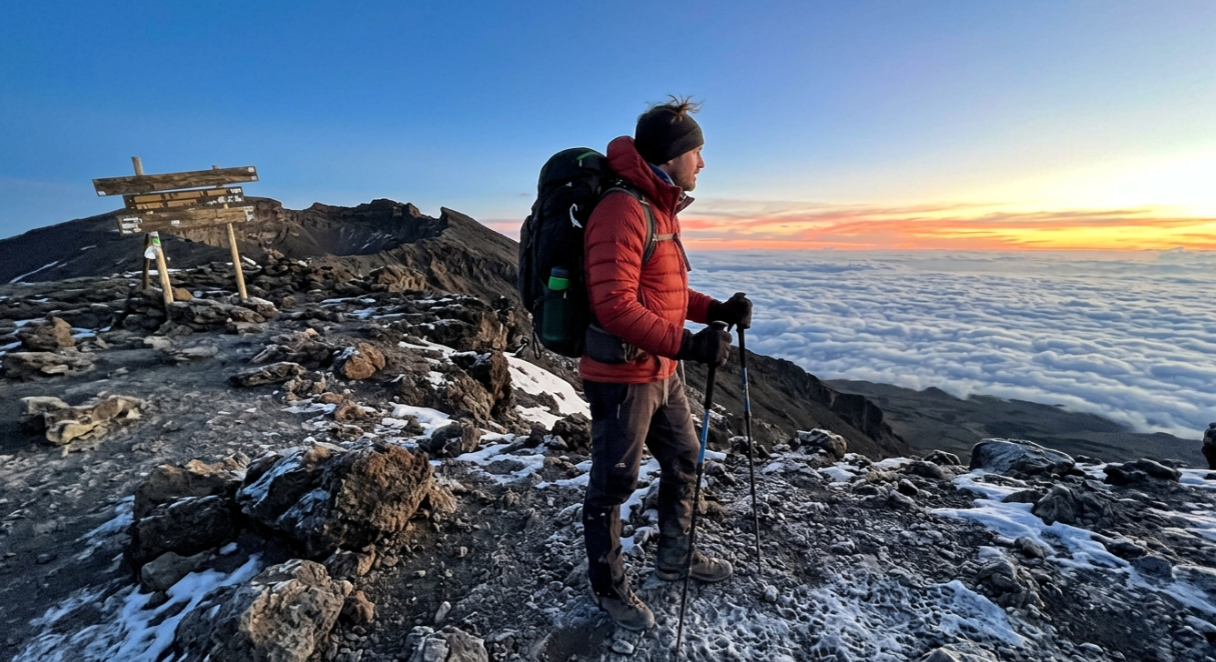
No. Kilimanjaro's summit is 5,895 meters (19,341 feet), well below the approximately 8,000-meter elevation commonly referred to as the mountaineering “death zone.”
That does not mean altitude illness is harmless. Severe altitude illness can occur well below 8,000 meters, which is why acclimatization and timely descent remain critical on Kilimanjaro.
Medications Related to Oxygen and Altitude
Diamox (Acetazolamide)
Acetazolamide, commonly known by the brand name Diamox, is a medication used to help prevent and treat acute mountain sickness. It works in part by stimulating ventilation, helping the body acclimatize to reduced oxygen availability.
It is not the same as supplemental oxygen and does not replace a gradual ascent or appropriate response to altitude-illness symptoms.
Common side effects include tingling in the hands or feet, increased urination, and changes in the taste of carbonated drinks. Whether acetazolamide is appropriate for you depends on your medical history, medications, allergies, and other factors, so discuss its use with a qualified healthcare professional before your trip.
Most importantly, taking Diamox does not mean you should ignore worsening symptoms or continue ascending when you are becoming ill.
Dexamethasone
A powerful corticosteroid used as an emergency treatment for HACE. It reduces brain swelling rapidly and can stabilize a climber long enough for descent. Dexamethasone is not a prevention tool and is not taken routinely. Guides carry it alongside emergency oxygen as part of their medical kit. It’s typically administered in conjunction with supplemental oxygen and immediate descent.
Ibuprofen
An over-the-counter anti-inflammatory that can relieve mild headaches at altitude. Some studies suggest it may reduce AMS incidence, but the evidence is mixed. The critical warning: ibuprofen should never be used to mask worsening symptoms so you can keep climbing. If your headache requires medication and worsens after treatment, tell your guide immediately.
Does a Longer Kilimanjaro Route Reduce Altitude Risk?
Generally, yes. The pace at which you gain altitude is one of the most important modifiable risk factors for acute altitude illness.
Kilimanjaro itineraries vary considerably in duration, and shorter itineraries give the body less time to adapt. Research on Kilimanjaro has found substantially different summit-success rates depending on itinerary length, with one published review reporting success rates of approximately 53% to 61% for 4- to 5-day climbs compared with about 88% for a 6-day climb.
|
Itinerary |
General Acclimatization Profile |
|---|---|
|
4–5 days |
Rapid ascent; less time to acclimatize |
|
6 days |
Better than very short itineraries, but still relatively fast |
|
7 days |
More time for gradual altitude exposure |
|
8–9 days |
Generally allows a slower ascent and more acclimatization opportunities |
These are general comparisons, not guarantees. Route profile, sleeping elevations, individual physiology, and the exact itinerary all affect acclimatization.
If altitude is your main concern, prioritize an itinerary that gives your body more time to adapt rather than simply choosing the shortest or cheapest climb.
What Should a Kilimanjaro Operator Provide for Altitude Safety?
When comparing Kilimanjaro operators, do not simply ask whether they “carry oxygen.” Ask what their complete altitude-safety system looks like.
|
Safety Question |
What a Good Answer Looks Like |
|---|---|
|
Do you carry emergency oxygen? |
The operator has a defined plan for using oxygen during serious altitude illness and evacuation. |
|
How do you monitor altitude illness? |
Guides regularly ask about symptoms and assess the climber's condition. |
|
Do guides have medical training? |
Guides have appropriate wilderness or first-aid training for the environment and role. |
|
What happens if someone becomes seriously ill? |
There is a clear descent and evacuation procedure. |
|
Who decides when a climber must descend? |
The operator has defined medical and safety procedures rather than leaving the decision to the client's summit ambitions. |
|
How do you communicate from the mountain? |
Guides have a reliable way to contact the operator or emergency support. |
|
What happens during a summit-day emergency? |
The company can coordinate assistance and descent quickly. |
|
Does the itinerary allow acclimatization? |
The schedule provides appropriate time for gradual altitude exposure rather than prioritizing the shortest possible climb. |
The best operator is not the one promising that you will never need oxygen. It is the one with a clear plan for what happens if you become sick.
Frequently Asked Questions
Do I need supplemental oxygen to climb Kilimanjaro?
No. Kilimanjaro’s summit at 5,895 meters is well below the altitude threshold (roughly 7,000+ meters) where supplemental oxygen becomes necessary. Your body can acclimatize to this elevation naturally. Using supplemental oxygen during the climb actually disrupts acclimatization and creates risk if the supply runs out at altitude.
What happens to my blood oxygen level on Kilimanjaro?
Your SpO2 will drop progressively with altitude. Expect readings in the high 80s to low 90s at mid-mountain camps, low to mid 80s at Barafu Camp (4,673m), and potentially 60 to 75% at the summit zone. These numbers would be alarming at sea level but are normal at altitude when the climber is otherwise symptom-free.
How do guides decide when to turn a climber around?
Most operators use a combination of the Lake Louise Scoring System, pulse oximeter readings, and symptom assessment. Sustained SpO2 below 75%, an LLSS score of 6 or higher, or any signs of HAPE or HACE typically trigger mandatory descent. The specifics vary by operator, which is why asking about safety protocols is one of the most important questions during the booking process.
Is Diamox the same as supplemental oxygen?
Not at all. Diamox helps your body acclimatize faster by stimulating deeper, faster breathing, so you absorb more oxygen naturally. Supplemental oxygen bypasses acclimatization entirely by artificially enriching the air you breathe. Diamox supports adaptation; supplemental oxygen prevents it.
What is ALTOX and should I use it?
ALTOX is a personal oxygen system marketed for Kilimanjaro climbers. The climbing community and most reputable operators strongly advise against it. It can mask symptoms of altitude sickness, giving climbers false confidence to continue ascending when they should descend. The term “altoxia” used in their marketing is not a recognized medical term.
How many people die on Kilimanjaro from altitude-related causes?
Approximately 3 to 10 people die annually out of about 50,000 climbers. HAPE accounts for 30 to 40% of those fatalities, and HACE for 15 to 25%. Nearly all altitude-related deaths are preventable with proper monitoring, timely descent, and emergency oxygen administration during evacuation.
Does being physically fit prevent altitude sickness?
No. There is no proven link between physical fitness and AMS resistance. Altitude sickness is primarily driven by ascent rate and individual physiological response, not cardio capacity. Fit climbers who push too fast are sometimes at higher risk than slower, less-fit climbers who take their time.
Ready to climb with an operator that takes oxygen safety seriously? Learn how guide credentials directly affect your summit-day experience in our guide to choosing a Kilimanjaro guide, or compare routes and acclimatization profiles in our full route breakdown.