

Kilimanjaro Safety Guide (2026): Every Term You Need
TL;DR
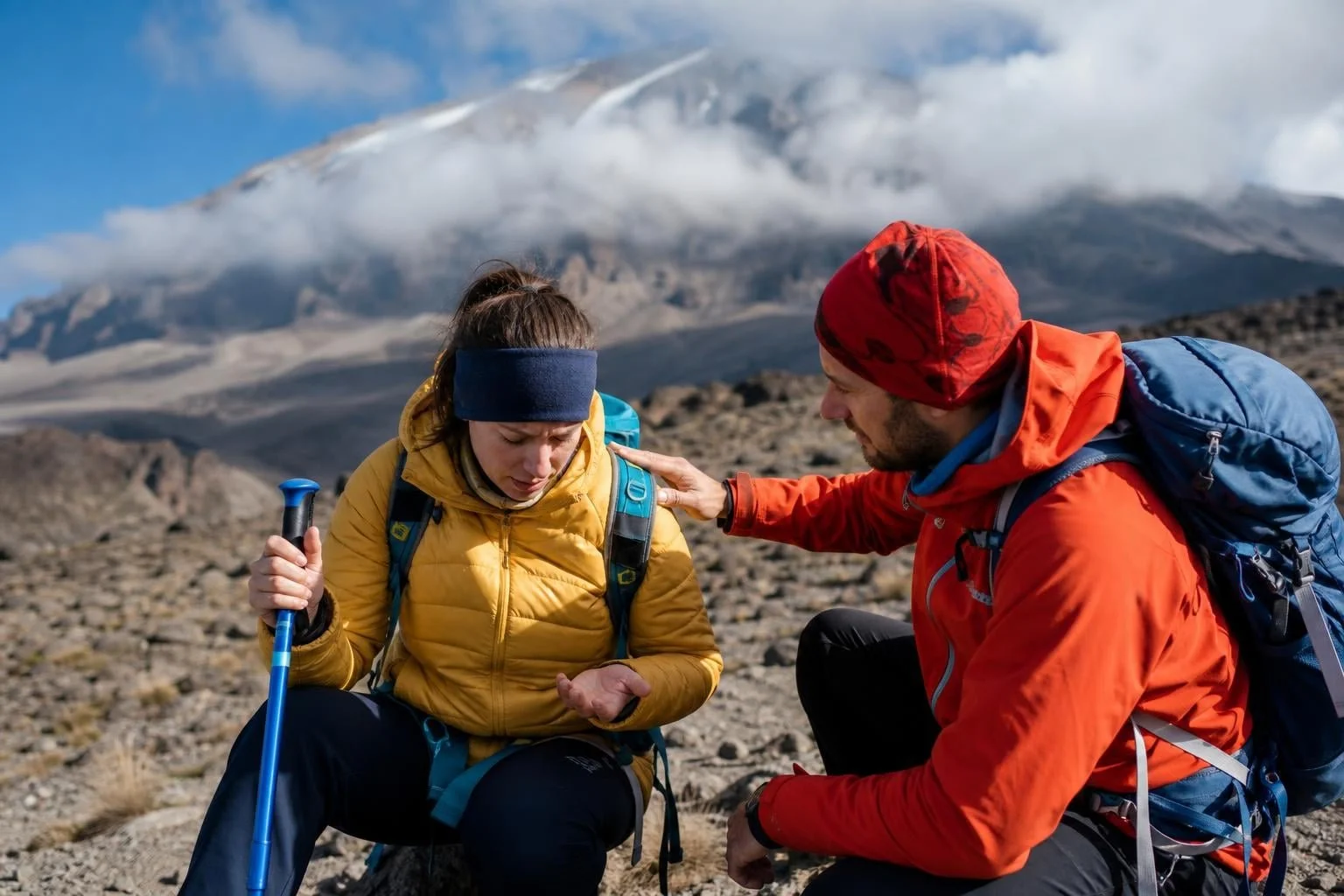
Climbing Kilimanjaro carries a mortality rate of roughly 0.03%, making it statistically safe when proper protocols are followed. The biggest danger is altitude sickness, which affects over 75% of climbers to some degree. Your single most important safety decision is choosing an operator with Wilderness First Responder (WFR)- certified guides, proper health-monitoring equipment, and ethical porter practices. This glossary covers every safety term you’ll encounter during your research.
Is Kilimanjaro Safe? (Quick Answer) Yes. Kilimanjaro is considered one of the safest high-altitude mountains when climbed with a reputable operator. The overall mortality rate is about 0.03%, but more than 75% of climbers experience mild altitude sickness. The biggest safety factors are choosing a longer itinerary (7–9 days), climbing with Wilderness First Responder (WFR) certified guides, monitoring oxygen levels twice daily, and descending immediately if serious altitude illness develops.
In short: - Most climbers finish safely. - Altitude sickness—not technical climbing—is the biggest risk. - Guide quality matters more than fitness. - Proper acclimatization dramatically improves safety.
Biggest Risks on Kilimanjaro
|
Risk |
Likelihood |
Prevention |
|---|---|---|
|
Mild AMS |
Very High |
Slow ascent |
|
Severe AMS |
Low |
Early descent |
|
HAPE |
Rare |
Medical monitoring |
|
HACE |
Very Rare |
Immediate evacuation |
|
Falls |
Low |
Trekking poles and proper footwear |
|
Hypothermia |
Low |
Proper layering |
|
Dehydration |
Moderate |
Drink regularly |
|
Sunburn |
High |
Sunscreen and sunglasses |
Kilimanjaro vs Other Famous Mountains
|
Mountain |
Technical Climbing |
Altitude |
Biggest Risk |
|---|---|---|---|
|
Kilimanjaro |
No |
5,895 m |
Altitude sickness |
|
Everest Base Camp |
No |
5,364 m |
Altitude sickness |
|
Everest Summit |
Yes |
8,849 m |
Extreme altitude |
|
Denali |
Yes |
6,190 m |
Weather |
|
Aconcagua |
No |
6,961 m |
Altitude sickness |
Why Kilimanjaro Safety Depends on What You Know
Between 30,000 and 50,000 people attempt Kilimanjaro each year. Roughly 3 to 10 of them die, putting the mortality rate at approximately 0.03%. That’s far lower than Everest (around 6%) and comparable to Denali. But those numbers only tell part of the story.
An estimated 1,000 climbers get evacuated from the mountain annually. And while official reports cite about 10 tourist deaths per year, the actual figure may be two to three times higher because not all fatalities are officially recorded. The difference between a safe climb and a dangerous one comes down to operator quality, route selection, and personal preparation, not raw fitness.
If you’re researching how to choose the best Kilimanjaro guide, understanding the terminology below will help you ask the right questions and spot the operators who take safety seriously versus those who just say they do.
This glossary covers every Kilimanjaro safety term you’ll encounter during your research, organized into five clusters: altitude and medical terms, certifications and standards, on-mountain safety systems, route safety concepts, and pre-climb preparation.
Altitude and Medical Terms
Acute Mountain Sickness (AMS)
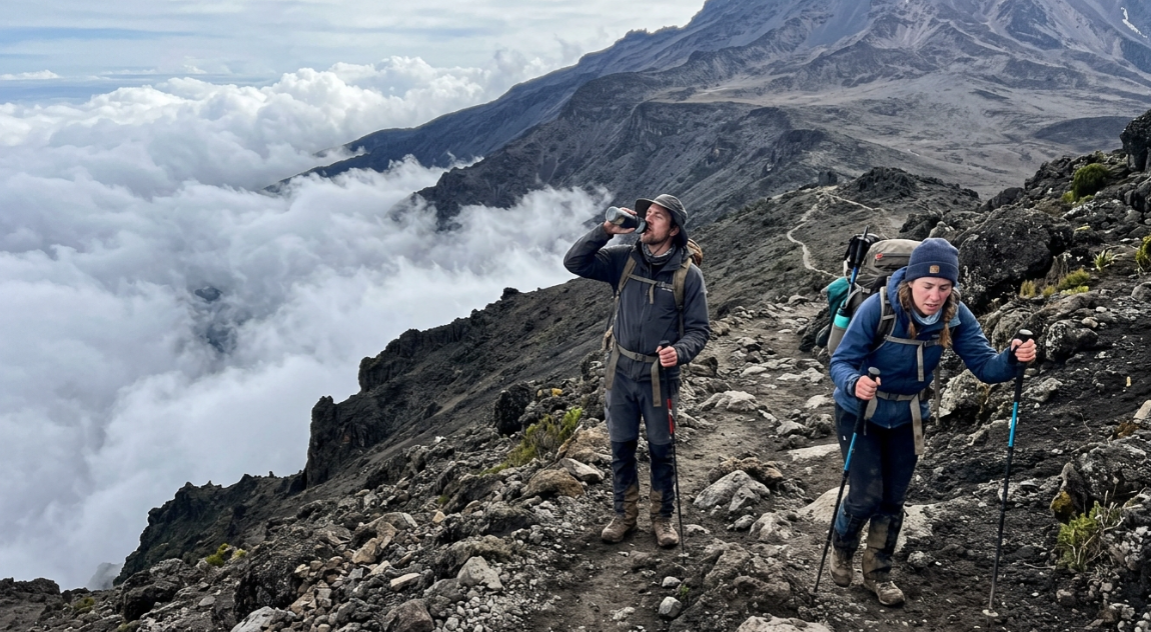
The mildest form of altitude illness, characterized by headache combined with nausea, fatigue, dizziness, or difficulty sleeping. At elevations above 10,000 feet (3,000 m), more than 75% of climbers experience at least mild AMS symptoms. A 2022 study published in the Journal of Travel Medicine found that 8.6% of recreational hikers on Kilimanjaro experienced severe symptoms, compared to just 1.5% of porters and guides who are already acclimatized.
Why it matters: AMS is the leading cause of death on Kilimanjaro. It does not correlate with fitness level, age, or sex. A marathon runner and a casual walker face the same biological risk. The variables that actually reduce AMS are route duration, acclimatization profile, and how quickly guides respond to early symptoms.
High Altitude Pulmonary Edema (HAPE)
Fluid accumulation in the lungs that can develop at high altitude, sometimes without prior AMS warning signs. Symptoms include extreme breathlessness at rest, a persistent cough (sometimes producing pink or frothy sputum), and chest tightness. HAPE can progress rapidly and become life-threatening within hours.
Why it matters: Because HAPE can appear without the typical AMS warning signs, twice-daily health checks with pulse oximetry are critical for catching it early. Immediate descent is the primary treatment.
High Altitude Cerebral Edema (HACE)
Swelling of the brain caused by fluid leakage at extreme altitude. This is the most dangerous altitude illness. Symptoms include severe confusion, loss of coordination (ataxia), irrational behavior, and eventually loss of consciousness. HACE requires immediate descent, there is no “wait and see” option.
Why it matters: HACE is rare but almost always fatal without rapid intervention. A guide trained only in basic first aid is not equipped to manage HACE during the hours it takes to evacuate a climber from high camp. This is precisely why WFR certification matters.
Acclimatization
The body’s gradual adaptation to reduced oxygen availability at altitude. At Kilimanjaro’s summit (5,895 m), there is approximately 49% less oxygen than at sea level. Acclimatization involves physiological changes including increased breathing rate, elevated heart rate, and higher red blood cell production.
Why it matters: Proper acclimatization is the single most effective way to prevent altitude sickness. Routes that allow 7 to 9 days give the body significantly more time to adapt, which is why success rates jump from 65% to 85-95% on longer itineraries with experienced guides.
“Climb High, Sleep Low”
The core acclimatization technique used on routes like Machame, Lemosho, and Northern Circuit. Climbers ascend to a higher elevation during the day, then descend to a lower camp to sleep. For example, on the Machame or Lemosho routes, you might hike up to Lava Tower (4,600 m) during the day and then descend to Barranco Camp (3,950 m) to sleep.
Why it matters: By sleeping at a lower altitude than the day’s highest point, the body gets a reprieve that improves rest and recovery. Routes designed around this principle have significantly higher summit success rates. Practitioners on Reddit frequently cite this acclimatization profile as the top factor in their successful summits, often more important than fitness.
Extreme Altitude
The altitude classification for elevations above 5,500 m. Kilimanjaro’s summit at 5,895 m falls squarely in this category, alongside peaks like Aconcagua and Denali. At extreme altitude, the body cannot fully acclimatize regardless of time spent. Performance degrades, and the risk of HAPE and HACE increases sharply.
Why it matters: Many first-time climbers underestimate Kilimanjaro because it doesn’t require technical climbing gear. But from a pure altitude perspective, the summit puts you in the same physiological danger zone as some of the world’s most serious mountains.
Pulse Oximeter (SpO2 Monitor)
A small fingertip device that measures blood oxygen saturation (SpO2) and pulse rate. Normal blood oxygen at sea level is 95-100%. On Kilimanjaro, guides monitor readings twice daily and use specific thresholds to make descent decisions.
Why it matters: The actionable numbers are critical to understand. When oxygen saturation drops below 80%, the climber enters a watch zone with readings taken every 30 minutes for two hours. If saturation does not rise to at least 75%, the climber must descend immediately. These aren’t arbitrary numbers. They represent the threshold where altitude illness can progress to HAPE or HACE.
Lake Louise Scoring System (LLSS)
A standardized diagnostic questionnaire developed in 1991 and last revised in 2018 to evaluate adults for acute mountain sickness. The system scores symptoms on a numerical scale: a total score of 3 to 5 indicates mild AMS, while 6 or more indicates severe AMS.
Why it matters: The LLSS gives guides an objective framework for assessing climber health, removing guesswork from the equation. When paired with pulse oximetry data, it creates a two-factor assessment system that catches problems early. If your operator doesn’t mention LLSS or doesn’t explain their health monitoring protocol, that’s a red flag.
Acetazolamide (Diamox)
A prescription medication used as a prophylactic against AMS. It has been studied in over 200 high-altitude research trials over the past 50 years. Current Wilderness Medical Society practice guidelines recommend a 125 mg dose daily, started the day before ascent.
Why it matters: Diamox can speed up acclimatization by stimulating deeper breathing, but it is not a substitute for proper pacing, route selection, or guide monitoring. Some climbers experience side effects including tingling in the fingers and increased urination. A pre-climb consultation with your doctor is essential before taking it. Proper nutrition and hydration on the mountain also play a supporting role in acclimatization.
Pole Pole
Swahili for “slowly, slowly” (pronounced po-lay po-lay). This isn’t just a charming local phrase. It’s the fundamental pacing philosophy on Kilimanjaro and arguably the most important two words you’ll hear during your climb. Experienced guides enforce a deliberately slow pace, especially on summit night, to minimize oxygen debt and reduce AMS risk.
Why it matters: New climbers frequently feel frustrated by the slow pace early in the trek, especially when they feel strong. But altitude sickness doesn’t care how fit you are. The guides who insist on pole pole from day one, even when clients push back, are the ones whose climbers make it to the top.
Safety Certifications and Standards
Wilderness First Responder (WFR)
An internationally recognized 80-hour wilderness medicine certification that prepares guides to manage medical emergencies in remote, high-altitude environments for 24 hours or longer in isolation. WFR certification is issued by organizations like NOLS (valid for two years) and WMA (valid for three years). It is voluntary for Kilimanjaro guides, not legally required.
Why it matters: Here’s the critical distinction that most operator websites gloss over. Tanzania National Park regulations require lead guides to hold only a basic first aid certificate, which trains someone to manage an emergency for 10 to 20 minutes until professional help arrives. A WFR-trained guide can manage that same emergency for 24 hours or more. On a mountain where helicopter evacuation takes approximately 45 minutes just to reach the mountain from Arusha (and that’s in good weather, during daylight), the gap between basic first aid and WFR training is the gap between adequate and inadequate care. When evaluating operators, WFR certification is the single clearest indicator of a company’s commitment to Kilimanjaro safety.
KPAP (Kilimanjaro Porters Assistance Project)
A Tanzanian NGO established in 2003 to improve working conditions for porters on Kilimanjaro. KPAP conducts audits twice per year during each climbing season. Partner companies must achieve at least 85% on their performance scorecard in both audits to remain on the approved partner list.
Why it matters: Approximately 70% of operators on Kilimanjaro do not meet KPAP’s ethical standards. But porter welfare isn’t just an ethics issue; it directly impacts climber safety. When porter teams are well paid, properly equipped, and not overloaded, camps get set up on time, meals are prepared properly, and guides can focus entirely on monitoring climbers instead of managing an exhausted, demoralized crew. A healthy support team creates a safer climb for everyone. KPAP partnership is a reliable proxy for overall operational quality.
TANAPA (Tanzania National Parks Authority)
The government body that manages regulations, fees, and rescue operations across all Tanzanian national parks, including Kilimanjaro. TANAPA sets the rules for guide certification minimums, park entry fees, and emergency rescue coordination.
Why it matters: TANAPA’s regulations establish the baseline, but that baseline is minimal. The legal requirement is basic first aid certification for lead guides. Operators who exceed TANAPA minimums (with WFR training, emergency oxygen, and health monitoring protocols) are choosing to invest in safety beyond what the law demands.
KINAPA (Kilimanjaro National Park Authority)
The park-level arm of TANAPA that specifically manages Kilimanjaro. KINAPA handles route access (including closures like the Western Breach), campsite management, and on-mountain ranger presence. They also coordinate with Kilimanjaro SAR for rescue operations.
Why it matters: KINAPA decisions directly affect route availability and safety conditions. When KINAPA closes a route, as they did with the Western Breach in May 2025, it’s typically in response to documented hazards like increased rockfall from glacial retreat.
On-Mountain Safety Systems
Daily Health Checks
Twice-daily assessments combining pulse oximetry readings with Lake Louise Scoring System questionnaires. These are typically conducted at camp in the evening after arrival and again in the morning before departure. Some operators add a midday check during longer hiking days.
Why it matters: Daily health checks are the early warning system that catches altitude illness before it becomes dangerous. The combination of objective data (SpO2 readings) and subjective symptom reporting (LLSS scores) gives guides a complete picture. Operators who skip this step, or who check only once daily, are cutting corners on the most fundamental Kilimanjaro safety protocol.
Summit-Night Guide Ratio
The ratio of guides to climbers during the summit-night push, which typically begins around midnight from high camp. This is the most physically demanding and medically dangerous phase of the entire climb, with temperatures dropping well below freezing and altitude effects at their peak.
Why it matters: A 1:1 guide-to-climber ratio on summit night means each climber has a dedicated guide monitoring their condition, adjusting pace, and ready to turn back with them individually if needed. A ratio of 1:4 or 1:6 means one guide must split attention across multiple climbers in darkness, extreme cold, and thin air. The difference in responsiveness during a medical emergency is enormous. If you’re comparing operators, ask specifically about summit-night ratios, not just the overall trip ratio.
For a deeper look at how route choice and itinerary length affect your odds, see Kilimanjaro success rates by route.
Emergency Oxygen
Supplemental oxygen carried by guides for acute altitude emergencies. This is not used for routine acclimatization support (as on commercial Everest expeditions) but reserved for climbers showing signs of severe AMS, HAPE, or HACE while being evacuated to lower altitude.
Why it matters: Emergency oxygen buys time during descent. It is not a treatment for altitude sickness; the only real treatment is getting lower. But when a climber’s SpO2 drops into dangerous territory, supplemental oxygen can stabilize them enough to walk down or be carried. Not all operators carry emergency oxygen. Ask.
Stretcher Evacuation
Ground-based evacuation from high camps using a wheeled or carried stretcher. This is the first-line rescue response on Kilimanjaro because it can be deployed immediately without waiting for helicopter availability, daylight, or favorable weather.
Why it matters: Stretcher evacuation requires a trained crew and enough porters to carry the stretcher safely down steep, rocky terrain (especially on routes like Machame with the Barranco Wall). The speed and competence of a stretcher evacuation depends entirely on the operator’s crew size and training.
Helicopter Evacuation
Air evacuation authorized by TANAPA, with helipads established at major camps including Horombo, Barranco, Barafu, Kosovo, Stella, Millennium, and Shira. Tropic Helicopters is the licensed Tanzanian air operator officially authorized to carry out aerial evacuations on Kilimanjaro. Response time from Arusha is approximately 45 minutes.
Why it matters: Helicopter evacuation is the fastest way off the mountain in a life-threatening emergency, but it comes with significant limitations. Helicopters cannot fly at night or in poor visibility. Without proper travel insurance covering high-altitude evacuation, trekkers face costs of several thousand dollars out of pocket.
On December 24, 2025, a helicopter crashed on Kilimanjaro during a medical evacuation, killing five people: two Czech tourists, a Tanzanian doctor, a mountain guide, and the pilot. This tragedy is a sober reminder that evacuation itself carries risk. It does not change the fundamental safety profile of trekking on Kilimanjaro (aviation and trekking are separate risk categories), but it underscores why prevention through proper acclimatization, health monitoring, and early descent decisions is always preferable to emergency extraction.
Kilimanjaro SAR (Search and Rescue)
The Moshi-based rescue coordination team responsible for organizing emergency response on Kilimanjaro. Kilimanjaro SAR coordinates between on-mountain crews, helicopter operators, and medical facilities in Moshi and Arusha.
Why it matters: SAR provides the infrastructure that makes rescue possible, but response times depend on the location of the emergency, weather conditions, and time of day. SAR is a safety net, not a guarantee. The best safety strategy remains preventing emergencies through proper operator protocols.
Route Safety Concepts
Western Breach
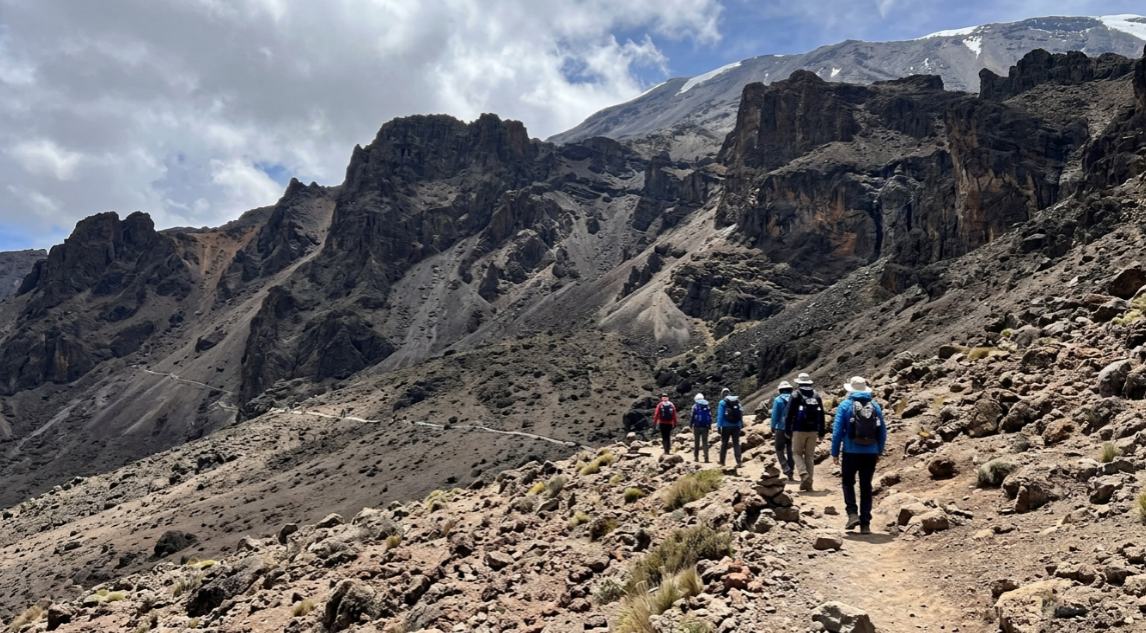
The most dangerous route option on Kilimanjaro, approaching the summit from the west through a steep, rockfall-prone gully. In 2006, a rockfall killed three American climbers. In 2015, another rockfall killed one climber. Since then, glacial retreat has increased the frequency of rockfall events. The Western Breach features three documented “kill zones” where climbers are exposed to falling rock even during quick crossings.
The route was closed again in May 2025 due to escalating rockfall risk from accelerating glacial melt.
Why it matters: All standard routes (Machame, Lemosho, Northern Circuit, Rongai, Marangu) reach the summit via Barafu Camp or Stella Point and do not involve rockfall exposure. The Western Breach represents the only true “high-risk” route choice on Kilimanjaro. Understanding this distinction matters because some budget operators still advertise the Western Breach when it’s open, sometimes without clearly communicating the additional danger.
Barafu Camp
The primary high camp at 4,673 m, used as the summit-night launch point for most routes including Machame, Lemosho, and Northern Circuit. Climbers typically arrive in the afternoon, rest for a few hours, and begin the summit push around midnight.
Why it matters: Barafu Camp is where the climb becomes genuinely hard. You’re at extreme altitude, trying to sleep in freezing temperatures, and about to embark on 6 to 8 hours of uphill hiking in the dark. The quality of your camp setup, your guide’s summit-night briefing, and your accumulated acclimatization from previous days all converge here. This is where the difference between a well-run operation and a cut-rate one becomes impossible to ignore. For a closer look at how weather affects conditions at Barafu and other camps, see the Kilimanjaro weather zone guide.
Lava Tower
An acclimatization waypoint at approximately 4,600 m on the Machame and Lemosho routes. Climbers ascend to Lava Tower during the day, then descend roughly 650 m to Barranco Camp (3,950 m) to sleep. This is the most prominent “climb high, sleep low” point on the mountain.
Why it matters: The Lava Tower day is often when climbers first feel the real effects of altitude. Headaches, nausea, and fatigue are common. But that’s actually the point. By stressing the body at 4,600 m and then recovering at 3,950 m, the acclimatization benefit is substantial. Routes that skip this step (or rush through it) sacrifice a critical safety advantage.
Acclimatization Day
A rest day or short-hike day built into the itinerary specifically for altitude adaptation. On longer routes (8-9 days), acclimatization days are integrated at key elevation points. Some climbers use Kilimanjaro day hikes before their main climb as a pre-trek acclimatization strategy.
Why it matters: Every additional day on the mountain improves acclimatization. The jump from a 5-day to a 7-day itinerary, or from 7 days to 9 days, produces measurable differences in summit success rates and altitude sickness incidence. Budget itineraries that compress the timeline are saving money at the direct expense of Kilimanjaro safety.
Pre-Climb Safety Preparation
Travel Insurance (High-Altitude Evacuation Coverage)
Specialized travel insurance that explicitly covers helicopter rescue and medical evacuation above 5,000 m. Standard travel insurance policies often exclude high-altitude activities or cap evacuation coverage at amounts far below actual costs.
Why it matters: Some popular travel insurance providers exclude the rescue dispatch cost itself, covering only medical treatment after you’ve been brought down. Helicopter evacuation from Kilimanjaro can cost several thousand dollars. Without coverage, that cost lands entirely on the climber. Before purchasing a policy, confirm three things: that it covers trekking above 5,000 m, that it includes helicopter evacuation, and that it covers search-and-rescue dispatch costs separately from medical treatment. Read the full travel insurance and evacuation coverage guide for a detailed breakdown.
Pre-Climb Medical Screening
A doctor consultation specifically addressing heart, lung, and altitude risk factors before committing to a Kilimanjaro climb. This should include discussion of any cardiac conditions, respiratory issues, blood pressure medication, and whether acetazolamide is appropriate.
Why it matters: Certain pre-existing conditions significantly increase altitude risk. A history of HAPE or HACE, uncontrolled hypertension, or severe respiratory conditions may make the climb inadvisable. A pre-climb screening isn’t about getting “cleared” for Kilimanjaro. It’s about understanding your personal risk profile and making an informed decision. For guidance on physical preparation, see the Kilimanjaro training glossary.
Kilimanjaro Safety Checklist
|
Before Booking |
On the Mountain |
|---|---|
|
Choose a KPAP partner |
Follow "Pole Pole" pace |
|
Choose a 7–9 day route |
Drink plenty of water |
|
Verify WFR-certified guides |
Never hide symptoms |
|
Confirm emergency oxygen |
Complete every health check |
|
Buy evacuation insurance |
Descend if guides advise |
How to Use This Glossary When Choosing an Operator
Knowing these terms transforms your ability to evaluate operators. When you’re comparing companies, use the glossary as a checklist. Does the operator mention WFR certification for their guides? Do they explain their pulse oximetry thresholds and LLSS protocols? Are they a KPAP partner? What’s their summit-night guide ratio?
The operators who explain these systems clearly and in detail are typically the ones who actually implement them. The ones who say “we take safety seriously” without specifics are often the ones operating at KINAPA’s legal minimum.
The average summit success rate across all operators is roughly 65%. With experienced guides on longer routes, that number reaches 85-95%. The difference isn’t luck. It’s the accumulation of every safety term defined in this glossary, applied consistently, by a crew that knows what they’re doing.
For a detailed guide on evaluating operators based on these criteria, read how to choose the best Kilimanjaro guide.
Frequently Asked Questions
Is climbing Kilimanjaro safe?
Statistically, yes. The mortality rate is approximately 0.03%, making it safer than driving in most countries. But that number assumes you’re climbing with a competent operator using proper safety protocols. With budget operators who lack WFR-trained guides, health monitoring equipment, and adequate crew, the risk profile is categorically different.
What is the biggest danger on Kilimanjaro?
Altitude sickness, specifically its severe forms: HAPE (fluid in the lungs) and HACE (brain swelling). Over 75% of climbers experience at least mild AMS symptoms. The key to safety is early detection through daily health checks and willingness to descend when symptoms escalate.
Do I need to be extremely fit to climb Kilimanjaro safely?
Physical fitness helps with endurance and comfort, but AMS does not correlate with fitness level. A highly trained athlete is just as susceptible to altitude sickness as a moderately fit hiker. The factors that actually predict safety are route duration, acclimatization profile, and guide quality.
What is a pulse oximeter and why do guides use one?
A pulse oximeter is a small fingertip device that measures blood oxygen saturation (SpO2). At sea level, normal readings are 95-100%. On Kilimanjaro, guides use specific thresholds: below 80% triggers close monitoring, and below 75% after two hours of observation requires mandatory descent. It’s the most objective tool guides have for assessing altitude stress.
How long should my Kilimanjaro itinerary be for safety?
Seven days is the minimum recommended duration for most routes. Eight to nine days is significantly safer and produces higher summit success rates. Every additional day allows more acclimatization. Five and six-day itineraries save money but increase AMS risk substantially.
Is the Western Breach route safe?
No. It is the most dangerous route on Kilimanjaro due to rockfall from retreating glaciers. Multiple fatalities have occurred, and the route was closed again in May 2025. All other standard routes summit via Barafu Camp or Stella Point without rockfall exposure.
Do I need travel insurance for Kilimanjaro?
Yes, and it must specifically cover high-altitude trekking above 5,000 m and helicopter evacuation. Standard policies often exclude these activities. Verify that your policy covers search-and-rescue dispatch costs, not just post-evacuation medical treatment.
What does KPAP certification mean for my safety as a climber?
KPAP audits verify that an operator treats porters ethically, including fair wages, proper equipment, and reasonable load limits. Well-supported porter teams set up camps on time, keep supplies organized, and allow guides to focus entirely on climber safety instead of crew management. Porter welfare and climber safety are directly connected.