

Zanzibar Dolphins: Ethical Tours & Best Spots (2026)
TL;DR
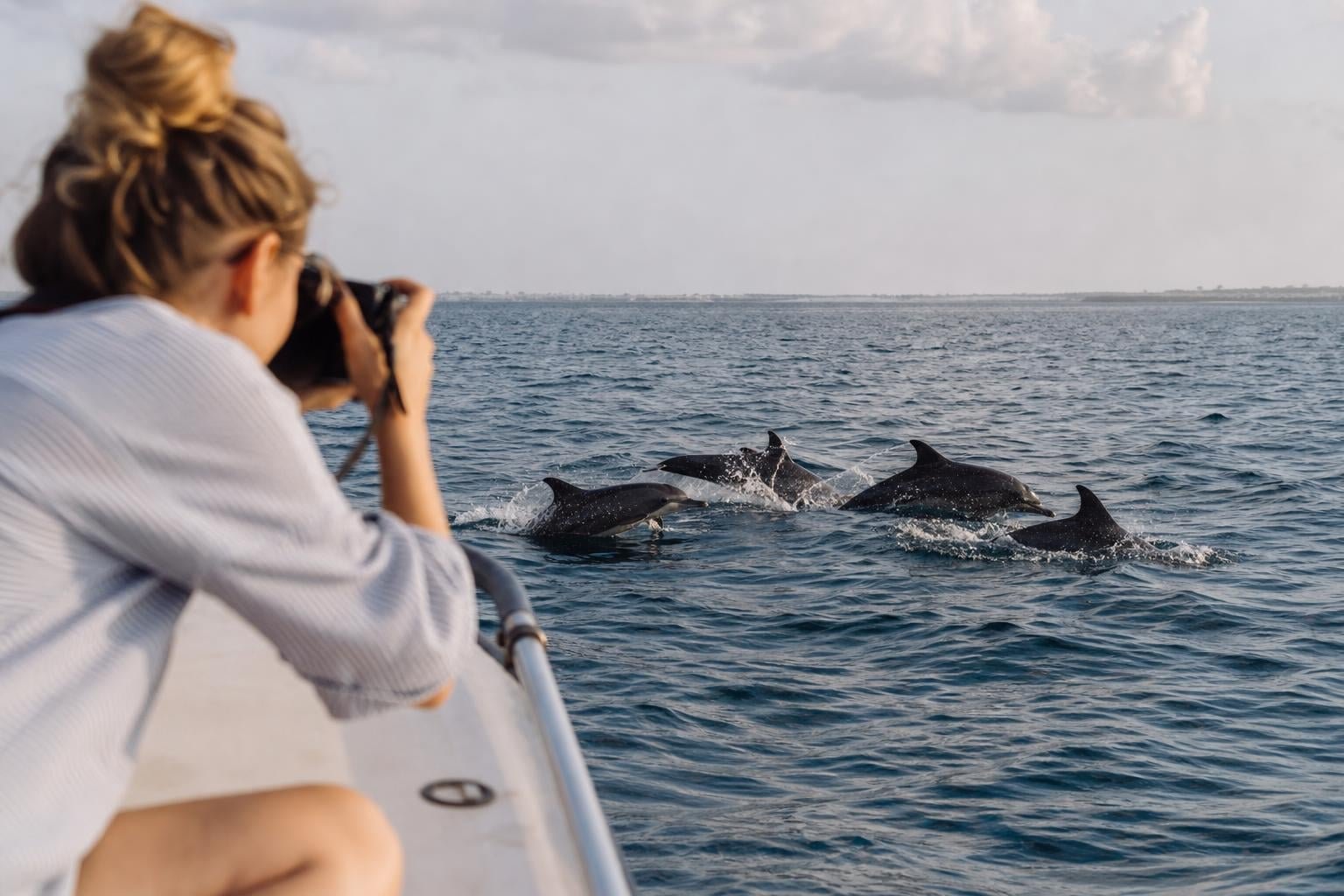
Three dolphin species live in Zanzibar’s waters: Indo-Pacific bottlenose, spinner, and the endangered Indian Ocean humpback dolphin. The main watching spots are Kizimkazi, Menai Bay, Mnemba Atoll, and Fumba. Research estimates only about 114 bottlenose and 19 humpback dolphins in the Menai Bay area, making ethical operator choice critical. Early morning during the dry season (June to October) offers the best sightings.
Zanzibar dolphins draw tens of thousands of visitors each year to the island’s southern and northeastern coasts. For many travelers, a dolphin tour is the first thing they book after landing in Stone Town. But the topic goes deeper than a boat ride. It involves three distinct species (one of them endangered), a genetically isolated population small enough to fit in a large classroom, a marine protected area that struggles with enforcement, and an ethics debate that dominates every travel forum discussing the experience.
This guide covers the species you can actually see, where to find them, what the tours involve, what they cost, and how to make choices that don’t contribute to the problem. If you’re planning a broader trip, our Zanzibar excursions guide covers the full range of day trips and activities on the island.
Quick Answer: Where Is the Best Place to See Dolphins in Zanzibar? Kizimkazi is the best-known place for dolphin tours in Zanzibar because resident Indo-Pacific bottlenose dolphins use the Menai Bay area year-round. However, it also has the greatest concern about boat crowding. For a more responsible experience, compare operators based on their wildlife-watching practices rather than simply choosing the tour with the highest sighting guarantee. Early departures generally offer better sea conditions, but dolphins can be encountered year-round.
Zanzibar Dolphin Tours at a Glance
|
Location |
Main attraction |
Typical tour format |
Best for |
Main consideration |
|---|---|---|---|---|
|
Kizimkazi |
Indo-Pacific bottlenose dolphins |
Short morning dolphin safari |
Highest chance of a dedicated dolphin encounter |
Boat crowding and wildlife-watching pressure |
|
Menai Bay |
Bottlenose and Indian Ocean humpback dolphins |
Dolphin tours from Kizimkazi or Fumba |
Conservation-focused travelers |
Marine protected area does not automatically mean low-impact tourism |
|
Mnemba Atoll |
Spinner dolphins plus reef snorkeling |
Dolphin and snorkeling excursions |
Travelers staying in the north/east |
Verify the operator's wildlife-watching practices |
|
Fumba |
Menai Bay, snorkeling and sandbanks |
Full-day marine excursion |
Travelers wanting a broader day trip |
Dolphin watching is usually only one part of the excursion |
Best overall for dedicated dolphin watching: Kizimkazi, but choose the operator carefully.
Best for combining dolphins with other marine activities: Fumba.
Best option for travelers staying in northern Zanzibar: Mnemba-area excursions.
Most important factor: The operator's behavior around dolphins matters more than the departure location.
Zanzibar is one of East Africa's best-known destinations for dolphin watching, with tours operating around Kizimkazi, Menai Bay, Fumba and the waters around Mnemba. The experience can be memorable, but choosing a responsible operator is important because some of Zanzibar's resident dolphin populations are small and vulnerable to human activity.
The best-known population is the Indo-Pacific bottlenose dolphin in Menai Bay. Research also documents the endangered Indian Ocean humpback dolphin in the same area, with a 2015 estimate of just 19 non-calf individuals.
This guide explains where to see Zanzibar dolphins, which species you may encounter, the best time to go, typical tour formats and prices, current wildlife-watching rules, and how to identify a more responsible dolphin tour.
What Dolphins Can You See in Zanzibar?
Several dolphin species have been documented in the waters around Zanzibar, but the species most relevant to dolphin tourism are the Indo-Pacific bottlenose dolphin, spinner dolphin and Indian Ocean humpback dolphin. The Menai Bay Conservation Area is particularly important for resident Indo-Pacific bottlenose and Indian Ocean humpback dolphins.
Indo-Pacific Bottlenose Dolphin
The Indo-Pacific bottlenose dolphin (Tursiops aduncus) is the species most closely associated with dolphin tours around Kizimkazi and Menai Bay.
A 2015 abundance estimate put the Menai Bay population at approximately 114 non-calf individuals, with a 95% confidence interval of 89 to 144. Researchers have also found that this population has high site fidelity and is genetically distinct from a bottlenose population found off northern Zanzibar.
Spinner Dolphin
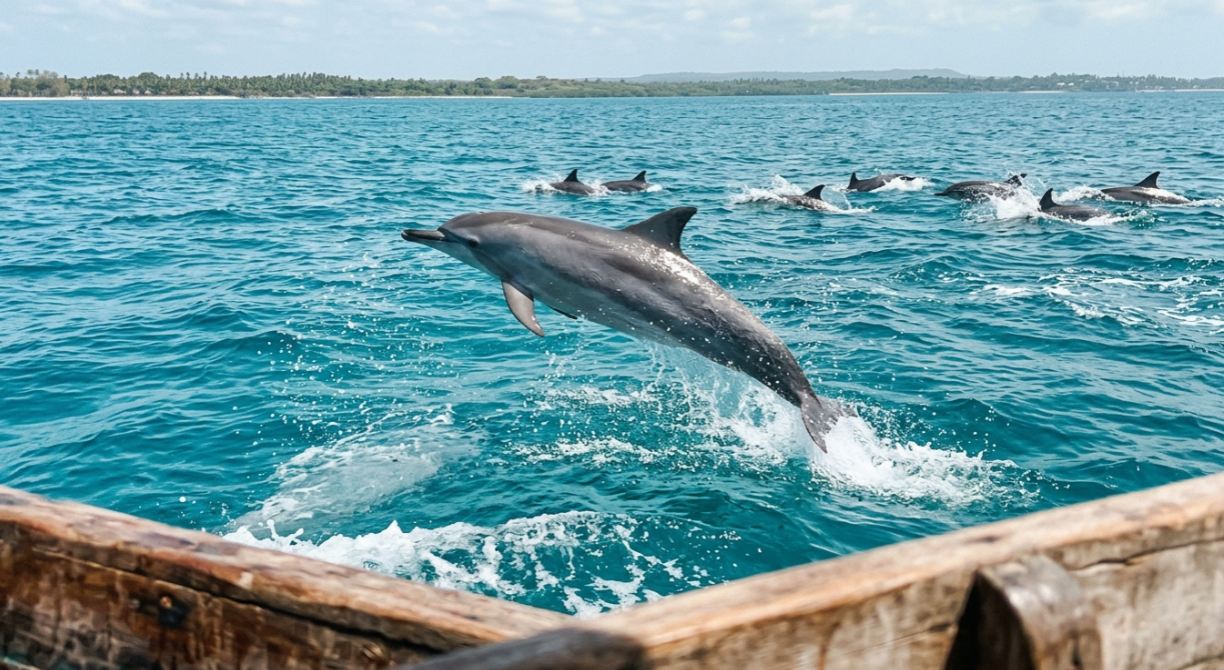
Spinner dolphins (Stenella longirostris) are also found in Zanzibar's waters and are known for their characteristic spinning leaps. They are frequently associated with offshore and deeper-water environments and may be encountered during marine excursions around the island.
Sightings are wildlife encounters rather than guaranteed attractions, so an operator should never promise that a particular species will appear.
Indian Ocean Humpback Dolphin
The Indian Ocean humpback dolphin (Sousa plumbea) is the most important species from a conservation perspective. The species is classified as Endangered, while the Menai Bay population has been assessed as exceptionally vulnerable.
A 2015 survey estimated only 19 non-calf humpback dolphins in Menai Bay, with a 95% confidence interval of 14 to 25. The estimate represented a 63% reduction from the 2002 estimate. Researchers identified fisheries bycatch and unregulated tourism among the major pressures on the population.
Other Dolphin Species
Other dolphin species have been recorded around Zanzibar, including Risso's dolphins, Fraser's dolphins and pantropical spotted dolphins. These sightings are comparatively uncommon and should not be treated as guaranteed parts of a standard dolphin tour.
Best Places to See Dolphins in Zanzibar
The best location depends on whether you prioritize dedicated dolphin watching, convenience, snorkeling or a broader marine excursion.
|
Location |
Best for |
Dolphins |
Typical experience |
Ethics consideration |
|---|---|---|---|---|
|
Kizimkazi |
Dedicated dolphin tours |
Bottlenose |
Short early-morning boat trip |
Choose an operator carefully because of potential boat congestion |
|
Menai Bay |
Wildlife and conservation context |
Bottlenose and humpback |
Marine excursions from several departure points |
Protected status does not eliminate tourism pressure |
|
Fumba |
Full-day marine excursion |
Dolphins plus other activities |
Safari Blue-style day trip |
Look for operators following wildlife-watching rules |
|
Mnemba area |
Northern Zanzibar travelers |
Often spinner dolphins |
Dolphin watching plus snorkeling |
Check how the operator approaches and interacts with dolphins |
Which Zanzibar Dolphin Spot Is Best?
Choose Kizimkazi if your priority is a dedicated dolphin excursion and you are willing to research the operator carefully.
Choose Fumba if you want dolphin watching combined with snorkeling, sandbanks and a longer marine excursion.
Choose Mnemba if you are staying in northern or northeastern Zanzibar and want to combine marine wildlife with reef activities.
The departure point matters, but the operator's behavior around dolphins is more important than simply choosing one location over another.
Where to See Dolphins in Zanzibar
Four locations account for nearly all dolphin encounters. Each offers a different experience, and the distance from your hotel matters more than most guides let on.
Kizimkazi
Kizimkazi sits on Zanzibar’s southern coast, about 60 km from Stone Town (roughly 1.5 to 2 hours by car). The village is split into two sections: Kizimkazi Dimbani to the north and Kizimkazi Mkunguni to the south. Mkunguni is the main departure point for dolphin tours. In the early 1990s, this was a quiet fishing village. By the mid-2000s, it had become one of Zanzibar’s most-visited destinations, with over 20,000 tourists arriving annually for boat excursions.
The concentration of boats here is the source of most ethical concerns. Practitioners on TripAdvisor describe mornings with 30 or more boats pursuing the same pod.
Menai Bay Conservation Area (MBCA)
Menai Bay is Zanzibar’s largest marine protected area, covering 470 square kilometers off the southwest coast. It has been a designated conservation area since 1997. This is where the resident bottlenose and humpback dolphin populations live, and where most of the population research has been conducted.
Tours departing from Fumba or Kizimkazi often enter Menai Bay waters. The MBCA is supposed to offer greater protection, but enforcement of boating regulations remains inconsistent.
Mnemba Atoll
Mnemba Island is a protected atoll off Zanzibar’s northeast coast. It’s the best option for travelers staying on the north or east side of the island. Dolphin safaris here (often featuring spinner dolphins) are typically combined with world-class snorkeling on the reef. This is a premium experience, and the marine environment around Mnemba is generally in better condition than the heavily trafficked Kizimkazi area.
For families weighing options, our Zanzibar family travel glossary covers kid-friendly considerations for marine excursions.
Fumba Peninsula
Fumba, on the southwest coast, is the departure point for Safari Blue, one of Zanzibar’s most popular full-day excursions. These sailing safaris combine dolphin watching with snorkeling, sandbank visits, and a seafood lunch. Fumba tours enter the Menai Bay Conservation Area and tend to be less frantic than the Kizimkazi experience, partly because the excursion isn’t solely focused on finding dolphins.
Why Kizimkazi Can Be Crowded
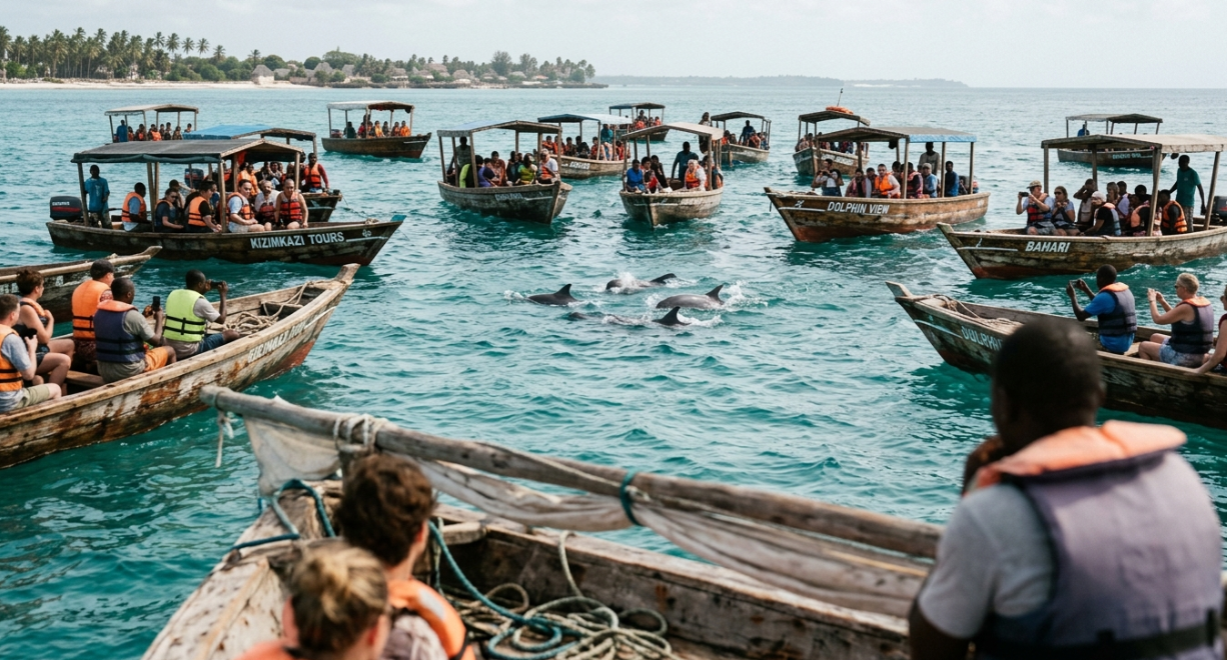
Kizimkazi's popularity is also its biggest drawback. Because multiple operators may be looking for the same dolphins, the quality of the encounter depends heavily on how captains behave around wildlife.
Zanzibar's 2024 tourism-related watersports standard sets specific limits for dolphin watching. It states that a maximum of five vessels should be in the dolphin-watching area at one time and that only one dolphin-watching vessel should be within 50 meters of a dolphin group. Vessels should also limit their time in the watching area and leave dolphins alone when they show signs of disturbance.
For travelers, this means a responsible tour is not simply one that finds dolphins. It is one that allows the animals to control the encounter.
Tour Types, Costs, and Key Terms
Dolphin Safari
The standard Zanzibar dolphin tour is a morning boat trip lasting 2 to 4 hours. Boats depart early (often 6:00 to 7:00 AM) and cruise the coastal channels looking for pods. Some operators stop for snorkeling afterward. Basic group tours from Kizimkazi start around $25 to $45 per person.
Safari Blue
A full-day excursion departing from Fumba that packages dolphin watching, snorkeling, sailing on a traditional dhow, and lunch on a sandbank. Prices typically range from $75 to $120 per person. This is the most popular combo format.
Dhow
A dhow is a traditional wooden sailing vessel with a lateen (triangular) sail, used across the Swahili Coast for centuries. Many dolphin tours and Safari Blue excursions use motorized dhows or a mix of motorboats and dhows.
Private Dolphin Watching
For travelers who want more control over the experience (and the ability to leave a pod alone if it’s being harassed by other boats), private charters run approximately $140 per adult for a full-day experience.
Snorkeling vs. Swimming with Dolphins
These terms get used interchangeably, but they describe different activities. Snorkeling means exploring a reef with mask and fins. “Swimming with dolphins” means entering the water when a pod is nearby, hoping they’ll swim close. The distinction matters because swimming with dolphins is far more disruptive to the animals than watching from a boat.
No-Chase Policy
A commitment by an operator to let dolphins approach the boat rather than driving into or after a pod. This is the single most important criterion when choosing a tour. Operators with a genuine no-chase policy will wait, drift, and accept that some mornings the dolphins simply aren’t interested.
Conservation and Regulation
Government Guidelines
The Zanzibar Department of Fisheries and Marine Resources has issued official guidelines for dolphin tourism. The rules mandate keeping a minimum distance of 50 meters from dolphins and prohibit driving boats into a pod’s path. In practice, enforcement is the gap. Multiple sources, including researchers and tourists, report that these guidelines are routinely ignored by boat operators competing to give their passengers the closest encounter.
KIDOTOA
KIDOTOA is a local NGO dedicated to the long-term sustainable development of dolphin tourism in Menai Bay. The organization focuses on dolphin research, education, and environmental conservation. In 2005, KIDOTOA held the first intensive training course in sustainable dolphin tourism for tour guides, a program that remains one of the only formal training efforts in the area.
African Impact Conservation Program
Established in 2013 in Kizimkazi, this volunteer research program investigates the impact of marine tourism on dolphin populations. Carried out in partnership with the University of Dar es Salaam, the findings support the development and implementation of tourism policies.
Why Boat Behavior Matters
Marine researchers sometimes describe an animal's allocation of time to feeding, resting, nursing and socializing as its behavioral budget. Repeated boat disturbance can interrupt these activities and force dolphins to change their normal behavior.
Research on Zanzibar's dolphins has raised concerns about tourism intensity and its effects on dolphin behavior, which is why responsible watching focuses on minimizing pursuit, noise and repeated disturbance.
Bycatch
The accidental capture of dolphins in fishing nets. Along with tourism pressure, bycatch is the primary threat to Zanzibar’s dolphin populations, particularly the endangered humpback dolphins. The IUCN assessment identifies incidental mortality in fisheries as the issue primarily responsible for population declines across the Indian Ocean.
For context on Zanzibar’s cultural traditions and how fishing communities interact with marine conservation efforts, that guide offers useful background.
Zanzibar Dolphin Watching Rules
Zanzibar has specific requirements for dolphin and whale watching vessels. The 2024 tourism-related watersports standard requires dolphin-watching operators to be licensed and requires guides to provide instructions and guidelines to clients during the trip.
Key requirements include:
|
Rule |
What it means for travelers |
|---|---|
|
Maximum five vessels in the watching area |
Large clusters of boats should be a warning sign |
|
One watching vessel within 50 m of a dolphin group |
Boats should not crowd dolphins |
|
Maximum one hour in the watching area |
Operators should not remain indefinitely around the same animals |
|
Approach at very low speed and on a parallel course |
Boats should not race toward dolphins |
|
No head-on or directly-from-behind approach |
Dolphins should have space to move naturally |
|
Slow to no-wake speed or stop if dolphins are within 100 m ahead |
Captains should avoid sudden approaches |
|
Avoid dolphins with young |
Mothers and calves require additional space |
|
Leave dolphins alone when they show avoidance behavior |
The animals' behavior should determine whether the encounter continues |
The standard also says operators should respect the dolphins' choice to approach or flee and should leave an elusive group alone rather than continuing to pursue it.
When to See Zanzibar Dolphins
Best Time of Day
Zanzibar dolphins are best observed in the early morning, between 6:00 and 8:00 AM. This is when pods come into shallow, protected waters to rest and socialize after nighttime feeding. By mid-morning, they’ve typically moved to deeper water. Every reputable operator departs at or before dawn.
Best Season
Thanks to resident populations, dolphin sightings are possible throughout the year. The dry seasons offer the best conditions: June through October and December through February. Calmer seas improve visibility and make boat travel more comfortable. The long rains (March through May) bring rougher water and lower visibility, though dolphins are still present.
For travelers coordinating a dolphin trip with a mainland safari, the best time to visit East Africa guide breaks down seasonal patterns across the region.
Ethical Dolphin Watching: What Travelers Should Know
This is the section that matters most. The ethics of Zanzibar dolphin tourism are not abstract. They involve a population of roughly 114 bottlenose dolphins and 19 humpback dolphins being pursued daily by fleets of motorboats.
What Travelers Report
Recent TripAdvisor reviews paint a stark picture. One visitor in 2026 described over 30 boats chasing a pod, with dolphins “coming up for air then shooting back down deep just to get away from the roaring boats.” No instructions were given other than “jump” when dolphins surfaced nearby. Another contributor noted that swimming with dolphins in Zanzibar “verges on harassment,” with boats zooming up to feeding pods and dropping swimmers directly into their path.
Not every experience is like this. Some travelers specifically credit ethical operators as the highlight of their trip. The difference comes down to who you book with.
How to Choose an Ethical Dolphin Tour in Zanzibar
The easiest way to evaluate a dolphin tour is to focus on what the operator does when dolphins appear, not what the tour advertisement promises.
Green Flags
Choose operators that:
-
Explain dolphin-watching rules before departure.
-
Approach slowly rather than racing toward dolphins.
-
Keep a clear escape route for the animals.
-
Avoid mothers and calves.
-
Stop or leave when dolphins show signs of avoidance.
-
Do not promise a guaranteed dolphin sighting.
-
Do not pressure guests to enter the water.
-
Are willing to leave a crowded pod rather than joining a cluster of boats.
-
Can explain their wildlife-watching policy clearly before you book.
Red Flags
Be cautious if an operator:
-
Promises guaranteed sightings or guaranteed swimming.
-
Chases dolphins to get closer photographs.
-
Cuts across a pod's path.
-
Encircles dolphins with multiple boats.
-
Encourages swimmers to jump into the water immediately.
-
Approaches mothers with calves.
-
Continues following dolphins when they repeatedly change direction or dive to avoid boats.
-
Cannot explain its wildlife-watching rules.
The Simple Test
Ask the operator one question before booking:
“What do you do if the dolphins move away from the boat?”
A responsible answer should involve slowing down, stopping, giving the animals space or leaving the group. If the answer is essentially “we follow them,” choose another operator.
Alternatives Worth Considering
Travelers who want a coastal wildlife experience without the ethical tension of Zanzibar’s dolphin tourism scene have options. Pangani and the Saadani coast offer a quieter Swahili Coast experience with beach, bush, and marine encounters minus the crowds. Saadani National Park is the only park in East Africa where the beach meets the bush, and boat safaris on the Wami River provide wildlife sightings in a completely different setting.
What to Expect on a Zanzibar Dolphin Tour
A typical Zanzibar dolphin excursion begins early in the morning from a coastal departure point such as Kizimkazi or Fumba. The exact itinerary varies by operator, but most trips involve a boat ride to areas where dolphins are known to occur, time observing marine wildlife, and a return trip to shore.
Depending on the tour, the itinerary may also include snorkeling, reef visits, sandbanks or lunch.
Do not expect a guaranteed wildlife encounter. Dolphins are wild animals, and responsible operators should allow the animals to determine whether an encounter happens.
Should You Swim With Dolphins in Zanzibar?
Swimming with wild dolphins is more controversial than observing them from a boat. If an operator encourages guests to chase dolphins, jump directly into their path or repeatedly enter the water around a pod, that is a strong reason to choose a different tour.
Zanzibar's official guidance emphasizes allowing dolphins to choose whether to approach or move away.
For the lowest-impact experience, watching quietly from a properly operated boat is the safer choice for the animals.
How Much Does a Zanzibar Dolphin Tour Cost?
Zanzibar dolphin tour prices vary substantially by departure point, group size, inclusions and whether the boat is private or shared. Treat the figures below as planning ranges rather than fixed 2026 prices.
|
Tour type |
Planning range |
Usually includes |
|---|---|---|
|
Shared dolphin trip |
$25–$45 per person |
Boat trip and dolphin watching |
|
Full-day marine excursion |
$75–$120 per person |
Dolphin watching, snorkeling and other activities |
|
Private boat |
From roughly $140+ |
Private boat and flexible itinerary |
Always confirm the current price directly with the operator before booking. Hotel transfers, park or conservation fees, food, equipment and private-boat supplements may be charged separately.
Planning a Zanzibar Dolphin Trip into a Broader Itinerary
Most travelers visiting Zanzibar are adding a beach extension to a Tanzania safari or Kilimanjaro climb. Dolphin watching fits naturally into a 2 to 3 day Zanzibar stay, especially if booked for the first morning when energy and enthusiasm are highest.
If you’re building a longer trip, our 14-day Tanzania safari and Zanzibar itinerary shows how a dolphin excursion fits into the broader flow of a safari-to-beach trip.
The key is making an informed choice. Knowing that you’re visiting a population of barely over 100 dolphins, that the humpback dolphins sharing those waters are endangered, and that your operator selection directly affects their daily survival, that knowledge transforms a generic tourist activity into something more considered.
When Is the Best Time to See Dolphins in Zanzibar?
Dolphins can be encountered around Zanzibar throughout the year, but sea conditions, tides, weather and local dolphin behavior can affect the quality of a trip.
Best Time of Day
Early-morning departures are common because sea conditions are often calmer and visibility can be better before winds increase. However, dolphin activity is not controlled by a simple 6:00–8:00 AM rule. Research in Menai Bay has found that dolphin occurrence varies by time of day, tide and monsoon season.
Best Months
For generally favorable beach and boating conditions, June through October and December through February are commonly preferred periods.
March through May coincides with the main long-rain season and can bring more challenging marine conditions.
The Bottom Line
Choose an early departure for better boating conditions, but do not book a tour solely because an operator claims that a particular hour guarantees dolphins. Wildlife sightings remain unpredictable.
Kizimkazi vs Mnemba vs Fumba: Which Dolphin Tour Should You Choose?
Choose Kizimkazi if...
You want a dedicated dolphin-watching trip and are staying in southern or central Zanzibar. Kizimkazi is strongly associated with the resident bottlenose dolphins of Menai Bay.
Choose Mnemba if...
You are staying in northern or northeastern Zanzibar and want to combine marine wildlife with snorkeling. Verify the operator's dolphin-watching practices rather than assuming that a premium or protected location automatically means an ethical encounter.
Choose Fumba if...
You want a broader marine day trip that combines dolphin watching with snorkeling, sandbanks and other activities. Fumba is also a practical departure point for exploring Menai Bay.
Which Is Best for Responsible Dolphin Watching?
There is no location that automatically guarantees an ethical encounter. The best choice is the operator that follows Zanzibar's wildlife-watching requirements, avoids chasing or crowding dolphins, and is willing to end an encounter when the animals show signs of disturbance.
Frequently Asked Questions
Where is the best place to see dolphins in Zanzibar?
Kizimkazi is the best-known place for dedicated dolphin tours because resident Indo-Pacific bottlenose dolphins use the Menai Bay area. However, Kizimkazi can also experience significant boat activity, so operator choice is important.
How far should a boat stay from dolphins in Zanzibar?
Zanzibar's 2024 tourism-related watersports standard states that only one dolphin-watching vessel should be within 50 meters of a dolphin group, with additional rules governing vessel numbers, speed and approach behavior.
Are dolphin tours in Zanzibar ethical?
They can be, but the experience depends heavily on the operator. Responsible tours avoid chasing dolphins, approaching mothers and calves, cutting across pods or continuing an encounter when dolphins show avoidance behavior. Zanzibar's official guidance requires operators to respect the animals' behavior and leave them alone when they show signs of disturbance.
How long is a Zanzibar dolphin tour?
A dedicated dolphin excursion commonly takes several hours, although the exact duration varies by departure point and operator. Full-day marine excursions can combine dolphin watching with snorkeling, sandbanks and lunch.
Can you swim with dolphins in Zanzibar?
Some tours offer swimming or entering the water near dolphins, but this is more ethically sensitive than observing from a boat. A responsible operator should never chase dolphins or force an interaction and should allow the animals to decide whether they approach swimmers.
Do dolphins live in Menai Bay year-round?
Yes. Indo-Pacific bottlenose and Indian Ocean humpback dolphins are resident in the Menai Bay Conservation Area, with research documenting strong site fidelity to the area.
Do Dolphins Live in Zanzibar?
Yes. Several dolphin species occur in the waters around Zanzibar, and Indo-Pacific bottlenose and Indian Ocean humpback dolphins are resident in the Menai Bay Conservation Area. Research has documented high site fidelity among the resident populations, meaning these dolphins regularly use the area rather than simply passing through it.