

Tanzania Safari Visa: 2026 Guide, Fees, Requirements

TL;DR
Most travelers need a Tanzania safari visa costing $50 (or $100 for US citizens), available as an eVisa or on arrival at airports like Kilimanjaro (JRO). Tanzania is not covered by the East Africa Tourist Visa, so you need a separate visa even if you hold an EATV. If your safari includes Zanzibar, budget an additional $44 for mandatory travel insurance. Apply for the eVisa 3 to 4 weeks before departure, but carry crisp US dollar bills as backup in case you need visa on arrival.
Planning a Tanzania safari means confronting a tangle of entry requirements that go well beyond a single visa form. There’s the visa itself, yes. But there’s also the yellow fever certificate that catches travelers routing through Kenya off guard, the mandatory Zanzibar insurance that didn’t exist before October 2024, and the widespread confusion about whether the East Africa Tourist Visa covers Tanzania (it doesn’t).
This guide defines every term you’ll encounter when sorting out your Tanzania safari visa and related entry documents. Think of it as a glossary built for people who are actually booking a trip, not just browsing. The visa fee is just one of several mandatory costs to budget for before your safari.
Quick Answer If you're traveling to Tanzania for a safari in 2026, you'll usually need a tourist visa before or upon arrival. Most travelers pay $50 USD, while US passport holders pay $100 USD for a mandatory Multiple Entry Visa. Tanzania is not part of the East Africa Tourist Visa, so you must obtain a separate Tanzania visa. If your itinerary includes Zanzibar, you must also purchase mandatory Zanzibar travel insurance. Apply for an eVisa at least 3–4 weeks before departure and carry printed copies of your visa approval, passport, return ticket, and any required health documents.
Tanzania Safari Visa Requirements at a Glance
|
Requirement |
Most Travelers |
|---|---|
|
Visa Required |
Yes |
|
Visa Cost |
$50 USD |
|
US Citizens |
$100 Multiple Entry Visa |
|
Visa on Arrival |
Yes |
|
eVisa Available |
Yes |
|
Passport Validity |
6 months minimum |
|
Blank Passport Page |
At least 1 |
|
Return Ticket |
Required |
|
Yellow Fever Certificate |
Only when arriving from risk countries |
|
Zanzibar Insurance |
Required only when visiting Zanzibar |
|
Recommended Application Time |
3–4 weeks before travel |
Core Visa Types for Safari Travelers
Ordinary (Single Entry) Visa
This is what most safari travelers need. It costs $50 USD and is valid for up to 90 days. Citizens of almost every country can apply for this visa type when visiting Tanzania for tourism. The one big exception: US passport holders, who must apply for the Multiple Entry Visa instead.
Ninety days is more than enough for even the most ambitious safari itinerary. If you’re doing a standard 7 to 14 day trip through the Serengeti, Ngorongoro Crater, and Tarangire, this is your visa.
Multiple Entry Visa
Costs $100 USD and is valid for one year. US citizens are required to get this visa type for tourism, with no option to purchase the cheaper single entry version. This is a quirk of bilateral agreements, not a choice.
The multiple entry visa also makes sense for travelers planning to leave Tanzania and return later in the same year. For example, a safari in the Serengeti followed by a side trip to Kenya’s Maasai Mara, then back to Tanzania for Zanzibar.
Transit Visa
A $30 visa for travelers passing through Tanzania en route to another destination. Valid for 14 days. This applies if you have a long layover or overland connection through Tanzania but aren’t staying for a safari. Most safari visitors won’t need this.
Referral Visa
This is where things get complicated for certain nationalities. Travelers from a list of referral countries (including Nigeria, Pakistan, Bangladesh, Somalia, and others) cannot get a visa on arrival. They need advance clearance from Tanzania’s Commissioner General of Immigration, and the process can take weeks.
The official advice is stark: applicants under the referral category should not book flights or make any reservations in Tanzania before receiving approval. Apply at least two months before your travel date. This is not a formality. Ignoring it can mean being denied boarding.
Business Visa
Not relevant for safari travelers, but worth a brief mention to avoid confusion. If you’re visiting Tanzania for conferences, meetings, or commercial purposes, a different visa category applies. Tourism activities, including safari, fall under the Ordinary or Multiple Entry visa.
Two Ways to Get Your Tanzania Safari Visa
eVisa (Recommended, With Caveats)
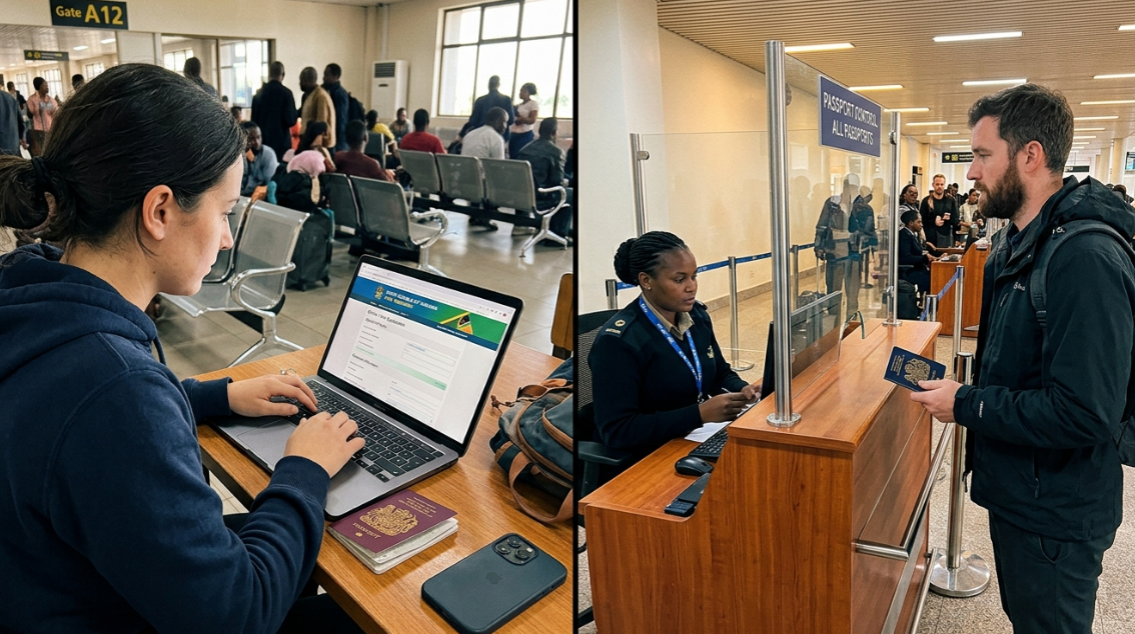
The Tanzania Immigration Services portal is the official online application system. Processing officially takes 3 to 10 business days, with most applicants receiving a decision within 4 to 6 business days.
There is no paid expedited option. Everyone waits in the same queue regardless of nationality or visa type.
Here’s what the official guidance doesn’t tell you: the eVisa system has a reputation for unreliability. In March 2026, the Tanzania Immigration Services Department announced its system was down following a technical incident, with no timeline for restoration. This wasn’t an isolated event.
Practitioners on TripAdvisor report persistent problems. One frequent traveler wrote: “I advise everyone to just get visa on arrival. In my opinion, it’s much easier than trying to deal with the online system which is very finicky.” Another discussion described a family from the Netherlands who couldn’t complete their eVisa application due to repeated error messages and had read that processing sometimes stretches beyond four weeks.
Team Kilimanjaro, a veteran operator, offers a balanced perspective: if you have time to plan ahead, the eVisa is recommended for peace of mind and to skip the arrival queue. But among more than 10,000 climbers they’ve processed, only one client has ever been denied entry with visa on arrival.
Practical recommendation: Apply 3 to 4 weeks before departure. If your eVisa hasn’t arrived by the time you fly, bring cash and get it on arrival.
If you’re planning a private Tanzania safari, a good operator can advise on timing your visa application alongside your itinerary logistics.
Visa on Arrival
Tanzania issues visas on arrival at Julius Nyerere International Airport (DAR), Kilimanjaro International Airport (JRO), Abeid Amani Karume International Airport in Zanzibar (ZNZ), major land borders like Namanga (the Kenya-Tanzania crossing used for Maasai Mara to Serengeti combinations), and seaports.
Processing typically takes 15 to 60 minutes depending on how many flights have just landed. Peak season (June through October, and December) means longer waits.
Cash is king at the border. You can technically pay with a Visa card, but travelers report the card system is frequently down. Bring crisp, unmarked US bills in $50 or $100 denominations, printed since 2013. Older or marked bills are routinely rejected.
Visa Grant Notice
When your eVisa is approved, you receive a Visa Grant Notice. This is your approval letter, but it is not a guaranteed entry pass. The immigration officer at your entry point can still refuse entry if you don’t meet other requirements (valid passport, return ticket, health documents). Print a hard copy and carry it with your passport.
eVisa vs Visa on Arrival
|
Feature |
eVisa |
Visa on Arrival |
|---|---|---|
|
Apply Before Travel |
Yes |
No |
|
Wait Time at Airport |
Minimal |
15–60 minutes |
|
Payment |
Online |
Cash preferred |
|
Risk of System Issues |
Yes |
No |
|
Recommended |
Yes |
Good Backup |
Entry Documents That Function Like Visas
A Tanzania safari visa gets you through immigration. But other documents are equally non-negotiable, and missing them can stop you at the border just as effectively.
Yellow Fever Vaccination Certificate
If you’re flying directly from Europe or the United States, no yellow fever certificate is required. The requirement kicks in only if you’re arriving from (or transiting through) a country with yellow fever risk.
Here’s the trap that catches multi-country safari travelers: Kenya, Ethiopia, and Rwanda are all classified as yellow fever risk countries. If you spend time in Kenya and then travel to Tanzania, you will need a Yellow Fever vaccination certificate to enter Tanzania. A transit of more than 12 hours through a high-risk country also triggers the requirement.
This matters because many popular East Africa safari itineraries combine Kenya and Tanzania. If you’re doing the Maasai Mara before crossing to the Serengeti, get vaccinated before you leave home.
The good news: the WHO now considers a single yellow fever vaccine dose valid for life. No boosters needed, and the certificate never expires.
Zanzibar Mandatory Travel Insurance (ZIC)
Since October 1, 2024, all non-resident visitors to Zanzibar must purchase mandatory travel insurance priced at $44 USD. This applies to every traveler, including children (ages 3 to 17 get a 50% discount at $22, and children under 3 are free). The policy is valid for up to three months.
This is not optional, and your existing travel insurance policy will not satisfy the requirement. It can only be purchased through the official Visit Zanzibar portal.
If your safari ends with a few days on the beach in Zanzibar (a very common itinerary pattern), budget for this on top of your visa fee. For a deeper look at all the costs involved, see this Zanzibar fees and budget guide.
Developing story: During the 2025-2026 national budget presentation, Tanzania’s Finance Minister proposed extending mandatory travel insurance to all non-residents entering mainland Tanzania at the same $44 rate. This is not yet in effect, but it’s worth watching if you’re booking a trip for late 2026 or beyond.
Passport Requirements
Your passport must have at least six months of validity remaining from your date of entry, plus at least one blank page. You also need to show a return or onward ticket at the entry point. These are enforced. Immigration officers check.
Multi-Country Visa Terms
East Africa Tourist Visa (EATV)
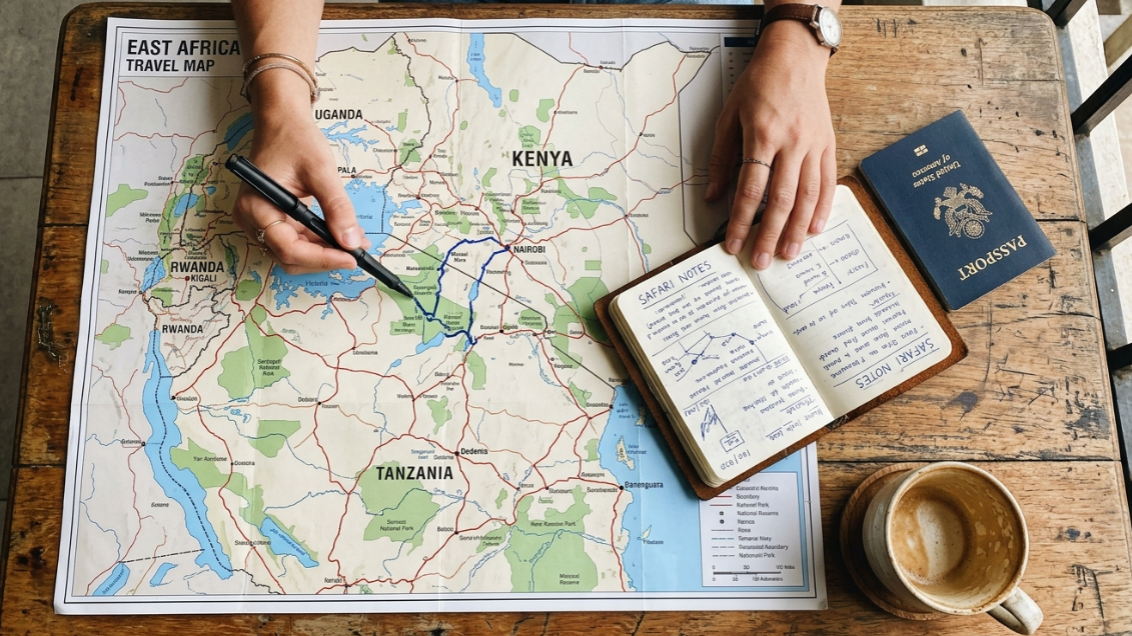
This is the single biggest source of confusion for safari travelers planning multi-country trips. The EATV costs $100 and covers Kenya, Uganda, and Rwanda. Tanzania is not included.
That bears repeating: Tanzania requires its own separate visa regardless of whether you hold an EATV. If your trip includes the Serengeti, Ngorongoro Crater, Kilimanjaro, or Zanzibar, you need a Tanzania eVisa ($50 for most nationalities, $100 for US citizens) in addition to any EATV you’ve purchased.
There’s another catch. The EATV remains valid only while you stay within the Kenya-Uganda-Rwanda bloc. If you fly from Nairobi to Dar es Salaam for a Tanzania safari, the EATV expires. You cannot re-enter Kenya, Uganda, or Rwanda on the same EATV after leaving the bloc. For a full breakdown of how these visas interact, see our East Africa visa guide.
Kenya eTA
Kenya replaced its traditional visa system with an electronic Travel Authorization (eTA) in January 2024. It costs $34 and is required for most nationalities. This is relevant if your East Africa trip starts in Nairobi before continuing to Tanzania.
Uganda eVisa
Uganda’s tourist visa costs $50 and is applied for online. Unlike Tanzania, Uganda requires yellow fever vaccination for all arriving travelers, regardless of where you’re coming from. If you’re combining a Uganda gorilla trek with a Tanzania safari, get the vaccine before leaving home. It satisfies both Uganda’s universal requirement and Tanzania’s conditional one.
Tanzania Visa Exempt Countries
Explain briefly that some nationalities do not require visas and link to the official exemption list instead of listing dozens of countries.
Example:
Some nationalities are exempt from Tanzania tourist visas under reciprocal agreements. Since this list changes periodically, always verify your status with Tanzania Immigration before travel.
This captures searches for:
-
Tanzania visa exempt countries
-
Who needs a Tanzania visa
Practical Terms Safari Travelers Ask About
eVisa Processing Time
Officially 3 to 10 business days. Realistically, plan for longer. Business days exclude weekends and Tanzanian public holidays. If you submit on a Friday, processing doesn’t start until Monday.
Peak travel seasons (June through October and December) may cause additional delays. The single most common cause of processing delays is a non-compliant passport photo, specifically a wrong background color, glasses in the image, or low resolution. Double check your photo before submitting.
eVisa System Outages
The Tanzania immigration portal has experienced documented outages, including the March 2026 incident where the system went down without a clear timeline for restoration. Forum users describe access issues during peak periods as well. This is why carrying USD cash for visa on arrival is a genuine backup plan, not an afterthought.
Visa Fees by Nationality
|
Nationality |
Visa Type |
Cost |
|---|---|---|
|
Most countries |
Ordinary (Single Entry) |
$50 |
|
United States |
Multiple Entry (mandatory) |
$100 |
|
Transit travelers |
Transit Visa |
$30 |
|
Referral countries |
Referral Visa |
$50 (plus advance clearance) |
Application ID
When you submit an eVisa application, you receive an Application ID for tracking your status on the immigration portal. Save this number. You’ll need it to check progress and to reference if you contact the immigration department about delays.
Arrival / Declaration Form
At your entry point, you’ll fill out a physical arrival card. This is a standard immigration form asking for your accommodation details, flight information, and purpose of visit. Nothing complicated, but have your hotel or lodge name and address ready.
Key Entry Points for Safari Travelers
Kilimanjaro International Airport (JRO) is the primary gateway for northern circuit safaris covering Tarangire, Ngorongoro, and the Serengeti. Most safari travelers flying internationally arrive here.
Julius Nyerere International Airport (DAR) in Dar es Salaam serves southern circuit safaris and travelers connecting to Zanzibar.
Abeid Amani Karume International Airport (ZNZ) in Zanzibar handles direct international flights and domestic connections.
Namanga Border is the main land crossing between Kenya and Tanzania, used by travelers combining the Maasai Mara with the Serengeti.
Common Tanzania Safari Visa Mistakes
Assuming the EATV covers Tanzania. It doesn’t. Only about two of the top-ranking pages on this topic even mention this distinction, which tells you how widespread the confusion is. Always get a separate Tanzania visa.
Not knowing US citizens must get the $100 multiple entry visa. There is no $50 option for American passport holders visiting Tanzania for tourism. Period.
Skipping the yellow fever vaccine for Kenya to Tanzania routing. If you’re doing a multi-country East Africa trip that touches Kenya before Tanzania, you need the certificate. Getting turned away at the Namanga border or JRO immigration for lack of a yellow fever card is entirely preventable.
Forgetting Zanzibar insurance for safari and beach combos. The $44 ZIC insurance has been mandatory since October 2024. Your regular travel policy doesn’t count. For families traveling with kids, check the Zanzibar family travel guide for details on children’s rates and what to expect.
Applying too close to departure during peak season. Three to ten business days is the official range, but forum users report waits of three to four weeks during high season. Submit your application at least a month out.
Not bringing crisp USD cash as backup. Even if your eVisa is approved and printed, bring cash. Card machines fail. Bills must be post-2013, crisp, and unmarked.
Not filing separate visa applications for children. Every passport holder, including minors, needs their own individual visa application. Listing children on a parent’s application does not satisfy this requirement.
For a broader look at planning pitfalls beyond the visa, see this guide on costly safari booking mistakes.
Frequently Asked Questions
Do I need a visa for a Tanzania safari?
Yes. Almost all foreign nationals need a visa to enter Tanzania. The type and cost depend on your nationality, but the requirement is nearly universal. A few countries are exempt, but for most travelers from North America, Europe, Asia, and Australasia, a Tanzania safari visa is mandatory.
How much does a Tanzania safari visa cost?
$50 USD for most nationalities (Ordinary/Single Entry Visa). US citizens pay $100 for a mandatory Multiple Entry Visa. Transit visas cost $30.
Can I get a visa on arrival at Kilimanjaro Airport?
Yes. Kilimanjaro International Airport (JRO) issues visas on arrival. Expect 15 to 60 minutes of processing time. Bring crisp US bills ($50 or $100 denominations, printed after 2013) because the card payment system is unreliable.
Does the East Africa Tourist Visa cover Tanzania?
No. The EATV covers Kenya, Uganda, and Rwanda only. Tanzania requires its own separate eVisa. This is the most common visa mistake among multi-country safari planners.
Do I need a yellow fever vaccination for Tanzania?
Only if you’re arriving from or transiting through a country with yellow fever risk. Direct flights from Europe or the US don’t trigger the requirement. But if your trip includes time in Kenya, Ethiopia, Rwanda, or Uganda before entering Tanzania, you need the certificate.
Is Zanzibar insurance required for mainland-only safaris?
No. The $44 mandatory Zanzibar travel insurance applies only to travelers entering the Zanzibar archipelago. If your safari stays on the mainland (Serengeti, Ngorongoro, Tarangire, etc.) and you skip Zanzibar, you don’t need it. A mainland insurance proposal is under consideration but not yet in effect.
How long does the Tanzania eVisa take to process?
Officially 3 to 10 business days. Most applicants receive a decision within 4 to 6 business days. During peak season or system outages, it can take longer. Apply at least 3 to 4 weeks before departure to be safe.
Do children need their own Tanzania visa?
Yes. Every passport holder, including minors, must have a separate visa application submitted. Children cannot be included on a parent’s application. The same fee applies: $50 for most nationalities, $100 for US citizens.
Getting your Tanzania safari visa sorted is the first concrete step toward actually being on the ground in East Africa. Once the paperwork is handled, the focus shifts to the trip itself. If you’re still in the planning stages and want help designing a route that accounts for all the visa, permit, and logistics complexity, explore private safari options and routes to see what a well-organized itinerary looks like.