

TL;DR
An ultra luxury safari in Tanzania starts at roughly $1,500 per person per night and can reach $3,500+, with total trip costs running $30,000 to $80,000 for a couple over 7 to 10 nights. What separates this tier from standard luxury isn’t thread count or fancy soap. It’s private concession access (off-road driving, night game drives, walking safaris), elite guiding, fly-in logistics, and the near-total absence of other vehicles. The 11 experiences below represent the highest tier available in East Africa, organized by who each one suits best.
An ultra-luxury safari in Tanzania combines exceptional wildlife experiences, exclusive safari accommodations, expert private guides, and carefully coordinated fly-in travel. Unlike conventional luxury safaris, the highest-end experiences often include access to private conservation areas where guests can enjoy night game drives, off-road wildlife tracking, and guided walking safaris.
Tanzania's most exclusive safari destinations include Singita Grumeti, Mwiba Wildlife Reserve, the Serengeti, Ngorongoro Crater, and Ruaha National Park. Depending on the property, season, and itinerary, accommodation can cost approximately $1,500 to $3,500 or more per person per night.
For a complete trip, couples should plan for approximately $30,000 to $80,000 or more for 7 to 10 nights, depending on accommodation, domestic flights, private experiences, and Zanzibar extensions.
The best ultra-luxury Tanzania safari is not necessarily the most expensive one. It is the itinerary that matches your wildlife priorities, travel dates, preferred level of privacy, and expectations for guiding and accommodation.
This guide compares 11 exceptional Tanzania safari lodges and experiences, including their approximate prices, locations, exclusive activities, advantages, limitations, and recommendations for different types of travelers.
What Is the Best Ultra-Luxury Safari in Tanzania? The best ultra-luxury safari in Tanzania combines exclusive wildlife access, exceptional guiding, premium safari lodges, and private fly-in logistics. Singita Sasakwa and Faru Faru are outstanding choices for private concession experiences in the western Serengeti, Mwiba Lodge offers exceptional privacy and cultural experiences, and andBeyond Ngorongoro Crater Lodge is ideal for a spectacular crater stay. For a complete trip, combine two or three safari regions with a Zanzibar beach extension. Expect to spend approximately $30,000 to $80,000 or more per couple for a 7- to 10-night itinerary, depending on the properties and travel season.
At-a-Glance Comparison: Best Ultra-Luxury Safari Lodges in Tanzania
|
Lodge or Experience |
Region |
Approx. Rate (PP/Night) |
Best For |
Private Concession |
Night Drives |
|---|---|---|---|---|---|
|
Singita Sasakwa Lodge |
Western Serengeti |
$2,550–$3,525 |
Exclusivity and celebrations |
Yes |
Yes |
|
Singita Faru Faru Lodge |
Western Serengeti |
$2,200–$3,000 |
Contemporary design and couples |
Yes |
Yes |
|
andBeyond Ngorongoro Crater Lodge |
Ngorongoro |
$1,500–$2,800 |
Honeymoons and crater views |
No |
No |
|
Mwiba Lodge |
Southern Serengeti ecosystem |
$1,800–$2,500 |
Privacy and cultural experiences |
Yes |
Yes |
|
Jabali Ridge |
Ruaha |
$1,200–$1,800 |
Photography and wild dogs |
No |
No |
|
Asilia Sayari Camp |
Northern Serengeti |
$1,400–$2,200 |
Great Migration crossings |
No |
No |
|
Four Seasons Safari Lodge Serengeti |
Central Serengeti |
$1,100–$1,600 |
Families and resort comfort |
No |
No |
|
Serengeti Bushtops |
Serengeti |
$1,500–$2,200 |
All-inclusive luxury |
Verify operating area and activity rules |
Verify |
|
Mnemba Island |
Zanzibar |
$1,800–$3,000 |
Private island beach extension |
N/A |
N/A |
Prices are indicative planning estimates, not guaranteed live rates. Actual costs depend on travel dates, occupancy, seasonal supplements, taxes, and booking conditions. Confirm current rates and activity permissions directly with each property.
Safari planning and booking: Duma Explorer Custom Safari
For travelers who want a coordinated itinerary combining several of these properties, Duma Explorer can help with lodge selection, domestic flights, private guiding, and multi-region safari planning.
Signature experiences to consider separately: Serengeti hot-air balloon safari and private bush breakfast.
What Makes a Tanzania Safari Ultra-Luxury?
An ultra-luxury Tanzania safari is defined by more than expensive accommodation. It combines exceptional wildlife access, highly experienced guides, personalized service, exclusive accommodation, and seamless transportation between remote destinations.
However, not all ultra-luxury safari properties offer the same experiences. Some specialize in private conservation areas and exclusive wildlife activities, while others focus on exceptional architecture, personalized hospitality, family facilities, or spectacular locations.
There are three main categories to understand when choosing an ultra-luxury safari in Tanzania.
1. Private Concession Safaris
Private concessions offer some of Tanzania's most exclusive safari experiences. These conservation areas operate under management arrangements that can permit activities not generally allowed inside national parks.
Depending on the specific concession and its regulations, guests may enjoy:
-
Off-road wildlife tracking.
-
Night game drives.
-
Guided walking safaris with qualified armed guides.
-
Fewer vehicles at wildlife sightings.
-
Private safari vehicles and specialist guides.
-
Cultural experiences with nearby communities.
Singita Grumeti and Mwiba Wildlife Reserve are examples of destinations offering this style of safari.
These properties are particularly suitable for experienced safari travelers, photographers, couples, and visitors who prioritize privacy and wildlife encounters over resort-style facilities.
2. Premium National Park Safaris
Some of Tanzania's most expensive safari properties are located inside national parks rather than private concessions.
These lodges can still deliver exceptional accommodation, guiding, food, service, and wildlife viewing. However, guests must follow the applicable national park regulations.
Examples include Four Seasons Safari Lodge Serengeti, Asilia Sayari Camp, and Jabali Ridge.
This category is particularly attractive to travelers who want access to famous wildlife destinations without necessarily requiring night drives or off-road activities.
3. Exclusive-Use and Resort-Style Safaris
Another category focuses on privacy, personalized service, and exceptional accommodation.
These experiences may include exclusive-use villas, private island stays, dedicated butlers, private dining, swimming pools, spa facilities, and personalized itineraries.
Examples include Singita Serengeti House, selected Four Seasons accommodation options, and Mnemba Island as a beach extension.
This category is particularly suitable for honeymooners, families, multi-generational groups, and travelers celebrating special occasions.
Private Concession vs. National Park: What's the Difference?
|
Feature |
Private Concession |
National Park |
|---|---|---|
|
Off-road driving |
May be permitted under local rules |
Generally prohibited |
|
Night game drives |
May be permitted |
Generally prohibited |
|
Walking safaris |
Available where authorized |
Subject to specific park rules and designated arrangements |
|
Vehicle congestion |
Often lower |
Can be higher around popular sightings |
|
Accommodation |
Private camps and lodges |
Luxury camps and lodges |
|
Wildlife viewing |
Excellent, depending on location and season |
Excellent, depending on location and season |
|
Privacy |
Often greater |
Depends on area and season |
|
Best for |
Exclusive activities and privacy |
Iconic wildlife destinations |
Important: Private concessions do not automatically guarantee private game drives or unlimited exclusivity. Confirm vehicle arrangements, activity permissions, and guest limits with the property before booking.
Here is how the two tiers break down:
|
Dimension |
Luxury ($700–$1,500/night) |
Ultra-Luxury ($1,500–$3,500+/night) |
|---|---|---|
|
Game drives |
On-road, daytime only (in parks) |
Off-road tracking, night drives, walking safaris |
|
Other vehicles |
Moderate to heavy at popular sightings |
Few or none on private concessions |
|
Guiding |
Good professional guides |
Elite guides (FGASA-qualified, specialist trackers) |
|
Transfers |
Often road-based |
Fly-in as standard |
|
Service model |
Attentive lodge staff |
Dedicated butler, private vehicle and guide |
|
Conservation |
Park fees fund TANAPA |
Direct concession funding for anti-poaching, community programs |
Why Fly-In Safaris Are Often the Best Choice for Ultra-Luxury Travel
Fly-in safaris are one of the most effective ways to maximize time in Tanzania's remote wildlife destinations. Instead of spending most of a day traveling between regions by road, guests can use scheduled bush flights to connect safari camps and lodges.
For example, a road journey from Arusha to the central Serengeti can take much of the day, depending on the route and conditions. A direct bush flight is considerably faster, although actual flight times depend on the departure airport, airstrip, and routing.
The advantages of fly-in safari travel include:
-
More time for wildlife viewing: Spend less time transferring between destinations.
-
Access to remote camps: Reach locations in the Serengeti, Ruaha, and other less accessible regions.
-
Multi-region itineraries: Combine several lodges without repeatedly returning to Arusha.
-
Greater comfort: Avoid long road journeys on rough safari routes.
-
Flexible trip design: Build an itinerary around wildlife seasons and lodge availability.
How Much Do Tanzania Bush Flights Cost?
Domestic bush-flight costs depend on the route, airline, season, luggage allowance, and whether the flight is scheduled or privately chartered.
For planning purposes, request a complete flight quotation rather than assuming that all transfers are included in a lodge rate.
|
Flight Type |
What to Expect |
|---|---|
|
Scheduled bush flight |
Shared aircraft with other passengers |
|
Regional flight connection |
Connects major safari areas |
|
Private charter |
More flexibility over routing and departure times |
|
Helicopter transfer |
Premium point-to-point transportation, where available |
Planning tip: Ask your safari operator to coordinate flights with lodge check-in times and scheduled game drives. A poorly timed connection can cost you an entire afternoon of wildlife viewing.
The Guide Is the Product
At $2,500 a night, a mediocre guide ruins the trip. This is something practitioners on travel forums repeat constantly, and it is true. The difference between a guide who parks at a well-known river crossing and waits, and one who reads fresh tracks, understands the flight patterns of oxpeckers, and positions you ahead of a predator hunt, is the difference between a nice holiday and the trip of a lifetime.
Operators with advanced guide training pipelines (FGASA qualifications, EcoTraining programs) deliver measurably better wildlife encounters. One Duma Explorer traveler reported seeing 42 big cats in just three days, the kind of density that results from expert guide placement and precise migration timing, not luck. Understanding what safari guide qualifications mean helps you evaluate whether an operator takes this seriously.
How to Choose an Expert Tanzania Safari Guide
Before booking an ultra-luxury safari, ask the operator who will lead your game drives and what experience the guide brings to the itinerary.
Use these questions to evaluate the guiding standard:
-
What qualifications does the guide hold? Ask about relevant professional training, guiding certifications, and field experience.
-
How many years has the guide worked in Tanzania? Local knowledge can make a significant difference when tracking wildlife and interpreting seasonal movements.
-
Does the itinerary include a dedicated private guide? Confirm whether the guide and vehicle are exclusive to your group.
-
Does the guide specialize in photography or particular wildlife? This matters if your priority is big cats, elephants, wild dogs, or migration photography.
-
What is the guide-to-guest ratio? Smaller groups can make wildlife viewing and communication more comfortable.
-
What happens if your assigned guide is unavailable? Ask about backup arrangements and guide continuity.
Professional qualifications such as FGASA and relevant first-aid training can help demonstrate a guide's preparation, but certifications alone do not guarantee excellent guiding. Practical experience, communication, local knowledge, and wildlife interpretation matter just as much.
For more information, see our guide to safari guide qualifications, including FGASA, KPSGA, and wilderness first aid.
The 11 Best Ultra-Luxury Safari Experiences in Tanzania
1. Duma Explorer Custom Ultra-Luxury Safari
Best for: Travelers who want a single specialist operator to design, coordinate, and execute a multi-property ultra-luxury itinerary from start to finish
Every property on this list is exceptional on its own. The challenge is stitching them together into an itinerary where the timing, routing, and guiding all work in concert. That is where Duma Explorer (operating locally as Alika Africa in Tanzania) earns its place at the top of this list, not as a lodge, but as the trip design layer that determines whether your ultra-luxury investment actually pays off.
Key details:
-
Owner-led itinerary design by Stacy Readal, who has spent 15+ years based in Tanzania and speaks fluent Swahili
-
Dual U.S. and Tanzanian operations (San Francisco Bay Area office for planning, Arusha ground team for execution), meaning responsive communication across time zones and reliable local logistics
-
Safari guides trained through EcoTraining programs with FGASA Level 1 certification rollout, the same qualification standard referenced throughout this guide as the marker of elite guiding
-
KPAP founding partner (verified fair porter treatment) and Travelife Certified (one of six operators in Tanzania with this sustainability credential)
-
Custom itineraries that mix private concession properties (Singita, Mwiba) with national park camps, Zanzibar extensions, and even multi-country additions (gorilla trekking in Uganda/Rwanda, Maasai Mara fly-in from Kenya)
-
Private safari pricing from approximately $2,000 per person for a 5-day northern circuit, scaling up through $6,000+ per person for 13-day multi-experience itineraries including accommodations, food, transport, and park fees
What travelers say: Practitioners on Reddit describe highly responsive planning from Stacy, with one honeymooner detailing a seamless multi-property itinerary that included a balloon flight over the Serengeti. The operator holds Tripadvisor Travelers’ Choice awards from 2020 through 2025 and claims 600+ five-star reviews across platforms. SafariBookings lists the Alika Africa profile at 5.0 out of 5 from 86 reviews, with consistent praise for guide quality and attentive trip coordination.
Why it matters for ultra-luxury: At this price tier, the operator determines which guide you get, which airstrip you fly into, and whether your arrival at camp leaves time for an afternoon drive or wastes half the day. Ultra-luxury properties allocate their best guides to operators they trust and work with regularly. Duma Explorer’s long-standing relationships with top Tanzanian properties, combined with the ground-team control that comes from owning local operations, means the details that separate a $50,000 trip from a $50,000 trip done right are handled by people who know the terrain personally.
Trade-offs:
-
Not the cheapest operator; pricing reflects investment in guide training, safety protocols, and concession-level logistics
-
Credit card payments carry an approximately 4% surcharge (standard for bespoke safari operators)
-
The dual branding (Duma Explorer in the U.S., Alika Africa in Tanzania) can cause minor confusion during initial research
2. Singita Sasakwa Lodge
Best for: Total exclusivity, celebration trips, repeat Africa travelers
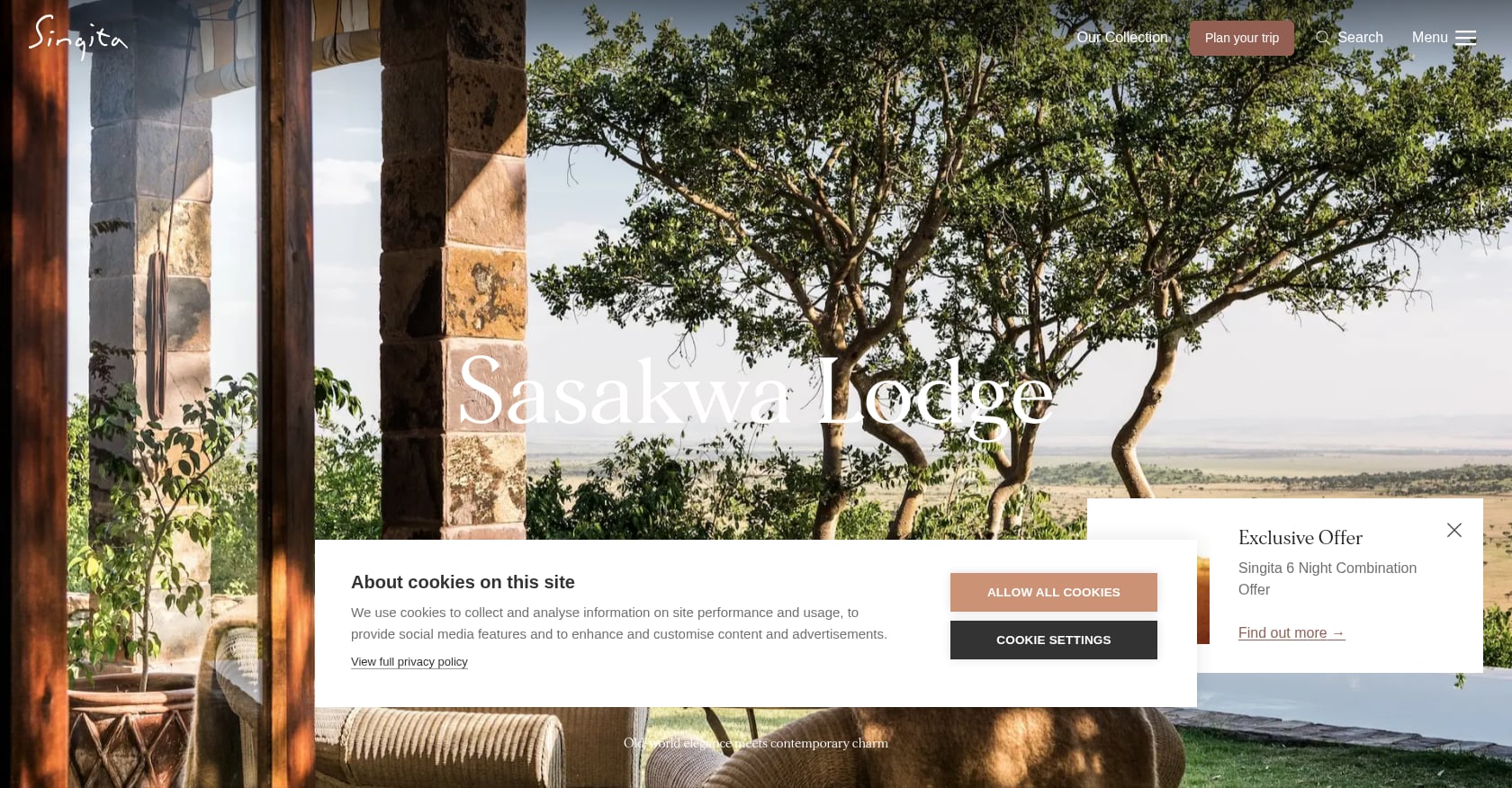
Singita Sasakwa is the property most often cited when people discuss the pinnacle of the ultra luxury safari Tanzania has to offer. It sits on a hill overlooking the 350,000-acre private Grumeti Reserve, styled as an Edwardian manor that somehow makes sense in the middle of the East African bush.
Key details:
-
12 cottages, each with private pool, butler, and panoramic plains views
-
Published rates: $2,550 to $3,525 per adult per night, all-inclusive (park and concession fees additional)
-
Activities: off-road game drives, night drives, walking safaris, horseback safaris, tennis court, wine cellar
-
Private concession: yes (Singita Grumeti, 162,000 hectares)
-
Migration corridor: the western Serengeti wildebeest crossing route passes through the reserve, typically May through July
What makes it different: The sheer scale of the concession. You have 350,000 acres shared among roughly 50 guests total across all five Singita Grumeti properties. The horseback safaris through open savanna, available to experienced riders, are among the most exclusive game-viewing activities in Africa.
Trade-offs:
-
The western Serengeti migration window is narrower than the Mara River crossing season further north
-
Rates put it firmly in the $50,000+ range for a couple’s week, before international flights
-
The Edwardian aesthetic won’t appeal to travelers seeking a more contemporary or “bush camp” feel
What travelers say: Guests on travel forums consistently describe the combination of Singita’s conservation investment (the Grumeti Fund runs anti-poaching patrols across the reserve) and the quality of guiding as what justifies the price premium over every other property in Tanzania.
3. Singita Faru Faru Lodge
Best for: Design-conscious couples, contemporary aesthetic seekers
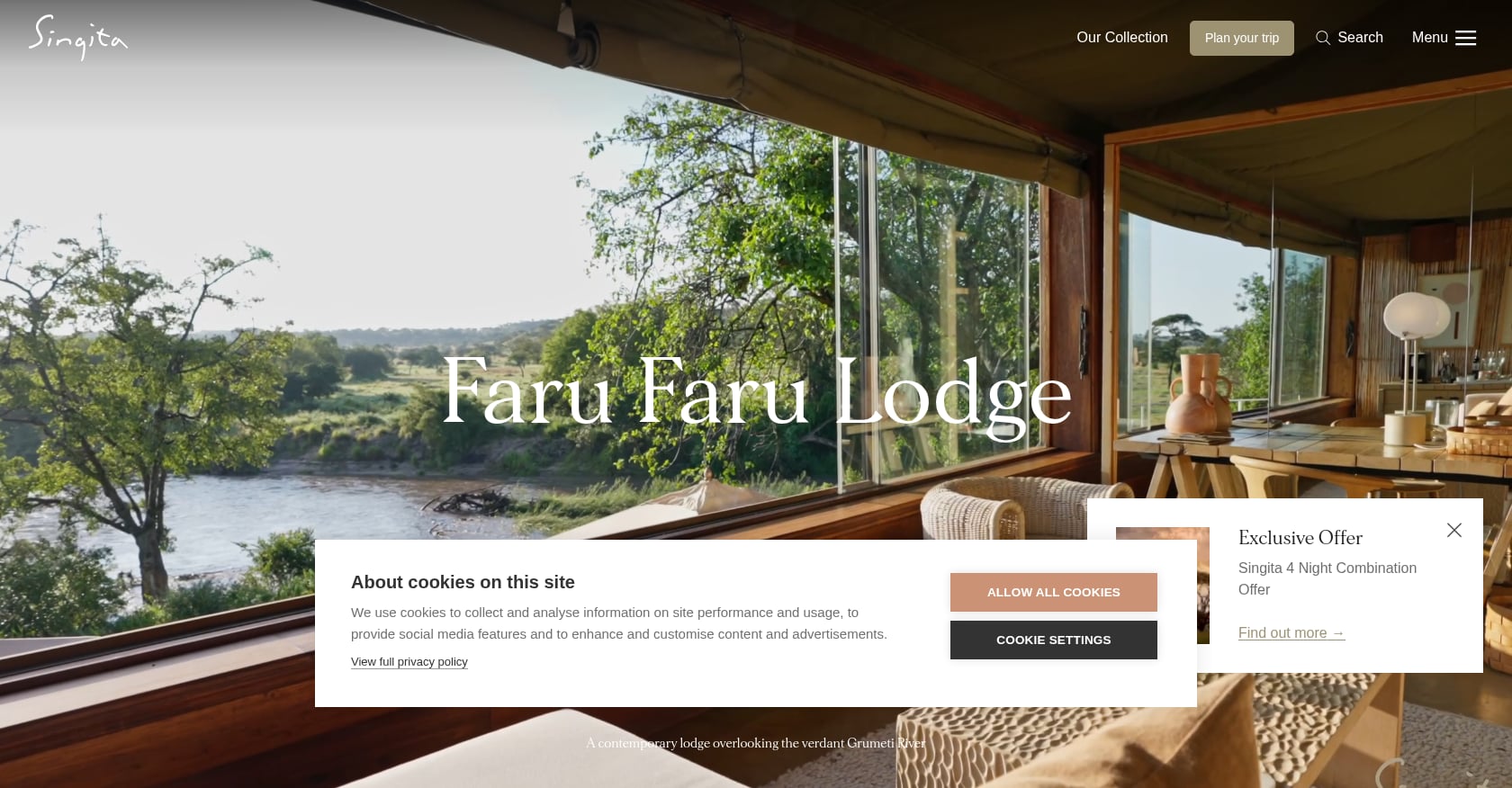
Same reserve, completely different feel. Where Sasakwa channels colonial-era grandeur, Faru Faru sits along a riverbed with modern, light-filled architecture. It is the property Singita most often recommends for couples who want the same phenomenal game viewing and private concession access but prefer clean lines to chandeliers.
Key details:
-
Rates: approximately $2,200 to $3,000 per person per night, all-inclusive
-
River setting attracts resident hippos, elephants, and predators to the area around camp
-
All the same concession advantages as Sasakwa: off-road, night drives, walking safaris
-
Design: contemporary East African, large glass frontages, natural materials
Trade-offs:
-
Less of the “wow factor” arrival moment compared to Sasakwa’s hilltop position
-
Still carries the same premium pricing tier
-
Limited to the western corridor migration timing
Singita also operates the ultra-private Singita Serengeti House for exclusive-use bookings, ideal for families or small groups wanting to take over an entire property.
4. andBeyond Ngorongoro Crater Lodge
Best for: Honeymooners, special occasions, first-time crater visitors
This is arguably the most visually dramatic lodge in Africa. Perched on the rim of the Ngorongoro Crater, it combines baroque interiors (think chandeliers, silk drapes, gilded mirrors) with one of the world’s greatest wildlife theatres 600 meters below.
Key details:
-
Rates: $1,500 to $2,800 per person per night
-
Butler assigned to every suite
-
Heated beds (the crater rim sits at over 2,200 meters, and nights are cold)
-
Crater descent included (normally a one-time fee of $295 per vehicle)
What travelers say: A FlyerTalk reviewer described the rooms as “extremely over the top with two chandeliers, one in the bedroom and one in the bathroom. Definitely not the typical safari lodge experience, but somehow works incredibly well with the environment.” The same reviewer called the service “immaculate and very polished compared to the other lodges we visited in Tanzania.”
Trade-offs:
-
Not on a private concession, so crater floor drives follow national park rules (on-road, daytime only)
-
The crater is busy during peak season, with many vehicles congregating at lion and rhino sightings
-
The baroque styling is polarizing; some guests find it magnificent, others find it excessive
For couples planning a trip that combines this property with Serengeti honeymoon lodges, the contrast between Crater Lodge’s ornate drama and the open-plains simplicity of the Serengeti creates one of Tanzania’s best two-property pairings.
5. Mwiba Lodge
Best for: Experiential travelers, repeat visitors seeking something genuinely different
Mwiba is the property that experienced Africa hands tend to recommend to each other. Built into a rocky gorge in the Mwiba Ranch private concession (bordering the southern Serengeti and Ngorongoro ecosystem), it combines extraordinary privacy with cultural experiences unavailable anywhere else at this level.
Key details:
-
Rates: approximately $1,800 to $2,500 per person per night
-
Private concession: yes (night drives, off-road, walking safaris included)
-
Unique cultural immersion: guided walks with the Hadzabe bushmen (one of the last hunter-gatherer communities on Earth) and visits to Datoga blacksmith communities
-
Built on and into actual rock formations
What travelers say: TripAdvisor reviewers highlight that guides “get you feet away from the animals,” with rooms described as “amazing” and the cultural experiences from Mwiba called “the highlight” of the trip. One reviewer wrote simply: “Mwiba is the nicest place I have ever stayed at.” Expert Africa assessed it as “most probably the one absolute thing money can buy, in terms of experience and luxury.”
Trade-offs:
-
Location means it works best as a southern Serengeti / Ngorongoro circuit addition, not a standalone
-
Not on the main Great Migration route (better for resident game and cultural immersion)
-
Fewer rooms mean availability books very early, especially July through October
6. Jabali Ridge
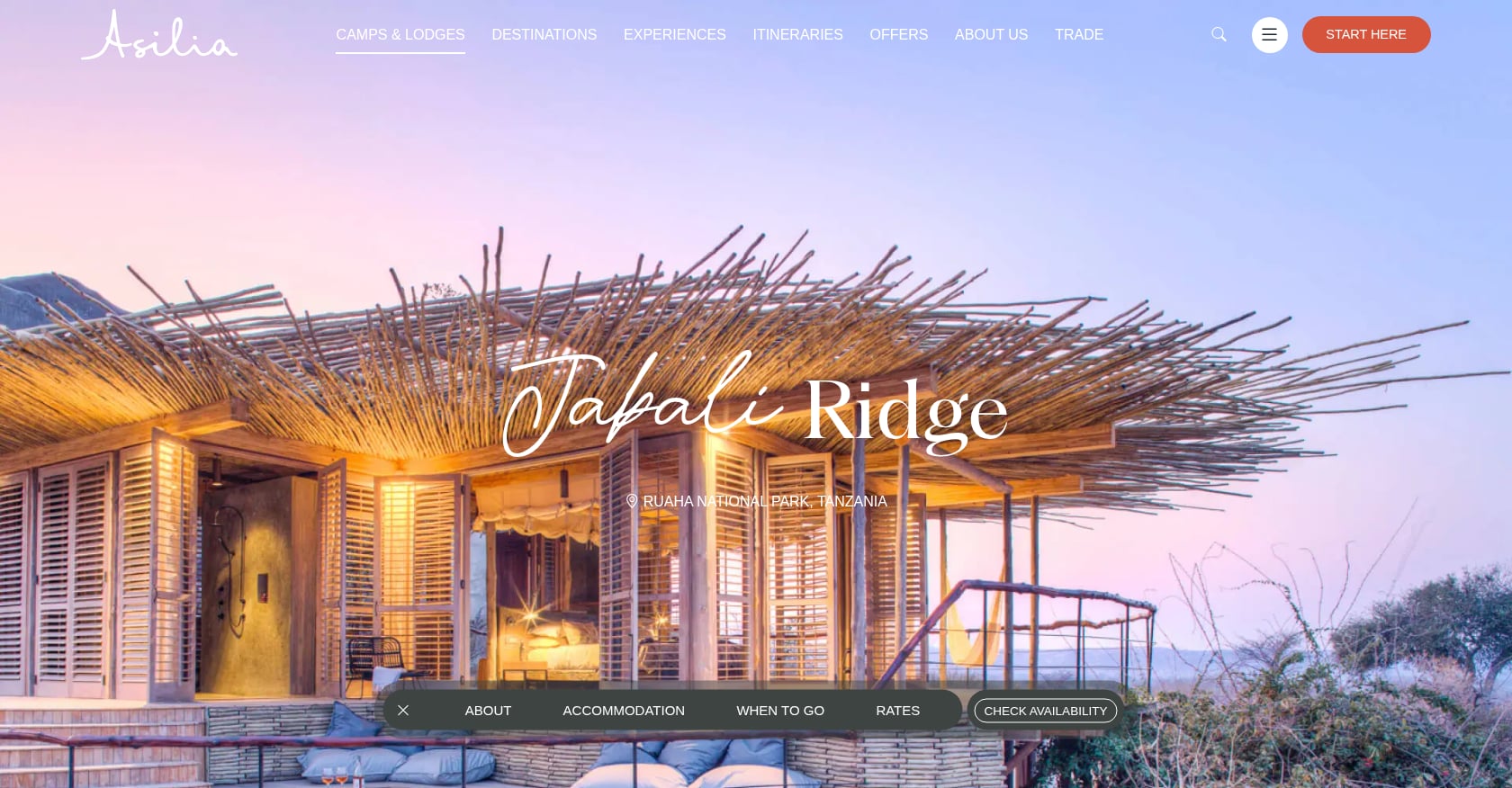
Best for: Photographers, repeat Tanzania visitors, wild dog seekers
Most ultra-luxury listicles focus entirely on the northern circuit. That’s a mistake. Jabali Ridge in Ruaha National Park represents the southern circuit’s strongest claim to ultra-luxury status and offers a completely different safari experience.
Key details:
-
Rates: approximately $1,200 to $1,800 per person per night
-
Ranked #2 of 14 specialty lodging in Ruaha with a 5.0 rating from 260 TripAdvisor reviews
-
Perched on a rocky kopje with infinity pool overlooking prime game-viewing territory
-
Ruaha has one of the largest wild dog populations in Africa and huge elephant herds
-
Striking contemporary architecture, integrated into the natural rock formations
What travelers say: Reviewers describe “five star” food, guiding that is “maybe the best in the industry,” and “unbeatable” views from rooms. The property has been included among Tanzania’s best luxury camps alongside other top-tier names.
Trade-offs:
-
Located inside a national park, not a private concession (no night drives or off-road access)
-
Requires a flight from Arusha or Dar es Salaam, adding travel time and cost
-
Less well-known than Serengeti properties, which some travelers see as a positive and others as a concern
-
Lower rates than true pinnacle properties reflect park-based (vs. concession) positioning
For photographers, pairing Jabali Ridge with a dedicated safari photography setup and the property’s purpose-built photography vehicle creates one of the best wildlife shooting opportunities in East Africa.
7. Asilia Sayari Camp
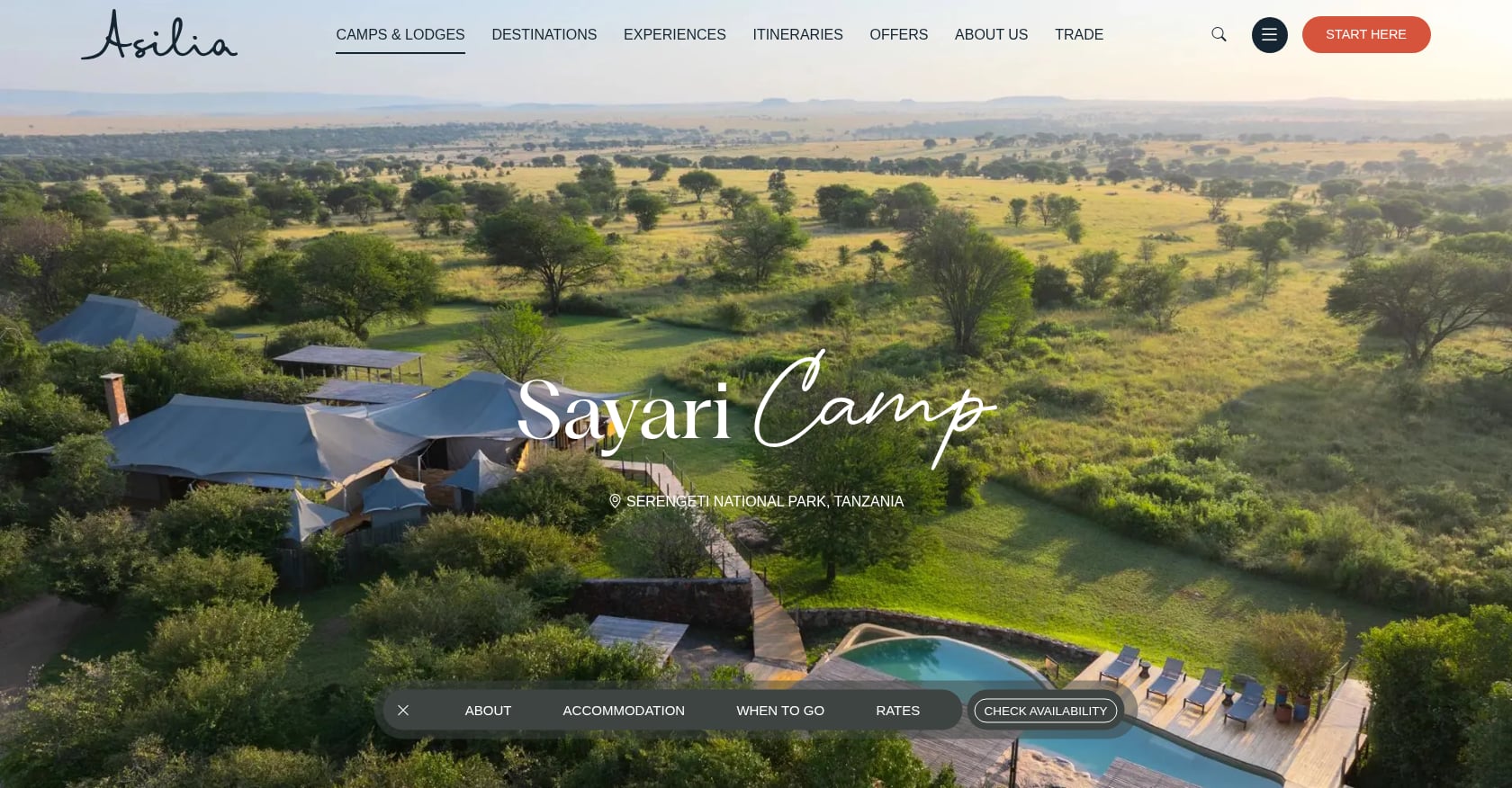
Best for: Migration enthusiasts targeting Mara River crossings (July through October)
If your definition of an ultra-luxury safari centers on witnessing the Great Migration’s most dramatic act, Sayari Camp delivers. Located in the Lamai Wedge of the northern Serengeti, it is the closest luxury camp to the Mara River crossing points where hundreds of thousands of wildebeest plunge into crocodile-filled waters.
Key details:
-
Rates: approximately $1,400 to $2,200 per person per night
-
Six main tents plus a private two-bedroom Sayari Villa
-
Inside the national park (on-road, daytime drives only)
-
Prime positioning for July through October crossing season
Trade-offs:
-
Seasonal, with the migration window largely dictating when to visit
-
National park rules apply (no off-road, no night drives)
-
The Lamai Wedge can be crowded during peak crossing periods, though nothing like the Mara in Kenya
-
Not the right choice if visiting outside the northern migration window
Understanding migration timing is essential when booking Sayari. Arriving a month too early or late means missing the crossings entirely.
8. Four Seasons Safari Lodge Serengeti
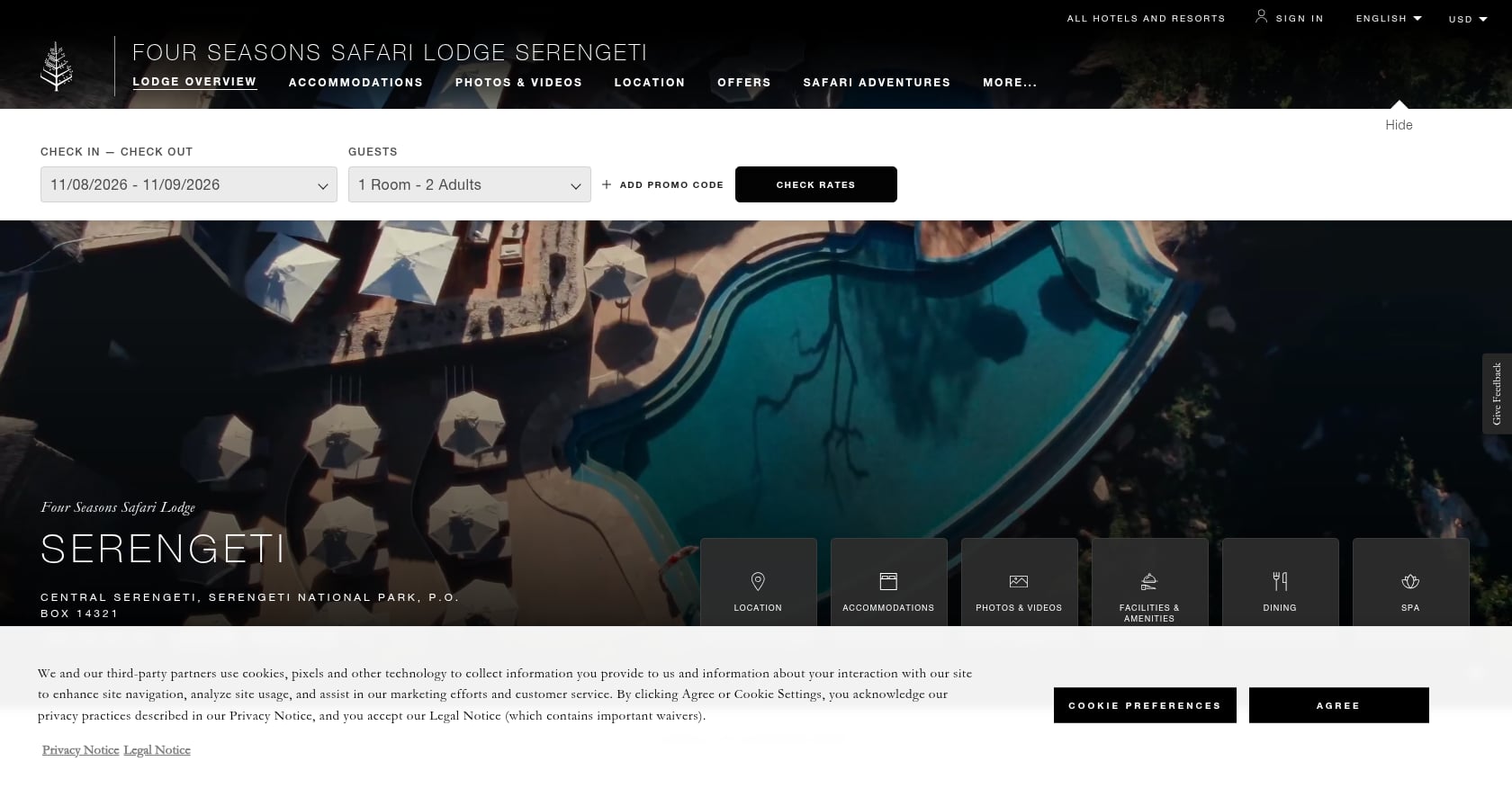
Best for: Families, first-time safari-goers wanting resort-level comfort
This is Tanzania’s most family-friendly ultra-luxury address. Where most high-end safari properties are designed around the adult experience (and many don’t accept young children), the Four Seasons offers a dedicated children’s program, a large main pool, and an in-camp waterhole that keeps wildlife visible even when small kids need downtime between drives.
Key details:
-
Rates: approximately $1,100 to $1,600 per person per night
-
Located in central Serengeti, inside the national park
-
Year-round game viewing (resident predators, migration passes through roughly December through March and June through July)
-
Full spa, multiple dining venues, kids’ club
Trade-offs:
-
Inside the national park (no private concession advantages)
-
The resort feel is distinctly different from the intimate bush camp experience that defines most ultra-luxury properties
-
Central Serengeti can have heavy vehicle traffic at popular sightings during peak months
-
Rates sit at the lower edge of ultra-luxury, reflecting the park-based (non-concession) positioning
For families weighing this against other options, the family safari lodge guide covers how to evaluate properties based on children’s ages, room configurations, and activity options.
9. Serengeti Bushtops
Best for: Travelers who want truly everything included, with no signing or thinking about extras
Bushtops occupies a distinctive niche: all-premium-inclusive. Where most lodges include house wines and basic spirits, Bushtops includes premium imported wines, top-shelf spirits, spa treatments, and laundry. The economic model is simple: pay once, then stop thinking about money for the duration.
Key details:
-
Rates: approximately $1,500 to $2,200 per person per night
-
Heated private infinity pool in each tent
-
All-premium-inclusive (top spirits, wines, spa)
-
Located in a private concession area on the edge of the Serengeti (some off-road flexibility)
Trade-offs:
-
The all-inclusive model appeals most to travelers who actually use the spa and premium drinks; non-drinkers may feel they’re paying for services they don’t value
-
Less game density than the Grumeti or Lamai areas, depending on the season
-
Tent-based luxury, which some travelers prefer and others find less comfortable than solid-walled rooms
10. The Zanzibar Ultra-Luxury Extension
Best for: Completing the bush-and-beach circuit that defines the quintessential Tanzania trip
Nearly every ultra-luxury Tanzania itinerary ends with two to four nights on the coast. This isn’t an afterthought. It is the expected closing chapter, a decompression from early morning game drives and adrenaline-filled wildlife encounters.
The pinnacle option: Mnemba Island, a private island off Zanzibar’s northeast coast, offers roughly 12 beachside bandas, a house reef for snorkeling directly off the sand, and the kind of barefoot luxury where no shoes, no phones, and no schedule become the entire point. Rates run $1,800 to $3,000 per person per night.
Key details:
-
Fly from the Serengeti to Zanzibar in approximately 90 minutes, no Arusha backtrack required
-
Two to three nights is the standard extension length
-
Beyond Mnemba, properties like Zuri Zanzibar and Baraza Resort offer ultra-luxury on the main island
-
Diving, deep-sea fishing, dhow sailing, and Stone Town cultural visits fill the days
Trade-offs:
-
Zanzibar’s peak season (June through October, December through February) aligns with safari peak season, so availability at top properties books early
-
Some travelers find the contrast between safari intensity and beach relaxation jarring rather than complementary
-
Budget impact is significant: adding three Mnemba nights for two people adds roughly $12,000 to $18,000 to the total trip cost
For planning the beach portion, the Zanzibar excursions guide covers how to fill days beyond the beach.
11. Hot-Air Balloon Safari + Private Bush Breakfast
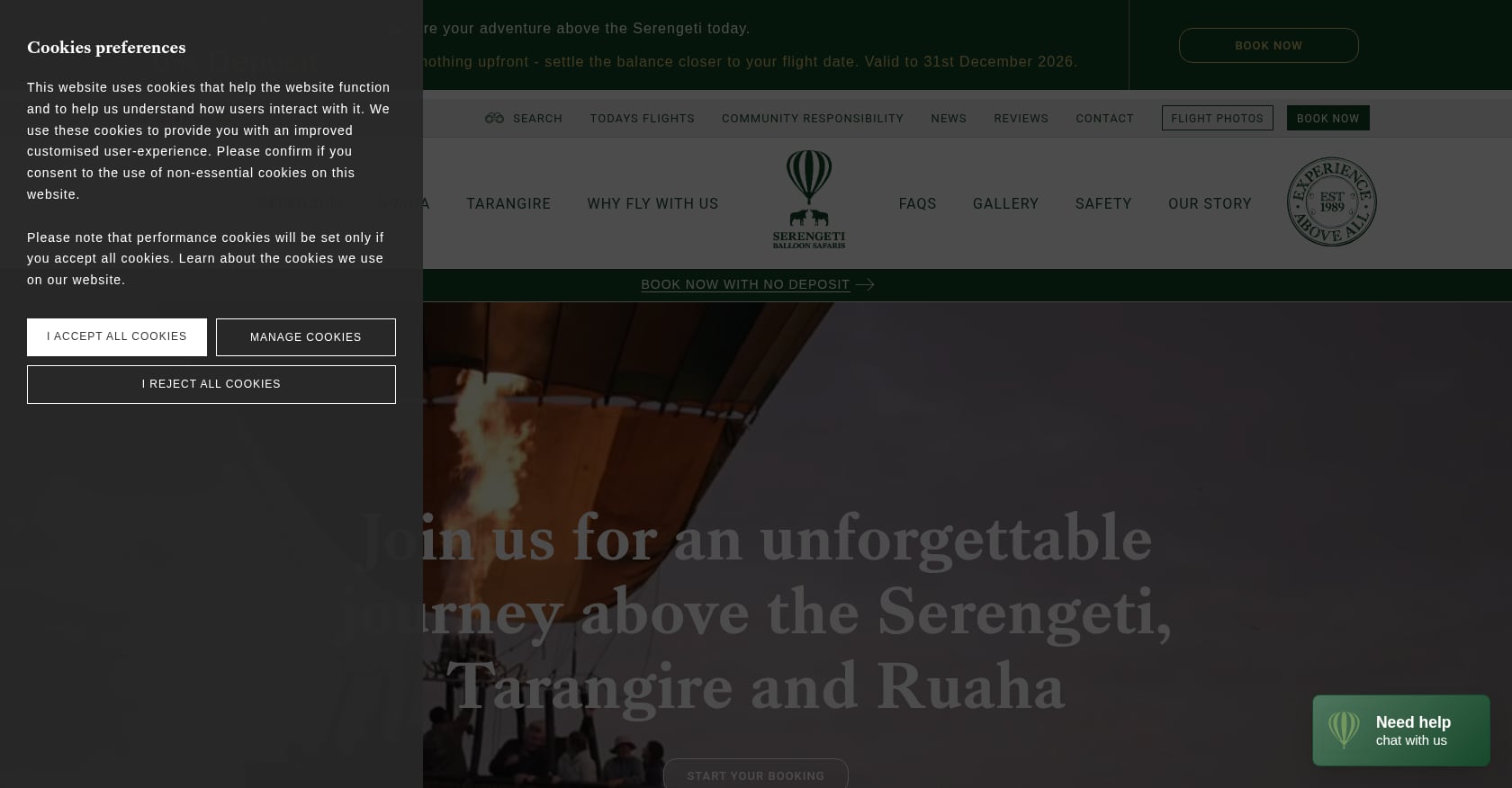
Best for: Everyone. This is the signature add-on experience for an ultra-luxury Serengeti safari.
A sunrise balloon flight over the Serengeti is one of those rare tourist activities that genuinely lives up to its reputation. Floating silently over herds of wildebeest, zebra, and giraffe as the sun breaks the horizon creates a perspective impossible from a vehicle.
Key details:
-
Approximately $500 to $600 per person
-
Launches before dawn from multiple Serengeti locations (central, western, and northern)
-
Lasts roughly one hour in the air
-
Followed by a champagne breakfast set up in the bush under acacia trees
-
Available year-round, though migration season adds spectacle
Trade-offs:
-
Weather-dependent; flights are occasionally cancelled for wind
-
One hour feels short for the price, though the bush breakfast extends the experience
-
The most popular launch sites can have multiple balloons in the air simultaneously during peak months
-
Travelers with a fear of heights or motion sensitivity should consider this carefully
Duma Explorer clients have described the balloon flight over the Mara River area as a highlight of their entire Tanzania trip, combining the aerial perspective with a private bush breakfast that sets the tone for the rest of the day.
How Much Does an Ultra-Luxury Tanzania Safari Actually Cost?
Nightly rates are useful for comparison, but they obscure the total financial commitment. Here is what complete ultra-luxury Tanzania trips actually look like for two people:
|
Trip Structure |
Duration |
Approximate Total (Couple) |
Notes |
|---|---|---|---|
|
Serengeti + Ngorongoro (ultra-luxury) |
7 nights |
$30,000–$60,000 |
Varies enormously by property mix |
|
Serengeti + Ngorongoro + Zanzibar |
10 nights |
$40,000–$80,000 |
Zanzibar adds $10,000–$20,000 |
|
Pinnacle (Singita + Crater Lodge + Mnemba) |
10 nights |
$58,000–$78,000+ |
The ceiling for non-private-charter trips |
What’s typically included at this tier: All meals, premium drinks (house or full bar depending on property), laundry, scheduled game activities (day drives, walking safaris, night drives where applicable), concession/conservancy fees at private properties, and internal camp transfers.
What’s typically NOT included: International flights ($2,000 to $8,000 per person from North America or Europe), domestic bush flights ($150 to $500 per sector), staff gratuities ($25 to $50 per person per day at ultra-luxury lodges), travel insurance, optional add-ons (balloon flights, helicopter transfers, spa treatments at some properties), and park entry fees at national park properties (Serengeti entry runs $82.60 per day in high season, per TANAPA published rates).
Green season savings: Traveling during March through May can reduce ultra-luxury rates by 30 to 40 percent at some properties. A couple spending $60,000 in peak season might spend $38,000 to $42,000 for the same properties during green season, with the bonus of fewer guests and lush scenery. The trade-off is heavier rainfall and less predictable migration positioning.
A private fly-in safari with Zanzibar extension typically runs $10,000 to $20,000 per person for 10 days at the premium (not pinnacle) ultra-luxury level.
When to Go: Timing an Ultra-Luxury Tanzania Safari
Timing matters more than most travel decisions at this level because it determines which properties make sense and what wildlife you will see.
July through October: Peak dry season. Best for Mara River crossings in the northern Serengeti (Sayari Camp territory). Highest rates, earliest booking requirements, best weather reliability. Grumeti properties see the migration earlier, typically May through July.
January through March: Calving season in the southern Serengeti and Ndutu area. Newborn wildebeest by the hundreds of thousands, with predators in peak hunting mode. Mwiba Lodge’s location near this ecosystem makes it particularly strong during this window.
March through May: Green season. Significant rate reductions. The Serengeti is stunningly verdant. Birding is at its peak. But afternoon rains can interrupt game drives, and some roads become challenging.
June and November: Shoulder months offering a balance of reasonable rates, decent weather, and good game viewing. Often the sweet spot for value-conscious ultra-luxury travelers.
For detailed month-by-month guidance, the best time for a Tanzania safari guide breaks down wildlife patterns across every region.
How to Plan an Ultra-Luxury Tanzania Safari
At this tier, the operator you choose matters more than at any other level of safari. Not because the logistics are harder (though they are), but because the details compound.
Which airstrip you fly into determines whether you arrive at camp in time for an afternoon drive or lose half a day. Which guide is assigned to your vehicle determines whether you see a leopard hunting from 20 meters or hear about one that was spotted yesterday. Which camp you stay at in which week of which month determines whether you witness 10,000 wildebeest crossing a river or an empty riverbed.
Ultra-luxury properties allocate their best guides to operators they trust. Lodges with just 12 rooms book out 6 to 12 months in advance for peak season. Fly-in routing requires coordination across multiple airstrips and camp check-in times. These are the details that a specialized trip designer handles.
The information an operator needs to start building an ultra-luxury itinerary:
-
Travel dates (even approximate months help narrow options)
-
Group composition (couple, family, multi-generational, friends)
-
Ages of any children (affects which properties are available)
-
Wildlife priorities (Great Migration crossings, big cats, wild dogs, birding)
-
Occasion (honeymoon, anniversary, birthday, retirement)
-
Previous safari experience (first-time vs. repeat visitor changes the property mix significantly)
-
Budget range (not to pinch pennies, but to know whether to build around Singita or a broader mix)
Travelers building a multi-camp ultra-luxury itinerary can ask Duma Explorer to compare fly-in routing options and lock in seasonal rates across properties.
Frequently Asked Questions
Is an ultra-luxury safari in Tanzania worth the price over standard luxury?
It depends on what you value. If the wildlife experience is paramount, private concession access (off-road tracking, night drives, walking safaris, near-zero vehicle congestion) represents a genuine, material upgrade in what you see and how you see it. If you’re primarily interested in comfortable accommodation, good food, and solid daytime game drives, a $700 to $1,200 per night luxury lodge delivers excellent quality without the concession premium. The biggest jump in experience quality happens at the concession line, not the thread-count line.
What’s the difference between a private concession and a national park safari?
National parks like the Serengeti are managed by TANAPA and require vehicles to stay on roads, prohibit night driving, and limit walking safaris. Private concessions (like Singita Grumeti or Mwiba Ranch) are leased and managed by conservation operators who set their own rules. They allow off-road driving, night game drives with spotlights, and guided bush walks. They also strictly limit guest numbers, meaning far fewer vehicles at any given sighting.
Can families do ultra-luxury safaris in Tanzania?
Yes, though property selection narrows. Many ultra-luxury camps have minimum age requirements (often 10 or 12 years). The Four Seasons Safari Lodge Serengeti is the most family-oriented option at this level. Singita offers exclusive-use properties that work well for families with older children. For families with younger kids, the private family safari guide covers age policies, room configurations, and activity options in detail.
How far in advance should I book an ultra-luxury Tanzania safari?
For peak season (July through October), 9 to 12 months ahead is advisable. Singita and Crater Lodge book out fastest. Green season (March through May) offers more last-minute flexibility, sometimes three to four months ahead. Honeymoon and holiday periods (Christmas, New Year, school breaks) require especially early planning.
What should I pack for an ultra-luxury safari?
Bush planes enforce strict luggage limits, typically 15 to 20 kg in a soft-sided bag. This applies even at the $3,000-per-night level. Leave hard suitcases at home. Neutral-colored clothing (khaki, olive, tan), layers for cool mornings and warm afternoons, a good camera setup, and comfortable walking shoes cover the essentials. Most ultra-luxury lodges offer same-day laundry service, so you need far less clothing than you think.
Can I combine an ultra-luxury safari with Kilimanjaro?
You can, though the sequencing matters. Most travelers climb first and safari after, since post-climb recovery is easier on a comfortable game drive than at altitude. The standard structure is Kilimanjaro (6 to 9 days), one recovery night in Arusha, then a fly-in safari. Total trip length usually runs 14 to 18 days. The Kilimanjaro and safari combination guide covers how to structure the logistics.
An ultra luxury safari in Tanzania is not simply a more expensive version of a regular safari. It is a fundamentally different way of experiencing wild Africa, one defined by private landscapes, elite guiding, and the rare privilege of having world-class ecosystems almost entirely to yourself. The properties and experiences above represent the best of what that tier offers in 2026 and 2027.
Design my ultra-luxury Tanzania safari