

Honeymoon After Kilimanjaro 2026: Safari & Beach Guide
TL;DR
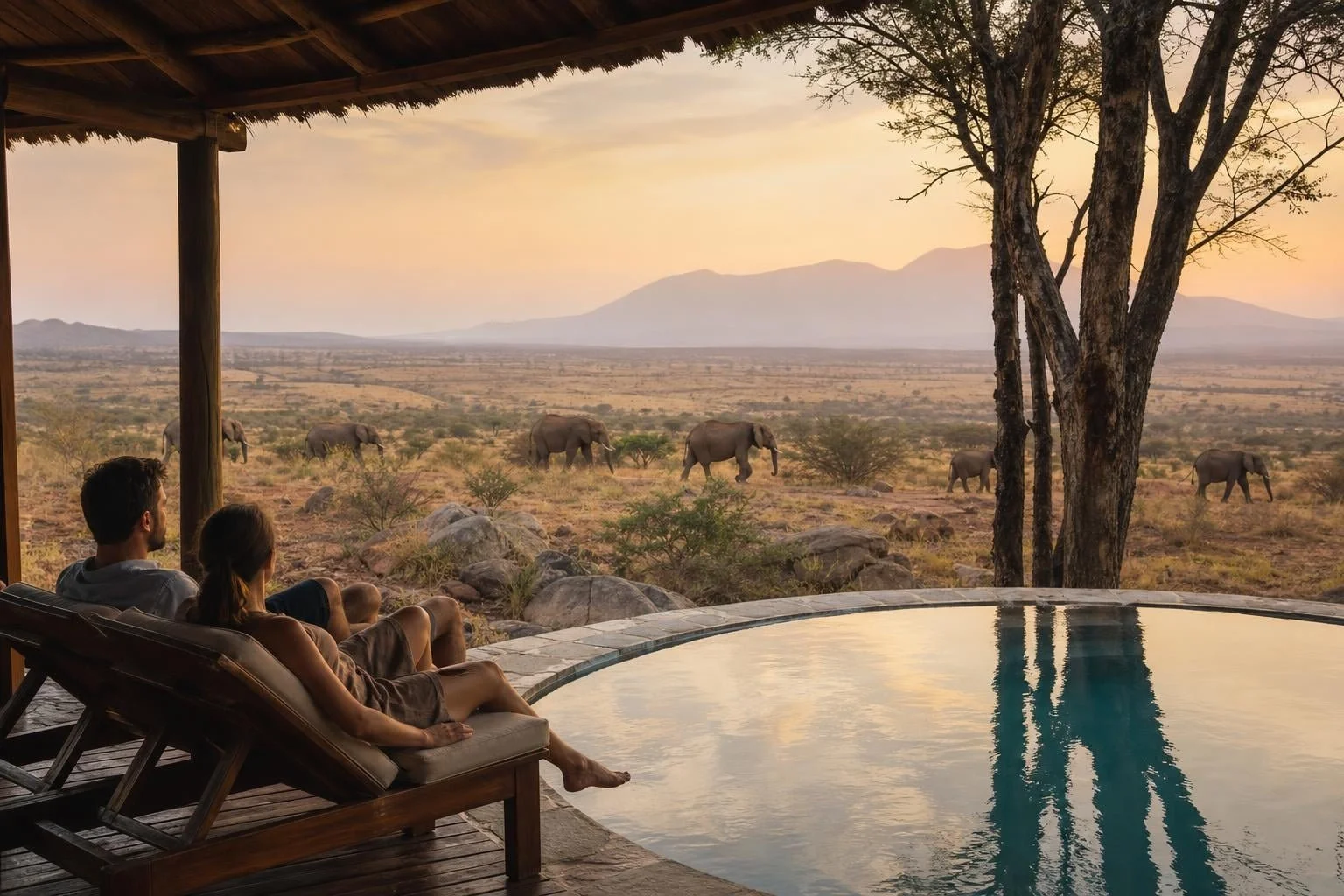
A honeymoon after Kilimanjaro works best when the climb comes first, followed by at least one recovery night in Moshi or Arusha, then safari or beach (or both). The ideal structure for most couples is a 7 or 8-day climb, one low-altitude recovery night, 3 to 5 safari nights if time allows, and 4 to 5 nights on Zanzibar or the Swahili Coast. If you have fewer than two weeks total, do not force Kilimanjaro, safari, and Zanzibar into one trip. Choose either a short safari or a beach finish.
A honeymoon after Kilimanjaro is not a beach vacation with a mountain attached. It is an endurance achievement followed by a recovery-focused, romance-sensitive itinerary where pacing matters more than checking off famous destinations. Mount Kilimanjaro stands at 5,895 meters (19,341 feet), making it Africa’s highest peak and one of the most physically demanding things most couples will ever do together. The CDC reports that acute mountain sickness rates reach 75 to 77% on shorter 4 and 5-day Kilimanjaro ascents, which means a honeymoon is the wrong time to rush the mountain.
The key planning terms to understand before reading any proposal: rest day, bush-and-beach, fly-in safari, Northern Circuit (which means two different things), crater descent, Zanzibar extension, tidal beach, and summit-day recovery. This guide defines every term you will see in a Kilimanjaro honeymoon itinerary and explains how each one affects the romantic portion of the trip.
If you want Kilimanjaro, safari, and beach to feel like one honeymoon rather than three separate bookings, Duma Explorer can design the climb, recovery night, safari route, and coast finish around your dates.
Quick Decision Table: What to Do Based on Trip Length
|
Total trip length |
Best honeymoon after Kilimanjaro plan |
What to avoid |
|---|---|---|
|
10 to 12 days |
Climb + 1 recovery night + either short safari or Zanzibar, not both |
Trying to fit summit, Serengeti, Ngorongoro, and beach into a rushed schedule |
|
13 to 15 days |
7 to 8 day climb + 1 recovery night + 2 to 3 night safari + 3 to 4 beach nights |
Long road transfers every other day |
|
16 to 18 days |
7 to 8 day climb + 1 to 2 recovery nights + 4 to 5 safari nights + 4 to 5 Zanzibar or coast nights |
Overloading activities on the first beach day |
|
19 to 21+ days |
Longer route + fuller safari + Zanzibar or Swahili Coast; optional Kenya or gorilla trekking if both partners want more adventure |
Treating gorilla trekking as “rest” after Kilimanjaro |
The 16 to 18-day range is the sweet spot. It gives the climb room to breathe, protects recovery, allows a proper safari without exhausting transfers, and still ends with enough beach time to feel like an actual honeymoon.
What Is the Best Honeymoon Itinerary After Kilimanjaro? The best honeymoon after Kilimanjaro usually follows a simple sequence: climb Kilimanjaro first, spend 1–2 nights recovering at low altitude, take a 2–5 night safari if your schedule allows, and finish with 3–5 nights on Zanzibar or the Tanzanian coast. For most couples, 16–18 days provides enough time for an 7–8 day climb, recovery, safari, and beach stay without making the honeymoon feel rushed. If you have only 10–12 days, choose either a short safari or Zanzibar rather than trying to include both. If you have 13–15 days, a shorter safari plus 3–4 beach nights can work. With 16–18 days, you can build a more relaxed climb, safari, and beach itinerary with enough recovery time between major activities.
|
Total Trip |
Recommended Structure |
Beach Time |
Safari Time |
Pace |
|---|---|---|---|---|
|
10–12 days |
Kilimanjaro + recovery + Zanzibar or short safari |
3–4 nights |
0–2 nights |
Fast |
|
13–15 days |
Kilimanjaro + recovery + short safari + Zanzibar |
3–4 nights |
2–3 nights |
Moderate |
|
16–18 days |
Kilimanjaro + recovery + full safari + Zanzibar |
4–5 nights |
4–5 nights |
Relaxed |
|
19–21+ days |
Longer climb + safari + Zanzibar/coast |
4–6+ nights |
4–6+ nights |
Flexibl |
What Should You Do After Climbing Kilimanjaro?
After climbing Kilimanjaro, most honeymooners should prioritize recovery before beginning another major part of the trip. A practical sequence is Kilimanjaro → low-altitude recovery → safari → Zanzibar or the Swahili Coast.
The mountain should be treated as the physically demanding part of the honeymoon. Safari can follow because most game viewing is vehicle-based, while the beach provides the least demanding final stage of the trip.
The key is not to schedule a major transfer, full-day excursion, or demanding activity immediately after the summit. A recovery night gives the couple time to shower, sleep, eat properly, reorganize luggage, and recover before moving on.
For couples with limited time, the decision becomes simpler: choose between safari and beach rather than trying to maximize the number of destinations.
|
Time After Summit |
What to Expect |
Recommended Activity |
|---|---|---|
|
First 12 hours |
Fatigue, soreness, dehydration possible |
Shower, food, sleep |
|
24 hours |
Muscle soreness may increase |
Rest, light walking |
|
24–48 hours |
Recovery continues |
Easy transfer or relaxed safari |
|
48–72 hours |
Many couples feel substantially better |
Safari, beach transfer |
|
3+ days |
More flexibility |
Normal honeymoon activities |
Important: Recovery varies between travelers. Altitude-related symptoms that are severe, worsening, or unusual should be treated as a medical issue rather than normal post-climb fatigue.
How Many Days Do You Need for a Kilimanjaro Honeymoon?
Most couples should allow at least 13–15 days for Kilimanjaro plus either a short safari and beach stay. A 16–18 day itinerary gives more room for an 7–8 day climb, recovery, safari, and several nights on Zanzibar or the Tanzanian coast.
The mountain route, recovery requirements, safari depth, and beach destination determine how much time is needed.
10–12 Days: Kilimanjaro + Beach or Short Safari
A short honeymoon can work if Kilimanjaro is the priority and the couple is willing to choose one major post-climb experience. The simplest structure is a 7-day climb, one recovery night, and 3–4 nights on Zanzibar.
13–15 Days: Kilimanjaro + Short Safari + Beach
This range allows a 7-day climb, one recovery night, a 2–3 night safari, and 3–4 beach nights. The safari needs to remain geographically efficient to avoid spending too much of the honeymoon in a vehicle.
16–18 Days: Kilimanjaro + Safari + Beach
This is the most flexible structure for couples who want all three experiences. An 8-day climb, one or two recovery nights, a 4–5 night safari, and 4–5 nights on the coast leaves more room for slower transfers and unscheduled time.
19–21+ Days: Extended Tanzania Honeymoon
Additional time allows a longer climb, deeper Serengeti itinerary, private beach stay, or another major destination. Gorilla trekking, Kenya extensions, and other adventure activities should be treated as additional physically demanding travel rather than recovery.
How to Plan a Safari After Kilimanjaro
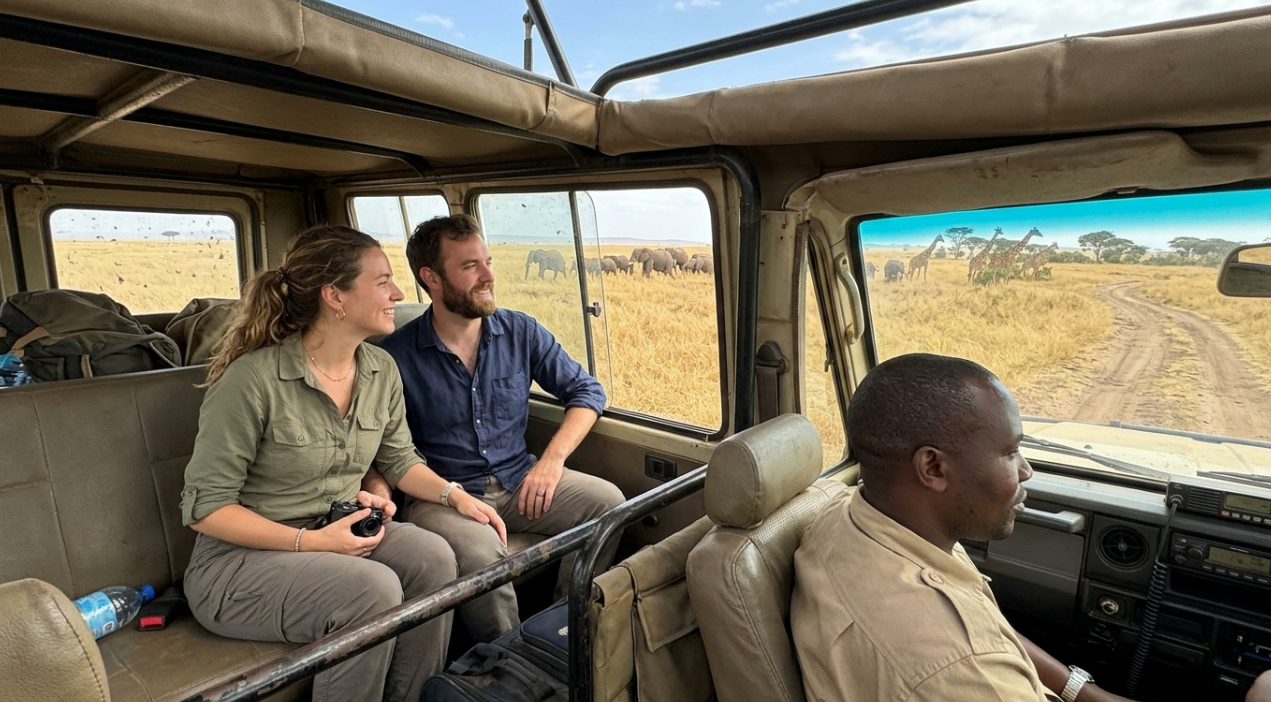
A safari after Kilimanjaro should be designed around recovery rather than maximizing the number of parks visited. Private vehicles and shorter transfers can make a significant difference because the couple can control the pace of each day.
Best Safari Length After Kilimanjaro
For a 13–15 day honeymoon, allow approximately 2–3 safari nights. For a 16–18 day itinerary, 4–5 safari nights gives enough time to combine destinations such as Tarangire, Ngorongoro, and the Serengeti without making every day a transfer day.
Private Safari vs. Shared Safari
A private safari gives honeymooners greater control over departure times, game-drive length, meal stops, and recovery days. A shared safari can reduce costs but gives the couple less control over the pace.
Road Safari vs. Fly-In Safari
Road safaris can cost less and allow couples to see more of northern Tanzania between destinations. Fly-in safaris reduce driving time and can be particularly useful after Kilimanjaro when conserving energy is a priority.
How Many Parks Should You Visit?
Fewer parks with longer stays are generally easier to enjoy than moving every night. A short honeymoon safari may work better with two or three carefully selected areas than an itinerary attempting to cover every major park in northern Tanzania.
The Best Sequence: Summit First, Softness Last
The default recommendation for a honeymoon after Kilimanjaro: climb first, recover briefly, safari if time allows, beach last.
Why this order works:
Protects summit focus. Kilimanjaro requires physical and mental commitment. A pre-climb safari can add fatigue, disrupt sleep patterns, and create anxiety about the mountain looming ahead. Practitioners on Reddit’s r/kilimanjaro consistently recommend climbing first if the mountain is the emotional priority, because it removes the anxiety and lets everything afterward feel like a reward.
Creates a natural emotional arc. The summit is the shared challenge. The safari is the first taste of relaxation (from a vehicle, no less). The beach is the actual decompression before the long flight home. This “summit first, softness last” structure gives the honeymoon a narrative that cramming everything together does not.
Keeps the romantic portion intact. After summiting, couples can stop performing and start enjoying. No more worrying about altitude, headaches, or whether they packed enough warm layers. The honeymoon begins in earnest.
When to break this rule: Fixed group departure dates, specific weather windows, or lodge availability constraints can sometimes make safari-before-climb logical. A night at Ngorongoro’s rim before the climb can even help with mild acclimatization, since the crater rim sits above 2,200 meters. But building a tiring multi-day safari before the summit attempt is a mistake for most honeymooners.
To match your dates to Tanzania’s seasons, the dry season from late June through October is generally strongest for both comfortable climbing weather and wildlife viewing.
Kilimanjaro Recovery Glossary
These are the terms that matter most in the 24 to 48 hours after descent, the window that separates a great honeymoon from an exhausting one.
Summit Day
The longest, hardest part of most Kilimanjaro climbs. Typically involves a midnight or early-morning summit push followed by a long descent, sometimes covering 12 to 16 hours of walking in a single day. This is why couples should not schedule a major transfer, romantic dinner, or any demanding activity immediately afterward.
Post-Climb Recovery Night
A night in Moshi or Arusha after descending from the mountain. This is not optional if you want the honeymoon to feel like a honeymoon. It is the night for a hot shower, clean clothes, a real bed, and sleep below 1,000 meters. One night is the minimum. Two nights is better if the couple wants a slower transition.
A Reddit user who completed an 8-day Lemosho climb followed by a 4-day safari reported that having one rest and travel day between the two was essential. Other experienced climbers in the same thread agreed: at least one day to recover after the summit is the standard advice.
Delayed-Onset Muscle Soreness (DOMS)
The deep muscle soreness that peaks roughly 24 to 72 hours after strenuous exercise. After Kilimanjaro, this means the couple may feel worse on the second day post-descent than the first. Planning a gentle first day of safari or a pool day at the beach hotel is smarter than scheduling a full-day excursion.
Acclimatization Day
Extra time built into the climb to help the body adjust to altitude. The CDC specifically recommends adding 1 to 2 days to Kilimanjaro ascents to improve acclimatization, especially on routes promoted as 4 to 6 days. For honeymooners, a longer route is almost always worth it. Saving one mountain day can cost more in comfort and summit success than it saves in budget.
Gear Storage
Leaving climb gear (boots, sleeping bags, poles, heavy insulation layers) in Arusha or Moshi while traveling onward to safari or Zanzibar. This matters because none of that equipment is needed on the beach, and bush flights often have strict luggage limits. A coordinated operator handles this without the couple needing to think about it.
For a deeper look at altitude, emergency protocols, and what to expect on the mountain, review Kilimanjaro safety terms before the trip.
Safari After Kilimanjaro: Key Terms
Safari is physically easier than trekking because game drives are vehicle-based, but it still involves early mornings, sometimes bumpy roads, and potentially long drives between parks. It can be excellent active recovery after Kilimanjaro when paced well. When paced badly, it becomes another endurance event.
Northern Tanzania Safari Circuit
The well-known loop through Arusha, Tarangire, Lake Manyara, Ngorongoro, and the Serengeti. This is what most people mean when they say “Northern Circuit.” But in Kilimanjaro planning, “Northern Circuit” also refers to a specific longer climb route that circles the mountain’s quieter northern slopes. Always ask which one your itinerary is referring to. Competitors rarely clarify this, and it causes real confusion.
Private Safari Vehicle
A 4x4 reserved for the couple or their group, not shared with strangers. After Kilimanjaro, this matters more than usual. A private vehicle means the couple can return to the lodge early if they are tired, linger longer at a sighting, or skip the dawn game drive entirely without affecting anyone else’s trip. For a post-climb honeymoon, it is one of the highest-value upgrades available.
Travelers deciding between a road-based safari and a fly-in version can compare private and group safari options to understand the real tradeoffs.
Fly-In Safari
Using light aircraft to travel between Arusha and safari airstrips in the Serengeti, Manyara, or other parks. Saves hours of road driving. After a Kilimanjaro climb, the time savings can make the difference between a honeymoon that feels relaxed and one that feels like a logistics exercise. It costs more, but it spends money to save energy, which is the right tradeoff after summit day.
Ngorongoro Crater Descent
Driving down into the Ngorongoro Crater for a day of game viewing. The crater is the world’s largest unbroken caldera and supports around 25,000 large animals with some of Africa’s densest predator populations, including endangered black rhino. It is one of the strongest single-day safari experiences in East Africa and works well in a short post-Kilimanjaro safari because it does not require a long drive deep into the Serengeti.
Great Migration
The annual movement of over 1 million wildebeest, 72,000 zebras, and roughly 350,000 Thomson and Grant gazelles through the Serengeti-Ngorongoro ecosystem. If the honeymoon falls during migration season, the Serengeti becomes extraordinary. But migration timing is not guaranteed on exact dates, and camp placement matters more than brand name for couples trying to witness river crossings.
River Crossings
Dramatic migration crossings in the northern Serengeti and Mara region, usually concentrated during dry-season months. Spectacular but unpredictable. Do not plan a honeymoon around guaranteed crossings.
Calving Season
Wildebeest calving in the southern Serengeti and Ndutu region, typically late January through February. A strong honeymoon alternative to the crowded peak dry season. Hundreds of thousands of calves born over a few weeks, with predators following closely.
Sundowner
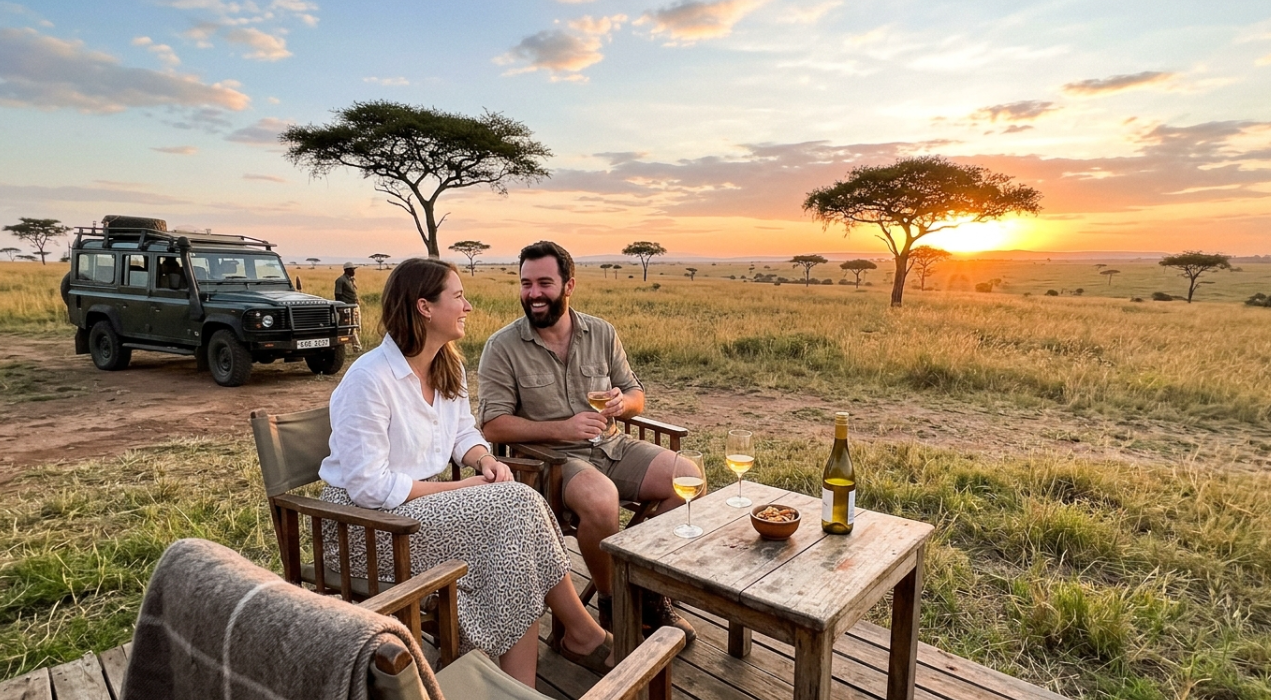
Drinks and snacks at sunset in a scenic bush location. Low effort, high romance. One of the simplest ways to make a post-climb safari day feel like a honeymoon rather than a wildlife checklist.
Hot Air Balloon Safari
A sunrise balloon flight over safari landscapes, usually followed by a bush breakfast. A genuine honeymoon splurge. Multiple Duma Explorer reviewers have mentioned balloon safaris over the Mara River as a trip highlight.
For Serengeti-specific planning, including seasonal camp placement and migration timing, a deeper guide is more useful than trying to cover everything here.
Zanzibar and Swahili Coast Glossary
Zanzibar is the classic beach finish to a honeymoon after Kilimanjaro. But “Zanzibar” is not one uniform beach product. Where you stay on the island changes the experience significantly.
Zanzibar Extension
A beach and culture add-on after Kilimanjaro or safari. Usually 3 to 5 nights. The standard structure is a domestic flight from Arusha to Zanzibar, a night in or near Stone Town, then transfer to a beach hotel on the north or east coast.
Bush-and-Beach
The idea of combining safari (bush) and coast (beach) in one itinerary. For a honeymoon after Kilimanjaro, this usually means the bush portion follows the climb and the beach comes last. Reversing that order rarely makes sense.
Stone Town
The historic core of Zanzibar City, a UNESCO World Heritage Site with African, Arab, Indian, and European influences accumulated over more than a millennium. Best experienced as a guided half-day or a single overnight stay. It is not a beach base. The narrow streets, rooftop restaurants, and spice-market atmosphere make a good first night on the island before moving to the coast.
Nungwi and Kendwa (North Coast)
The north and northwest tip of Zanzibar. Often the best choice for honeymooners who want easy swimming and sunsets. Reddit’s r/zanzibar community regularly points out that Nungwi and Kendwa offer ocean access through most of the day, while other coasts lose their beach to retreating tides for hours at a time.
Paje and Jambiani (East and Southeast Coast)
Boutique, quieter, good for beach walks and a more local atmosphere. Popular with kitesurfers. But the east coast is significantly more tide-dependent. At low tide, the sea can retreat hundreds of meters, exposing seaweed-covered flats. Beautiful in its own way, but not what most couples picture when they imagine beach lounging after Kilimanjaro.
Tidal Beach
A beach where the ocean retreats dramatically at low tide. Important to understand because honeymooners who pick a southeast Zanzibar hotel expecting all-day swimming may be disappointed when the water disappears for half the afternoon.
Swahili Coast
Tanzania’s mainland Indian Ocean coast and islands, with deep Swahili cultural roots. Includes Pangani, Saadani, Mafia Island, and other destinations that are quieter and less developed than Zanzibar. A good fit for couples who want fewer crowds and a more understated beach finish.
Pangani
A quiet mainland coast destination with historical ruins, mangroves, and uncrowded beaches. Good for low-key recovery if the couple prefers less tourist infrastructure.
Saadani
A coastal national park where bush meets beach. Elephants and other wildlife walk near the ocean. A useful option for couples who want a soft beach-and-bush blend without the full safari commitment.
For detailed Zanzibar excursion planning, including dhow cruises, spice tours, sandbank trips, and responsible dolphin encounters, a dedicated guide covers options more thoroughly.
Other Zanzibar terms worth knowing
Dhow cruise: A traditional sailing boat excursion. Low-effort romantic activity, weather dependent.
Sandbank trip: A boat excursion to a temporary sandbank for swimming, snorkeling, and seafood. Can be romantic if kept private or small-group.
Spice tour: A guided visit to spice farms. Good low-effort activity, but avoid scheduling it on the first beach day when the couple should be doing as little as possible.
Airport, Flight, and Luggage Glossary
Post-climb travel logistics are not complicated when planned ahead. But they have enough moving parts that honeymooners should not leave them loose.
JRO (Kilimanjaro International Airport)
The main gateway for Kilimanjaro and northern Tanzania. Located roughly 40 km from Arusha and 30 km from Moshi, it serves both international and domestic routes. This is where most couples will arrive for the climb and depart after their honeymoon.
Moshi
The town most commonly used as a Kilimanjaro climb base, sitting at the mountain’s southern foot. Good for the immediate post-climb recovery night because it is close to the park gate.
Arusha
Northern Tanzania’s main safari gateway city. Better than Moshi for starting a safari or catching a domestic flight to Zanzibar or the Serengeti. Many operators, including Duma Explorer’s local operations through Alika Africa, are based here.
ARK (Arusha Airport)
The domestic airport used for light aircraft connections to safari airstrips and Zanzibar. Not the same as JRO. Scheduled domestic flights often connect ARK with Serengeti airstrips and Zanzibar, though exact routing varies by carrier and season.
ZNZ (Abeid Amani Karume International Airport, Zanzibar)
The arrival and departure point for the beach extension. Handles both domestic flights from mainland Tanzania and international connections.
Bush Flight
A light aircraft flight to or from a safari airstrip. Time-efficient but comes with luggage restrictions, typically requiring soft-sided bags and weight limits that should be confirmed with the airline before packing.
Soft-Sided Luggage
Flexible duffel-style bags, often required or strongly preferred on bush flights. After Kilimanjaro, the couple will have heavy climb gear that needs to be stored in Arusha or Moshi rather than dragged to Zanzibar in a hard-shell suitcase.
Arrival Buffer
A night before the climb to absorb international flight delays, recover from jet lag, and do a final gear check. Protects the summit attempt. Skipping this is a common mistake.
Departure Buffer
Time built in before the international flight home after Zanzibar or safari. Domestic flights can shift, and weather occasionally disrupts small aircraft schedules. A same-day connection from a bush airstrip to an international departure is risky.
Cost, Visa, Insurance, and Tipping Glossary
A Kilimanjaro honeymoon has several separate cost centers that couples often do not see coming until they receive their first proposal. Understanding these terms helps compare quotes honestly.
Park Fees and Conservation Fees
Official fees paid to enter Tanzania’s protected areas. TANAPA conservation fees are valid for 24 hours from time of entry and include VAT where applicable. These fees vary by park and are a significant line item in any safari or Kilimanjaro quote.
Crater Descent Fee
A vehicle fee for entering the Ngorongoro Crater floor. Must be included in any safari quote that includes a crater game drive. Verify the current amount, as fees are updated periodically.
Porter and Guide Tips
Tips for the Kilimanjaro mountain crew (guides, porters, cooks) and separately for safari driver-guides. These are not optional in practice and should never be hidden from the honeymoon budget. For Kilimanjaro tipping guidelines and expected ranges, a dedicated guide breaks down amounts and etiquette.
Tanzania eVisa / Tourist Visa
A visa required for most foreign visitors. The Embassy of Tanzania in Washington lists the U.S. tourist visa at $100 (multiple entry, valid 12 months). Many other nationalities pay $50 for a single-entry visa. Apply online before travel.
Zanzibar Inbound Insurance
As of October 1, 2024, foreign visitors entering Zanzibar must carry mandatory inbound travel insurance covering their stay. The Zanzibar Insurance Corporation lists the adult cost at USD 44. This is separate from any personal travel insurance.
Medical Evacuation Insurance
Insurance covering emergency evacuation from Kilimanjaro or remote safari areas. Not optional for a trip that includes both a high-altitude climb and bush locations far from hospitals. For coverage recommendations and what to look for, review a full breakdown of evacuation and trip insurance options.
Malaria Prophylaxis
Prescription medication to prevent malaria. The CDC recommends malaria medication for certain areas of Tanzania below 1,800 meters. Kilimanjaro’s summit is well above that line, but Arusha, safari parks, Zanzibar, and coastal areas are not. Visit a travel clinic before the trip.
Yellow Fever Transit Rule
Yellow fever vaccine is not required for travelers arriving directly from the United States, but the CDC notes it is required for travelers arriving from countries with yellow fever risk, including long airport transits over 12 hours in those countries. If your honeymoon routing passes through Addis Ababa, Nairobi, or another hub in a risk country, check this rule carefully.
The Ten Cost Centers of a Kilimanjaro Honeymoon
-
The climb itself
-
Mountain crew tips
-
Recovery hotel night(s)
-
Safari (vehicle, accommodation, park fees)
-
Safari guide tips
-
Domestic flights
-
Beach hotel
-
Zanzibar mandatory insurance
-
Tanzania visa
-
Optional experiences (balloon, sandbank, dhow, spa)
Understanding these as separate line items makes it easier to compare proposals and spot where costs are bundled or hidden. For detailed safari cost breakdowns, a full pricing guide covers what drives costs up and where spending more genuinely matters.
Safety and Responsible Travel Glossary
A responsible operator matters on this kind of trip. Porter welfare, emergency preparedness, and guide training are part of the experience, not abstract concepts.
Acute Mountain Sickness (AMS)
The most common altitude-related illness on Kilimanjaro. Symptoms include headache, nausea, fatigue, and dizziness. The CDC’s core rules apply: know the symptoms, do not continue ascending with symptoms, and descend if symptoms worsen. For honeymooners, the practical takeaway is that a longer, better-acclimatized climb reduces AMS risk and protects the rest of the trip.
Wilderness First Responder (WFR)
Field medical training for wilderness emergencies. Duma Explorer’s Kilimanjaro guides hold WFR certification, which means they are trained to recognize and respond to altitude illness, injuries, and other emergencies far from hospitals.
Summit-Day Guide Ratio
The number of guides supporting climbers on summit day. Duma Explorer’s small-group climbs use a 1:1 guide-to-climber ratio on summit day, providing individualized pacing and support during the most demanding portion of the climb.
KPAP (Kilimanjaro Porters Assistance Project)
An organization focused on porter welfare standards, including fair wages, proper equipment, and reasonable load limits. Duma Explorer is a KPAP founding partner. For couples who care about the ethics of their trip (and most honeymooners booking premium travel do), this is one of the clearest signals of responsible porter treatment.
Travelife Certified
A sustainability certification for tourism businesses. Duma Explorer holds Travelife certification, one of a small number of Tanzania operators to do so.
Western Breach
A high-risk Kilimanjaro ascent route with a history of rockfall incidents. Duma Explorer avoids the Western Breach for safety while still offering Crater Camp via a safer ascent route. This is worth knowing because some operators still use the Western Breach, and a honeymoon is not the time to accept unnecessary risk.
Sample Honeymoon After Kilimanjaro Structures
These are templates, not fixed packages. Every couple’s priorities, dates, and fitness levels are different.
Template A: Short and Focused (Climb + Beach)
Best for: 10 to 12 total days.
-
Day 1: Arrive JRO, buffer night
-
Days 2 to 8: 7-day Kilimanjaro climb
-
Day 9: Recovery night in Moshi or Arusha
-
Day 10: Fly to Zanzibar
-
Days 10 to 13: Beach hotel (north coast for swimming, or southeast for quiet)
-
Day 13 or 14: Fly home
Strengths: Simple logistics, protected beach recovery, lower total cost. Tradeoff: No safari.
Template B: Balanced (Climb + Short Safari + Beach)
Best for: 13 to 15 total days.
-
Days 1 to 8: Buffer night + 7-day climb
-
Day 9: Recovery night
-
Days 10 to 12: 2 to 3 night safari (Tarangire, Ngorongoro, or a short Serengeti loop)
-
Days 13 to 16: 3 to 4 nights Zanzibar
Strengths: Classic Tanzania contrast. Wildlife and beach without excessive transfers. Tradeoff: Safari must be selective. Trying to add the deep Serengeti creates too many driving hours. A fly-in connection between Arusha and the Serengeti can help, but adds cost.
For a closer look at how to structure a two-week Tanzania itinerary around safari and Zanzibar, a detailed routing guide covers day-by-day options.
Template C: Ideal (Climb + Proper Safari + Coast)
Best for: 16 to 18 total days.
-
Days 1 to 9: Buffer night + 8-day Lemosho or Northern Circuit climb
-
Days 10 to 11: 1 to 2 recovery nights in Arusha
-
Days 12 to 16: 4 to 5 night private safari (Tarangire, Ngorongoro, Serengeti)
-
Days 17 to 21: 4 to 5 nights Zanzibar, Pangani, or Swahili Coast
Strengths: Best balance of climb quality, recovery, safari depth, and beach time. The couple has room to slow down, skip a morning game drive, or add a sundowner without feeling rushed. Tradeoff: Higher budget.
One Duma Explorer reviewer, NJWrigley, described a 2025 honeymoon safari as: “It exceeded our expectations in every way.” That kind of feedback tends to come from trips that had enough breathing room in the schedule.
Template D: Extended Adventure (Climb + Safari + Beach + Gorillas)
Best for: 21+ days and couples who actively want another physical challenge.
-
Kilimanjaro climb
-
Recovery
-
Northern Tanzania safari
-
Uganda or Rwanda gorilla trekking
-
Zanzibar or Swahili Coast
Strengths: A major East Africa bucket-list trip. Serious tradeoff: Gorilla trekking is physically demanding. In a 2026 Reddit honeymoon planning thread, one commenter cautioned that gorilla trekking is harder than many travelers expect. After Kilimanjaro, adding it only makes sense if the couple has real time and genuine enthusiasm for another strenuous hike. It should never be treated as a recovery activity.
Common Mistakes on a Honeymoon After Kilimanjaro
1. Trying to do Kilimanjaro, Serengeti, Ngorongoro, and Zanzibar in under two weeks. The strongest advice from Reddit’s travel and safari communities consistently trends toward fewer places done well. A June 2026 r/travel honeymoon thread saw the most upvoted feedback telling the couple to cut destinations so the honeymoon would feel like a vacation rather than a grueling itinerary.
2. Choosing a 5-day climb to “save time.” The CDC data on AMS rates makes the case clearly: shorter ascents mean higher sickness rates. A 7 or 8-day climb is better for summit success, for the couple’s health, and for how the rest of the honeymoon feels.
3. Booking the first post-climb day as if the couple will feel normal. DOMS peaks at 24 to 72 hours. Schedule nothing demanding on day one after descent.
4. Treating Zanzibar as one beach. North coast, east coast, Stone Town, and offshore islands are genuinely different experiences. A honeymoon couple who books a southeast hotel expecting all-day swimming may spend half their afternoons staring at exposed tidal flats.
5. Using separate vendors without a handoff plan. Luggage, transfers, domestic flight changes, and timing adjustments between a mountain crew, safari operator, and beach hotel get complicated fast. Having one coordinated operator manage the entire sequence, including climb, safari, flights, and beach, removes friction at the exact moment the couple is too tired to manage it themselves.
6. Forgetting that a honeymoon needs unscheduled time. Not every hour needs an activity. Some of the best honeymoon moments happen when the couple has nothing to do but sit together and absorb where they are.
Planning Checklist
Before requesting any proposal, have answers (or at least preferences) for:
-
Total trip length and travel window
-
Preferred climb route, or comfort with the operator recommending one
-
Fitness level and altitude experience
-
Whether the summit is the non-negotiable priority
-
Safari must-sees: migration, big cats, elephants, Ngorongoro, photography
-
Private vehicle preference
-
Drive-in versus fly-in budget tradeoff
-
Beach style: easy swimming, boutique quiet, culture, diving, or private-island atmosphere
-
Desired honeymoon touches: sundowner, private dinner, balloon safari, dhow cruise, spa
-
Approximate budget per person (excluding international flights)
-
Medical or mobility considerations
-
Whether gorilla trekking or Kenya extensions are genuinely desired
Couples who want the summit, safari, and coast to fit together can ask Duma Explorer to compare two versions of the same honeymoon: one that saves budget with more road transfers, and one that saves energy with fly-in connections and a softer post-climb pace. Explore Tanzania honeymoon packages to understand how different structures affect both cost and experience.
Frequently Asked Questions
Is Kilimanjaro a good honeymoon idea?
Yes, for adventurous couples who want the honeymoon to include a shared physical challenge. It is not a restful honeymoon until after the climb, so the itinerary must include proper recovery and a softer finish. Couples who see the summit as a meaningful way to start a marriage, rather than just an activity to check off, tend to find it deeply rewarding.
Should we do safari before or after Kilimanjaro?
Climb first for most couples. The mountain requires focus, and completing it first removes anxiety and lets the safari and beach feel like a celebration. Practitioners on Reddit report that climb-first is the more common and more practical sequence for exactly this reason.
How many days should we rest after Kilimanjaro before starting a safari?
Plan at least one full low-altitude recovery night. Two nights is better if the couple wants time for laundry, a massage, repacking, and genuinely feeling human before the next phase. The cost of an extra hotel night is far less than losing a safari day to exhaustion.
Can we do Kilimanjaro, safari, and Zanzibar in two weeks?
It is possible but tight. A 7-day climb, one recovery night, 2 to 3 safari nights, and 3 to 4 Zanzibar nights fits into 14 to 15 days. It will not feel slow. For a true honeymoon pace, 16 to 18 days is better. A Reddit user asking about a sub-two-week Kilimanjaro honeymoon received warnings that the itinerary would feel rushed, especially if the couple wanted any real beach time.
Which Zanzibar beach is best after Kilimanjaro?
For easy swimming and sunsets, Nungwi or Kendwa are the safest choices because the ocean stays accessible through most of the day. For boutique atmosphere and beach walks, Paje or Jambiani can be wonderful if the couple understands and accepts significant tidal variation. For a complete Zanzibar coast comparison, a detailed guide covers each beach area, tidal patterns, and which coast suits which type of couple.
Is gorilla trekking a good add-on after Kilimanjaro?
Only for couples with enough time (21+ total days) and genuine enthusiasm for another physically demanding trek. Gorilla trekking in Uganda or Rwanda is extraordinary, but it involves steep forest hiking at altitude, sometimes for several hours. It is not a rest extension.
Why does having one operator matter for this kind of trip?
A honeymoon after Kilimanjaro involves a mountain crew, safari guide, domestic flights, luggage transfers between mountain and beach, hotel bookings across multiple locations, and timing coordination that falls apart if one piece shifts. Having a single operator manage the entire sequence, from climb to coast, means the couple does not become their own project manager while exhausted. Duma Explorer coordinates Kilimanjaro climbs, private safaris, domestic flights, and beach extensions through its local Tanzania operations (Alika Africa), with U.S.-based communication support.
Ready to plan a honeymoon after Kilimanjaro? Request a custom Kilimanjaro, safari, and beach honeymoon itinerary with your travel dates, preferred climb route, total trip length, safari priorities, and beach style.