

Private Family Safari Tanzania: 2026 Glossary & Guide
TLDR
A private family safari in Tanzania means your family gets its own vehicle, dedicated guide, and custom itinerary rather than joining a fixed group. The real value is control over pace, stops, route, and accommodation choices. For most families, spending first on a private guide and vehicle matters more than booking the fanciest lodge. This glossary covers every term you need to understand before requesting a quote, from vehicle types and child policies to crater permits and Zanzibar logistics.
A private family safari in Tanzania usually means your family has its own safari vehicle, dedicated driver-guide, and custom itinerary rather than joining a fixed group departure. For families, that privacy matters less for status and more for comfort: you can start later, return early, adjust game drives around children’s energy, stop for breaks, and choose lodges with the right room setup. The main terms to understand are private vehicle, private guide, exclusive-use camp, family tent, fly-in safari, road safari, child rate, minimum age, and Northern Circuit. This glossary explains what each term means, why it matters for families, and how to use the terms when planning Tarangire, Ngorongoro, Serengeti, Arusha, Lake Manyara, or a Zanzibar extension.
Private Family Safari Tanzania: Quick Answer A private family safari in Tanzania gives your family a dedicated safari vehicle and guide instead of sharing with other travelers. The main benefit is flexibility: you can adjust game-drive times, stops, meals, route, and daily pace around children's ages and energy levels. A typical family itinerary may include Tarangire, Ngorongoro, and Serengeti, with Zanzibar added afterward for a beach stay. The most important planning factors are children's ages, private vehicle and guide availability, accommodation room configuration, park routing, road versus fly-in transfers, activity age limits, and total safari cost.
Private Family Safari Tanzania: Key Facts
|
Planning factor |
What families should know |
|---|---|
|
Private vehicle |
Your family uses its own safari vehicle rather than sharing with another group |
|
Private guide |
A dedicated guide can adapt game drives and explanations to your family's interests and pace |
|
Best-known route |
Tarangire, Ngorongoro, and Serengeti form the core of many Northern Circuit itineraries |
|
Young children |
Possible, but itineraries generally need shorter drives, flexible schedules, and carefully selected camps |
|
Older children |
Ages 8–12 can often engage strongly with wildlife, tracking, photography, and longer game drives |
|
Teens |
Longer drives and more active experiences may be easier to incorporate |
|
Road safari |
Usually provides more flexibility and can reduce flight costs, but involves longer transfers |
|
Fly-in safari |
Reduces long road journeys but adds flight costs and luggage restrictions |
|
Family accommodation |
Confirm whether you need a family room, connecting rooms, or multiple tents |
|
Zanzibar extension |
Commonly added after the safari for beach and recovery time |
|
Booking window |
Peak-season availability can require planning several months ahead, especially for large families |
Private Family Safari Terms at a Glance
|
Term |
Plain-English Meaning |
Why It Matters for Families |
|---|---|---|
|
Private safari |
A safari built for your family rather than a mixed group |
Controls pace, stops, route, and lodge choices |
|
Private vehicle |
Your family has its own 4x4 safari vehicle |
Lets tired children return early without affecting strangers |
|
Private guide |
One guide stays focused on your family’s interests and pace |
Better for children’s questions, wildlife interpretation, and flexibility |
|
Custom itinerary |
A route designed around your dates, ages, budget, and priorities |
Avoids adult-style trips that are too intense for children |
|
Exclusive-use camp/villa |
A whole house, camp, or villa reserved for your group |
Useful for large or multigenerational families, but not required |
|
Family tent / family room |
Accommodation configured for parents and children |
Prevents rooming surprises and safety issues in unfenced camps |
|
Fly-in safari |
Domestic flights reduce long road transfers |
Saves time but raises cost and luggage planning complexity |
|
Road safari |
Overland travel between parks with game drives en route |
Often better value, but long days must be planned carefully |
|
Child policy |
Lodge or activity age rules |
Affects walking safaris, night drives, balloon safaris, and some camps |
|
Northern Circuit |
Tanzania’s classic family safari route: Tarangire, Ngorongoro, Serengeti, Lake Manyara, Arusha |
Most common first-time family safari region |
For a broader overview of family safari package terms across Africa, that glossary covers terminology beyond Tanzania specifically.
What Does “Private Family Safari” Actually Mean in Tanzania?
The word “private” gets used loosely in safari marketing. It can mean at least five different things, and most operators blend them together without explaining which ones you are getting.
Private vehicle means your family rides alone in a 4x4 rather than sharing with strangers. Private guide means one guide is dedicated to your family, sometimes for the entire trip. Private itinerary means the route is designed around your dates, ages, and pace. Exclusive-use accommodation means you have an entire lodge, villa, or camp section to yourselves. Private concession means the wildlife area itself has restricted access, which is a separate concept from having a private vehicle.
A family can book a private vehicle with mid-range tented camps and still have a genuinely private safari. They do not need an exclusive-use villa unless their group is large enough to need one. The confusion between “private” and “luxury” leads many families to either overspend or assume private safaris are out of reach.
The practical distinction matters. A private Tanzania family safari is a different trip design model, not just a more expensive version of a group safari. The core value is control: pace, guide attention, children’s needs, vehicle space, camp selection, routing, and the ability to adapt each day.
Duma Explorer (operating locally as Alika Africa in Tanzania) designs custom private safaris that typically include a private 4x4 vehicle, dedicated driver-guide, accommodations, meals, park fees, and in-country transfers. Owner-led trip design by Stacy Readal, who has spent 15 years based in Tanzania, means families work with someone who understands both the logistics and the on-the-ground realities.
Private Vehicle: The Most Important Upgrade for Families
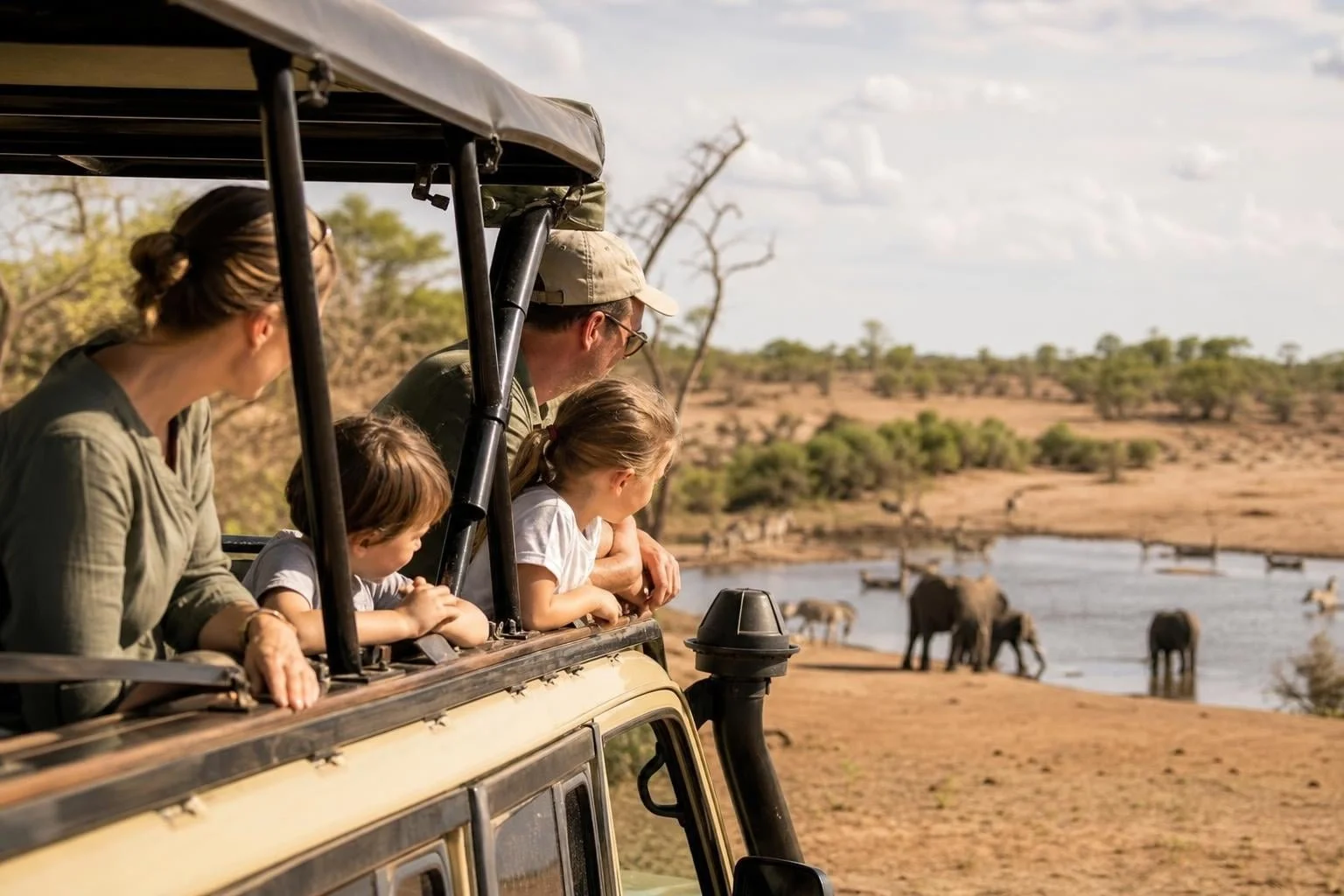
A private vehicle is a safari 4x4 reserved for your family. No other travelers share it. Your family controls the day’s rhythm: leave later, return earlier, linger at a leopard sighting, stop for bathroom breaks, or cut a game drive short when a five-year-old melts down.
This is not a vanity upgrade. It is the tool that makes the itinerary humane.
Practitioners on Reddit report this consistently. In one thread about children ages 8 and 11 handling eight consecutive safari days, a traveler with repeated family safari experience called a private vehicle and guide “highly recommended” because the family could leave after breakfast, pack lunch, go deeper into the bush, and adjust everything on the go. Another discussion about traveling with toddlers drew strong advice to either wait until children are older or use a private vehicle, because very young children struggle with long, quiet drives and can disrupt other travelers in shared settings.
For a deeper look at safari vehicle types including pop-up roofs, window seats, and seating configurations, that guide covers the mechanical details.
A Tripadvisor thread asking whether age 7.5 is too young for safari drew similar advice: book a private car and plan shorter days, because a private setup lets the itinerary fit the child rather than the group. The private vehicle protects your family’s flexibility and protects other travelers’ experience.
Private Guide: Why Guide Quality Shapes the Whole Trip
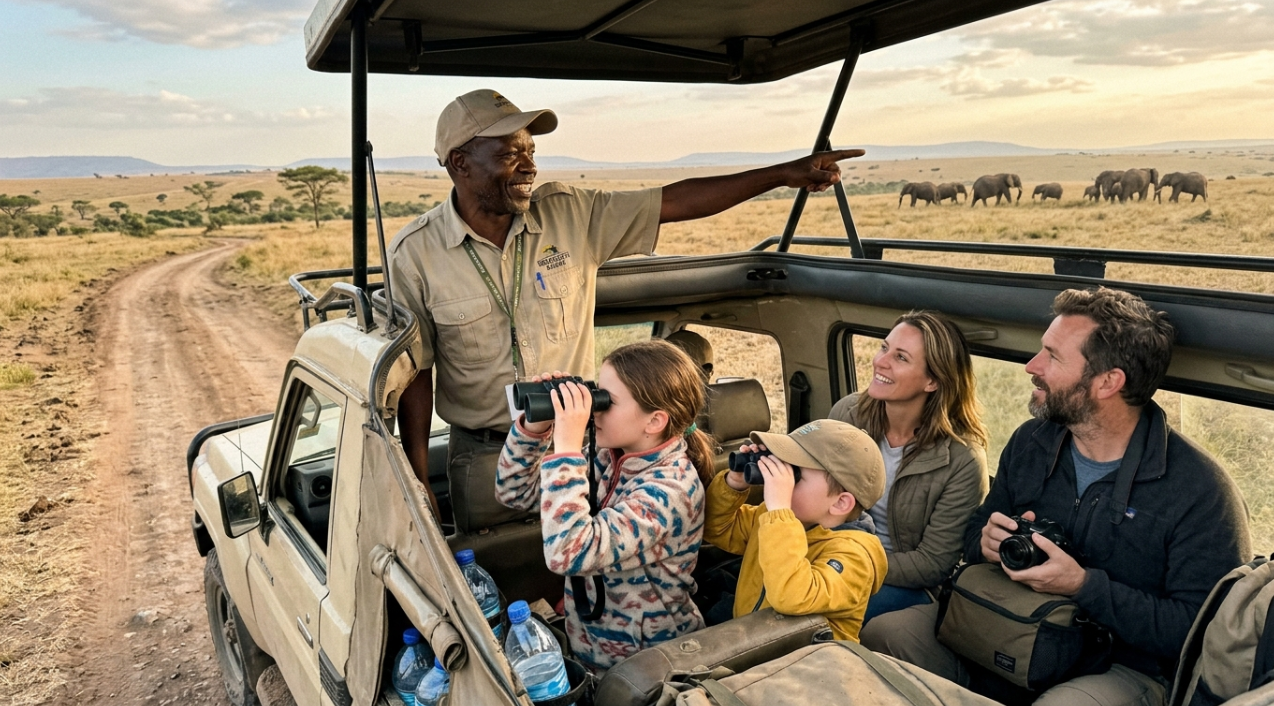
A private guide is a dedicated safari guide focused on your family’s route, wildlife interests, safety, and pace. On a private family safari in Tanzania, the guide often doubles as the driver and stays with your family throughout the itinerary.
Guide quality affects how much your children engage. A good family guide explains animal behavior in age-appropriate ways, adjusts the commentary for teenagers versus six-year-olds, and knows when to let silence do the work. Guide ethics also matter, especially around high-drama wildlife events.
TANAPA’s official Mara River crossing guidelines require vehicles to remain stationary in designated areas, not approach animals during crossings, and give wildlife adequate space. These rules exist because unethical tourism practices have been documented at crossing points. A respectful guide follows these rules without being asked. One family working with Duma Explorer specifically noted in their review that the guide was respectful of animals, something the family genuinely appreciated.
Duma Explorer is rolling out FGASA Level 1 certification for safari guides through EcoTraining, building on existing guide training standards. For more about how guide qualifications work, that breakdown explains what FGASA, EcoTraining, and other credentials actually mean.
Custom Itinerary: Route Design Built Around Your Family
A custom itinerary is a route designed around your travel dates, children’s ages, preferred pace, interests, accommodation style, and budget. It is the opposite of a fixed group departure with pre-set dates and stops.
Adult safari itineraries often try to cover too many parks in too few days. Families need fewer camp moves, realistic drive times, and genuine downtime. A custom family safari itinerary can sequence parks more thoughtfully:
-
Arusha arrival night for recovery
-
Tarangire as a gentle first wildlife stop (about 2.5 to 3 hours from Arusha by road)
-
Ngorongoro for a high-density wildlife day in the crater
-
Serengeti with enough nights or a fly-in strategy
-
Zanzibar after safari for beach rest
One family of four with two teenagers, working with Duma Explorer, did a walking safari in Arusha National Park, then spent two nights each in Western Serengeti, Central Serengeti, Ngorongoro, and Tarangire. That itinerary illustrates thoughtful pacing: varied parks, enough time in each place, and enough movement to keep teenagers engaged without exhausting everyone.
Explore the full scope of Tanzania safari itinerary and cost planning for a deeper breakdown of how days, parks, and costs relate to each other.
How Many Days Do You Need for a Tanzania Family Safari?
A Tanzania family safari can work in four to five safari days if the itinerary focuses on Tarangire and Ngorongoro. Families wanting to include the Serengeti should generally allow more time, particularly if traveling by road. Adding Zanzibar requires additional days for flights, accommodation, and beach time.
|
Safari length |
What can fit |
|---|---|
|
3–4 days |
One or two nearby parks with limited transfers |
|
5 days |
Tarangire, Ngorongoro, and a carefully planned additional destination |
|
7 days |
Tarangire, Ngorongoro, and Serengeti with more realistic pacing |
|
8–10 days |
More Serengeti time, slower pacing, or additional activities |
|
10–14+ days |
Safari plus Zanzibar or a broader family itinerary |
For families with younger children, adding nights to fewer locations can be more comfortable than trying to maximize the number of parks visited.
Which Ages Work Best for a Tanzania Family Safari?
There is no universal “right age” for a family safari. The experience changes significantly by age group, and honesty matters more than cheerful marketing.
|
Child Age |
Planning Implications |
|---|---|
|
0 to 4 |
Possible, but difficult. Keep drives very short, choose fenced or highly supportive lodges, and expect disrupted plans. |
|
5 to 7 |
Often workable with a private vehicle, flexible guide, snacks, and shorter game drives. Pool time helps. |
|
8 to 12 |
Strong family safari age. Children can engage with animal behavior, tracking, and photography if the itinerary is not overloaded. |
|
13+ |
Teens handle longer drives, migration-focused itineraries, and walking safaris where age-appropriate. |
|
Multigenerational |
Plan around the slowest traveler, not the most energetic. Consider two vehicles for large groups. |
The CDC recommends families consult a pediatrician or travel medicine specialist at least one month before departure. Children face many of the same travel health risks as adults, but consequences can be more serious, and not all vaccines can be given to very young children.
Avoid the common operator mistake of saying “all ages are welcome” as if that solves the problem. The better answer: the right age depends on the child, the route, the guide, the vehicle setup, and the lodge choices.
For families spanning three generations, Duma Explorer has designed trips including a multigenerational group of 13 travelers ranging in age from 11 to 62. That kind of trip requires careful room planning, possibly two vehicles, and a realistic pace that works for everyone.
The Northern Circuit: Tanzania’s Core Family Safari Route
The Northern Circuit is the classic Tanzania safari region most first-time families choose. It includes Arusha, Tarangire, Lake Manyara, Ngorongoro, and the Serengeti, and the Tanzania Tourist Board positions Tarangire, Ngorongoro, and Serengeti as the signature northern safari experience.
Tarangire is a strong first stop for families. It is closer to Arusha than the Serengeti, famous for large elephant herds and baobab trees, and gentle enough to ease children into the safari rhythm without overwhelming them.
Ngorongoro Crater concentrates wildlife in a dramatic volcanic caldera. The NCAA’s official guidelines note that crater tours are half-day and permits are valid for a single entry, which matters for setting expectations. You get one descent, and it needs to count.
Serengeti is the emotional centerpiece. But the family planning challenge is distance and time. Do not casually add Serengeti to a three-night safari unless flying is part of the plan.
Lake Manyara and Arusha National Park can fill useful roles depending on time, ages, and interests. Arusha National Park works well for a walking safari on arrival day.
The best family route is not the route with the most parks. It is the route with the fewest exhausting transfers that still delivers varied wildlife. For a complete overview of where to go on safari in Tanzania, that guide covers all circuits.
Sample 7-Day Private Family Safari Tanzania Itinerary
A seven-day private family safari can cover the Northern Circuit without trying to visit every major park. The exact route should be adjusted for children's ages, travel dates, accommodation availability, and whether the family prefers road travel or domestic flights.
|
Day |
Example plan |
Family planning focus |
|---|---|---|
|
Day 1 |
Arrive in Arusha |
Recover from international travel and keep the evening flexible |
|
Day 2 |
Arusha to Tarangire |
Start with a manageable wildlife day |
|
Day 3 |
Tarangire |
Full or shortened game drive based on children's energy |
|
Day 4 |
Tarangire to Ngorongoro |
Combine transfer with a relaxed afternoon |
|
Day 5 |
Ngorongoro Crater |
Concentrated wildlife viewing with a realistic game-drive schedule |
|
Day 6 |
Ngorongoro to Serengeti |
Consider flying if long road transfers are difficult for younger children |
|
Day 7 |
Serengeti |
Full day or second Serengeti night depending on the total trip length |
Families with more time can add additional Serengeti nights rather than automatically adding another park. Families with very young children may also benefit from fewer camp changes and more downtime.
Private Family Safari Tanzania Cost: What You Pay For
The cost of a private family safari in Tanzania depends on the number and ages of travelers, safari length, vehicle and guide arrangement, accommodation category, park and conservation fees, domestic flights, season, and activities. There is no single reliable “family safari price” because a four-person mid-range road safari and a multigenerational fly-in safari can have very different costs.
For families, compare quotes by looking at the total trip structure rather than only the advertised per-person price. Ask whether the quote includes the private vehicle, guide, park fees, accommodation, meals, airport transfers, domestic flights, and activities.
|
Cost factor |
Why it changes the price |
|---|---|
|
Number of travelers |
Vehicle, guide, rooms, flights, and activities may be shared or multiplied across the group |
|
Children's ages |
Some operators and lodges use child rates or age-specific pricing |
|
Safari length |
More nights increase accommodation, park, food, and guiding costs |
|
Accommodation |
Standard tented camps, lodges, and premium properties can have substantially different rates |
|
Private vehicle |
The vehicle and guide are dedicated to your group rather than shared |
|
Road vs. fly-in |
Flights can save transfer time but add per-person costs and luggage restrictions |
|
Season |
Demand and accommodation availability vary throughout the year |
|
Serengeti routing |
Long road transfers or domestic flights can materially affect the total |
|
Activities |
Walking safaris, balloon flights, cultural experiences, and other activities add separate costs |
|
Zanzibar |
Adds accommodation, flights or transfers, and additional activities to the overall trip |
Family Tents, Family Rooms, and the Rooming Problem
Accommodation can make or break a family safari, and “family-friendly lodge” is too vague to be useful. Families need to ask specific questions before booking.
Family room means one larger unit designed for parents and children. Family tent is the tented-camp version. Connecting rooms are separate units linked internally or side by side. Triple or quad means a room with three or four beds, though these are often limited by lodge policy.
Fenced vs. unfenced camp is an important distinction. In unfenced camps, wildlife can move through camp, and children must be escorted by staff after dark. This is not a deal-breaker, but parents need to know in advance.
Key questions to ask before confirming accommodation:
-
What exact room configuration will we have?
-
How far apart are the children’s and parents’ rooms?
-
Is the camp fenced?
-
What escort rules apply after dark?
-
Are meals flexible for early or late schedules?
-
Is there a pool, and is it supervised?
One Duma Explorer review described Stacy planning the right number of days at each park and listening to the family’s accommodation needs: not so high-end that the trip stopped feeling like safari, and not so basic that the kids would not want to return to Africa when older. That calibration, matching comfort level to the family’s personality, is what good trip design looks like.
Families of five face a recurring challenge. Many safari lodges and tented camps configure rooms for two or four. A five-person family often needs two rooms, which doubles the accommodation cost. This should be discussed during the planning stage, not discovered at check-in.
Exclusive-Use Safari House or Villa
Exclusive-use means your family reserves an entire house, villa, or camp section, usually with private staff, a private guide, and full schedule control. It is not the same as a private vehicle.
Exclusive-use properties are best for:
-
Multigenerational families needing different rhythms (grandparents resting while teens do a walking safari)
-
Large groups needing four or more rooms
-
Families with very young children who need total flexibility
-
Milestone trips where privacy and shared space both matter
They are not required for every private family safari. A family of four can have a wonderful private Tanzania safari with a dedicated vehicle, a good guide, and well-chosen tented camps. Exclusive-use adds a layer that makes most sense when the group is big enough to justify it.
Practitioners on Reddit support this directly. In one discussion about private vs. non-private safari, a traveler said the extra cost of a private vehicle was worth it even at the expense of choosing a less luxurious camp, because flexibility mattered more than thread count. For most families, that hierarchy holds: private vehicle first, luxury extras second.
The Private Family Safari Value Ladder
This framework helps families decide where to spend first.
|
Priority |
Spend Here First? |
Why |
|---|---|---|
|
Dedicated guide |
Yes |
Guide quality shapes safety, learning, wildlife sightings, and children’s engagement |
|
Private vehicle |
Yes |
Controls pace, bathroom breaks, starts, stops, and tired-child moments |
|
Realistic routing |
Yes |
Prevents the trip from becoming a transfer marathon |
|
Family room setup |
Yes |
Affects safety, sleep, and daily stress |
|
Camp location |
Yes |
Reduces wasted driving and improves wildlife time |
|
Fly-in transfers |
Sometimes |
Worth it when time is short or children cannot handle long drives |
|
Luxury lodge level |
Depends |
Comfort matters, but over-luxury can reduce the “safari” feel for some families |
|
Exclusive-use villa |
For large/multigen groups |
Excellent when privacy, shared space, and total schedule control matter |
|
Extra activities |
Selectively |
Good for teens; may not suit young children or tight itineraries |
Child Policies and Minimum Ages
A child policy is a lodge or activity rule about whether children of specific ages are accepted, discounted, or allowed to participate. There is no single rule. These vary by property, operator, and activity type.
Vehicle-based game drives are usually the most flexible, with no minimum age in most cases. Walking safaris commonly have minimum ages between 12 and 16. Night drives may restrict younger children. Balloon safaris typically require children to be at least 7 or 8. Some camps do not accept children under 5 or 6 at all, particularly unfenced camps in high-predator areas.
Ask for rules before promising children a specific activity. A balloon safari sounds magical until you learn your seven-year-old is one month too young for the operator’s cutoff.
Safari Pacing: The Term Most Parents Need to Understand
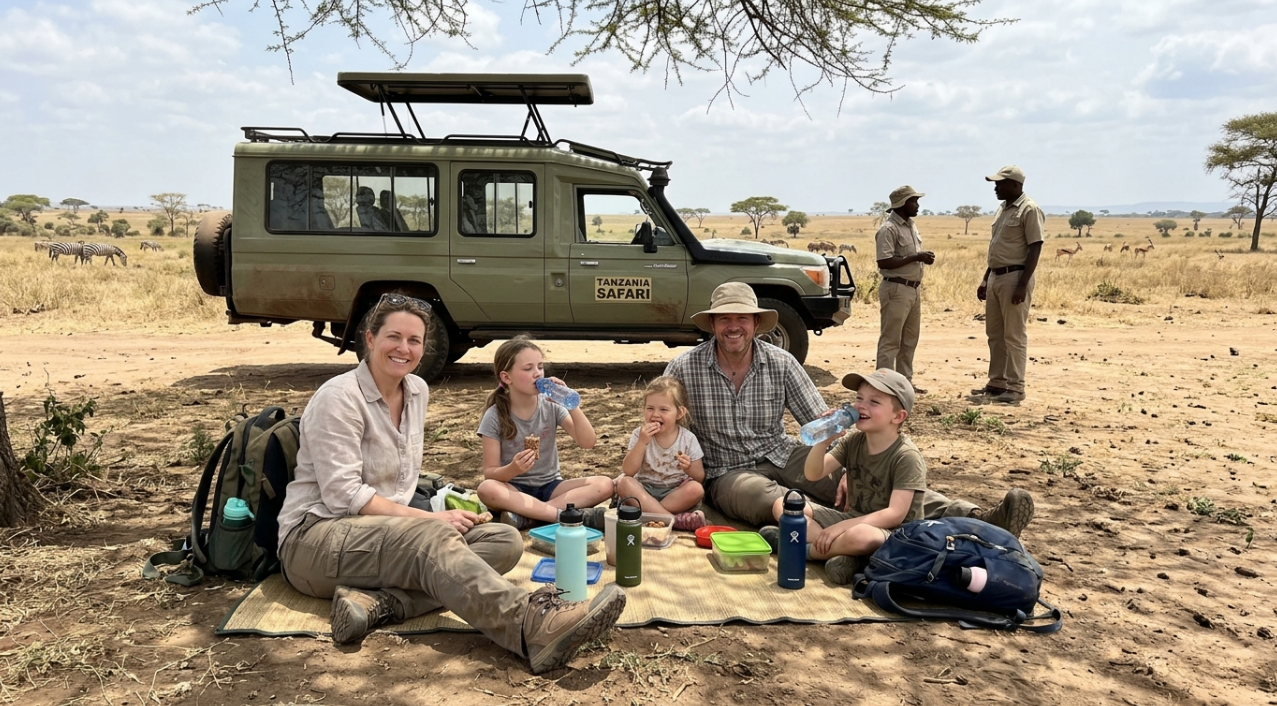
Safari pacing is the rhythm of wake-up times, game drives, meals, rest, transfers, and camp moves across the trip. It is one of the strongest reasons to book a private family safari.
Families usually need:
-
Fewer one-night stops (two to three nights per location works better)
-
Later morning starts than a typical adult safari
-
Flexible lunch timing (packed lunches eaten in the bush work well with kids)
-
Genuine downtime between drives
-
Rest days or pool days between major transfers
Reddit discussions show real parents worrying about exactly these issues. One parent asked whether kids ages 9 and 11 could handle eight consecutive game-drive days. The consensus: yes, with a private vehicle, later starts, and flexibility to call a drive early when attention fades.
Long days on safari are real. A private safari does not eliminate them. What it does is give you tools to manage them, returning to camp early, splitting a full-day drive into two shorter sessions, or spending a midday hour at a hippo pool instead of pushing toward the next park.
Great Migration, Calving, and Mara River Crossings
The Great Migration is the seasonal movement of roughly 1.6 million wildebeest and zebra through the Serengeti-Mara ecosystem. It is the Serengeti’s defining feature, and many families plan their trip around it.
A few terms to understand:
Calving season occurs around mid-February in the southern Serengeti and Ndutu area, when an estimated 250,000 calves are born in a short window. Calving can be excellent for children interested in baby animals and predator-prey dynamics, though predator activity can be intense.
Mara River crossings happen during the dry season in the northern Serengeti. These require patience, ethical viewing, and understanding that crossings are not scheduled entertainment. TANAPA’s guidelines explicitly require vehicles to stay stationary and give animals space.
Migration camps are seasonal camps positioned for migration movement. Their location shifts with the herds, which is the whole point.
For families, the Serengeti works best when you stay at least two to three nights in the relevant region, choose camp location carefully based on season, and do not promise children a river crossing as though it is a show. For help planning around the best time for a Tanzania safari, that guide breaks down seasonality month by month.
Combining Safari and Zanzibar for Families
A safari-and-Zanzibar trip pairs mainland wildlife viewing with Indian Ocean beach time. For families, this combination works well when Zanzibar comes after safari, giving children (and adults) recovery time after early mornings and long drives.
Logistics to plan:
-
Flights: Domestic flights connect Serengeti or Arusha to Zanzibar, usually through Dar es Salaam or direct charters
-
Luggage: Domestic flights often have weight limits, so plan what stays in Arusha storage
-
Beach choice: Zanzibar’s east coast has big tides that can leave shallow flats at low tide; the north and west coasts often work better for children who want to swim
-
Insurance: The official Zanzibar inbound travel insurance portal states mandatory inbound insurance applies to Zanzibar visitors
For families planning a longer trip, a Tanzania safari and Zanzibar itinerary of 14 days can combine the Northern Circuit parks with meaningful beach time. Zanzibar weather and wind patterns affect which coast suits your travel dates.
Costs and What Drives Them
Family safari pricing depends on many moving parts, and no single number captures it honestly. The main cost drivers are:
-
Number of travelers and children’s ages: Some parks and lodges offer child rates; others do not
-
Vehicle count: A family of four shares one vehicle; a family of seven may need two
-
Guide style: A dedicated private guide for the full trip costs more than a different driver at each camp
-
Number of safari nights: More nights means more park fees, accommodation costs, and meals
-
Park and conservation fees: Ngorongoro crater descent carries a separate service fee beyond general entry
-
Domestic flights: Multiply per-seat costs across every family member
-
Accommodation category: The gap between a good tented camp and a premium lodge can be $300 to $800 per person per night
-
Season: Peak season (July through October, December through February) drives prices higher and requires earlier booking
Duma Explorer’s published starting points include a 5-day Northern Circuit safari from about $2,000 per person and a 13-day Mountains, Safari & Beach trip at about $6,000 per person including accommodations, food, and transport.
[FACT CHECK REQUIRED: Confirm whether the 5-day Northern Circuit and 13-day Mountains/Safari/Beach price examples are still current and appropriate for this article.]
For a detailed breakdown of how Tanzania safari costs are calculated, that guide covers per-person pricing mechanics.
A useful thing for families to know: a family of four can sometimes make private vehicle costs more efficient per person than a couple, because the vehicle and guide cost is shared across more travelers. Private does not always mean more expensive per head.
Health, Safety, and Documents
Keep this section brief. Parents need to know what to prepare, not receive a medical education.
Malaria: The CDC states that malaria risk in Tanzania applies to all areas below 1,800 meters and recommends prescription prophylaxis for travelers. Safari activities, including tented accommodation and dusk wildlife viewing, increase mosquito exposure. Consult a travel medicine specialist, bring insect repellent, and use bed nets.
Yellow fever: Generally not required for direct travel from the United States. It is required for travelers arriving from or transiting for more than 12 hours through countries with yellow fever transmission risk.
Travel insurance: Essential. Make sure the policy includes emergency evacuation coverage for all family members, including children. For more detail, the Tanzania safari safety guide covers park rules, vehicle safety, and camp protocols.
Visa: U.S. passport holders traveling to Tanzania for tourism must apply for a Multiple Visa through the official eVisa portal. Requirements change, so verify before booking flights.
Is a Private Family Safari the Right Fit?
A private family safari in Tanzania is likely a good fit if:
-
Children can sit reasonably still for at least part of a game drive
-
The family values flexibility more than the lowest price
-
The trip includes multiple ages or generations
-
The family wants Serengeti, Ngorongoro, Tarangire, or Zanzibar arranged without DIY logistics
-
Parents want guide continuity and custom pacing
-
Room setup matters
-
The budget supports private guiding and quality accommodation
Extra caution is needed if:
-
Children are toddlers or preschool age
-
The family wants the cheapest possible trip
-
The trip is only two to three safari nights and includes Serengeti by road
-
Travelers dislike long drives
-
Mobility needs have not been disclosed early
-
The family expects guaranteed sightings or scheduled migration crossings
What to Share When Requesting a Quote
A good safari planner will ask for specific details. Having these ready speeds up the process and leads to a better-designed trip:
-
Travel dates and total trip length
-
Number of adults and children’s exact ages
-
Safari-only or safari plus Zanzibar
-
Preferred accommodation style (comfortable tented camps, lodges, or premium)
-
Approximate per-person budget range
-
Must-see parks or wildlife priorities
-
Interest in Great Migration timing
-
Tolerance for long drives (or preference for flights)
-
Rooming needs (family of five, connecting rooms, etc.)
-
Mobility, dietary, or medical requirements
-
Interest in walking safaris, balloon safaris, cultural visits, or beach time
If you are comparing a private vehicle with an exclusive-use lodge, or trying to decide between a road-based and fly-in route through the Serengeti, Duma Explorer can design both versions of the same Tanzania family safari for comparison.
Request a Custom Family Safari Itinerary
Frequently Asked Questions
Is a private safari worth it for families in Tanzania?
Almost always yes. A private vehicle and guide let the family control start times, drive length, breaks, lunch, sightings, and pace. This matters more with children or grandparents than with two flexible adults. The cost premium over a group safari is often smaller than expected when split across a family of four or five.
What is the best age for children on a Tanzania safari?
Ages 8 to 12 are often the sweet spot, with enough patience for game drives and enough curiosity to engage with wildlife. Teens can handle more ambitious routes. Younger children need shorter drives, flexible lodges, and private vehicles. Families with toddlers should plan very carefully or consider waiting.
How many safari days does a private family trip need?
For Tarangire and Ngorongoro, four to five safari days can work. For Serengeti plus Ngorongoro and Tarangire, plan about seven to ten safari days. Add more time if including Zanzibar or traveling with young children who need slower pacing.
Is the Serengeti worth it for kids?
Yes, if you give it enough time. The Serengeti can be the highlight of a family safari, but it is far from Arusha and should not be rushed by road in a very short itinerary. Two to three nights in the right Serengeti region, or flying at least one direction, makes it work.
What is the difference between a private vehicle and an exclusive-use camp?
A private vehicle means only your family shares the safari 4x4 and guide. Exclusive-use means your family has an entire house, villa, or camp section. Many families need the first. Fewer need the second. Exclusive-use is best for large or multigenerational groups.
Can we combine a Tanzania family safari with Zanzibar?
Yes. Zanzibar works best after safari because children and adults can rest after early mornings and long drives. Plan flights, beach location, tides, and mandatory Zanzibar inbound insurance requirements in advance.
How far ahead should we book a private family safari?
Six to twelve months is typical for peak season (July through October, or December through February). Multigenerational groups needing four or more rooms should plan even earlier, because many safari camps have only six to twelve rooms total. A large family can fill half a camp during high season.