

Zanzibar Weather 2026: Seasons, Winds & When to Go
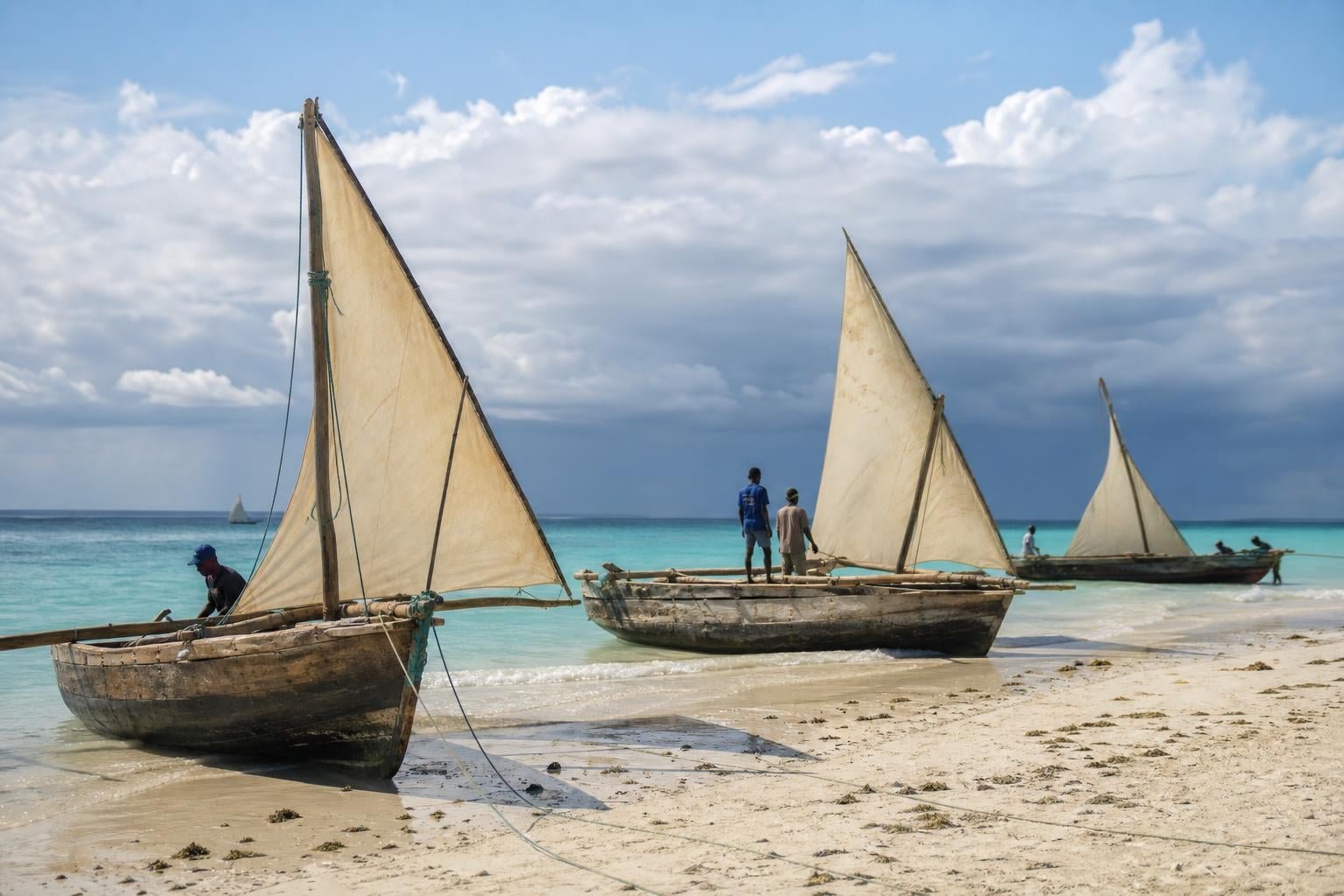
TL;DR
Zanzibar is warm year-round, but that does not mean every month offers the same travel conditions. Rainfall, humidity, monsoon winds, sea temperature, tides, and underwater visibility can change significantly throughout the year.
The most important distinction is between Zanzibar's long dry season from June to October, the short dry period in January and February, the long rains from March to May, and the short rains toward November and December. The northeast Kaskazi and southeast Kusi wind systems also influence how different beaches and water activities feel from season to season.
For most travelers, June through October offers the best overall combination of dry weather, comfortable temperatures, and reliable beach conditions. September is particularly attractive because rainfall is typically low while temperatures remain comfortable. However, the best month depends on what you want to do: January and February suit hot-weather beach trips, June through October is stronger for diving and kitesurfing, and November or late May can provide a useful balance between lower prices and acceptable weather.
This guide explains Zanzibar weather month by month, compares the island's seasons and wind systems, and shows how weather changes depending on where you stay and what you plan to do.
Quick Answer: When Is the Best Time to Visit Zanzibar? The best time to visit Zanzibar is generally June through October, when the island has its driest weather, lower humidity, comfortable temperatures, and favorable conditions for beaches, diving, snorkeling, and safari-and-beach trips. January and February are also good for hot beach weather, while November and December offer a lower-cost shoulder-season alternative. March through May is the long-rains season, with April typically the wettest month and the greatest risk of disrupted beach days. In simple terms: * Best overall weather: June to October * Best single month: September * Hottest beach weather: January to February * Best for kitesurfing: June to October and December to March * Best for diving: June to October, with good conditions also possible in January and February * Lowest weather reliability: March to May, especially April * Best shoulder-season value: November, late May, and early June * Best for all-day swimming: North coast beaches such as Kendwa and Nungwi, where tidal exposure is less pronounced than on much of the east coast Zanzibar stays warm throughout the year. The main variables are rainfall, humidity, wind, sea conditions, and tides, rather than temperature alone.
Zanzibar Weather at a Glance
|
Season |
Months |
Typical Conditions |
Rain Risk |
Best For |
|---|---|---|---|---|
|
Short Dry Season |
January–February |
Hot, humid, mostly sunny |
Moderate |
Beaches, swimming, snorkeling |
|
Long Rains (Masika) |
March–May |
Hot, humid, frequent heavy rain |
High |
Budget travel, flexible itineraries |
|
Long Dry Season |
June–October |
Warm, drier, breezier |
Low |
Beaches, diving, safari combinations |
|
Short Rains (Vuli) |
November–December |
Warm with short showers |
Moderate |
Shoulder-season travel, lower crowds |
At-a-Glance Takeaway
If weather reliability is your priority, choose June through October. If you prefer hotter conditions and don't mind humidity, January and February can also be excellent. If price matters more than weather certainty, November, late May, and early June can offer a better compromise.
Rainfall varies by weather station and dataset, so monthly figures should be treated as climate averages rather than guarantees for a specific trip.
Zanzibar Weather Month by Month
January
January is hot, humid, and generally favorable for a beach holiday. The Kaskazi northeast monsoon is active, keeping temperatures high and often producing good conditions for swimming and snorkeling.
Best for: Beach holidays, swimming, snorkeling, diving
Watch for: High humidity and occasional rain
February
February is typically one of Zanzibar's hottest months. Sea temperatures remain very warm, while the combination of heat and humidity can make afternoons feel intense.
Best for: Beach resorts, swimming, water activities
Watch for: Heat and humidity
March
March marks the transition toward the long rains. Early March can still provide good beach weather, but rainfall generally becomes more frequent as the month progresses.
Best for: Flexible travelers, early-season beach trips
Watch for: Increasing rain and humidity
April
April is normally the wettest and least reliable month for a classic beach holiday. Heavy rainfall can disrupt outdoor activities, and some tourism businesses reduce operations during the long-rains period.
Best for: Budget-conscious travelers with flexible plans
Watch for: Heavy rain, muddy roads, disrupted excursions
May
May remains part of the long-rains season, although rainfall generally begins to ease compared with April. Conditions can become more usable toward the end of the month.
Best for: Lower-cost travel, flexible itineraries
Watch for: Residual rain and occasional resort closures
June
June marks the beginning of Zanzibar's long dry season. Conditions become cooler, drier, and breezier as the Kusi wind becomes established.
Best for: Diving, beaches, safari-and-Zanzibar combinations
Watch for: Stronger winds on exposed beaches
July
July is one of the most comfortable months for outdoor activities. Temperatures are relatively mild by Zanzibar standards, rainfall is low, and the Kusi wind creates a noticeably breezier feel.
Best for: Diving, beach holidays, sightseeing, safari combinations
Watch for: Windier conditions on the southeast coast
August
August remains dry and comfortable, with warm days and cooler nights than the hotter months at the beginning of the year. The southeast can be particularly windy.
Best for: Diving, kitesurfing, beaches
Watch for: Wind and choppier conditions on exposed coasts
September
September is one of the strongest all-round months for Zanzibar travel. Rainfall is typically among the year's lowest while temperatures remain warm enough for swimming and beach activities.
Best for: Beaches, diving, snorkeling, safari combinations
Watch for: Stronger winds on some southeast-facing beaches
October
October remains relatively dry and warm, although conditions begin transitioning toward the short-rains season later in the month.
Best for: Beaches, diving, sightseeing
Watch for: Increasing humidity toward the end of the month
November
November brings the short rains, known as Vuli. Showers are generally more intermittent than during the long rains, and sunny periods can still dominate much of the day.
Best for: Shoulder-season travel, lower crowds
Watch for: Unpredictable showers
December
December is warm and increasingly humid as the Kaskazi wind returns. Early December can retain some short-rains influence, while the festive period is typically much busier.
Best for: Beach holidays, festive-season travel
Watch for: Humidity, higher demand around Christmas and New Year
Climate Foundations
Tropical Monsoon Climate (Am)
What it means: Under the Köppen climate classification system, Zanzibar is designated Am, a tropical monsoon climate. This means temperatures stay high year-round and rainfall is significant across all months, with a pronounced wet season.
Why it matters for trip planning: Unlike destinations with hot summers and cold winters, Zanzibar’s temperature barely fluctuates. The average ranges from 22°C to 33°C in every month. Rainfall is the variable that defines your experience, not temperature. When someone asks about Zanzibar weather, the real question is usually about rain.
ITCZ (Inter-Tropical Convergence Zone)
What it means: The ITCZ is a belt of low atmospheric pressure near the equator where trade winds from the northern and southern hemispheres collide. This collision forces warm, moist air upward, producing intense convective rainfall.
Why it matters: The ITCZ migrates north and south with the sun throughout the year. When it passes over Zanzibar (roughly March to May, and again briefly in November), it triggers the island’s rainy seasons. When it moves away, dry conditions follow. Almost no competing travel guide explains this mechanism, but understanding it makes the entire seasonal pattern click: the rains aren’t random. They’re driven by a predictable atmospheric system.
Trade Winds
What it means: Trade winds are persistent wind patterns that blow from subtropical high-pressure zones toward the equatorial low-pressure belt. In the Indian Ocean, they arrive from the northeast or southeast depending on the time of year.
Why it matters: On Zanzibar, trade winds do more than move air. They determine sea conditions, diving visibility, kitesurfing quality, humidity, and even which coast of the island feels most comfortable. The two trade wind systems that affect Zanzibar have their own Swahili names, covered next.
Kaskazi vs. Kusi: Zanzibar's Two Main Wind Systems
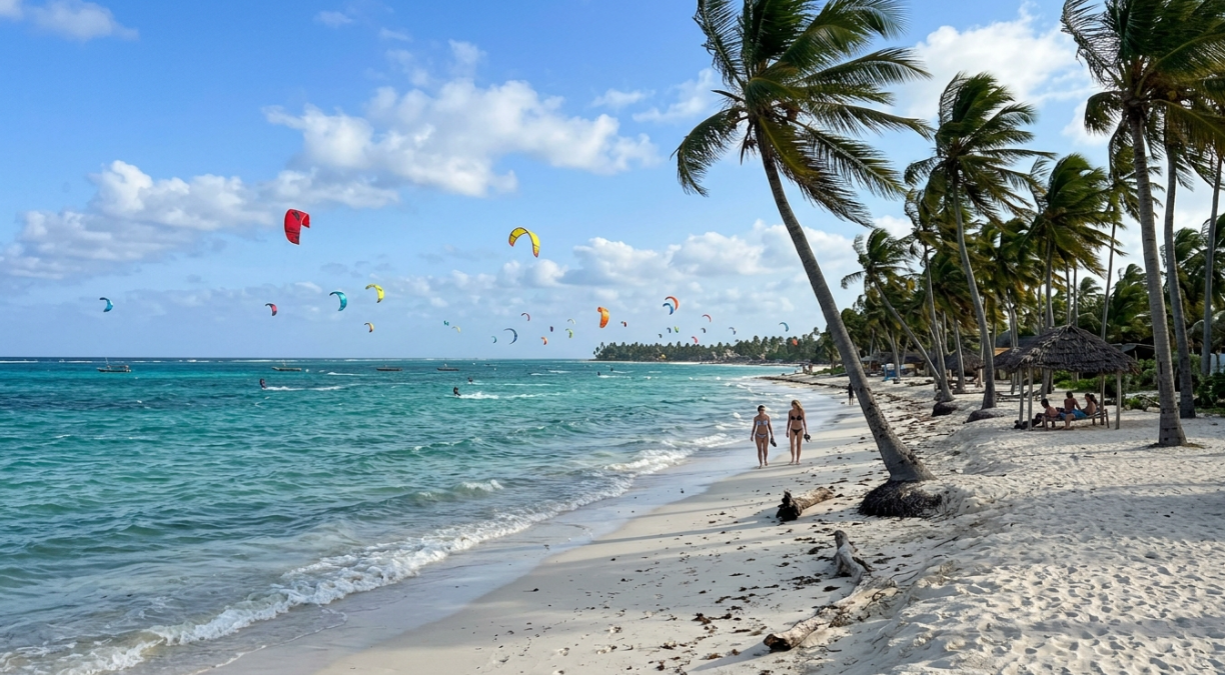
Zanzibar's seasonal weather is strongly influenced by two major wind patterns. Kaskazi is associated with the northeast monsoon and is most prominent around December through March, while Kusi is associated with the southeast trade winds and is strongest during the middle of the year.
|
Feature |
Kaskazi |
Kusi |
|---|---|---|
|
Direction |
Northeast |
Southeast |
|
Main period |
December–March |
June–October |
|
Typical feel |
Hotter and more humid |
Cooler, drier and breezier |
|
Main travel effect |
Warm seas and generally favorable beach conditions |
Stronger winds and excellent conditions for wind sports |
|
Best known for |
Swimming, snorkeling, warm-water activities |
Kitesurfing, diving, breezy beach conditions |
|
Most affected areas |
Island-wide, especially exposed coasts |
Southeast and east coasts |
Which Wind Season Is Better?
Neither wind season is universally better. Kaskazi generally suits travelers prioritizing warm, calm-water beach conditions, while Kusi is particularly attractive for travelers who want drier weather, lower humidity, diving, or kitesurfing.
The exact experience also depends on which coast you choose because wind exposure, tides, and shoreline geography vary around Zanzibar.
Zanzibar’s Wind Systems
Kaskazi (Northeast Monsoon)
What it means: Kaskazi is the Swahili word for “northern wind.” It refers to the northeast monsoon that blows across Zanzibar from December through March. Wind speeds typically average 12 to 20 knots.
What it feels like: Warmer, gentler, and more humid than the alternative. The Kaskazi flattens the ocean surface, creating calm, glassy seas ideal for swimming, snorkeling, and beginner water sports. Humidity runs high (75-82%), so even though temperatures hover around 30-33°C, the air feels heavier than the numbers suggest.
Key data: Sea temperatures during the Kaskazi peak at 28-29°C, the warmest of the year.
Practitioners based on the Zanzibar coast note that the Kaskazi period is when humidity sits at its highest, around 80%. February at 30°C with 80% humidity feels genuinely oppressive compared to July at 28°C with 65% humidity. The wind is what saves you.
Kusi (Southeast Trade Wind)
What it means: Kusi (also called Kusini, meaning “southern wind” in Swahili) is the southeast trade wind that blows from June through September or October. It’s stronger and more consistent than the Kaskazi, averaging 15 to 25 knots.
What it feels like: Cooler and drier. The Kusi brings noticeably lower humidity (73-76%) and comfortable daytime temperatures of 25-30°C. It’s the wind system behind Zanzibar’s long dry season and the reason June through October is peak tourism season.
Activity connection: The Kusi’s strength and reliability make Paje and Bwejuu on the southeast coast the center of Zanzibar’s kitesurfing scene. Those beaches catch the full force of the trade winds. For a broader look at Swahili Coast travel terms, including wind terminology, that glossary goes deeper.
Transition Periods
What it means: The windows between monsoon systems, roughly April to May and October to November, when neither the Kaskazi nor Kusi dominates. Winds become lighter and more variable.
Why it matters: Transition periods overlap with the rainy seasons. Without consistent wind to push clouds through and moderate humidity, these windows tend to feel more stagnant. The April-May transition is particularly wet. The October-November transition is milder, bringing scattered showers rather than sustained downpours.
Zanzibar’s Four Seasons
Short Dry Season (January to February)
What it means: The brief hot and sunny window between the short rains and the long rains. January and February are warm, bright, and relatively dry compared to what comes before and after.
Key data: January averages a high of 32.8°C with 85mm of rain over about 10 days and 9 hours of daily sunshine. February is the hottest month on the island, with temperatures reaching 33.1°C. Sea temperature hits 28.5°C or higher.
Trip planning note: This is one of Zanzibar’s best beach windows. The ocean is bath-warm, the Kaskazi keeps seas calm, and rainfall is manageable. The main trade-off is humidity, which can feel intense, especially in February.
Masika (Long Rains), March to May
What it means: Masika is the Swahili term for Zanzibar’s long rainy season. It runs from March through May and represents the heaviest sustained rainfall of the year. The ITCZ passes directly over the archipelago during this period.
Key data: April is the peak, with roughly 320 to 400mm of rain falling over 18 or more days. May eases slightly to around 290mm. Humidity spikes to 86% in May, the year’s highest.
The reality: April is the one month that’s genuinely difficult to recommend for a beach holiday. Some resorts close entirely during April and May because the demand drops and conditions are unpredictable. Rainfall peaks during the long rains, with heavy afternoon showers making roads muddy.
The flip side: Hotel rates, flights, and some tours come at significant discounts during the Masika. If you’re budget-conscious and flexible, the shoulder edges of this season (early March, late May) can offer usable weather at lower prices.
Long Dry Season (June to October)
What it means: Zanzibar’s extended dry period, driven by the Kusi winds. This is the season most travel guides call the “best time to visit,” and the data supports it.
Key data: Monthly rainfall drops to 50-100mm, with September recording as little as 35mm over just 7 days, the driest month of the year. Daytime temperatures hover at a comfortable 25-30°C. Sunshine averages 9 hours daily. Sea temperatures cool to 25-27°C, still warmer than most European summer seas.
Why September stands out: Experienced Zanzibar travelers frequently cite September as the single best month. Minimal rain, maximum sunshine, comfortable temperatures, and excellent diving visibility all converge.
This season also overlaps with safari high season in Tanzania, making it the most popular window for safari-then-beach itineraries.
Vuli (Short Rains), November to December
What it means: Vuli is the Swahili name for the short rainy season. It brings lighter, more scattered showers than the Masika, usually arriving as brief afternoon spells followed by sunny periods.
Key data: November sees around 140-170mm of rainfall. Conditions typically clear by mid-December, just before the festive season. Temperatures climb back to 29-30°C as the Kaskazi onset begins.
Trip planning note: The Vuli is a genuine shoulder season. Prices drop, crowds thin, and the rain is rarely a dealbreaker. Most showers pass within 30 minutes to two hours, leaving long stretches of usable beach weather.
When to Visit Zanzibar Based on Your Trip
The best Zanzibar weather depends on what you plan to do. A month that is excellent for kitesurfing may not be ideal for someone who wants completely calm water, while a budget traveler may deliberately choose a wetter month to save money.
|
Your Priority |
Best Time |
Why |
|---|---|---|
|
Best overall weather |
June–October |
Drier, comfortable temperatures and lower humidity |
|
Best single month |
September |
Typically very dry with comfortable temperatures |
|
Hottest beach weather |
January–February |
High temperatures and very warm sea |
|
Diving |
June–October |
Generally favorable dry-season conditions |
|
Kitesurfing |
June–October; December–March |
Seasonal trade winds provide reliable wind windows |
|
Swimming |
Year-round |
Sea remains warm, but tides matter by location |
|
Safari + Zanzibar |
June–October |
Dry-season conditions work well for both regions |
|
Lower-cost travel |
November, late May, early June |
Shoulder-season conditions can mean fewer crowds and lower rates |
|
Avoiding heavy rain |
June–October |
Lowest overall rainfall period |
|
Cultural sightseeing |
June–October |
More predictable outdoor conditions |
Best Month for a Beach Holiday
For travelers who want the highest probability of dry, comfortable beach weather, September is one of the strongest choices.
Best Months for a Budget Beach Holiday
If you are willing to accept a higher chance of rain, November and the late-May to early-June transition can provide a better balance between weather and price than the peak dry season.
Best Months for Kitesurfing
The strongest wind seasons are generally associated with the Kusi and Kaskazi systems, making June through October and December through March the key periods to investigate. Local conditions can vary by beach and day, so wind forecasts should be checked close to the trip.
Measurable Weather Terms
Average Temperature Range
The numbers: Zanzibar’s annual highs range from 28°C to 33°C. Lows stay between 22°C and 25°C throughout the year. The hottest month is February (average 28°C overall, highs near 33°C). The “coldest” is July (average 24°C). In extreme cases, temperatures can reach 36-38°C.
What actually matters: A four-degree difference between your hottest and coolest months is tiny. Temperature alone almost never determines whether you’ll enjoy a particular month. Humidity and rainfall are the real decision factors.
Humidity
The numbers: Zanzibar humidity ranges from 73% in August and September to 86% in May. The year starts high (82% in January), drops to 76% by March, spikes through the Masika, bottoms out in September, and climbs again toward December (85%).
Why this is the most underrated Zanzibar weather variable: Locals and long-term residents consistently emphasize that humidity, not temperature, defines comfort. The four-degree temperature difference between February and July feels like a ten-degree swing once you factor in humidity. The Kusi trade winds during the long dry season actively lower the “feels like” temperature, making 28°C in July feel genuinely pleasant rather than sticky.
Rainfall
The numbers: Zanzibar (Unguja island) receives approximately 1,650mm of rain annually. Pemba, the smaller northern island of the archipelago, gets about 1,900mm, roughly 15% more. Monthly totals swing from as low as 35mm in September to 400mm in April.
Measurement context: Rainfall is measured in millimeters. One millimeter equals one liter of water per square meter. When a month records 400mm, that’s a lot of water, equivalent to submerging the entire island under 40cm if it all fell at once and didn’t drain.
Sea Temperature
The numbers: Zanzibar’s sea temperature ranges from 25.5°C in August and September to 28.5-29.5°C between December and April. It’s warm enough for comfortable swimming every day of the year.
Perspective: Even in the coolest month, Zanzibar’s ocean is warmer than the Mediterranean in peak summer. Water temperature is essentially never a reason to avoid a particular month.
Sunshine Hours
The numbers: Dry months (June through October, plus January and February) average 8 to 9 hours of sunshine daily. Even during the Masika, mornings are often clear and bright. The rain tends to build in the afternoon or arrive at night.
Why this matters: A “rainy month” on Zanzibar rarely means gray skies all day. The pattern is usually sunny mornings, followed by an afternoon downpour, followed by clearing.
UV Index
What it means: The UV index measures the intensity of ultraviolet radiation from the sun. At 6° south of the equator, Zanzibar’s UV index is high to very high year-round, typically 10 or above.
Practical note: Reef-safe sunscreen is essential every day, not just beach days. The equatorial sun burns faster than most northern visitors expect, even on overcast days when cloud cover thins the UV only slightly.
What Does Zanzibar Weather Actually Feel Like?
Zanzibar's temperatures can look remarkably similar throughout the year, but the experience changes considerably depending on humidity and wind.
During January and February, temperatures are high and humidity can make afternoons feel heavy and tropical. The Kaskazi wind can provide some relief, particularly along exposed beaches.
During June through October, daytime temperatures are generally more comfortable and the Kusi trade winds create a noticeably breezier environment. The same nominal temperature can therefore feel much more pleasant than it does during a humid spell earlier in the year.
During the long rains from March through May, the combination of heat, humidity and frequent rainfall can make outdoor activities less predictable.
The practical lesson is simple: don't choose a Zanzibar travel month based on temperature alone. Check rainfall, humidity, wind and tides together.
Zanzibar Weather by Coast: North vs. East vs. West
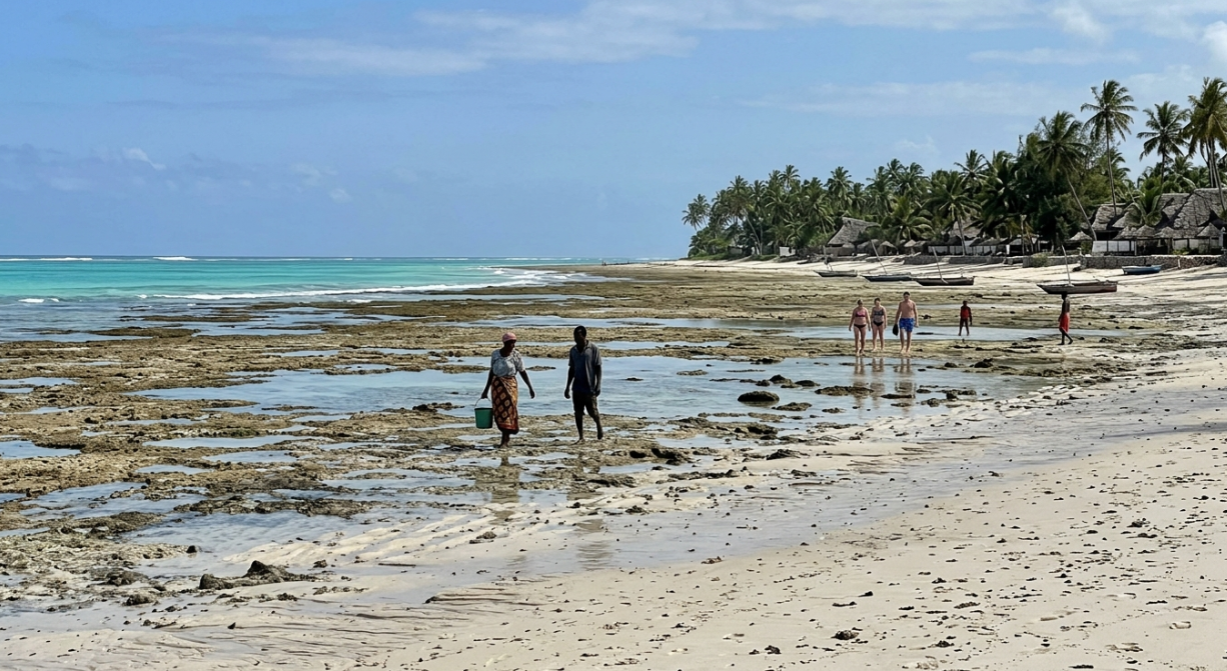
Zanzibar does not feel identical everywhere. Wind exposure, tides, shoreline orientation and local geography can make the same weather system feel very different depending on where you stay.
|
Coast |
Weather/Sea Character |
Tides |
Best For |
|---|---|---|---|
|
North |
Relatively sheltered and less tide-affected |
Lower impact |
Swimming, resorts, sunsets |
|
East |
More exposed to trade winds and strong tidal changes |
High impact |
Kitesurfing, diving, quiet beaches |
|
Southeast |
Wind-exposed, especially during Kusi |
High impact |
Kitesurfing, water sports |
|
West |
More sheltered from southeast trade winds |
Generally less dramatic |
Stone Town, sunsets, sightseeing |
North Coast: Nungwi and Kendwa
The north coast is one of the easiest choices for travelers who prioritize swimming. Kendwa and Nungwi are less affected by the dramatic tidal exposure found along much of the east coast.
East Coast: Matemwe, Kiwengwa and Paje
The east coast experiences much more noticeable tidal changes. At low tide, the sea can retreat a substantial distance from shore, exposing reef flats and tidal pools.
This does not mean the east coast has worse beaches. It means travelers should plan swimming and water activities around the tide as well as the weather.
West Coast: Stone Town
The west coast is useful for travelers combining beach time with Stone Town, cultural attractions and sunset views. Its more sheltered position can also make the shoreline feel different from the wind-exposed southeast.
Activity-Weather Connections
Diving and Snorkeling Visibility
The numbers: June through October offers the best underwater visibility, reaching 20 to 30 meters at top sites like Mnemba Atoll, Chumbe Island, and Tumbatu. The Kusi winds bring dry, calm conditions that reduce sediment and plankton. December through February maintains good visibility (15-25m), with calmer Kaskazi winds creating flat seas ideal for beginner divers.
When to avoid: Visibility drops during the Masika (March through May) as rain runoff and plankton blooms cloud the water.
For ethical dolphin tours, the calm seas of December through February are particularly well suited to boat-based excursions.
Kitesurfing Seasons
The pattern: Zanzibar has two distinct kitesurfing windows. During the Kusi (June through October), strong and reliable 15-25 knot winds suit intermediate to advanced riders. During the Kaskazi (December through March), lighter 12-20 knot winds and flatter water suit beginners and freestyle sessions. The transition months (April-May, November) are generally too unpredictable for consistent sessions.
Where: Paje, on the southeast coast, is the hub. It catches the full force of both wind systems and has shallow lagoon areas exposed at low tide that create natural flat-water spots.
Shoulder Season
What it means: In Zanzibar context, the shoulder seasons are the transitional periods between peak dry and peak wet, roughly early to mid November, late May to early June, and March. Weather is unpredictable but often usable.
Why it matters: Shoulder season pricing can be 20-40% lower than peak season for flights, accommodation, and excursions. If your schedule is flexible and you’re comfortable accepting occasional rain, these windows offer strong value. A rainy afternoon is also perfect for a Zanzibar spice tour, which happens mostly under tree canopy.
Safari-Beach Weather Alignment
What it means: Coastal Tanzania (including Zanzibar) follows a monsoon-driven weather pattern. Inland Tanzania, the safari belt around Arusha, Serengeti, and Ngorongoro, sits at higher altitude and follows a different system. The dry seasons roughly overlap (June through October is dry in both regions), but rainfall timing and intensity can differ.
Why it matters: If you’re combining a mainland safari with a Zanzibar beach extension, expect different weather at each stop. The good news is that June through October works well for both, which is why it’s the most popular window for combination trips.
For a detailed look at mainland safari timing, that guide breaks down each park’s season individually.
Practical Terms
Rainy Day Reality
What it actually looks like: On most days during Zanzibar’s rainy seasons, showers last 30 minutes to two hours. They build in the afternoon or arrive during the night, leaving long stretches of sunshine in between. All-day gray washouts are uncommon even in April.
Why this matters: Many travelers avoid the rainy season entirely based on the assumption that “rainy” means unusable. That’s overly cautious for most months except April, when the frequency and duration of showers do become disruptive.
Resort Closures During Masika
What it means: Some Zanzibar properties close during April and May because occupancy drops to the point where staying open isn’t viable. This is more common at smaller, boutique lodges than at large resorts.
Practical impact: If you’re planning a trip during the Masika, confirm your preferred hotel is open before booking flights. The upside of reduced options is that open properties often offer their lowest rates of the year.
Cyclone Risk
What it means: Severe tropical cyclones in the southwest Indian Ocean occasionally generate rough weather in Zanzibar’s vicinity, but direct landfall is rare. Zanzibar sits just outside the main cyclone belt.
Practical impact: Cyclone risk is not a significant planning consideration for Zanzibar. Heavy weather can occur, particularly during the Masika, but the statistical probability of a trip-disrupting cyclone is low.
Ramadan and Cultural Calendar
What it means: Zanzibar is predominantly Muslim, and Ramadan, the holy month of fasting, significantly affects daily rhythms. From 2023 to 2025, Ramadan begins in March, overlapping with the transition into the Masika.
Why it matters for weather planning: Ramadan isn’t a weather event, but it interacts with weather-related travel decisions. If you’re visiting during March, you’ll experience both the onset of rains and shorter business hours during the day. Some restaurants and shops close until evening. The tradeoff is experiencing a vibrant cultural period, with lively evenings after the fast is broken.
Packing for Zanzibar Weather
What to bring: Given the year-round warmth and humidity, pack light, breathable fabrics. Quick-dry layers handle sudden rain better than cotton. Reef-safe sunscreen is critical. For complete packing guidance, including gear that works for both safari and beach, that list covers everything.
Key items by season:
-
Kaskazi (Dec-Mar): Lightest possible clothing, high-SPF sunscreen, hat, light rain jacket
-
Masika (Mar-May): Waterproof bag for electronics, quick-dry everything, insect repellent
-
Kusi (Jun-Oct): Light fleece or long sleeve for breezy evenings, reef shoes for east coast walks at low tide
-
Vuli (Nov-Dec): Compact umbrella, sandals that handle wet surfaces, modest clothing for Stone Town visits
Quick Reference: Zanzibar Weather by Season
|
Season |
Months |
Avg High |
Avg Low |
Monthly Rain |
Humidity |
Sea Temp |
Wind |
|---|---|---|---|---|---|---|---|
|
Short Dry |
Jan-Feb |
32-33°C |
24-25°C |
55-85mm |
75-82% |
28-29°C |
Kaskazi (12-20 kn) |
|
Masika (Long Rains) |
Mar-May |
29-33°C |
24-25°C |
190-400mm |
79-86% |
28-29°C |
Transition |
|
Long Dry |
Jun-Oct |
27-30°C |
21-24°C |
35-100mm |
73-80% |
25-27°C |
Kusi (15-25 kn) |
|
Vuli (Short Rains) |
Nov-Dec |
29-30°C |
25-26°C |
140-170mm |
80-85% |
27-28°C |
Kaskazi onset |
Frequently Asked Questions
What is the best month for Zanzibar weather?
September is the strongest single month. It records the lowest rainfall of the year (around 35mm over 7 days), 9 hours of daily sunshine, comfortable temperatures, and the best diving visibility. June through October are all excellent, but September edges ahead on nearly every metric.
Does it rain every day during Zanzibar’s rainy season?
Not quite. During the Masika (March through May), rain falls on roughly 15-18 days per month at the peak. But showers typically last 30 minutes to two hours and arrive in the afternoon or at night. Mornings are often sunny. April is the only month where rain genuinely disrupts full days with regularity.
Is Zanzibar weather the same across the whole island?
No. The east coast is more exposed to trade winds and experiences dramatic tides. The north coast (Nungwi, Kendwa) is less tide-affected. The west coast (Stone Town) is more sheltered and slightly hotter. Pemba island receives about 15% more annual rainfall than Unguja. Rainfall timing follows roughly the same pattern everywhere, but wind exposure and tidal conditions vary significantly by coast.
Can you swim in Zanzibar year-round?
Yes, the sea temperature never drops below 25.5°C. The real constraint on swimming is tidal, not thermal. On the east coast, low tide exposes reef flats and makes swimming impossible for several hours each day regardless of season. At Nungwi and Kendwa on the north coast, the steep drop-off means you can swim at any tide.
How does Zanzibar weather compare to mainland Tanzania safari weather?
Coastal Zanzibar and inland Tanzania (Serengeti, Ngorongoro, Tarangire) follow different weather systems. The dry seasons roughly overlap, making June through October ideal for both safari and beach. But inland parks sit at higher altitude, so mornings and evenings are cooler, and rain patterns are driven by the East African system rather than coastal trade winds. Expect different conditions at each destination if you’re combining the two.
Is Zanzibar’s rainy season worth visiting?
Outside of April, yes, especially for budget-conscious travelers. November, March, and May all offer usable weather at significantly lower prices. The Vuli (November-December) in particular brings brief afternoon showers with plenty of sunshine in between. Accommodation rates, flights, and tour costs all drop.
Do I need to worry about cyclones in Zanzibar?
The risk is minimal. Zanzibar sits just outside the main cyclone belt of the southwest Indian Ocean. While heavy weather can occur during the wet seasons, direct cyclone landfall on the archipelago is rare enough that it shouldn’t factor into trip planning decisions.
Ready to match Zanzibar’s best weather windows with a complete trip? Explore a safari and Zanzibar itinerary that combines mainland wildlife with island time, timed to the seasons that suit you best.