

Zanzibar Spice Tour 2026 Guide: Glossary, Costs, Tips
TL;DR
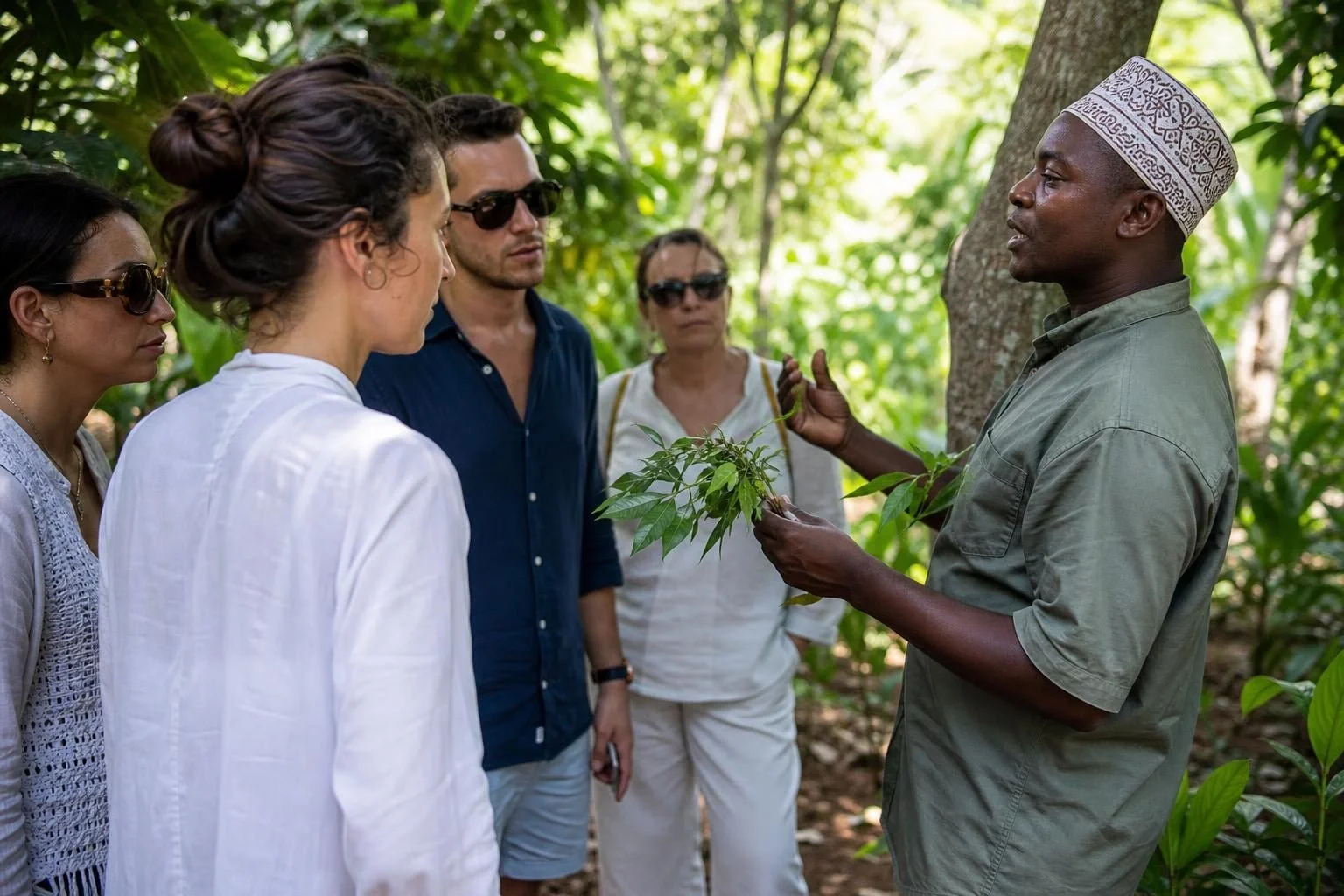
A Zanzibar spice tour is a 2 to 3 hour sensory experience through a demonstration garden (not a commercial plantation) where you touch, smell, and taste spices that shaped centuries of Indian Ocean trade. This glossary covers every spice, fruit, food term, farm name, and practical detail you’ll encounter, including the Swahili names that most guides expect you to try pronouncing. Tours cost $15 to $85 depending on format, and the dry season (June through October) offers the best conditions.
Zanzibar earned its “Spice Island” nickname for good reason. For nearly two centuries, this small archipelago off the Tanzanian coast was the engine room of the global spice trade, pumping cloves, cinnamon, and black pepper into markets from Muscat to Mumbai. Today, a Zanzibar spice tour is the most popular half-day activity on the island, and nearly every tour operator offers one.
But here’s what most visitors don’t realize until they arrive: these spice “farms” are demonstration gardens, not working commercial plantations. They’re compact plots designed to showcase dozens of plants in a short walk, giving you the chance to see, smell, and taste spices growing in their natural state. That’s not a criticism. It’s just worth knowing so your expectations match reality.
This glossary covers everything you’ll see, hear, taste, and need to know, organized by theme. Whether you’re still deciding if a spice tour is worth it or you’ve already booked and want to prepare, this is your reference.
Planning a broader trip around your Zanzibar visit? Our Swahili Coast travel glossary covers the wider regional context.
Quick Answer If you're wondering whether a Zanzibar spice tour is worth it, the answer is yes for most visitors. A typical tour lasts 2–3 hours and takes place in a demonstration spice garden where you'll smell, taste, and handle spices such as cloves, cinnamon, vanilla, nutmeg, turmeric, and black pepper. Expect to pay around $15–$85 depending on whether you choose a group, private, or cooking-class tour. The best months are June through October for comfortable weather, while December through February offers the chance to see clove harvesting. Most travelers consider the fruit tasting, knowledgeable guides, and cultural history to be the highlights.
Zanzibar Spice Tour at a Glance
|
Topic |
Quick Answer |
|---|---|
|
Tour length |
2–3 hours |
|
Cost |
$15–85 USD |
|
Best months |
June–October |
|
Harvest season |
December–February |
|
Good for children |
Yes |
|
Walking difficulty |
Easy |
|
Main spices |
Cloves, cinnamon, vanilla, nutmeg, pepper, turmeric |
|
Main starting point |
Stone Town |
|
Best upgrade |
Cooking class combination |
|
Typical tips |
$5–15 total |
What You'll Actually Do on a Zanzibar Spice Tour
Many first-time visitors imagine endless spice plantations stretching over the horizon. The reality is different—but arguably better.
A typical Zanzibar spice tour follows a simple sequence:
-
Hotel pickup from Stone Town or nearby beaches.
-
Guided walk through a demonstration spice garden.
-
Smelling and tasting fresh spices directly from the plants.
-
Watching a coconut climbing demonstration.
-
Sampling tropical fruits.
-
Shopping for spices and handmade souvenirs.
-
Optional Swahili lunch or cooking class.
Understanding this flow helps set realistic expectations before booking.
Historical and Geographic Terms
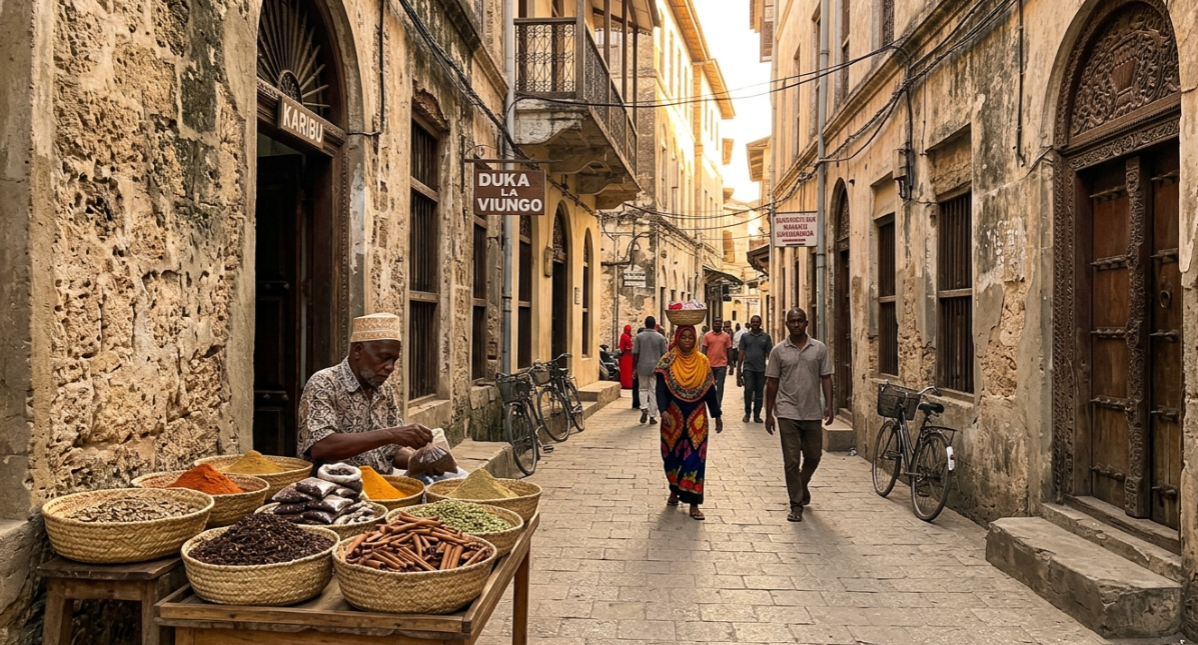
Understanding a few historical terms will make your guide’s narration far more meaningful. The spice tour is really a history tour in disguise.
Spice Island / Spice Islands
The nickname given to Zanzibar (primarily Unguja island) because of its dominance in the global spice trade from the mid-1800s onward. You’ll sometimes see “Spice Islands” used more broadly to include Pemba Island, which actually grows more cloves than Unguja today. The original “Spice Islands” in global history were the Maluku Islands in Indonesia, the birthplace of cloves.
Sultan Seyyid Said and the Omani Sultanate
The single most important figure in Zanzibar’s spice history. In 1840, Sultan Seyyid Said moved the capital of his Omani empire to Stone Town and mandated the establishment of clove plantations on both public and private land. He forced Zanzibar’s enslaved population to grow and harvest the crops. By mid-century, Zanzibar was the world’s leading producer of cloves, and spices like cloves were considered more valuable than gold.
The Spice Trade
Centuries-old trade networks connecting Zanzibar to India, the Arabian Peninsula, China, and Europe. Spices were first introduced by the Portuguese in the 16th century, transported from colonies in Goa and Brazil. The Omanis arrived later and turned spice cultivation into an industrial operation. The British colonial period expanded crops like black pepper. Your guide will likely compress all three eras into a quick speech at the farm entrance.
Stone Town
The UNESCO-listed historic center of Zanzibar City and the departure point for almost every spice tour. Most tours include pickup from Stone Town hotels. If you’re staying at a beach resort on the east or north coast, expect a longer transfer (sometimes 45 minutes to an hour each way). For deeper context on what to explore here, see our Stone Town travel guide.
Darajani Market
Stone Town’s central market, a riot of fresh fish, tropical fruit, and spice stalls. Some spice-and-cook tours include a market stop where you shop for ingredients before heading to the farm. Even if your tour doesn’t include Darajani, it’s worth a solo visit to see how the spices you encountered on the farm appear in everyday Zanzibari commerce.
Zanzibar State Trading Corporation (ZSTC)
The government body that historically controlled clove marketing and exports. It’s relevant because Zanzibar’s clove industry remains a significant economic force. Clove export volumes rose to 6,400 tonnes in the year ending May 2026, up from just 700 tonnes the previous year, while the average export price climbed 36.2% to over $6,500 per tonne. The “declining spice industry” narrative you’ll read in older travel guides is outdated.
The Spice Glossary
This is the core of any Zanzibar spice tour. Each entry below includes the Swahili name (which your guide will quiz you on), what the plant looks like growing, and how it’s used. One note worth flagging: the “King of Spices” and “Queen of Spices” labels are inconsistent from guide to guide. Some call cloves the King and cinnamon the Queen. Others give those titles to black pepper and cardamom. Both versions are “correct” in the sense that local guides genuinely vary. Don’t argue with your guide about it.
Cloves (Karafuu)
Zanzibar’s signature export and the spice that built the island’s wealth. What you see growing are the dried flower buds of the clove tree, picked before they open. The trees take 5 to 7 years to produce their first harvest. Once the world’s most valuable spice, cloves remain a pillar of Zanzibar’s agricultural economy, with export earnings reaching $32.7 million in recent reporting periods. Your guide will likely hand you a bud to crush and smell.
Cinnamon (Mdalasini)
Often called the “Queen of Spices” on Zanzibar tours. What makes the local presentation special is learning that every part of the tree is used: leaves brewed for tea, bark peeled and dried for the spice you know, roots processed for traditional medicine. Your guide will peel a thin strip of bark and let you taste it fresh, which is sweeter and more fragrant than anything from a supermarket jar.
Nutmeg (Kungumanga)
The seed hidden inside a fleshy fruit, wrapped in a bright red web-like covering called mace. So you get two spices from one fruit. Guides enjoy explaining that nutmeg aids digestion and sleep in small doses but can cause hallucinogenic effects in large quantities. They usually add a dramatic pause before that second part.
Cardamom (Iliki)
Small green pods that are among the world’s most expensive spices by weight. Often chewed whole for fresh breath. Some guides call cardamom the “Queen of Spices” rather than cinnamon. The plant grows close to the ground in shady spots, so you’ll usually crouch down to see it.
Black Pepper (Pilipili Manga)
Vine-grown berries that climb up tree trunks or support poles. Green, black, and white pepper all come from the same plant, just harvested and processed at different stages. Its cultivation on Zanzibar expanded during the British colonial period.
Turmeric (Manjano)
A vibrant yellow rhizome that your guide will slice open and rub on your hand or arm, staining it bright yellow. Valued for its earthy flavor and anti-inflammatory properties. The stain washes off eventually. Eventually.
Ginger (Tangawizi)
Another rhizome, similar in appearance to turmeric but with a completely different flavor profile. Introduced via Indian trade routes, ginger is both a culinary and medicinal staple across East Africa, used to make spiced tea or season fish and curry dishes. The popular Tangawizi Spice Farm takes its name from this word.
Vanilla
An orchid vine that produces the long pods you’d recognize from baking. What surprises most visitors is that vanilla pods need months of careful curing after harvest to develop their characteristic aroma. The fresh green pods on the vine smell like almost nothing. Guides explain the labor-intensive process, which is why real vanilla is so expensive.
Lemongrass (Mchaichai)
Tall, sharp-edged grass that releases a strong citrus scent when you crush a blade between your fingers. Popular in Zanzibari teas and soups, with health benefits ranging from boosting metabolism to treating colds, according to local tradition.
Annatto / Achiote
Known as the “lipstick tree” because the bright orange-red seeds were historically used as face paint and natural dye. Your guide will probably rub some on a visitor’s cheek for a photo opportunity. In cooking, it adds color rather than strong flavor.
Ylang Ylang
A tree whose fragrant flowers are distilled into essential oil used in perfumes (including, famously, Chanel No. 5). You’ll see it on some farms but not all. The scent is intense, floral, and slightly sweet.
Iodine Tree
Guides break open a fruit or leaf and show the dark liquid inside, explaining its traditional use as an antiseptic. It stains skin a deep brown, similar to iodine solution, which is how it got its common name.
Neem
A tree whose leaves are a traditional remedy for malaria and fever across East Africa. The taste is extraordinarily bitter, and guides sometimes dare visitors to chew a leaf. Do it once for the experience.
Pili Pili (Chili Peppers)
Multiple chili varieties grow on Zanzibar, ranging from mild to genuinely painful. “Pili pili” is the general Swahili term. Bird’s eye chilies are the most common variety you’ll encounter on the farm and later in your food.
Cocoa
Grows well in Zanzibar’s humid climate. Guides crack open a cocoa pod so you can taste the sweet, slimy pulp surrounding the beans, which tastes nothing like chocolate. The beans need fermentation and roasting before they become anything resembling what you know.
Coffee (Robusta)
Some farms grow a few coffee plants for demonstration purposes. Zanzibar isn’t a major coffee producer (mainland Tanzania is), but seeing the red cherries on the bush helps visitors understand what coffee looks like before processing.
Tropical Fruits You’ll Encounter
Most Zanzibar spice tours end with a fruit tasting. A farm worker will have been preparing plates while you walked the garden, and the variety is often the highlight for visitors who’ve never tasted tropical fruit this fresh.
Jackfruit (Fenesi): Enormous, spiky green fruit with sweet, sticky yellow flesh inside. It can weigh 30 kilograms or more.
Durian: The love-it-or-hate-it fruit banned from many Southeast Asian hotels because of its pungent smell. It grows in Zanzibar’s climate, and your guide will enjoy watching reactions.
Rambutan: Red, hairy exterior concealing sweet, translucent flesh. Easy to eat, hard to stop eating.
Breadfruit: Starchy when cooked, similar to potato. Not typically eaten raw on the tour.
Starfruit (Carambola): Tart, juicy, with that distinctive star-shaped cross-section when sliced.
Pineapple, Mango, Papaya, Banana, Coconut: The staples. The difference between a mango ripened on the tree in Zanzibar’s equatorial heat and one from a supermarket in Europe or North America is staggering.
If you’re curious about the broader food scene, our Zanzibar food guide covers what to eat and where beyond the farm.
Tour and Experience Terms
Demonstration Garden vs. Commercial Farm
This distinction matters. Spice farms in Zanzibar visited by tourists are not vast plantations. They have a demonstrative character, with a variety of plants grown on a relatively small area so visitors can see the diversity quickly. Setting this expectation beforehand makes the experience more enjoyable, not less. You’re there to learn and taste, not to witness industrial agriculture.
Coconut Climber / “Human Butterfly”
At nearly every spice farm, a young man will climb a coconut palm barefoot at remarkable speed, sometimes weaving palm fronds into crowns, baskets, or neckties while up in the tree. Visitors call this the “human butterfly” because of the acrobatic movements. It’s a performance element, and yes, a tip is expected afterward.
Spice-and-Cook Tour
The extended format that combines a farm visit with a Swahili cooking class, typically lasting 5 to 6 hours instead of 2 to 3. Practitioners on Reddit and TripAdvisor consistently say this is the higher-value experience. One travel blogger noted that the standout version “took visitors into a local village to meet a family and taste food, then learn to cook in their kitchen.” If you can spare the extra time and $20 to $30, this is the upgrade most visitors wish they’d known about beforehand.
Swahili Lunch
Many tours include a communal lunch of spiced rice, coconut fish curry, and other local dishes. It’s usually simple but flavorful, and you’ll recognize the spices you just encountered on the farm. Some tours charge extra for lunch; confirm what’s included before booking.
Tipping (Bakshishi)
The single most discussed friction point among travelers who’ve done a Zanzibar spice tour. Multiple reviewers on TripAdvisor describe being asked to tip 3 to 5 separate people during a single 90-minute tour: the main guide, the coconut climber, the fruit preparer, and sometimes others. One solo traveler wrote that “having to hand over money to five different people as a solo tour participant was frustrating.” Budget roughly 5,000 to 10,000 Tanzanian shillings ($2 to $4) per person you tip. It’s not unreasonable, but it helps to have small bills ready.
For broader tipping norms across Tanzania, our tipping guide breaks down expectations by situation.
Spice Basket / Spice Necklace
Woven gifts made by farm workers during the tour, typically from palm fronds. They’re charming souvenirs, and accepting one implies a small tip. The spice packets sold at the farm exit are consistently described as overpriced compared to Stone Town markets, so buy there if you want to stock up.
Allergy Considerations
A genuine gap that almost no tour operator addresses. Spice tours involve handling raw spices, rubbing turmeric on your skin, tasting unfamiliar fruits, and inhaling concentrated scents. One TripAdvisor reviewer noted that “the tour should ask participants about allergies, as they are dealing with spices.” If you have known sensitivities to specific plants, latex, or tropical fruits, mention this to your guide at the start.
Swahili Food Terms from Spice Tours
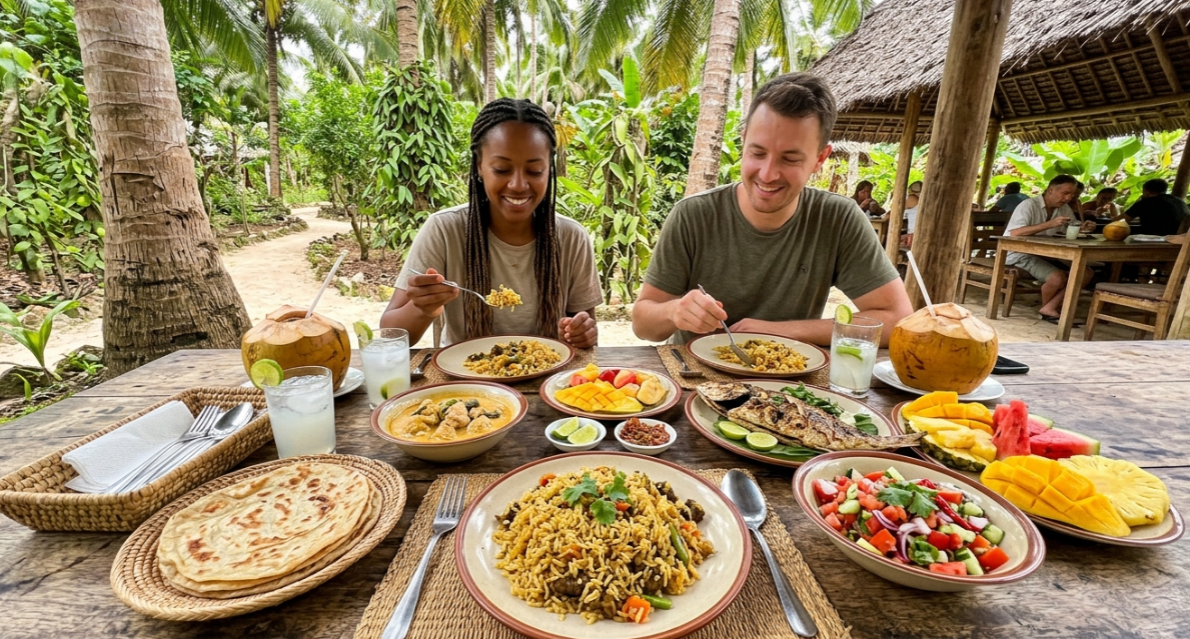
The spices you encounter on the farm are the same ones that define Zanzibari cuisine. Learning a few dish names will serve you well at restaurants all week. For those exploring Zanzibar’s culture and traditions, food vocabulary is a natural entry point.
Pilau: Spiced rice cooked with cardamom, cloves, cinnamon, and cumin. The single most common dish at Swahili lunch tables. Indian-influenced but distinctly Zanzibari.
Biryani: Layered rice dish, richer and more complex than pilau, with meat or fish between spiced rice layers. Also Indian-influenced.
Urojo: A tangy, turmeric-yellow street-food soup unique to Stone Town. It’s a mix of lentil broth, bhajia (fritters), boiled egg, potato, mango, and coconut chutney, all in one bowl. Strange-sounding, deeply satisfying.
Mchuzi wa Samaki: Coconut fish curry. The coconut milk you watched being pressed from fresh coconut on the farm? This is where it ends up.
Samaki wa Kupaka: Grilled fish basted with a spiced coconut sauce. A cooking-class favorite.
Chapati: Unleavened flatbread, pan-fried until golden. Used to scoop up curries and stews.
Kashata: Coconut candy or sweets, often made with sugar and grated coconut. You might receive some as a sample on the tour.
Mandazi: Fried doughnut, lightly sweetened, sometimes flavored with cardamom. A common snack and breakfast item across East Africa.
Kisamvu: Cassava leaves, pounded and slow-cooked in coconut milk. Some cooking-class tours include harvesting and preparing cassava leaves from scratch.
Mishkaki: Grilled meat skewers, marinated in spices and charcoal-grilled. Common at Forodhani Night Market in Stone Town.
Zanzibar Pizza: Not Italian pizza at all. It’s a thin dough filled with meat, vegetables, egg, cheese, or even Nutella, folded and fried on a flat griddle. A street-food icon.
Maharage: Bean stew cooked in coconut milk with spices. A staple side dish.
Kachumbari: Fresh tomato, onion, and chili salad. Appears alongside almost every meal.
Named Spice Farms at a Glance
Different farms emphasize different things. These are the names that come up most often in traveler discussions. None of these are rankings, just honest descriptions.
Tangawizi Spice Farm: Named after the Swahili word for ginger. Consistently praised for its tastings and guide quality. Practitioners on TripAdvisor forums say that “of all the spice tours, this one is the best.” Located a short drive from Stone Town.
Kizimbani Spice Farm: A government-run operation focused on heritage and agricultural training. Feels more institutional and educational than some of the private farms. Good for visitors interested in the policy side of spice production.
Kidichi Plantation: The main draw here goes beyond spices. The site includes historic Persian-era baths that tell stories of royal luxury, set amid gardens of vanilla and turmeric. Worth choosing if you want a Zanzibar spice tour that blends agriculture with architecture.
Jambo Spice Farm: Located in Dole village, northeast of Zanzibar City. Popular on booking platforms like Expedia and GetYourGuide. Well-organized for larger groups.
Shabuta Spice Farm: Recommended in forums for its smaller, more authentic feel. Less polished than some competitors, which is exactly what some visitors prefer.
Shamba Spice Farm: Sustainability-focused, with an emphasis on organic growing methods and environmental stewardship.
Hakuna Matata Spice Farm: Named for the Swahili phrase meaning “no worries.” Also located in Dole village. Family-friendly and relaxed in tone.
Practical Planning Terms
Best Season for a Spice Tour
The dry season from June through October offers comfortable conditions with less humidity and minimal rain. The harvest months of December through February add the bonus of seeing cloves and other spices actively being picked and dried. March through May (the long rains) brings lush greenery but regular afternoon showers that can make muddy farm paths slippery. A spice tour works year-round, but timing affects comfort.
For help matching your travel dates to weather patterns across the region, see our best time to visit East Africa guide.
Typical Cost
Basic group spice tours start around $15 per adult. Private tours range from $35 to $85 or more. Premium options that combine the farm visit with a cooking class and village visit run $50 to $69 and up. The price difference between group and private mostly comes down to pace and attention from the guide, not what you see.
Duration
Standard spice farm tours take 2 to 3 hours, including travel time from Stone Town. The spice-and-cook combination stretches to 5 to 6 hours.
What’s Typically Included
A farm guide, spice tastings, tropical fruit plate, water, and farm entry fee. Some tours include a basic Swahili lunch. Transport from Stone Town hotels is usually included; transport from beach hotels may cost extra.
What’s Typically NOT Included
Tips (budget for 3 to 5 recipients), personal souvenir purchases, transport from beach hotels on the east or north coast, and meals on the basic tour format.
Common Mistakes First-Time Visitors Make
Many disappointments come from unrealistic expectations rather than the tour itself.
Avoid these common mistakes:
-
Expecting a commercial plantation instead of a demonstration garden.
-
Forgetting small cash for tips.
-
Buying all spices at the farm without comparing Stone Town prices.
-
Wearing white clothing that may get stained by turmeric.
-
Assuming every farm offers identical experiences.
-
Booking only by price instead of guide quality.
-
Skipping the fruit tasting because you're full after breakfast.
Who Will Enjoy a Zanzibar Spice Tour Most?
A spice tour is especially worthwhile if you enjoy:
-
Food and cooking
-
Local culture
-
History
-
Photography
-
Tropical plants
-
Family-friendly activities
It may be less appealing if you're looking for adventure activities or expect a large commercial plantation experience.
Group Tour vs Private Tour Comparison
|
Feature |
Group Tour |
Private Tour |
|---|---|---|
|
Price |
Lower |
Higher |
|
Pace |
Fixed |
Flexible |
|
Questions |
Limited |
Unlimited |
|
Personal attention |
Moderate |
Excellent |
|
Photography time |
Less |
More |
|
Best for |
Budget travelers |
Couples, photographers, families |
How a Spice Tour Fits Into a Zanzibar Itinerary
A spice tour is a natural half-day activity, best done early in your Zanzibar stay. Once you’ve handled fresh turmeric, crushed a clove bud, and tasted cinnamon bark still warm from the tree, every meal you eat for the rest of the week makes more sense. You’ll recognize the flavors in your pilau, understand why the fish curry tastes like that, and actually know what lemongrass tea is made from.
It pairs well with a Stone Town walking tour on the same day or the day before. Together, the two experiences ground you in the history and culture of the island before you head to the beaches.
For visitors combining Zanzibar with a mainland Tanzania safari itinerary, the spice tour works perfectly as a first or last day activity. Many travelers fly into Zanzibar after a week on safari and use the spice tour to shift gears from wildlife to culture.
Couples planning a honeymoon safari and beach trip will find the spice tour adds a shared experience that goes beyond sunbathing, one where you’re learning something together and laughing at each other’s reactions to durian.
Families traveling with children should know that kids generally love the coconut climber, the fruit tasting, and getting turmeric rubbed on their arms. Our Zanzibar family travel glossary covers what else works well with younger travelers.
Sample Half-Day Zanzibar Spice Tour Itinerary
|
Time |
Activity |
|---|---|
|
8:30 AM |
Hotel pickup |
|
9:00 AM |
Guided spice garden walk |
|
10:15 AM |
Coconut climbing demonstration |
|
10:45 AM |
Fruit tasting |
|
11:15 AM |
Spice shopping |
|
11:45 AM |
Return to hotel |
|
Optional |
Swahili lunch or cooking class |
Frequently Asked Questions
Is a Zanzibar spice tour worth it?
Yes, with caveats. It’s a genuine sensory education, not just a walking lecture. The tipping expectations and souvenir pressure can be annoying, but the experience of handling fresh spices at their source is something you can’t replicate anywhere else. Opt for the cooking-class extension if your schedule allows. That’s where the real value multiplies.
How much does a Zanzibar spice tour cost?
Group tours start at roughly $15 per person. Private tours range from $35 to $85. Cooking-class combinations run $50 to $69 and up. Budget an additional $5 to $15 for tips across multiple recipients.
What should I wear on a spice tour?
Closed-toe shoes or sturdy sandals (farm paths can be muddy in the rainy season), lightweight clothing that covers your shoulders and knees (respectful in a predominantly Muslim community), and something you don’t mind getting turmeric stains on.
Can I buy spices on the tour?
Yes, but the prices at the farm are marked up significantly compared to Stone Town. Multiple travelers report that you can buy the same spice packets at Darajani Market or small shops in Stone Town for a fraction of the farm price. Buy a small souvenir at the farm if you want to support the workers directly, but stock up in town.
Are spice tours suitable for children?
Generally yes. Kids enjoy the hands-on elements, especially the coconut climber, fruit tasting, and the “lipstick tree” face painting. The walking distances are short. Just be mindful of allergies and keep an eye on younger children around chili plants.
How do I choose between spice farms?
Tangawizi is the most consistently praised. Kidichi stands out if you want to see the Persian baths. Shabuta appeals to visitors who prefer a smaller, less commercialized setting. For most first-time visitors, the guide matters more than the farm. Ask your tour operator who will be guiding, and prioritize experience over the specific location.
Should I book in advance or arrange on arrival?
Either works. Booking through your hotel or a local operator in Stone Town the day before is fine and often cheaper than international booking platforms. If you want a private tour or the cooking-class extension, booking 2 to 3 days ahead ensures availability, especially during peak season (July through September and December through January).
What’s the difference between a group tour and a private tour?
Group tours are cheaper and social but move at the group’s pace. Private tours let you ask more questions, linger at plants that interest you, and skip what doesn’t. The farm itself and the spices you see are the same either way.