

Accessible Tours for Seniors 2026: East Africa Safari Guide
TL;DR
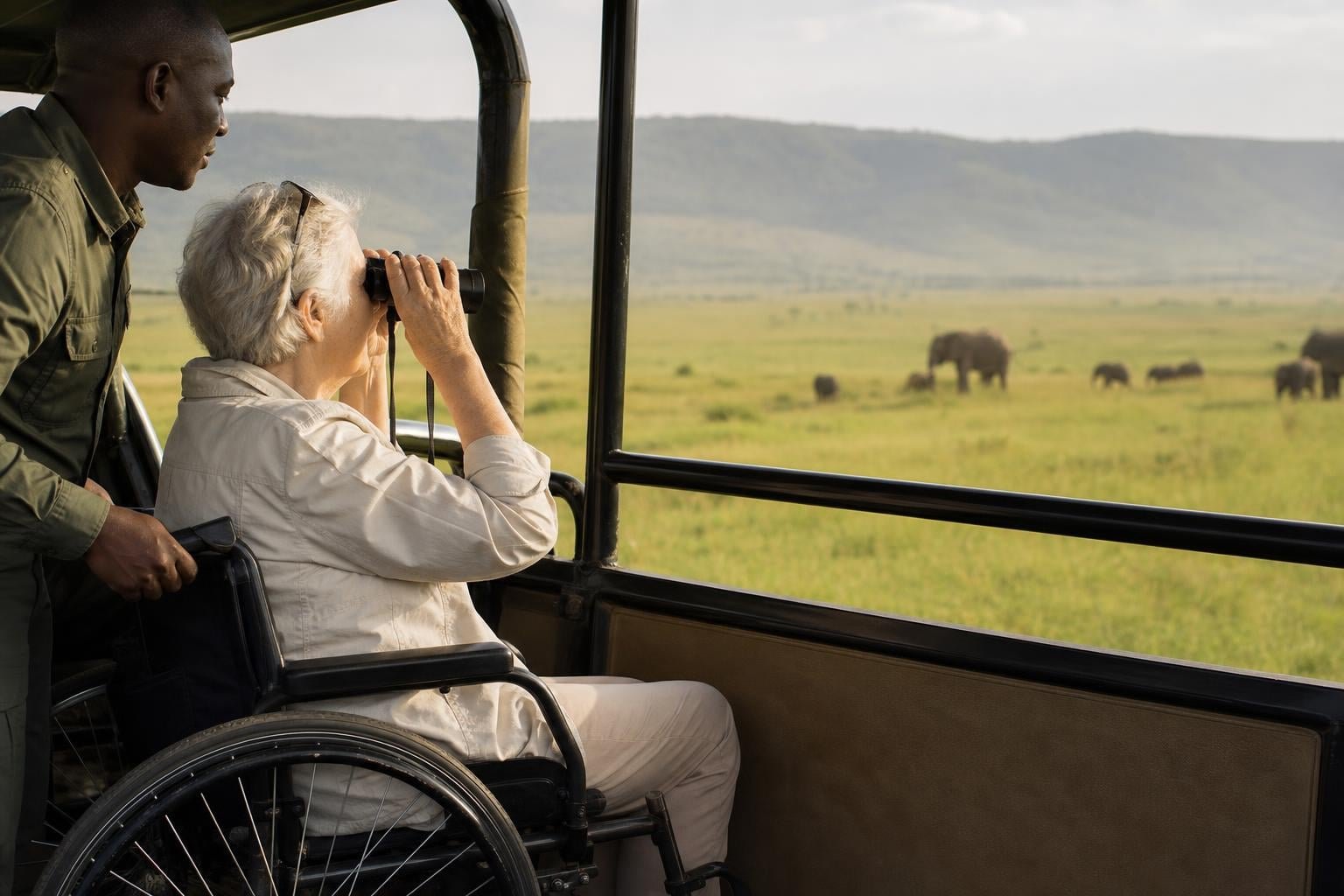
Accessible tours for seniors are trips designed around mobility, comfort, pacing, health needs, and support, not age alone. They range from gently paced itineraries for active retirees to fully wheelchair-accessible trips with adapted vehicles and verified step-free routes. For East Africa safaris, accessibility depends more on itinerary design, vehicle entry, lodge layout, and guide flexibility than on walking distance. Always ask for specific details and photos rather than accepting vague “senior-friendly” labels.
Quick Answer: Are Accessible Senior Safaris Worth It? Accessible tours for seniors can make East African safaris comfortable and realistic for many older travelers, including those with arthritis, joint replacements, reduced stamina, mobility limitations, or wheelchair needs. The best safari is usually a private itinerary with shorter travel days, flexible game drives, accessible lodging, and verified vehicle access rather than the cheapest group tour. Accessibility depends on planning, not age.
Best Accessible Safari Options by Traveler Type
|
Traveler Type |
Best Choice |
|---|---|
|
Active retirees |
Standard private safari |
|
Arthritis or back pain |
Fly-in safari with shorter drives |
|
Cane or walker user |
Mobility-friendly private safari |
|
Wheelchair user (transfer possible) |
Wheelchair-assisted safari |
|
Full-time wheelchair user |
Fully accessible custom safari |
|
First safari |
Northern Tanzania Circuit with longer lodge stays |
Accessible Tours for Seniors: What the Term Means and How to Choose the Right Trip
Accessible tours for seniors are guided trips designed to reduce physical, logistical, sensory, and health-related barriers for older travelers. They may include slower pacing, private transport, shorter walking distances, step-free rooms, walk-in showers, easier vehicle access, flexible schedules, dietary support, medication planning, and emergency backup.
One critical clarification up front: “accessible” does not automatically mean “wheelchair-accessible.” Many tours marketed as senior-friendly are suitable only for travelers who can walk short distances and climb into a vehicle with assistance. True wheelchair-accessible tours require confirmed vehicle adaptations, step-free routes throughout, appropriate room dimensions, and accessible bathrooms. These are different standards, and confusing them causes real problems for real travelers.
For East Africa safaris, an accessible senior tour typically means a private or highly flexible safari with shorter transfer days, comfortable 4x4 vehicles, lodges chosen for easy movement, rooms close to dining areas, and game drives paced around the traveler rather than a fixed group schedule.
If you are exploring private safari options with flexible pacing, see private Tanzania safari routes for an overview of how custom planning works.
Why Accessible Senior Travel Is a Growing Priority
This is not a special accommodation for a small group. The UN reports that the number of people aged 60 or over has grown from about 541 million in 1995 to 1.2 billion in 2025, projected to reach 2.1 billion by 2050. The market for accessible tours for seniors is expanding because the traveling population itself is aging.
WHO estimates that 1.3 billion people, roughly 16% of the global population, experience significant disability. Disability prevalence increases with age, and WHO’s framework defines disability not as a fixed personal trait but as the interaction between a person’s condition and environmental barriers like inaccessible transport, buildings, and limited support. This matters because the same senior traveler might be “disabled” by a poorly planned itinerary with steep stairs and rushed transfers, yet fully comfortable on a private safari with easier vehicle entry, a room near dining, and a flexible guide.
UNWTO’s accessible tourism framework treats accessibility as a “Tourism for All” concept that benefits people with disabilities, seniors, families, and other travelers with temporary or situational needs. Accessibility is mainstream trip design, not charity.
Key Terms: Accessible vs. Senior-Friendly vs. Wheelchair-Accessible
One of the biggest problems in marketing for accessible senior tours is vague language. “Accessible,” “senior-friendly,” and “comfortable” are used interchangeably when they should not be. Here is what each term actually means.
|
Term |
What it means |
What to verify |
|---|---|---|
|
Accessible tour |
A tour designed so people with mobility, sensory, stamina, or health needs can participate with fewer barriers. |
Ask what specifically is accessible: vehicle, lodge, bathroom, paths, dining, transfers, activities, emergency support. |
|
Senior-friendly tour |
A trip paced and planned for older adults, with comfort and flexibility. |
May include relaxed starts, shorter drives, and better hotels. May not be wheelchair-accessible. |
|
Mobility-friendly tour |
A tour that reduces walking, stairs, rough paths, and difficult transfers. |
Good for cane, walker, hip/knee issues, or reduced stamina. Confirm vehicle step height and lodge paths. |
|
Wheelchair-accessible tour |
A tour designed for wheelchair users with adapted vehicles and verified accessible rooms. |
Requires specifics: ramp or lift, door widths, turning space, roll-in shower, grab bars, path surfaces. |
|
Low-impact tour |
A trip with reduced physical demands. |
Safaris are often low-impact because viewing is vehicle-based, but rough roads and long days can still be tiring. |
|
Private tour |
A tour reserved for one traveler, couple, family, or group. |
Often the best choice for seniors because the guide adjusts stops, pace, start times, and rest breaks. |
|
Fly-in safari |
A safari using light aircraft to reduce long road transfers. |
Helpful for fatigue, back, or joint issues. Check luggage limits and boarding steps. |
|
Step-free access |
A route without stairs or raised thresholds. |
Confirm the full route: room, dining, lounge, vehicle pickup, pathways, and bathroom. |
|
Walk-in shower |
A shower entered without stepping over a bathtub. |
Good for many seniors, but not the same as a roll-in shower (which has no curb). |
|
Roll-in shower |
A shower designed for wheelchair entry, usually with no lip. |
Essential for many wheelchair users. Ask for photos. |
|
Medical evacuation insurance |
Insurance covering emergency transport to appropriate medical care. |
Particularly important for remote safari destinations. |
|
Safari fatigue |
Cumulative tiredness from early starts, rough roads, long transfers, dust, heat, and constant sensory attention. |
Build in rest half-days and avoid overpacked itineraries. |
Practitioners on LinkedIn who specialize in accessible travel emphasize that accessibility is not only about ramps. For many travelers, uncertainty is itself a barrier: Can I enter independently? Will staff know how to assist? Is the information online accurate? Accurate access information and trained staff matter as much as physical infrastructure.
Four Levels of Accessibility for Senior Tours
Not every senior traveler needs the same level of support. This framework helps match the tour to the traveler.
Level 1: Comfort-Accessible
Best for: Active older travelers who walk independently but want comfort, flexibility, and a slower pace.
What it looks like: private or flexible itinerary, comfortable lodges, shorter game drives if desired, rooms close to main areas, fewer one-night stays, luggage assistance, and a guide who adjusts pace.
Not enough for travelers who need step-free access or wheelchair support.
Level 2: Mobility-Friendly
Best for: Travelers with a cane, walker, hip or knee replacement, arthritis, balance issues, back pain, or reduced stamina.
What it looks like: minimal stairs, ground-level rooms, walk-in showers, vehicle step stool, front or middle-row seating, private vehicle, frequent rest stops, shorter transfer days or fly-in sections.
“Mobility-friendly” still typically requires walking short distances and climbing into a safari vehicle with some assistance.
Level 3: Wheelchair-Assisted
Best for: Travelers who use a wheelchair for distance but can transfer, stand briefly, or climb a few steps with help.
What it looks like: confirmed transfer ability, vehicle seat access with step support, wheelchair storage, step-free lodge routes where possible, staff briefed before arrival on specific needs.
A practitioner on Reddit planning a safari for an ambulatory wheelchair user captured the nuance well: the traveler could walk short distances with a cane, use a walker for up to about a mile, and climb vehicle steps, but many smaller safari camps were simply not structurally accessible.
Level 4: Fully Wheelchair-Accessible
Best for: Travelers who cannot climb vehicle steps, cannot transfer easily, or require wheelchair access throughout.
What it looks like: adapted vehicle with ramp or lift, secure tie-downs, verified door widths and turning radius, true roll-in shower, grab bars, step-free routes to room, dining, lounge, and viewing areas, detailed photos or measurements confirmed in writing.
Do not accept “accessible room available” without details and photos. A wheelchair user and chronic-conditions advocate on LinkedIn put it directly: one of the biggest barriers to visiting places is the lack of easy-to-find, relevant access information. If people cannot find reliable details, they may not visit at all.
How to Know Whether You Can Do a Safari
You can probably enjoy a safari if you:
-
Can sit comfortably for several hours
-
Can enter a safari vehicle with assistance
-
Can manage uneven lodge paths
-
Can tolerate early mornings
-
Can handle occasional bumpy roads
You may need additional planning if you:
-
Cannot transfer independently
-
Require oxygen
-
Need dialysis
-
Need daily nursing care
-
Require powered mobility equipment
-
Need a roll-in shower
A safari should always be matched to your actual mobility and medical needs rather than your age.
The Accessibility Chain: Why One Weak Link Breaks the Trip
A tour is only as accessible as its weakest step. A beautiful lodge cannot rescue an inaccessible airport transfer or a bathroom that does not work. This concept, called the accessibility chain, is the single most useful framework for evaluating accessible tours for seniors.
For a senior East Africa safari, the chain has ten links:
1. Pre-trip communication. Does the operator ask about mobility, health, stamina, medications, dietary needs, hearing or vision needs, and preferred pace? Do they document those needs for guides and lodges?
2. Flights and airport support. Has wheelchair assistance been requested? Are mobility devices documented with the airline? Are medications and devices packed in carry-on? U.S. travelers with disabilities can contact TSA Cares for screening support. The U.S. DOT also publishes air passenger disability rights that cover mobility-device handling and boarding assistance.
3. Arrival and transfers. Meet-and-greet support, easy vehicle boarding, a short transfer after a long-haul flight, and an overnight recovery before the safari begins.
4. Safari vehicle. Step height, grab handles, seat comfort, suspension, seat belts, legroom, dust exposure, and the ability to stop when needed.
5. Pacing. Two-night minimums where possible. No strings of one-night stays. Late-start or rest half-days built into the schedule.
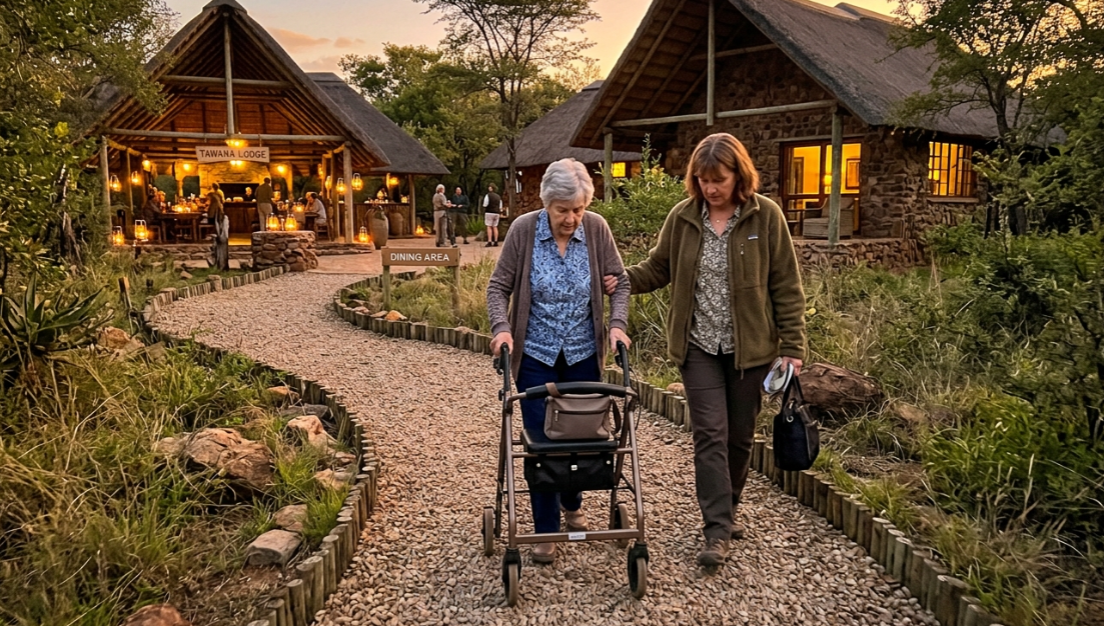
6. Lodging. Ground-floor room, flat firm pathways, room near dining, good lighting at night, staff assistance without pressure or embarrassment.
7. Bathroom access. Walk-in shower or roll-in shower, grab bars, non-slip floor, raised toilet, shower stool, no lip at shower entry.
8. Activities. Game drives, cultural visits, birding, boat safaris. Match the activity to stamina and mobility, not age alone.
9. Medical and emergency support. Pre-travel medical advice, medication plan, hydration, evacuation coverage, nearest medical facility, and a communication plan. For a deeper look at emergency and safety planning, see the East Africa safety glossary.
10. Return logistics. Avoid ending with a punishing all-day transfer before an international flight. Build in a buffer night.
Common Accessibility Challenges on East African Safaris
|
Challenge |
Why It Matters |
Possible Solution |
|---|---|---|
|
High vehicle steps |
Difficult entry |
Step stool or adapted vehicle |
|
Gravel pathways |
Hard for walkers |
Ground-floor lodge |
|
Long transfer days |
Fatigue |
Fly-in safari |
|
Limited public toilets |
Medical concerns |
Flexible private guide |
|
Uneven camp lighting |
Fall risk |
Room near dining |
|
Dust |
Respiratory issues |
Buff and medication |
How Accessible Safari Planning Works in East Africa
Safaris are often more accessible than people expect. Wildlife viewing is largely vehicle-based. If a traveler can sit in a 4x4 for a few hours, a safari may be realistic even when city walking tours or mountain trekking would not be. The typical safari day involves morning game drives, brunch, a siesta, afternoon drives, and dinner. That rhythm can suit many older travelers well.
The challenge is not usually walking. It is road fatigue, steps into vehicles, limited restroom stops, early mornings, dust, heat, and overpacked itineraries.
Safari Fatigue Is Real
Practitioners on Reddit warn that many first-time Tanzania itineraries try to include too many parks because they look impressive on paper. The result is exhaustion by day four or five from early starts, long drives, rough roads, and constant sensory intensity. One experienced traveler recommended building in slower afternoons and warned that frequent transfers reduce real wildlife-viewing time.
For senior travelers, a better safari is usually not the one with the most parks. It is the one with the fewest stressful transitions. A practical pacing rule: at least two nights per safari area when possible, and one slower half-day after several intensive days.
Vehicle Access Can Make or Break the Trip
A Reddit post about planning a Tanzania safari for a parent or grandparent recommended requesting front or middle-row seats, confirming a step stool, avoiding rough rear seats, checking for walk-in showers and flat pathways, and considering a charter flight between rougher transfer sections for travelers with back or joint issues.
Vehicle questions to ask before booking:
-
How high is the first step?
-
Is there a step stool?
-
Can the traveler sit in the front or middle row?
-
Is there enough legroom?
-
Can the guide stop whenever needed for rest or restrooms?
-
Is the roof pop-up or open-sided?
-
Is there space for a folded wheelchair or walker?
Restroom Planning Is Part of Accessibility
Many safari articles avoid this topic. Contributors on TripAdvisor warn that restrooms may be limited during game drives, with more availability at picnic sites or crater locations than in the open bush. Comfort stops are not a luxury detail. For many older travelers, restroom timing determines whether a game drive feels relaxed or stressful.
Lodge Accessibility Must Be Verified, Not Assumed
Ask for current photos of the actual room, bathroom, shower entry, path to dining, and vehicle step. A lodge can honestly describe itself as “easy access” while still having a shower lip, gravel path, low lighting, or a room too far from dining for a traveler with limited stamina.
Key questions: Is the room ground-level? How far is it from dining? Is the route paved, packed dirt, gravel, or sand? Is the path lit at night? Walk-in shower or roll-in? Grab bars? Can the property guarantee a room closest to the main area?
Best Safari Planning Choices for Seniors
Private vs. Group Safari
A private safari gives the traveler control over start times, bathroom breaks, game drive duration, seating, pace, and rest time. Forum advice on TripAdvisor for senior Tanzania safari planners specifically recommends private safaris because they allow travelers to set their own pace and decide when to start and finish each day.
Small-group tours can work for active seniors, but the group moves as a group. That means pressure to keep up. For travelers who need frequent stops, medical flexibility, or a non-standard schedule, group pacing often does not work.
For a detailed comparison, see private vs. group safari costs.
Fly-In vs. Drive-In Safari
A fly-in safari uses light aircraft to skip long, bumpy road transfers. Reddit discussions describe fly-in lodge-based safaris as smoother and less tiring, while private driver-guided safaris offer more control but involve more overland driving. The tradeoff is real. Small planes may have luggage limits (often 15 kg soft bags), boarding steps, and mobility-device constraints. The right choice depends on the traveler.
Best Parks for Accessible Senior Safaris
Famous parks are not automatically easier.
Ngorongoro Crater can be high-reward because wildlife density is concentrated. The crater area is home to over 25,000 large animals including the Big Five. Game drives cover a relatively compact area. But crater rim altitude (over 2,200 meters), cool mornings, and the steep descent road should be planned for.
Serengeti National Park is extraordinary but enormous, covering 1.5 million hectares and hosting the annual migration of over 1.5 million wildebeest. Lodge location matters hugely. A lodge in the wrong part of the Serengeti for the season means long transfer drives to reach the wildlife.
Season also affects comfort. Heat, rain, road conditions, and wildlife movement all shift by month, which is covered in the best time to visit East Africa guide.
Safari Is Different from Trekking
If you are considering combining a safari with gorilla trekking in Uganda or Rwanda, know that trekking is a completely different physical category involving steep, muddy trails at altitude, sometimes for several hours. Before adding it to an accessible itinerary, read about gorilla trekking fitness requirements.
Medical Preparation for Senior Travelers
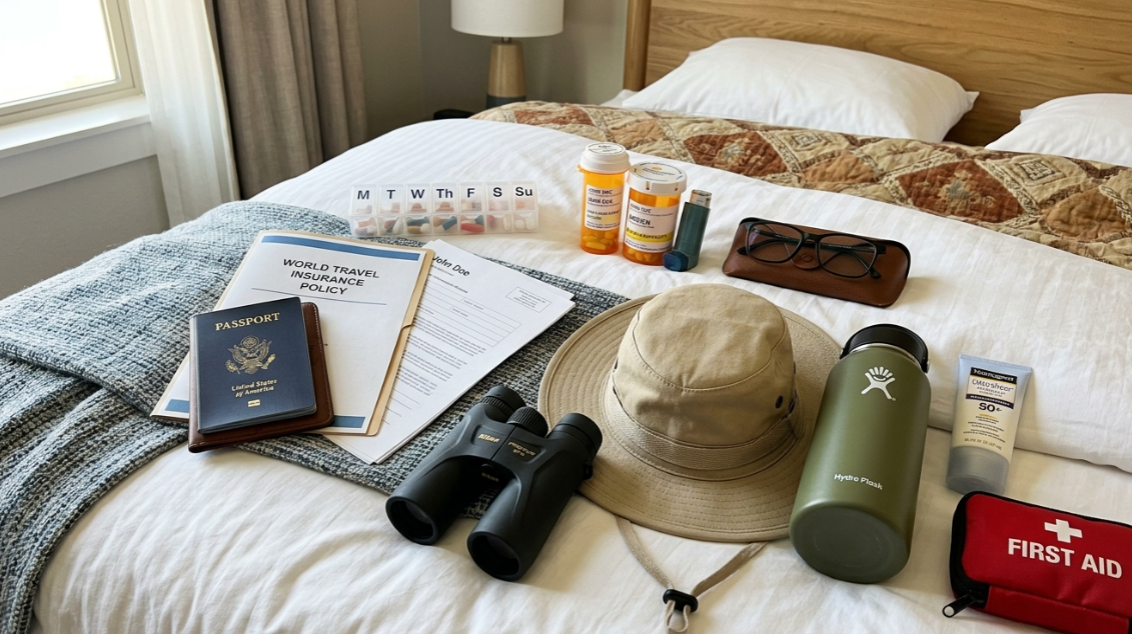
Health planning belongs at the center of accessible tour preparation, not as an afterthought at the bottom of the page.
The CDC advises older adults to schedule an appointment with a healthcare provider or travel health specialist at least 4 to 6 weeks before departure. This visit should cover chronic conditions, planned activities, all medications, and destination-specific health risks. The CDC also recommends considering travel insurance that includes healthcare abroad and emergency evacuation coverage, particularly for remote areas.
The numbers show why this matters: 6 in 10 U.S. adults have a chronic illness, and 4 in 10 have two or more, with the highest prevalence among adults 65 and older. Carrying medications in hand luggage with extra supply for unexpected delays is strongly recommended.
For Tanzania specifically, malaria chemoprophylaxis is recommended, and yellow fever vaccination requirements depend on travel routing. Direct travel from the United States does not require yellow fever vaccination, but travelers arriving from countries with yellow fever transmission risk may need proof.
A medical preparation checklist for accessible senior tours:
-
Travel clinic visit 4 to 6 weeks before departure
-
Malaria prophylaxis prescription
-
Medication letter from your doctor
-
Extra medication supply in carry-on
-
Medical evacuation insurance, especially for remote safari areas
-
Pre-existing condition coverage review
-
CPAP battery and power confirmation if needed
-
Emergency contact plan
For travel insurance guidance, including what evacuation coverage means for safari destinations, see safari travel insurance explained.
Questions to Ask Before Booking an Accessible Senior Tour
Save this checklist. These questions separate genuine accessible tour planning from marketing language.
About mobility and stamina: How far can the traveler comfortably walk on uneven ground? Can they climb 1 to 3 vehicle steps? Do they use a cane, walker, wheelchair, scooter, or other assistance? Do they need rest every few hours?
About the vehicle: What vehicle type is used, and how high is the first step? Is a step stool available? Can the traveler sit in the front or middle row? Is the vehicle private? Can the guide stop whenever needed?
About lodging: Is the room ground-floor, and how far from dining? Is the route flat, firm, and lit at night? Are there steps, thresholds, gravel, sand, or uneven surfaces?
About the bathroom: Walk-in shower or roll-in shower? Grab bars? Shower stool? Non-slip floor? Raised toilet? Can the operator send bathroom photos?
About medical support: Where is the nearest clinic or evacuation point? Can medications be refrigerated? Is power available for CPAP or medical device charging? Can dietary needs be accommodated?
About the itinerary: How many transfer days? How long are the longest drives? Are there midday breaks? Can game drives be shortened? Is there a recovery night after arrival and a buffer before the flight home?
Do not tell an operator only “limited mobility.” Give exact functional details: walking distance, stairs, transfer ability, shower needs, wheelchair or scooter dimensions, battery type, and whether the traveler can board a safari vehicle independently.
For additional packing considerations, the East Africa packing list covers medications, layers, sun protection, and gear essentials.
Red Flags in Accessible Tour Marketing
Watch for these warning signs:
-
“Accessible” with no details. If the operator cannot specify what is accessible, the word is decorative.
-
No photos of bathrooms, pathways, or vehicle entry. Visual proof matters.
-
The operator cannot say how high the vehicle step is. That suggests they have not thought about it.
-
“Ground floor” room that still has stairs or uneven paths. Ground floor does not always mean step-free.
-
“Walk-in shower” with a lip or slippery floor. A walk-in shower is not a roll-in shower.
-
“Private guide” but shared vehicle. Clarify whether the vehicle is also private.
-
Too many one-night stays. Constant packing and moving is exhausting for seniors.
-
No rest days or late-start options. Rigid early-morning schedules do not suit accessible pacing.
-
No plan for medications, CPAP, dietary needs, or emergency evacuation.
-
“We handle seniors all the time” without asking about specific needs. Good operators ask detailed questions. Great ones put the answers in writing.
-
Wheelchair users told “staff can carry you” instead of being offered structural access. That is not accessibility.
Does Accessibility Change Safari Cost?
Often, yes. Private vehicles, fly-in transfers, better-located rooms, longer stays, and higher-comfort lodges can raise the budget compared to a shared group safari. That said, the most important accessibility upgrade (a private guide who adjusts the pace) is often already part of a custom safari rather than an expensive add-on.
Understanding what drives pricing helps set realistic expectations. The East Africa safari cost guide breaks down costs across lodge tiers, transfer methods, and itinerary lengths.
Accessible Safari Planning Scenarios
These examples show how accessible tours for seniors work differently depending on the traveler.
Active senior couple wanting comfort and wildlife. Private 4x4 with a flexible guide. Two nights per lodge. Shorter game drives with midday rest. Room near dining with walk-in shower. Optional cultural visit or birding afternoon.
Parent with knee replacement traveling with adult children. Fly-in section to reduce rough transfers. Front-row vehicle seat with step stool. Ground-floor room confirmed in writing. Bathroom photos reviewed before booking. Private guide who can adjust the schedule daily.
Ambulatory wheelchair user on first safari. Confirmed vehicle entry ability with step support. Wheelchair storage in vehicle. Step-free lodge routes verified with photos. Written accessibility confirmation from each property. Itinerary built around fewer parks and longer stays.
Duma Explorer designs custom and private safaris in East Africa, with planning that includes itinerary design, lodge and camp selection, in-country logistics, transfers, domestic flights, permits, and guiding. For travelers with specific accessibility needs, that kind of detail-level planning is where the difference is made.
Compare East Africa safari itineraries for routes, costs, and pacing options suited to different traveler needs.
Accessibility Planning Timeline
|
Before Departure |
What To Do |
|---|---|
|
6 months |
Choose itinerary |
|
4–6 months |
Book accessible rooms |
|
3 months |
Confirm vehicle access |
|
6 weeks |
Visit travel clinic |
|
1 month |
Review medications |
|
2 weeks |
Confirm accessibility requests |
|
Departure week |
Pack medications and documents |
FAQ
Are accessible tours for seniors only for wheelchair users?
No. They help older travelers with stamina limits, arthritis, balance issues, hearing or vision needs, medication schedules, dietary requirements, or a preference for slower pacing. UNWTO identifies seniors as a major beneficiary group of accessible tourism even though not all seniors have disabilities.
Is a Tanzania safari suitable for seniors?
Often yes, if planned well. Safari is mostly vehicle-based, so it requires less walking than city touring or trekking. But long bumpy drives, early starts, heat, dust, and limited restrooms must be planned around. The itinerary design matters more than the destination itself.
Is a private safari better for senior travelers?
Usually. A private safari allows flexible start times, shorter drives, rest stops, room for mobility aids, and a guide who adapts to the traveler’s energy. Forum advice from experienced safari planners consistently recommends private safaris for older adults.
Does “senior-friendly” mean wheelchair-accessible?
No. Senior-friendly typically means slower pacing and comfortable lodging. Wheelchair-accessible should mean verified step-free access, suitable bathrooms, vehicle adaptations, and enough space for the traveler’s mobility equipment. Never treat these terms as interchangeable.
What health preparation should older travelers do before a safari?
The CDC recommends meeting a healthcare provider or travel health specialist 4 to 6 weeks before departure, discussing chronic conditions and medications, carrying medication in hand luggage with extra supply, and considering travel insurance with emergency evacuation coverage for remote areas.
How do I know if a tour operator is genuinely offering accessible senior tours?
Ask for specific details. Request photos of the vehicle step, bathroom, shower entry, pathway to dining, and room location. Ask about door widths, grab bars, step heights, and transfer distances. If the operator cannot provide specifics or asks no questions about the traveler’s actual needs, the “accessible” label may not mean much.
Should seniors choose a fly-in safari over a drive-in safari?
A fly-in safari reduces road fatigue and long bumpy transfers, which helps travelers with back, hip, knee, or stamina issues. But small aircraft boarding, luggage limits, and mobility-device handling should be confirmed first. The right choice depends on the traveler’s specific needs, not a universal rule.
What is the accessibility chain?
The accessibility chain is the idea that a trip is only as accessible as its weakest step. If the lodge is perfect but the vehicle is impossible to board, or the bathroom does not work, the whole trip suffers. Good accessible tour planning checks every link: flights, transfers, vehicles, lodging, bathrooms, activities, medical support, and return logistics.