

How Fit Do You Need to Be? Gorilla Trekking Fitness 2026
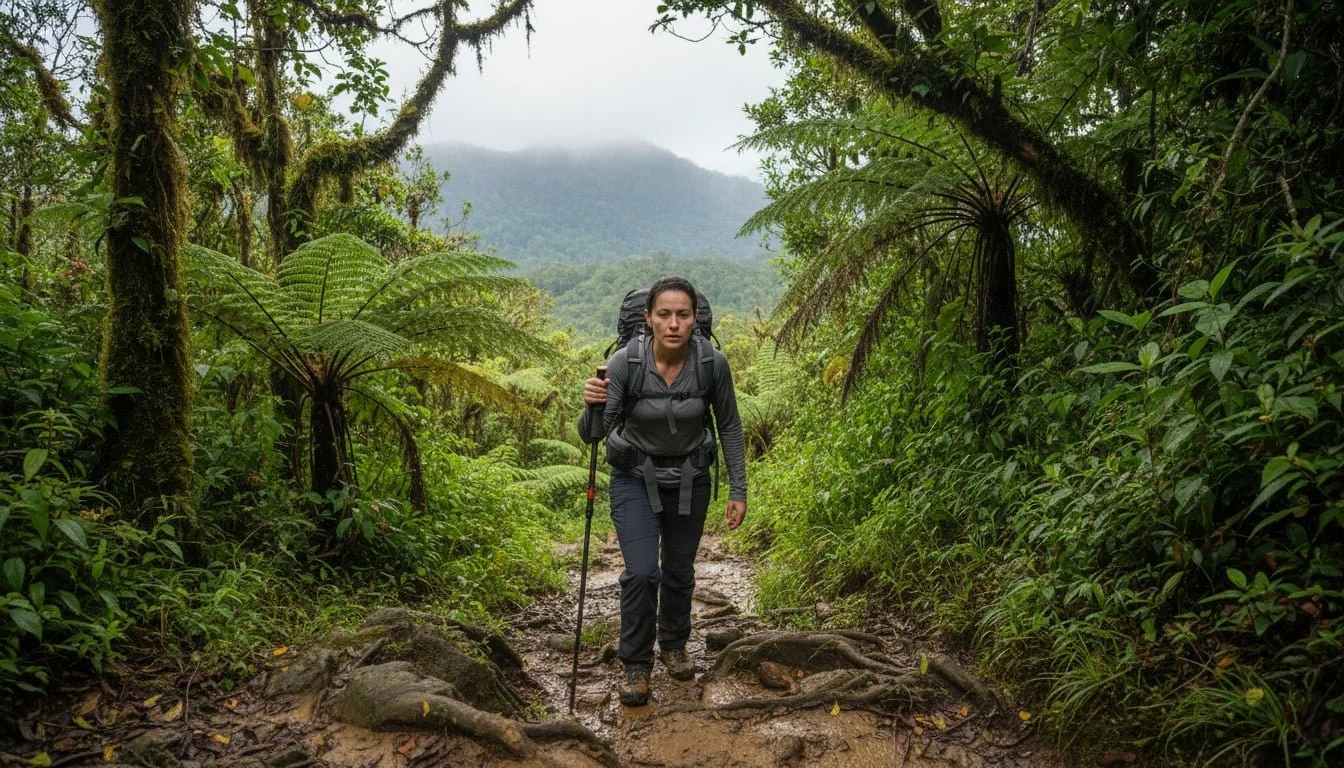
TLDR
Gorilla trekking fitness means being able to hike 3 to 5 hours on steep, muddy, uneven terrain at moderate altitude (1,400 to 3,200 meters) while carrying a daypack. Most travel sites call it “moderate fitness” without explaining what that means. A practical test: if you can walk 5 to 10 km with 300 to 600 meters of elevation gain at a steady pace, you’re ready for most treks. If you’re borderline, stack three things in your favor: hire a porter, bring trekking poles, and add an acclimatization night near the park.
Quick Answer: How fit do you need to be for gorilla trekking? To successfully trek gorillas in 2026, you need moderate cardiovascular endurance and functional leg strength. Specifically, you should be able to: Hike for 4–6 hours on uneven, steep, and often muddy terrain. Ascend 300–600 meters of elevation at altitudes between 1,400m and 3,200m. Maintain balance on slippery surfaces while carrying a 5kg daypack. If you can walk 10km (6 miles) on hilly terrain or climb 30 flights of stairs without stopping, you are physically prepared for a standard trek.
What “Gorilla Trekking Fitness” Actually Means
Every operator blog says you need “moderate fitness” for gorilla trekking. That phrase is almost useless. Here’s what the treks actually demand:
-
Time on your feet: 2 to 8 hours of hiking, plus 1 hour sitting or crouching near the gorillas once you find them. The typical range is 1 to 6 hours of hiking each way, though some treks stretch longer.
-
Elevation gain: You’ll climb and descend steep slopes, sometimes gaining 300 to 600+ meters in a single trek.
-
Footing: Slippery clay, tangled roots, thick mud, and dense vegetation including stinging nettles. This isn’t a groomed trail.
-
Altitude: Treks happen between roughly 1,160 and 2,607 meters in Bwindi (Uganda) and 2,400 to 3,200+ meters in Volcanoes National Park (Rwanda). High enough that some people feel the thin air, especially if arriving from sea level.
Gorilla trekking fitness isn’t about being an athlete. It’s about sustained effort on bad footing at altitude, with no way to predict how long the hike will take on any given day.
Am I Fit Enough? A Simple Self-Assessment
Forget vague labels. Here are concrete benchmarks to test yourself against before booking:
You’re likely ready if you can:
-
Walk or hike continuously for 3 to 5 hours on hilly terrain
-
Handle 300 to 600 meters (1,000 to 2,000 feet) of total elevation gain
-
Stay comfortable on uneven ground (rocks, mud, wet grass) while wearing a daypack
-
Climb 20 to 30 flights of stairs without needing to stop
You’ll want extra help if:
-
A 2-hour walk on flat ground leaves you winded
-
You have significant knee or ankle instability
-
You haven’t done any exercise beyond daily activities in the past six months
If you live somewhere flat and can’t easily test on hills, use a stair machine or a parking garage stairwell. Climb for 30 to 45 minutes at a pace you could maintain while talking. If that feels manageable, you have a solid foundation.
The critical thing to understand is that treks vary wildly in difficulty. Practitioners on Reddit report that in the same morning at the same park, one group had a 45-minute stroll while another spent 5 to 7 hours on steep ground. You cannot pick your difficulty level with certainty. You prepare for the hard version and hope for the easy one.
What the Parks Require (Rules That Affect Fitness Planning)
Uganda Wildlife Authority (UWA) and Rwanda Development Board (RDB) enforce several rules that directly intersect with gorilla trekking fitness:
-
Minimum age: 15 years old in both Uganda and Rwanda (UWA Guidelines, July 2024)
-
Illness exclusion: If you show signs of contagious illness, you may be denied entry to protect the gorillas. This is strictly enforced. Respiratory infections pose a documented risk to habituated gorilla families.
-
One-hour viewing limit: Each group gets exactly one hour with the gorillas once found, regardless of how long the hike took.
-
7-meter minimum distance: You must stay at least 7 meters from the gorillas, a conservation rule designed to reduce disease transmission (UWA conservation guidelines)
-
Group size: Maximum 8 trekkers per gorilla family per day
The illness rule matters for fitness planning because it means you should arrive healthy and rested, not exhausted from a punishing travel schedule. Build buffer days into your itinerary. For a full breakdown of permit logistics and costs, see this guide to Uganda gorilla trekking costs and permits.
How Hard Are the Treks? Time, Terrain, and Altitude Explained
A Typical Trekking Day
Your day starts early. Briefings usually begin around 7:00 AM at the park headquarters or designated meeting point. Rangers explain the rules, assign gorilla families, and organize groups. Then you drive or walk to the trailhead and start hiking.
The hike to reach the gorillas commonly takes 1 to 6 hours, though some treks extend closer to 8. You spend one hour with the gorillas, then hike back. Total time on your feet can run from 3 hours (lucky day, close family) to 9 or 10 hours (family moved overnight, rangers tracking them up a mountain).
There’s no way to guarantee a short trek. Gorillas are wild animals. They go where they want.
Terrain Realities
This is where gorilla trekking fitness gets tested hardest. The trails, if you can call them that, run through dense montane forest. Expect:
-
Steep clay slopes that become skating rinks when wet
-
Root-tangled paths that catch your toes and twist ankles
-
Thick mud that can suck boots off your feet
-
Dense undergrowth you sometimes push through rather than walk around
-
Stinging nettles that burn exposed skin on contact
One traveler on a luxury safari forum noted that nettles are “no joke” and recommended gloves and rugged pants even when staying at high-end lodges that provide gaiters. Many lodges and parks supply garden gloves and gaiters, but bringing your own ensures a better fit.
Trail conditions also shift with the seasons. Wet months (March through May, October through November) make slopes slicker and mud deeper. Check the best time for gorilla trekking in Uganda for a seasonal breakdown that affects trail difficulty.
Altitude and Acclimatization
Altitude is the most overlooked factor in gorilla trekking fitness. Most people think of altitude sickness as a Kilimanjaro problem, but gorilla treks happen at elevations where mild symptoms are common.
Bwindi Impenetrable National Park (Uganda): Ranges from about 1,160 to 2,607 meters (3,806 to 8,553 feet). Most trekking happens in the 1,800 to 2,500 meter range.
Volcanoes National Park (Rwanda): Ranges from about 2,400 to 4,507 meters (7,874 to 14,787 feet). The bamboo zone where many gorilla families are found sits between 2,500 and 3,200 meters.
The CDC Yellow Book recommends staging nights at 2,450 to 2,750 meters to reduce the risk of acute mountain sickness, and avoiding rapid ascent to sleeping altitudes above 2,750 meters. Many gorilla treks fall right in that threshold zone.
Practical acclimatization tip: if trekking in Rwanda, spend at least one or two nights in Musanze (about 1,860 meters) before your trek day. If you have a history of altitude sickness or you’re flying in from sea level the day before, discuss acetazolamide (Diamox) with your doctor. For more on how altitude affects the body, the altitude sickness guide for Kilimanjaro covers the physiology in detail, and the same principles apply at gorilla trekking elevations.
Rwanda vs. Uganda: What Changes for Fitness
Volcanoes National Park (Rwanda)
Rwanda gets described as the “easier” gorilla trekking option. That’s only partly true. The terrain around Volcanoes NP is generally more open (bamboo forest, volcanic slopes) compared to the tangled jungle of Bwindi. Trails are sometimes better defined.
But the altitude is higher. You’re starting at 2,400 meters and potentially climbing above 3,000. Shorter trek durations are more common in Rwanda, but when families move high on the volcanoes, treks can stretch to 5 to 8 hours at elevation.
A key advantage in Rwanda: at the morning briefing at Kinigi headquarters, rangers often assign gorilla families based on reported fitness, age, and preferences. You can ask for an “easier” group. This isn’t guaranteed (conditions change, families move), but it’s a real mechanism that helps match effort to ability.
For detailed Rwanda preparation advice, see this Rwanda gorilla trekking planning guide.
Bwindi and Mgahinga (Uganda)
Bwindi is called “impenetrable” for a reason. The forest is denser, the slopes are often steeper, and the mud can be extraordinary. Elevation is generally lower than Volcanoes NP, so altitude is less of a concern, but the terrain more than compensates.
Trek difficulty varies dramatically by sector. Buhoma tends to have shorter, relatively easier treks. Ruhija sits at higher elevation with tougher terrain. Nkuringo is famous for steep descents and climbs. Rushaga falls somewhere in between. Uganda also practices family allocation by fitness at the morning briefing, though the process is less formalized than Rwanda’s.
Gorilla trekking fitness requirements are real in both countries. Rwanda is not “easy,” it’s often “easier.” And Uganda’s lower altitude doesn’t make it less physically demanding. For a deep look at sector-by-sector differences, the Bwindi gorilla trekking guide breaks down what to expect in each area.
|
Feature |
Bwindi (Uganda) |
Volcanoes Nat. Park (Rwanda) |
|
Average Altitude |
1,160m – 2,600m |
2,400m – 3,200m+ |
|
Terrain Type |
Thick jungle, "impenetrable" brush |
Bamboo forests, open volcanic slopes |
|
Incline |
Very steep, "up and down" ridges |
Steady, long volcanic ascents |
|
Mud Factor |
High (Deep clay mud) |
Moderate (Volcanic soil) |
|
Primary Challenge |
Leg fatigue & footing |
Oxygen levels (Altitude) |
If You’re Not a Natural Hiker: Help That Makes It Doable
Porters
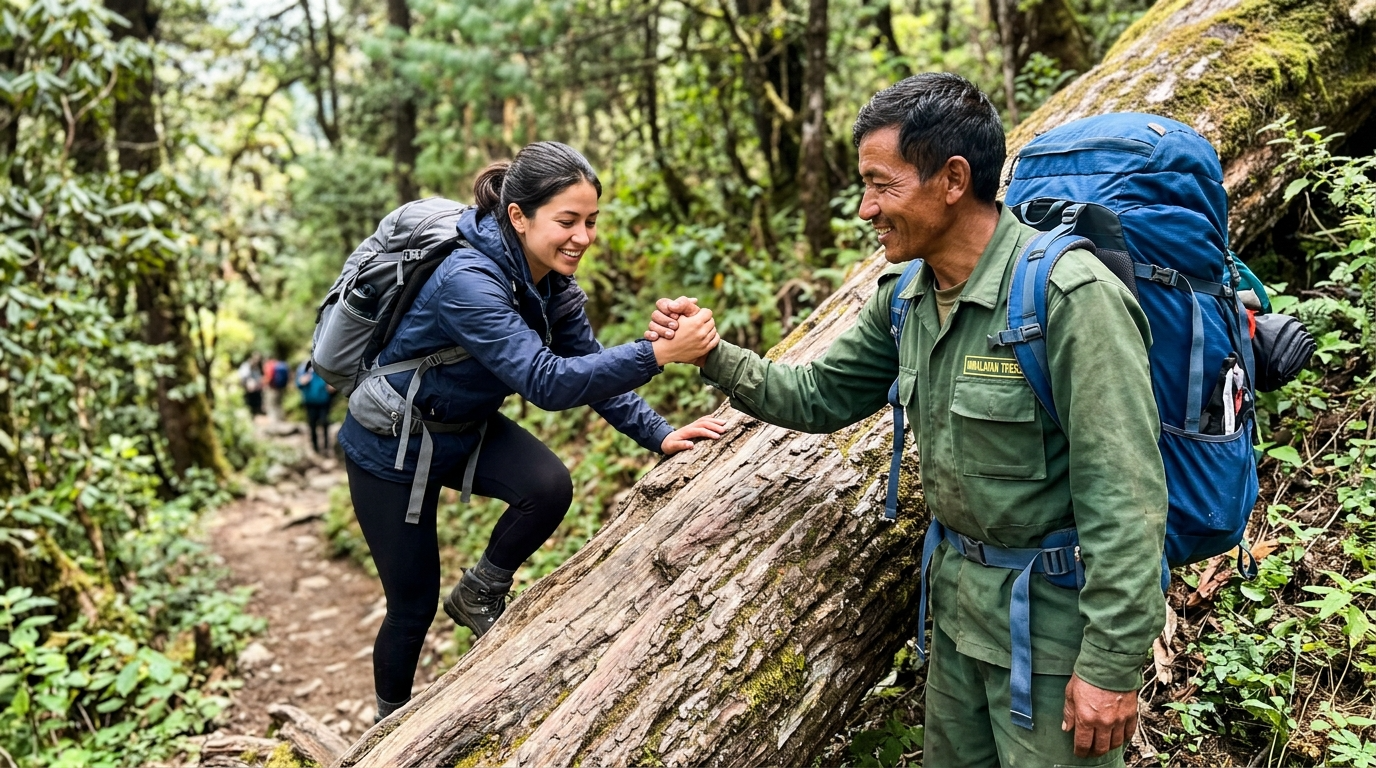
Hire a porter. This is the single most repeated piece of advice from anyone who has actually done a gorilla trek, fit or not.
Porters do far more than carry your daypack. They spot footholds on slippery clay, stabilize you with a hand or arm on steep sections, and physically push you up steps cut into hillsides when your legs give out. One traveler on Reddit described how their porter essentially functioned as a human guardrail on the steepest mud sections, catching them multiple times.
What porters cost:
-
Uganda: typically around $20 per trek (posted lodge rates)
-
Rwanda: commonly $10 to $25 depending on the lodge or park arrangement
These fees go directly to local community members. Tipping is customary on top of the fee. Carry small bills in local currency.
Even fit trekkers should hire porters. The gorilla trekking fitness margin they provide, freeing you from pack weight and giving you physical support on the worst terrain, makes the experience dramatically better.
Sedan Chairs (“African Helicopter”)
For travelers with mobility limitations, recent injuries, or serious concerns about gorilla trekking fitness, sedan chairs are a real and routinely used option. A team of porters carries you in a chair (sometimes a bamboo stretcher) to and from the gorillas.
Key details:
-
Available in both Uganda and Rwanda
-
Pre-book through your operator or lodge if you anticipate needing one
-
Pricing varies by route length, terrain, and crew size, typically $300 to $500 per trek
-
Practitioners on Reddit report paying around $400 and note it’s a common, routine service with no stigma attached
-
Payment is usually cash, paid locally
Sedan chairs are worth considering if you have knee replacements, recent surgeries, chronic joint conditions, or simply aren’t confident in your ability to handle an unexpectedly long trek. Arrange them in advance rather than hoping one is available day-of.
A 6 to 8 Week Training Plan for Desk-Based Travelers
If you have 6 to 8 weeks before your trek and currently spend most of your day sitting, this plan builds the specific gorilla trekking fitness you need. No gym membership required, though access to stairs or hills is essential.
Weekly Structure
3 days per week: Cardio with hills (45 to 60 minutes each)
-
Brisk walking or hiking on the hilliest terrain you can find
-
One of these three sessions should include intervals: 2 minutes hard uphill effort, 2 minutes easy walking, repeated 8 to 10 times
-
If you live somewhere flat, use a stair machine, parking garage stairs, or incline treadmill set to 10 to 15% grade
-
Wear the boots or shoes you’ll trek in to break them in
2 days per week: Leg and core strength (30 to 40 minutes each)
-
Step-ups onto a bench or sturdy step (3 sets of 12 per leg)
-
Walking lunges (3 sets of 10 per leg)
-
Bodyweight squats (3 sets of 15)
-
Single-leg deadlifts or hip hinges (3 sets of 10 per leg, for balance)
-
Eccentric step-downs: stand on a step, slowly lower one foot to the ground over 3 to 4 seconds, then step back up. This specifically trains your knees for the pounding of downhill hiking
-
Planks and side planks (30 to 60 seconds each, 3 rounds)
1 day per week: Long session (90 minutes to 3 hours)
-
A longer hike or urban hill walk wearing a daypack with 5 to 8 kg (10 to 15 lbs)
-
Practice with trekking poles during this session to build coordination
-
Gradually increase duration each week: start at 90 minutes, build to 3+ hours by week 6
1 day per week: Rest
Week-by-Week Progression
-
Weeks 1 to 2: Establish the routine. Keep intensity moderate. Focus on getting your body used to regular effort and breaking in footwear.
-
Weeks 3 to 4: Increase hill intensity. Add pack weight to long sessions. Start eccentric step-downs if knees are a concern.
-
Weeks 5 to 6: Simulated trek days. Your long session should approach 3 hours on the hardest terrain available. Add a second interval session.
-
Weeks 7 to 8: Maintain, don’t increase. Taper slightly in the final week before travel to arrive fresh.
For Altitude-Anxious Travelers
If your trek is in Rwanda (higher altitude) or in Bwindi’s upper sectors like Ruhija, add acclimatization time to your travel plan. Spend one to two nights near the park before trekking. If you’ve had altitude sickness before or your itinerary involves flying directly from low altitude to the park area, talk to your doctor about preventive medication.
Day-of Strategies That Reduce Exertion
Gorilla trekking fitness isn’t only about physical preparation. Smart choices on trek day make a measurable difference.
Ask for an easier gorilla family at the briefing. Be honest about your fitness level, age, and any health concerns. Rangers at both Volcanoes NP and Bwindi try to match groups to ability where possible. “Easier” usually means a family that was tracked nearby the previous afternoon, on lower slopes. It’s not guaranteed, but asking politely gives you the best chance.
Hire a porter even if you think you don’t need one. The $10 to $25 is the best money you’ll spend on the entire trip.
Use trekking poles. They reduce load on your knees by up to 25% on descents and give you two extra points of contact on slippery slopes. Set them slightly longer for downhill sections, shorter for uphill. If you have knee issues, poles aren’t optional, they’re essential.
Pace yourself early. The temptation is to keep up with the fittest person in your group. Don’t. Communicate with your ranger if the pace is too fast. Rangers are experienced at managing mixed-fitness groups.
Hydrate and snack steadily. Bring at least 2 liters of water and quick-energy snacks (dried fruit, energy bars, nuts). Sip regularly rather than waiting until you’re thirsty.
Technique on mud: Take micro-steps, keep a wide stance, and plant poles wider than you think necessary. Accept ranger-called breaks even if you feel fine. They keep the group together and prevent the weakest members from falling dangerously behind.
Health and Safety Reminders
-
Do not trek if you’re ill. This protects the gorillas, and rangers will turn you away regardless. A cold or stomach bug can be lethal to a gorilla.
-
Follow distance rules (7 meters minimum) even when gorillas approach you. Stay still if a gorilla walks close.
-
Masks may be requested or required under current park guidance.
-
Follow ranger instructions without exception. They know the terrain and the gorillas.
For context on how operators think about evacuation and emergency protocols in East Africa, this guide to helicopter evacuation on Kilimanjaro reflects the safety mindset that applies across mountain and forest environments.
Building Your Fitness Margin
The smartest approach to gorilla trekking fitness is stacking advantages. Any single measure helps; combining several turns a borderline experience into a comfortable one.
The three-lever formula:
-
Porter (reduces physical load, provides stability on terrain)
-
Trekking poles (protects joints, improves balance)
-
Extra acclimatization night (reduces altitude stress, improves sleep quality before trek)
Add a structured training plan and asking for an easier family at the briefing, and even travelers in their 60s and 70s can have a wonderful gorilla trekking experience. There is no upper age limit for gorilla trekking in either Uganda or Rwanda (UWA terms and conditions). The only real requirement is that you’re honest with yourself about your current fitness and willing to accept help where needed.
If you’re planning a multi-country trip that combines gorilla trekking with safari, beach, or other activities, the logistics of fitting multiple experiences into one East Africa trip matter for your energy and recovery between active days.
Frequently Asked Questions
Can seniors do gorilla trekking?
Yes. There is no upper age limit. Travelers in their 60s, 70s, and even 80s complete gorilla treks regularly, especially when they hire porters, use trekking poles, and request an easier gorilla family. Sedan chairs are available for those who need them. The key is honest self-assessment and willingness to use the support available.
Is Rwanda easier than Uganda for gorilla trekking?
Often, but not always. Rwanda’s Volcanoes National Park has more open terrain and sometimes shorter treks, but sits at higher altitude (2,400 to 3,200+ meters for most treks). Uganda’s Bwindi is generally lower but steeper, muddier, and more densely forested. Gorilla trekking fitness is tested differently in each country, and both can produce an unexpectedly long, hard day.
Do I really need trekking poles?
For anyone with knee concerns, absolutely. For everyone else, strongly recommended. Poles reduce joint impact on descents, improve balance on slippery slopes, and help you maintain a steadier pace over hours of uneven terrain. Practice with them before your trip so the technique feels natural.
What if I get sick the day before my trek?
If you show symptoms of a contagious illness (cough, fever, diarrhea), you will likely be denied entry to protect the gorillas. This is a strict, non-negotiable conservation rule. Travel insurance that covers trip interruption is worth having for this reason. Some operators can help reschedule, but permit availability is limited.
How much do porters and sedan chairs cost?
Porters typically cost $10 to $25 per trek depending on the country and arrangement. Sedan chairs run $300 to $500 per trek depending on distance, terrain, and crew size. Both are paid in cash locally. Pre-book sedan chairs through your operator if you think you might need one.
What’s the single best thing I can do if I only have a few weeks to prepare?
Walk hills or climb stairs three to four times per week for 45 to 60 minutes, with one longer session on weekends. Add eccentric step-downs for knee strength. This combination builds the specific cardio endurance and downhill control that gorilla trekking demands. Even four weeks of consistent effort makes a noticeable difference.
How do I get assigned an easier gorilla family?
At the morning briefing, tell the rangers your fitness level, age, and any health concerns. In Rwanda especially, rangers at Kinigi headquarters factor this into family assignments. In Uganda, a similar process happens at each sector’s meeting point. Be honest rather than optimistic. “Easier” usually means a family tracked at lower elevation the previous day, but assignments depend on conditions and are never guaranteed.
Should I worry about altitude for gorilla trekking?
If you’re trekking in Rwanda or in Bwindi’s higher sectors like Ruhija, altitude is a real factor. Spending one to two nights near the park at intermediate elevation before your trek helps. If you have a history of altitude sickness, consult your doctor about preventive medication. Most healthy travelers adapt fine with basic acclimatization, but ignoring altitude entirely is a mistake.
Ready to start planning your gorilla trek in Uganda or Rwanda? Duma Explorer arranges permits, lodges, in-country logistics, and expert local guides for gorilla trekking experiences in both countries. Start with the complete East Africa trip planning guide to see how gorilla trekking fits into a broader safari itinerary.