

Family Safari School Holidays 2026: Tanzania A–Z Guide
TL;DR
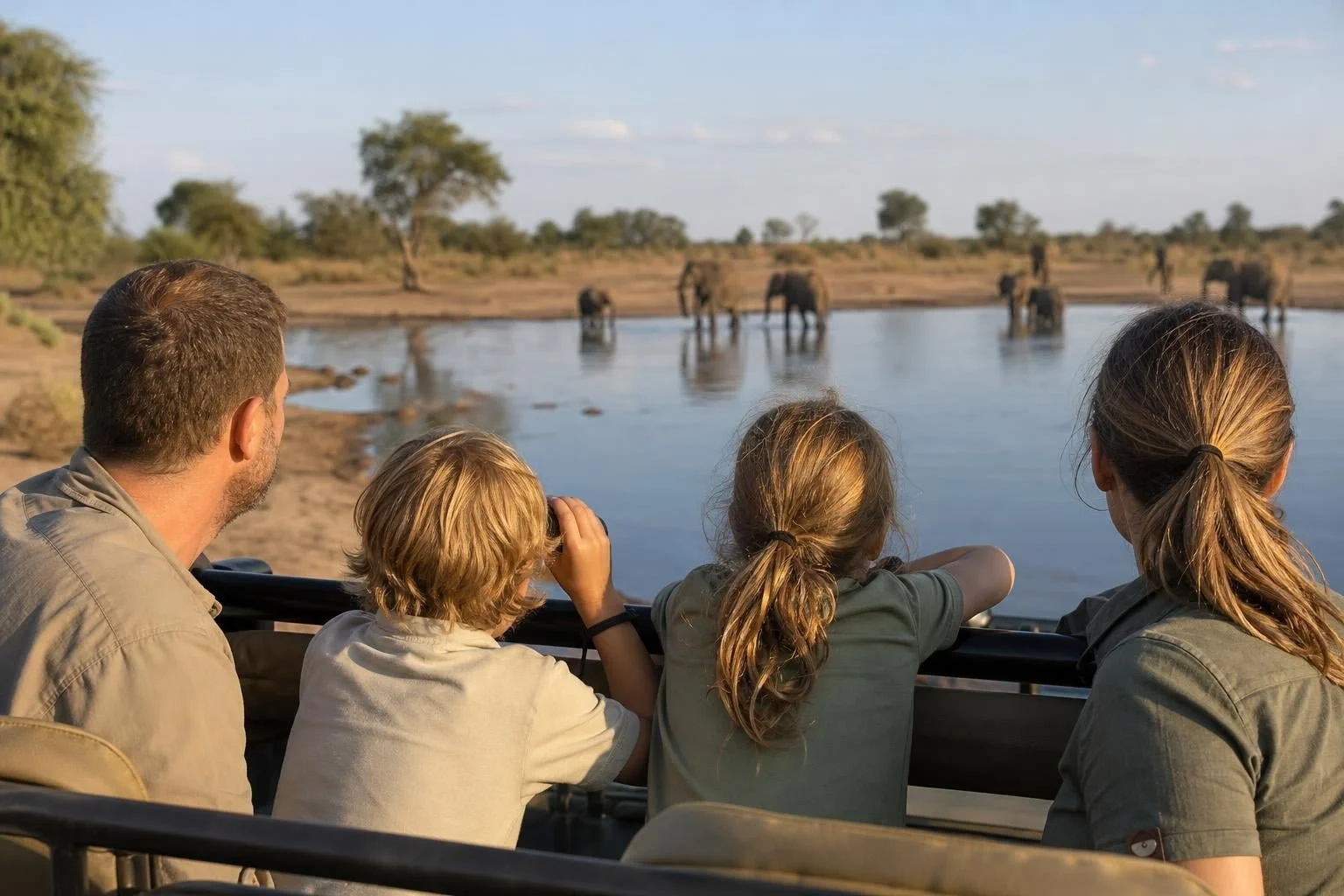
School holidays align well with Africa’s best safari seasons. The dry season (June to October) overlaps Northern Hemisphere summer breaks, making it the most popular window for family safaris. Easter, half-term, and Christmas holidays each offer distinct wildlife highlights and pricing. This glossary covers every term families encounter when planning, from park fees and age restrictions to migration timing and accommodation types.
Planning a family safari during school holidays means learning a new vocabulary fast. Dry season, calving season, concession fees, pop-top vehicles, TANAPA park fees, minimum age policies. These terms show up in every quote, itinerary, and camp description, and understanding them changes how you evaluate options.
The good news: school holiday calendars and Africa’s safari seasons fit together remarkably well. The European and North American summer break falls squarely within East Africa’s peak wildlife-viewing months. Easter lines up with a value-rich shoulder season. Even February half-term catches one of the Serengeti’s most dramatic events.
What Are the Best School Holidays for a Family Safari in Tanzania? The best school holidays for a family safari in Tanzania depend on your wildlife priorities, budget, and children's ages. June to August is ideal for families seeking dry-season game viewing and the chance to see the Great Migration, while January to February is best for wildebeest calving in the southern Serengeti. Easter can offer greener scenery and potentially lower accommodation rates, although heavier rainfall may affect travel conditions in March and April. October can provide excellent wildlife viewing toward the end of the dry season. Christmas and New Year are also good options, but festive surcharges and limited family-room availability make early booking important. Before choosing dates, check the latest seasonal conditions, camp availability, child-age policies, and park fees for your specific itinerary.
This glossary organizes the terms by planning stage so you can move from “when should we go?” through “what will it cost?” without hitting jargon walls along the way.
Exploring a private family safari in Tanzania? That planning guide covers the full decision framework.
Quick Reference: Tanzania Safari Seasons During School Holidays
Tanzania offers good safari opportunities throughout the year, but the best travel window depends on whether your family prioritizes dry weather, the Great Migration, fewer crowds, or budget flexibility.
|
School holiday |
Typical timing |
Seasonal conditions |
Wildlife highlights |
Planning considerations |
|---|---|---|---|---|
|
US summer break |
June–August |
Dry season develops and wildlife viewing is often excellent |
Migration movement through the Western Corridor and, later, the northern Serengeti |
High demand at popular camps; book family rooms and private vehicles early |
|
UK summer holidays |
Late July–August |
Generally dry in northern Tanzania |
Potential Great Migration river crossings in the northern Serengeti |
Popular camps can fill well in advance; crossings are never guaranteed |
|
Easter / spring break |
March–April |
Green landscapes and variable rainfall |
Calving may continue in early March; wildlife remains present year-round |
April can be particularly wet; confirm road conditions and seasonal camp closures |
|
UK February half-term |
February |
Generally part of the southern Serengeti calving period |
Wildebeest calves and increased predator activity |
Consider the Ndutu area; exact conditions depend on rainfall |
|
UK October half-term |
October |
Often late dry season, with the short rains possible later in the month or beyond |
Wildlife viewing can remain excellent; migration may be moving south |
A useful option for families seeking dry-season conditions outside the busiest summer weeks |
|
Christmas / New Year |
Late December–early January |
Short rains may occur; conditions vary |
Herds are often in the southern Serengeti as the calving period approaches |
Festive supplements and limited availability are common |
|
Australian winter break |
June–July |
Dry-season transition |
Wildlife viewing improves in many northern Tanzania parks as conditions dry |
Late June may offer different rates from July; confirm actual dates and lodge pricing |
Important: The Great Migration follows rainfall and grazing conditions rather than a fixed calendar. These periods are seasonal guides, not guarantees of particular sightings. Prices and availability depend on the exact dates, accommodation, and itinerary.
Which School Holiday Is Best for Your Family Safari?
The right time to visit Tanzania depends on your family's priorities. Some families want the best chance of seeing the Great Migration, while others prefer quieter parks, greener landscapes, or a safari that fits a tighter budget.
|
Your priority |
Holiday period to consider |
Why it may work |
|---|---|---|
|
Dry weather and easier wildlife viewing |
June–October |
Shorter vegetation and generally drier conditions can make animals easier to spot |
|
Great Migration river crossings |
July–October |
Herds may be in the northern Serengeti, although crossings are unpredictable |
|
Wildebeest calving and predator activity |
January–February |
The southern Serengeti and Ndutu area are important calving locations |
|
Potentially lower accommodation rates |
April–May |
This is generally the long-rains period, when some lodges offer lower rates |
|
Festive family travel |
Late December–early January |
The southern Serengeti can offer excellent wildlife viewing, but festive rates may apply |
|
A safari and beach holiday |
June–October |
Northern Tanzania safari routes can be combined with Zanzibar during its generally drier season |
Three Questions to Ask Before Booking
1. Which wildlife experience matters most? If seeing the Great Migration is your main goal, choose the region as well as the month. River crossings, calving, and general herd movement happen in different parts of the Serengeti ecosystem.
2. How much flexibility do you have? Families travelling during fixed school holidays may need to book earlier and accept less flexibility on accommodation. If your dates are flexible, compare prices just before or after the busiest weeks.
3. How well do your children handle long journeys? A shorter itinerary with fewer hotel changes may be more enjoyable than trying to visit every major park. Consider private game drives, domestic flights where practical, and time to rest between activities.
School Holiday Calendar Terms
Summer Holidays (June to August)
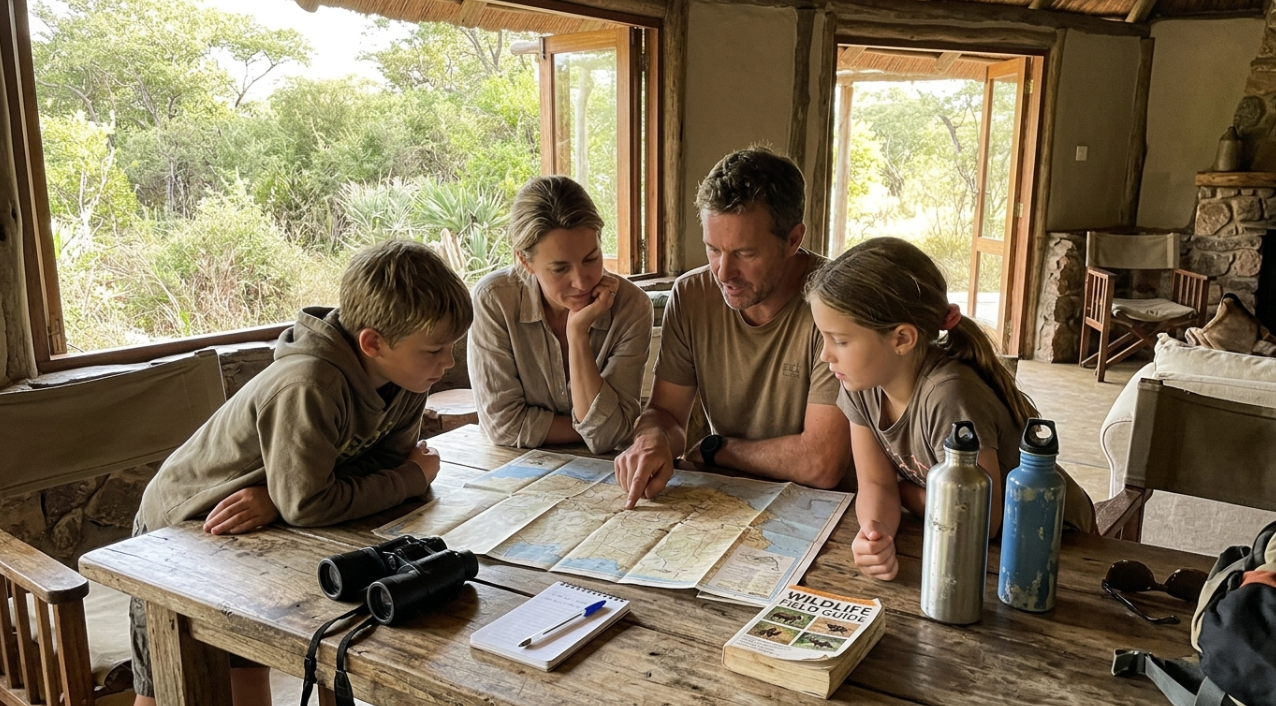
The six to eight weeks from mid-June through August overlap directly with Africa’s prime safari months. For US families, a useful pricing detail: late June (roughly June 25 to July 10) often sits in a lower pre-peak rate band before high-season pricing kicks in on July 1. Booking six to ten months ahead is critical during this window, and twelve to eighteen months is better.
UK summer holidays start later (typically late July) and land in the most competitive period for family suites and private vehicles.
Easter and Spring Break (March to April)
Easter holidays often hit a shoulder-season sweet spot, providing green-season vibrancy with thinning vegetation and noticeably better pricing than peak months. March and April bring lush landscapes, newborn animals from late calving, and far fewer vehicles in the parks. The trade-off: some roads can still be soft from recent rains, and afternoon showers are possible.
For families comfortable with a bit of unpredictability, Easter represents genuine value. You’ll find wider availability at the best family safari lodges in Tanzania and lower per-night rates.
Half-Term (UK-Specific)
October half-term falls at the tail end of Tanzania’s dry season. Game viewing remains excellent, the migration is heading south through the Serengeti, and family demand is lower than summer. Tanzania is at its best from late June to early October, so October half-term just catches the final stretch.
February half-term works for families wanting to see the Serengeti’s calving season. One family travel blog noted choosing “February half-term plus an extra week to escape our winter,” combining safari with beach time in Zanzibar afterward.
Christmas and Winter Break (December to January)
Mid-December to early January offers great wildlife viewing, with many animals more active during the warmer months. In Tanzania, this coincides with the buildup to calving season in the southern Serengeti. Expect festive surcharges at most camps, sometimes 20–30% above standard rates, and very limited availability at popular family properties. Booking twelve months or more ahead is standard for Christmas departures.
Australian Winter Break (June to July)
Australian school holidays in June and July align with the start of Tanzania’s dry season. Late June can offer pre-peak pricing before the July surge, making it a smart window for Australian families willing to travel at the beginning of winter break rather than the end.
Safari Season Terms
Dry Season
In northern Tanzania, the main dry season generally runs from June to October. Rainfall is typically lower, vegetation becomes thinner, and wildlife can be easier to spot around remaining water sources. This is a popular time for family safaris, particularly for travellers hoping to see the Great Migration.
Mornings and evenings can be cool, so children should have warm layers for early game drives. Dry-season conditions vary by location, and individual parks can offer good wildlife viewing at other times of year.
Green Season
The green season broadly covers November to May, although rainfall patterns vary and January and February can include relatively dry periods. Lush vegetation, migratory birds, and seasonal wildlife activity make this an attractive alternative to the busiest months.
March to May is generally associated with the long rains. Some roads may become difficult, and certain camps may close temporarily. Confirm accessibility and operating dates before booking a family itinerary.
Shoulder Season
Shoulder season refers to periods between the busiest travel weeks and quieter seasonal periods. Depending on the itinerary, late October, November, early June, or other transition dates may provide a balance between wildlife viewing, availability, and accommodation costs.
There is no universal shoulder-season discount. Compare actual quotes for your dates and check whether park fees, lodge rates, and seasonal supplements differ.
Peak Season
Peak season is the period when demand and accommodation prices are typically highest. July and August are particularly popular with families travelling during Northern Hemisphere summer holidays, while other dates can also be busy depending on the park and lodge.
For school-holiday trips, book early if you need adjoining rooms, a family suite, or a private safari vehicle. Always compare the total itinerary cost rather than relying on a general seasonal percentage.
Calving Season
Wildebeest calving typically takes place around January and February on the southern Serengeti plains and in the Ndutu area, although conditions vary from year to year. The concentration of newborn calves can attract predators and create memorable wildlife-viewing opportunities.
Families interested in calving season should choose accommodation based on likely herd locations and current conditions, rather than assuming that every camp offers the same access to wildlife.
Wildlife and Migration Terms
Great Migration
The annual movement of roughly 1.5 million wildebeest, hundreds of thousands of zebras, and gazelles around the Serengeti-Mara ecosystem, following rainfall and fresh grazing. The timing is circular and year-round, but the most dramatic moments for families align with school holidays:
-
June to July: Western Corridor and Grumeti River crossings
-
August to October: Northern Serengeti and Mara River crossings (the iconic footage you’ve seen)
-
January to February: Calving in the southern Serengeti
Travelling June to September may be more expensive, but the guaranteed dry conditions and uncomplicated overland logistics make the whole trip easier with children. The Great Migration safari guide maps this timing in detail.
Big Five
Lion, leopard, elephant, Cape buffalo, and black rhinoceros. The term originates from colonial-era hunting (these were considered the five most dangerous animals to hunt on foot) but now refers to the most sought-after wildlife sightings. Ngorongoro Crater is one of the few places in East Africa where all five can realistically be seen in a single game drive.
River Crossing
The dramatic moments when wildebeest herds plunge into crocodile-filled rivers during the Great Migration. Practitioners on safari forums are clear about expectations: you cannot book a crossing for a specific morning. What you can do is stack the odds by travelling in the right window. September and October are the most reliable for Mara River crossings, August is very good, and July is early. Families should plan several days in the northern Serengeti rather than a single night if crossings are a priority.
Migration Timing Versus Migration Location
The Great Migration is a year-round movement of wildebeest and other grazing animals through the Serengeti ecosystem and into Kenya's Maasai Mara. Its location changes as herds respond to rainfall, fresh grazing, and seasonal conditions.
For families planning around school holidays, the key is to match the travel month with the region where the herds are most likely to be found.
|
Approximate period |
Region to consider |
What families may see |
|---|---|---|
|
January–February |
Southern Serengeti and Ndutu |
Wildebeest calving and predator activity |
|
March–May |
Southern and central Serengeti, with movement varying by rainfall |
Herd movement, green landscapes, and resident wildlife |
|
June–July |
Western and central Serengeti, depending on conditions |
Herd movement toward the north and possible river activity |
|
July–October |
Northern Serengeti |
Potential Mara River crossings and large herds |
|
November–December |
Central and southern Serengeti as herds move south |
Herd movement and the approach of the calving period |
These are approximate seasonal patterns, not fixed dates. Families with a particular wildlife goal should allow enough time in the relevant region and ask their safari operator about recent herd movements before finalizing accommodation.
A river crossing is a natural event that cannot be scheduled. Spending several nights in the appropriate area may improve your opportunity to witness one, but no operator can guarantee that a crossing will happen during a specific game drive.
Game Drive
A guided wildlife-viewing excursion in a 4x4 vehicle, typically lasting three to four hours. For families, pacing matters enormously. Experienced operators recommend a lodge lunch plus downtime from roughly 11am to 3:30pm. Pushing through without a break risks meltdowns by day three. Morning drives (departing at 6:30am) offer the best light and animal activity. Afternoon drives pick up again around 3:30 to 4pm when temperatures drop.
Accommodation and Logistics Terms
Family Suite and Family Tent
Interlinked tents, adjoining rooms, or multi-bedroom suites designed so families stay together. Whether a camp is fenced or unfenced affects how freely children can roam between meals and activities. Family suites vary enormously, from simple canvas-walled tents with a shared bathroom to elaborate multi-room villas with private plunge pools. When evaluating quotes, always ask for the specific room configuration, not just “family room.”
One past Duma Explorer traveller noted that the trip planner “listened to what type of accommodations we needed, not so high end that we didn’t feel like we were on a safari and not so basic that the kids wouldn’t want to return to Africa when they got older.” That calibration matters more than star ratings.
Exclusive-Use
A property or villa booked entirely for one family group. This eliminates age-restriction issues (most minimum-age rules apply to shared camps, not exclusive bookings), gives full flexibility on meal timing and activity scheduling, and means children can be children without worrying about disturbing other guests. Exclusive-use properties are particularly valuable for large family safari groups or multigenerational trips.
Private Vehicle
A dedicated 4x4 and driver-guide assigned to your family alone. This is non-negotiable for families with children. You need the flexibility to leave a sighting early when a child needs the bathroom, to skip a long drive when energy is depleted, and to alter timing without affecting other guests.
One Duma Explorer client (a family of four on a 10-day private tour) described it simply: “We would heartily recommend it to anyone wanting to go on safari.” Private vehicles typically add $150–$300 per day over shared options but transform the experience for families.
Duma Explorer designs private family safari itineraries around your specific school holiday dates and children’s ages, including accommodation choices that work for kids without compromising the safari experience.
Pop-Top Vehicle
A vehicle with a roof that pops upward, allowing passengers to stand and photograph through the opening while remaining enclosed on all sides. This is distinct from open-sided vehicles, which look great in photos but create real safety concerns around predators with small children who cannot be relied on to stay seated. For families, pop-top is the correct choice.
Fly-In Safari
Using small bush planes (typically Cessna Caravans carrying 12–14 passengers) to move between parks instead of driving. A flight from Arusha to the northern Serengeti takes about 90 minutes versus a full day of driving. Fly-in safaris reduce travel fatigue significantly for families, though they cost more and impose strict luggage limits (usually 15–20kg per person in soft bags). The safari vehicle and transport glossary explains the full range of options.
Northern Circuit
Tanzania’s most popular safari route, connecting Tarangire, Lake Manyara, the Serengeti, and Ngorongoro Crater. The circuit works as a 10–12 day loop because the distances between parks are manageable and the variety keeps kids absorbed. One family with two teenagers completed a well-paced Northern Circuit itinerary with Duma Explorer: a walking safari at Arusha National Park, then two nights each at Western Serengeti, Central Serengeti, Ngorongoro, and Tarangire.
For families working within a shorter school holiday window, a 7-day version focusing on Serengeti and Ngorongoro is the most common structure. The full Tanzania safari itinerary guide covers routing options and costs.
Zanzibar Extension
Adding two to four nights on the Zanzibar archipelago after safari is one of the most popular patterns for family safari school holidays trips. Tanzania is one of the best and easiest countries to combine safari and beach. June to October is Zanzibar’s cooler, drier season with daytime temperatures around 26–28°C and low humidity, overlapping European summer holidays perfectly.
The flight from Serengeti to Zanzibar takes about two hours with a connection through Arusha or Dar es Salaam. Check Zanzibar weather and when to go to match your school holiday dates with beach conditions.
Swahili Coast
Alternative beach destinations to Zanzibar, including Pangani and Saadani National Park. Less crowded, often more affordable, and Saadani uniquely combines beach and bush (it’s the only national park in East Africa bordering the Indian Ocean). For families wanting something off the beaten path after safari, these are worth considering.
Age, Safety, and Booking Terms
Minimum Age
Most safari camps in East Africa enforce a minimum age of six years old, and many luxury lodges raise that bar to twelve. However, most camps on Tanzania’s Northern Circuit accept children from five on shared vehicles, and some from three on exclusive bookings. The key distinction: minimum ages often apply to shared game drives and communal dining, not to the entire property. Exclusive-use bookings and private vehicles frequently lower or eliminate these restrictions.
For families with younger children, the guide to safari with toddlers in Tanzania covers which parks and camps are most accommodating.
Age Brackets for Pricing
Children aged 5–15 typically pay 20–50% of the adult rate at Tanzania’s national parks. Children under 5 enter free at all TANAPA parks. Lodge pricing varies more widely, with some properties charging 50% for children sharing a family suite and others offering free stays for under-5s. Always confirm the specific child policy at each camp in your itinerary.
Walking Safari Age Limit
Safari walks through the bush with an armed ranger are best suited to families with older children. The minimum age for this activity is usually 12 or 16 years, depending on the park and operator. Walking safaris add a completely different dimension to the trip, but they require the ability to stay quiet, walk steadily for one to three hours, and follow instructions without hesitation.
Balloon Safari Age Limit
Hot air balloon flights over the Serengeti are a popular family add-on. The minimum age is seven years old. Flights depart at dawn, last about an hour, and end with a champagne breakfast (juice for the kids) in the bush. Cost runs approximately $500–$600 per person.
Booking Lead Time
Peak-season family safari school holidays trips should be booked twelve to eighteen months ahead. Off-peak trips can often be arranged six to nine months out. Because family logistics are more complex (connecting rooms, private vehicles, age-appropriate camps, specific school holiday dates), earlier planning gives the widest choice. One Duma Explorer client described how the planning process involved “multiple revisions until every family need was met, including special food requests and wonderful lodges inside each park.” That level of customization takes time.
Recommended Safari Duration
A 7 to 14-day Tanzania itinerary is ideal for families. However, experienced practitioners recommend not extending your safari time beyond 8 nights because of early rises and fatigue with children. The pattern that works best: 6–8 nights on safari followed by 2–4 nights on a beach in Zanzibar or the Swahili Coast. That gives kids time to decompress, swim, and process what they’ve seen.
Age Bracket Sweet Spots
Ages 6 to 9 are the sweet spot for a first family safari. Children are old enough to sit through a full game drive, curious enough to ask brilliant questions, and young enough to be completely unjaded by what they’re seeing.
Ages 10 to 13 can handle the full 7-day Northern Circuit itinerary without modification. They’re ready for early mornings, longer drives, and more complex wildlife discussions with guides.
Ages 14 to 17 benefit from adding active elements: walking safaris, cultural visits, and potentially a Zanzibar snorkeling excursion to keep the trip from feeling like a passive observation exercise.
Planning a Tanzania Safari by Your Children's Ages
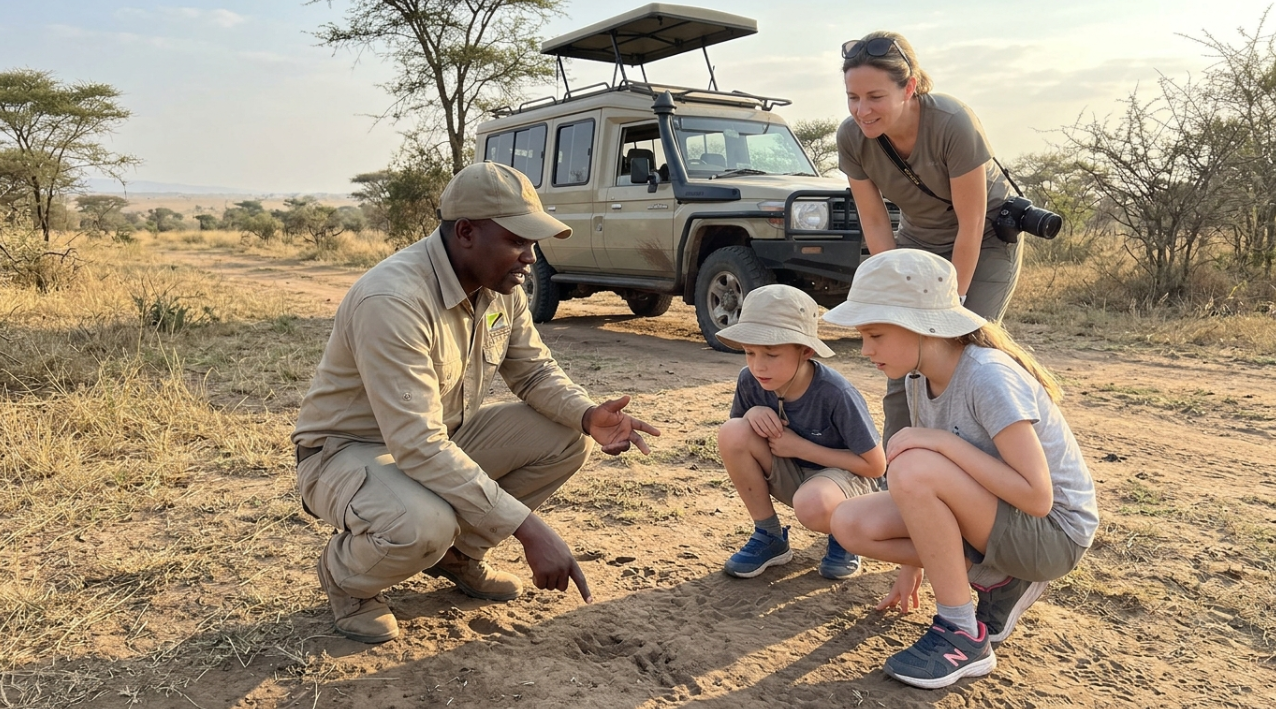
Children of different ages have different needs on safari. Rather than choosing an itinerary based on age alone, consider how long your children can comfortably travel, their interest in wildlife, and whether they can follow safety instructions.
|
Children's age |
What to prioritize |
Planning tips |
|---|---|---|
|
Under 5 |
Shorter drives, flexible meal times, and suitable accommodation |
Confirm minimum ages, child-minding arrangements, and whether private activities are available |
|
Ages 5–9 |
Wildlife-rich parks, comfortable family rooms, and a flexible daily schedule |
Consider a private vehicle and regular breaks between activities |
|
Ages 10–13 |
A varied itinerary with wildlife viewing and age-appropriate educational experiences |
Longer game drives may work well, depending on the child's interests and stamina |
|
Ages 14–17 |
More varied activities, photography, wildlife learning, and selected cultural experiences |
Ask about walking safaris, balloon flights, and other activities with minimum-age requirements |
|
Multigenerational groups |
Comfortable accommodation, flexible pacing, and accessible transport arrangements |
Balance early game drives with rest time and confirm the needs of every traveller |
How Long Should a Family Safari Last?
A safari of approximately six to eight nights is a useful starting point for many families, although the ideal duration depends on the children's ages, travel time, budget, and destinations.
A family with limited time might focus on two or three parks rather than trying to cover the entire Northern Circuit. Families with longer holidays could add a few nights in Zanzibar or along the Swahili Coast for swimming, beach time, and a slower pace after the safari.
Before booking, ask your operator to estimate daily driving times and explain which activities are optional. A well-paced itinerary is often more rewarding than trying to fit in as many destinations as possible.
Cost and Fee Terms
Tanzania Safari Park Fees: What Families Need to Budget For
Park and conservation fees are an important part of a Tanzania safari budget. The amount depends on the destination, visitor category, children's ages, length of stay, and activities included in the itinerary.
|
Cost category |
What it covers |
What to confirm |
|---|---|---|
|
National park entry fee |
Admission to a national park for the applicable period |
Current tariff, visitor category, and child rate |
|
Conservation area entry fee |
Entry to a conservation area such as Ngorongoro |
Applicable fees and rules for your itinerary |
|
Crater descent or vehicle-related fee |
Additional charges associated with specific activities or access |
Current amount, whether it is charged per vehicle or another unit, and whether it is included in your quote |
|
Overnight concession or camping fee |
Applicable charges for certain overnight stays |
Whether the fee applies to your accommodation and whether it is included in the quoted rate |
|
Special activities |
Experiences such as balloon flights or guided walks |
Minimum age, per-person price, and advance-booking requirements |
Important: Fees and regulations can change. Check the applicable official tariff before booking and ask your safari operator to itemize compulsory charges in the quotation.
For national park charges, consult the official TANAPA park fees and tariffs page. For Ngorongoro Conservation Area charges, consult the Ngorongoro Conservation Area Authority.
Concession Fee
An additional fee charged per person per night for overnight stays within national parks or conservation areas. Serengeti and Ngorongoro concession fees run approximately $59 per person per night. Tarangire and Lake Manyara are approximately $47.20 per person per night. These are separate from entry fees and are typically included in your lodge rate, but it’s worth confirming.
Ngorongoro Crater Vehicle Service Fee
A separate charge of $295 per vehicle to descend into the Ngorongoro Crater floor. This applies per descent, not per person. For a family sharing one private vehicle, this is a single flat charge, making it more cost-effective than it first appears. The crater floor game drive typically lasts 5–6 hours.
Family Safari Cost Benchmarks
How Much Does a Family Safari in Tanzania Cost?
The total cost of a family safari depends on travel dates, accommodation standards, the number of nights, park fees, transport, and children's ages. Peak school-holiday periods can also affect availability and lodge rates.
When comparing quotations, check whether each price includes:
-
Accommodation and meals.
-
A private safari vehicle and driver-guide.
-
Park and conservation fees.
-
Airport transfers and domestic flights, if applicable.
-
Child rates and family-room supplements.
-
Optional activities and any compulsory additional charges.
-
Tips, drinks, and other excluded expenses.
A seven-day safari quotation should clearly state the travel dates, number of adults and children, accommodation category, and inclusions. Compare the total price for your family rather than relying only on a per-person rate.
If you are travelling during school holidays, request a quotation early enough to compare suitable family rooms and transport options before availability becomes limited.
Families wanting a clear, all-inclusive price that accounts for park fees, children’s rates, and private vehicle costs can ask Duma Explorer to build a custom family safari quote.
Tipping
Budget approximately $50 per vehicle per day for the driver-guide, plus $10–$15 per guest per day for lodge staff. For a 7-day family safari, that means roughly $350 for your guide and $280–$420 for lodge staff across the trip. Tipping is customary and expected in Tanzania’s safari industry. Many families put tipping envelopes together with their children as part of the trip experience.
Planning Decisions That Depend on School Holiday Timing
Different school holiday windows change which terms matter most. Here’s how to focus your research based on when you’re travelling.
Travelling during US/UK summer holidays (June to August)?
Focus on: dry season, peak season, Great Migration crossings, Mara River crossing windows, booking lead time (12–18 months), private vehicle availability, Zanzibar extension timing, and high-season cost benchmarks.
Travelling during Easter or spring break (March to April)?
Focus on: shoulder season, green season, calving season tail end, moderate pricing, road conditions, camp closures (some properties close in April), and wider lodge availability.
Travelling during UK October half-term?
Focus on: late dry season, migration heading south, moderate-to-high pricing, and the transition toward short rains (usually starting mid-November, so October is still safe).
Travelling during February half-term?
Focus on: calving season, Ndutu area access, southern Serengeti camp availability, predator concentrations, and short dry spell timing.
Travelling during Christmas and New Year?
Focus on: festive surcharges, short rains transition, southern Serengeti positioning, booking lead time (12+ months minimum), and reduced availability at top family properties.
A family of 13 (ages 11 to 62) successfully completed a multi-generational Duma Explorer trip, demonstrating that even complex group logistics can be managed when planning starts early enough. The key is matching your school holiday window to the right parks, camps, and pacing for your specific family.
Plan Your Tanzania Family Safari Around School Holidays
The best family safari is one that matches your school holiday dates, children's ages, wildlife priorities, and budget. Whether you're planning a summer trip to see the Great Migration, a February safari during calving season, or a Christmas getaway, choosing the right parks and accommodation can make the experience more comfortable for everyone.
Duma Explorer can help you compare safari seasons, select family-friendly camps, and build an itinerary around your available travel dates.
Plan Your Private Family Safari in Tanzania
Start planning early if you need family suites, connecting accommodation, or a dedicated safari vehicle during popular school holiday periods.
Frequently Asked Questions
Which school holidays align best with safari season in Tanzania?
UK and US summer holidays (June to August) offer the strongest alignment with East Africa’s dry season and Great Migration crossings. Easter provides a shoulder-season value window with good wildlife viewing. February half-term catches the dramatic calving season in the southern Serengeti. All major school holiday periods can work for a family safari; the wildlife highlights and pricing simply shift.
What is the minimum age for a family safari in Tanzania?
Most camps enforce a minimum age of five or six for shared game drives. Many luxury lodges set the bar at twelve. However, exclusive-use bookings and private vehicles frequently lower or remove age restrictions entirely. Children under five enter all TANAPA national parks for free.
How far ahead should we book a family safari during school holidays?
For peak-season travel (July to October), book twelve to eighteen months ahead. The best family suites, connecting tents, and private vehicles at popular camps fill quickly during school holiday periods. Off-peak holidays like Easter or February half-term can sometimes be arranged six to nine months out.
How much does a family safari cost during school holidays?
A 7-day mid-range safari for a family of four typically costs $9,000 to $13,500 during peak season. This includes accommodation, meals, a private vehicle, park fees, and transfers. Shoulder-season travel (Easter, February) can reduce costs by 15–25%. Children aged 5–15 receive reduced park fees at all Tanzanian national parks.
Can you see the Great Migration during school holidays?
Yes. The Great Migration is a year-round phenomenon, and its most dramatic moments coincide with several school holiday periods. Summer holidays (June to August) align with river crossings in the Western Corridor and northern Serengeti. February half-term catches the calving season. Christmas and New Year find the herds in the southern Serengeti.
Is Zanzibar a good add-on during school holidays?
Zanzibar works exceptionally well as a post-safari extension during summer holidays. June to October is the island’s cooler, drier season with daytime temperatures around 26–28°C, low humidity, and calm seas. Two to four nights is the typical family add-on, giving children time to swim, snorkel, and unwind after early-morning game drives.
What is the best age to take children on safari?
Ages six to nine represent the sweet spot for a first family safari. Children are old enough for full game drives, engaged enough to absorb what they’re seeing, and young enough to find genuine wonder in every sighting. Children aged ten and above can handle longer itineraries and more active elements like walking safaris (minimum age 12–16) and cultural visits.