

Safari Vehicles Africa: 2026 Guide to Types & Features
TL;DR
The vehicle you ride in on an African safari is largely determined by geography and park regulations, not just operator preference. East Africa relies on closed pop-top Land Cruisers because open vehicles are banned on public roads and in certain parks. Southern Africa favors open-sided game viewers with tiered seating because safaris happen inside private concessions. This glossary covers every vehicle type, modification, and transport mode you’ll encounter while planning a safari, plus the questions to ask before you book.
The vehicle shapes your entire safari. It determines what you see, how you photograph it, whether you’re comfortable at 6 AM in the Ngorongoro Highlands cold, and whether dust coats everything you own by day three. Yet most travelers book a safari without knowing the difference between a pop-top Land Cruiser and an open-sided game viewer, or why those two vehicles exist in different parts of the continent.
This is the gap this glossary fills. Every vehicle type, every modification term, and every alternative mode of safari transport, explained with enough context to help you compare operators and ask the right questions.
Planning a trip and want to understand safari costs in Tanzania alongside vehicle options? That pricing context pairs well with what follows.
Quick Answer There is no single "best" safari vehicle in Africa because the right vehicle depends on the country, park regulations, road conditions, and the type of safari you book.
- East Africa (Tanzania, Kenya, Uganda, Rwanda) primarily uses enclosed Toyota Land Cruisers with pop-up roofs because safaris include long road transfers and many national parks prohibit fully open vehicles. - Southern Africa (Botswana, South Africa, Zambia, Zimbabwe, Namibia) mainly uses open-sided game viewers with tiered seating because game drives take place inside private reserves where road regulations are different. - Travelers focused on photography generally benefit from open-sided vehicles, while families, older travelers, and those taking long driving itineraries often find enclosed pop-top vehicles more comfortable.
For most first-time safari visitors, a Land Cruiser with a pop-up roof offers the best balance of comfort, visibility, reliability, and off-road capability.
|
Vehicle |
Best For |
Countries |
Comfort |
Photography |
Budget |
|---|---|---|---|---|---|
|
Pop-top Land Cruiser |
First-time safari |
Tanzania, Kenya |
⭐⭐⭐⭐⭐ |
⭐⭐⭐⭐ |
$$$ |
|
Open Game Viewer |
Wildlife photography |
Botswana, South Africa |
⭐⭐⭐⭐ |
⭐⭐⭐⭐⭐ |
$$$$ |
|
Safari Minibus |
Budget safari |
Kenya |
⭐⭐⭐ |
⭐⭐ |
$$ |
|
Photography Vehicle |
Professional photographers |
Kenya, Tanzania |
⭐⭐⭐⭐⭐ |
⭐⭐⭐⭐⭐ |
$$$$$ |
|
Overland Truck |
Budget overland tours |
Africa-wide |
⭐⭐ |
⭐⭐ |
$ |
|
Mokoro |
Water safaris |
Botswana |
⭐⭐⭐⭐ |
⭐⭐⭐⭐ |
$$$ |
|
Boat Safari |
River wildlife |
Botswana, Tanzania |
⭐⭐⭐⭐ |
⭐⭐⭐⭐ |
$$$ |
Safari Vehicle Types: A Complete Glossary
Balloon Safari Basket
A hot-air balloon safari begins at dawn (around 6 AM) and lasts roughly one hour, drifting at low altitude over wildlife-rich areas. The wicker basket typically holds 8 to 16 passengers in compartments. This is a signature experience in the Serengeti and Masai Mara, where flights cost approximately $450 to $600 per person. Most balloon safaris include a champagne bush breakfast after landing.
Where used: Serengeti (Tanzania), Masai Mara (Kenya), Pilanesberg (South Africa)
Best for: Once-in-a-lifetime aerial perspective, special occasions, photography of migration herds from above
Boat Safari Vessel
River-based game viewing using motorboats, pontoons, or smaller craft. Boat safaris are ideal for spotting hippos, crocodiles, and waterbirds that you simply won’t see well from land vehicles. Sessions typically last two to three hours, often timed for late afternoon when animals congregate at the water’s edge.
Where used: Rufiji River (Selous/Nyerere), Chobe River (Botswana), Lake Manyara (Tanzania), Zambezi River (Zambia/Zimbabwe)
Best for: Birding enthusiasts, photographers wanting water-level angles, travelers who want variety beyond game drives
For a unique combination of boat and bush safari, Saadani National Park on Tanzania’s coast offers both in a single destination.
Closed Safari Vehicle (Pop-Top Land Cruiser)
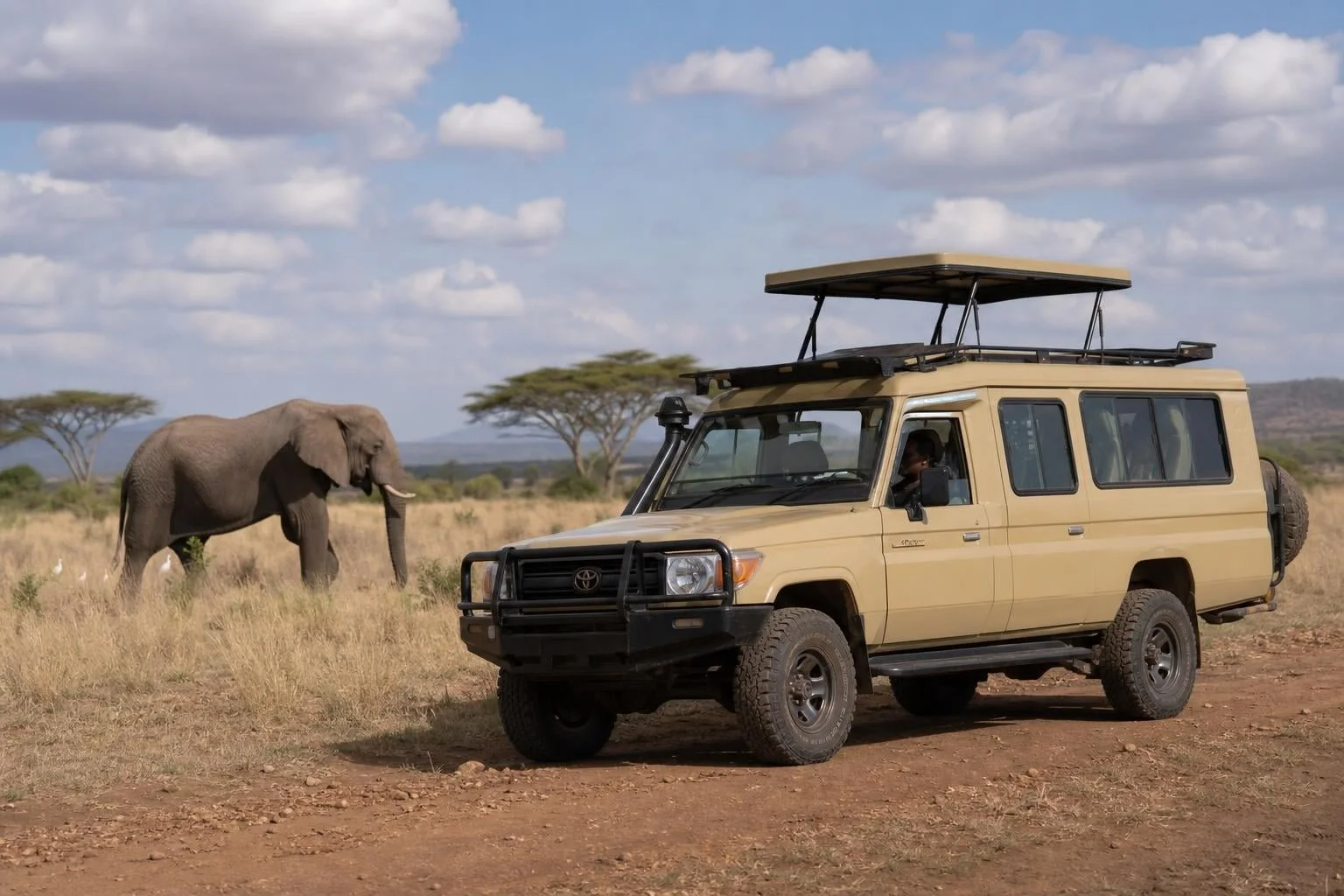
The standard safari vehicle across East Africa. These are enclosed 4WD Toyota Land Cruisers fitted with a pop-up roof that passengers raise during game drives for standing, viewing, and photography. The sides stay closed, with large windows that can be opened at sightings. Typically seats six to seven passengers plus a driver-guide.
Pop-top Land Cruisers dominate in Tanzania because game drives often involve long distances on tarmac and dirt roads between parks like Serengeti, Ngorongoro, and Tarangire. The vehicles offer air conditioning and onboard refrigerators for comfort during multi-hour transfers. They also provide great vantage points for photography when the roof is up.
Where used: Tanzania, Kenya (national parks), Uganda, Rwanda
Best for: Multi-park itineraries with long driving days, cold-weather highland drives, travelers who want protection from dust and wind between sightings
Typical capacity: 6 to 7 passengers
Practitioners on TripAdvisor forums offer a useful perspective on these vehicles. One experienced safari-goer noted that a closed vehicle lets you shut out dust and wind on transfers and open up when it counts, while in a fully open vehicle you’re exposed the entire journey. “Over several days, that difference adds up.”
There’s a catch, though. A 6’5" traveler reported on TripAdvisor that he dislikes pop-top vehicles because “the top of the side windows on all of these vehicles are below my eye line. Meaning I have to slouch, crouch forward, or bend my neck down to see.” If you’re tall, this is worth raising with your operator before departure.
Electric Safari Vehicle (EV)
A growing category of safari vehicles in Africa. Electric safari vehicles are converted diesel Land Cruisers or purpose-built EVs that run on battery power, producing almost no noise. They are noticeably quieter than vehicles with combustion engines, which means closer wildlife encounters without the rumble of a diesel motor.
Natural Habitat Adventures began converting older diesel Land Cruisers in Botswana’s Okavango Delta starting in late 2021, bringing their first EV fully online in 2023. The technology is moving beyond small-scale pilot projects as reduced conversion costs and rising fuel prices accelerate adoption.
Where used: Select luxury lodges in Botswana, South Africa, Kenya
Best for: Wildlife photography (silent approach), eco-conscious travelers, luxury safari experiences
Current limitation: Primarily available at high-end properties, with higher per-vehicle costs than diesel equivalents
Extended Land Cruiser
A Toyota Land Cruiser with a chassis extension that stretches the body to accommodate more passengers and features. The extension allows the originally five-seat vehicle to carry six passengers (excluding the driver-guide) while adding larger windows, USB charging points, a cooler box or fridge, and extra legroom. This is the most common premium safari vehicle in Tanzania and Kenya.
Where used: Tanzania, Kenya
Best for: Private safaris, families, anyone prioritizing interior space and comfort
Game Viewer (Open-Sided 4x4)
The standard safari vehicle in Southern Africa. Open-sided game viewers are typically Land Cruisers or Land Rovers with no doors, no enclosed windows, and tiered bench seating that rises from front to back (theatre-style). Most seat six to eight passengers. Some feature a tracker seat mounted on the front bumper.
Open vehicles are the norm in Southern Africa because camps and lodges are generally located within private concessions rather than along public roads. You’re never driving on highways, so there’s no legal or safety requirement for enclosed bodywork.
Where used: Botswana, South Africa (private reserves like Sabi Sand, Timbavati), Zambia, Zimbabwe, Namibia, and Kenya’s private conservancies (Mara North, Ol Pejeta)
Best for: Photography (unobstructed sightlines on all sides), feeling immersed in the bush, Southern African safaris
Typical capacity: 6 to 8 passengers
A TripAdvisor contributor with experience in both vehicle types offered this nuance: for general safari enjoyment, the stepped theatre-style seating with a canopy roof is best. But for serious photography, the optimal setup is “the coach body with pop-top with most of the sides removed.” That distinction matters if photography is your primary goal.
Not everyone prefers open vehicles, though. Another forum contributor with bad knees found pop-top vehicles “more comfortable for me getting in and out” while finding “the open-sided vehicles less comfortable for sitting for hours.” Physical comfort is personal, and there’s no universal winner.
Horseback Safari
Guided game viewing on horseback through wildlife areas. Horses allow closer approaches to certain species (zebra, giraffe, antelope) because the animals perceive the horse-and-rider silhouette differently than a vehicle. Riders typically need intermediate experience or better.
Where used: Private conservancies in Kenya (Laikipia, Masai Mara), Botswana (Okavango Delta), South Africa (Waterberg)
Best for: Experienced riders seeking a unique, intimate bush experience
Land Cruiser 70 Series (76, 78, 79)
The backbone of the African safari industry. In Kenya’s tourism sector, the Toyota Land Cruiser 70 Series is the gold standard for safari operations. Often called the “workhorse,” it is designed for extreme durability and off-road performance.
-
76 Station Wagon: The most common converted safari vehicle. Solid axles, leaf-spring suspension, available with pop-top roof modifications.
-
78 Hardtop (Troopcarrier): A longer body designed for larger groups or family safaris with ample seating and storage space. Popular for group safari transfers.
-
79 Single/Double Cab: Pickup configuration sometimes used for supply logistics or as a base for custom safari builds with open rear seating.
These models run on diesel, carry fuel tanks of approximately 130 liters, and are serviceable at bush mechanics across the continent. Parts availability is a key reason operators choose Toyota over other brands.
Land Rover Defender
The classic British alternative to the Land Cruiser. Defenders are common in Southern African safari fleets, particularly in South Africa, Botswana, and Zimbabwe, where they serve as open-sided game viewers. The Defender’s boxy frame and solid axles make it capable off-road, though spare parts can be harder to source in East Africa, which is why Toyota dominates there.
Where used: South Africa, Botswana, Zimbabwe, Zambia
Best for: Open-vehicle game drives in Southern African private reserves
Mokoro (Makoro)
A traditional dugout canoe used in the Okavango Delta and along the Chobe River in Botswana. The mokoro is propelled through shallow water by a poler who stands in the stern and pushes against the riverbed with a long pole. Each mokoro carries two passengers plus the poler.
Traditionally carved from single tree trunks (ebony, sausage tree), modern mokoros are increasingly made from fiberglass to help preserve large trees. The experience is utterly silent, which means close encounters with elephants, hippos, and water birds.
Where used: Okavango Delta (Botswana), occasionally Chobe River
Best for: Quiet, intimate water-level wildlife viewing paired with open-vehicle game drives on islands
Overland Truck
Among the largest safari vehicles in Africa. Overland trucks are purpose-built expedition vehicles designed for long journeys over rough roads, carrying 12 to 30 passengers on multi-country camping trips. They feature elevated seating with large windows, storage lockers underneath, and often a built-in kitchen area.
Where used: Pan-African routes (Cape Town to Nairobi, East Africa circuits, Southern Africa loops)
Best for: Budget-conscious travelers, young travelers on extended trips, anyone prioritizing social travel over exclusivity
Trade-off: Less flexibility than private vehicles, fixed itineraries, less intimate wildlife viewing due to vehicle size
Photography Vehicle
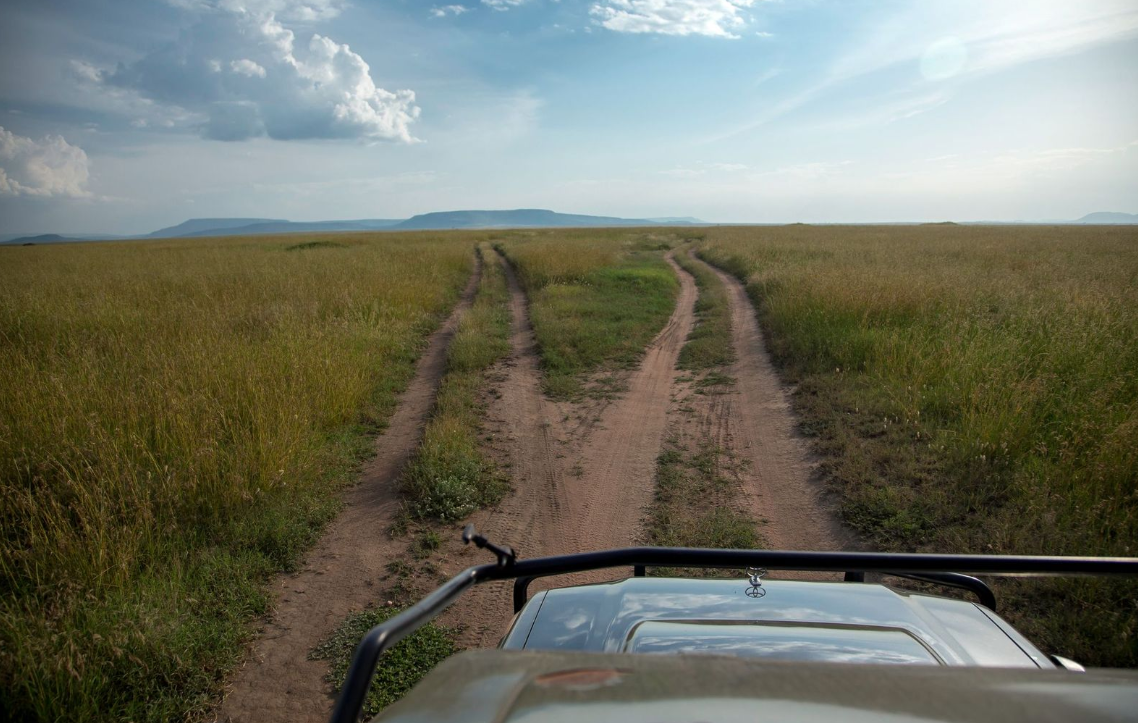
A modified safari vehicle specifically outfitted for wildlife photography. Modifications include camera bean-bag rests or clamp mounts on window ledges, extra-large roof hatches (sometimes the entire roof removed), and limited passenger numbers (often capped at three or four) so each photographer gets a full side of the vehicle.
Some operators in Kenya’s Masai Mara and Tanzania’s Serengeti offer dedicated photography vehicles with professional guides who understand positioning for light, background, and animal behavior.
Where used: Kenya, Tanzania, South Africa, Botswana
Best for: Serious photographers willing to pay a premium for unobstructed shooting positions and guides who think in terms of f-stops, not just species identification
Safari Minibus / Van (Toyota HiAce)
The budget option for safari vehicles in Africa, mainly in Kenya. The Toyota HiAce van is modified with a pop-up roof for game viewing. It typically seats six to eight passengers and costs approximately $100 per day less than a Land Cruiser.
The trade-offs are real. Minibuses sit lower to the ground, lack four-wheel drive, and struggle on rough terrain. On Tanzania’s infamous black cotton soil after rain, a minibus can get stuck where a Land Cruiser pushes through. Windows are smaller, and the interior feels more cramped.
Where used: Kenya (national parks and reserves), some budget operators in Tanzania
Best for: Budget-conscious travelers on well-maintained park roads
Not recommended for: Rainy-season safaris, off-road-heavy itineraries, photography-focused trips
Self-Drive Safari Vehicle
A rental 4x4 (usually a Toyota Hilux, Land Cruiser Prado, or Suzuki Jimny) that you drive yourself through national parks and reserves. Self-drive safaris give you complete control over timing, route, and stops.
Where used: Most popular in Namibia (Etosha, Sossusvlei) and South Africa (Kruger). Possible but less common in Tanzania (Serengeti, Ngorongoro require robust vehicles and navigation confidence).
Best for: Independent travelers, road-trip enthusiasts, repeat visitors who know the parks
Practical note: You lose the guide’s animal-tracking expertise. In big parks, that knowledge is the difference between seeing a leopard and driving past one hidden in a sausage tree.
Walking Safari
On-foot game viewing with an armed professional guide. Walking safaris strip away the vehicle entirely, putting you at ground level with wildlife. Professional walking guides are highly trained, including in rifle use (purely for safety), and follow established protocols: pre-walk safety briefings, single-file movement, and clear hand signals for communication.
Where used: Zambia (South Luangwa, birthplace of the walking safari), Tanzania (Serengeti, Ruaha, Nyerere), Zimbabwe (Mana Pools), South Africa (Kruger wilderness trails)
Best for: Experienced safari-goers seeking a deeper, more sensory bush experience
For more on staying safe in the bush, see this guide to safari safety rules and tips.
Key Vehicle Features: A Quick-Reference Glossary
Bull Bar
A heavy-duty metal guard mounted on the front of the vehicle. It protects the radiator and engine bay from impacts with animals, fallen branches, or rocks. Standard on virtually all safari vehicles in Africa.
Cooler Box vs. Onboard Fridge
Some vehicles carry a passive cooler box (ice required), while higher-end vehicles have a 12V electric fridge powered by the vehicle’s battery. On a hot day in Amboseli or the Serengeti, cold water versus lukewarm water is a bigger deal than it sounds. Ask your operator which they provide.
Pop-Up / Hatch Roof
The signature feature of closed-body safari Land Cruisers. The roof section can be raised during game drives, allowing passengers to stand up and enjoy unobstructed 360-degree views. When lowered, it seals the cabin against dust, rain, and cold. This single modification is what makes an enclosed vehicle viable for game viewing.
Raised Air Intake (Snorkel)
A tube that extends the engine’s air intake to roof height. It prevents water from flooding the engine during river crossings and reduces dust ingestion on dry trails. Essential for off-road vehicles operating in areas with seasonal flooding.
Roof Rack
Mounted on top of the vehicle for securing luggage, spare fuel jerry cans, and sometimes a spare tire. On extended safari routes between parks, roof racks free up interior space for passenger comfort. Soft bags are preferred over hard suitcases because they compress and fit more easily.
Don’t forget that what you pack affects how well it fits on the rack. Soft duffel bags are the universal recommendation.
Tiered / Theatre-Style Seating
Rows of bench seats that rise progressively from front to back, so every passenger sees over the heads of those in front. This is standard on open-sided game viewers in Southern Africa and ensures everyone gets a clear sightline to animals.
Tracker Seat
A specialized bucket seat bolted to the front bumper of open-sided game viewers, positioned ahead of and below the driver. The tracker sits here, watching the road surface for fresh tracks and spoor, and communicates findings to the driver-guide through hand signals. This role is unique to Southern African safari traditions.
USB / Charging Ports
Now standard on most quality safari vehicles. Multiple USB ports or 12V outlets let passengers charge cameras, phones, and power banks during drives. On multi-day safaris where lodge generator hours are limited, in-vehicle charging becomes essential.
VHF / Two-Way Radio
Mounted in the dashboard or clipped to the guide’s belt. The VHF radio lets the guide communicate with park officials and other guides to share recent sightings. When a leopard appears on a kopje, word travels fast across radio channels. This is one of the most valuable tools for maximizing your game viewing.
Window-Seat Guarantee
A booking-stage detail that matters more than people expect. Reputable operators cap passengers at six per vehicle so that everyone gets a window seat. The back-row bench seat is the bumpiest ride, so experienced travelers rotate rows each game drive to share the different vantage points. Always ask your operator about maximum occupancy before you book.
Country-by-Country Safari Vehicle Guide
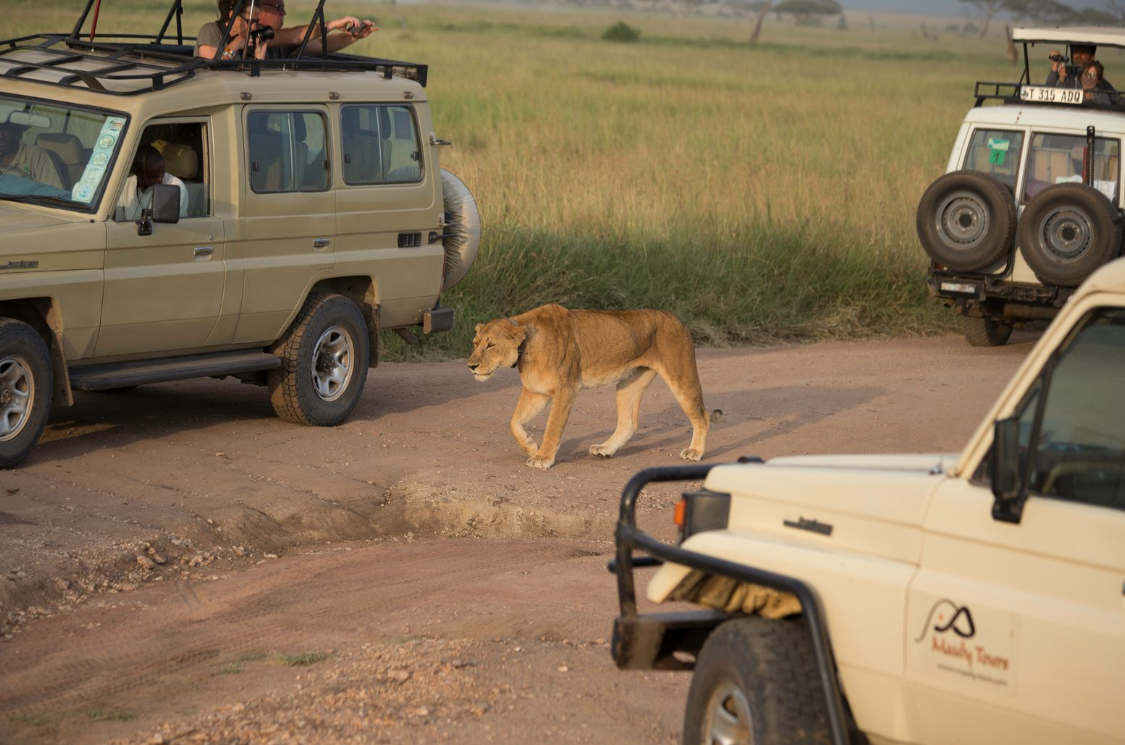
The safari vehicle you ride in is determined more by where you’re going than by what you prefer. Park regulations, road conditions, and concession structures all dictate vehicle type.
Tanzania
Pop-top Land Cruisers are the standard across all northern circuit parks (Serengeti, Tarangire, Lake Manyara, Ngorongoro). Open-sided vehicles are specifically banned in the Ngorongoro Crater and on all public roads between parks. This is partly a safety regulation (cheetahs and other predators have been known to jump onto vehicles) and partly a practical one (you’re driving on tarmac highways shared with trucks and buses).
If you’re comparing private versus group safari options, know that vehicle allocation changes significantly between the two. Private safaris mean a dedicated vehicle; group safaris mean shared seating.
Kenya
Three main safari vehicle types operate in Kenya: the Toyota Land Cruiser (closed-side, for road travel and national park game drives), the Toyota HiAce safari van (budget option), and the open-sided game viewer. Open vehicles are permitted in private conservancies like Mara North and Ol Pejeta but not in national parks like Amboseli or Lake Nakuru. The price gap between a minivan and a Land Cruiser is roughly $100 per day.
Uganda & Rwanda
Pop-top Land Cruisers serve as transfer vehicles to gorilla trekking starting points. The terrain is hilly and roads can be rough, so smaller, more agile 4x4s sometimes replace full-size Land Cruisers. Once you begin the trek itself, you’re on foot. Learn more about gorilla trekking in Uganda and Rwanda.
Botswana
A combination of open-sided game viewers for land-based drives and mokoros for water-based game viewing in the Okavango Delta. Many lodges also offer boat safaris on deeper channels. Botswana’s safari model is low-volume, high-value, so vehicles are well-maintained and passenger counts are low.
South Africa
Open game viewers dominate in private reserves adjacent to Kruger (Sabi Sand, Timbavati, Manyeleti). Inside Kruger National Park itself, self-drive is the most common option, using rental 4x4s or sedans on paved and gravel roads. Guided drives in open vehicles are available through Kruger rest camps but must be booked separately.
Zanzibar & the Swahili Coast
Minivans for road transfers, dhows (traditional sailing boats) for island-hopping and snorkeling excursions, and speedboats for reef trips. No traditional game-drive vehicles here, though nearby Saadani National Park offers Land Cruiser game drives combined with boat safaris.
Best Safari Vehicle for Different Types of Travelers
|
Traveler |
Recommended Vehicle |
|---|---|
|
First safari |
Pop-top Land Cruiser |
|
Wildlife photographer |
Photography Vehicle |
|
Family |
Closed Land Cruiser |
|
Seniors |
Closed Land Cruiser |
|
Budget traveler |
Safari Minibus |
|
Luxury safari |
Open Game Viewer |
|
Solo traveler |
Shared Land Cruiser |
|
Birdwatcher |
Boat Safari |
|
Adventure traveler |
Mokoro + Walking Safari |
How to Choose the Right Safari Vehicle
Let the Destination Decide
The most important thing to understand about safari vehicles in Africa is this: the park dictates the vehicle, not your personal preference. If you’re visiting the Ngorongoro Crater, you’re in a closed pop-top Land Cruiser. If you’re in Sabi Sand, you’re in an open game viewer. Knowing this up front prevents disappointment.
Match Vehicle to Purpose
Photography priority: Open-sided game viewers with tiered seating give the best unobstructed views. In East Africa where closed vehicles are mandatory, request a vehicle with a large pop-top hatch and ask about maximum passenger count (fewer passengers means more room to position yourself).
Family with young children: Closed vehicles are safer and more practical. Doors that lock, windows that close, air conditioning for cranky toddlers. For family-specific advice, see this guide to family safaris in Africa.
Budget: Safari minibuses are the cheapest option in Kenya. Land Cruisers cost more but handle terrain better. Fly-in safaris with open game viewers at private lodges sit at the premium end.
Mobility concerns: Travelers with bad knees or limited mobility often find pop-top Land Cruisers easier to board (step up into a seat) than open game viewers (climb up tiered benches). There’s more detail in this guide to accessible safari options for seniors.
Tall travelers: If you’re over 6 feet, closed vehicles may feel restrictive. The window line can sit below eye level, forcing you to crouch for side views. Ask your operator about window height and headroom before booking.
Questions to Ask Your Operator Before Booking
No competing guide includes this, so here’s a checklist drawn from real traveler experiences shared on forums:
-
What vehicle model and year will be used? Older vehicles break down more often. A 2018 Land Cruiser and a 2008 Land Cruiser are very different experiences.
-
What is the maximum number of passengers? If the answer is more than six or seven, you may not get a window seat.
-
Does everyone get a window seat? Ask directly.
-
Fridge or cooler box? Matters on hot-weather safaris.
-
Are USB charging ports available? Critical for camera batteries and phones.
-
How many spare tires does the vehicle carry? Two is standard for remote-area safaris. One is a risk.
-
Will the same vehicle stay with us between parks, or will we switch? Consistency means your gear stays settled.
-
Is the guide also the driver, or are they separate roles? In Southern Africa, a dedicated tracker plus driver-guide is common. In East Africa, one person typically fills both roles.
Skipping these questions is one of the most common safari booking mistakes travelers make.
Choosing Your Safari and Vehicle with Confidence
The vehicle is not a minor detail. It’s the platform for every wildlife sighting, every photograph, and every hour of your day in the bush. Now that you understand what each type of safari vehicle in Africa offers, the differences between regions, and the features that matter, you’re equipped to have a much more productive conversation with any operator.
If you’re planning a Tanzania safari and want a dedicated, well-maintained Land Cruiser with a knowledgeable guide, explore private Tanzania safari options to see how custom itineraries come together.
Frequently Asked Questions
What is the most common safari vehicle in Africa?
The Toyota Land Cruiser 70 Series with a pop-up roof is the most widely used safari vehicle across East Africa. In Southern Africa, open-sided Land Cruisers and Land Rover Defenders with tiered seating are the standard. The vehicle you encounter depends almost entirely on which country and park you visit.
Are open or closed safari vehicles better?
Neither is universally better. Open-sided game viewers provide unobstructed views and a more immersive experience, making them preferred for photography and bush atmosphere. Closed pop-top vehicles offer protection from dust, wind, and cold on long transfer drives, and are legally required in most East African national parks. Your destination determines which you’ll use.
Why can’t I use an open vehicle in the Ngorongoro Crater?
Tanzania’s park regulations prohibit open-sided vehicles in the Ngorongoro Crater and on public roads for safety reasons. Predators, particularly cheetahs, have been known to jump onto vehicles. The regulation also reflects the reality that you’re sharing tarmac roads with commercial traffic when driving between parks.
How many people fit in a safari vehicle?
Pop-top Land Cruisers typically seat six to seven passengers. Open-sided game viewers seat six to eight. Safari minibuses hold six to eight. Overland trucks carry 12 to 30. The key number to ask about is maximum passengers per vehicle, because that determines whether everyone gets a window seat and adequate personal space.
Are electric safari vehicles available?
Yes, though availability is limited to select luxury properties in Botswana, South Africa, and Kenya. The first fully operational electric converted Land Cruiser came online in 2023 in Botswana’s Okavango Delta. The technology is expanding as conversion costs decrease, but for now, expect to find EVs primarily at premium lodges.
Should I choose a Land Cruiser or a minibus for a Kenya safari?
If your budget allows, choose the Land Cruiser. It handles rough terrain with higher ground clearance, four-wheel drive, and more power for muddy or rocky conditions. The price difference is roughly $100 per day, but the comfort and reliability difference, particularly in rainy season, is substantial.
What is a tracker seat on a safari vehicle?
A tracker seat is a bucket seat mounted on the front bumper of open-sided game viewers in Southern Africa. A specialist tracker sits here, reading the ground for fresh animal tracks and spoor, then communicates findings to the driver-guide through hand signals. This role significantly increases your chances of finding predators and rare species.
Can I do a self-drive safari in Africa?
Yes, most commonly in Namibia (Etosha, Sossusvlei) and South Africa (Kruger National Park). Self-drive is possible in parts of Tanzania and Kenya but requires a capable 4x4, confidence on unpaved roads, and acceptance that you’ll miss sightings a trained guide would catch. For first-time visitors, a guided safari almost always delivers better wildlife encounters.