

Family Safari Zanzibar: Complete A–Z Planning Guide 2026
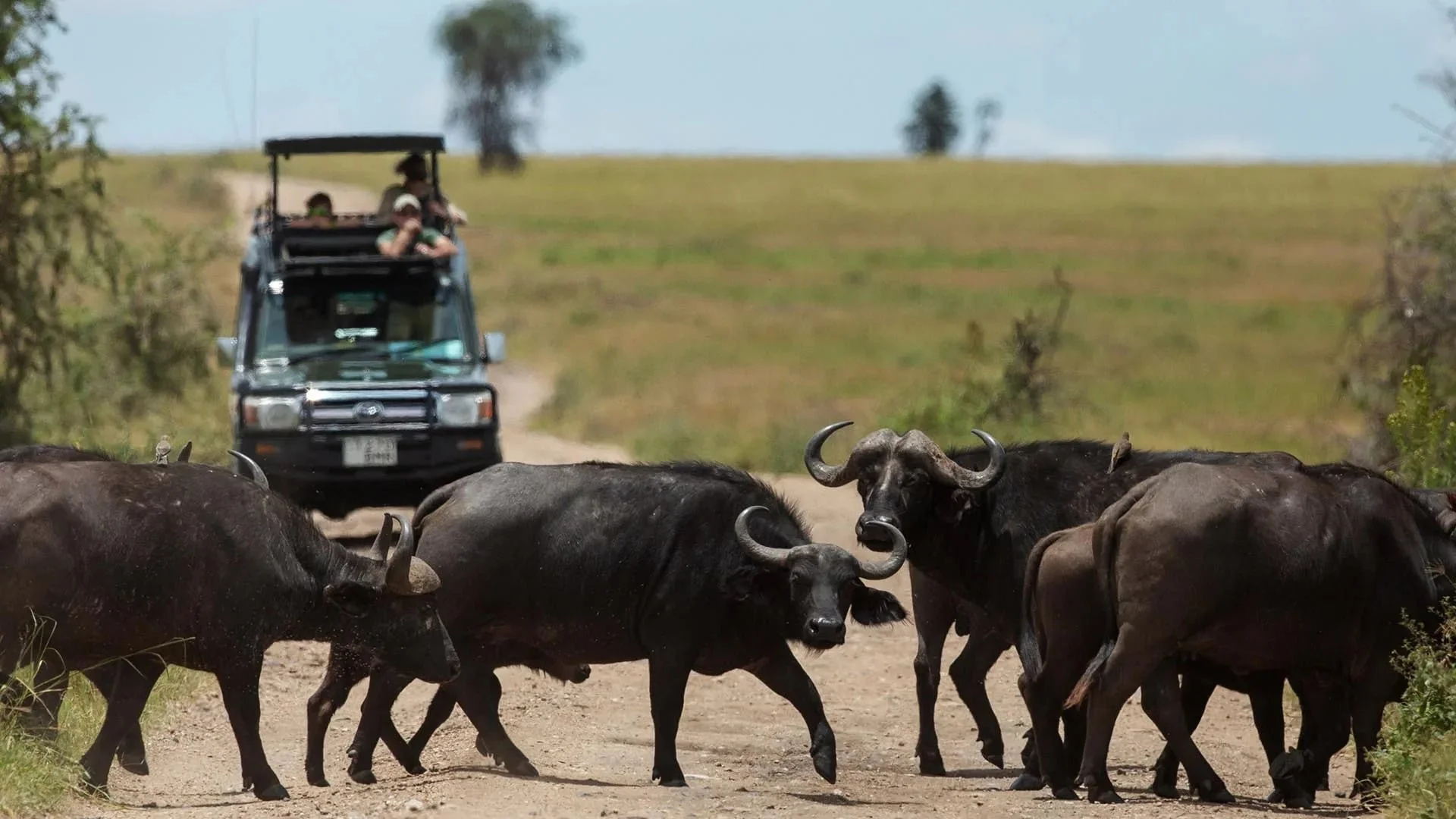
A family safari Zanzibar trip combines mainland Tanzania wildlife parks (Serengeti, Ngorongoro, Tarangire) with a Zanzibar beach extension, typically running 10 to 14 days. Most families do bush first, beach second. This glossary defines the key terms, age restrictions, logistics, and planning concepts parents encounter when putting this combination trip together.
A family safari in Tanzania combined with a Zanzibar beach holiday gives parents and children the chance to experience African wildlife, explore local culture, and relax by the Indian Ocean in one trip. Most itineraries need around 10 to 14 days, including five to six nights on safari and four to five nights in Zanzibar, plus travel time.
The best itinerary depends on your children's ages, travel dates, budget, and preferred pace. Families with younger children often benefit from shorter game drives, a private safari vehicle, and fewer camp changes. Older children and teenagers may enjoy longer wildlife excursions, snorkeling, and cultural activities.
This guide explains the key terms, age restrictions, transport arrangements, accommodation choices, health precautions, and costs involved in planning a family safari and Zanzibar beach holiday. Use it as a practical reference before booking your flights, safari camps, and beach accommodation.
For a trip tailored to your family, explore Duma Explorer's private family safari planning guide.
What Is a Family Safari in Zanzibar? A family safari in Zanzibar usually combines a wildlife safari in mainland Tanzania with a beach holiday on Zanzibar Island. Families typically spend five to six nights exploring parks such as Tarangire, Ngorongoro, and the Serengeti, followed by four to five nights enjoying Zanzibar's beaches and family-friendly activities. A total trip of 10 to 14 days allows time for wildlife viewing, transfers, and relaxation.
Family Safari Zanzibar: Planning at a Glance
|
Planning factor |
Practical starting point |
|---|---|
|
Recommended trip length |
10–14 days, including travel time |
|
Safari duration |
Around 5–6 nights |
|
Zanzibar beach stay |
Around 4–5 nights |
|
Parks to consider |
Tarangire, Ngorongoro, and the Serengeti |
|
Best travel periods to compare |
June–October and December–February |
|
Safari transport |
Private 4x4 vehicle or fly-in transfers, depending on budget |
|
Accommodation |
Family tents, connecting rooms, or family suites |
|
Zanzibar beach choice |
North coast for more reliable swimming; east coast for tidal exploration and selected water sports |
|
Health preparation |
Consult a travel health professional before departure |
|
Flights and luggage |
Check each airline's baggage allowance and soft-bag requirements |
|
Travel insurance |
Check the current mandatory insurance rules for your first point of entry into Tanzania |
|
Booking priority |
Confirm children's age restrictions and family-room availability before paying deposits |
These are planning guidelines rather than fixed rules. The best itinerary depends on your children's ages, the season, the camps' policies, and the activities your family wants to prioritize.
Sample 12-Day Family Safari and Zanzibar Itinerary
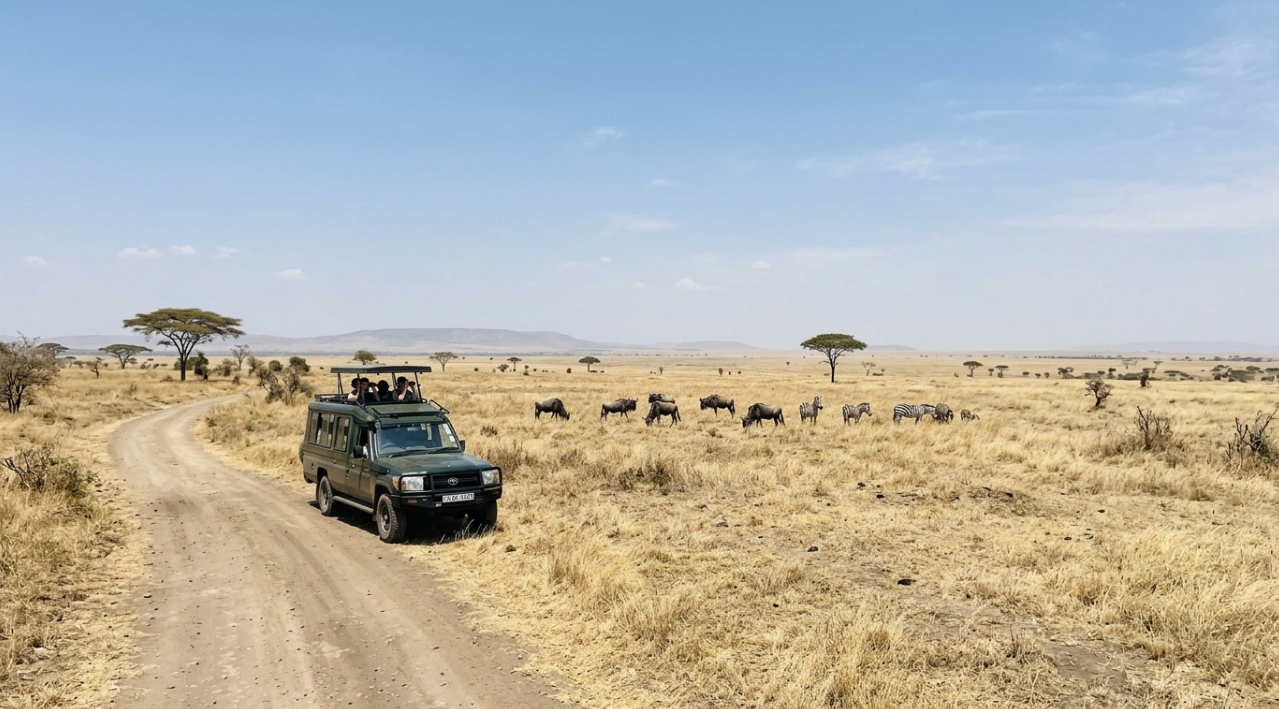
A 12-day itinerary gives families a practical starting point for combining wildlife viewing with beach time. This example prioritizes manageable travel days and a relaxed finish in Zanzibar. Actual routing depends on flight schedules, camp locations, and your children's ages.
|
Day |
Destination |
Suggested activity |
|---|---|---|
|
1 |
Arusha |
Arrive, meet your driver, and rest after the international flight |
|
2 |
Tarangire National Park |
Take a game drive focused on elephants and other wildlife |
|
3 |
Tarangire or nearby area |
Enjoy a shorter morning game drive and relaxed afternoon |
|
4 |
Ngorongoro Conservation Area |
Travel toward the crater region and stay near the crater rim or Karatu |
|
5 |
Ngorongoro Crater |
Explore the crater floor on a guided game drive |
|
6 |
Serengeti National Park |
Travel to the Serengeti by road or suitable flight connection |
|
7 |
Serengeti National Park |
Enjoy a morning game drive and a rest period at camp |
|
8 |
Serengeti to Zanzibar |
Transfer to the appropriate airstrip and connect to Zanzibar, subject to available flights |
|
9 |
Zanzibar |
Relax on the beach and recover from travel |
|
10 |
Zanzibar |
Choose a family-friendly boat excursion or guided island activity |
|
11 |
Zanzibar |
Visit Jozani Forest, take a spice tour, or enjoy a relaxed beach day |
|
12 |
Zanzibar |
Depart from Zanzibar Airport, allowing enough time for your international connection |
How to adapt this itinerary for children: For younger children, consider reducing the number of camp changes and choosing shorter game drives. For teenagers, additional Serengeti time may be worthwhile, particularly if wildlife migration is a priority. Families with limited time can simplify the mainland route rather than attempting to visit every major park.
Before booking, confirm the actual flight schedule between your safari destination and Zanzibar. Some routes operate seasonally or require connections.
What Is the Best Age for a Tanzania Safari and Zanzibar Holiday?
There is no single best age for every family. Younger children can enjoy a safari with the right transport, accommodation, and pacing, while older children have more options for longer game drives and water activities.
|
Children's age |
What to prioritize |
Planning considerations |
|---|---|---|
|
Under 3 |
Short outings, comfortable accommodation, and flexible rest periods |
Confirm camp policies, medical access, transport arrangements, and age-appropriate activities |
|
3–5 |
Short private game drives, easy wildlife viewing, and simple beach activities |
Check minimum ages at every camp and activity provider |
|
6–10 |
Wildlife-focused game drives, guided nature walks where permitted, and selected snorkeling trips |
A private vehicle provides flexibility when children need breaks |
|
11–15 |
Longer game drives, selected water sports, cultural activities, and age-appropriate adventure experiences |
Verify activity-specific age, swimming ability, and supervision requirements |
|
16+ |
A wider range of safari, walking, diving, and adventure options |
Check the rules for each activity and destination rather than assuming all activities are available |
Planning principle: Choose camps and activities based on each child's age, energy level, swimming ability, and interests. An age recommendation is not necessarily a legal minimum, and an operator's policy may be stricter than a park's rules.
Glossary A to Z
Age Brackets (Safari)
There is no universal minimum age for a Tanzania safari. Individual parks and camps set their own policies, which catches many parents off guard.
Key thresholds:
-
Vehicle game drives: No legal minimum under TANAPA. However, many luxury tented camps set a minimum of 6 or 8 for shared game drives. If your children are younger, you’ll need a private vehicle.
-
Hot air balloon safari: Minimum age 7, per TANAPA regulation.
-
Walking safari: Minimum age 16 under TAWA regulations. Some operators allow 12 and up for shorter guided walks, but this varies.
Why families care: If you’re traveling with children under 6, your park and camp selection narrows significantly. Tarangire and Ngorongoro Crater tend to work better than deep Serengeti camps for young kids. For a full breakdown by age group, the best age for safari guide covers this in detail.
Age Brackets (Zanzibar)
Ages 0 to 2 are doable but not ideal given malaria risk, limited medical infrastructure, and heat. Ages 6 to 10 are the sweet spot: old enough to snorkel, handle a boat trip, and absorb a spice tour. Teenagers (11 and up) get more from diving courses, kitesurfing, and independent Stone Town exploration.
The Zanzibar family travel glossary breaks this down in granular detail by activity.
Balloon Safari
A hot air balloon flight over the Serengeti, typically launching at dawn and lasting about an hour. The experience includes a champagne bush breakfast after landing. The minimum age is 7. Children must be able to stand and brace in the basket during landing, which can be bumpy.
Why families care: This is often the single most memorable moment of a safari trip, but it’s not cheap (roughly $500 to $600 per person) and younger siblings will need to stay behind at the lodge with a babysitter or parent.
Bush-to-Beach
The standard travel pattern for a family safari Zanzibar combination: safari first, beach second. The logic is simple. Early-morning game drives, bumpy roads, and constant movement are exhausting for kids (and adults). Zanzibar provides the reset everyone needs before flying home.
Practitioners on Reddit and family travel forums consistently recommend this sequence. One family travel blogger noted that trying beach-first, safari-second left their kids too wiped out to enjoy the wildlife. The safari-first approach also means you fly from safari airstrips directly to Zanzibar rather than backtracking to Arusha.
A well-paced trip runs 10 to 12 days total: five to six nights on safari followed by four to five on the beach. One Duma Explorer reviewer (Janice K., 2025) described a 10-day family safari for four and would “heartily recommend” the experience, which aligns with this standard pacing.
Bush Flight
A domestic flight on a small propeller aircraft (typically 12 to 14 seats) connecting remote safari airstrips with Kilimanjaro or Arusha airports, and from there to Zanzibar. Operators like Coastal Aviation and Auric Air run these routes.
Critical for families: Luggage limits are strict, usually 15 to 20 kilograms per person in soft-sided bags only. Hard-shell suitcases are not permitted. With kids, you’re packing for two completely different climates (cool bush mornings, tropical beach days), so this requires genuine discipline. Roll clothes tightly. Ship anything non-essential home. See the family safari packing list for practical guidance.
Changuu Island (Prison Island)
A small island roughly 20 minutes by boat from Stone Town. The main draw for families is the colony of Aldabra giant tortoises, some over 100 years old. Kids can feed and touch them under supervision. The surrounding waters are calm enough for short swims.
This is one of the most reliable half-day outings for all ages. Even toddlers enjoy the tortoises, and the boat ride is short enough to avoid seasickness.
Coastal Aviation / Auric Air
The two primary domestic carriers connecting safari airstrips to Zanzibar. Flights typically take one to two hours. Expect small aircraft, open seating, and potentially multiple stops at bush airstrips.
Why families care: Booking these flights early matters during peak season (July to October). A missed connection can mean an unplanned night in Arusha. An experienced operator coordinates these transfers so you don’t have to worry about the handoff.
Another Duma Explorer reviewer (Mike R., 2026) described seamless handling “from the moment we landed at Kilimanjaro until we departed from Zanzibar Airport,” noting that previous operators on earlier safaris didn’t compare. That bush-to-beach handoff is precisely where trip coordination makes or breaks a family holiday.
Connecting Flights
A connecting flight is a journey that requires passengers to transfer between two or more flights before reaching their destination. On a Tanzania safari and Zanzibar holiday, families may need to connect from an international arrival airport to a domestic safari flight, or travel from a remote airstrip to Zanzibar.
Why families care: Short connections can be stressful when traveling with children, particularly if flights are delayed or baggage must be transferred between carriers. Check whether your tickets are issued on one itinerary, whether baggage is transferred automatically, and how much time is available between flights.
Whenever possible, leave a comfortable buffer between separate flight bookings and avoid scheduling a long game drive immediately before an important international departure.
Dhow Cruise
A sailing trip on a traditional wooden vessel (dhow) used in Zanzibar for centuries. Sunset dhow cruises from Stone Town or Nungwi are popular family outings, usually lasting two to three hours. Some include snorkeling stops.
Family suitability: Good for kids 5 and up who can sit reasonably still on a boat. Younger children may find the limited shade and movement challenging. Ask about life jacket availability for children before booking.
Which Zanzibar Beach Is Best for Families?
The best Zanzibar beach for a family depends on whether you prioritize swimming throughout the day, quieter surroundings, water sports, or exploring the coastline at low tide. The north and east coasts offer different experiences, so choose accommodation based on your family's preferred activities rather than photographs alone.
|
Factor |
North Coast: Nungwi and Kendwa |
East Coast: Paje, Jambiani, and Matemwe |
|---|---|---|
|
Tides |
Generally less exposed to dramatic tidal retreat, though local conditions vary |
Often experiences more pronounced tidal changes |
|
Swimming |
A practical choice for families who want more consistent beach access |
Swimming conditions depend more on the location, tide, and reef |
|
Activities |
Beach time, boat excursions, and selected water sports |
Tidal-flat exploration, snorkeling excursions, and kitesurfing in suitable conditions |
|
Atmosphere |
Ranges from lively resort areas to quieter stretches |
Ranges from peaceful villages to activity-focused beach areas |
|
Family considerations |
Check swimming conditions, currents, and resort facilities |
Check tide tables, reef access, and how far the water retreats |
How to Choose
-
For families with young children: Prioritize easy beach access, a suitable swimming area, shade, and accommodation with appropriate facilities.
-
For families with older children: ConsJozani Forestider snorkeling trips, boat excursions, or water sports that match the children's swimming ability and age.
-
For families seeking a quieter stay: Compare individual properties and nearby villages rather than assuming the entire coast has the same atmosphere.
Tidal conditions differ by location and date. Check local tide tables and follow lifeguard or boat-operator advice before swimming or participating in water activities.
For additional destination information, consult the Zanzibar Commission for Tourism.
Family Room / Family Tent
Accommodation configurations designed for parents traveling with children. On safari, this might mean a large tent with an additional cot or a connected tent for older kids. In Zanzibar resorts, family rooms typically include a separate sleeping area or an interconnecting door.
Why families care: Availability varies enormously. Many premium safari camps have only one or two family-configured tents, so these book out months in advance during high season. If you’re traveling with children under 12, confirm family room availability before finalizing any camp.
For larger groups, the safari for large families planning guide covers accommodation logistics for five or more travelers.
Fly-in Safari
A safari where you fly between parks and camps rather than driving. Instead of spending five hours on the road from Arusha to the Serengeti, you take a 90-minute bush flight.
Why families care: Fly-in safaris dramatically reduce travel time, which matters enormously with kids. Less time on bumpy roads means better moods, more energy for game drives, and fewer “are we there yet” moments. The trade-off is cost: fly-in itineraries run significantly more than road-based alternatives. For a family of four, the premium can be $3,000 to $6,000 depending on the route.
Game Drive Duration
How long a single game drive lasts. Standard game drives run three to four hours (morning: roughly 6:30 to 10:00 a.m., afternoon: roughly 3:30 to 6:30 p.m.). Full-day drives with a packed lunch can run six to eight hours.
Age-based guidance: For children under 7, two hours is plenty. One or two good animal sightings will create more lasting excitement than a six-hour circuit that ends in tears. For kids 7 to 12, a standard three-hour morning drive works well. Teenagers can handle full-day drives, especially during the Great Migration.
This is one of the strongest arguments for a private vehicle: you control when you go back.
Choosing between a north coast resort and an east coast escape, or deciding how many safari days work for a 6-year-old, is easier with an operator who builds family itineraries regularly. Duma Explorer’s trip designers can walk you through the trade-offs.
Inbound Travel Insurance (Zanzibar)
Effective October 1, 2024, all foreign visitors to Zanzibar must purchase mandatory travel insurance from the Zanzibar Insurance Corporation before arrival. Travelers without this insurance will be refused entry.
Cost breakdown for a typical family of four (two adults, two children aged 5 and 8):
|
Traveler |
Cost |
|---|---|
|
Adult 1 |
$44 |
|
Adult 2 |
$44 |
|
Child (age 5) |
$22 |
|
Child (age 8) |
$22 |
|
Family total |
$132 |
Children under 2 are free. The insurance is valid for 92 days and covers multiple stays within that period. For broader travel insurance considerations, see the Tanzania travel insurance guide.
[FACT CHECK REQUIRED: The purchase process and enforcement details for Zanzibar mandatory insurance continue to evolve. Verify current procedures before publication.]
Jozani Forest
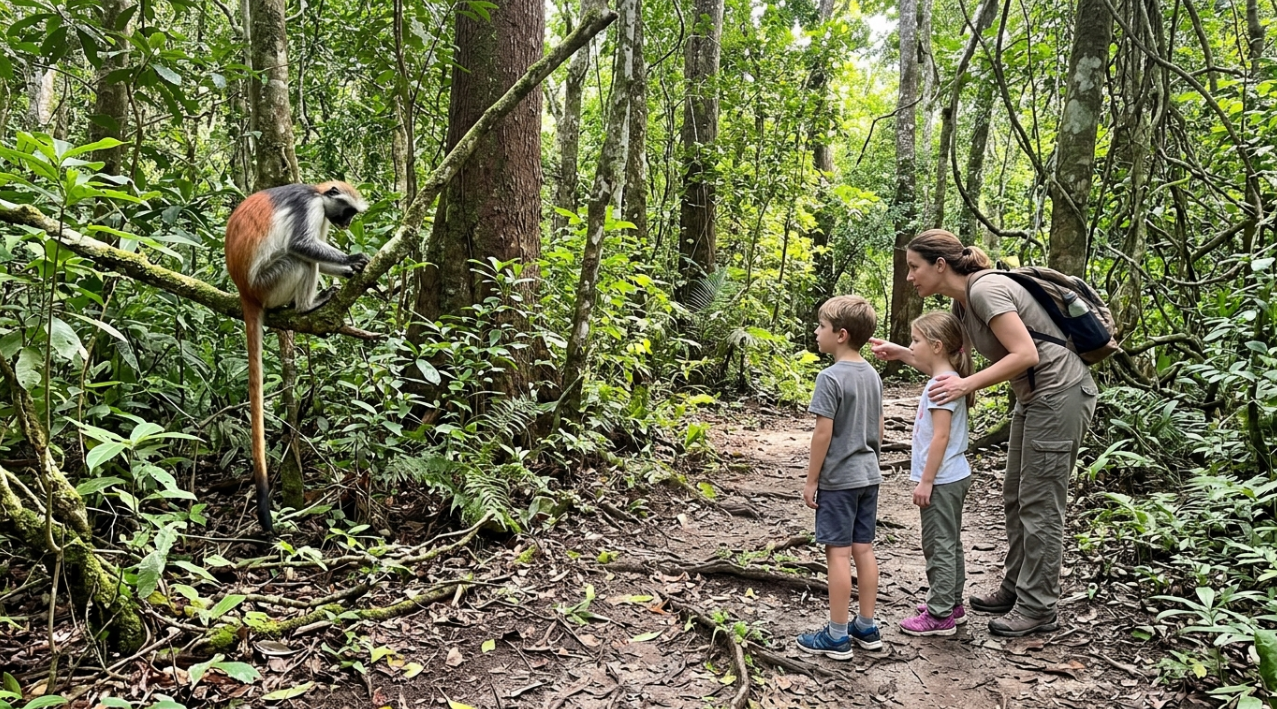
Zanzibar’s only national park, home to the endemic Zanzibar red colobus monkey. Tours are easy-paced and educational, typically lasting one to three hours along a boardwalk through mangrove forest.
Why families care: This is one of the few Zanzibar activities that works for every age. Toddlers in carriers, school-age kids, teenagers. The monkeys are habituated to visitors and often come within a few meters, making it reliable for photos and genuine wildlife engagement. A useful bridge between the safari half of the trip and the beach half. The Zanzibar day trips guide covers logistics and timing.
Kendwa Beach
A north coast beach adjacent to Nungwi with minimal tidal variation, making it one of the best swimming beaches in Zanzibar for families. Kendwa tends to be slightly quieter than Nungwi, with a handful of resort properties and beachfront restaurants.
Family pros: Swimmable at all tide levels. Sandy bottom without the rock and coral that characterizes parts of the east coast. Several resorts here accept young children, though facilities vary.
Kids’ Club
On-site supervised childcare programs at some larger Zanzibar resorts. These typically accept children ages 3 to 12 and run structured activities (crafts, beach games, local storytelling) for a few hours each day.
Notable resorts with kids’ clubs include Baraza Resort & Spa, Meliá Zanzibar, The Residence Zanzibar, and Gold Zanzibar Beach House & Spa.
Why families care: Kids’ clubs give parents a few hours of downtime during the beach portion of the trip, which is especially welcome after the intensive pace of the safari days. Most safari camps do not have kids’ clubs, so this is a Zanzibar-specific benefit.
Malaria Prevention and Travel Health
Malaria prevention is an important part of planning a family safari in Tanzania and a Zanzibar beach holiday. The CDC identifies malaria transmission risk in parts of Tanzania below 1,800 metres, including Zanzibar. Infants and young children need particular care because malaria can become severe quickly.
Before departure, consult a qualified travel health professional about your itinerary, children's ages, medical history, recommended vaccines, and appropriate malaria-prevention medication. Arrange this consultation well in advance, ideally at least a month before travel, or earlier if advised.
Families should also plan to reduce mosquito bites by using an age-appropriate insect repellent, wearing suitable clothing during mosquito-active hours, and sleeping in screened or properly netted accommodation where appropriate.
Important: No single medication or prevention plan is right for every traveler. Follow your clinician's advice and the current guidance for your destination. If anyone develops a fever during or after travel to a malaria-risk area, seek prompt medical assessment and tell the clinician about the trip.
For the latest destination-specific recommendations, consult the CDC's Tanzania travel health guidance.
Mnemba Atoll
A protected marine area off Zanzibar’s northeast coast, widely considered the best snorkeling spot on the island. Boat trips depart from nearby beaches and typically last two to three hours.
Family suitability: Best for confident swimmers aged 6 and up. The snorkeling takes place in open water (not a shallow lagoon), so younger or nervous swimmers may struggle. Life jackets are available. One Duma Explorer reviewer specifically mentioned snorkeling with dolphins as a highlight of the Zanzibar portion.
Multi-City Booking
Flying into one airport and out of another. For a family safari Zanzibar trip, this means arriving at Kilimanjaro International Airport (JRO) near Arusha and departing from Abeid Amani Karume International Airport (ZNZ) in Zanzibar.
Why families care: A multi-city booking eliminates the need to backtrack to Arusha after Zanzibar, saving a full day of travel. Most international carriers (Ethiopian Airlines, KLM, Turkish Airlines, Qatar Airways) allow multi-city routing, though it sometimes requires a phone call rather than online booking.
Neap Tide
A tide with the smallest difference between high and low water, occurring during quarter moons. If you’ve chosen an east coast Zanzibar beach, timing your stay around neap tides means less dramatic water retreat, which translates to more swimming time for kids.
Practical tip: Check a tide chart for your travel dates. If your Zanzibar stay falls during spring tides (full or new moon), the east coast tidal flats can extend enormously. The north coast is largely unaffected either way.
Ngorongoro Crater
A collapsed volcanic caldera in northern Tanzania with extraordinary wildlife density. Because the crater floor is relatively compact (about 260 square kilometers), game drives here are shorter and sightings are more frequent than in the vast Serengeti. That makes it one of the best safari stops for young children.
Important note for families: The crater rim sits at roughly 2,300 meters, and early morning temperatures can drop to 8 to 10°C. Pack warm layers for kids, even in the dry season. The Ngorongoro Crater planning guide covers what to expect.
Nungwi Beach
The northernmost tip of Zanzibar and the island’s most popular beach for families. Tidal variation is just 1 to 2 metres, the smallest on the entire island, meaning kids can swim at virtually any time. Good restaurant and shop infrastructure. Several family-friendly hotels.
The trade-off: Nungwi is the busiest beach on the island. If you want quiet, Kendwa (adjacent) or the east coast may suit better, depending on your family’s priorities.
Park Fees (Children)
Tanzania’s national parks charge reduced entry fees for children aged 5 to 15. Children under 5 are typically free. These fees are included in most safari package prices, but it’s worth confirming with your operator.
Why families care: Park fees add up quickly. A family of four spending three days in the Serengeti will pay hundreds of dollars in fees alone. The child discount meaningfully reduces this, but the exact amount varies by park and changes periodically.
Private Vehicle
A dedicated safari vehicle (typically a 4x4 Land Cruiser with a pop-up roof) for your family only, rather than sharing with other travelers.
For families with children under 10, a private vehicle is not a luxury. It is a practical necessity. It allows you to control drive duration, make bathroom stops on your schedule, return to the lodge when kids hit their limit, and linger at a lion sighting that has your 7-year-old transfixed.
Most lodges enforce a 6-plus age minimum for shared game drives specifically because young children can disrupt other guests’ experience. A private vehicle removes that conflict entirely. The guide to safari vehicles explains the different vehicle types you’ll encounter.
Reef Shoes
Water shoes that protect feet from sea urchins, sharp coral, and rocky seabeds. Essential kit for kids in Zanzibar, particularly on the east coast where reef platforms are exposed at low tide.
Pack a pair that each child has already worn. New reef shoes can cause blisters, which is the last thing you need on a beach holiday.
Safari Blue
A popular full-day boat excursion from Fumba (southwest Zanzibar) that includes snorkeling, a sandbank picnic, and sailing on a traditional dhow. It’s one of Zanzibar’s most booked group tours.
Family considerations: Best for kids aged 6 and up. It’s a long day on the water (roughly 9 a.m. to 5 p.m.), and younger children may find the heat and sun exposure difficult. Seafood lunch is included but options for picky eaters may be limited. Ask about private Safari Blue bookings if your family needs flexibility.
Serengeti
Tanzania’s most famous national park and the anchor of most family safari Zanzibar itineraries. The Serengeti is vast (14,763 square kilometers) and distances between camps can be significant.
Family considerations: Older kids (7 and up) tend to get more from the Serengeti because game drives here can run longer and wildlife isn’t always immediately visible like it is in Ngorongoro Crater. The Great Migration (wildebeest herds) adds drama but requires careful timing. The Serengeti safari guide covers seasonal positioning in detail.
For families with very young children, some operators recommend limiting Serengeti time and spending more days in Tarangire and Ngorongoro instead.
Soft-Sided Bag
A duffel bag or similar luggage without a rigid frame. Required for bush flights because small aircraft have limited, irregularly shaped cargo holds. Hard-shell suitcases will not fit and will be refused.
Family planning tip: One large soft duffel per parent plus a smaller one per child works well. Pack a small day bag with in-flight essentials (snacks, entertainment, a change of clothes) in case checked bags are delayed. With a 15 to 20 kg limit per person, you genuinely cannot overpack.
Spice Tour
A family-friendly half-day visit to a spice farm in the Zanzibar countryside. Guides walk families through plantations of clove, vanilla, cinnamon, nutmeg, and turmeric, letting children smell, taste, and sometimes climb trees for fresh coconut.
Best for ages 5 and up (younger children may lose interest after 30 minutes). The interactive, sensory nature of the tour makes it more engaging than most cultural activities for school-age kids. See the spice tour guide for costs and what to expect.
Stone Town
Zanzibar’s UNESCO World Heritage old quarter, a maze of narrow alleys, carved wooden doors, and bustling markets. A walking tour takes two to three hours and covers the slave market memorial, Freddie Mercury’s birthplace, and the Darajani market.
Family considerations: Stone Town is hot, humid, and crowded. With children under 5, it can be miserable. With kids aged 8 and up, it’s fascinating. Keep the walking tour to 90 minutes for younger children and build in an ice cream or fresh juice stop. Late afternoon is cooler than midday.
Tarangire National Park
A northern Tanzania park known for enormous elephant herds and ancient baobab trees. Wildlife density is high and sightings come quickly, often within 30 minutes of entering the park.
Why families care: Tarangire is widely considered the best “first safari” park for young kids. It’s only about two hours from Arusha (no bush flight needed), elephants are dramatic and easy for small children to appreciate, and game drives can be shorter without sacrificing quality. Many family safari Zanzibar itineraries start here for exactly this reason.
Tipping
Gratuities for safari guides, camp staff, drivers, boat crews, and Zanzibar activity providers. Budget roughly $300 to $500 or more for a family over a 10 to 14 day safari and Zanzibar trip. This should be set aside in cash (U.S. dollars are standard) before departure.
Tipping can feel awkward, but it’s an important part of the local tourism economy. Your operator should provide guidelines specific to your itinerary.
Walking Safari
A guided walk through the bush on foot, accompanied by an armed ranger. This is a fundamentally different experience from a vehicle-based game drive: quieter, closer to the ground, focused on tracks, plants, and smaller wildlife.
The minimum age is 16 under TAWA regulations for Tanzania, though some operators allow children aged 12 and up for shorter, less remote walks. Walking safaris are best positioned as a teen activity within a family safari Zanzibar trip. For families with teenagers, the safari with teenagers guide covers appropriate activity options.
Activity Age-Restriction Quick Reference
|
Activity |
Minimum Age |
Notes |
|---|---|---|
|
Vehicle game drive |
No legal minimum (lodges often 5 to 6+) |
Private vehicle recommended under 10 |
|
Hot air balloon |
7 |
TANAPA regulation |
|
Walking safari |
12 to 16 |
TAWA regulation; varies by operator |
|
Kitesurfing |
14+ |
East coast (Paje), steady trade winds |
|
PADI diving courses |
8+ (Bubblemaker); 10+ (Junior Open Water) |
Multiple dive centers on island |
|
Snorkeling at Mnemba Atoll |
6+ (confident swimmer) |
Open-water boat trip required |
|
Jozani Forest walk |
All ages |
Easy paced, 1 to 3 hours |
|
Prison Island tortoises |
All ages |
20-minute boat from Stone Town |
|
Spice tour |
All ages |
Better for 5+ (attention span) |
|
Safari Blue excursion |
6+ recommended |
Full day on the water |
|
Stone Town walking tour |
All ages (8+ ideal) |
Hot and crowded; keep short for young kids |
Which Zanzibar Coast for Which Family?
|
Factor |
North Coast (Nungwi/Kendwa) |
East Coast (Paje/Jambiani/Matemwe) |
|---|---|---|
|
Tidal impact |
Minimal (swim anytime) |
Dramatic (up to 2 km retreat at low tide) |
|
Best for |
Toddlers, first-time visitors, guaranteed swimming |
Older kids (8+), nature explorers, kitesurfing teens (14+) |
|
Resort infrastructure |
More family resorts, restaurants, shops |
Quieter, often better value, fewer kids’ clubs |
|
Vibe |
Social, livelier |
Peaceful, more authentic Zanzibari feel |
|
Main activity advantage |
Water sports, boat trips, reliable beach time |
Tidal pool exploration, kitesurfing, cycling |
The north coast is the default recommendation for families visiting Zanzibar for the first time, especially those with children under 8. The east coast rewards families who are willing to work around tidal schedules and who have older, more adventurous kids.
How Much Does a Family Safari and Zanzibar Holiday Cost?
The cost of a family safari in Tanzania combined with a Zanzibar beach stay depends on the season, children's ages, accommodation category, group size, domestic flights, and the number of nights spent in each destination.
Rather than comparing package prices alone, check whether the quote includes accommodation, meals, park and conservation fees, a private safari vehicle, domestic flights, airport transfers, and guided activities.
Main Costs to Budget For
|
Cost component |
What to check before booking |
|---|---|
|
International flights |
Arrival airport, departure airport, baggage allowance, and connection times |
|
Safari accommodation |
Number of nights, room configuration, meals, and family occupancy rules |
|
Park and conservation fees |
Which parks are included, applicable child rates, and current tariffs |
|
Safari transport |
Private vehicle, shared vehicle, or fly-in transfers |
|
Domestic flights |
Baggage limits, additional airstrip stops, and transfer arrangements |
|
Zanzibar accommodation |
Room category, meal plan, beach location, and children's facilities |
|
Excursions |
Boat trips, snorkeling, guides, equipment, and transport |
|
Travel insurance |
Mandatory inbound policies, personal travel cover, and medical evacuation protection |
|
Other expenses |
Tips, drinks, souvenirs, visas where applicable, and unplanned overnight stays |
How to Compare Family Safari Packages
Ask each operator for a written quote based on the same travel dates, number of travelers, children's ages, accommodation category, and itinerary. Request a clear breakdown of included and excluded costs.
For a family of four, the total can change substantially depending on whether you choose road transfers or fly-in safari connections and whether the children qualify for reduced accommodation or park rates. Use current operator quotes rather than relying on a single generic price range.
Planning tip: Set your budget before choosing the camps, then compare where additional spending makes a meaningful difference to your family's comfort, travel time, and wildlife experience.
Best Time for a Family Safari and Zanzibar Beach Holiday
The best time for a family safari and Zanzibar beach holiday depends on your priorities. June to October is a popular choice for combining wildlife viewing with beach time, while January and February can suit families interested in warm weather and seasonal wildlife experiences.
|
Travel period |
What families can expect |
Planning considerations |
|---|---|---|
|
June–October |
A popular period for safari game viewing and Zanzibar beach activities |
High demand during many school holidays; book accommodation and flights early |
|
January–February |
Warm conditions and opportunities to plan around seasonal wildlife viewing |
Confirm wildlife locations and local weather for the exact dates |
|
March–May |
Wetter conditions during much of the long-rains period |
Check camp operating schedules, road conditions, and flexible booking terms |
|
November–December |
Short rains may affect some areas, with conditions varying by location |
Check forecasts, flight schedules, and the timing of school holidays |
Which Season Should Families Choose?
Choose June to October if you prioritize a classic dry-season safari and beach combination. Consider January or February if the timing suits your family and you want to plan around seasonal wildlife events.
The Great Migration moves throughout the Serengeti ecosystem, so sightings depend on the month and the herds' location rather than a fixed annual schedule.
For the best result, match your travel dates to your preferred wildlife experiences, Zanzibar beach conditions, children's school holidays, and budget. Check the latest local forecasts and camp availability before booking.
For more detail, see Duma Explorer's Zanzibar weather and seasons guide.
Swahili Phrases for Kids
A small but meaningful way to help children engage with the trip:
|
English |
Swahili |
Pronunciation |
|---|---|---|
|
Hello |
Jambo |
JAHM-bo |
|
Thank you |
Asante |
ah-SAHN-teh |
|
Lion |
Simba |
SIM-bah |
|
Elephant |
Tembo |
TEM-bo |
|
Let’s go |
Twende |
TWEN-deh |
|
Good |
Nzuri |
n-ZOO-ree |
|
Water |
Maji |
MAH-jee |
Kids who use even a few Swahili words get warmer receptions from guides, camp staff, and market vendors. It also makes the trip feel more real and less like a spectator experience.
Frequently Asked Questions
What is the best age for a family safari and Zanzibar trip?
The sweet spot is 6 to 10. Children in this range can handle three-hour game drives, snorkel at Mnemba Atoll, and engage meaningfully with a spice tour or Jozani Forest walk. That said, families travel with toddlers and teenagers successfully. The trip just needs to be designed differently for each age group. The best age for safari guide explores this in depth.
How many days should a family safari Zanzibar trip be?
Ten to fourteen days is standard. Five to six nights on safari, four to five nights in Zanzibar, plus travel days. Going shorter than 10 days means rushing one half or the other, which defeats the purpose of the combination.
Is Zanzibar safe for children?
Zanzibar is generally safe for family travel. The primary health concerns are malaria (take prophylaxis, use repellent and bed nets), sun exposure (the equatorial sun is intense), and sea urchins on some beaches (bring reef shoes). Petty theft exists in Stone Town, as in any tourist area. Standard travel precautions apply.
Do kids need malaria medication for Zanzibar?
Yes. The CDC classifies all of Zanzibar as a malaria transmission area, and infants and young children face higher risk of severe complications from Plasmodium falciparum. Consult a travel doctor for age-appropriate prophylaxis at least four to six weeks before departure.
Can toddlers go on safari in Tanzania?
They can, but it requires careful planning. Many camps enforce minimum ages of 6 or 8, so your options narrow. A private vehicle is essential, game drives should be kept to one to two hours, and nap schedules will dictate your daily rhythm. The safari with toddlers guide covers what’s realistic.
Is a private vehicle necessary for a family safari?
For families with children under 10, yes. It’s the difference between a safari that works around your kids’ energy levels and one where you’re hostage to a fixed schedule with other guests. The extra cost is worth it for bathroom stops alone, never mind the flexibility to leave a sighting when attention spans run out.
When is the best time for a family safari Zanzibar trip?
June to October (dry season) offers the best combination of safari game viewing, Zanzibar weather, and alignment with school holidays. December to February is an excellent alternative, particularly for families interested in the wildebeest calving season. Avoid April and May.
A family safari Zanzibar trip is one of the most rewarding holidays a family can take, but it rewards planning. The right coast, the right camp, the right drive length for your children’s ages, and the right sequence between bush and beach all make a measurable difference.
Build My Family Safari + Zanzibar Trip
When you’re ready to start planning, it helps to have your travel dates, children’s ages, preferred accommodation level, and approximate trip length in mind. Those four details let a trip designer build something that actually fits your family rather than a generic package.