Gorilla Trekking Duration 2026: How Long It Really Takes
TL;DR
Gorilla trekking duration refers to the total time from your morning briefing at park headquarters to the moment you return from the forest, typically 4 to 8 hours. The hike itself ranges from 30 minutes to 6+ hours depending on where the gorillas are that day. Once you find them, you get exactly one hour of viewing time, a strict rule enforced across Uganda, Rwanda, and the DRC.
Planning a gorilla trek means accepting a fundamental truth: you cannot predict how long it will take. The gorillas move where they want, and you follow. That unpredictability is part of what makes the experience extraordinary, but it also makes understanding gorilla trekking duration essential for building a realistic itinerary.
If you’re weighing whether gorilla trekking fits your schedule or fitness level, this guide breaks down exactly how long each phase takes, how duration varies by country and park sector, and what you can do to prepare.
→ Gorilla trekking costs and permits for Uganda planning
Quick Answer: How Long Does Gorilla Trekking Take?
Most gorilla trekking experiences last between 4 and 8 hours total, including the briefing, hike, one-hour gorilla viewing period, and return trek. The actual hiking portion can range from just 30 minutes to more than 6 hours depending on where the gorilla family is located that day.
Rwanda typically offers shorter and easier treks, while Uganda’s Bwindi Impenetrable National Park often involves steeper terrain and longer hiking times.
Key timing breakdown:
- Morning briefing: ~30 minutes - Drive to trailhead: 15 minutes to 1+ hour - Hike to gorillas: 30 minutes to 6+ hours - Gorilla viewing: Exactly 1 hour - Return hike: 1 to 3 hours
Travelers should reserve the entire day for gorilla trekking because trek duration is unpredictable.
The Three Layers of Gorilla Trekking Duration
The phrase “gorilla trekking duration” causes confusion because it can mean three different things. Separating them makes planning much easier.
Trekking Time (The Hike)
This is the physical hiking portion, the time spent walking through Afro-montane forest to reach a gorilla family and then hiking back out. It ranges from as little as 30 minutes to over 6 hours in each direction. Some groups make contact with gorillas quickly. Others trek for most of the day before finding them.
Viewing Time (Time With the Gorillas)
Once you reach a habituated gorilla family, you get exactly one hour. This limit is consistent across all three gorilla trekking countries and is non-negotiable. The restriction exists to protect mountain gorillas from stress, disrupted feeding patterns, and the risk of disease transmission from humans. Read more about gorilla trekking rules and safety to understand why these protocols matter.
Total Day Commitment
When you add the morning briefing, the drive to the trailhead, the hike in, the one-hour viewing, and the return hike, the full day typically runs 4 to 8 hours. In rare cases involving deep forest treks, it can stretch longer.
Here’s how a typical trek day breaks down:
|
Phase |
Typical Duration |
|---|---|
|
Morning briefing at park HQ |
~30 minutes |
|
Drive to trailhead |
15 minutes to 1+ hour |
|
Hike to gorilla family |
30 minutes to 6+ hours |
|
Time with gorillas |
Exactly 1 hour |
|
Return hike |
1 to 3 hours |
|
Total |
4 to 8+ hours |
Typical Gorilla Trekking Day Timeline
6:30 AM – Arrival at Park Headquarters
Trekkers arrive early for registration, passport checks, and group assignment. Most parks require arrivals before 7:00 AM.
7:00 AM – Ranger Briefing
Park rangers explain trekking rules, gorilla safety protocols, and assign groups based on fitness level and tracker reports.
8:00 AM – Transfer to Trailhead
Some gorilla families are close to headquarters, while others require a drive deeper into the park.
9:00 AM to 1:00 PM – Gorilla Trekking
This is the most unpredictable part of the day. Some groups locate gorillas within an hour, while others hike for several hours through steep forest terrain.
One Hour With the Gorillas
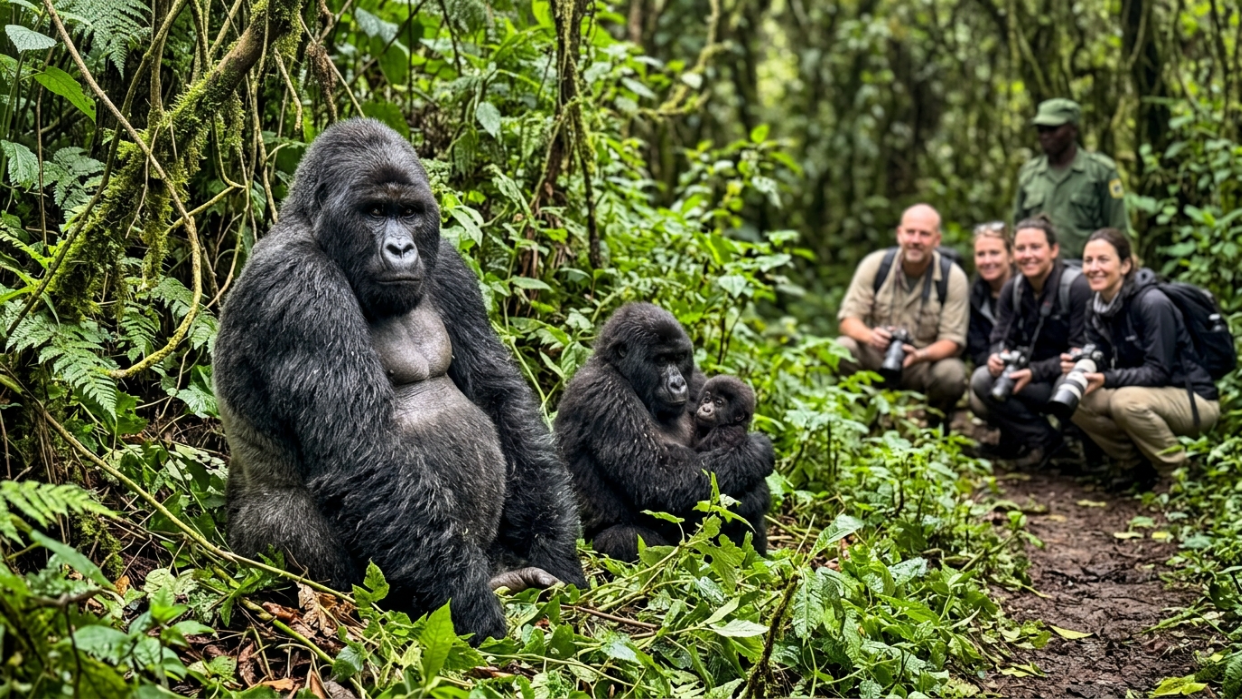
Once the gorilla family is located, visitors spend exactly one hour observing and photographing them.
Afternoon – Return Hike and Exit
Most trekkers return between 1:00 PM and 4:00 PM, though deep forest treks can finish later.
The return hike is almost always faster than the trek in. You’ve already cleared a path, and gravity works in your favor on the descent. Still, plan on at least an hour for the return, and potentially more if you trekked deep into steep terrain.
Gorilla Trekking Duration by Country and Park
Not all gorilla trekking destinations produce the same duration. Geography, altitude, and the behavior of local gorilla families create meaningful differences.
Rwanda, Volcanoes National Park
Rwanda consistently offers the shortest average gorilla trekking duration. Hikes to gorilla families range from 30 minutes to about 4 hours round trip. The bamboo forest terrain in Volcanoes National Park is more open than the dense vegetation of Bwindi, and the park’s gorilla families tend to be well consolidated.
Access is another advantage. Volcanoes National Park sits roughly 2 hours by paved road from Kigali, making it possible to trek gorillas on a 2-day trip. The trade-off is price: Rwanda gorilla permits cost $1,500 per person, and only 96 permits are issued daily.
Uganda, Bwindi Impenetrable National Park
Bwindi produces the widest range of gorilla trekking durations, anywhere from 2 to 7+ hours of hiking. The park earns its name. Vegetation is thick, trails are steep in places, and gorilla families spread across four distinct sectors with very different terrain profiles. Uganda permits cost $800 per person for foreign non-residents.
For a complete breakdown of Bwindi logistics, see our Bwindi gorilla trekking guide.
Uganda, Mgahinga Gorilla National Park
Mgahinga is smaller than Bwindi and hosts just one habituated gorilla family. Treks here often move through bamboo forest, and the duration tends to be shorter and more predictable than Bwindi. It’s a good option for trekkers who want a Uganda permit price with a potentially easier hike.
DRC, Virunga National Park
Gorilla trekking in Virunga typically takes about 4 hours total. However, the park has been closed to tourism due to ongoing security concerns, so it’s not a viable option for current trip planning.
Gorilla Trekking Duration Comparison by Destination
|
Destination |
Average Trek Duration |
Terrain Difficulty |
Permit Cost (2026) |
Best For |
|---|---|---|---|---|
|
Rwanda – Volcanoes National Park |
2 to 4 hours |
Moderate |
$1,500 |
Shorter luxury trips |
|
Uganda – Bwindi Impenetrable Forest |
4 to 8 hours |
Moderate to difficult |
$800 |
Best overall value |
|
Uganda – Mgahinga |
3 to 5 hours |
Moderate |
$800 |
Smaller crowds |
|
DRC – Virunga National Park |
~4 hours |
Moderate |
Historically lower |
Currently unavailable |
“Uganda generally offers longer and more physically demanding treks, while Rwanda prioritizes accessibility and shorter travel times.”
Bwindi Sector Duration Comparison
Bwindi’s four sectors deserve their own comparison because the difference between them is significant. No one assigns you a sector randomly. Rangers match trekking groups to gorilla families based on fitness, and the sector determines your likely trekking difficulty and duration.
|
Sector |
Typical Trek Duration |
Terrain Difficulty |
Best For |
|---|---|---|---|
|
Buhoma |
2 to 4 hours |
Gentle, flatter trails |
First-timers, seniors, those with limited fitness |
|
Ruhija |
2 to 6 hours |
Moderate to steep, highest altitude in Bwindi |
Birders, those seeking solitude |
|
Rushaga |
2 to 6+ hours |
Moderate to challenging |
Most gorilla families, habituation experience |
|
Nkuringo |
3 to 6+ hours |
Most challenging terrain |
Fit adventurers, dramatic scenic views |
Buhoma is widely regarded as the easiest sector. The terrain is gentler, and practitioners on Reddit and travel forums frequently recommend it for older travelers or anyone uncertain about their fitness level. Nkuringo, by contrast, sits in the southern part of the park and involves steep descents and ascents that test even experienced hikers.
One traveler who trekked both Bwindi and Volcanoes National Park noted that “the trek was completely different” between the two locations, a reminder that gorilla trekking duration is not just about time but about the nature of the terrain you cover.
How Difficult Is Gorilla Trekking?
Gorilla trekking is moderately to highly physically demanding depending on the park sector, altitude, and weather conditions.
Difficulty Scale by Trek Type
|
Trek Type |
Difficulty Level |
Typical Hiking Time |
|---|---|---|
|
Easy |
Moderate |
1 to 3 hours |
|
Medium |
Moderately strenuous |
3 to 5 hours |
|
Difficult |
Strenuous |
5 to 8+ hours |
Trekkers may encounter:
-
Steep muddy slopes
-
Thick vegetation
-
High altitude hiking
-
Uneven terrain without established trails
-
Long periods of uphill walking
Many travelers over age 60 successfully complete gorilla treks by requesting shorter routes and hiring porters for assistance.
What Affects Your Gorilla Trekking Duration
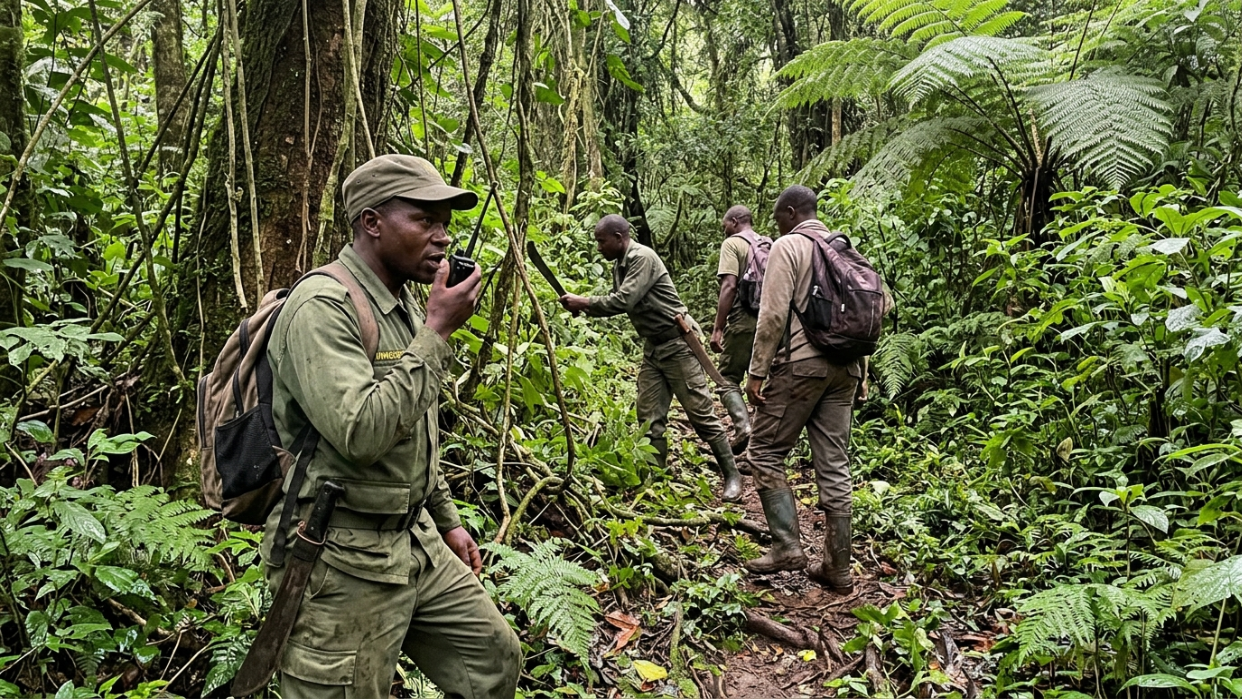
Five variables determine how long your specific trek will last.
1. Gorilla Family Assignment
This is the single biggest factor. Some gorilla families nest close to trailheads. Others roam deep into the forest. You don’t choose your family. Rangers assign groups based on fitness assessments and tracker reports from the field.
2. The Tracker System
Before trekkers even arrive at the briefing, trackers are already in the forest. These specialists follow specific gorilla families daily, monitoring their movements overnight. They radio coordinates to your guide, giving the team a starting estimate of distance. Some mornings, the trackers report a family within a 30-minute walk. Other mornings, the family has moved several kilometers deeper.
3. Fitness and Group Pace
On the morning of your trek, rangers typically split visitors into “fast” and “slow” groups based on self-reported fitness and observable agility. This matters because the group moves at the pace of its slowest member. If you’re a strong hiker placed in a slower group, your trek will take longer than your individual pace would suggest. Understanding gorilla trekking fitness requirements ahead of time helps you prepare and get placed appropriately.
4. Weather and Season
Rainfall between March and May or September and November turns trails muddy, slows movement, and forces more rest stops. Wet conditions can add an hour or more to both the approach and return hike. Check the best time for gorilla trekking if timing flexibility matters to you.
5. Altitude
This factor gets overlooked. Bwindi’s elevation ranges from 1,160 to 2,607 meters. Volcanoes National Park reaches up to 4,000 meters. Higher altitude means thinner air, slower movement, and more frequent rest stops. Even fit trekkers notice the difference above 2,500 meters. Ruhija sector in Bwindi sits at the park’s highest elevation, which partly explains why treks there can stretch longer despite moderate distances.
What Happens If You Can’t Finish the Trek?
Most travelers successfully complete gorilla trekking, but difficult conditions can occasionally force visitors to stop early.
If a trek becomes too physically demanding:
-
Rangers may shorten the route where possible
-
Porters can provide physical assistance on steep terrain
-
Sedan chairs carried by local teams are available in some sectors for travelers with mobility limitations
Refunds are generally not provided once a trek begins, so proper preparation is important.
Gorilla Trekking Altitude by Park
|
Park |
Elevation Range |
|---|---|
|
Bwindi Impenetrable National Park |
1,160 to 2,607 meters |
|
Mgahinga Gorilla National Park |
2,227 to 4,127 meters |
|
Volcanoes National Park |
2,400 to 4,507 meters |
Higher elevations can slow trekking pace and make hikes feel more strenuous, especially for travelers arriving directly from sea level.
Gorilla Habituation Experience Duration
Gorilla Habituation Experience is a distinct activity, separate from standard gorilla trekking. Instead of one hour with a fully habituated gorilla family, you spend up to four hours with a semi-habituated group, gorillas still in the process of becoming accustomed to human presence.
This experience is only available in the Rushaga sector of Bwindi Impenetrable National Park. Just 4 to 8 permits are issued daily, split between two gorilla families (Bukingyi and Bushaho). A habituation permit costs $1,500, compared to $800 for a standard Uganda gorilla trekking permit.
The total day commitment is substantially longer. You start earlier, hike deeper, spend four times longer with the gorillas, and return later. Plan for a full day with no other activities.
The habituation experience appeals to wildlife photographers who need more than 60 minutes of shooting time and to travelers who want a rawer, less structured encounter. It’s not recommended for anyone with significant mobility limitations, given the extended time in challenging forest terrain.
How Many Days Do You Need for Gorilla Trekking?
The gorilla trekking duration on the day itself is just one piece of the scheduling puzzle. Getting to and from the park adds transit days.
Uganda (from Kampala or Entebbe): Minimum 3 days. Day 1 is the transfer to Bwindi (a long drive or a domestic flight plus shorter drive). Day 2 is trekking day. Day 3 is the return transfer. Most travelers find 4 to 5 days more comfortable, especially when combining gorilla trekking with other activities like Queen Elizabeth National Park.
Rwanda (from Kigali): Minimum 2 days. The short 2-hour drive from Kigali to Volcanoes National Park means you can transfer, trek, and return with less buffer time.
Multi-country trips: Operators that work across East Africa can stitch gorilla trekking into broader itineraries that include Tanzania safaris, Kilimanjaro, or Zanzibar. This is where having a single operator handle permits, logistics, and cross-border coordination saves significant planning friction.
→ Explore Uganda gorilla safari packages with full pricing and itinerary options
What to Bring for Long Gorilla Treks
For treks lasting several hours, experienced guides recommend bringing:
-
Waterproof hiking boots
-
Thick garden gloves
-
Rain jacket
-
2 liters of water
-
Energy snacks
-
Long pants and gaiters
-
Small backpack
-
Walking stick (usually provided at the briefing)
Avoid heavy camera bags or unnecessary gear, especially on longer treks.
Planning Tips Related to Duration
Block the entire day for trekking. Do not schedule flights, transfers, or fixed-time activities on trek day. Your gorilla trekking duration could be 3 hours or 8 hours, and there’s no way to know in advance. Activities with fixed departure times belong on the following day.
Hire a porter. This advice comes up repeatedly from experienced trekkers. One common refrain in gorilla trekking communities: “Hire a porter, even if you are fit. Providing employment opportunities to locals is the best way to help protect gorillas.” Porters carry your daypack, help you over difficult terrain, and cost a modest fee that directly supports communities adjacent to the park.
Bring garden gloves. Experienced trekkers on forums consistently flag this. You’ll grab thorns, vines, and nettles throughout the hike. Regular hiking gloves won’t cut it. Thick garden gloves protect your hands and improve your grip on steep sections. See our full gorilla trekking packing list for other essentials.
Carry more water than you think you need. Bring at least 2 liters plus energy snacks. On longer treks (4+ hours of hiking), dehydration and low blood sugar compound the difficulty of the terrain.
Train with incline walks. Stair climbing, hill hiking, and weighted walking are the best physical preparation. Flat-ground cardio helps, but it doesn’t replicate the steep, uneven terrain you’ll face in the forest.
Book permits well in advance. Rwanda issues only 96 permits per day. Uganda’s daily allocation is similarly limited, with 8 permits per gorilla family. During peak season (June through September, December through February), permits sell out months ahead.
→ Start planning your trek with our complete Bwindi guide
Frequently Asked Questions
How long is gorilla trekking in total?
The total gorilla trekking duration from morning briefing to returning from the forest is typically 4 to 8 hours. This includes a 30-minute briefing, the drive to the trailhead, the hike in (30 minutes to 6+ hours), one hour with the gorillas, and the return hike.
How long do you actually spend with the gorillas?
Exactly one hour. This is a strict conservation rule enforced across Uganda, Rwanda, and the DRC. It protects gorillas from stress and reduces the risk of disease transmission from humans. The only exception is the Gorilla Habituation Experience in Bwindi’s Rushaga sector, which allows up to four hours.
Is gorilla trekking harder in Uganda or Rwanda?
Bwindi Impenetrable National Park in Uganda generally involves longer, more physically demanding treks due to denser vegetation and steeper terrain. Rwanda’s Volcanoes National Park has more open bamboo forest and typically shorter treks. That said, Bwindi’s Buhoma sector is considered relatively easy and suitable for beginners. The minimum age for gorilla trekking is 15 in both countries.
Can I choose an easier or shorter trek?
Not directly, but the ranger briefing system works in your favor. Rangers assess each group’s fitness on the morning of the trek and assign gorilla families accordingly. If you communicate limited mobility or lower fitness, you’re more likely to be assigned a family closer to the trailhead. Be honest during the assessment.
What is the Gorilla Habituation Experience and how long does it take?
The Gorilla Habituation Experience lets you spend up to four hours with a semi-habituated gorilla family. It’s only available in Bwindi’s Rushaga sector, costs $1,500 per permit (versus $800 for standard trekking in Uganda), and requires a full day commitment. Only 4 to 8 permits are available daily.
How many days should I plan for a gorilla trekking trip?
Minimum 3 days for Uganda (including travel to and from Bwindi) and 2 days for Rwanda. Most travelers find 4 to 5 days more comfortable, especially when adding other wildlife experiences. See our East Africa itinerary planning guide for multi-destination options.
Does weather affect gorilla trekking duration?
Yes. Rain makes trails muddy and slippery, which slows movement and adds rest stops. The wettest months are March through May and September through November. Treks during these periods can take significantly longer than the same route in dry conditions.
How much does a gorilla trekking permit cost?
As of 2026, Uganda gorilla trekking permits cost $800 per person for foreign non-residents. Rwanda permits cost $1,500 per person. The Gorilla Habituation Experience in Uganda costs $1,500. All permits should be booked well in advance, particularly during peak travel seasons.