Gorilla Trekking Safety 2026: Rules for Uganda & Rwanda
TL;DR
Gorilla trekking is safe when you follow established park rules, and those rules exist primarily to protect gorillas from us, not the other way around. Uganda requires a minimum distance of 10 meters from gorillas; Rwanda requires 7 meters. Both countries limit groups to 8 visitors, enforce a one-hour viewing window, and require ranger-led treks with morning briefings. The biggest actual risks are terrain-related (mud, steep slopes, biting ants) rather than gorilla-related, and hiring a porter is one of the smartest safety decisions you can make.
Is Gorilla Trekking Safe? Yes, gorilla trekking is considered exceptionally safe for humans. In 2026, both Uganda and Rwanda enforce a mandatory 10-meter (32-foot) distance and surgical mask-wearing to prevent disease transmission. Physical safety is managed by armed rangers and professional trackers who accompany every group of 8. While no tourist has been harmed by a gorilla in a regulated trek, the primary safety risks are environmental: steep, muddy terrain and biting insects.
Gorilla trekking safety refers to the full system of rules, controls, and visitor behaviors that protect both people and endangered mountain gorillas during regulated, ranger-led visits in Uganda and Rwanda. The system works. It has been refined over decades, and it covers everything from disease prevention (minimum distances, masks, health screening) to physical safety on the trail (armed rangers, trackers, porters) to fraud prevention in the booking process.
But many online guides repeat outdated rules or skip the details that actually matter on the ground. This guide uses current official sources and real trekker experiences to cover what you need to know before you go.
How the Safety System Actually Works on Trek Day
The safety process starts hours before you see a gorilla. Understanding how the morning unfolds removes most of the anxiety people carry into their first trek.
The Morning Briefing
You report to park headquarters early. In Rwanda’s Volcanoes National Park, that means arriving at Kinigi HQ by 7:00 AM. In Uganda’s Bwindi Impenetrable National Park, you check in at your assigned sector headquarters.
Expert guides run a mandatory briefing covering rules, expectations, and gorilla behavior. They then allocate groups, often factoring in your fitness level when deciding which gorilla family you’ll visit. This matters more than people realize: some families stay close to the trailhead, while others roam deep into steep terrain. If you have concerns about fitness or mobility, speak up during the briefing. Guides want to match you well.
Trackers, Guides, and Armed Rangers
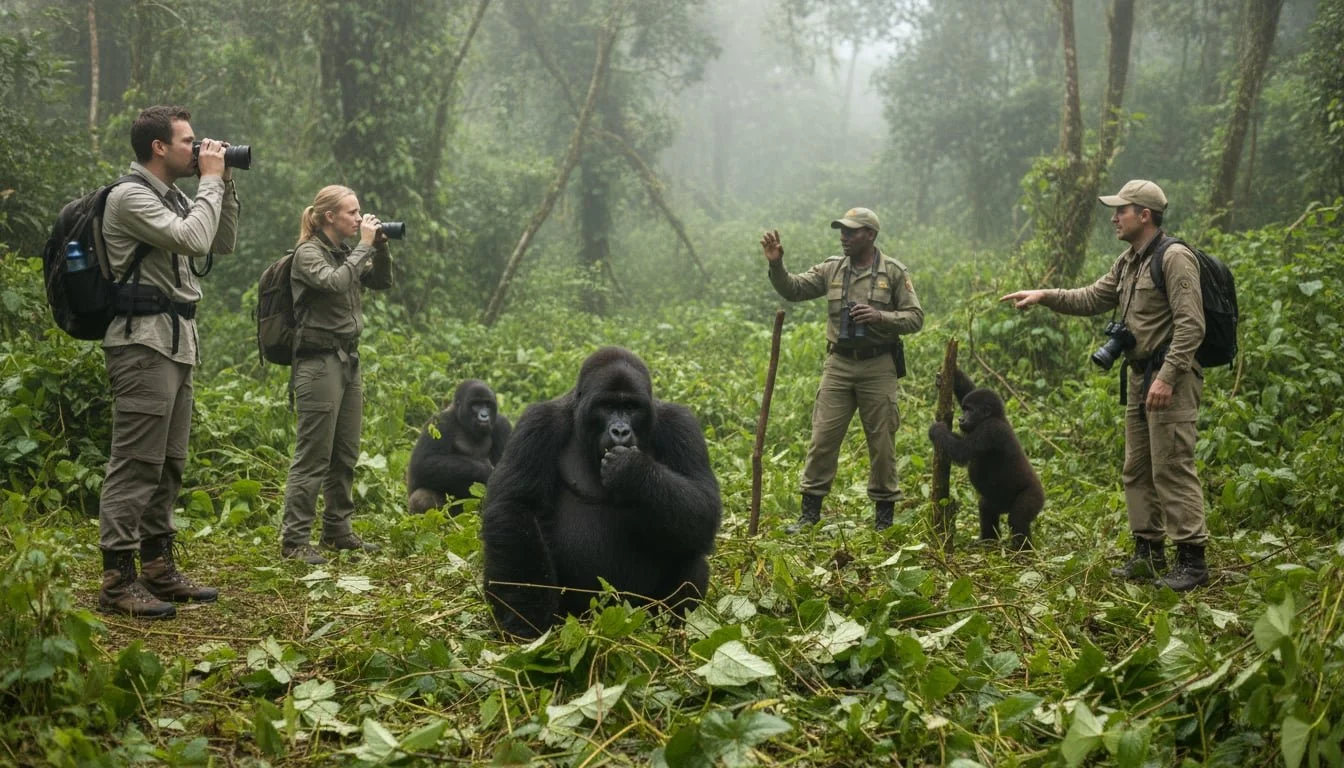
You never walk alone or unguided. The standard escort includes a lead guide, park rangers, and often porters who double as trail assistants. Ahead of your group, trackers have already located the gorilla family using radio communication and their knowledge of each group’s movement patterns.
Practitioners on Reddit consistently confirm this structure. Multiple trip reports describe armed rangers accompanying the group throughout the trek. This is standard security protocol in remote terrain, not a sign of danger. Treat it as normal.
As you approach the gorillas, you’ll leave backpacks and walking sticks with porters and move forward with cameras only, under your guide’s direct instruction.
Rules That Matter Most, Country by Country
Gorilla trekking safety rules differ between Uganda and Rwanda. Many guides still list generic rules without specifying which country they apply to. Here are the current, source-backed requirements.
Uganda (Bwindi Impenetrable NP and Mgahinga)
Uganda’s rules come from the UWA Conservation Tariff for July 2024 through June 2026:
Minimum distance: 10 meters (32.8 feet) from gorillas
Group size: Maximum 8 visitors per gorilla family
Viewing time: One hour with the gorillas
Minimum age: 15 years
Health rules: Do not visit if sick; sneeze and cough away from gorillas; no eating, drinking, or smoking during tracking
Booking: Foreign non-residents and Rest of Africa visitors must book permits through licensed tour operators (UWA links to the Uganda Tourism Board operator list)
That last point is a critical anti-fraud safeguard, covered in detail below. For a full breakdown of permit logistics and pricing, see our guide to Uganda gorilla trekking costs and permits.
Note: UWA’s current tariff also states that visitors must present a Covid-19 vaccination card alongside their ID. Health entry rules can change, so always confirm requirements close to your travel date.
Rwanda (Volcanoes National Park)
Rwanda’s rules are published on the Rwanda Development Board’s official booking portal:
Minimum distance: 7 meters (about 22 feet)
Group size: Maximum 8 visitors per gorilla family
Viewing time: One hour
Minimum age: 15 years
Health rules: Low voices required; cover coughs; spitting prohibited; do not visit if ill
Mock charge protocol: If a gorilla charges, do not panic. Stay still, avert your gaze, and follow your guide
Why the Distance Difference Matters
Uganda’s 10-meter rule is stricter than Rwanda’s 7-meter standard. The reason both countries enforce minimum distances at all is disease prevention. Mountain gorillas are highly susceptible to human respiratory viruses. According to IUCN best-practice guidelines for great ape tourism, 7 meters has historically been the minimum, with recommendations to increase it and add surgical masks when within 10 meters.
The smart move: treat 10 meters as your personal standard regardless of which country you’re in. If a gorilla approaches closer than the minimum (they sometimes do), step back to re-establish the gap. Your guide will direct you.
2026 Gorilla Safety & Permit Comparison
| Feature | Uganda (Bwindi/Mgahinga) | Rwanda (Volcanoes NP) |
|---|---|---|
| Official Distance | 10 Meters (32.8 ft) | 10 Meters (Updated 2026) |
| Mask Policy | Mandatory (Surgical/N95) | Mandatory (Contact Zone) |
| Permit Price | $800 ($600 Low Season) | $1,500 |
| Min. Age | 15 Years | 15 Years |
| Illness Policy | 50% Refund (Verified) | Reschedule/Partial Refund |
| Terrain Style | Dense, steep, tangled | Open bamboo, high altitude |
Health Protection: Masks, Disease Risk, and Why These Rules Exist
The safety rules around gorilla trekking aren’t about protecting you from gorillas. They’re about protecting gorillas from you.
Masks as a Conservation Tool
Many visitors assume mask requirements are leftover Covid-era policy. They’re not. The IGCP Gorilla Friendly Pledge asks trekkers to commit to wearing a surgical mask and maintaining at least 10 meters of distance. This predates the pandemic. IUCN guidelines specifically recommend surgical masks during viewing to reduce aerosol spread to great apes, who lack immunity to common human respiratory infections.
On the ground, enforcement varies. Some guides in both Uganda and Rwanda actively request masking when close to the family; others are more relaxed. Visit Rwanda promotes the Gorilla Friendly Pledge as endorsed best practice. Uganda’s rules emphasize respiratory etiquette and the stricter 10-meter distance.
The position worth taking: bring surgical masks and wear them during your viewing hour. It costs you nothing and protects an endangered species.
Don’t Trek When Sick
Both UWA and RDB are clear on this. If you have a cold, flu, or any contagious illness, you must not visit the gorillas. This is enforced during morning briefings, and rangers can turn you away. Losing a $700+ permit stings, but a respiratory virus transmitted to a gorilla family could be devastating. If you’re preparing for your trek in Rwanda, our guide on how to prepare for Rwanda gorilla trekking covers health preparation in detail.
What to Do If You Wake Up Sick
In 2026, the Uganda Wildlife Authority (UWA) has clarified its "Safety Net" policy. If a Park Warden certifies you are too ill to trek (fever, persistent cough), you are eligible for a 50% permit refund. This policy is designed to encourage honesty; it is better to lose half the permit cost than to risk the lives of a gorilla family. Always ensure your travel insurance includes "Cancel for Any Reason" (CFAR) to recoup the remaining 50%.
Travel Health Beyond the Trek
The CDC recommends malaria chemoprophylaxis for both Uganda and Rwanda. You’ll also want to check on routine and recommended vaccines, including Hepatitis A, Typhoid, and Yellow Fever (depending on your itinerary and entry rules). Build time for a travel medicine consultation at least 4 to 6 weeks before departure.
Fitness, Terrain, and the Gear That Prevents Injuries
The gorillas themselves pose minimal danger. The terrain is a different story. This is where gorilla trekking safety becomes very practical.
What the Trail Is Really Like
Forget paved paths. You’ll be hiking through dense, montane forest on steep, muddy, off-trail terrain. Volcanoes National Park in Rwanda sits at 2,500 to 4,000 meters elevation. Bwindi’s trails are lower but arguably tougher, with tangled vegetation and sharp elevation changes.
Hike duration is unpredictable. Depending on where the gorilla family is that day, your trek could last 30 minutes or stretch past 4 hours. Practitioners on Reddit report that even groups starting on the same trail can have wildly different experiences. One trekker described their group finishing quickly while another group on the same family’s trail ended up with a 7-hour round trip because the gorillas moved uphill.
The lesson: manage your expectations and prepare for the longer scenario.
Ants, Nettles, and Other Surprises
Several recent trip reports on Reddit highlight hazards that most gorilla trekking safety guides skip entirely. Stinging nettles line many trails and can cause painful welts through thin clothing. Safari ants form columns on the forest floor, and multiple trekkers report standing directly in biting ant colonies during the viewing hour because that’s where the gorillas happened to settle.
Light gardening-style gloves protect your hands when pushing through vegetation. Gaiters and pants tucked into socks keep ants off your legs. These aren’t optional comfort items; they’re practical safety gear.
💡Expert Tip: The "Bwindi Fashion Statement" involves tucking your trousers into long socks. It looks silly in photos but is your #1 defense against Safari Ants, which can crawl up your legs undetected until they bite simultaneously.
Altitude
At elevations above 2,500 meters, altitude can affect your energy and breathing. Pace yourself, stay hydrated, and don’t underestimate how much harder a steep muddy hike feels at altitude compared to sea level. Trail conditions vary by season, so choosing the right time of year can make a meaningful difference. Our guide to the best time for gorilla trekking in Uganda covers seasonal tradeoffs for trail conditions and weather.
Porters Are Safety Equipment
This is worth stating plainly: hire a porter. They are not a luxury. Porters prevent slips, set foot placements on muddy slopes, carry your daypack so you can use your hands for balance, and can literally push or pull you through the steepest sections.
One trekker shared in a Reddit trip report that porters were “incredibly helpful” not just for carrying gear but for maintaining safe footing throughout the hike. Another described being physically guided through near-vertical muddy sections they couldn’t have managed alone.
Porters are available for a modest fee in both Uganda and Rwanda, and hiring them also provides direct income to local communities.
Sedan Chairs for Mobility Challenges
For anyone with injuries, limited mobility, or who simply cannot complete the hike, both countries offer what’s locally called an “African helicopter,” a sedan chair carried by a team of porters. Multiple Reddit trip reports confirm these work well. Confirm availability and cost with your operator in advance, and don’t treat it as a last resort. If you have any doubt about your ability to manage the terrain, arranging this ahead of time is the responsible choice.
What to Do If a Gorilla Approaches or Mock Charges
This is the scenario that worries first-time trekkers most. Here’s what you need to know: gorilla mock charges are rare, and no tourist has been seriously harmed during a regulated trek.
Rwanda’s official booking portal states the protocol explicitly:
Do not run. Running triggers a chase response.
Stay still or crouch down slowly.
Avert your gaze. Direct eye contact can be perceived as a challenge.
Follow your guide’s instructions exactly.
Your guide has spent years with these gorilla families and knows individual temperaments. Trust their direction. If a silverback or other gorilla approaches closer than the minimum distance, you step back calmly. The guide manages the rest.
Rangers can also pause or end a visit early if gorilla behavior warrants it. This is not a failure; it’s gorilla trekking safety working as designed.
Permits, Booking Safety, and Avoiding Scams
Permit fraud is a real problem that most gorilla trekking safety articles ignore.
Uganda’s Licensed Operator Rule
UWA’s 2024-2026 Conservation Tariff is clear: foreign non-residents and Rest of Africa visitors must book gorilla and chimpanzee permits through licensed tour operators. The tariff links directly to the Uganda Tourism Board’s list of approved operators. This rule exists specifically to prevent fraud.
Real-World Scam Cases
A widely upvoted warning on Reddit’s r/travel described someone posing as UWA via WhatsApp, collecting a wire payment for a “permit,” then disappearing entirely. The victim had no recourse.
The pattern is consistent: scammers contact travelers through WhatsApp or social media, offer permits at slightly below market rate or claim availability when official channels show sold out, request wire transfers or direct payments, then vanish.
Your defense is simple. Book through a licensed, vetted operator. Never send money to an individual via wire transfer or WhatsApp. If an offer seems too good or too convenient, it probably is.
For a complete breakdown of how Uganda permit booking works, pricing, and availability windows, see our detailed guide on gorilla trekking costs and permits in Uganda.
Country Security: Why Most Travelers Choose Uganda or Rwanda
Mountain gorillas live in three countries: Uganda, Rwanda, and the Democratic Republic of Congo. For gorilla trekking safety, the country you choose matters enormously.
Uganda and Rwanda operate highly structured, ranger-escorted treks with daily tracking and well-established tourism infrastructure. Both are considered safe for gorilla tourism when you follow official procedures.
The DRC is a different situation. As of mid-2026, the US State Department rates eastern DRC (North Kivu and South Kivu) as “Do Not Travel” due to ongoing armed conflict and kidnapping risks. Gorilla trekking in DRC’s Virunga National Park is not a safety-first recommendation for most travelers unless and until advisories change.
Uganda’s Gorilla Habituation Experience: When 4 Hours Is Allowed
Standard gorilla treks allow one hour of viewing time. Uganda offers one exception: the Gorilla Habituation Experience, available only in Bwindi, which allows up to 4 hours with a semi-habituated gorilla group.
Permits for this experience are extremely limited. The trek is longer and more physically demanding because semi-habituated groups may be less predictable in their location. The same safety rules apply (or stricter), including minimum distance, mask etiquette, and ranger escort. This option suits experienced trekkers who want deeper observation time and don’t mind a harder day on the trail.
Safety Packing Checklist
Gorilla trekking safety extends to what’s in your bag. This list is field-tested by trekkers, not just theoretical.
Footwear and clothing:
Broken-in waterproof hiking boots (not new ones)
Long pants tucked into socks
Light gloves for nettles and thorns
Gaiters to keep out ants and debris
Rain shell (it can rain any day in montane forest)
Warm layer for high-altitude mornings
Health and hygiene:
Surgical masks (at least two, for viewing proximity)
Hand sanitizer
Personal medications
Malaria prophylaxis as prescribed by your travel clinic
Blister care supplies
Electrolyte tablets or powder
Trek aids:
Hired porter (arrange through your operator or at the trailhead)
Hiking pole (often available to borrow at park HQ)
Light, waterproofed daypack
Water bottle
Documentation:
Passport or valid ID
Printed permit confirmation
Vaccination card if required
Travel insurance documents with medical evacuation coverage
On that last point: get travel insurance that includes medical evacuation. Rwanda’s official gorilla trekking process includes an indemnity agreement, and helicopter access exists on some high-end itineraries, but neither should be assumed as guaranteed. Carry your own coverage.
Planning a Safe Gorilla Trek as Part of a Larger Trip
Gorilla trekking fits naturally into a broader East Africa itinerary. Many travelers combine a Uganda or Rwanda gorilla trek with a Tanzania safari and Zanzibar beach stay. Getting the logistics right, from permits to domestic flights to timing, requires careful coordination. Our guide on how to fit multiple experiences into one East Africa trip walks through exactly how that works.
If you’re still in the early planning stages, our complete safari planning guide for East Africa covers the full picture from budgeting to booking.
Frequently Asked Questions
-
Yes. Fitness matters more than age, and the system is designed to accommodate a range of ability levels. Guides assign gorilla families partly based on fitness, and porters provide physical support throughout the hike. For anyone with significant mobility concerns, sedan chairs carried by a team of porters are available in both Uganda and Rwanda. Confirm availability with your operator before you travel.
-
Yes. Gorillas are wild animals and sometimes walk directly toward or past visitors. If this happens, you step back slowly to re-establish the minimum distance, following your guide’s instructions. Gorillas in habituated families are accustomed to human presence and generally treat visitors with calm indifference.
-
Expect to. The IGCP Gorilla Friendly Pledge and IUCN guidelines both recommend surgical masks during close-proximity viewing to protect gorillas from human respiratory diseases. On the ground, many guides request it. Bring surgical masks regardless of current mandates. It’s the conservation-responsible choice.
-
If you’re visibly ill or report symptoms during the morning briefing, rangers can deny you access to the gorillas. This protects the gorilla family from potential disease transmission. You are unlikely to receive a refund for the permit. This is one reason travel insurance is important. It’s also why taking health precautions in the days before your trek matters so much.
-
It varies enormously. The hike can take as little as 30 minutes or as long as 4+ hours each way, depending on where the gorilla family is that day. Trackers locate the family before your group sets out, but gorillas move. Ask during the briefing about expected difficulty and duration, but prepare for the longer scenario.
-
As of mid-2026, no. The US State Department rates eastern DRC as “Do Not Travel” due to armed conflict. Stick with Uganda or Rwanda for gorilla trekking until advisories change.
-
Book through a licensed tour operator listed by the Uganda Tourism Board or directly through the Rwanda Development Board’s official booking portal. Never send wire payments to individuals via WhatsApp or social media. UWA requires foreign visitors to book through licensed operators for exactly this reason.
-
Yes. Porters do far more than carry your bag. They stabilize you on slippery slopes, set foot placements in mud, and physically assist you through the steepest sections. Experienced trekkers on Reddit consistently call porters essential rather than optional. Hiring one also directly supports the local community around the park.