

Kilimanjaro Porters: Glossary, Wages & Tipping (2026)
TL;DR
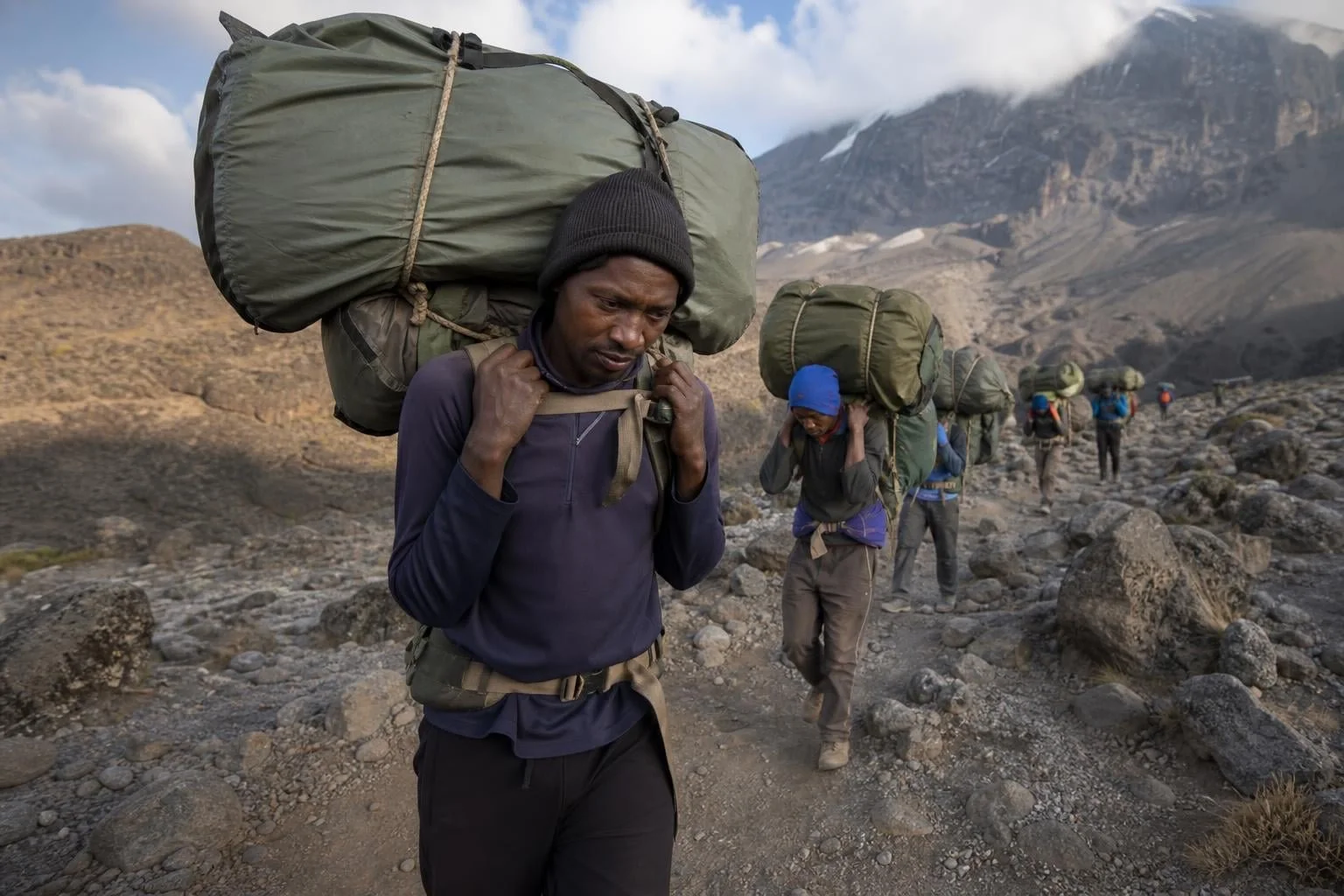
Kilimanjaro porters are the local Tanzanian workers who carry gear, set up camps, and make summit attempts possible for more than 35,000 climbers each year. A typical climb requires 3 to 5 porters per climber, each carrying up to 20 kg of client gear under park regulations. Tipping runs $6 to $10 per porter per day, and choosing a KPAP partner operator is the single best way to ensure your crew is treated fairly.
More than 35,000 people attempt to climb Kilimanjaro every year. Behind each of those climbers stands a team of porters, guides, and cooks, often outnumbering the trekkers four or five to one. This means the mountain supports a workforce of tens of thousands of porters cycling through each climbing season. Understanding who these people are, what they carry, what they earn, and how to treat them well is not optional knowledge for any serious trip planner.
This glossary covers every term you will encounter about your Kilimanjaro mountain crew, from role definitions and weight regulations to tipping math and porter welfare organizations. If you are still choosing your best time to climb Kilimanjaro, bookmark this page and come back when you are ready to dig into crew logistics.
Quick Answer: What Should You Know About Kilimanjaro Porters? If you're climbing Mount Kilimanjaro, your porter team will carry your duffel bag, camping equipment, food, water, safety gear, and much of the shared expedition equipment. Most climbs require three to five porters per climber. Porters are legally limited to carrying 20 kg (44 lbs) of client gear, while recommended tips are $6–10 per porter per day. Choosing a KPAP-certified operator is the best way to ensure your crew receives fair wages, adequate food, proper equipment, and ethical working conditions.
Key Takeaways
• Expect 3–5 porters for every climber.
• Porters carry far more than personal luggage.
• The legal client load is 20 kg per porter.
• Budget 10–15% of your trip cost for tips.
• Always verify KPAP partnership before booking.
• Cheap operators often cut porter wages.
Why Kilimanjaro Needs So Many Porters
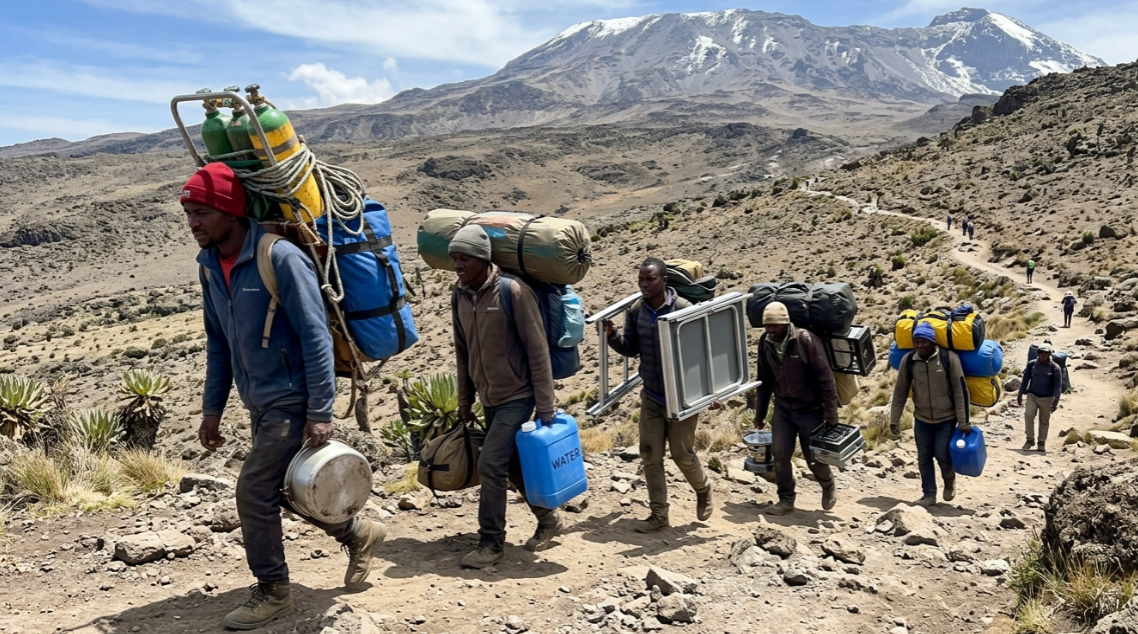
One of the biggest surprises for first-time climbers is the size of the mountain crew. Unlike many trekking destinations, Kilimanjaro requires support teams to transport nearly everything needed for several days at altitude.
Porters typically carry:
-
Client duffel bags
-
Camping tents
-
Sleeping tents
-
Dining tent
-
Kitchen tent
-
Tables and chairs
-
Cooking equipment
-
Food supplies
-
Drinking water
-
Fuel
-
Oxygen cylinders
-
Medical kits
-
Portable toilets
-
Waste for removal
Unlike pack animals, all supplies on Kilimanjaro are carried by people because animals are not permitted on most climbing routes.
Typical Crew Size by Group
|
Climbers |
Guides |
Cook |
Porters |
Total Crew |
|---|---|---|---|---|
|
1 |
1 |
1 |
4–5 |
6–7 |
|
2 |
1 |
1 |
6–7 |
9–10 |
|
4 |
2 |
1 |
14–16 |
17–19 |
|
6 |
2 |
1 |
20–24 |
23–27 |
|
10 |
3 |
2 |
30–35 |
35–40 |
The Mountain Crew: Roles Defined
The support team on a Kilimanjaro climb is collectively called the mountain crew. It includes everyone from the lead guide to the porter carrying your duffel bag. Most first-time climbers underestimate how many people are involved. A group of four climbers might have a mountain crew of around 21 people. A group of twelve could need 57.
Here is who does what.
Mountain Crew
The umbrella term for your entire support team. This includes lead guides, assistant guides, cooks, and all categories of porters. When operators quote “crew size,” they mean this full headcount.
Lead Guide
The overall trek leader responsible for health, safety, route decisions, and pace management. There is one lead guide per group. Reputable operators staff this role with guides who have 15 or more years of mountain experience. Duma Explorer’s Kilimanjaro guides hold Wilderness First Responder (WFR) certification, and the company provides a 1:1 guide-to-climber ratio on summit day for maximum safety support.
Assistant Guide
Supports the lead guide by monitoring climber health, answering questions, and managing group logistics. The ratio is roughly one assistant guide for every two to three climbers on hut routes, and one for every four to five climbers on camping routes. On longer routes with more altitude gain, the assistant guide role becomes critical for spotting early symptoms of altitude sickness.
Cook
Prepares all meals: breakfast, lunch, dinner, and snacks. One cook per group is standard. The cook works closely with porters who help carry food supplies, purify water, and wash dishes. For a deeper look at what you will actually eat on the mountain, see this Kilimanjaro food guide.
Porter (General)
A Kilimanjaro porter is a local Tanzanian, typically between 18 and 40 years old, whose primary job is carrying equipment required for the climb. This includes not just your personal gear but also tents, sleeping bags, food supplies, oxygen bottles, medical kits, stretchers, hyperbaric chambers, portable toilets, and all garbage generated along the way. Porters also sanitize drinking and cooking water, help the cook with food preparation and service, and clean up afterward.
Most Kilimanjaro porters are not employed permanently. They freelance for different companies climb by climb, and for many, this work is their primary income source.
Summit Porter
A specialized subset of Kilimanjaro porters who stay with the climbing group all the way to the peak, carrying safety and emergency equipment. While general porters travel ahead to set up the next camp, summit porters match the climbers’ pace through the final push, providing encouragement and carrying supplies through the coldest, windiest conditions near Uhuru Peak.
Waiter Porter / Helper Porter
Some porters pull double duty. A waiter porter carries loads like any other porter but also serves meals, sets the dining tent, and manages the eating area. These roles carry additional responsibilities beyond standard carrying duties and should receive additional tips accordingly.
Toilet Porter
Exactly what it sounds like. This porter is responsible for transporting, setting up, and servicing the portable toilet tent at each camp. It is not glamorous work, and it matters for hygiene at altitude. Practitioners on Reddit frequently mention that the toilet porter is the easiest crew member to forget when calculating tips, so make a point to include them.
How Porters Work: Logistics Terms
Porter-to-Climber Ratio
The number of porters assigned per climber varies by route, trip length, group size, camping setup, and service level. Most sources cite a range of 3 to 5 porters per climber. A common standard is 4 porters per climber on camping routes. On the Marangu route, where climbers sleep in huts instead of tents, the ratio drops because there is less camping equipment to haul.
Specific example: a climb for two people over seven days would typically require one lead guide, one assistant guide, one cook, and six to seven porters.
For a breakdown of how routes affect crew size and summit outcomes, see Kilimanjaro success rates by route.
Gate Weigh-In
Before your trek begins, all porter loads are weighed at the park gate by Kilimanjaro National Park Authority (KINAPA) officials. This mandatory inspection verifies that no porter is carrying more than the regulated limit. Packs are checked again periodically during the journey. The gate weigh-in is your first real encounter with the park’s porter protection infrastructure, and a good operator welcomes it rather than trying to work around it.
20 kg Weight Limit
This is the single most confusing number in Kilimanjaro trip planning, because different sources cite different figures.
Here is the real breakdown:
-
KINAPA/TANAPA regulation: Each porter may carry a maximum of 20 kg (44 lbs) of client gear.
-
Personal gear allowance: On top of the 20 kg client load, porters carry 5 to 10 kg of their own belongings (clothing, food, sleeping gear).
-
Female porter limit: Female porters are permitted to carry a maximum of 15 kg of client gear.
-
Voluntary operator limits: Some responsible operators cap client gear loads at 15 kg per porter as an extra safety margin. When you see “15 kg” cited online, this is usually the explanation.
The problem is real. Unscrupulous employers routinely force porters to carry as much as 40 kg instead of the mandated 20 kg. This is one of the most common forms of porter exploitation.
What Do Porters Actually Carry?
Although climbers usually think porters only carry duffel bags, most loads consist of shared expedition equipment.
Typical porter loads include:
-
Client luggage
-
Sleeping tents
-
Dining tents
-
Kitchen supplies
-
Food
-
Gas cylinders
-
Water
-
Tables
-
Chairs
-
Medical equipment
-
Portable toilets
-
Waste bags
The exact load varies throughout the expedition because food weight decreases while waste must be carried off the mountain.
Duffel Bag
The standard container for gear that porters carry on your behalf. Most operators provide or require a specific type of duffel bag that can be sealed and weighed easily at gate check-ins. Packing efficiently is not just about your own comfort; it directly affects porter welfare. Check the East Africa packing list for practical guidance on keeping your load within limits.
Total Luggage Weight Per Climber
On average, it takes about 225 pounds (roughly 102 kg) of total luggage per trekker to get to Kilimanjaro’s peak and back. This figure includes all shared equipment: tents, cooking gear, food supplies, safety equipment, portable toilets, tables, chairs, and waste. It explains why even a two-person climb needs six or seven porters.
Pole Pole
Swahili for “slowly, slowly.” You will hear this phrase constantly from your guides, who use it to manage your pace and reduce altitude sickness risk. Here is the interesting contrast: porters do not go pole pole. After your tents are broken down and packed, a group of porters races ahead on the trail to secure the best campsite and finish setting up camp before trekkers arrive. They carry heavy loads at speed, often passing climbers on narrow trails. This mismatch between porter pace and climber pace is one reason porter fitness and proper load limits matter so much.
Challenges Kilimanjaro Porters Face
Although portering creates thousands of jobs, it is physically demanding work.
Common challenges include:
-
Carrying heavy loads at high altitude
-
Freezing temperatures during summit pushes
-
Long walking days
-
Seasonal employment
-
Limited access to quality gear
-
Low wages from unethical operators
-
High competition for available work
Choosing an ethical operator directly improves these conditions.
Porter Welfare and Ethics Terms
KPAP (Kilimanjaro Porters Assistance Project)
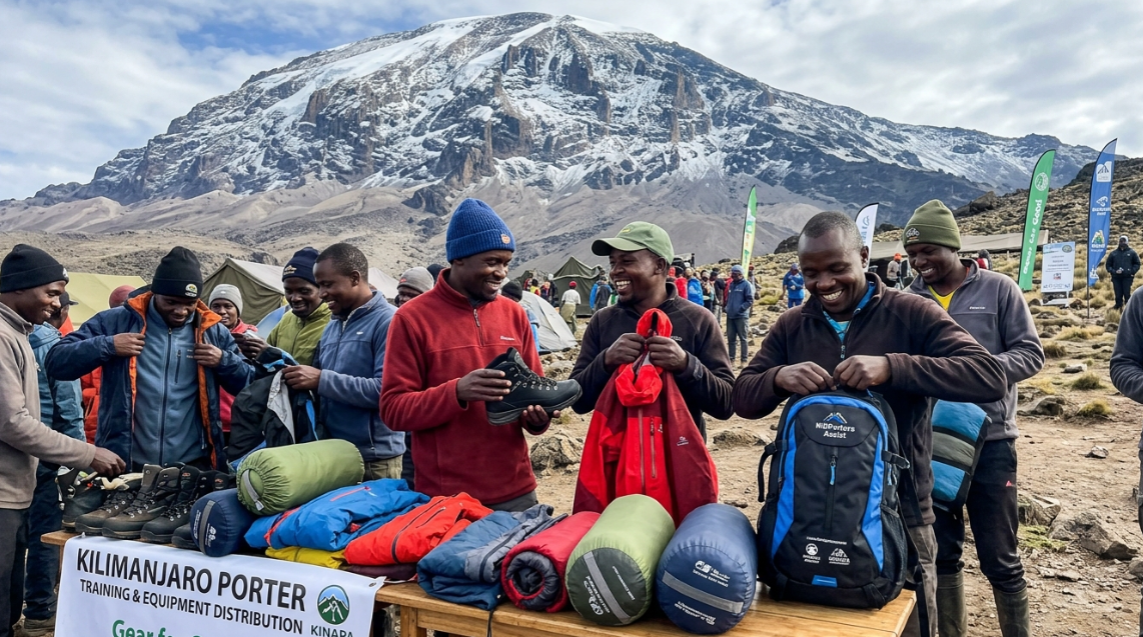
Established in 2003, KPAP is a legally registered project within a Tanzanian non-governmental organization. Its mission is to improve working conditions for porters by promoting socially responsible Kilimanjaro climbs. Through its monitoring programs, KPAP ensures that more than 7,000 porters each year receive fair wages and ethical treatment.
KPAP has also provided free educational programs to over 16,000 mountain crew members, offering lessons in English, financial literacy, and HIV/AIDS prevention.
Duma Explorer is a KPAP founding partner, a distinction that goes beyond standard partnership and reflects involvement in building the organization’s monitoring framework from the ground up.
KPAP Partner vs Non-Partner Operators
|
Feature |
KPAP Partner |
Non-Partner |
|---|---|---|
|
Weight Monitoring |
Yes |
Varies |
|
Wage Monitoring |
Yes |
Not guaranteed |
|
Tip Transparency |
Yes |
Varies |
|
Sleeping Conditions |
Audited |
Unknown |
|
Crew Meals |
Audited |
Varies |
|
Independent Inspections |
Yes |
No |
Partner for Responsible Travel Program
KPAP’s formal monitoring system. After every climb, KPAP assesses the crew’s conditions and gives the operator a score based on wage payment, weight compliance, food provision, sleeping arrangements, and tipping transparency. To remain a partner, operators must maintain a score of 85% or higher for the entire season. Among partner companies, 95.2% of climbs had transparent tipping procedures, and porters slept in good quality tents with adequate space 97.4% of the time.
KRTO (Kilimanjaro Responsible Trekking Organization)
The parent NGO under which KPAP operates. KRTO is a registered non-governmental organization in Tanzania focused on sustainable trekking practices across the mountain.
IMEC (International Mountain Explorers Connection)
The nonprofit organization founded in 1996 to promote sustainable travel in the Himalayas. KPAP was created as an offshoot of IMEC, adapting lessons learned in the Himalayan porter welfare movement to Kilimanjaro’s specific context.
TPA (Tanzania Porters Association) and KGA (Kilimanjaro Guides Association)
Two organizations that set guidelines protecting porter welfare. The TPA focuses on porter rights and working conditions, while the KGA addresses guide standards and certification. Together, they create a regulatory layer beyond what the park authority enforces.
KINAPA / TANAPA
KINAPA (Kilimanjaro National Park Authority) manages Kilimanjaro National Park directly. TANAPA (Tanzania National Parks Authority) is the national-level body overseeing all Tanzanian national parks, including Kilimanjaro. TANAPA sets the 20 kg porter weight regulation, park entry fees, and permit requirements. You will see both acronyms on permits, gate signage, and official communications.
Understanding Kilimanjaro weather by altitude zone helps explain why proper porter gear matters: temperatures on the mountain range from tropical heat at the base to well below freezing at the summit.
Porter Lending Program
A KPAP initiative that provides free gear and clothing to porters who cannot afford proper equipment. Without adequate jackets, boots, and sleeping bags, porters risk hypothermia and frostbite, especially on summit night when temperatures plummet. The lending program fills the gap for porters working with operators that do not supply crew gear.
Kirunje
A Swahili word meaning “shadow.” In the Kilimanjaro context, kirunje refers to a scam where operators or crew leaders add fictitious porters to the group headcount. These “shadow” porters do not exist, but their names appear on tip distribution lists, allowing someone in the chain to pocket the difference. This is one reason transparent tipping procedures (where each porter signs for their tips individually) matter. Only a handful of sources mention kirunje by name, but practitioners on climbing forums describe encountering it with budget operators.
Tipping and Compensation Terms
Porter Wage
The Kilimanjaro National Park Authority mandates a minimum porter wage of 20,000 Tanzanian Shillings per day, roughly $8.50 at current exchange rates. This figure was agreed upon by porter unions in 2014, up from just 9,000 TZS previously. The increase was largely driven by KPAP advocacy.
Context matters: many budget operators pay just half the minimum. If you book a climb that seems too cheap to be true, porter wages are almost always the first thing to suffer. For a broader understanding of what drives Kilimanjaro costs, the climb cost breakdown explains where your money actually goes.
Porter Earnings Breakdown
|
Income Source |
Typical Amount |
|---|---|
|
Daily Wage |
20,000 TZS minimum |
|
Tips |
$6–10/day |
|
Expedition Length |
6–8 days |
|
Total Earnings Per Climb |
varies by operator and tips |
|
Main Income Source |
Seasonal mountain work |
Tipping Ceremony
The tipping ceremony marks the end of every Kilimanjaro climb. It is a tradition filled with singing and dancing, where the climbing group formally thanks the mountain crew and distributes tips. For many first-time climbers, this is an unexpectedly emotional moment. It is also practical: the ceremony creates a public, transparent setting for tip distribution, reducing the chance of tips being intercepted by middlemen. For broader context on tipping practices across East Africa, see this safari tipping guide.
Per-Group vs. Per-Person Tip
This is the number-one source of tipping confusion. Some operators quote tipping guidelines as a total per-group amount, others as per-person amounts. Always clarify which one your operator means. The standard practice is to calculate tips per climber, then pool the total for distribution across the crew.
Tip Distribution Form
A document used by ethical operators where each crew member signs individually upon receiving their tip. This paper trail prevents kirunje schemes and ensures every porter gets what they are owed. Ask your operator before the trek whether they use distribution forms.
Tipping Quick Reference
Here are the KPAP-recommended daily tipping amounts per climber:
|
Role |
Tip Per Day (USD) |
|---|---|
|
Lead guide |
$20 to $25 |
|
Assistant guide |
$12 to $20 |
|
Cook |
$12 to $15 |
|
Porter |
$6 to $10 |
Budget rule: Plan to set aside 10 to 15% of your total trip cost for tips.
Cash only. Credit cards are not accepted for tipping anywhere on the mountain. Bring enough cash in small USD denominations before your trek begins. Tanzanian shillings are also accepted, but USD is standard for tips.
Practical math for a 7-day climb with 2 climbers:
Assuming 1 lead guide ($20/day), 1 assistant guide ($15/day), 1 cook ($12/day), and 7 porters ($8/day each):
-
Lead guide: $20 x 7 = $140
-
Assistant guide: $15 x 7 = $105
-
Cook: $12 x 7 = $84
-
7 porters: $8 x 7 x 7 = $392
-
Total: ~$721, split between two climbers = ~$360 per person
This is a mid-range estimate. Adjust up or down based on service quality and group size.
Choosing an Ethical Operator: What to Look For
Being a Kilimanjaro porter is one of few job options available to many young Tanzanians who lack higher education or specialized training. But there are thousands of would-be porters and relatively few jobs, which makes it easy for companies to exploit them. Porters working for disreputable companies often have ragged clothes and worn-out shoes, do not receive enough food or proper shelter, and in extreme cases, risk death from hypothermia on cold nights.
The best thing any climber can do is choose an operator that treats porters well. Price is the clearest signal. If a climb package seems impossibly cheap, the savings are coming from somewhere, and that somewhere is almost always crew welfare. See this guide on common safari booking mistakes for more on how bargain pricing creates hidden costs.
Five Questions to Ask Any Operator About Porter Treatment
-
Are you a KPAP partner? Verify their status directly on the KPAP website. Ask whether they are a standard partner or a founding partner, which indicates longer commitment to the program.
-
What is your porter weight limit? The answer should be 20 kg maximum for client gear, with periodic checks during the trek. Better operators voluntarily limit loads to 15 kg.
-
How many meals do porters receive per day? The standard is three full meals. Some budget operators cut this to two or provide inadequate portions.
-
Do porters receive proper sleeping gear? KPAP partner companies provide good quality tents and adequate sleeping space 97.4% of the time. Non-partners often leave porters to fend for themselves.
-
How are tips distributed? Look for operators who use individual tip distribution forms signed by each crew member. Transparent tipping should be the norm, not the exception.
Key Numbers at a Glance
|
Metric |
Figure |
|---|---|
|
Annual Kilimanjaro climbers |
35,000+ |
|
Porters per climber |
3 to 5 |
|
Client gear weight limit (KINAPA) |
20 kg (44 lbs) |
|
Female porter weight limit |
15 kg |
|
Total luggage per climber |
~225 lbs (102 kg) |
|
Minimum porter daily wage |
20,000 TZS (~$8.50) |
|
Recommended porter tip/day |
$6 to $10 |
|
Tip budget as % of trip cost |
10 to 15% |
|
KPAP partner score threshold |
85%+ |
|
Crew members educated by KPAP |
16,000+ |
Planning your climb and want to ensure your mountain crew is treated right from the start? Explore Kilimanjaro route options and costs to find the right fit for your trip.
Frequently Asked Questions
How many porters will I have on a Kilimanjaro climb?
Most climbs require 3 to 5 porters per climber, depending on the route, number of days, and whether you are on a camping or hut route. A two-person, seven-day climb typically includes about 6 to 7 porters plus a lead guide, assistant guide, and cook.
How much should I tip my Kilimanjaro porters?
KPAP recommends $6 to $10 per porter per day. Tips must be in cash (USD or Tanzanian shillings). Budget 10 to 15% of your total trip cost for tipping the entire mountain crew.
What is the weight limit for Kilimanjaro porters?
KINAPA regulations cap client gear at 20 kg (44 lbs) per porter, with an additional 5 to 10 kg for the porter’s personal belongings. Female porters carry a maximum of 15 kg of client gear. Some operators voluntarily set lower limits for porter safety.
What is KPAP and why does it matter?
The Kilimanjaro Porters Assistance Project is a Tanzanian NGO established in 2003 that monitors operator compliance with fair wage, weight, food, and shelter standards for porters. Climbing with a KPAP partner operator is the most reliable way to ensure your crew is treated ethically.
What is kirunje?
Kirunje is Swahili for “shadow” and refers to the practice of adding fictitious porters to a crew list to siphon off tip money. Transparent tipping procedures with individual sign-off forms prevent this scheme.
Do Kilimanjaro porters get paid enough to live on?
The mandated minimum is 20,000 TZS per day (about $8.50), which is meaningful income in rural Tanzania when combined with tips of $6 to $10 per day. However, many budget operators pay well below the minimum. Choosing a KPAP partner operator is the single most effective way to ensure fair wages reach your crew.
Can I donate gear to my porters?
Yes, and many climbers do. Donate directly to individual porters rather than through guides or operators, which ensures items reach the intended person. Warm jackets, boots in good condition, and sleeping bags are the most needed items.
How do I verify that an operator treats porters ethically?
Check the operator’s KPAP partner status on the official KPAP website. Ask about weight limits, meals provided, sleeping arrangements, and tipping transparency before booking. Avoid operators whose pricing is significantly below market rates, as crew welfare is typically what gets cut first.