

Gorilla Trek Cost 2026: Permits, Prices & What’s Included
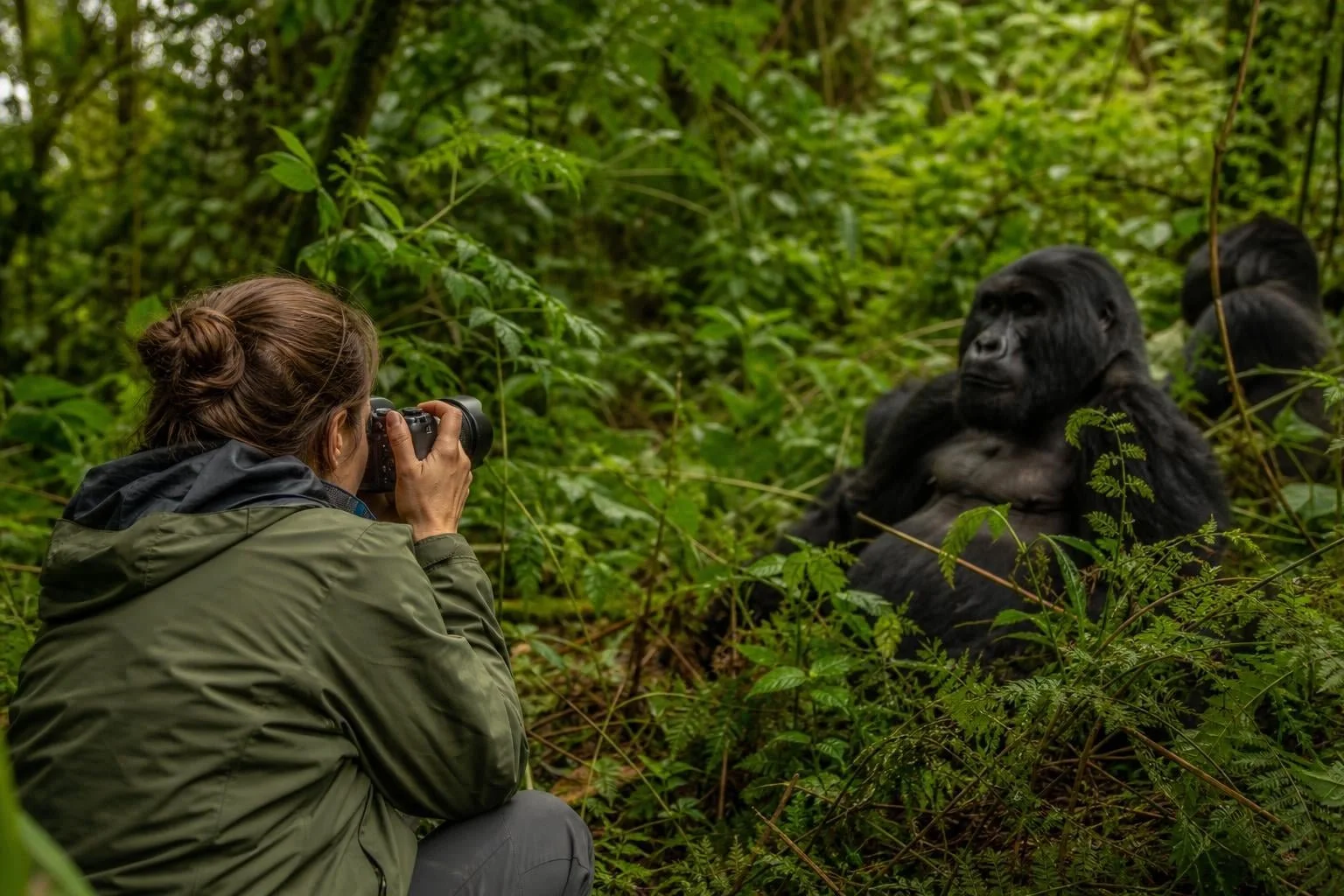
TLDR: A gorilla trek cost is the sum of a mandatory permit plus transport, lodging, meals, tips, and other logistics. Uganda’s standard foreign visitor permit is $800, Rwanda’s is $1,500, and total trip costs typically range from about $1,200 per person for a short budget Uganda trip to $5,000 or more for luxury itineraries. The permit is the headline number, but your country, route, accommodation tier, group size, and season determine the real price.
The gorilla trek cost question sounds simple. It is not. The permit is the biggest fixed line item, and that is what most people fixate on: $800 for Uganda, $1,500 for Rwanda. But the real trip price depends on how you reach the park, where you sleep, whether you travel privately or in a group, and how much help you want with permits and logistics.
This guide breaks down every layer of cost, from the permit itself to the expenses that catch travelers off guard.
Exploring gorilla trekking options in Uganda or Rwanda? See Uganda gorilla safari prices for trip types, routes, and what to expect.
Quick Answer: How Much Does Gorilla Trekking Cost in 2026? If you're planning a gorilla trek in 2026, expect to spend:
|
Trip Type |
Uganda |
Rwanda |
|---|---|---|
|
Permit Only |
$800 |
$1,500 |
|
Budget Trip |
$1,200–$2,000 |
$1,700–$2,500 |
|
Mid-range Trip |
$2,500–$4,000 |
$2,500–$5,000 |
|
Luxury Safari |
$4,000–$7,000+ |
$5,000–$10,000+ |
For most travelers, the permit accounts for roughly 40–65% of the total trip cost. Transport, accommodation, meals, porter fees, tips, and travel insurance make up the remaining expenses.
Takeaway Uganda offers the lowest overall price for most travelers, while Rwanda offers the fastest and easiest access. The cheapest permit does not always result in the cheapest trip.
Gorilla Trek Cost Calculator
|
Expense |
Budget |
Mid-range |
Luxury |
|---|---|---|---|
|
Permit |
$800 |
$800 |
$800 |
|
Accommodation |
$60 |
$180 |
$800 |
|
Transport |
$150 |
$350 |
$800 |
|
Meals |
$40 |
$80 |
Included |
|
Porter & Tips |
$50 |
$80 |
$120 |
|
Insurance |
$80 |
$120 |
$200 |
|
Miscellaneous |
$70 |
$150 |
$300 |
|
Estimated Total |
$1,250 |
$2,560 |
$5,020+ |
What “Gorilla Trek Cost” Actually Means
In travel planning, gorilla trek cost means the total amount you should budget to see wild mountain gorillas, not just the park permit. The permit is mandatory and non-negotiable, but you still need to pay for transport, lodging, meals, tips, porter support, and sometimes visas or domestic flights.
“Gorilla trekking” usually refers to visiting wild mountain gorillas in either Uganda (Bwindi Impenetrable National Park or Mgahinga Gorilla National Park) or Rwanda (Volcanoes National Park). DRC’s Virunga National Park historically offered trekking at a lower price, but the park’s official visitor site states that gorilla treks are closed until further notice, making it impractical for current planning.
Here is the formula that governs every gorilla trekking cost:
Gorilla trek cost = permit + transport + lodging + meals + guide/driver + porter and tips + visas/insurance + optional add-ons
The permit is fixed. Everything else is a variable you can control.
Quick Answer: How Much Does a Gorilla Trek Cost?
|
Cost type |
Uganda |
Rwanda |
|---|---|---|
|
Standard foreign visitor permit |
$800 |
$1,500 |
|
Low-season permit (if available) |
Reported at $600 in Apr/May/Nov |
Standard $1,500 for foreign visitors |
|
Short budget trip (total) |
~$1,200+ per person |
~$1,700+ per person |
|
Mid-range private trip |
$2,500–$4,000+ |
$2,500–$5,000+ |
|
Luxury trip |
$4,000–$7,000+ |
$5,000+ |
These total-trip benchmarks come from Horizon Guides, written by Charlotte Beauvoisin, a Uganda-based travel journalist and Bradt Uganda contributor. Permit prices reflect Uganda Wildlife Authority’s published tariff and Visit Rwanda’s official gorilla tracking page.
Permit Prices by Country
The permit is the single largest fixed cost in any gorilla trekking budget. Here is what each country charges.
Uganda
Under the Uganda Wildlife Authority’s 2024–June 2026 conservation tariff, gorilla tracking permits cost:
-
Foreign Non-Residents: $800
-
Foreign Residents: $700
-
Rest of Africa: $500
-
East African Community citizens: UGX 300,000
Uganda also offers the Gorilla Habituation Experience, which allows longer time with semi-habituated gorilla families. The habituation permit was $1,500 for Foreign Non-Residents under the same tariff, though practitioner reporting from Uganda-based Diary of a Muzungu indicates the rate rises to $1,800 from January 1, 2027.
Both Bwindi Impenetrable National Park and Mgahinga Gorilla National Park offer gorilla tracking at the same permit rates. Source: UWA Conservation Tariff.
For a deep dive on Uganda permit rules and booking, see the Uganda gorilla permits guide.
Rwanda
Rwanda’s official gorilla tracking permit is $1,500 for foreign visitors. The Rwanda Development Board booking portal lists additional categories: $500 for foreign residents in Rwanda, $200 for Rwandan citizens, and $200 for East African citizens, subject to promotional conditions.
Volcanoes National Park has 12 fully habituated gorilla families with eight permits issued per family per day, making 96 permits available daily. Visitors gather at park headquarters in Kinigi at 7:00 AM, get assigned a family group based partly on fitness level, and may hike from 30 minutes to four or more hours at altitudes between 2,500m and 4,000m. Source: Visit Rwanda.
DRC (Virunga)
DRC’s Virunga National Park was historically the cheapest mountain gorilla option, with permits often cited around $400. But SafariBookings notes the park closed to tourism in March 2020 and has not reopened due to security issues. Do not plan around DRC gorilla trekking unless official reopening and security conditions change.
|
Country |
Park |
Foreign visitor permit |
Status |
|---|---|---|---|
|
Uganda |
Bwindi / Mgahinga |
$800 |
Active; low-season discounts reported |
|
Rwanda |
Volcanoes National Park |
$1,500 |
Active; 96 permits/day |
|
DRC |
Virunga |
~$400 historical |
Closed until further notice |
Gorilla Trek Permit Prices by Nationality
|
Visitor Category |
Uganda |
Rwanda |
|---|---|---|
|
Foreign Non-Resident |
$800 |
$1,500 |
|
Foreign Resident |
$700 |
$500 |
|
Rest of Africa |
$500 |
— |
|
East African Citizen |
UGX 300,000 |
$200 (eligible categories) |
What the Permit Includes (and What It Does Not)
This is one of the biggest confusion points. Many travelers compare “$800 Uganda vs $1,500 Rwanda” and forget that neither permit covers getting to the park or sleeping near the trailhead.
Usually included in the permit:
-
Park access for the trekking day
-
Ranger/guide support and trackers
-
Regulated access to one habituated gorilla family
-
Up to one hour of viewing time once gorillas are found
-
In Uganda, the tariff explicitly includes guide fee, park entrance for the day, and a community development contribution
Not included in the permit:
-
International or domestic flights
-
Road transfers to the park
-
Accommodation
-
Meals outside a package
-
Porter
-
Tips for ranger, tracker, porter, and driver-guide
-
Visas
-
Travel insurance
-
Add-on activities (golden monkey trekking, chimpanzee tracking, etc.)
Understanding these inclusions and exclusions matters because the cost of gorilla trekking extends well beyond the permit number you see quoted everywhere.
What the Permit Does NOT Include
|
Included |
Not Included |
|---|---|
|
Ranger Guide |
Flights |
|
Gorilla Tracking |
Hotels |
|
Park Entry |
Meals |
|
Conservation Fees |
Porter |
|
Community Contribution |
Tips |
|
One Hour Viewing |
Insurance |
|
Trackers |
Visa |
The Real Cost Drivers Beyond the Permit
Country Choice
Uganda lowers your permit cost. Rwanda lowers your logistical friction. These are not the same thing.
Rwanda’s Volcanoes National Park sits about two hours from Kigali, making same-day or next-day trekking straightforward. Uganda’s Bwindi is harder to reach, requiring either a full day’s drive from Entebbe/Kampala, a domestic flight to a regional airstrip, or a cross-border shortcut from Kigali into southern Bwindi.
Transport
Transport is the cost variable people underestimate most. A private 4x4 with driver-guide from Entebbe to Bwindi can take 8 to 10 hours each way. Domestic charter flights cut the time but add several hundred dollars. The Kigali-to-southern-Bwindi route is a popular shortcut, but it introduces border crossings and visa considerations that add complexity.
Should You Drive or Fly?
|
Option |
Cost |
Time |
Best For |
|---|---|---|---|
|
Drive from Entebbe |
Lower |
8–10 hrs |
Budget travelers |
|
Domestic Flight |
Higher |
1–2 hrs |
Luxury & short itineraries |
|
Kigali to Bwindi |
Moderate |
3–4 hrs |
Time-conscious travelers |
Accommodation
Lodge tier is the second-biggest swing after the permit. Horizon Guides gives typical per-person, per-night ranges for Uganda at roughly $50–$70 budget, $80–$120 mid-range, and $300–$3,000 luxury. Rwanda runs slightly higher overall, with a stronger concentration of high-end lodges near Volcanoes National Park.
Group Size
When two or four travelers share a private vehicle and driver-guide, the per-person transport cost drops substantially. Solo travelers absorb the full vehicle cost alone, which is one reason Rwanda can sometimes be cheaper for solo trips despite its higher permit price.
Season
Uganda’s low-season months (April, May, November) can reduce the permit cost by $200, bringing the Foreign Non-Resident rate to a reported $600. But the tradeoff is real: wetter trails, muddier conditions, and the Diary of a Muzungu notes that low-season permits cannot be rescheduled. If you are flexible, fit, and comfortable with rainier trekking conditions, these months offer the best-value Uganda windows, but only if you can commit to fixed dates.
Uganda vs Rwanda: Which Is Better Value?
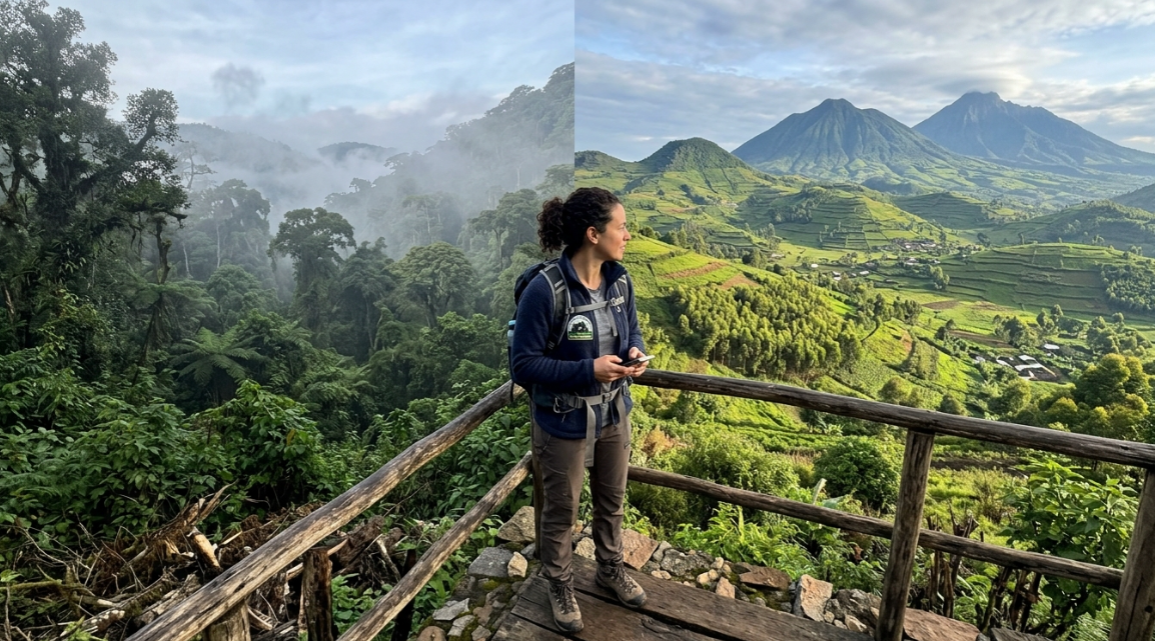
This is the question almost every traveler asks, and the answer is not as simple as comparing permit prices.
Choose Uganda if:
-
You want the lower permit price ($800 vs $1,500)
-
You are planning a longer East Africa safari that includes chimps, savanna wildlife, or multiple parks
-
You want the Gorilla Habituation Experience
-
You are traveling as a couple, family, or group and can share vehicle costs
-
You are flexible enough to travel during low-season discount months
-
You want more mid-range lodging options near the park
Choose Rwanda if:
-
You have only one or two days for gorilla trekking
-
You are already in Kigali or arriving there
-
You are solo and want to avoid the cost of long private Uganda transfers
-
You want the simplest possible logistics
-
You prioritize luxury lodges and polished infrastructure
-
You are combining gorillas with other Rwanda parks
For a full side-by-side breakdown, see Rwanda vs Uganda gorilla trekking.
When the Cheaper Permit Is Not the Cheaper Trip
On paper, Uganda saves a foreign traveler $700 on the permit alone. But TripAdvisor destination experts make a point that practitioners on forums consistently echo: the permit price is only one element. For a quick solo trip, Rwanda may be cheaper overall after logistics, while Uganda often makes more sense as part of a longer itinerary.
Consider a solo traveler with two days in East Africa. In Rwanda, they fly into Kigali, transfer two hours to Volcanoes National Park, trek the next morning, and fly out the same evening. Total: permit plus one or two hotel nights, a short transfer, and meals. In Uganda, the same traveler needs a flight to Entebbe, a long drive or domestic flight to Bwindi, at least two extra nights, and a private vehicle. The $700 permit savings can vanish into transport and accommodation.
The reverse is also true. A couple spending 10 days in Uganda, combining Bwindi with Queen Elizabeth National Park, Kibale Forest for chimps, and Lake Bunyonyi, will spread vehicle and guide costs across the full trip. The gorilla trekking cost becomes one line item in a longer, more cost-efficient itinerary.
This is an important point that most gorilla trek cost guides skip over entirely.
Hidden Costs to Budget For
Porter ($10–$20 plus tip)
Porters carry your daypack and physically help on steep, muddy, slippery sections. TripAdvisor users report porter costs around 50,000 UGX (about $13) in Uganda. Reddit travelers consistently emphasize that a porter does more than carry a bag: they help with balance on difficult terrain and provide direct local income. If you are debating one small add-on, choose the porter.
Tips
Tips are not included in the permit. Plan for tips to your porter, ranger/guide, trackers, and driver-guide if you are on a package. Read our guide on safari tipping etiquette for typical amounts.
Travel Insurance
Because permit refund rules are strict and gorilla trekking involves remote terrain, insurance is functionally mandatory. Rwanda’s RDB portal states there is no refund for late arrivals, flight delays, absence, or trip cancellation. Coverage for medical evacuation, trip interruption, and non-refundable permit costs is worth the premium. See gorilla trekking insurance for what to look for.
Extra Night Near the Park
Most itineraries require arriving the night before trekking to make the early morning briefing. This is not optional; it is a practical requirement that adds at least one hotel night to your budget.
Gear
Rain jacket, waterproof hiking boots, long pants, gardening gloves, and gaiters are standard recommendations. If you do not already own these, budget for them or plan to rent locally where available.
Domestic Flights
A charter or scheduled flight from Entebbe to an airstrip near Bwindi (like Kihihi or Kisoro) typically costs several hundred dollars per person. It saves a full day of driving each way but adds meaningfully to the total gorilla trekking cost.
Habituation vs Standard Trekking
Uganda’s Gorilla Habituation Experience lets visitors spend up to four hours with semi-habituated gorillas, compared to the standard one-hour viewing window. The habituation permit under UWA’s published tariff was $1,500 for Foreign Non-Residents, roughly matching Rwanda’s standard permit price.
Fodor’s forum discussions reveal important nuance here. Some travelers find habituation compelling because it offers significantly more time for about the same price as a Rwanda standard permit. Others report that a standard trek with a fully habituated family can actually be more satisfying, because the gorillas are calmer, closer, and more predictable.
Choose standard trekking for the classic experience, lower cost, and more sector flexibility. Choose habituation if your priority is extended time, a research-style experience, or gorilla photography. Avoid habituation if you expect a polished, easy, close-up encounter. Semi-habituated gorillas can be less predictable.
For travelers who want better odds and more variety, booking two standard treks on consecutive days (two different gorilla families) is another option worth considering.
Is Gorilla Trekking Worth the Cost?
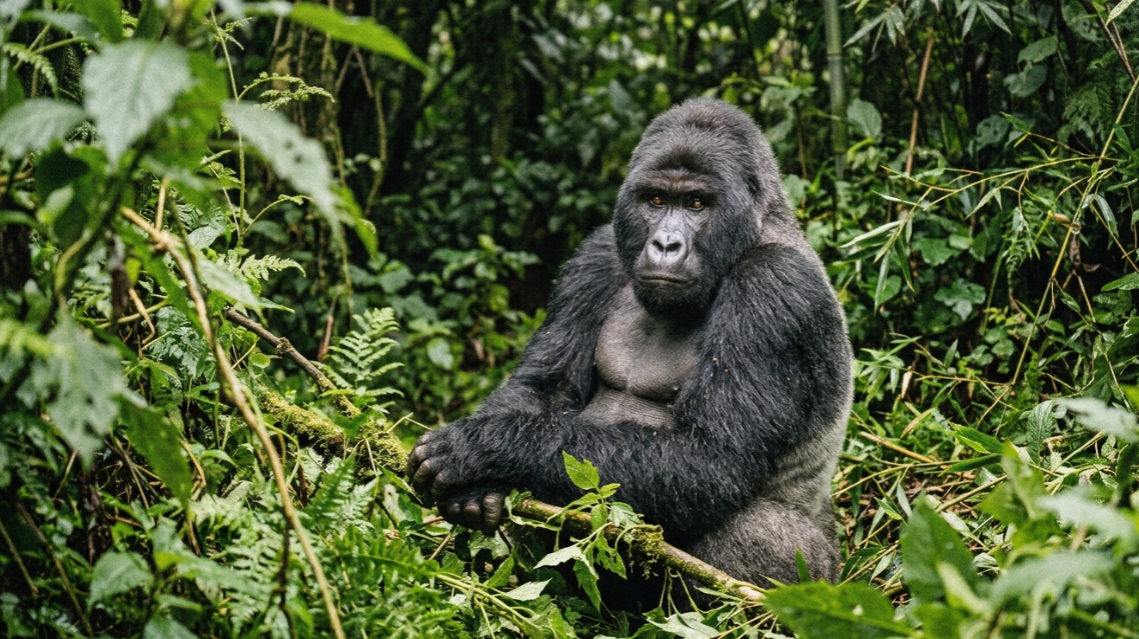
A high-signal Reddit thread asks directly whether Uganda gorilla trekking for roughly $900 is worth it. The responses are overwhelmingly positive, with many commenters describing it as a top travel experience. But several add important caveats: if you dislike hiking, group trekking, mud, or early mornings, the cost may not feel justified.
Trek times vary widely. One Reddit user reported one trek took several hours while another day required only 20 minutes of walking, and they were actually disappointed it was not longer. This variability is part of the deal. You are visiting wild animals in their habitat, not buying a seat at a show.
A better way to think about the price: you are not paying for one hour like a ticketed event. You are paying into a tightly controlled conservation system that allows a small number of people to visit wild gorillas without overwhelming them. Uganda’s tariff explicitly funds guide services, park entry, and community development. Rwanda channels 10% of permit revenue toward local communities for schools, health centers, roads, and farmer compensation when gorillas damage crops.
The one-hour viewing window is only the final part of a regulated half-day or full-day experience. UWA says treks can last 2 to 7 hours in Uganda before you reach the gorillas.
For a deeper look at this question, see our full guide on whether gorilla trekking is worth it.
Booking and Risk Tips
Reddit threads include cautionary stories about travelers trying to avoid “sketchy companies” and confusion around official Uganda permit purchasing. The anxiety is understandable: permits are expensive, non-refundable in many cases, and the booking process is not always intuitive.
Here is a practical checklist:
-
Secure the permit before final lodge booking. In Bwindi, the trekking sector affects where you should sleep. Booking the wrong lodge for the wrong Bwindi sector can add hours of rough driving.
-
Ask for written permit confirmation with date, park, sector, and name details.
-
Use official RDB/UWA channels or a vetted licensed operator. UWA has issued advisories on adherence to permit purchase guidelines.
-
Avoid paying large sums to unverifiable WhatsApp-only operators. Use traceable payment methods.
-
Budget for a porter. It is a small cost that improves both your experience and local livelihoods.
-
Avoid tight flight connections after trekking. Trek length is unpredictable, and parks are remote.
-
Do not trek sick. Rwanda’s rules state visitors may be denied access if they have a cold, flu, or contagious illness, with no refund.
-
Buy travel insurance that covers non-refundable trip costs and medical evacuation.
-
Confirm current rates at booking. Uganda’s tariff structure has been transitioning, and travelers booking for late 2026 or 2027 should verify directly with UWA or their operator.
Planning Gorillas as Part of a Bigger Trip
Gorilla trekking costs become more manageable when the trek is one component of a broader East Africa itinerary. Shared vehicle costs, combined logistics, and multi-stop routing spread the fixed expenses across more travel days and experiences.
If you are combining Uganda or Rwanda gorilla trekking with a Tanzania safari, Kilimanjaro climb, Kenya extension, or Zanzibar beach stay, working with a single operator who can coordinate permits, border crossings, flights, lodges, and backup timing across multiple countries simplifies the process considerably.
See Uganda gorilla trip options for trip types ranging from budget road treks to fly-in luxury itineraries, or explore how to fit multiple experiences into one East Africa trip.
Frequently Asked Questions
How much is a gorilla trekking permit?
Uganda’s standard Foreign Non-Resident gorilla tracking permit is $800 under UWA’s published tariff. Rwanda’s foreign visitor permit is $1,500. Uganda has reported low-season discounts bringing the price to $600 for April, May, and November, but travelers should confirm current rates before booking.
Is the permit the full gorilla trek cost?
No. The permit covers the regulated trekking experience, but the total trip cost also includes transport, lodging, meals, tips, porter, visas, insurance, and optional add-ons. The permit is typically 40–65% of the total cost depending on lodge tier and transport choices.
Is Uganda or Rwanda cheaper for gorilla trekking?
Uganda is cheaper on permit price. But total gorilla trek costs depend on your itinerary. Rwanda can be more cost-efficient for a short solo trip because Volcanoes National Park is close to Kigali, while Uganda wins for longer trips, groups, and mid-range travelers combining gorillas with other wildlife areas.
Why is gorilla trekking so expensive?
Access is deliberately limited and conservation-managed. Rwanda allows only 96 visitors per day across 12 gorilla families. Uganda enforces similar group-size limits. The fees fund ranger guides, trackers, park operations, anti-poaching patrols, and community development programs.
Can I trek gorillas in DRC for less?
Not currently. Virunga National Park’s official site says gorilla treks are closed until further notice due to security issues. DRC is not a practical mountain gorilla option for mainstream travelers right now.
Should I hire a porter?
Yes. The cost is small (roughly $10–$20 plus tip), and porters help with bags and balance on steep, muddy trails. They also provide direct income to local communities near the parks.
How long do I spend with the gorillas?
The standard viewing time is one hour once the gorillas are found. But the trek to reach them can last 2 to 7 hours in Uganda, and 30 minutes to four or more hours in Rwanda, depending on where the gorilla family is that day.
When is the cheapest time for gorilla trekking?
Uganda’s reported low-season months (April, May, November) offer the lowest permit costs at $600 for Foreign Non-Residents. Trails are muddier, but crowds are thinner and lodge availability is often better. The tradeoff: these discounted permits reportedly cannot be rescheduled.