

TL;DR
The most exclusive safari lodges in Tanzania are defined by three things: private conservancy access, low guest counts (under 20), and activities you can’t get inside national parks (night drives, off-road tracking, walking safaris). Singita Sasakwa in the Grumeti Reserve sets the benchmark at $2,550–$3,525 per person per night. Mwiba Lodge offers the highest land-to-guest ratio in the country. andBeyond Ngorongoro Crater Lodge is closed for a complete rebuild until January 2027, a fact most guides still miss. For travelers who want the exclusive feel without ultra-luxury pricing, camps like Jabali Ridge in Ruaha and Nyumbani in the Central Serengeti deliver outstanding value.
Tanzania has more options labeled “exclusive” than any country in East Africa. Most of them aren’t. A lodge with 77 rooms and a famous brand name is not the same product as an eight-tent camp on a private 130,000-acre reserve where your vehicle is the only one for miles.
This guide separates the two. It covers ten properties that earn the word “exclusive” through some combination of private conservancy access, genuinely low capacity, sole-use booking options, and activities that Tanzania’s national parks simply don’t permit. Every lodge includes real pricing, honest tradeoffs, and a clear picture of who it actually suits.
If you’re building a luxury safari itinerary in Tanzania and want help matching specific lodges to your dates and priorities, Duma Explorer designs private itineraries around these properties.
What are the most exclusive safari lodges in Tanzania? The most exclusive safari lodges in Tanzania include Singita Sasakwa Lodge and Singita Faru Faru in the private Grumeti Reserve, Mwiba Lodge in Mwiba Wildlife Reserve, Chem Chem Safari Lodge in the Tarangire corridor, and smaller luxury camps such as Sayari Camp and Jabali Ridge. These properties offer different levels of privacy, accommodation capacity, wildlife access, and personalized safari experiences. For the highest level of exclusivity, prioritize private conservancy access, low guest capacity, dedicated safari vehicles, and activities such as night drives and guided walking safaris where permitted. In 2026, published rates range from approximately $865 to more than $3,500 per person per night, depending on the property, season, and accommodation category.
At-a-Glance Comparison: 10 Exclusive Safari Lodges in Tanzania
|
Safari Lodge |
Location |
Indicative Price (USD/person/night) |
Accommodation |
Exclusivity Type |
Best For |
|---|---|---|---|---|---|
|
Singita Sasakwa |
Grumeti Reserve |
$2,550–$3,525 |
10 cottages + Hillside Suite |
Private reserve |
Ultimate luxury and migration |
|
Mwiba Lodge |
Mwiba Wildlife Reserve |
$2,150–$2,885 |
10 suites |
Private reserve |
Privacy and helicopter experiences |
|
Sayari Camp |
Northern Serengeti |
$980–$2,250 |
15 tents + 2 retreats |
Small luxury camp |
Mara River crossings |
|
Serengeti Bushtops |
Northern Serengeti |
$1,090–$2,160 |
15 suites |
Small luxury camp |
All-inclusive comfort |
|
Four Seasons Serengeti |
Central Serengeti |
$865–$1,080 |
77 rooms, suites and villas |
Large luxury lodge |
Families and hotel-style amenities |
|
andBeyond Ngorongoro Crater Lodge |
Ngorongoro Crater rim |
Historical rates: $1,460–$2,470 |
30 suites before refurbishment |
Iconic crater-rim location |
Honeymoons after reopening |
|
Jabali Ridge |
Ruaha National Park |
$880–$1,660 |
8 suites + family house |
Small luxury camp |
Remote southern circuit |
|
Chem Chem Safari Lodge |
Tarangire corridor |
Request current rates |
8 tented rooms |
Private concession |
Walking safaris and exclusivity |
|
Nyumbani Camp |
Central Serengeti |
Request current rates |
Small tented camp |
Boutique camp |
Personal service and value |
|
Singita Faru Faru |
Grumeti Reserve |
$2,550–$3,525 |
9 suites + 2 villas |
Private reserve |
Contemporary luxury and families |
Pricing note: Prices are indicative 2026 figures from the article's research, not guaranteed live quotations. Rates vary by season, room category, occupancy, and inclusions. The Four Seasons figure should be independently checked against the selected room category and whether the rate is per room or per person. andBeyond Ngorongoro Crater Lodge is closed for refurbishment, so its historical prices are not current bookable rates. Contact each property or a safari operator for a final quotation.
What Makes a Tanzania Safari Lodge Genuinely “Exclusive”?
Most articles about exclusive safari lodges in Tanzania skip this entirely. They list expensive properties and call it a day. But in Tanzania, the word “exclusive” carries a specific, practical meaning that directly affects what you can do on safari.
The distinction comes down to where the lodge sits: inside a national park, or on a private conservancy.
National parks (Serengeti, Ruaha, Tarangire) are managed by the Tanzania National Parks Authority (TANAPA). They’re open to any operator who pays the entry fees. Vehicles must stay on designated roads. Driving after approximately 6:30 PM is prohibited. Walking safaris are restricted or unavailable. During peak season, multiple vehicles may cluster around a sighting.
Private conservancies and game reserves (Grumeti Reserve, Mwiba Wildlife Reserve, Chem Chem concession) tightly control visitor numbers to maintain low-density, high-quality experiences. On these properties, lodges can offer night drives, off-road tracking, walking safaris, and bush meals in locations inaccessible to park visitors.
This is not a minor difference. It changes the entire character of the safari.
The ideal Tanzania itinerary that includes a conservancy typically combines both: three to four days inside the national parks for the iconic encounters (Ngorongoro Crater floor, central Serengeti’s big cat concentrations) and two to three days on a private conservancy for the depth of experience, the night drives, and the sense of genuine wilderness.
Beyond conservancy access, exclusivity in Tanzania also means:
-
Capacity. An eight-tent camp where you share the bush with 16 guests is a fundamentally different product than a 77-room hotel.
-
Sole-use options. Some lodges offer exclusive-use booking for the entire property or a self-contained wing, meaning your group is the only one there.
-
Private vehicles and guides. At the top tier, every booking gets a dedicated 4x4 and guide, not a shared vehicle on a fixed schedule.
The lodges below are organized to make these distinctions clear.
Private Conservancy vs. National Park Safari Lodges in Tanzania
One of the biggest differences between luxury safari lodges in Tanzania is whether they operate inside a national park or within a private wildlife reserve or concession. This distinction affects wildlife activities, visitor numbers, privacy, and the overall safari experience.
|
Feature |
Private Conservancy or Concession |
National Park Lodge |
|---|---|---|
|
Visitor numbers |
Usually more tightly controlled |
Open to multiple safari operators |
|
Night game drives |
Available where permitted |
Generally restricted, with specific authorized exceptions |
|
Off-road driving |
May be permitted under concession rules |
Generally prohibited unless specifically authorized |
|
Walking safaris |
Available where permitted |
Available in approved locations with authorized guides |
|
Vehicle density |
Often lower |
Can be higher around popular sightings |
|
Private safari vehicles |
Common at luxury properties |
Available at some lodges, sometimes at additional cost |
|
Wildlife viewing |
Depends on reserve and season |
Often excellent in established wildlife areas |
|
Accommodation costs |
Frequently higher |
Range from mid-luxury to ultra-luxury |
Which experience should you choose?
Choose a private conservancy if:
-
Privacy is more important than minimizing accommodation costs.
-
You want opportunities for night drives and guided walking safaris.
-
You prefer fewer vehicles around wildlife sightings.
-
You want a more flexible safari schedule.
-
You are interested in specialist activities such as off-road photography.
Choose a national park lodge if:
-
You want access to Tanzania's famous wildlife destinations.
-
You are prioritizing the Great Migration or established big-cat areas.
-
You want more accommodation choices at different price points.
-
You prefer to spend more of your budget on the overall safari itinerary.
Neither option is automatically better. A national park can offer exceptional wildlife density, while a private concession can offer greater flexibility and privacy.
For many travelers, combining both creates the most rewarding Tanzania safari.
The 10 Most Exclusive Safari Lodges in Tanzania
1. Singita Sasakwa Lodge
Location: Grumeti Reserve, western Serengeti
Best for: The definitive Tanzania ultra-luxury experience
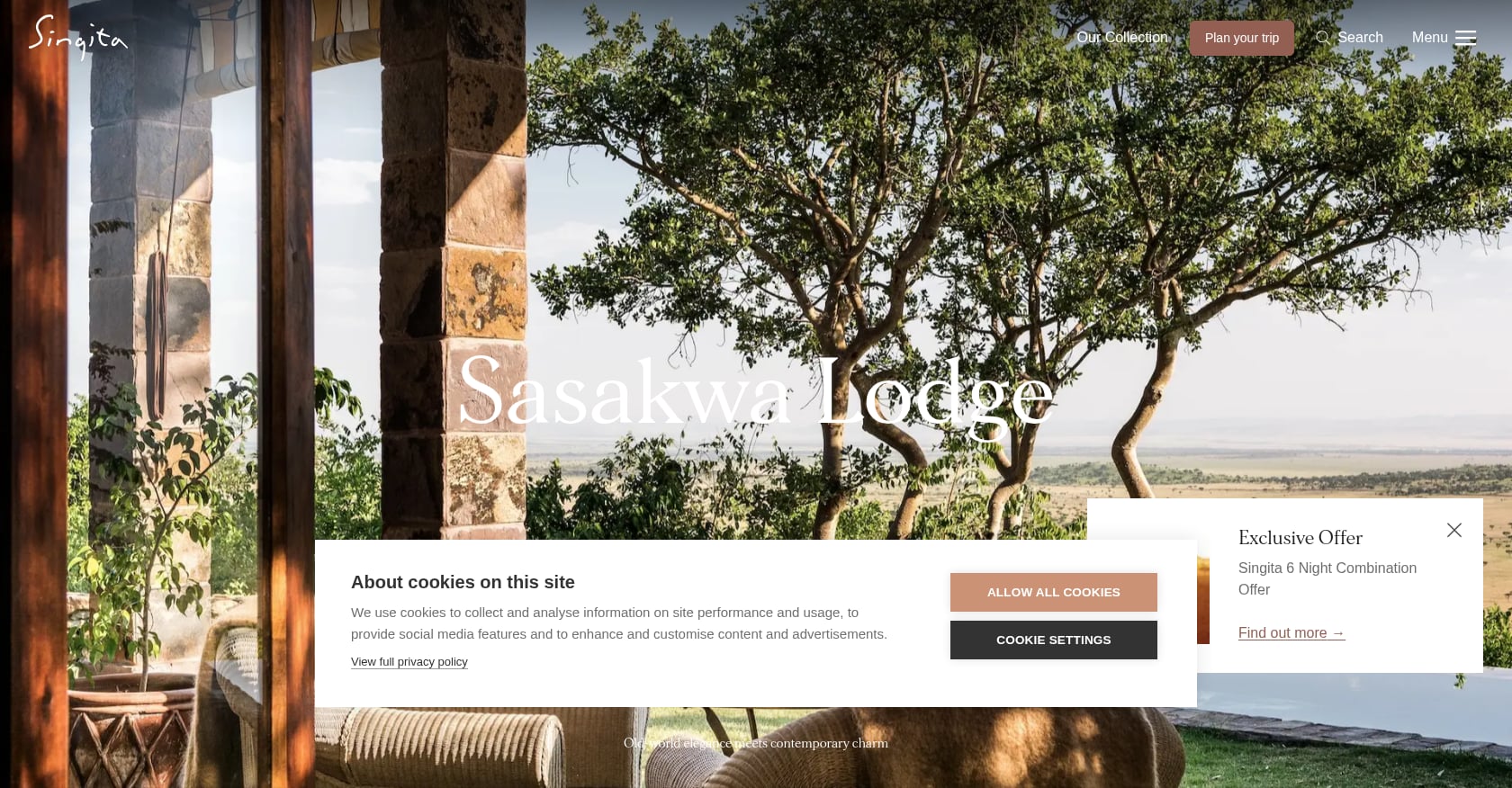
Singita Sasakwa Lodge sits within the 350,000-acre Singita Grumeti Reserve in northern Tanzania. It is the most consistent answer to the question of Tanzania’s best exclusive safari lodge, combining Edwardian manor-house elegance with one of the most exclusive private wildlife areas in East Africa.
Rooms: Six one-bedroom cottages, two two-bedroom cottages, and one three-bedroom cottage, all with private infinity pools. A four-bedroom private villa is also available for sole-use bookings.
Pricing (2026): Cottages range from $2,550 per person per night (January–May, November–December) to $3,525 during peak season (June–October, holiday periods). A $177 Wildlife Fee per adult per night, plus carbon and tourism levies, are added on top.
What’s included: All meals, premium drinks, two game activities per day with a private vehicle and guide, laundry, Wi-Fi.
Why it earns “exclusive”: The Grumeti Reserve is a private concession. Night drives, off-road driving, and walking safaris are all available. Vehicle density is minimal. During the western corridor migration (May through July), wildebeest crossings happen with almost no other tourists in sight.
Honest tradeoff: This is the most expensive lodge in Tanzania. The Grumeti location means migration herds pass through seasonally; the rest of the year, resident game is excellent, but you won’t see the massive columns of wildebeest.
2. Mwiba Lodge
Location: Mwiba Wildlife Reserve, southern Serengeti corridor
Best for: Privacy absolutists and helicopter exploration
If exclusivity is something safari operators throw around loosely, Mwiba earns the word. Ten tented suites on 130,000 private acres with no other camps anywhere nearby.
Rooms: Ten suites designed for a maximum of twenty guests.
Pricing: $2,150 to $2,885 per person per night, covering meals, house drinks, laundry, Wi-Fi, and airstrip transfers.
Key differentiator: Mwiba is the only lodge in Tanzania with a permanent helicopter on site, opening up exploration impossible elsewhere: flights over the Serengeti plains, down into the Rift Valley, and across to Lake Eyasi. Cultural excursions with the Hadzabe and Datoga tribes are included in the rates. Every booking gets a fully private safari vehicle and guide.
Why it earns “exclusive”: Private conservancy with night drives, walking safaris, and off-road access. The land-to-guest ratio is the highest in southern Tanzania. The helicopter adds an entire dimension unavailable at any competitor.
Honest tradeoff: The lodge’s location outside the park is what creates its exclusivity, but it also means a longer drive to reach the core game-viewing areas of the southern Serengeti. Calving season (December through March) is the strongest period for nearby wildlife density.
For couples considering Mwiba as part of a private honeymoon safari in Tanzania, the privacy and helicopter access make it particularly compelling.
3. Sayari Camp
Location: Northern Serengeti, near Kogatende
Best for: Mara River crossing access with genuine comfort
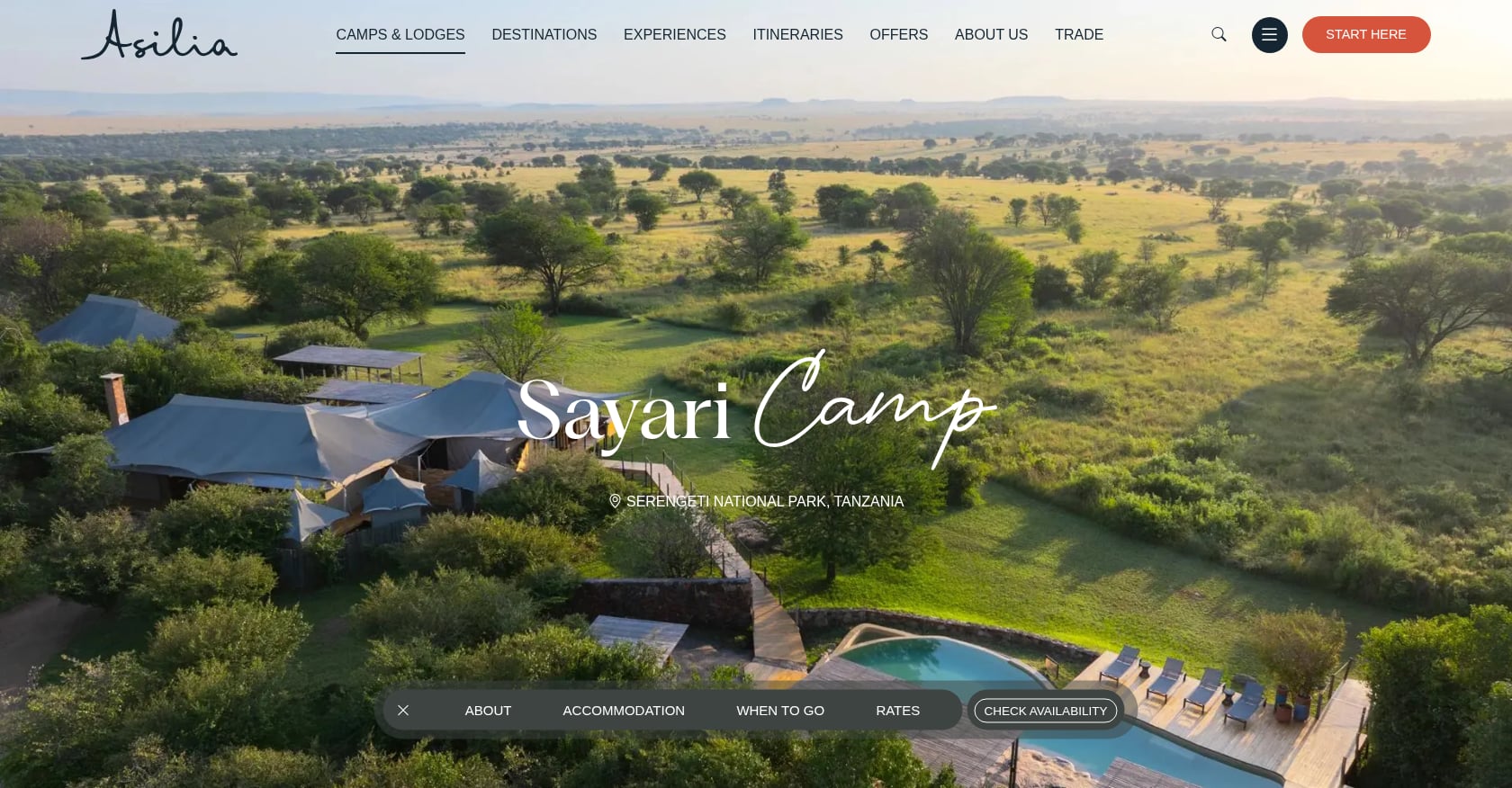
Sayari is described as the best all-round luxury camp in the Serengeti for its location close to Mara River crossing points, genuine luxury with bathtubs, pool, and spa, and Asilia’s most experienced guiding team.
Rooms: 15 tents including two family tents and one honeymoon tent. Two exclusive-use Retreats, each with two en suite bedrooms, a lounge and dining area, a wide veranda with private firepit, a dedicated host, private chef, and private safari vehicle and guide. Retreat rates start from $3,580 per house.
Pricing: $980 per person per night in shoulder season (January–March) to $2,250 during peak migration (July–October).
What’s included: Full board, house drinks, game drives, walking safaris where permitted, laundry.
Why it matters: The northern Serengeti between July and October is where the Great Migration’s Mara River crossings happen. Sayari’s position near these crossing points is its primary draw. Off-season, the northern Serengeti also holds Tanzania’s best black rhino sighting probabilities.
Honest tradeoff: Sayari sits inside the national park, so night drives and off-road driving are prohibited. The remote Kogatende airstrip access can add domestic flight costs to the itinerary. Not a conservancy property, but genuinely exclusive through capacity and location.
Those planning around the migration should check our Great Migration safari guide for month-by-month positioning.
4. Serengeti Bushtops
Location: Northern Serengeti
Best for: All-inclusive luxury with zero hidden costs
Serengeti Bushtops is an ultra-luxury tented camp with fifteen enormous en-suite tents, each open on two sides, facing the sunset, with a private hot tub on the viewing deck.
Pricing (2026): Fully inclusive rates between $1,090 and $2,160 per person per night. “Fully inclusive” here means premium wines, spirits, spa treatments, and laundry, not just meals.
Key features: Each tent has a personal steward. Signature experiences include sundowners at Simba’s Rock and game drives aboard “The Beest,” a custom 6x6 game viewer. The camp’s position in the northern Serengeti places it well for migration season between July and October.
Why it matters: At this price point, the all-inclusive model eliminates the nickel-and-diming that frustrates travelers at properties where drinks, spa, and premium activities are extra. You know the total cost before you arrive.
Honest tradeoff: One reviewer captured it well: “A lovely luxurious lodge, but if you’re looking for a vintage Africa safari experience, this lodge will seem over the top with too many modern touches.” Inside the national park, so no night drives. Travelers seeking a raw, classic safari atmosphere may prefer a conservancy property.
5. Four Seasons Safari Lodge Serengeti
Location: Central Serengeti
Best for: Families and travelers wanting a known international brand
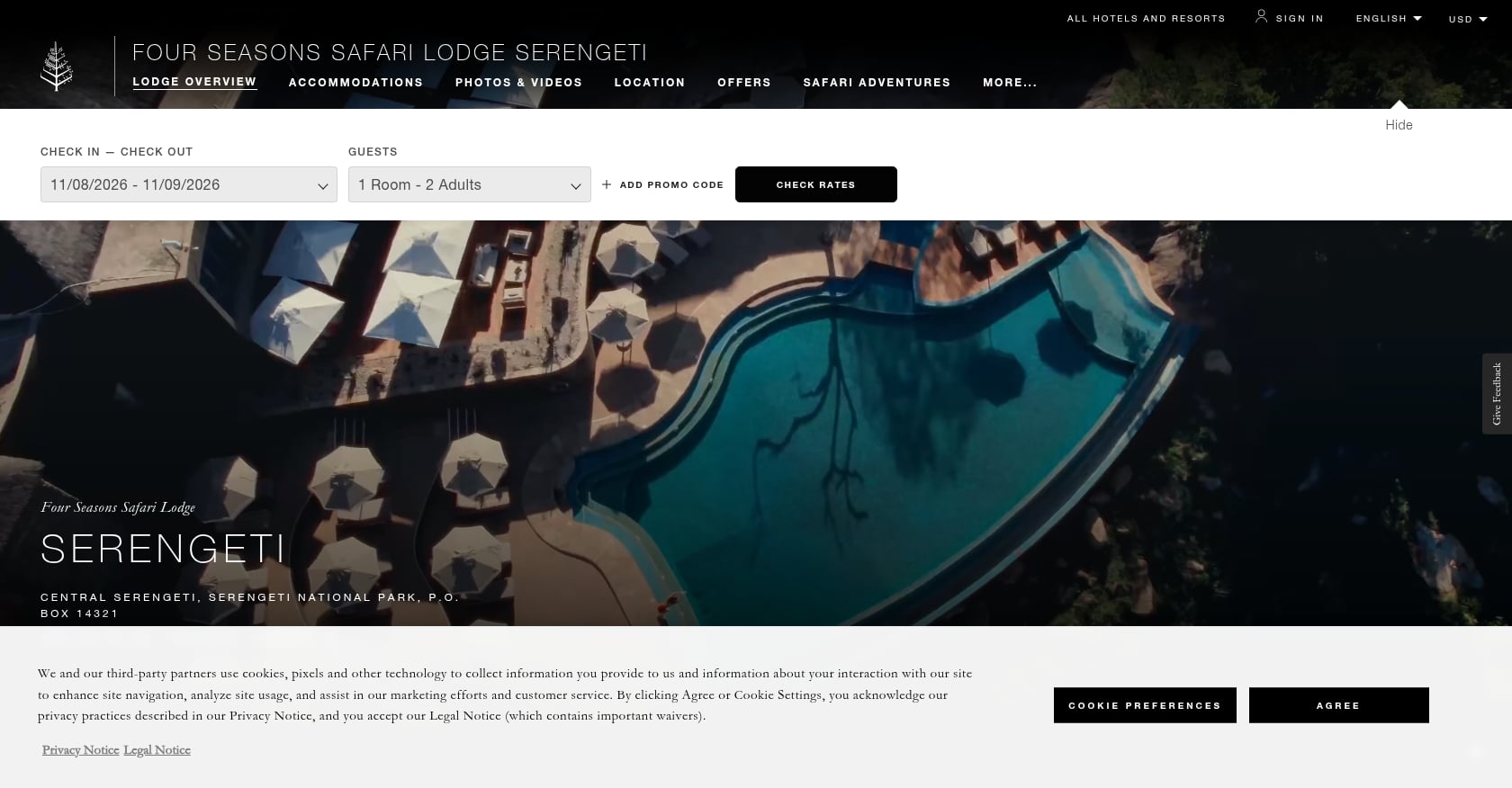
The only internationally branded luxury hotel inside the Serengeti, Four Seasons delivers predictable excellence in a setting that most other Four Seasons properties can’t match: an infinity pool overlooking an active elephant waterhole.
Rooms: 77 rooms, suites, and villas. A free kids club accepts children from age two, making it one of the few high-end Serengeti properties genuinely set up for young families.
Pricing (2026): Peak rates around $1,080 per person per night (June–October); shoulder season from $865 (November–December). Game drives cost extra.
User perspective: Rated 4.8 out of 5 from over 1,150 TripAdvisor reviews, but one reviewer captured the tension: “It will appeal to those wanting the comforts of a known luxury brand, but for me it totally lacked the charm of a small boutique lodge.”
Why it’s here: The Four Seasons isn’t exclusive by the conservancy definition. With 77 rooms, it’s the largest property on this list by a wide margin. But for families, particularly those with young children, it offers something the eight-tent camps can’t: reliable childcare, a swimming pool, and the infrastructure to handle the unpredictable needs of kids on safari.
Honest tradeoff: This is a hotel, not a bush camp. No night drives. Game drives are not included in the room rate. The central Serengeti location provides year-round game, but you’ll share roads with other vehicles during peak season.
Parents weighing their options should also look at our guide to kid-friendly Serengeti camps for smaller alternatives.
6. andBeyond Ngorongoro Crater Lodge
Location: Ngorongoro Crater rim
Best for: Honeymooners wanting the most dramatic location in African safari hospitality
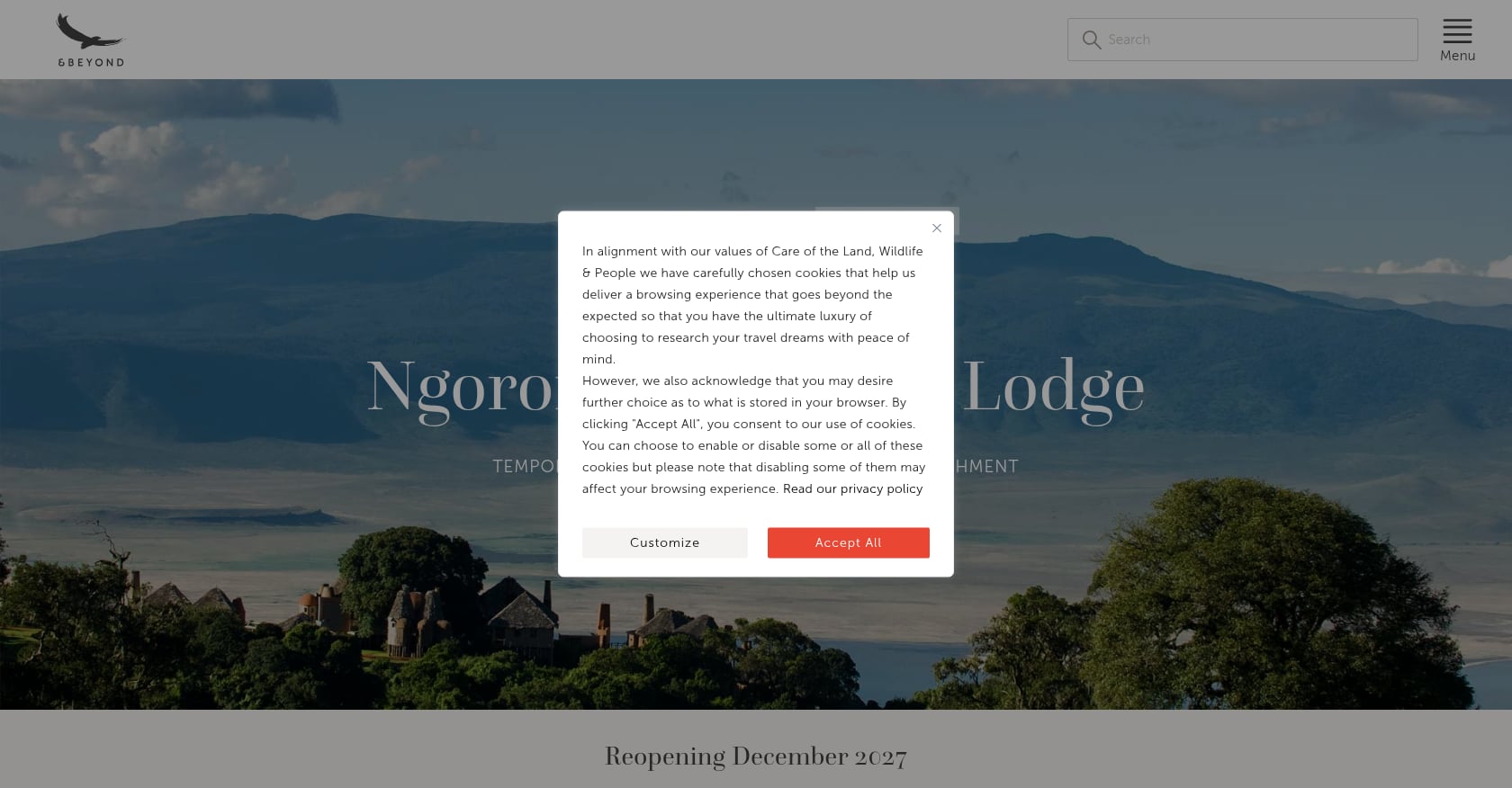
Baroque-luxury suites perched on the crater rim, each with private butler service and views into the caldera from the room, shower, and patio. There is nothing else like it in Tanzania.
Critical update: andBeyond Ngorongoro Crater Lodge is closed for a complete rebuild and is expected to reopen in January 2027. Most competitor articles still list this property as bookable, which is misleading. Anyone traveling before early 2027 should look at alternatives. The Meliá Ngorongoro Lodge on the rim is the closest direct substitute.
Pre-closure details: Divided into three camps with 30 suites featuring banana-leaf ceilings and grass roofs. Published 2024 rates ran from $1,460 per person per night to $2,470 in peak months.
Why it earns its spot: Even closed, Crater Lodge belongs on any list of exclusive safari lodges in Tanzania because it will return as one of the continent’s most iconic properties. The rebuild should address aging infrastructure while preserving what made the original legendary.
Honest tradeoff: Even before closure, some TripAdvisor reviewers described it as feeling “over the top.” The Ngorongoro Conservation Area is not a national park but is not a private conservancy either; night drives are not available. The crater floor itself limits game-drive time (typically a half day). For alternatives while the lodge is being rebuilt, see our guide to the best Ngorongoro honeymoon lodges.
7. Jabali Ridge
Location: Ruaha National Park
Best for: Experienced safari-goers chasing predators away from the crowds
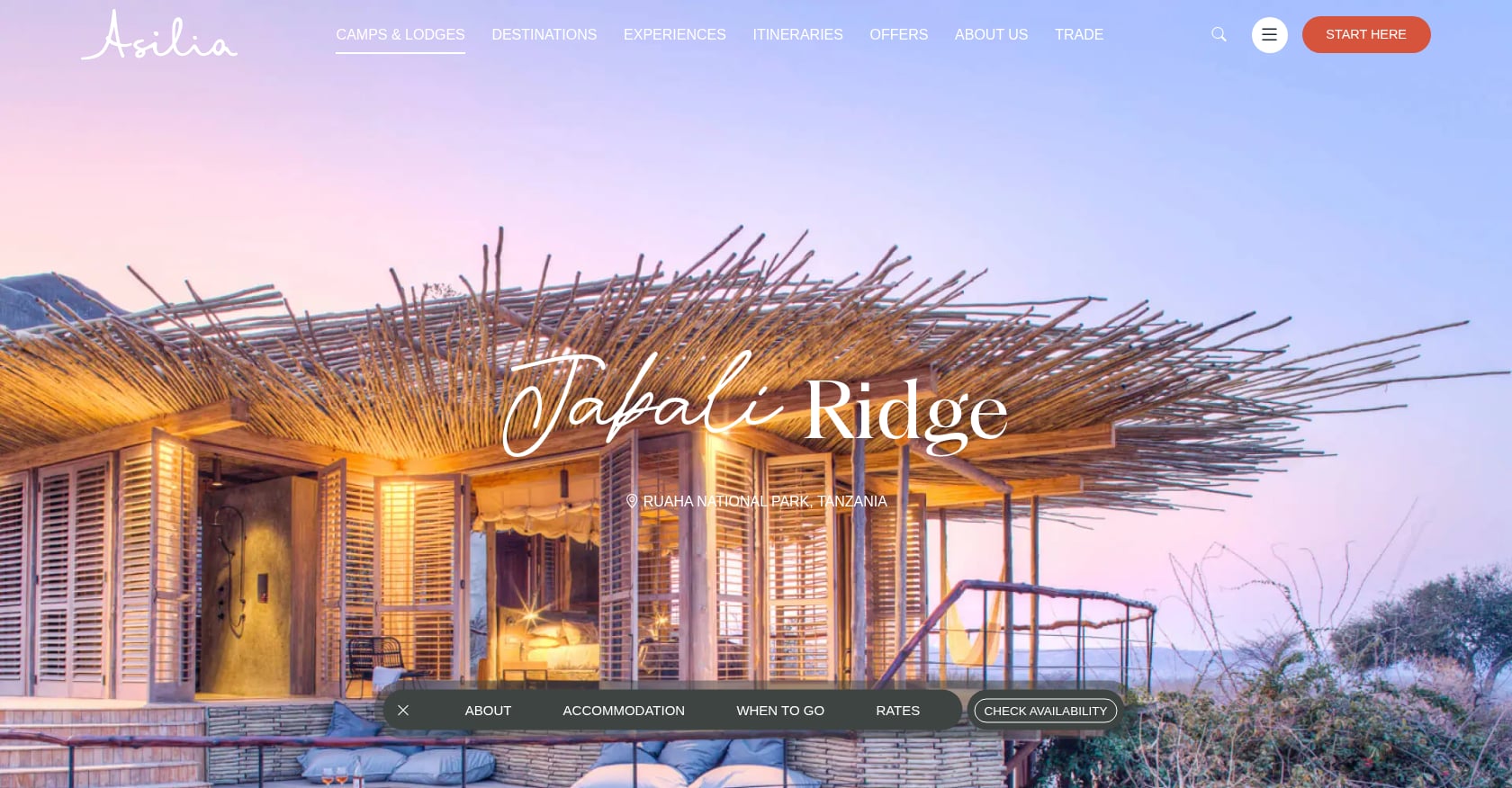
Ruaha is one of the least visited but most exciting conservation areas in Tanzania, known for concentrations of elephants, buffalo, lion, leopard, and the country’s largest population of African wild dogs. Jabali Ridge is its most luxurious lodge, set among rocky kopjes above the Mwagusi River.
Rooms: Eight luxury suites plus a family house.
Pricing: $880 to $1,660 per person per night. Includes full board, house drinks, a private vehicle and guide, night drives, walking safaris, and airstrip transfers. This all-inclusive approach at Ruaha’s price point represents exceptional value compared to northern circuit properties.
User perspective: “The lodge is stunning but the staff and guides outshine the beautiful setting.” Practitioners on Reddit consistently recommend Ruaha for travelers who’ve already done the Serengeti and want something wilder. The park’s remoteness means few vehicles and unhurried sightings.
Why it earns “exclusive”: Ruaha sits on Tanzania’s southern circuit, far from the tourist density of the north. Jabali Ridge’s eight-suite capacity means you’re sharing the property with a maximum of 16 guests. Night drives and walking safaris are available here, despite the national park setting, because of specific park provisions for Ruaha.
Honest tradeoff: Reaching Ruaha requires a domestic flight, which adds cost and logistics. The park is genuinely remote. Not ideal for first-timers who want the marquee Serengeti and Ngorongoro experience. But for second or third safaris, it’s often the highlight.
For itineraries that include Ruaha alongside the northern circuit, a fly-in safari approach makes the logistics work without losing days to driving.
8. Chem Chem Safari Lodge
Location: Tarangire corridor, between Tarangire National Park and Lake Manyara
Best for: Private concession freedom in northern Tanzania’s elephant country
Chem Chem holds sole access to a 4,000-hectare conservation area within a larger 20,000-hectare concession that forms a migratory corridor between Tarangire and Lake Manyara. That sole access is the definition of exclusivity.
Rooms: Eight tented rooms, including one family suite.
Activities: Walking safaris, night drives, bush meals, horseback safaris, and cultural experiences, all possible because Chem Chem operates on a private concession rather than inside a national park.
User perspective: “Chem Chem works best if you value atmosphere, thoughtful guiding, and refined comfort alongside your safari experiences.”
Why it earns “exclusive”: Private concession with full activity flexibility. The Tarangire corridor during dry season (June through October) concentrates elephants in extraordinary numbers. For travelers building a full northern circuit itinerary, Chem Chem offers the conservancy experience without flying to the western Serengeti.
Honest tradeoff: “It’s not a lodge for hardcore safari enthusiasts, who are likely to prefer somewhere inside Tarangire or Lake Manyara.” Game density is lower than inside the national parks. This is a place for atmosphere, privacy, and the freedom of activities rather than back-to-back big cat sightings.
First-time visitors to the Tarangire area will find our Tarangire safari guide useful for understanding what the park and corridor offer.
9. Nyumbani Camp
Location: Central Serengeti
Best for: An exclusive feel at a more accessible price point
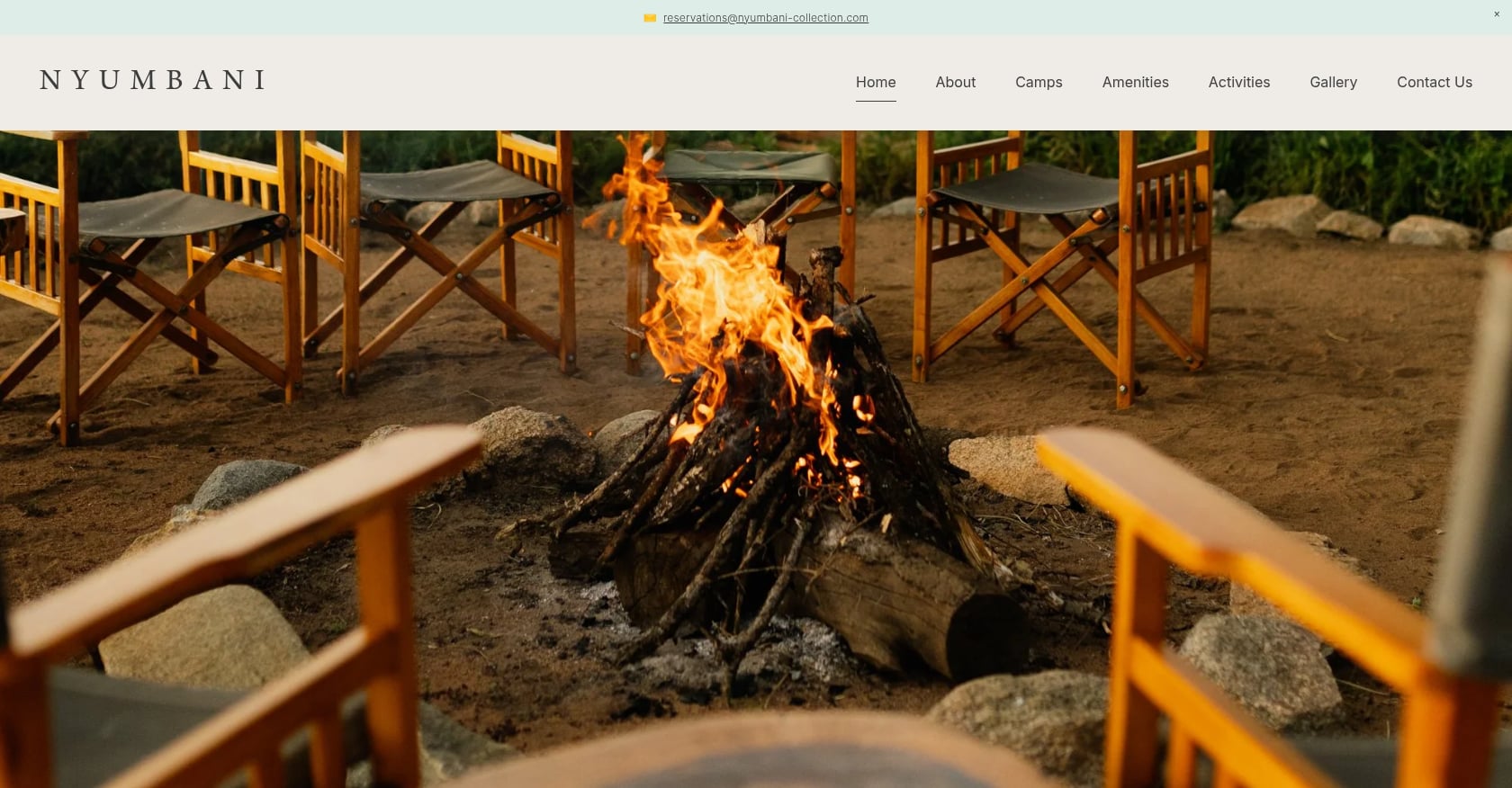
Not every exclusive safari lodge in Tanzania needs to cost $2,000 a night. Nyumbani Camp in the central Serengeti represents a tier that matters to many travelers: genuine quality, personal service, and small-scale intimacy without the ultra-luxury price tag.
A past Duma Explorer traveler specifically praised Nyumbani for its food quality and 24-hour hot water, calling it an “absolute favorite” alongside Lion’s Paw Camp. Another reviewer described the experience as a case where “luxury and hospitality were spot on,” highlighting extremely friendly staff, excellent food, and comfortable accommodations. Multiple travelers noted that these camps provided fantastic service while minimizing their environmental impact.
Why it earns “exclusive”: Small capacity, personal attention, and a central Serengeti location that provides year-round game access. The central Serengeti’s open plains are where the Great Migration’s calving season unfolds (December through March) and where big cat densities remain high throughout the year.
Honest tradeoff: Inside the national park, so the same TANAPA restrictions apply: no night drives, no off-road driving. The exclusivity here comes from scale and service rather than conservancy freedom. But for travelers who want to spend their budget across a longer itinerary rather than concentrating it into two or three ultra-premium nights, properties like Nyumbani make the math work.
10. Singita Faru Faru Lodge
Location: Grumeti Reserve, western Serengeti
Best for: Contemporary design lovers and families wanting conservancy access
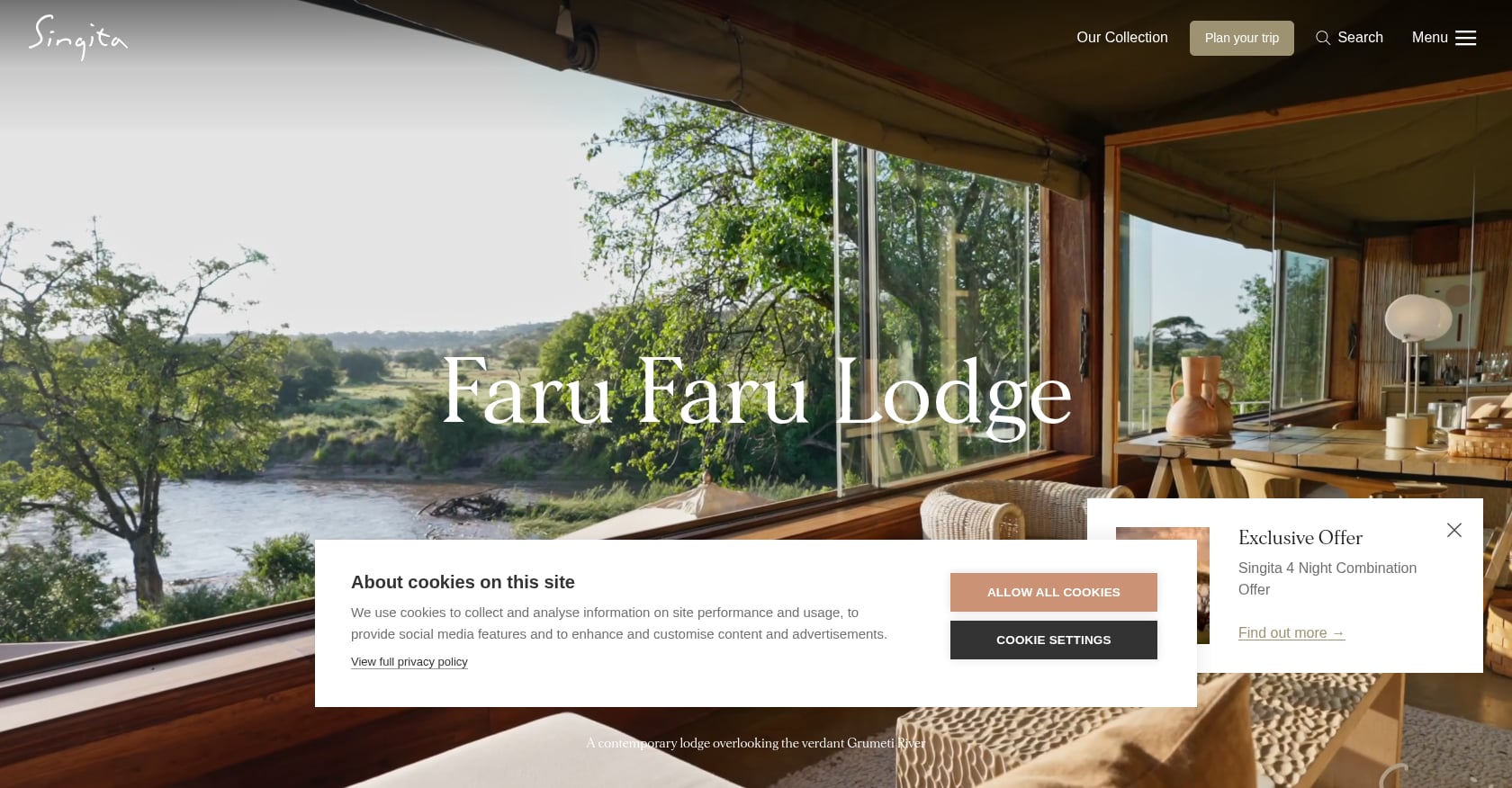
Faru Faru shares the same 350,000-acre Grumeti Reserve as Sasakwa but offers a completely different aesthetic: light, contemporary, and riverine rather than Edwardian manor. It’s the more relaxed sibling.
Rooms: Nine suites and two two-bedroom villas, all overlooking a seasonal river where wildlife comes to drink.
Pricing (2026): Comparable to Sasakwa at $2,550 to $3,525 per person per night, with the same Wildlife Fee and levy structure.
Why it earns “exclusive”: Same private conservancy benefits as Sasakwa: night drives, off-road driving, walking safaris, minimal vehicle density. The villas work well for families or small groups wanting shared living space with separate bedrooms. Faru Faru’s design is modern African rather than colonial.
Honest tradeoff: Same seasonal migration limitations as Sasakwa. At this price point, the comparison with Mwiba is inevitable, and Mwiba’s lower guest count and helicopter access give it an edge on pure exclusivity. But for travelers who want the Grumeti Reserve’s proven wildlife and a lighter, more contemporary feel than Sasakwa, Faru Faru is the right choice.
Which Exclusive Safari Lodge Is Best for Your Travel Style?
Not every luxury safari lodge offers the same experience. Some prioritize complete privacy, while others focus on family facilities, migration access, or specialist wildlife activities.
Use this comparison to narrow down your choices.
|
Traveler Type |
Recommended Lodge |
Why Choose It? |
|---|---|---|
|
Honeymoon couples |
Mwiba Lodge |
Private reserve setting, intimate accommodation, and helicopter experiences |
|
Ultra-luxury travelers |
Singita Sasakwa |
Exclusive Grumeti Reserve location and high-end accommodation |
|
Great Migration enthusiasts |
Sayari Camp |
Northern Serengeti location near Mara River crossing areas |
|
Families with young children |
Four Seasons Serengeti |
Established family facilities and children's programming |
|
Families wanting a private safari |
Sayari Retreats |
Dedicated chef, host, guide, and private safari vehicle |
|
Contemporary design enthusiasts |
Singita Faru Faru |
Modern architecture and Grumeti Reserve wildlife access |
|
Experienced safari travelers |
Jabali Ridge |
Remote Ruaha location and specialist wildlife experiences |
|
Walking safari enthusiasts |
Chem Chem Safari Lodge |
Private concession activities, subject to operating permissions |
|
Couples seeking a boutique experience |
Nyumbani Camp |
Small-scale accommodation and personalized service |
|
Crater-view honeymoon travelers |
andBeyond Ngorongoro Crater Lodge |
Iconic crater-rim location after its planned reopening |
The right lodge depends on your travel dates, group size, desired activities, and total safari budget. A property with a higher nightly rate may not necessarily offer the best experience for your particular itinerary.
How to Choose the Right Exclusive Lodge
The right property depends on what kind of traveler you are and what you’re optimizing for.
Honeymooners: Mwiba Lodge for total privacy, Chem Chem for atmosphere, or andBeyond Crater Lodge when it reopens in 2027. See our guide to romantic safari lodges in Tanzania for a broader comparison.
Great Migration chasers: Sayari Camp (July–October for Mara River crossings) or Singita Sasakwa (May–July for western corridor crossings). Timing matters more than lodge choice here.
Families: Four Seasons for young children. Sayari Retreats or Faru Faru villas for exclusive-use family accommodation with better bush atmosphere. Our family safari lodges guide covers child-age policies in detail.
Off-the-beaten-path seekers: Jabali Ridge in Ruaha or Chem Chem in the Tarangire corridor. Both offer wildlife experiences that feel nothing like the crowded Seronera circuit in peak season.
Calving season specialists: Mwiba Lodge (December–March) for proximity to the southern Serengeti calving grounds, with the conservancy advantages intact.
Photographers: Grumeti Reserve properties (off-road positioning for optimal angles) and Mwiba (helicopter for aerial shots). Read our safari photography gear guide before packing.
Best Time to Visit Exclusive Safari Lodges in Tanzania
The best time to visit an exclusive safari lodge in Tanzania depends on the wildlife experience you want, your preferred destination, and your travel budget. June through October is generally popular for dry-season wildlife viewing, while January through March is especially attractive for southern Serengeti calving season.
However, different lodges offer different seasonal advantages.
Tanzania Safari Lodge Seasonal Guide
|
Month |
Best Safari Region |
Wildlife Experience |
Lodge Recommendations |
|---|---|---|---|
|
January |
Southern Serengeti and Ndutu |
Wildebeest calving season begins |
Mwiba Lodge, southern Serengeti camps |
|
February |
Southern Serengeti |
Calving season and predator activity |
Mwiba Lodge |
|
March |
Southern Serengeti |
Continued calving season, changing weather |
Mwiba Lodge |
|
April |
Serengeti and northern circuit |
Green landscapes and fewer visitors; some camps close |
Properties operating during the rains |
|
May |
Western Serengeti |
Migration movement toward the western corridor |
Singita Sasakwa, Singita Faru Faru |
|
June |
Western and northern Serengeti |
Migration movement and beginning of dry season |
Singita lodges, Sayari Camp |
|
July |
Northern Serengeti |
Mara River crossing opportunities |
Sayari Camp, Serengeti Bushtops |
|
August |
Northern Serengeti |
Peak river-crossing season |
Sayari Camp, Serengeti Bushtops |
|
September |
Northern Serengeti |
Continued migration activity |
Sayari Camp |
|
October |
Northern Serengeti |
Late-season migration opportunities |
Sayari Camp, Serengeti Bushtops |
|
November |
Central and southern Serengeti |
Short rains and migration movement south |
Nyumbani Camp, Mwiba Lodge |
|
December |
Southern and central Serengeti |
Herds move toward calving grounds |
Mwiba Lodge, Nyumbani Camp |
Best Season by Safari Experience
For the Great Migration: Choose the northern Serengeti between July and October for opportunities to witness Mara River crossings. Sayari Camp is particularly well positioned for this experience.
For wildebeest calving: Choose the southern Serengeti between January and March. This period attracts predators and offers excellent wildlife photography opportunities.
For fewer tourists: Consider November, January, February, or March. These months can offer quieter safari experiences, although rainfall and wildlife movements vary.
For western Serengeti safaris: Consider May through July, when migration herds may move through the Grumeti region.
For southern circuit safaris: Plan around Ruaha's dry season, generally June through October, when wildlife gathers around available water sources.
Does the Great Migration guarantee wildlife sightings?
No. The Great Migration is a continuous movement of wildebeest and zebra across the Serengeti ecosystem. River crossings are unpredictable, and animals may cross at different locations or remain in one area for several days.
The best strategy is to choose accommodation based on the expected migration location, allow enough nights in the region, and remain flexible with game-drive schedules.
What Exclusive Safari Lodges in Tanzania Actually Cost
Pricing for exclusive lodges falls into three recognizable tiers:
Ultra-luxury conservancy ($2,000–$3,800 per person per night): Singita Sasakwa, Singita Faru Faru, Mwiba Lodge. Private conservancy access, private vehicles, premium inclusions. A seven-night safari at this tier costs roughly $14,000 to $27,000 per person before international flights.
Premium in-park ($900–$2,250 per person per night): Sayari Camp, Serengeti Bushtops, Four Seasons Serengeti, Jabali Ridge. Excellent properties inside national parks, typically with strong inclusions (Bushtops and Jabali Ridge are notably all-inclusive). Seven nights runs approximately $6,300 to $15,750 per person.
High-value exclusive ($700–$1,000 per person per night): Camps like Nyumbani and Lion’s Paw that deliver personal service and small-group intimacy at prices that allow longer itineraries or multi-park routing.
Practitioners on Reddit report that ultra-luxury safaris in Tanzania can run $12,000 to $20,000 or more per person for the full trip, including flights, transfers, and park fees. Budget-conscious travelers on forums also consistently recommend Tarangire-area lodges for luxury experiences with fewer crowds and lower costs.
What the nightly rate doesn’t always include:
-
Park fees: TANAPA fees for the Serengeti are roughly $70–$80 per adult per 24-hour period. Ngorongoro Crater service fees are separate and substantial.
-
Conservancy fees: Singita’s $177 Wildlife Fee per adult per night is charged in addition to the room rate.
-
Game drives: The Four Seasons charges separately for game drives. Most other properties on this list include them.
-
Domestic flights: Reaching Ruaha, the northern Serengeti (Kogatende), or the Grumeti Reserve by air adds $200–$500 per person per sector.
-
Balloon safaris: Roughly $500–$600 per person, available in the Serengeti and worth it for a single sunrise flight.
A consistent theme across travel forums: travelers regret not spending an extra night in the Serengeti to avoid rushed drives between parks. Pacing matters as much as lodge choice. Trying to cram five parks into seven days is a recipe for spending more time in a vehicle than watching wildlife.
How Much Does a 7-Night Exclusive Tanzania Safari Cost?
The accommodation rate is only one part of a luxury safari budget. Travelers must also consider park fees, domestic flights, transfers, optional activities, and additional conservation or concession charges.
The following estimates illustrate how accommodation choices affect the budget for a seven-night safari.
|
Accommodation Category |
Indicative Nightly Rate |
Seven-Night Accommodation Cost |
|---|---|---|
|
High-value boutique camps |
$700–$1,000 |
$4,900–$7,000 |
|
Premium luxury lodges |
$900–$2,250 |
$6,300–$15,750 |
|
Ultra-luxury conservancy lodges |
$2,000–$3,800 |
$14,000–$26,600 |
Estimates are per person and assume the same nightly rate for seven nights. They are accommodation-level comparisons, not complete safari quotations.
Additional Expenses to Include in Your Budget
|
Expense |
What to Consider |
|---|---|
|
International flights |
Depends on departure country and travel dates |
|
Domestic safari flights |
Depends on route, airline, luggage allowance, and destination |
|
National park fees |
Vary by park, visitor category, and applicable tax |
|
Conservancy fees |
May be charged separately from accommodation |
|
Private safari vehicle |
May be included or charged separately |
|
Balloon safari |
Usually an additional paid experience |
|
Travel insurance |
Depends on coverage and trip duration |
|
Tips and gratuities |
Should be budgeted separately |
How to Reduce the Cost Without Sacrificing the Experience
1. Combine accommodation categories. Spend two or three nights in an ultra-luxury conservancy and use boutique camps for the rest of the itinerary.
2. Travel during shoulder or lower-demand periods. Some lodges offer significantly lower rates outside peak migration dates.
3. Choose properties with more inclusions. A higher nightly rate may provide better overall value if meals, drinks, game drives, guides, and transfers are included.
4. Avoid unnecessary flights. Build a geographically logical route instead of moving between distant regions without considering transfer costs.
5. Spend more nights in fewer locations. Staying longer in one wildlife area can reduce travel costs and provide more time for meaningful sightings.
The best way to compare exclusive safari lodges is to calculate the complete trip cost rather than choosing accommodation based on the nightly rate alone.
What to Check Before Booking an Exclusive Safari Lodge in Tanzania
A high nightly rate does not automatically guarantee a private or exclusive safari experience. Before confirming a lodge, travelers should check exactly what is included and how the property operates.
Use this checklist when comparing luxury safari accommodation.
1. Is the Property Located Inside a National Park or Private Reserve?
Confirm whether the lodge operates inside a national park, private wildlife reserve, or concession. This affects available activities, visitor density, and the flexibility of game drives.
2. Is a Private Safari Vehicle Included?
Some luxury lodges include dedicated vehicles and guides, while others charge extra or operate shared game drives. Confirm whether your vehicle is exclusive to your booking.
3. How Many Guests Can Stay at the Property?
Check the total number of suites, tents, cottages, and maximum guest capacity. A small property can provide a more intimate atmosphere, but low room numbers alone do not guarantee private game viewing.
4. Which Activities Are Actually Available?
Ask whether the lodge offers night drives, walking safaris, off-road tracking, bush dinners, or specialist photography experiences. Confirm any age restrictions, seasonal limitations, and required permissions.
5. What Does the Nightly Rate Include?
Request an itemized quotation covering:
-
Accommodation and meals.
-
Alcoholic and non-alcoholic drinks.
-
Game drives and guiding.
-
Park and concession fees.
-
Airstrip transfers.
-
Domestic flights.
-
Laundry and other services.
6. How Far Is the Lodge from the Wildlife Areas?
A beautiful lodge may not be ideally positioned for your preferred wildlife experience. Check driving distances to river crossings, migration areas, major game-viewing zones, and airstrips.
7. What Is the Cancellation and Rebooking Policy?
Understand deposit requirements, cancellation deadlines, seasonal rate changes, and the arrangements available if domestic flights or safari activities are disrupted.
A careful comparison of these details can help travelers avoid unexpected expenses and choose a lodge that genuinely matches their expectations.
Frequently Asked Questions
What is the most exclusive safari lodge in Tanzania?
Singita Sasakwa Lodge in the Grumeti Reserve is the most widely cited answer. It combines a private 350,000-acre conservancy, sub-20-guest capacity, private infinity pools, and rates starting at $2,550 per person per night. Mwiba Lodge is a close second, with a stronger argument on pure privacy (130,000 acres for only 20 guests) and the only permanent helicopter in Tanzanian safari lodging.
How much does an exclusive safari lodge in Tanzania cost per night?
Rates span a wide range. Premium in-park lodges like Sayari Camp start at $980 per person per night in shoulder season. Ultra-luxury conservancy properties like Singita Sasakwa reach $3,525 per person per night at peak. Most rates are per person sharing, so a couple pays double the listed figure per night. Conservancy and park fees are typically added on top.
Is a private conservancy worth the extra cost?
Yes, if you value the experience differences. Private conservancies in Tanzania allow night drives, off-road tracking, and walking safaris, none of which are permitted inside national parks. They also limit vehicle numbers, so a leopard sighting might have one or two vehicles present rather than a dozen. The tradeoff is that conservancies sometimes have lower overall game density than the national parks, particularly outside migration season.
Can families stay at exclusive safari lodges?
Some properties welcome families; others don’t. The Four Seasons Serengeti has a kids club from age two. Sayari Camp offers family tents and exclusive-use Retreats. Singita Faru Faru has two-bedroom villas that work for families. Mwiba and Chem Chem can accommodate older children. Always confirm age policies directly, as minimum ages vary by property and sometimes by season.
When is the best time to stay at a Serengeti luxury lodge?
June through October is peak dry season with the best game viewing and Great Migration crossings in the northern Serengeti. December through March brings calving season in the southern Serengeti, lower rates, and fewer tourists. April and May are the long rains, when some camps close and prices drop significantly. The “best” month depends on which wildlife event you’re targeting.
How do you get to remote lodges like Mwiba or Jabali Ridge?
Domestic flights from Arusha or the Serengeti’s regional airstrips. Coastal Aviation and Auric Air operate scheduled light-aircraft routes to strips throughout Tanzania’s safari circuit. Most exclusive lodges include airstrip transfers in their rates. Flight time from Arusha to Ruaha is roughly 2.5 hours with a stop; to the western Serengeti (Grumeti) around 2 hours. These flights are part of what makes a fly-in safari practical for multi-park itineraries.
What is the difference between an exclusive safari lodge and a luxury safari lodge?
A luxury safari lodge focuses on accommodation quality, service, dining, and amenities. An exclusive safari lodge generally adds elements such as low guest capacity, private wildlife access, dedicated guides, private vehicles, or exclusive-use accommodation. A lodge can be luxurious without offering private conservancy privileges.
Are exclusive safari lodges in Tanzania worth the price?
They can be worth the additional cost for travelers who prioritize privacy, personalized guiding, premium accommodation, and specialist wildlife experiences. Private conservancies can offer activities and vehicle access that differ from conventional national park safaris. However, travelers primarily interested in wildlife density may find excellent value at luxury lodges inside the Serengeti or other national parks.
Which Tanzania safari lodge offers the most privacy?
Mwiba Lodge, Singita Sasakwa, and Singita Faru Faru are strong options for travelers prioritizing private reserve access and low-density safari experiences. The best choice depends on guest capacity, private vehicle arrangements, and the specific accommodation category booked.
Can you book an entire safari lodge for private use?
Some Tanzania safari properties offer exclusive-use arrangements, private villas, or dedicated retreats. Availability and minimum booking requirements vary. For example, Sayari Retreats provide dedicated accommodation, a private chef, host, guide, and safari vehicle for families and groups.
Are there exclusive safari lodges in Tanzania for families?
Yes. Four Seasons Safari Lodge Serengeti offers family facilities and children's programming, while Singita Faru Faru and Sayari Retreats provide accommodation options suited to families wanting a more private experience. Check age restrictions for individual activities before booking.
What is the best alternative to andBeyond Ngorongoro Crater Lodge?
While andBeyond Ngorongoro Crater Lodge is closed for refurbishment, travelers can consider Lemala Osonjoi Lodge and Nomad Entamanu Ngorongoro for crater-rim accommodation. The best alternative depends on room availability, location, views, and the desired level of luxury.
Do exclusive safari lodges in Tanzania include game drives?
Many luxury safari lodges include scheduled game drives in their rates, but inclusions vary. Some properties charge separately for game drives, private vehicles, or specialist activities. Always request a detailed quotation before booking.
Plan Your Exclusive Tanzania Safari with the Right Lodge
Choosing an exclusive safari lodge in Tanzania involves more than comparing nightly prices. The right property depends on your travel dates, preferred wildlife experiences, group size, accommodation preferences, and whether private conservancy access is important to you.
A couple planning a romantic safari in the Grumeti Reserve may prefer Singita Sasakwa or Mwiba Lodge, while a family traveling during the Great Migration may find Sayari Camp or Four Seasons Serengeti more suitable.
For travelers wanting a combination of experiences, a multi-lodge itinerary can bring together private conservancy activities, iconic national park wildlife, and remote southern Tanzania destinations.
Duma Explorer designs private Tanzania safari itineraries around your priorities, helping you select suitable lodges, coordinate domestic flights, arrange safari vehicles, and plan the right number of nights in each destination.
Whether you are planning an ultra-luxury honeymoon, a private family safari, or a wildlife-focused journey through the Serengeti and Ruaha, the team can help match your accommodation choices to your travel goals.
Ready to plan your Tanzania luxury safari?
Share your preferred travel dates, group size, approximate budget, and the experiences you want to prioritize.
Request a Custom Tanzania Safari Itinerary →