

Tarangire Safari 2026: A–Z Terms for Your First Game Drive
TL;DR
Tarangire National Park is the most underrated stop on Tanzania’s northern safari circuit, covering roughly 2,850 square kilometers of baobab-dotted savanna that hosts over 3,000 elephants during the dry season. A Tarangire safari offers night drives, walking safaris in adjacent wildlife management areas, and 550+ bird species, all at lower cost and with fewer crowds than the Serengeti. This glossary breaks down every term and concept you need to plan confidently.
Planning a Tarangire safari means running into vocabulary that no one bothers to explain. What exactly is a WMA? Where does walking actually happen? Why do park fees have to be paid electronically? Most safari content skips these details or gets them wrong.
This glossary covers the terms, places, wildlife, and logistics that come up when researching Tarangire National Park. Each entry is short, factual, and tied to decisions you will actually need to make. If you are building a Tanzania safari itinerary, this is the reference page to bookmark.
Tarangire Safari 2026: What You Need to Know
A Tarangire safari is one of the best wildlife experiences on Tanzania’s northern safari circuit, particularly during the dry season from June through October. Tarangire National Park is known for large elephant concentrations, baobab-dotted landscapes, the Tarangire River, more than 550 recorded bird species, and access to distinctive safari activities. The park covers about 2,850 square kilometers and is roughly 2.5–3 hours by road from Arusha.
If you are planning your first visit, the most important things to understand are when to go, how many days to spend, what animals you can see, where walking and night activities are available, how park fees work, and how Tarangire fits into a northern Tanzania itinerary.
This A–Z guide explains the terminology, wildlife, activities, fees, seasons, access points, and planning decisions you are most likely to encounter when researching a Tarangire safari.
Quick Answer: Is Tarangire Worth Visiting? Yes. Tarangire is especially worth adding to a Tanzania safari if you want elephants, baobab landscapes, strong birding, and a different experience from the Serengeti. The park is most famous during the dry season, when wildlife concentrates around permanent water sources and the Tarangire River. It can also complement the Serengeti and Ngorongoro Crater rather than compete with them. For a first safari, plan at least one full game-drive day, with two days preferable if you want more time for different areas of the park or additional activities.
Tarangire Safari at a Glance
|
Planning question |
Quick answer |
|---|---|
|
Location |
Northern Tanzania, in the Manyara Region |
|
Park size |
About 2,850 km² |
|
Best known for |
Elephants, baobabs, the Tarangire River and birding |
|
Birdlife |
More than 550 recorded bird species |
|
Best wildlife season |
Generally June through October |
|
Green-season advantage |
Lush scenery, migratory birds and fewer visitors |
|
Distance from Arusha |
Roughly 2.5–3 hours by road |
|
Main safari activity |
Game drives |
|
Other activities |
Guided walking, night game drives and balloon safaris, depending on current regulations and location |
|
Main wildlife draw |
Elephants and dry-season concentrations of large mammals |
|
Nearby safari stops |
Lake Manyara, Ngorongoro Crater and Serengeti |
|
Recommended minimum |
One full day |
|
Better for a slower safari |
Two or more days |
|
Main planning issue |
Choosing the right season, location and combination of park/WMA activities |
TANAPA currently describes Tarangire as a 2,850+ km² park with more than 2,500 elephants and highlights game viewing, guided walking safaris and optional balloon safaris among visitor activities.
The 10 Tarangire Safari Terms You Should Know First
You do not need to memorize the entire glossary before visiting Tarangire. These 10 terms have the biggest impact on how you plan your safari.
1. Dry Season
The June–October dry season is when wildlife generally becomes more concentrated around permanent water, making it the most popular period for traditional game viewing.
2. Tarangire River
The Tarangire River is the park's defining water source and a major focus of dry-season wildlife activity.
3. Game Drive
A vehicle-based safari through the park. Game drives are the standard way to explore Tarangire.
4. WMA
A Wildlife Management Area is community-managed conservation land outside the national park. WMAs can provide access to activities and experiences that differ from those available inside the national park.
5. Walking Safari
Walking activities require authorized guides or rangers and must follow the rules of the specific area. Do not assume that every "Tarangire walking safari" takes place inside the national park. TANAPA's current visitor guidance states that walking activities must be accompanied by authorized rangers.
6. Night Drive
A nighttime wildlife drive that allows visitors to observe nocturnal species and behavior. Availability depends on the specific area, operator and applicable park regulations.
7. Silale Swamp
A major habitat in southern Tarangire that can be important for visitors who want to explore beyond the more frequently visited northern areas.
8. Park Fees
TANAPA charges entry fees according to visitor category, age and applicable activity. Fees can change, so check the current tariff before traveling.
9. Northern Circuit
The classic northern Tanzania safari route connecting destinations such as Tarangire, Lake Manyara, Ngorongoro and Serengeti.
10. Green Season
The wetter part of the year, generally associated with greener scenery, changing wildlife distribution and strong birding opportunities.
The Glossary: A to Z
Arusha
The gateway city for Tanzania’s northern safari circuit. Tarangire National Park sits about 140 kilometers southwest of Arusha along the A104, a drive of roughly three hours. Most travelers fly into Kilimanjaro International Airport (JRO) or Arusha Airport (ARK), spend a night in town, and head out the next morning. Every northern circuit safari starts and ends here.
Baobab Tree
The visual signature of Tarangire. These massive, bulbous trees dot the landscape in concentrations found nowhere else on the northern circuit, and some specimens are estimated to be over 1,000 years old. Elephants strip their bark to access the moisture inside, creating the gnarled, scarred trunks you see in every Tarangire photograph. During the green season, baobabs produce large white flowers that attract fruit bats as pollinators.
Big Five (in Tarangire Context)
Tarangire has four of the Big Five: elephant, lion, leopard, and buffalo. Rhino are absent from the park. If completing the Big Five matters to you, pair Tarangire with a visit to Ngorongoro Crater, where black rhino are regularly sighted. For a deeper comparison of parks on the circuit, see this guide to Tanzania’s best safari locations.
Birding / Bird Species
With more than 550 species recorded, Tarangire is widely considered the best birding park on the northern circuit. Highlights include the ashy starling (a Tanzanian endemic), yellow-collared lovebird, kori bustard (Africa’s heaviest flying bird), and a variety of raptors. The green season from November through May is peak birding time, when migratory species from Europe and North Africa arrive.
For a full overview of the country’s birding hotspots, the birding in Tanzania guide goes deeper.
Burunge WMA
A Wildlife Management Area bordering Tarangire to the north and west. Burunge enables activities that are restricted inside the national park itself, including walking safaris and cultural visits. Several lodges and tented camps sit on Burunge land, and staying there means paying a WMA concession fee on top of (or instead of) national park entry fees. This is one of the areas where “walking safari in Tarangire” actually takes place.
Concession Fee
A separate charge for staying at lodges or camps located on private or community-managed land adjacent to the park. Concession fees may or may not be bundled into your room rate, so always ask. They typically range from $25 to $50 per person per night and go toward the community or land management authority rather than TANAPA.
Dry Season
June through October. This is the best time for a Tarangire safari, full stop. As water sources outside the park dry up, animals converge on the Tarangire River and its associated swamps. One practitioner on the Fodor’s travel forum described staying three nights in Tarangire during February and, after continuing across Manyara, Ngorongoro, and the Serengeti for two and a half weeks, still rating Tarangire as a highlight of the trip. Imagine how much stronger that experience would be during peak dry season, when elephant herds of 300+ gather at the river.
Tarangire rewards getting the month right more than any other park on the circuit. The difference between September and April is the difference between hundreds of elephants at the river and a quiet green park with good birds. For month-by-month guidance, see best time for safari in Tanzania.
Elephant Herds
Tarangire hosts one of the largest elephant populations in East Africa, estimated at more than 3,000 individuals during the dry season. It is entirely possible to encounter several hundred elephants over the course of a single game drive, particularly along riverside road circuits. This concentration is the park’s main draw and the reason Lonely Planet calls it one of Africa’s most underrated parks.
Fly Camping
A lightweight overnight camping experience set up in the bush, typically in a WMA adjacent to Tarangire rather than inside the park boundaries. You sleep in a minimalist tent (sometimes just a bedroll under mosquito netting), eat dinner cooked over a fire, and wake up to the sounds of the savanna. Fly camping is one of the activities that makes the Tarangire ecosystem unique on the northern circuit, as it is not available in the Serengeti or Ngorongoro.
Fringe-Eared Oryx
A rare dry-country antelope found in Tarangire and one of the park’s special wildlife sightings. Also called the East African oryx, this species is a relative of the gemsbok and thrives in the arid scrubland that characterizes parts of southern Tarangire. Most northern-circuit parks do not support this species, making it a genuine Tarangire exclusive.
Game Drive
The primary safari activity. In Tarangire, game drives come in four flavors: morning (departing around 6:30 AM), afternoon (starting after lunch, running until sunset), full-day (with a packed lunch eaten in the bush), and night (see Night Drive below). Early morning and late afternoon produce the best wildlife activity and the best photographic light. For tips on getting the most from your time in the vehicle, the safari photography tips guide is worth a read.
Gate
Tarangire has multiple access corridors rather than a single universal entrance for every safari. TANAPA's current visitor guide identifies the Maweninga and Sangaiwe/Kwasuyo corridors among the park's main access points. The best entrance depends on your accommodation, route and the area of the park you plan to explore.
When booking, ask your operator which gate or access corridor your safari will use and how that affects driving time inside the park.
Gerenuk
Sometimes called the “giraffe gazelle,” the gerenuk is a rare, long-necked antelope that browses standing upright on its hind legs to reach foliage other species cannot. Tarangire is one of the few places on the northern circuit where gerenuks are sighted with any regularity. Spotting one is a genuine highlight, especially for wildlife photographers.
Green Season
November through May. Migratory animals disperse out of the park during this period because water is available across the wider ecosystem, so large mammal concentrations drop significantly. The trade-off: lower crowds, discounted lodge rates (sometimes 30% to 40% off peak pricing), lush green scenery, and excellent birding as migratory species arrive. Park fees stay the same year-round.
Hot-Air Balloon Safari
Dawn flights over Tarangire’s baobab-studded plains, lasting roughly an hour. Pricing runs around $495 per person, and this is almost never included in a standard safari package. Balloons launch at first light, and the flight ends with a champagne breakfast in the bush. It is a memorable add-on but a significant budget item.
Lake Manyara
A smaller national park neighboring Tarangire, often combined on two or three-day safari circuits. Manyara is known for its groundwater forest, alkaline lake, tree-climbing lions, canopy walkway, and canoeing. The practical comparison: if you can only pick one park and it is dry season, take Tarangire for the elephants and baobabs. If it is green season, Manyara holds up better because its resident wildlife does not leave.
Night Drive / Night Safari
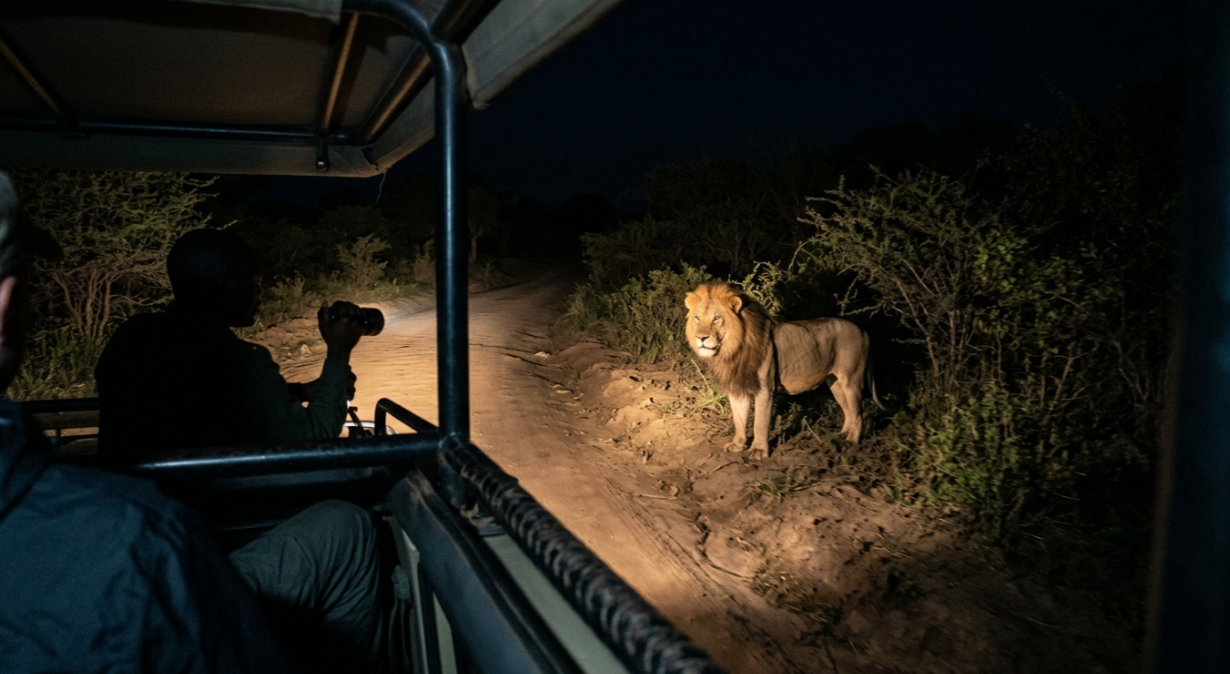
A nighttime wildlife drive that provides an opportunity to see nocturnal species and observe wildlife behavior that is rarely visible during daylight game drives. TANAPA currently lists night game drives among Tarangire's visitor experiences.
Availability, departure times, permitted areas and prices depend on the specific operator and conservation area, so confirm the details before booking. If a night drive is important to you, choose accommodation and an itinerary that explicitly includes the activity rather than assuming every Tarangire camp offers it.
Northern Circuit
Tanzania’s most popular safari route, typically running Tarangire, Lake Manyara, Ngorongoro Crater, and the Serengeti, all accessible from Arusha. Tarangire is usually the first or last stop. Most itineraries give it a single day, which is a mistake. Two days allows time for the southern swamps and a night drive.
For a complete breakdown of how the circuit fits together, the northern circuit safari guide covers routes, timing, and costs.
Park Fees (TANAPA)
Tarangire National Park entry fees depend on visitor category, age and applicable activities, and separate charges may apply for vehicles, camping and guiding. TANAPA's current Tarangire information lists an international adult entry fee of $70 and an international child fee of $20. Because park tariffs can change by financial year, confirm the current TANAPA tariff before booking or traveling.
For safari planning, do not treat the entry fee as the total cost of a Tarangire safari. Your overall price can also include transportation, vehicle and guide costs, accommodation, meals, conservation or WMA charges, and optional activities.
Randilen WMA
A Wildlife Management Area adjacent to Tarangire on its eastern border. Randilen is prime walking safari territory, with landscapes of open plains, scattered baobabs, and seasonal water that mirror Tarangire itself. Many camps in this area bundle walking safaris, night drives, and fly camping into their activity packages. When someone says they did a “walking safari in Tarangire,” they almost certainly mean Randilen or Burunge.
Silale Swamp
A major swamp system in the southern part of Tarangire that most day visitors never reach. Silale attracts large buffalo herds (200+ animals), the resident Silale lion pride, and occasional wild dog sightings. Getting here requires a full day in the park or, better yet, staying at a camp in the south. The reward for the extra effort is near-total solitude, even during high season.
Tarangire Ecosystem
The full Tarangire landscape extends far beyond the park boundaries to cover approximately 3.5 million hectares. This ecosystem supports East Africa’s third-largest terrestrial mammal migration. The problem: eight migration corridors for wildlife existed in 1964, and only two remain today. Growing human settlements and agricultural expansion have blocked the rest. Conservation efforts by TANAPA and international partners focus on protecting these last two corridors through community programs, including beehive fences that deter elephants from farms while giving locals a honey-based income source.
Tarangire Migration
Distinct from the famous Serengeti Great Migration, this is Tarangire’s own seasonal wildlife movement. Roughly 250,000 animals, including wildebeest, zebra, buffalo, and eland, move into the park during the dry season, following the Tarangire River’s permanent water. When the rains return in November, these animals disperse across the wider ecosystem. This migration is poorly marketed compared to the Serengeti’s, but it is the engine that drives Tarangire’s extraordinary dry-season wildlife concentrations.
Tarangire River
The park’s lifeline. The river flows roughly north to south and is the primary permanent water source in the region during the dry season. Every major species in the park eventually comes to the river, making its banks the single best place for game viewing. The name “Tarangire” may translate to “river of warthogs” or “spotted water” (a river that never dries), depending on the linguistic source.
Tree-Climbing Lions
Tarangire’s lions occasionally climb trees, a behavior also associated with Lake Manyara. The sightings are not as reliable as at Manyara, but they are documented. Lions in Tarangire are common overall, with more than 700 resident individuals in the wider ecosystem. Leopard and cheetah are present but rare.
Vehicle Fee
A separate TANAPA charge for safari vehicles entering the park, ranging from $10 to $40 depending on the vehicle type and weight class. This fee is typically included in your safari package but worth confirming. It is separate from both park entry fees and any WMA concession fees.
Walking Safari
A guided wildlife experience on foot rather than from a safari vehicle. Walking activities in the Tarangire area must follow the rules of the specific conservation area and be conducted with authorized guides or rangers. TANAPA currently lists guided walking safaris among Tarangire visitor activities, while nearby Wildlife Management Areas can provide additional walking experiences under their own management arrangements.
If walking is a priority, confirm exactly where the activity takes place, who provides the guide or ranger, and whether the experience is inside the national park or on adjacent community-managed land.
Wildlife Management Area (WMA)
Community-managed conservation land adjacent to national parks. WMAs enable activities not allowed inside TANAPA parks, including walking safaris, night drives, and fly camping. Revenue from tourism goes directly to the local communities that manage the land, creating economic incentives for conservation. In the Tarangire context, Burunge and Randilen are the two most relevant WMAs.
Where Tarangire Safari Activities Take Place
One of the easiest sources of confusion is assuming that every activity described as a "Tarangire safari" happens inside Tarangire National Park. The exact location matters.
|
Experience |
Possible location |
What to confirm |
|---|---|---|
|
Game drive |
Tarangire National Park |
Which park area and access gate |
|
Guided walking |
National park or authorized adjacent conservation area |
Who provides the authorized guide/ranger |
|
Night drive |
Depends on the specific area and regulations |
Whether it is permitted in your planned location |
|
Fly camping |
Depends on camp/operator and permitted area |
Exact campsite location and inclusions |
|
Balloon safari |
Tarangire area, subject to operator availability |
Launch location, season and current price |
|
Cultural experience |
Often on community-managed land outside the park |
Community or WMA involved |
|
Birding |
Throughout the Tarangire ecosystem |
Season and target species |
TANAPA currently lists game viewing, guided walking safaris, photographic safaris, bush experiences and optional balloon safaris among Tarangire activities.
Best Time to Visit Tarangire National Park
The best time to visit Tarangire depends on whether your priority is concentrated wildlife, birding, scenery, lower visitor numbers or accommodation value.
|
Period |
What to expect |
Best for |
|---|---|---|
|
June–July |
Dry conditions begin concentrating wildlife around reliable water |
First-time safari visitors |
|
August–October |
Strong dry-season wildlife viewing and classic Tarangire scenery |
Elephants and game viewing |
|
November–December |
Short rains and greener landscapes begin |
Birding and greener scenery |
|
January–February |
Seasonal changes, greener landscapes and varied wildlife distribution |
Travelers seeking a quieter experience |
|
March–May |
Long-rain period, greener scenery and wetter conditions |
Birding, photography and lower-season travel |
TANAPA describes Tarangire as a year-round destination, with wildlife particularly concentrated during the dry season when animals gather around the Tarangire River.
Best Month for a First Tarangire Safari
For a first-time visitor whose priority is wildlife concentration, the core dry-season months are the safest recommendation. If birding, green scenery and fewer visitors matter more than maximum concentrations of large mammals, the wetter months can be a better fit.
There is no single "best" month for every traveler. Choose the season based on the experience you want rather than treating Tarangire as a one-season destination.
What Animals Can You See on a Tarangire Safari?
Tarangire is particularly known for elephants, but the park supports a much broader range of wildlife.
|
Animal or group |
Tarangire experience |
|---|---|
|
Elephants |
One of the park's defining wildlife attractions, especially during the dry season |
|
Lions |
Regularly encountered predator |
|
Leopards |
Present but less predictable than lions |
|
Cheetahs |
Present but generally less commonly seen |
|
Buffalo |
Common, particularly around suitable water and wetland habitat |
|
Giraffes |
Regularly seen |
|
Zebras |
Seasonal movements can produce large concentrations |
|
Wildebeest |
Seasonal and migratory |
|
Eland |
One of the larger antelopes found in the ecosystem |
|
Gerenuk |
A distinctive dry-country antelope and notable Tarangire sighting |
|
Oryx |
A specialist dry-country sighting |
|
Wild dogs |
Possible but uncommon |
|
Birds |
More than 550 species have been recorded |
TANAPA highlights Tarangire's elephant concentration, while its broader park information identifies species including cheetah, African wild dog, Beisa oryx and gerenuk. TANAPA also records about 550 bird species in the park.
Wildlife sightings are never guaranteed, and seasonal distribution can change significantly.
How Much Does a Tarangire Safari Cost?
There is no single Tarangire safari price because the total depends on accommodation level, group size, transportation, number of safari days, park fees and optional activities.
Think of the cost in four layers:
|
Cost component |
What it covers |
|---|---|
|
Park fees |
Entry and applicable TANAPA charges |
|
Safari vehicle and guide |
Transportation, driver-guide and game-drive logistics |
|
Accommodation |
Lodge, tented camp or other overnight stay |
|
Activities and extras |
Walking, night activities, balloon flights, cultural experiences and other optional services |
TANAPA's current visitor information confirms that Tarangire fees vary by visitor category, age and activity, with separate charges potentially applying for vehicles, camping and guiding.
For an accurate 2026 quote, compare complete safari packages rather than comparing only the advertised per-person rate. Ask whether park fees, accommodation, meals, transfers, vehicle costs and optional activities are included.
How to Plan Your Tarangire Safari
How Many Days Do You Need in Tarangire?
For most first-time visitors, one full day is enough for a useful introduction to Tarangire, but two days provide a more complete experience.
|
Time |
Best for |
What you can realistically do |
|---|---|---|
|
1 day |
First-time visitors with limited time |
Full-day game drive and major wildlife areas |
|
2 days |
Best balance for most travelers |
Multiple game-drive periods and more time to explore different habitats |
|
3 days |
Photographers and serious wildlife enthusiasts |
Slower game viewing, photography and additional activities |
|
3+ days |
Specialist travelers |
Birding, photography, walking and other experiences where available |
My Recommendation
If Tarangire is your first safari park, book two days if your budget and itinerary allow it. One day can show you the park's headline attractions, but additional time gives you more flexibility to explore different habitats and avoid making your entire experience depend on one game drive.
If Tarangire is only one stop on a longer northern-circuit itinerary, one full day can still make sense.
When to Go
Dry season (June through October) for maximum wildlife density. September is arguably the single best month. Green season (November through May) for birding, discounted lodges, and fewer tourists.
What to Combine It With
Tarangire fits naturally into a northern circuit itinerary with Ngorongoro Crater and the Serengeti. Lake Manyara makes a good half-day addition. Travelers with more time often add Zanzibar for a beach finish or gorilla trekking in Uganda or Rwanda.
For a longer trip framework, the 14-day Tanzania itinerary shows how Tarangire fits into a two-week adventure.
Where to Stay
The northern part of the park near the main gate has the most lodges and the most traffic. Camps deeper in the park, particularly in the south near Silale Swamp, offer far better exclusivity. Even during high season, it is common to have wildlife sightings completely to yourself in the remote southern areas. Staying inside the park (rather than at a lodge outside the gate) eliminates the repetitive drive in and out, and gives you more actual game-viewing time.
Working With an Operator
Between park fees, WMA concession fees, vehicle fees, electronic payment requirements, and the logistics of getting camps and activities aligned, a Tarangire safari has enough moving parts that working with an experienced operator saves real headaches. The right operator also knows which camps deliver the best experience for your budget and when to time your visit for peak wildlife.
For a clear picture of what a Tanzania safari costs, the cost per person guide breaks down pricing across budget levels.
Tarangire vs. Serengeti: Which Safari Is Better?
Tarangire and Serengeti offer different safari experiences, so the better choice depends on what you want to see and how much time you have.
|
If your priority is... |
Better choice |
|---|---|
|
Large elephant concentrations |
Tarangire |
|
Baobab landscapes |
Tarangire |
|
Great Migration |
Serengeti |
|
Vast open plains |
Serengeti |
|
Predator-focused safari |
Serengeti |
|
Birding |
Tarangire |
|
Shorter road journey from Arusha |
Tarangire |
|
Night-game-drive opportunities |
Tarangire area, subject to current rules and location |
|
First northern-circuit stop |
Tarangire |
|
Combining multiple parks |
Both |
Choose Tarangire If...
Choose Tarangire if elephants, baobabs, birding, varied habitats and a shorter road transfer from Arusha are your priorities.
Choose Serengeti If...
Choose the Serengeti if the Great Migration, expansive grasslands and major predator encounters are the main reason you are traveling to Tanzania.
Best Option for a First Northern-Circuit Safari
If your itinerary allows it, you do not have to choose. Tarangire and Serengeti serve different purposes and can work especially well when combined with Ngorongoro Crater.
Tarangire vs. Serengeti vs. Ngorongoro vs. Lake Manyara
|
Park |
Best known for |
Best suited to |
|---|---|---|
|
Tarangire |
Elephants, baobabs and dry-season wildlife |
Wildlife variety, elephants and a shorter first safari stop |
|
Serengeti |
Great Migration, plains and predators |
Big-cat viewing and migration-focused safaris |
|
Ngorongoro Crater |
Dense wildlife in a dramatic crater setting |
First-time visitors, Big Five goals and compact game viewing |
|
Lake Manyara |
Forest, birding and varied habitats |
Short visits and travelers wanting a different landscape |
The Simple Choice
Choose Tarangire for elephants and baobabs, Serengeti for migration and predators, Ngorongoro for dense wildlife and rhino possibilities, and Lake Manyara for forest, birding and a compact park experience.
For a first northern Tanzania safari, combining two or more of these parks usually provides more variety than spending the entire trip in one destination.
What to Expect on Your First Tarangire Game Drive
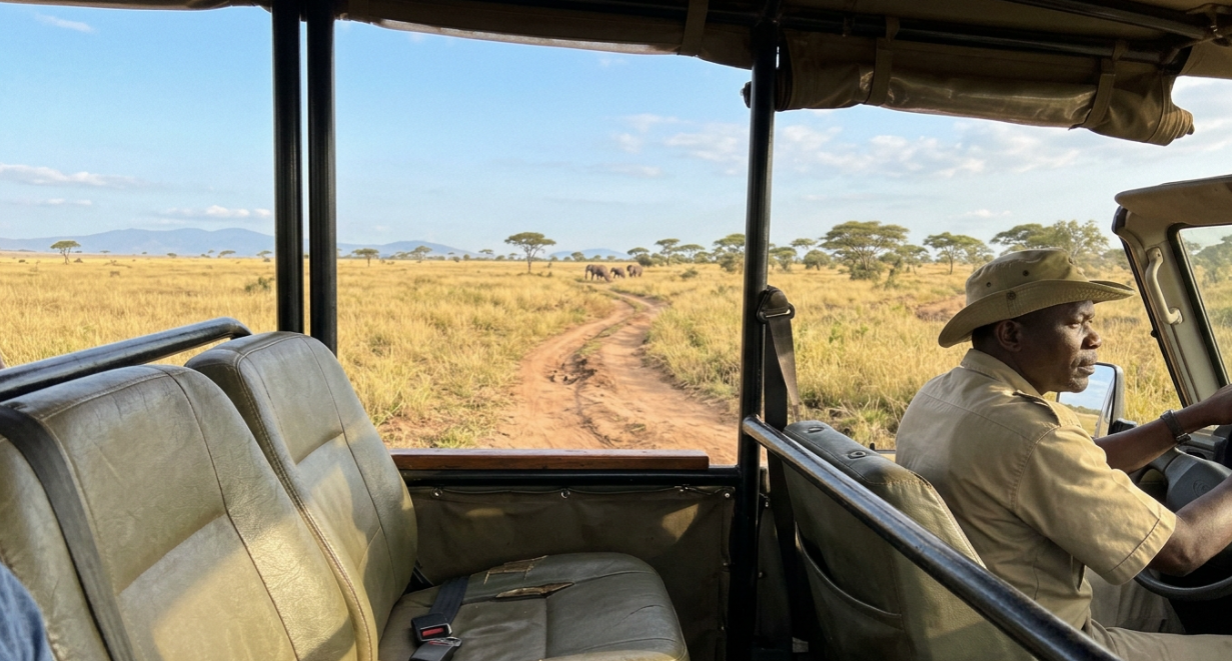
A first Tarangire game drive is less like visiting a zoo and more like searching a large, living landscape for signs of wildlife. Your guide may slow down for tracks, alarm calls, movement in vegetation, birds or animals partly hidden by woodland.
Expect the landscape to change between open grassland, woodland, riverine areas, swamps and baobab-dotted sections. The Tarangire River and wetland areas can become particularly important for dry-season wildlife viewing.
What Your Guide Does
Your guide is responsible for more than driving. They help identify animals, interpret behavior, choose routes and manage safe viewing distances.
What You Should Do
Stay inside the vehicle unless your guide identifies an authorized place to exit. Do not call to wildlife, feed animals or encourage animals to approach the vehicle. TANAPA's current visitor guidance specifically instructs visitors to remain on designated tracks, follow speed limits and leave vehicles only at designated points.
The Most Important Tip
Do not measure a game drive only by the number of animals you photograph. A good guide can turn tracks, bird calls, behavior and habitat into part of the experience.
Frequently Asked Questions
Is a Tarangire safari worth it?
Absolutely. Lonely Planet calls Tarangire one of Africa’s most underrated parks, and that reputation holds. The dry-season elephant concentrations are among the best on the continent, the baobab scenery is unlike anything else on the northern circuit, and the availability of night drives and walking safaris (in adjacent WMAs) gives Tarangire a diversity of experiences that even the Serengeti cannot match.
What animals will I see on a Tarangire safari?
Elephant (abundant, with herds of 300+ during dry season), lion (common, 700+ in the ecosystem), giraffe (common), buffalo, wildebeest, zebra, warthog, and impala. Rarer sightings include leopard, cheetah, fringe-eared oryx, gerenuk, and wild dog (mostly in the south near Silale Swamp). Tarangire also has 550+ bird species.
Can you do a walking safari in Tarangire?
Not inside the national park itself. Walking safaris take place in adjacent Wildlife Management Areas, primarily Randilen and Burunge. These areas share the same landscape and wildlife as Tarangire but are managed by local communities under rules that permit walking with armed rangers. Most camps on WMA land include walking as a standard activity.
How much does a Tarangire safari cost?
Park entry alone is $50 to $60 per adult per day for international visitors. A full-day game drive with a private vehicle, guide, packed lunch, and park fees typically runs $250 to $500+ per person depending on group size and vehicle type. Multi-day safari packages that include Tarangire alongside other parks, accommodations, meals, and all logistics start in the range of $2,000 per person for budget options and go up from there. The Tanzania safari cost breakdown has a detailed fee-by-fee analysis.
How does Tarangire compare to Ngorongoro Crater?
They are very different experiences. Ngorongoro is a collapsed volcanic caldera with dense wildlife in a small area and the chance to see black rhino (completing the Big Five). Tarangire is open savanna with baobabs, massive elephant herds, and more diverse activities. Most itineraries include both, and they complement each other well. For Ngorongoro specifics, see the Ngorongoro Crater planning guide.
Is Tarangire safe for families?
Yes. Game drives are vehicle-based, the park is well-managed by TANAPA, and children under 5 enter free. Families with older kids can add night drives for excitement. The family safari guide covers family-specific logistics across East Africa.
Do I need to book park fees in advance?
Your safari operator handles this. All TANAPA fees must be paid electronically, so you cannot simply show up with cash. This is one of the practical reasons to book through an operator rather than attempting a self-drive safari in Tarangire.