

TL;DR
A luxury family safari in Tanzania means a private vehicle, a dedicated guide, premium accommodation suited to your children’s ages, and an itinerary built around your family’s pace. This glossary defines 40+ terms you’ll encounter when comparing proposals, from “exclusive-use” and “fly-in” to age restrictions and concession fees. Use it to decode operator language and make sharper planning decisions.
When you start requesting proposals for a luxury safari family Tanzania trip, the terminology comes fast. Operators mention “private concessions,” “family tents,” “PPPN rates,” and “fly-in transfers” as though every parent has been on six safaris before. Most haven’t. And the stakes are high: a premium family safari for four can run $20,000 to $40,000 or more for a week, so understanding what you’re actually paying for matters.
This glossary covers the terms and concepts that appear specifically at the intersection of luxury and family travel in Tanzania. It isn’t a general safari dictionary or a basic family planning overview. Instead, it focuses on the vocabulary and upgrade decisions that emerge when families move into the premium tier, where the right choice often comes down to your children’s ages, your travel dates, and what kind of experience you want them to remember.
For a broader look at structuring a luxury safari itinerary in Tanzania, start there and return here when the terminology in proposals starts to blur.
What Is a Luxury Family Safari in Tanzania? A luxury family safari in Tanzania is a private or customized wildlife journey that combines premium accommodation, dedicated driver-guides, private 4x4 safari vehicles, and activities suited to children's ages. It typically includes carefully selected lodges or tented camps, flexible game drives, family-friendly room configurations, and optional experiences such as cultural visits or Zanzibar beach extensions. Unlike a standard safari package, a luxury family safari prioritizes flexibility, child safety, accommodation suitability, and personalized service. The itinerary is designed around the family's travel dates, children's ages, preferred destinations, and budget rather than following a fixed group schedule. The most important factors to compare are private vehicle arrangements, accommodation age restrictions, family room availability, included park fees, flight luggage limits, and the flexibility to adjust daily activities.
Luxury Family Safari Tanzania: Essential Terms at a Glance
The following table summarizes the most important terms parents should understand before comparing luxury Tanzania safari proposals.
|
Safari Term |
Simple Definition |
Why It Matters for Families |
|---|---|---|
|
Private Vehicle |
A dedicated safari vehicle for your family |
Provides flexibility during game drives |
|
Private Guide |
A driver-guide assigned to your group |
Allows age-appropriate wildlife interpretation |
|
Luxury Lodge |
A permanent upscale safari property |
Often offers pools and family suites |
|
Luxury Tented Camp |
An upscale canvas accommodation in the wilderness |
Provides an immersive safari experience |
|
Family Suite |
Accommodation designed for parents and children |
Keeps the family together |
|
Exclusive-Use |
Private use or buyout of an entire property |
Offers greater privacy and scheduling flexibility |
|
Private Concession |
A privately managed wildlife area |
May allow activities restricted in national parks |
|
Fly-In Safari |
Travel between destinations by light aircraft |
Reduces long overland transfers |
|
Road Safari |
Travel between parks by vehicle |
Offers flexibility and additional sightseeing |
|
PPPN |
Per Person Per Night |
Helps compare accommodation prices |
|
Full Board |
Accommodation with breakfast, lunch, and dinner |
Clarifies meal inclusions |
|
All-Inclusive |
A package with additional drinks or services |
Helps identify potential extra expenses |
|
Child Rate |
A discounted or adjusted rate for children |
Changes the total family budget |
|
Minimum Age |
The youngest age accepted by a property or activity |
Determines which camps and experiences are suitable |
|
Concession Fee |
A charge associated with accommodation or use of a concession area |
Affects the overall safari price |
|
Game Drive |
Wildlife viewing from a safari vehicle |
The main safari activity |
|
Walking Safari |
Guided wildlife exploration on foot |
Has additional age and safety requirements |
|
Night Drive |
Wildlife viewing after dark |
May only be permitted in designated areas |
|
Balloon Safari |
A hot-air balloon experience over the wilderness |
Has operator-specific age and weight requirements |
|
Great Migration |
Seasonal movement of wildebeest and other wildlife |
Helps determine the best travel dates |
Parents should also check the specific property policies and inclusions behind each term. Similar-sounding safari packages can differ considerably in accommodation, activities, transport, and child-related arrangements.
Luxury Family Safari Tanzania: Cost Tiers
Luxury family safari costs in Tanzania depend on accommodation category, travel season, transportation, park fees, and the number of travelers sharing a private vehicle.
The following figures are indicative planning estimates for a seven-day safari for a family of four, not fixed operator quotations.
|
Safari Category |
Indicative Cost Per Person Per Day |
Estimated Total for 7 Days (Family of 4) |
Typical Features |
|---|---|---|---|
|
Premium Private Safari |
$700–$1,200 |
$19,600–$33,600 |
Private 4x4, dedicated guide, luxury lodges or camps |
|
Luxury Fly-In Safari |
$1,200–$1,500+ |
$33,600–$42,000+ |
Domestic flights, premium accommodation, reduced road transfers |
|
Exclusive-Use Safari |
Property-dependent |
$40,000–$75,000+ |
Private camp or lodge buyout, customized services and activities |
Important: These are illustrative budgets rather than standardized market rates. Actual quotations depend on children's accommodation rates, family room availability, seasonal supplements, flights, park and concession fees, and optional activities.
Before comparing proposals, ask whether the quoted price includes:
-
Accommodation and meals.
-
Private safari vehicle and driver-guide.
-
National park and conservation area fees.
-
Concession and crater service fees.
-
Domestic flights and airport transfers.
-
Children's accommodation rates.
-
Drinks, laundry, and optional activities.
For a more detailed breakdown, see the Tanzania family safari cost guide.
Children’s rates, park fees, and activity add-ons shift these ranges. The family safari cost guide breaks down pricing in more detail.
Accommodation Terms Every Parent Should Know
Luxury Lodge
A permanent structure built from stone, timber, or concrete. Luxury lodges in Tanzania typically offer swimming pools, family suites with interconnecting rooms, structured children’s programs, and solid walls that comfort parents of younger kids. Rates run $450–$900 per person per night.
Lodges often suit families with children under 8 better than tented camps. The pool alone can save an afternoon when a four-year-old has hit their wildlife saturation point.
Luxury Tented Camp
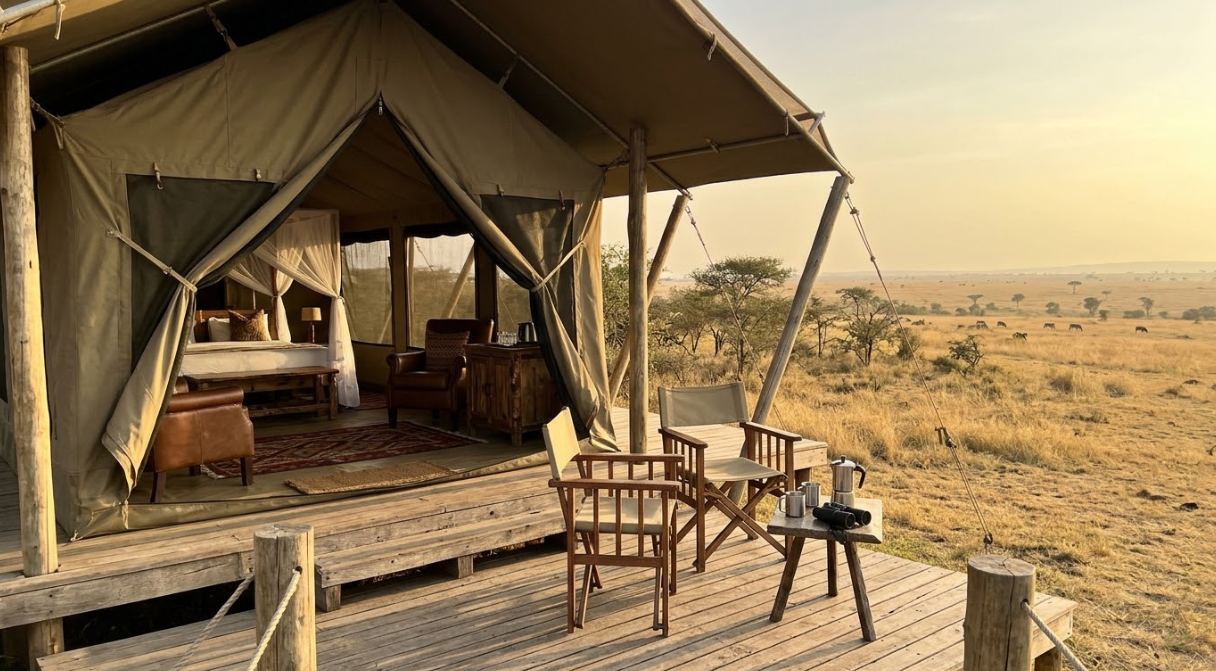
Canvas-walled suites set on raised platforms, combining immersive bush atmosphere with high-end furnishings, en-suite bathrooms, and sometimes plunge pools. Rates run $550–$1,400 per person per night, sometimes higher for top-tier properties. Small luxury tented camps typically have 6 to 12 tents, which means the staff-to-guest ratio is extraordinary.
The trade-off: many luxury tented camps set minimum age requirements of 8 or 10 for shared game drives, partly because canvas walls don’t muffle sound the way lodge rooms do, and partly because intimate camp settings don’t absorb the energy of very young children easily. Private vehicles can sometimes override these age restrictions. Always confirm directly with the property.
For a deeper comparison of family safari lodge options in Tanzania, including properties that genuinely welcome younger children, that guide covers specifics by park.
Family Tent / Family Suite
An oversized or interconnecting unit designed for parents and children. In tented camps, this usually means two canvas bedrooms joined by a shared living space. In lodges, it’s typically two rooms with a connecting door.
Family room inventory at luxury camps is limited, often just one or two units per property. During school holidays (June–August, December), these book out 9 to 12 months in advance. If your operator hasn’t confirmed family room availability by name and date, your itinerary isn’t confirmed. The family room configurations guide explains what different properties actually offer.
Interconnecting Rooms
Two separate guest rooms connected by an internal door. Parents can occupy one room while children sleep in the adjoining room without needing to use an outdoor corridor.
For families with school-age children or teenagers, interconnecting rooms offer more privacy than a single family suite while keeping everyone close together. Confirm whether the connecting door is guaranteed or simply available on request.
Family Villa
A private multi-bedroom accommodation unit within a luxury lodge or safari property. Family villas may include separate bedrooms, shared living spaces, private outdoor areas, and sometimes a swimming pool.
Unlike standard family suites, villas can provide greater privacy for multigenerational families or groups traveling with grandparents. Ask whether the villa receives the same housekeeping, dining, and safari services as the main lodge.
Plunge Pool
A small private swimming pool attached to a safari suite, tent, or villa. It provides a place to cool off between game drives without visiting the property's main swimming pool.
For families, ask whether the plunge pool has appropriate safety measures, whether children require constant supervision, and whether it is included in the accommodation rate.
Child-Friendly Property
A lodge or camp that accommodates children through suitable room configurations, age-appropriate activities, flexible dining, and relevant safety arrangements.
A property describing itself as family-friendly does not necessarily accept infants or toddlers. Always request its written child policy, including minimum ages for accommodation, shared game drives, and other activities.
Family-Friendly Meal Arrangements
Dining arrangements that accommodate children's food preferences, allergies, meal schedules, and portion sizes.
Some luxury camps can prepare early dinners or familiar meals for younger guests. Ask whether these arrangements are included or require advance notice.
Exclusive-Use
A private buyout of an entire camp for your family or group. Rates range from $1,200 to $2,800+ per person per night, depending on the property and season. Everything, from game drive timing to meal schedules, revolves around your family.
A 13-person multigenerational group spanning ages 62 to 11 completed a Tanzania safari described as “an amazing, once-in-a-lifetime experience,” demonstrating that these large-group, exclusive-use arrangements are operationally viable even with a wide age spread. For families planning something similar, the multigenerational safari planning guide covers the logistics.
Mobile Camp
A seasonal tented camp that moves to follow the Great Migration or to occupy temporary concession areas. Mobile camps are typically simpler than permanent luxury tented camps (think bucket showers, smaller tents, generator power). Some are excellent for families with older children who want an authentic, close-to-the-action experience. They’re less ideal for families with children under 6, where comfort infrastructure matters more.
Minimum Age (Accommodation)
The age below which a camp or lodge won’t accept children. This is set by the property, not by the government. There is no universal minimum age for a vehicle-based safari in Tanzania. Individual lodges, camps, operators, and activities each set their own policies.
A luxury tented camp might require children to be 8 or older for shared game drives but allow younger children if the family books a private vehicle. A lodge in the same park might welcome children of any age. Always ask the specific property, not just your operator.
If you’re comparing proposals and unsure which lodges genuinely work for your children’s ages, Duma Explorer can review your shortlist and flag age restrictions or room-configuration issues before you commit.
Transport and Logistics Terms
Private Vehicle
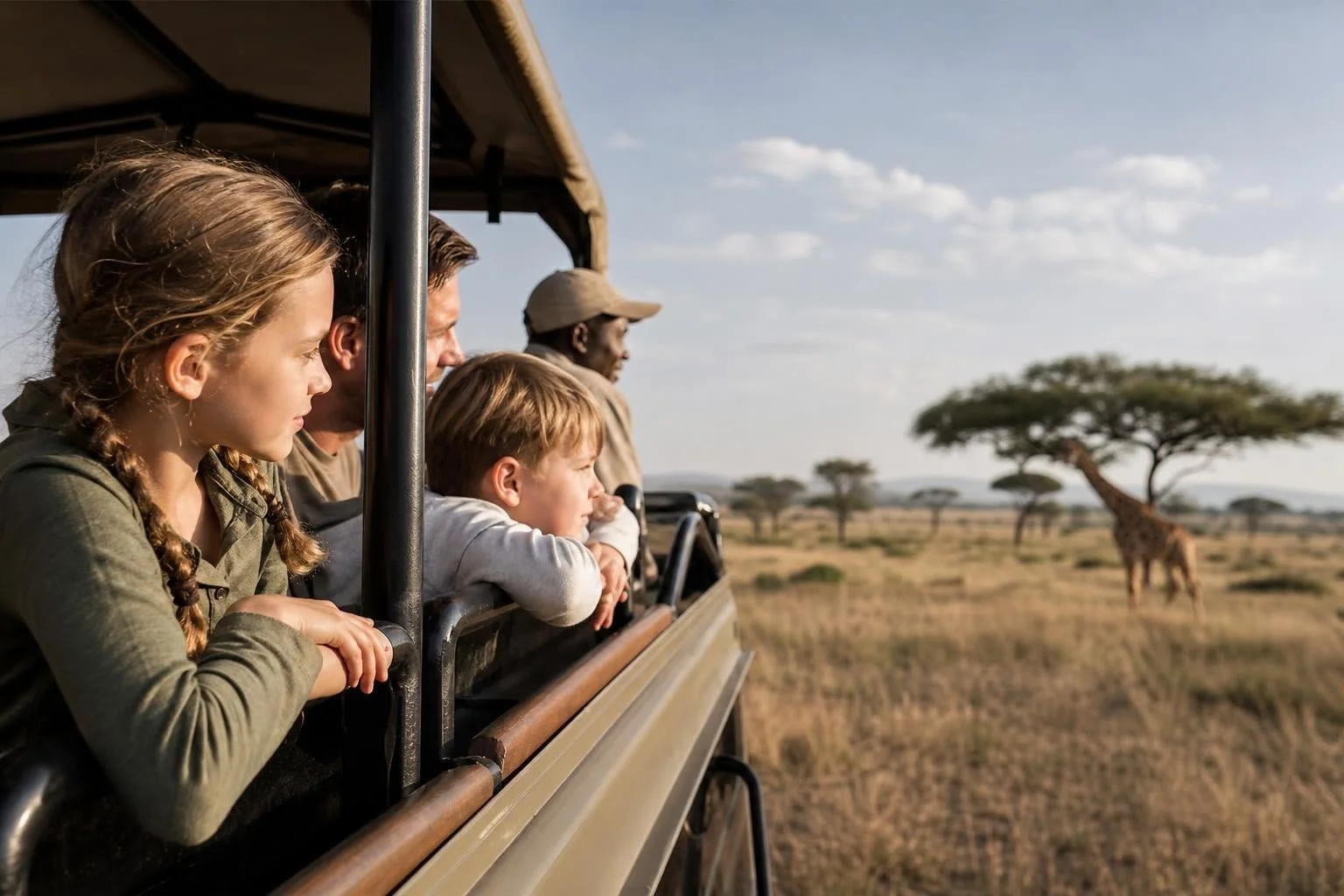
The single most important upgrade for a luxury family safari in Tanzania. A private vehicle means a dedicated 4x4 Land Cruiser with a pop-up roof and your own driver-guide, exclusively for your family. You control the pace: leave earlier, stay longer at a sighting, return to camp when the kids need a break.
Practitioners on Reddit consistently rank the private vehicle above accommodation upgrades. One traveler said the extra cost was worth it even at the expense of choosing a less luxurious camp, because “flexibility mattered more than thread count.” Another parent in a family travel discussion noted that downtime is “HUGE” on safari, that animals are amazing but long drives and early mornings add up, and that a private vehicle is “worth it for the flexibility alone.”
Here’s what many families don’t realize: a private vehicle’s cost is partly fixed (vehicle, fuel, guide, daily operating expenses). A family of four sharing one vehicle pays less per person than a couple in the same vehicle, because the cost spreads across more seats. This makes the private vehicle upgrade proportionally cheaper for families than for couples.
For more on the private family safari experience in Tanzania, including how guide selection works, that resource goes deeper.
Fly-In Safari
A fly-in safari uses light aircraft (typically Cessna Caravans seating 12–14) to reach safari areas instead of driving overland. Flying from Arusha to the Serengeti takes about 90 minutes; driving takes a full day. A fly-in itinerary typically adds $650–$1,200 per person across a week compared with driving, but it removes two full transfer days, which is significant when you’re trying to keep children engaged and rested.
The counterargument for families: when you’re a group of four sharing a single vehicle, the per-person cost of driving drops considerably. The luxury fly-in safari guide compares both options with route-specific examples.
Important practical note: family suites at fly-in camps are limited in number and book fast during school holidays. Confirm availability before committing to a fly-in route.
Drive-In / Road Safari
Overland transfer between parks by vehicle. Longer transit days (4–6 hours between some parks), but you see the countryside, can stop for Maasai markets, and save the fly-in premium. For families, the drive between Tarangire and Ngorongoro or between Ngorongoro and the Serengeti can be part of the experience, not just a transfer.
Bush Flight / Scheduled Flight vs. Charter
Scheduled bush flights run fixed routes on fixed timetables (Arusha to Serengeti, Serengeti to Zanzibar, etc.) and sell seats individually. Charters are private aircraft hired for your group, offering schedule flexibility at a higher cost. Most luxury family safaris use scheduled flights unless the group is large enough to justify a charter.
Soft-Bag Luggage Limit
Light aircraft require soft-sided bags (no hard-shell suitcases) and impose a weight limit, typically 15 kg per person including carry-on. This catches families off guard. Pack light, plan laundry at camps, and leave bulky items at your Arusha hotel. The family safari packing list is built around these constraints.
Airport Transfer
The drive from Kilimanjaro International Airport (JRO) to your first safari destination or to Arusha. JRO is the main international gateway. Arusha Airport (ARK) handles domestic bush flights. Most luxury itineraries include an overnight in Arusha before the safari begins, which helps families adjust after long flights.
Domestic Flight Connection
A scheduled or chartered flight connecting safari destinations within Tanzania, such as Arusha, the Serengeti, and Zanzibar.
Domestic flights can reduce long overland transfers, particularly when traveling with younger children. However, flight schedules, available routes, aircraft capacity, and luggage restrictions vary by airline and destination.
When comparing itineraries, ask whether flight costs, airport transfers, and airstrip connections are included in the quoted price.
Airstrip Transfer
A vehicle transfer between a safari airstrip and the lodge or tented camp.
Unlike major airports, bush airstrips are often located some distance from accommodation. The transfer itself may become a short game drive, depending on the route and wildlife activity.
Ask how long the transfer takes and whether it is included in the accommodation or safari package.
Private Charter
An aircraft hired exclusively for your family or travel group rather than sharing seats on a scheduled bush flight.
A charter can provide greater control over departure times, routing, and baggage arrangements, subject to aviation and operational restrictions. It is particularly relevant for large multigenerational families or groups with complex itineraries.
The additional cost can be substantial, so compare the charter quotation with the cost of purchasing individual scheduled-flight seats.
Park and Destination Terms
Northern Circuit
The standard luxury family safari route in Tanzania: Tarangire National Park, Lake Manyara, Ngorongoro Conservation Area, and the Serengeti. Most 7- to 10-day luxury family itineraries cover three or four of these parks. A family of four with teenagers, for example, might combine walking safari in Arusha National Park with stays in the Western Serengeti, Central Serengeti, Ngorongoro, and Tarangire for a comprehensive Northern Circuit experience.
For park-by-park breakdowns suited to children, the best safari parks for kids guide helps narrow the list.
Private Concession / Conservancy
An exclusive wildlife area, typically adjacent to a national park, managed by a private operator or community trust. Concessions are the single biggest differentiator between a standard luxury safari and a truly premium one.
Why they matter for families:
-
Night drives are permitted (banned in national parks)
-
Off-road driving is allowed, so your guide can approach sightings from better angles
-
Walking safaris may be available for younger ages than the national park minimum of 16
-
Far fewer vehicles: typically 4–6 per conservancy versus dozens in a national park during peak season
The cost premium is real ($400 to $1,300 more per night than comparable national park lodging), but the experiential gap between a concession and a busy park zone during August peak season is even more significant.
That said, a family with very young children may be better served by a national park lodge with structured children’s programming and a swimming pool than by a remote concession camp that’s oriented toward adult guests.
TANAPA
The Tanzania National Parks Authority responsible for managing Tanzania's national parks and administering applicable park entry charges.
Park fees vary according to the destination, visitor category, age, and applicable tariff. Children may qualify for reduced fees or exemptions depending on the current regulations.
When budgeting for a family safari, ask your operator to itemize adult and child park fees separately and confirm which tariff applies to your travel dates.
NCAA
The Ngorongoro Conservation Area Authority, which manages the Ngorongoro Conservation Area.
Unlike national parks administered by TANAPA, Ngorongoro operates under a separate authority and has its own fee structure.
Family safari quotations should account for applicable conservation, vehicle, camping, and crater service charges. The crater service fee is particularly important because it is charged separately from ordinary accommodation expenses.
Always confirm the current NCAA tariff before finalizing your safari budget.
Concession Fee
A nightly charge levied on camps located inside national parks or conservation areas. This is separate from the daily park entry fee that visitors pay. It’s typically included in your accommodation rate at luxury properties, but it’s worth understanding because it’s one reason camps inside parks cost more than camps just outside.
National Park vs. Conservation Area
A national park is a protected area managed by the Tanzania National Parks Authority (TANAPA). A conservation area, such as the Ngorongoro Conservation Area, operates under a separate management authority and may have different access rules, fees, and land-use arrangements.
For families planning a Northern Circuit safari, this distinction matters because park entry, crater access, accommodation, and activity charges may be calculated differently.
Do not assume that a single park fee covers every destination or activity in your itinerary.
Game Management Area (GMA)
A designated wildlife management area outside or surrounding certain protected areas, where wildlife conservation and regulated community land use operate together.
GMAs can form part of wider safari ecosystems and may have different access rules from national parks. Ask your operator which authority manages the area and which activities are permitted.
Crater Descent
The journey from the Ngorongoro Crater rim to the crater floor for wildlife viewing.
Crater access is controlled, and visitors must follow the applicable entry, vehicle, and timing requirements. The crater service fee is separate from ordinary accommodation costs and should appear clearly in your itinerary quotation.
For families, the descent is an important logistical consideration because the day typically involves an early start and several hours of game viewing.
Wildlife Corridor
A natural route that allows animals to move between habitats, protected areas, and seasonal feeding grounds.
Wildlife corridors help explain why animals appear in different parts of the ecosystem throughout the year. For families, understanding these movement patterns helps set realistic expectations about wildlife sightings and migration timing.
Cost and Pricing Terms
Per Person Per Night (PPPN)
The standard pricing unit for safari accommodation in East Africa. When a camp quotes $800 PPPN, that’s $800 for one person for one night. A family of four staying three nights at that rate: $9,600 before park fees and activities. Always clarify whether PPPN quotes are for adults only or include child rates.
Full Board vs. All-Inclusive
Full board means all meals are included in the rate. This is standard at virtually every safari camp and lodge. All-inclusive goes further: meals, house drinks (wine, beer, spirits), laundry, and often one or two activities per day (game drives, guided walks) are bundled into the rate. Most luxury properties in Tanzania are all-inclusive or close to it. Confirm what’s excluded, as premium wines, balloon safaris, and spa treatments usually carry surcharges.
Child Rate
Varies by property and by the governing authority. TANAPA parks charge children aged 5–15 approximately 50% of the adult park fee. Children under 5 enter TANAPA parks free. Individual lodges and camps set their own child accommodation rates, which can range from 30% to 70% of the adult PPPN. Some luxury camps charge a “sharing supplement” instead of a fixed child rate. Always get the child rate in writing for every property on your itinerary.
Peak Season / High Season
June through October. The dry season brings the best wildlife viewing (animals concentrate around water sources), the Great Migration river crossings (July–September), and the highest prices. August and September are the peak of peak: park fees are at their highest, top camps book out 9–12 months in advance, and popular crossing points can attract 30 or more vehicles.
Green Season / Low Season
March through May. Lower prices, lush scenery, fewer tourists, and some lodge closures. The heavy rains can make roads difficult. Some luxury camps offer green season rates that are 30–40% lower than peak rates. Families with flexible schedules and children old enough to handle occasional rain find excellent value here.
Holiday Supplement
A surcharge applied during Christmas, New Year, Easter, and sometimes July–August school holidays. Supplements vary by property but can add $50–$200 per person per night. Combined with peak-season rates, holiday supplements push December and August pricing to annual highs.
Single Supplement
An additional charge applied when one person occupies a room or tent designed for two guests.
Safari accommodation is commonly priced per person sharing. A solo parent traveling with children should therefore ask whether the property charges a single supplement and whether any child-sharing arrangements are available.
Sharing Rate
The accommodation rate charged when two or more guests share a room or tent.
Some properties offer discounted rates for children sharing with adults, while others apply different age-based pricing structures. Confirm whether the quotation uses adult sharing rates, child rates, or family-specific pricing.
Park Conservation Fee
A charge collected for entry into or use of a protected area. The amount can depend on the destination, visitor category, age, residency status, and applicable tax treatment.
These fees are separate from many accommodation rates and should be itemized in a safari proposal. Always check the current tariff for each protected area.
Value-Added Tax (VAT)
A consumption tax applied to eligible goods and services in Tanzania.
Some safari quotations display prices inclusive of applicable taxes, while others show additional charges separately. Ask whether the quoted total includes VAT and other mandatory government levies.
Cancellation Policy
The conditions governing refunds or penalties when a traveler cancels a safari booking.
Luxury safari operators and accommodation providers may have different cancellation deadlines. These can become stricter as departure approaches, particularly for peak-season bookings and exclusive-use properties.
Parents should review the cancellation terms for accommodation, domestic flights, balloon safaris, and other prepaid activities separately.
Travel Insurance
An insurance policy that may cover eligible medical expenses, emergency evacuation, trip cancellation, baggage loss, and travel disruptions.
Families traveling to remote safari destinations should check whether their policy includes emergency medical evacuation and whether children are covered under the same terms.
Travel insurance is not automatically included in a luxury safari quotation.
Minimum Stay Requirement
The minimum number of nights a property requires guests to book.
Some exclusive camps, seasonal properties, or premium accommodation categories may impose minimum stays during high-demand periods. This can affect the overall itinerary budget and the number of destinations a family can visit.
Activity Terms
Game Drive
Vehicle-based wildlife viewing, conducted in open-topped 4x4 Land Cruisers. No minimum age for game drives in national parks. Your private guide drives, spots animals, and interprets behavior. Morning drives typically depart at 6:00–6:30 AM; afternoon drives run from 3:30–4:00 PM until sunset. Full-day drives are possible with a packed lunch, useful when chasing migration action.
Walking Safari
Guided walks in the bush, on foot, with an armed ranger. TAWA (Tanzania Wildlife Authority) sets the minimum age at 16 for walking safaris in national parks. Some private concessions allow younger participants (typically 12+) because the controlled environment and lower wildlife density reduce risk. A family with teenagers completed a walking safari in Arusha National Park as part of their Northern Circuit itinerary, which is one of the more accessible options for families wanting this experience.
Night Drive
A game drive conducted after dark using spotlights, typically departing around 7:00 PM and lasting 1–2 hours. Only permitted in private concessions, not in national parks. Night drives reveal nocturnal predators (leopard, aardvark, genet, bush baby) that families will never see during daytime drives. This is one of the strongest arguments for including at least one concession stay in a luxury family itinerary.
Balloon Safari
A hot-air balloon flight over the Serengeti, typically launching at dawn and lasting about an hour. The minimum age is 7 years. Expect to pay $500–$600 per person. The experience includes a champagne bush breakfast after landing. Worth it for families with children old enough to appreciate it, but not essential for younger kids who are already thrilled by the game drives themselves.
Cultural Visit
A guided visit to a Maasai village or local community. No age restriction. One reviewed family safari included a stay near a Maasai village with firsthand cultural experience, which parents described as one of the trip’s most memorable moments. These visits work well as a mid-safari break from game drives.
Bush Breakfast / Sundowner
A meal or drinks set up at a scenic bush location, away from camp. Bush breakfasts happen mid-morning during a game drive. Sundowners are evening drinks at a viewpoint as the sun sets. Some camps restrict sundowners to guests over a certain age (usually 10+) because alcohol is served and the setting is in open terrain. Ask your operator.
Wildlife and Timing Terms
Great Migration
The year-round, circular movement of roughly 2 million wildebeest, plus hundreds of thousands of zebra and gazelle, through the Serengeti-Mara ecosystem. The herds are always somewhere; the question is where they’ll be during your travel dates.
Calving Season (January–March)
The herds gather in the Southern Serengeti and Ndutu area. Up to 500,000 wildebeest calves are born within a few weeks, attracting predators in extraordinary concentrations. Calving season is excellent for families: drives are shorter (the action is concentrated), predator sightings are frequent, and watching newborn calves take their first steps resonates with children in a way that few other wildlife experiences can.
Note: some camps in the Ndutu area during calving season are seasonal mobile affairs that may not be ideal for very young kids. Confirm your accommodation type. For planning around school holidays and migration timing, that guide maps the overlap.
River Crossing (July–September)
The herds cross the Mara and Grumeti rivers in the Northern and Western Serengeti, facing crocodiles and strong currents. This is the most dramatic wildlife spectacle on earth, but it comes with trade-offs for families: peak-season pricing, large crowds at crossing points (30+ vehicles), and unpredictable timing (you might wait hours and see nothing, or arrive at the perfect moment).
Big Five
Lion, leopard, elephant, Cape buffalo, and rhinoceros. Tanzania’s Northern Circuit offers strong chances of seeing all five, with Ngorongoro Crater being the most reliable single location for a Big Five day.
Dry Season (June–October)
Lower vegetation and scarce water concentrate animals around rivers and waterholes, making wildlife easier to spot. Higher prices, more tourists.
Green Season (November–May, heaviest March–May)
Lush, photogenic scenery. Lower prices. Some roads become difficult. Birdlife peaks. Many luxury camps offer their best value during green season shoulder months (November, early December, late May).
Guide and Safety Terms
Private Guide / Driver-Guide
Your dedicated guide for the safari. In a luxury family context, the guide’s skill with children matters as much as their wildlife knowledge. The best family guides adjust their commentary for different ages, know when to return to camp, and turn game drives into a kind of detective game that keeps younger children engaged.
FGASA (Field Guides Association of Southern Africa)
FGASA is a South African organization that provides professional field-guide training and qualifications.
Its certifications cover areas such as wildlife interpretation, ecology, animal behavior, and guiding skills. Although FGASA qualifications are recognized within the wider safari industry, they should not be confused with Tanzania's own guide licensing and regulatory requirements.
When evaluating a Tanzanian safari guide, ask about their local guiding qualifications, professional experience, first aid training, wildlife knowledge, and any additional international certifications.
WFR (Wilderness First Responder)
Wilderness First Responder is a professional-level medical training qualification designed for people working in remote environments where access to emergency medical services may be delayed.
Training generally covers patient assessment, emergency stabilization, injury management, and decision-making in wilderness settings.
For families traveling through remote safari areas, a guide's first aid training can provide additional reassurance. Ask the safari operator which guides hold current qualifications, what emergency equipment is available, and how medical evacuation is organized.
WFR certification is an additional safety credential, not a substitute for appropriate local guiding qualifications and operational safety procedures.
Children’s Guide / Junior Ranger Program
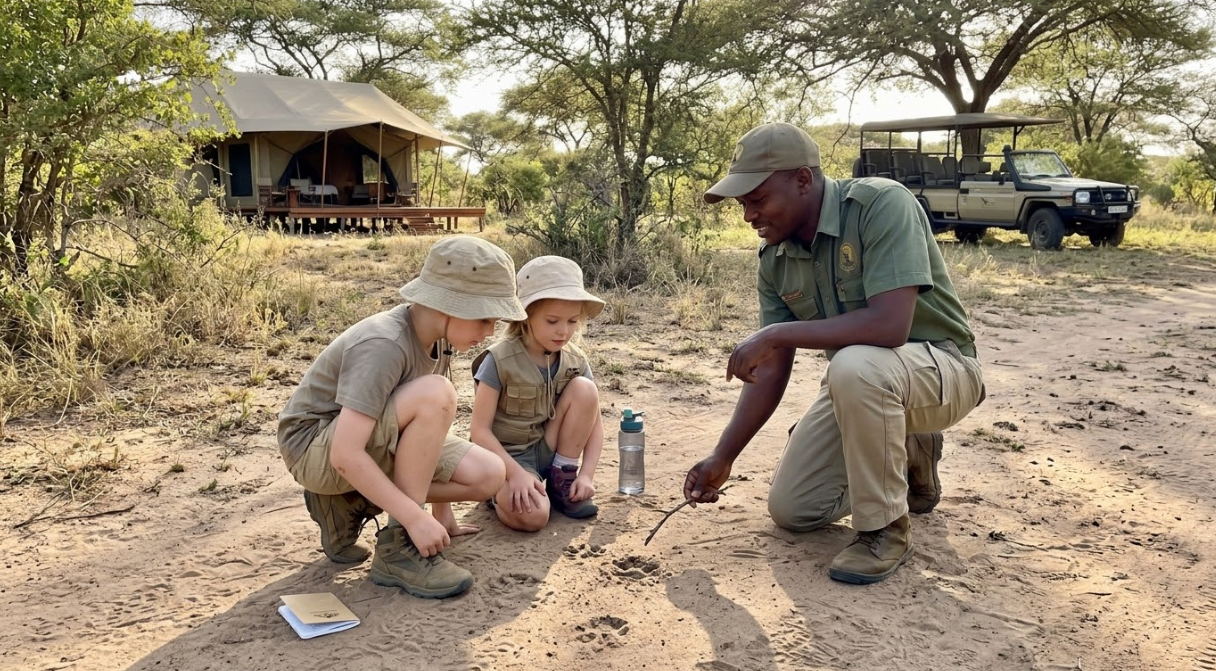
Some luxury properties offer dedicated children’s guides or structured programs (bug hunts, track identification, bird bingo, bushcraft activities) that give kids their own safari experience while parents enjoy a quieter game drive or an afternoon at camp. Not all luxury camps offer this. If it matters to your family, it needs to be part of the property selection, not an afterthought.
Child Supervision Policy
The rules governing how children must be supervised while staying at a safari lodge, tented camp, or participating in activities.
Some properties require children below a specified age to remain under adult supervision in common areas, around swimming pools, and during wildlife activities.
Ask whether the property provides childcare or babysitting services and whether these must be booked in advance.
Shared Game Drive Age Limit
The minimum age a property or operator requires for children joining a game drive with other guests.
Some luxury camps restrict younger children from shared vehicles because of noise, long driving periods, and the need to accommodate other guests.
A private vehicle may provide an alternative, but it does not automatically override every accommodation or activity restriction.
Child Policy
The property's rules for accepting children, including minimum ages, room-sharing requirements, supervision, meal arrangements, and activity restrictions.
Never rely on a general statement that a lodge is family-friendly. Request the actual written policy for the specific property and travel dates.
Medical Evacuation
The organized transfer of an injured or seriously ill traveler from a remote safari location to an appropriate medical facility.
Safari camps may be several hours away from major hospitals. Families should ask about the property's emergency procedures, available communication systems, nearest medical facilities, and evacuation arrangements.
First Aid Certification
A qualification demonstrating that a guide or staff member has completed relevant first aid training.
For families, ask when the certification was obtained, whether it is current, and whether the guide has additional training relevant to remote environments.
Emergency Evacuation Cover
An insurance benefit or service arrangement that covers eligible emergency transportation from a safari destination to medical care.
Check the geographical coverage, exclusions, financial limits, and whether the policy covers all family members.
Pool Safety
The precautions a property uses to reduce the risk of swimming-related accidents.
Parents should ask about pool barriers, lifeguard availability, water depth, and supervision requirements, particularly when traveling with toddlers or young children.
Travel Fatigue
Physical and mental tiredness caused by long flights, early departures, extended game drives, and frequent changes of accommodation.
A well-designed family safari includes rest periods, manageable transfer times, and flexibility to return to camp when children need a break.
Booking and Planning Terms
Bespoke / Custom Safari
A tailored itinerary designed around your family’s ages, dates, interests, pace, and budget. The opposite of a fixed departure group tour. At the luxury family level, virtually every safari should be bespoke. A good operator will ask about children’s ages, attention spans, special interests (one child obsessed with big cats, another with photography), and then build the route and property selection around those inputs.
Lead Time
How far in advance you need to book. For luxury family safaris during peak season (July–October) or school holidays (August, December), premium camps with family rooms book 9 to 12 months ahead. For green season travel, 3 to 6 months is often sufficient. The constraint isn’t flights or park permits. It’s family room availability at the 4 or 5 camps that are genuinely right for your children.
Deposit
Typically 25–30% of the total trip cost at booking, with the balance due 60–90 days before travel. Cancellation terms become progressively stricter as the travel date approaches.
Family Room Inventory
The number of family-configured rooms at a given property. Most luxury tented camps have only 1 or 2 family units out of 8–12 total tents. This is the bottleneck for luxury family safari planning, not guide availability or vehicle allocation.
Provisional Booking
A temporary reservation held by an accommodation provider, airline, or safari operator while the traveler makes a final decision.
A provisional booking is not necessarily a confirmed reservation. It may have an expiration date, after which the room or flight becomes available to other travelers.
Families should ask which accommodations are held provisionally and which have been fully confirmed before paying a deposit.
Itinerary Pacing
The way destinations, activities, and rest periods are arranged throughout a safari.
For families, good itinerary pacing means balancing wildlife viewing with manageable driving times, downtime, and opportunities for children to relax.
A seven-day safari covering three destinations may be more comfortable than one involving five destinations and several long transfers.
Travel Window
The specific dates or period during which a family plans to travel.
A travel window influences accommodation availability, seasonal pricing, migration locations, weather, and flight schedules.
Families with flexible dates may have more accommodation choices and can sometimes access more favorable seasonal rates.
Zanzibar Extension
A beach stay on Zanzibar Island after the safari, reached by a short flight from the Serengeti or Arusha. The classic luxury family combination is 6–7 nights of safari followed by 3–4 nights on the coast. Children get to decompress, swim, snorkel, and visit Stone Town. The family safari Zanzibar planning guide covers logistics, timing, and which coast suits families best.
How to Compare Two Luxury Family Safari Proposals
Understanding safari terminology is useful, but the real advantage comes when you can use it to compare competing itineraries.
Two luxury Tanzania safari proposals may look similar in price while offering very different accommodation, transportation, activities, and family arrangements.
Before choosing an operator, compare the following details.
|
What to Compare |
Proposal A |
Proposal B |
What Parents Should Check |
|---|---|---|---|
|
Safari Vehicle |
Private 4x4 |
Shared 4x4 |
Is the vehicle exclusively for your family? |
|
Driver-Guide |
Dedicated guide |
Shared guide |
Does the guide have family safari experience? |
|
Accommodation |
Luxury lodge |
Luxury tented camp |
Which is better suited to your children's ages? |
|
Family Rooms |
Confirmed family suite |
Standard twin rooms |
Are the room configurations guaranteed? |
|
Child Policy |
Written confirmation |
General family-friendly claim |
Are your children's ages accepted? |
|
Transport |
Road transfers |
Scheduled bush flights |
How much travel time is saved? |
|
Meals |
Full board |
All-inclusive |
Are drinks and special meals included? |
|
Park Fees |
Included |
Charged separately |
Are all applicable fees accounted for? |
|
Activities |
Game drives |
Game drives and walking safari |
Which activities can your children join? |
|
Cancellation |
Property-specific terms |
Operator-specific terms |
What happens if plans change? |
Five Questions to Ask Before Paying a Deposit
-
Are all accommodation properties confirmed for our exact travel dates?
-
Are the family room configurations guaranteed rather than requested?
-
Can you confirm the child policies for every camp and activity?
-
Does the quotation include park fees, concession charges, flights, and transfers?
-
What happens if a flight is canceled, an activity becomes unavailable, or a child cannot participate?
Why the Cheapest Proposal Is Not Always the Best Value
A lower quotation may exclude domestic flights, park fees, concession charges, or activities that another operator has already included.
Similarly, a more expensive proposal may offer a private vehicle, family suites, shorter transfers, and greater flexibility.
The best comparison is therefore based on the complete experience rather than the headline price alone.
Ask your safari operator to provide an itemized quotation showing accommodation, transportation, activities, fees, and child-related arrangements separately.
The Defining Tension of Luxury Family Safari Planning
One reviewed family captured the central challenge perfectly: the ideal luxury family safari accommodation is “neither so high-end that they no longer felt on safari nor so basic that the children would not want to return to Africa.”
That tension runs through every decision in this glossary. A private concession offers exclusivity, but a national park lodge might have the pool and kids’ club your six-year-old needs. A fly-in saves time, but a road transfer lets your teenager photograph that Maasai market. A luxury tented camp feels more authentic, but a lodge with solid walls means your toddler’s 2:00 AM crying doesn’t wake neighboring guests.
The point of understanding these terms isn’t to chase the most expensive option. It’s to make deliberate choices about where the premium matters for your particular family, and where a different kind of value serves your children better.
Families weighing fly-in against drive-in options, or concession stays against national park lodges, can ask Duma Explorer to compare both routes for the same itinerary. The time and cost trade-offs look different for a family of four than for a couple.
Frequently Asked Questions
What is the minimum age for a luxury family safari in Tanzania?
There is no single government-mandated minimum age for a vehicle-based safari. TANAPA parks have no legal age minimum for entry. However, individual camps and lodges set their own policies, typically requiring children to be 6, 8, or 10 years old. Specific activities have firm limits: walking safaris require age 16 in national parks (TAWA regulation), and balloon safaris require age 7. A private vehicle and careful property selection can make a luxury safari work for children as young as 3 or 4.
How much does a luxury family safari in Tanzania cost for a family of four?
For a 7-day luxury family safari, expect $20,000 to $40,000+ for a family of four. A premium private safari runs roughly $700–$1,200 per person per day. Fly-in itineraries push above $1,200 per person per day. These ranges include accommodation, meals, park fees, private vehicle, and guide, but exclude international flights, visas, travel insurance, and optional activities like balloon safaris.
Is a private vehicle worth the extra cost for a family?
Yes. It is the single most impactful upgrade. The flexibility to leave early, return to camp for a midday break, or linger at a sighting without worrying about other guests’ schedules transforms the experience for children. And because the cost is partly fixed, a family of four pays less per person than a couple sharing the same vehicle.
What’s the difference between a luxury lodge and a luxury tented camp for families?
Lodges offer solid walls, swimming pools, interconnecting family rooms, and often structured children’s programs. They’re better for families with children under 8. Luxury tented camps offer a more immersive bush atmosphere with canvas suites, higher staff-to-guest ratios, and closer proximity to wildlife. They tend to suit families with children 8 and older who can handle the openness and the quieter camp culture.
When is the best time to take children on a Tanzania safari?
Calving season (January–March) is arguably the best for families: concentrated wildlife, shorter drives, predator action, and newborn animals that fascinate children. June–July offers dry-season reliability with lower crowds than August–September. The peak river crossing season (August–September) is spectacular but crowded and expensive. Green season (November, early December) offers strong value with fewer tourists.
How far ahead should we book a luxury family safari?
For peak-season travel (July–October) and school holidays (August, December–January), book 9 to 12 months in advance. Family suites at top camps are the bottleneck. For green season or shoulder months, 4 to 6 months is typically sufficient.
What is included in a luxury family safari in Tanzania?
A luxury family safari in Tanzania typically includes premium accommodation, meals, a private 4x4 safari vehicle, a dedicated driver-guide, and scheduled game drives. Depending on the operator and itinerary, the package may also include park fees, domestic flights, airport transfers, laundry, drinks, and selected activities.
Families should request an itemized quotation because all-inclusive arrangements vary between lodges and safari operators.
Are private safari vehicles safer for families with young children?
Private safari vehicles provide greater control over daily schedules, rest breaks, and game drive duration. This can make them more practical for families traveling with young children.
However, a private vehicle does not eliminate wildlife-related risks. Children must follow the guide's instructions, remain appropriately supervised, and comply with the safety rules of the park and accommodation provider.
Can children stay in luxury tented camps in Tanzania?
Yes. Many luxury tented camps accommodate children, but their minimum age requirements vary.
Some properties accept younger children in family tents or when accompanied by a private vehicle, while others impose age restrictions for accommodation or shared game drives.
Always confirm the written child policy and family room availability before paying a deposit.
Is fly-in or drive-in better for a family safari in Tanzania?
Fly-in safaris reduce long road transfers and can be more convenient for families with younger children or limited travel time. Drive-in safaris offer more flexibility for sightseeing and can reduce transportation costs, especially when four family members share a private vehicle.
The right option depends on your children's ages, itinerary, budget, and the destinations you want to visit.
Can we combine a luxury Tanzania safari with Zanzibar?
Yes. Many families combine a Northern Circuit safari with a beach holiday in Zanzibar.
A typical itinerary includes six or seven nights of safari followed by three or four nights on the coast. Families can enjoy wildlife viewing before relaxing with swimming, snorkeling, and cultural visits.
Domestic flight availability, luggage limits, and accommodation preferences should be considered when arranging the connection.
What should parents look for when choosing a luxury safari lodge?
Parents should check minimum age requirements, family room configurations, swimming pool safety, meal flexibility, childcare availability, and the property's approach to shared game drives.
The location also matters. A lodge closer to wildlife viewing areas may reduce long transfers, while a property with family facilities may provide a more comfortable experience between activities.
Is an exclusive-use safari worth it for a family?
An exclusive-use safari can be worthwhile for large families, multigenerational groups, or travelers who want privacy and greater control over daily activities.
However, it is not automatically the best-value option for every family. A private vehicle combined with a family-friendly luxury lodge can provide many of the same scheduling advantages at a lower overall cost.
Compare the full property buyout price against the cost of booking individual family suites and a private vehicle.
What happens if a child cannot participate in a safari activity?
Activity restrictions vary by provider. If a child does not meet the minimum age or safety requirements, the operator may offer alternative arrangements, such as a supervised camp activity or a separate experience with an accompanying adult.
Ask about childcare availability and alternative activities before booking. Do not assume that every property provides babysitting or supervision during excursions.
Ready to start building a luxury family safari in Tanzania around your children’s ages and your travel dates? Share your family details (children’s ages, preferred travel window, trip length, and accommodation priorities) with Duma Explorer.