Gorilla Trekking Altitude 2026: Parks, Risks, What to Expect
TLDR
Gorilla trekking altitude ranges from about 1,500 meters at Bwindi’s lower sectors to over 3,500 meters on certain treks in Rwanda’s Volcanoes National Park. True altitude sickness is unlikely at these elevations for most people, but the combination of thinner air, steep terrain, and unpredictable trek lengths creates real fatigue. Your choice of park and sector matters more than most guides admit, and this article breaks down exactly what to expect at each location.
Mountain gorillas live at elevations that most people never think about until the trip is booked. Then the questions start. How high will I actually be hiking? Will I feel the altitude? Should I take Diamox? Is Rwanda harder than Uganda?
These are fair questions, and most online guides answer them poorly. They either dismiss altitude as irrelevant or lump all four gorilla parks together as if they’re interchangeable. They’re not. The elevation difference between Bwindi’s Buhoma sector and a high trek in Volcanoes National Park is roughly 1,500 meters, which is the difference between a pleasant forest walk and a genuinely breathless climb.
This guide covers every gorilla trekking destination with specific altitude data, sector-level breakdowns, medical context, and practical advice for choosing the right park based on your comfort level.
Planning a gorilla trekking trip? See our full breakdown of Uganda gorilla safari pricing to understand what’s included.
Gorilla Trekking Altitude at a Glance The altitude for gorilla trekking depends on the park you visit.
|
Park |
Typical Trekking Altitude |
Difficulty |
|---|---|---|
|
Bwindi (Uganda) |
1,500–2,600 m |
Easy to Moderate |
|
Volcanoes (Rwanda) |
2,500–3,500 m |
Moderate |
|
Mgahinga (Uganda) |
2,500–3,500 m |
Moderate |
|
Virunga (DRC) |
2,500–3,350 m |
Moderate |
Key Takeaways - Gorilla trekking occurs between 1,500 and 3,500 meters. - Most visitors do not develop altitude sickness. - The biggest challenge is steep hiking combined with thinner air. - Bwindi's Buhoma sector is the easiest option. - Rwanda starts at a higher elevation than Uganda.
What “Gorilla Trekking Altitude” Actually Means
Gorilla trekking altitude refers to the elevation at which you’ll be hiking to find habituated mountain gorilla families. This is distinct from the overall elevation range of a national park, which can be misleading. Virunga National Park in the DRC, for example, spans from 680 meters at its lowest point to 5,109 meters at Mount Stanley. But gorilla trekking there happens in a narrow band around 2,500 to 3,350 meters.
The same distinction matters everywhere. Park boundary elevations tell you very little about your actual trekking experience. What matters is the trailhead altitude (where you start walking), the trekking altitude (how high the gorillas are ranging that day), and the elevation gain (the vertical climb between those two points).
Mountain gorillas as a species inhabit elevations between roughly 2,200 and 4,000 meters. The specific families you visit, the sector you’re assigned to, and even the season can shift your trekking altitude by hundreds of meters on any given day.
Gorilla Trekking Parks Compared
|
Best For |
Recommended Park |
|---|---|
|
Lowest altitude |
Bwindi (Buhoma) |
|
Beginners |
Bwindi |
|
Older travelers |
Buhoma |
|
Short hikes |
Volcanoes NP |
|
Best infrastructure |
Rwanda |
|
Biggest challenge |
Nkuringo |
|
Highest trekking elevations |
Volcanoes NP |
|
Best if worried about altitude |
Bwindi |
Altitude by Park: Side-by-Side Comparison
No two gorilla parks offer the same altitude experience. Here’s what the numbers actually look like when you compare the four destinations where mountain gorilla trekking is possible.
|
Park |
Country |
Park Elevation Range |
Typical Trekking Altitude |
AMS Risk |
Typical Trek Duration |
|---|---|---|---|---|---|
|
Bwindi Impenetrable NP |
Uganda |
1,160–2,607 m (3,806–8,553 ft) |
1,500–2,600 m |
Low |
2–8 hours |
|
Volcanoes NP |
Rwanda |
2,400–4,507 m (7,874–14,787 ft) |
2,500–3,500 m |
Low to Moderate |
1–6 hours |
|
Mgahinga Gorilla NP |
Uganda |
2,227–4,127 m (7,306–13,540 ft) |
2,500–3,500 m |
Low to Moderate |
1–6 hours |
|
Virunga NP |
DRC |
680–5,109 m (2,231–16,762 ft) |
~2,500–3,350 m |
Low to Moderate |
2–5 hours |
A few things stand out immediately. Bwindi offers the widest range and the lowest possible trekking altitudes, which makes it the most forgiving option for altitude-sensitive travelers. Volcanoes NP in Rwanda starts higher (the entry point at Kinigi already sits at approximately 2,400 meters) and certain treks push past 3,000 meters. Mgahinga and Virunga fall in between but share the volcanic terrain of the Virunga Massif, meaning steeper gradients on open slopes.
For more context on permits and logistics at each destination, see our guide to gorilla trekking permits in Uganda.
Gateway Town Elevations
Your acclimatization actually begins in the town where you sleep the night before your trek. These elevations matter:
-
Musanze, Rwanda (gateway to Volcanoes NP): ~1,850 m
-
Kabale, Uganda (gateway to southern Bwindi): ~1,900 m
-
Kisoro, Uganda (gateway to Mgahinga and Nkuringo): ~1,600 m
-
Kigali, Rwanda: ~1,500 m
-
Kampala, Uganda: ~1,190 m
If you’re flying in from a coastal or low-altitude city, spending a night or two in one of these towns before your trek provides meaningful, if modest, acclimatization.
Gorilla Trekking Altitude Compared to Familiar Places
|
Location |
Elevation |
|---|---|
|
Sea Level |
0 m |
|
Denver |
1,609 m |
|
Kigali |
1,500 m |
|
Nairobi |
1,660 m |
|
Bwindi Trekking |
1,500–2,600 m |
|
Volcanoes NP Trekking |
2,500–3,500 m |
|
Machu Picchu |
2,430 m |
|
Everest Base Camp |
5,364 m |
|
Kilimanjaro Summit |
5,895 m |
Bwindi Sector Altitude Breakdown
Bwindi Impenetrable National Park deserves its own section because it’s the most popular gorilla trekking destination and because its four sectors offer dramatically different altitude experiences. Most articles mention Bwindi’s overall range of 1,160 to 2,607 meters and leave it at that. That’s not helpful. The difference between sectors is the difference between an easy morning walk and a grueling all-day hike.
Buhoma (Northern Bwindi): The Easiest Option
Buhoma sits at the lowest elevations in the park and offers the gentlest terrain. The trails here are flatter compared to other sectors, and the gorilla families tend to range at accessible altitudes. This sector is widely recommended for beginners, older travelers, and anyone whose fitness levels are modest. If altitude is a concern at all, Buhoma effectively removes it from the equation.
Rushaga (Southern Bwindi): Moderate
Rushaga offers a middle ground. The terrain is hillier than Buhoma but less punishing than the higher sectors. Several habituated gorilla families range here, giving the park rangers more flexibility in matching groups to visitor fitness levels.
Ruhija (Eastern Bwindi): High and Cold
Ruhija is the highest sector in Bwindi, perched around 2,350 meters. It’s also the coolest and wettest, which compounds the altitude challenge. The elevation here adds a noticeable dimension of difficulty, and trekkers should expect to feel the thinner air during steep sections. Ruhija is a good choice for fit travelers who want a more immersive wilderness experience.
Nkuringo (Southern Bwindi): The Steepest
Nkuringo is consistently rated the most challenging sector in Bwindi. The difficulty comes less from absolute altitude and more from the extreme steepness of the terrain. The starting point sits high, and the descents and ascents through dense forest are relentless. This sector demands excellent physical fitness.
Sector difficulty ranking, easiest to hardest: Buhoma → Rushaga → Ruhija → Nkuringo.
For a detailed comparison of how Uganda and Rwanda differ beyond altitude, read our guide on gorilla trekking: Rwanda vs. Uganda.
Is Altitude Sickness a Real Risk During Gorilla Trekking?
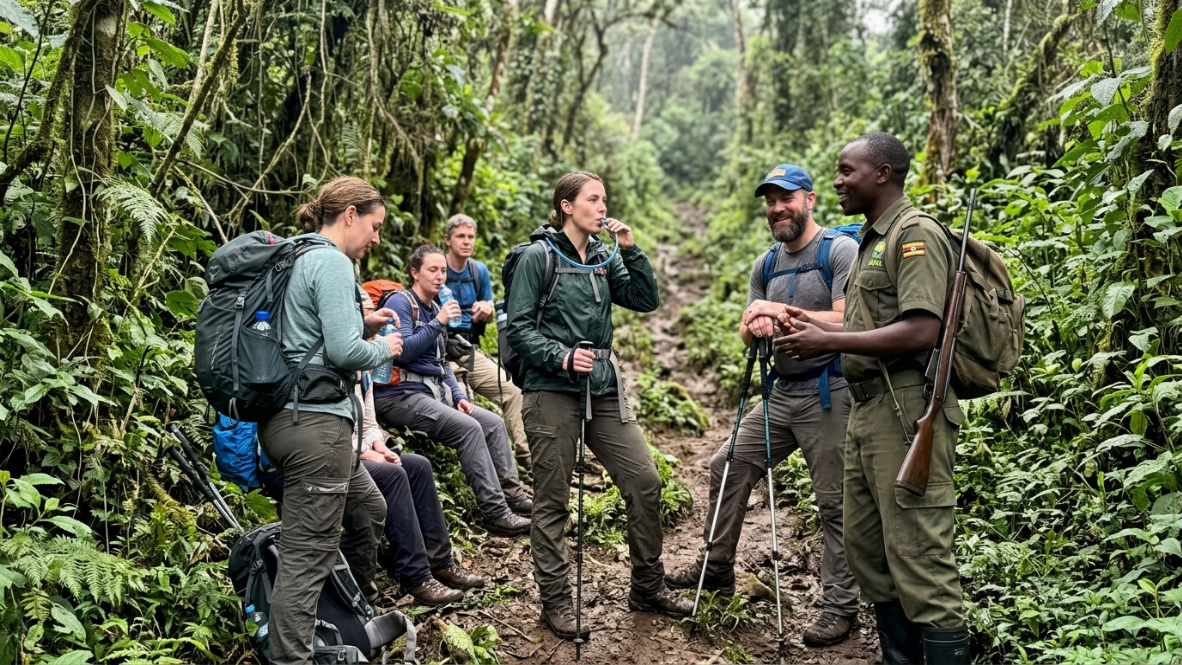
This is the question that generates the most anxiety and the most misleading answers online. The short version: true altitude sickness (acute mountain sickness, or AMS) is unlikely during gorilla trekking, but altitude will absolutely affect how you feel.
The Medical Threshold
Acute mountain sickness generally becomes a risk at altitudes starting from 2,500 meters above sea level, though some individuals may develop symptoms slightly below that threshold. The medical literature notes that AMS is rare below 2,400 meters (8,000 feet), but there are isolated reports of symptoms in unacclimated individuals spending several hours at altitudes as low as 2,000 meters.
Most gorilla treks in Bwindi stay well below the 2,500-meter threshold. In Volcanoes NP and Mgahinga, some treks do push past 3,000 meters, which puts them in the zone where mild symptoms (headache, nausea, light-headedness) become plausible for sensitive individuals.
What Practitioners Say
A medical contributor on TripAdvisor’s Bwindi forum put it plainly: “It would be most unlikely that a visitor hiking to see the gorillas at Bwindi would develop true high-altitude sickness, and there seems little indication for taking acetazolamide as prophylaxis.”
Practitioners on Reddit and travel forums consistently echo a similar point: the altitude itself is not the problem. The problem is exertion at elevation. Dense forest, steep slopes, muddy trails, and the unpredictable duration of treks (anywhere from one to eight hours) combine with slightly thinner air to create genuine fatigue. You’re not going to get HACE or HAPE (the severe, life-threatening forms of altitude illness) on a gorilla trek. But you might get winded faster than you expected, especially if you flew in from sea level the day before.
One important nuance: physical conditioning does not prevent altitude sickness. Being fit doesn’t make your body acclimatize faster. What fitness does provide is better breathing efficiency and cardiovascular capacity, meaning you’ll recover faster between steep sections and maintain a steadier pace overall. That distinction matters.
For a thorough look at what fitness level you actually need, check out our guide on gorilla trekking fitness requirements.
Should You Take Diamox?
For Bwindi, the consensus among experienced guides and medical professionals is no. The altitudes involved are far too low to justify acetazolamide (Diamox), which is standard for Kilimanjaro-level climbs above 4,000 meters but overkill for a 2,000-meter forest trek.
For Volcanoes NP or Mgahinga, where certain treks can reach 3,000 to 3,500 meters, the answer shifts to “maybe, if you have known altitude sensitivity.” Consulting a doctor before your trip is reasonable in those cases, particularly if you’ve experienced AMS symptoms at similar elevations before.
How Altitude Affects Your Trek Day
Even if altitude sickness isn’t a realistic concern, the gorilla trekking altitude still shapes your experience in practical ways.
Thinner air means faster fatigue. At 2,500 to 3,000 meters, the air contains roughly 25% less oxygen than at sea level. You won’t notice it standing still, but you’ll feel it within minutes of hiking uphill through thick vegetation. Expect heavier breathing and the need for more frequent rest stops than you’d take on a similar hike at lower elevation.
Guides pace to the slowest member. This is reassuring. Your park ranger and guide will set a sustainable pace, and there’s no pressure to rush. But it also means that if you’re the slowest member, the group moves at your speed, which can feel uncomfortable for some people.
Trek duration is unpredictable. The gorillas move. Your guide will have radio intelligence about their general location, but “general” can still mean one hour of hiking or six. This variability is what makes altitude management tricky. You can’t budget your energy precisely when you don’t know how long the trek will last.
Understanding how long gorilla trekking really takes will help you set realistic expectations.
What Happens During Your Trek
|
Stage |
Typical Elevation |
|---|---|
|
Park briefing |
1,500–2,400 m |
|
Trailhead |
1,500–2,600 m |
|
Forest hike |
2,000–3,200 m |
|
Gorilla encounter |
2,000–3,500 m |
|
Return hike |
Descending back to trailhead |
How Temperature Changes With Altitude
|
Elevation |
Typical Temperature |
|---|---|
|
1,500 m |
18–25°C |
|
2,000 m |
15–22°C |
|
2,500 m |
12–20°C |
|
3,000 m |
8–18°C |
|
3,500 m |
5–15°C |
Higher elevations are not only harder because of thinner air. They're also cooler and often wetter, which is why layered clothing is recommended regardless of season.
Specific Gorilla Families and Altitude Difficulty
This is something almost no online guide covers, but it’s critical information. Not all gorilla families range at the same altitude, and some are significantly harder to reach than others.
In Volcanoes National Park (Rwanda):
-
Susa A is widely considered the most challenging group to trek due to the altitude range visitors must cover to reach them. Expect a longer, higher trek.
-
Sabyinyo, Hirwa, Kwitonda, and Agashya are generally more accessible and straightforward to reach.
-
Despite the higher base elevation, Volcanoes NP is regarded by many experts (including guidebook author Philip Briggs) as the easiest place overall to track mountain gorillas because the habituated groups are predictably territorial and often found close to the forest edge.
In Bwindi (Uganda):
-
The Nkuringo group and other families in the Nkuringo sector require the most strenuous trekking.
-
Buhoma’s families are consistently the easiest to access, often found on relatively flat trails close to the park boundary.
-
Ruhija’s families add altitude to the challenge, with the sector’s characteristically cool, wet climate making conditions less comfortable.
Your park will assign you a gorilla family on the morning of your trek based on group sizes, ranger intelligence, and sometimes visitor fitness levels. If you have strong preferences or concerns, communicate them clearly during the pre-trek briefing.
Preparing for Gorilla Trekking at Altitude
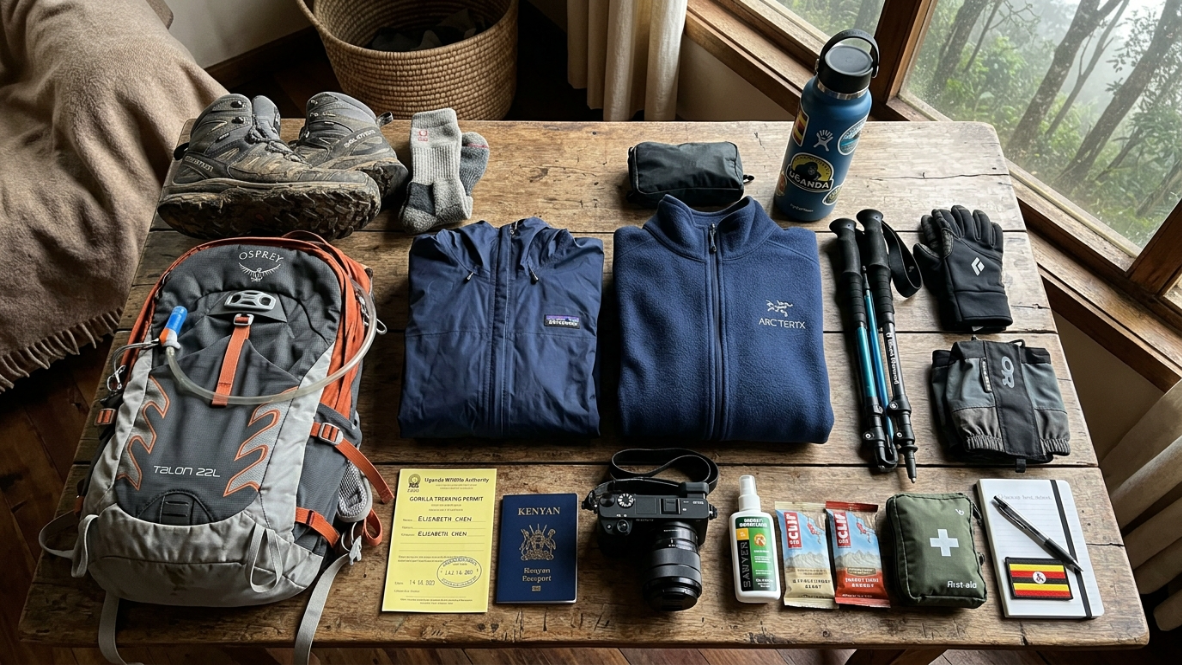
Preparation doesn’t need to be complicated, but it should be deliberate. Here’s what actually helps.
Arrive Early
Allow 24 to 48 hours at an intermediate elevation before your trek. If you’re flying from a coastal city, don’t schedule your gorilla trek for the day after arrival. Spend a night in Kigali, Musanze, Kisoro, or Kabale to let your body adjust. Even this modest acclimatization period makes a measurable difference in how you feel on trek day.
Train Your Cardiovascular System
Three to six weeks of regular cardio training before your trip is the single best investment you can make. Focus on hiking (ideally uphill), stair climbing, and sustained walking. You don’t need to be an athlete, but you do need to be comfortable walking for several hours at a steady pace on uneven ground.
Hydrate and Avoid Alcohol
Drink aggressively the day before and the morning of your trek. Dehydration amplifies altitude-related fatigue. Avoid alcohol the night before. This advice appears in virtually every gorilla trekking guide because it works.
Hire a Porter
At $15 to $20 in Uganda, a porter is the best money you’ll spend on your entire trip. They carry your daypack, provide a steadying hand on steep sections, and can push or pull you through difficult terrain when your legs give out. Every experienced gorilla trekker recommends this, and the money goes directly into the local community.
Pack Light, Dress in Layers
The temperature can swing significantly during a trek, especially at higher altitudes in Ruhija or Volcanoes NP. Start with a warm layer, carry rain gear, and be prepared to strip down as you warm up from exertion. Lighter camera gear also matters when every extra kilogram compounds fatigue at elevation. For a full equipment list, see our gorilla trekking packing list.
How Gorilla Trekking Altitude Compares to Other East African Activities
Gorilla trekking altitude sits firmly in the “moderate elevation” category when compared to other popular activities in the region. Putting it in context helps calibrate whether your concern level is appropriate.
|
Activity |
Typical Altitude |
|---|---|
|
Zanzibar beach holiday |
Sea level |
|
Serengeti/Ngorongoro game drives |
1,000–2,300 m |
|
Nairobi |
~1,660 m |
|
Kigali |
~1,500 m |
|
Gorilla trekking (Bwindi) |
1,500–2,600 m |
|
Gorilla trekking (Volcanoes/Mgahinga) |
2,500–3,500 m |
|
Kilimanjaro summit (Uhuru Peak) |
5,895 m |
The key takeaway: gorilla trekking is nowhere near Kilimanjaro territory. Even the highest gorilla treks in Rwanda top out around 3,500 meters, which is lower than Kilimanjaro’s third-day camp on most routes. If you’ve completed a multi-day hike at moderate elevation anywhere in the world, gorilla trekking altitude should be well within your capacity.
For travelers combining gorilla trekking with a Kilimanjaro climb, the trekking altitude serves as useful low-level acclimatization. For those pairing it with a safari, the transition from game-drive elevations (typically 1,000 to 2,000 meters) to gorilla trekking altitudes is gentle enough that most people don’t notice.
Timing your trip well also reduces difficulty. Dry-season conditions make trails more stable underfoot, which matters when altitude is already taxing your system. Check our best time to visit East Africa guide for seasonal planning.
Which Gorilla Trekking Destination Is Right for You?
|
If You... |
Choose |
|---|---|
|
Are worried about altitude |
Bwindi Buhoma |
|
Are over 60 |
Buhoma |
|
Want luxury lodges |
Rwanda |
|
Want the shortest hikes |
Rwanda |
|
Want lower permit prices |
Uganda |
|
Want a physical challenge |
Nkuringo |
|
Want volcanic scenery |
Rwanda or Mgahinga |
Choosing the Right Park for Your Altitude Comfort
Your choice of destination should match your fitness level and altitude tolerance. Here’s a straightforward framework.
If Altitude Worries You at All: Bwindi (Buhoma Sector)
Bwindi’s Buhoma sector keeps you well below any altitude that could cause even mild symptoms. The terrain is the gentlest in the park, and the gorilla families here are reliably accessible. Multiple sources recommend Bwindi specifically for travelers who want to eliminate altitude as a variable. As one guide notes, “the hikes here tend to be a bit muddier, but you’re well below any elevation that could potentially make you feel iffy.”
If You’re Moderately Fit: Volcanoes NP (Rwanda)
Rwanda’s Volcanoes National Park starts at a higher base elevation (2,400 meters at Kinigi), but the trekking infrastructure is excellent and the gorilla groups are often found close to the forest edge. For most families, treks are shorter than Bwindi’s. The exception is Susa A, which involves a longer, higher ascent. If you request an easier family assignment during your briefing, Volcanoes NP is a very manageable option for people with average fitness.
If You Want a Challenge: Mgahinga or Bwindi’s High Sectors
Mgahinga Gorilla National Park shares the volcanic terrain of the Virungas and involves steeper ascents through open slopes. Bwindi’s Nkuringo and Ruhija sectors offer similarly demanding experiences within a dense forest setting. These options reward physically fit travelers with more remote, immersive encounters.
Ready to start planning? Compare gorilla trekking in Rwanda vs. Uganda to find the destination that fits your trip.
Key Altitude Terms for Gorilla Trekkers
A quick glossary of terms you’ll encounter when researching gorilla trekking altitude:
-
AMS (Acute Mountain Sickness): The mildest form of altitude illness, characterized by headache, nausea, and fatigue. Generally onset at 2,500 meters or above.
-
Acclimatization: The body’s gradual adaptation to reduced oxygen at higher elevations. Even 24 to 48 hours at moderate altitude helps.
-
Elevation gain: The total vertical ascent during a trek, distinct from the absolute altitude. A trek that starts at 2,000 meters and reaches 2,800 meters has 800 meters of elevation gain.
-
Trailhead altitude: The elevation at the starting point of your hike, not the highest point you’ll reach.
-
HACE/HAPE: High Altitude Cerebral Edema and High Altitude Pulmonary Edema, the severe and potentially fatal forms of altitude illness. These occur at much higher elevations (typically above 4,000 meters) and are not relevant to gorilla trekking.
Frequently Asked Questions
What is the altitude for gorilla trekking in Uganda?
In Uganda, gorilla trekking occurs at Bwindi Impenetrable National Park (typical trekking altitude of 1,500 to 2,600 meters) and Mgahinga Gorilla National Park (2,500 to 3,500 meters). Bwindi offers the lower-altitude option, particularly in its Buhoma sector, making it the better choice for altitude-sensitive travelers.
Will I get altitude sickness on a gorilla trek?
True altitude sickness is very unlikely during gorilla trekking, especially at Bwindi where most treks stay below 2,600 meters. The medical threshold for AMS onset is generally around 2,500 meters. What you will notice is faster fatigue and heavier breathing due to the combination of elevation and physical exertion on steep terrain.
Is gorilla trekking altitude higher in Rwanda or Uganda?
Rwanda’s Volcanoes National Park has a higher base elevation (starting at 2,400 meters) and treks can push past 3,000 meters. Uganda’s Bwindi is lower overall, with many treks staying between 1,500 and 2,200 meters. Mgahinga in Uganda matches Rwanda’s altitude range since both parks are on the Virunga volcanoes.
Do I need Diamox for gorilla trekking?
For Bwindi, no. Medical professionals and experienced practitioners agree there’s little indication for acetazolamide at these altitudes. For Volcanoes NP or Mgahinga, where treks can reach 3,000 to 3,500 meters, consult your doctor if you have known altitude sensitivity. Diamox is standard for climbs above 4,000 meters (like Kilimanjaro) but generally unnecessary for gorilla trekking.
Which gorilla trekking sector is easiest?
Buhoma sector in Bwindi is consistently rated the easiest for gorilla trekking, with the lowest altitude, gentlest terrain, and most accessible gorilla families. In Rwanda, families like Sabyinyo and Hirwa are considered easier treks compared to the Susa A group, which ranges at higher altitude.
How should I prepare for gorilla trekking at altitude?
Arrive one to two days early to acclimatize at your gateway town. Do three to six weeks of cardio training beforehand (hiking and stair climbing are ideal). Hydrate well, avoid alcohol the night before, hire a porter, and dress in layers. These steps collectively reduce altitude-related fatigue more than any single intervention.
How does gorilla trekking altitude compare to Kilimanjaro?
Gorilla trekking tops out around 3,500 meters on the most demanding treks. Kilimanjaro’s summit is 5,895 meters. Even the highest gorilla trek is lower than most Kilimanjaro camps from day three onward. The two experiences are in completely different altitude categories.
Can older travelers handle gorilla trekking altitude?
Yes, with the right preparation and park choice. Bwindi’s Buhoma sector is ideal for older travelers or anyone with limited fitness, as it stays at low altitude on relatively gentle terrain. Porters are available for additional support, and age requirements are straightforward (minimum age 15, no upper limit). Many travelers in their 60s and 70s complete gorilla treks successfully.