Gorilla Trekking Etiquette 2026: Rules for Uganda & Rwanda
TL;DR
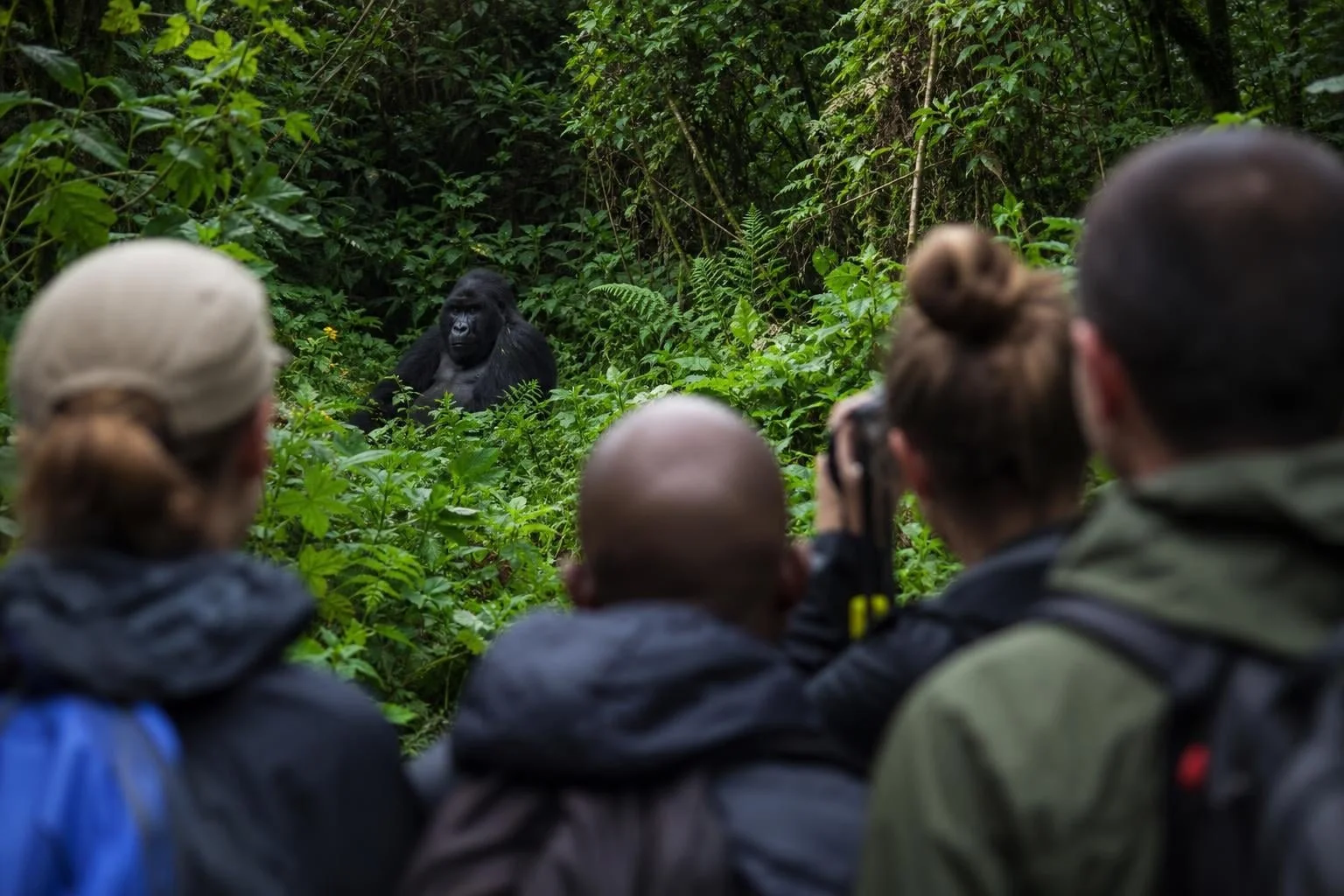
Gorilla trekking etiquette covers every behavioral rule and social expectation before, during, and after your encounter with mountain gorillas. Core rules include maintaining a minimum distance (10 meters in Uganda, 7 meters in Rwanda), observing a strict one-hour viewing limit, never using flash photography, and staying home if you’re sick. These aren’t suggestions. They exist because mountain gorillas share 98% of human DNA, making them dangerously vulnerable to our diseases, and every rule is a direct line of defense for a species that numbered just 254 individuals in 1981.
The safety rules around gorilla trekking aren’t about protecting you from gorillas. They’re about protecting gorillas from you.
That framing changes everything about how to approach gorilla trekking etiquette. This isn’t a theme park with guardrails designed for your comfort. It’s a conservation program that happens to allow visitors. The rules, both the enforceable ones and the softer behavioral expectations, exist because mountain gorillas are critically endangered, because human diseases can kill them, and because the tourism revenue that funds their protection only works if the gorillas remain wild and healthy.
The most recent census from the Greater Virunga Transboundary Collaboration (late 2024) puts the global mountain gorilla population at approximately 1,063 individuals. That’s up from a catastrophic low of 254 in 1981. Mountain gorillas are the only great ape whose population is growing, and that growth is directly tied to tourism-funded conservation and the strict behavioral protocols that make it sustainable.
This guide covers every piece of etiquette you need, organized as a glossary of terms and rules. Where Uganda and Rwanda differ, those differences are flagged. Where breaking a rule carries consequences, those consequences are spelled out.
Planning your gorilla trek? Start with our breakdown of Uganda gorilla safari trips and prices.
Gorilla Trekking Etiquette at a Glance
If you're going gorilla trekking in Uganda or Rwanda, follow these essential etiquette rules: - Stay at least 10 meters away in Uganda and 7 meters away in Rwanda - Never touch a gorilla, even if it approaches you - Keep voices quiet and avoid sudden movements - Turn off camera flash before entering the forest - Spend only one hour with the gorilla family (standard permits) - Stay home if you have a cold, flu, or other contagious illness - Follow ranger instructions immediately during the trek - Do not eat, smoke, or litter near gorillas - Respect the forest by leaving no trace - Hire a porter if you need assistance and tip guides respectfully
These rules protect mountain gorillas from human disease, reduce stress on wildlife, and help ensure gorilla tourism continues to support conservation across Uganda and Rwanda.
Gorilla Trekking Etiquette Checklist
Before your trek, make sure you can answer "yes" to every item below.
|
Checklist |
✓ |
|---|---|
|
Passport packed |
|
|
Permit confirmed |
|
|
Hiking boots cleaned |
|
|
Flash disabled |
|
|
Surgical mask packed |
|
|
Feeling healthy (no illness) |
|
|
Neutral clothing packed |
|
|
Water and snacks packed |
|
|
Cash for porter/tips |
|
|
Camera batteries charged |
Pre-Trek Etiquette
These are the rules and protocols that apply before you ever set foot in the forest.
Morning Briefing
A mandatory orientation session held at park headquarters before each trek. In Rwanda, visitors gather at Volcanoes National Park headquarters in Kinigi at 7am. In Uganda, briefings happen at the respective park office (Bwindi or Mgahinga).
During the briefing, rangers explain the core rules (distance, flash ban, time limit, behavior around gorillas), assign you to a specific gorilla family, and may check your camera settings to confirm flash is disabled. This is your last chance to ask questions, flag health concerns, or mention physical limitations.
Show up on time. Late arrivals can delay the entire group, and rangers are not obligated to wait.
Fitness Disclosure
Gorilla families are assigned to trekking groups on the morning of the trek, not at booking. Some families live on steep slopes at high altitude, requiring hours of hard hiking. Others are closer to trailheads.
If you have mobility challenges, knee problems, or any condition that limits your hiking ability, communicate this to your tour operator well before your trek date. The park officials can then assign you to a family that’s easier to reach. Hiding a fitness limitation doesn’t help anyone. It slows the group, puts pressure on rangers, and could mean you never reach the gorillas at all. Our detailed guide on gorilla trekking fitness requirements breaks this down further.
Gorilla Permit
Your gorilla permit is date-specific, park-specific, and matched to your passport. In Uganda, permits cost $800 during peak season and $600 during low season (2026 rates). In Rwanda, permits cost $1,500 year-round. Uganda also offers a Gorilla Habituation Experience permit at $1,800, available only in Bwindi.
Permits are largely non-refundable. Rwanda does offer a partial exception: the Rwanda Development Board (RDB) will refund 50% of the gorilla tracking fee if a visitor is declared unfit due to illness by the Warden in Charge. Uganda has no comparable refund policy.
For a full breakdown of costs and booking rules, see our guide on gorilla trekking permits in Uganda.
Passport Requirement
Bring your passport on trek day. Park officials check passports against permits before allowing entry. Forget your passport and you may not be allowed into the park. No exceptions, no workarounds. This catches people off guard surprisingly often, particularly those staying at lodges far from the park gate who pack light for the morning.
Shoe Disinfection
All visitors must disinfect their shoes at designated points before entering the forest. This prevents the introduction of soil-borne pathogens from other environments. Step into the disinfection mat fully and deliberately. It takes five seconds and protects an entire ecosystem.
Gorilla Friendly Pledge
The Gorilla Friendly Pledge is an online awareness campaign run by the International Gorilla Conservation Programme (IGCP), backed by Conservation International, Fauna & Flora International, and WWF. By taking the pledge, you commit to wearing a surgical mask near gorillas, maintaining at least 10 meters of distance, and following all park rules.
Fewer than 2,000 people have taken it. Signing before your trek takes two minutes and serves as a useful mental rehearsal of the rules you’ll need to follow.
Habituation
Not every gorilla family in the forest is available for tourism. Gorilla habituation is a gradual process where wild gorillas become accustomed to human presence over two to three years (sometimes longer) under the guidance of researchers and conservationists. Only fully habituated families are opened to standard tourism visits.
Uganda’s Gorilla Habituation Experience in Bwindi offers a unique alternative: trekkers spend up to four hours with a semi-habituated group, observing the habituation process in action. This comes with a higher permit cost ($1,800) and different behavioral expectations, since the gorillas are less predictable.
During-Trek Behavioral Etiquette
These rules apply from the moment you enter the forest until you leave. Most are strictly enforced by rangers, and violations can end your trek immediately.
Minimum Distance Rule (7 Meters vs. 10 Meters)
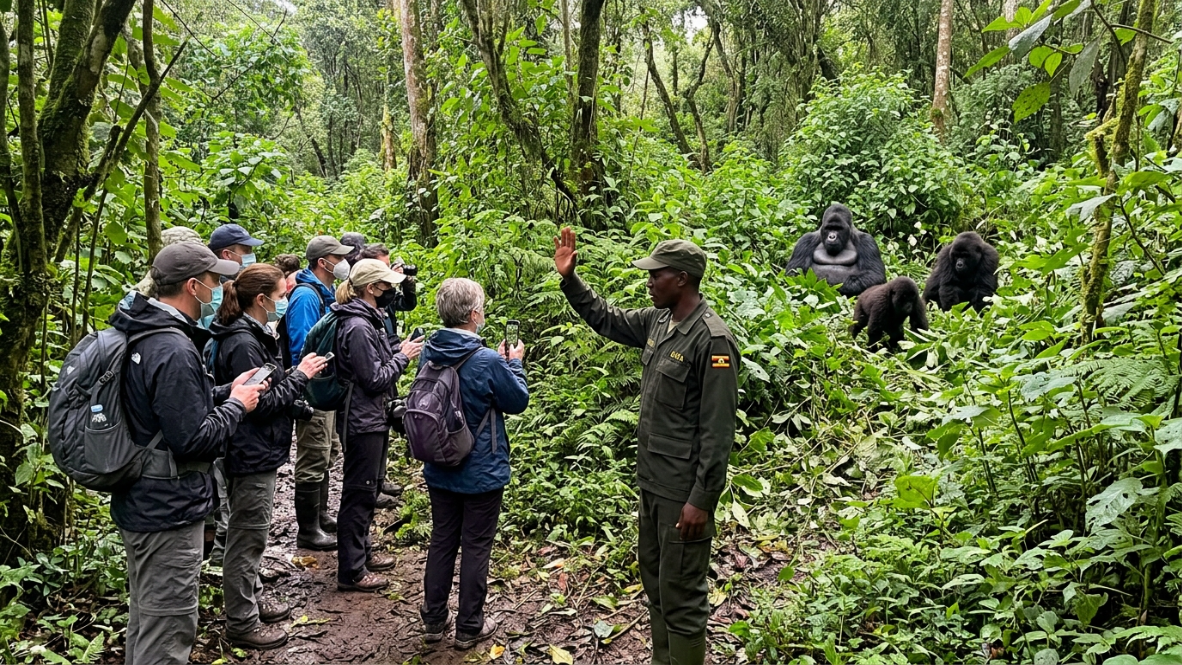
Uganda requires a minimum distance of 10 meters from gorillas. Rwanda requires 7 meters. According to IUCN best-practice guidelines for great ape tourism, 7 meters has historically been the standard minimum, with recommendations to increase it and add surgical masks when within 10 meters.
The smart move: treat 10 meters as your personal standard regardless of which country you’re in. That extra three meters costs you nothing and gives the gorillas more space.
Practitioners on Reddit who’ve done treks in both countries report that the distance rule is sometimes hard to maintain perfectly, especially when gorillas move toward the group. The key is never to approach closer yourself. If a gorilla closes the gap, hold still or move slowly backward. For a deeper look at all distance and safety protocols, read our full guide on gorilla trekking safety rules for Uganda and Rwanda.
One-Hour Viewing Limit
Standard gorilla treks allow exactly one hour of viewing time. Rangers track this precisely and will alert the group when the session ends. The timer starts when you first make visual contact with the gorilla family, not when you left the trailhead. So a four-hour hike to reach the gorillas doesn’t eat into your viewing time.
This limit preserves the gorillas’ natural rhythms and ensures they associate human presence with minimal disruption. One hour sounds short. Every single trekker says it goes by in a flash. Knowing this in advance helps you prioritize the experience over fiddling with camera settings. For more context on trek timing, see how long gorilla trekking really takes.
Group Size Cap (8 Visitors)
Both Uganda and Rwanda limit groups to 8 visitors per gorilla family per day. Rwanda issues 96 gorilla permits per day total (12 habituated families multiplied by 8 visitors each). This cap is non-negotiable and is one of the reasons permits sell out months in advance.
The small group size is central to gorilla trekking etiquette. Larger groups would create more noise, more disease risk, and more stress for the animals.
No-Touch Rule
Do not touch the gorillas. Even if a gorilla approaches you, brushes past you, or sits down right next to you. The temptation is real, especially with juveniles, who are curious and sometimes reach toward visitors. Resist it completely.
Human contact can transmit diseases and cause gorillas unnecessary stress. Gorillas share 98% of their DNA with humans, which means our respiratory infections, skin conditions, and gastrointestinal bugs can jump species with alarming ease. A single touch could introduce a pathogen that spreads through an entire family.
Health Screening and Illness Policy
If you have a cold, flu, or any contagious illness, you must not visit the gorillas. This is enforced during the morning briefing, and rangers can turn you away on the spot.
Losing a $700+ permit stings. But a respiratory virus transmitted to a gorilla family could be devastating. These animals have no immunity to human diseases. Entire family groups have been affected by outbreaks traced to human contact.
Rwanda’s 50% refund for illness-related cancellations offers some financial cushion. Uganda offers none. Either way, reporting your illness honestly is not optional. It is the single most important piece of gorilla trekking etiquette.
Mask Wearing
The IGCP Gorilla Friendly Pledge asks trekkers to commit to wearing a surgical mask when within close proximity of gorillas. On the ground, enforcement varies. Some guides in both Uganda and Rwanda actively request masking when the group is close to the family. Others are more relaxed about it.
Bring a surgical mask regardless. If the gorillas end up closer than expected (which happens regularly), you’ll want it.
Flash Photography Ban
Flash photography is completely banned during gorilla encounters in Uganda, Rwanda, and the DRC. Flash can startle gorillas, provoke defensive behavior from silverbacks, and disrupt the entire family dynamic. Rangers may check your camera settings before the trek, and using flash during the encounter can result in your visit being terminated immediately, without refund.
Before you leave your lodge, switch your camera and phone to flash-off mode. Double-check it. Then check it again. One accidental flash pop can ruin the experience for your entire group. Our gorilla trekking photography guide covers camera prep, recommended lenses, and settings in detail.
Drone Ban
Drone usage is not permitted in any gorilla trekking park. The noise disturbs gorillas and other wildlife, and the visual presence of an unfamiliar flying object can provoke panic or aggressive responses. Leave the drone at your lodge. This applies to all drone sizes and types.
Direct Eye Contact (Avoidance)
Direct and prolonged eye contact can be perceived as a challenge or threat by gorillas. If a gorilla looks at you, avert your gaze. Don’t stare back. This feels counterintuitive when you’re face-to-face with one of the most magnificent animals on earth, but it matters. A brief glance is fine. A locked stare is not.
Quiet Voices
Speak in whispers. Better yet, stay silent. Loud voices or sudden noises can startle gorillas, particularly mothers with infants who are already on high alert. If you need to communicate with your guide or fellow trekkers, keep it barely above a murmur.
No Eating, Drinking, or Smoking
Visitors are prohibited from eating, drinking, smoking, or chewing gum during the gorilla encounter. Food smells attract insects and wildlife, create contamination risks, and are a general disturbance. Have your snack before or after the encounter, not during.
No Mimicking Gorilla Sounds
Even with the best intentions, mimicking gorilla vocalizations can send misleading signals and cause confusion or agitation within the family. The rumbling “contentment” sound you heard in a documentary? Don’t try to reproduce it. You don’t speak gorilla, and getting the tone wrong could be interpreted as aggression.
Silverback Charge Response Protocol
About 99% of gorilla charges are bluff charges. A silverback may beat his chest, vocalize loudly, and rush toward the group to give his family time to move to safety. It looks terrifying. It almost never results in contact.
If a gorilla charges or comes close: crouch down slowly to make yourself appear smaller, avert your gaze, do not run, and follow your ranger guide’s lead exactly. Running triggers a chase instinct. Standing tall looks like a challenge. Crouching signals submission and defuses the situation.
Submissive Posture / Crouching
Beyond charge situations, crouching or sitting down is the default body language whenever gorillas are near. If a gorilla walks past you on the trail, crouch low, avoid eye contact, and wait for the animal to pass. Your ranger guide will model this behavior. Copy them.
Toilet Protocol
This is the etiquette rule no one wants to talk about, but everyone needs to know. If you need to relieve yourself while in the forest, ask the ranger guide to dig you a hole. The hole must be at least 30 centimeters deep. After you’re finished, fill the hole completely.
This prevents human waste from contaminating the gorillas’ environment and reduces disease transmission risk. It’s not glamorous, but it’s straightforward and every experienced trekker will tell you to just ask without embarrassment. Rangers handle this request regularly.
Leave No Trace
Stay on designated trails to minimize habitat disruption and erosion. Do not litter. Fines for littering in Uganda can reach $150 USD. Do not remove plants, insects, or any natural objects from the forest. Pack out everything you bring in.
This extends to small items people forget about: tissue wrappers, energy bar packaging, lens caps. If it entered the forest in your pocket, it leaves in your pocket.
Gorilla Trekking Do's and Don'ts
|
Do |
Don't |
|---|---|
|
Stay behind your ranger |
Approach gorillas |
|
Speak quietly |
Shout or clap |
|
Wear neutral colors |
Wear bright neon clothing |
|
Follow group instructions |
Wander away from the group |
|
Keep flash off |
Use flash photography |
|
Carry out your rubbish |
Leave litter behind |
|
Crouch if instructed |
Run from a gorilla |
|
Respect the one-hour limit |
Ask for extra viewing time |
Photography Etiquette
Photography deserves its own section because it’s where etiquette violations happen most frequently.
Pre-Trek Camera Check
Rangers may inspect your camera and phone settings at the morning briefing to verify flash is disabled. Come prepared. If you’re using a DSLR or mirrorless camera, disable the pop-up flash and switch to manual or aperture-priority mode. On smartphones, go into camera settings and turn flash to “off” (not “auto,” which can fire in low light, which is exactly the condition you’ll be shooting in under the forest canopy).
Telephoto Lens Selection
A 70-200mm f/2.8 lens is the consensus pick among wildlife photographers for gorilla trekking. It gives you enough reach to fill the frame from a safe distance and enough light-gathering capability for the dim forest environment. Wider lenses (24-70mm) are useful for environmental shots, but don’t rely on them as your primary lens, because you’ll be tempted to move closer for frame-filling shots.
No Rapid Repositioning
Do not suddenly shift position to get a better angle if it means breaking the minimum distance rule. Professional photographers must balance creative ambition with compliance. No photograph is worth stressing a gorilla family or getting your trek terminated.
Experience-First Mindset
One of the most overlooked pieces of gorilla trekking etiquette has nothing to do with official rules. It’s about how you choose to spend your hour.
Some tourists spend the entire session behind their phone screen, recording nonstop, posing with their backs turned to the gorillas for selfies, or snapping hundreds of nearly identical photos. They leave having documented the experience but barely having experienced it.
Put the camera down for at least the first five to ten minutes. Watch the gorillas. Listen to them. Let the reality of what you’re seeing sink in. You can photograph for the remaining fifty minutes. That initial period of pure observation will be what you remember most vividly for the rest of your life.
Social Media and Geotagging
When you post your photos on social media (and you will), avoid geotagging exact locations. Specific GPS coordinates or trail markers can create over-tourism pressure on certain gorilla families and, in worst-case scenarios, provide intelligence for poaching operations. Tag the national park broadly if you want. Don’t tag the precise spot.
The Biggest Gorilla Trekking Etiquette Mistakes Visitors Make
Most etiquette violations happen because visitors become excited once they see gorillas. Common mistakes include:
Getting Too Close
Many visitors accidentally move forward while taking photos.
Always let the gorillas control the distance.
Forgetting Flash is Enabled
Auto flash is one of the most common reasons rangers intervene.
Turn flash completely OFF before leaving your lodge.
Spending the Entire Hour Behind a Camera
Many experienced trekkers recommend watching the gorillas for the first few minutes before taking photos.
The memories are often more valuable than hundreds of nearly identical images.
Talking Too Loudly
Excited conversations disturb gorillas and other trekkers.
Keep conversations short and quiet.
Arriving While Sick
Even a mild cold can threaten an entire gorilla family.
If you're unwell, inform park staff immediately.
Porter and Tipping Etiquette
This falls outside the formal park rules but is a critical part of gorilla trekking etiquette that directly affects local communities and your own trek experience.
Hiring a Porter
Hiring a porter is one of the smartest decisions you can make on a gorilla trek. Porters carry your daypack, camera bag, or water, freeing your hands for balance on steep, muddy terrain. For photographers carrying heavy camera equipment, a porter isn’t a luxury. It’s a necessity.
Porter costs are modest: $10 to $25 for the day depending on the park and country. Critically, many gorilla trekking porters earn no regular salary. The daily hire fee is their income. Hiring a porter supports the local economy directly and gives community members a financial stake in gorilla conservation.
For anyone with significant mobility concerns, sedan chairs carried by a team of porters are available in both Uganda and Rwanda. Using this service is not something to feel awkward about. It exists for a reason, it employs more porters, and it allows people who couldn’t otherwise trek to have the experience.
Tipping Guidelines
Tipping is expected and important. A common guideline: budget approximately $50 USD per couple per day, broken down roughly as $30 to the head ranger, $10 for backup guides or armed guards, and $10 for the tracking team. Porter tips are separate from the hiring fee. Since porters have no salary, their tip is functionally their bonus.
In both Uganda and Rwanda, tips should be in US dollars. East African banks and exchange services can be particular about bill condition, so bring post-2009 bills in good condition. Some parks have communal tip boxes; others allow direct tipping. Your guide will clarify the local custom at the briefing.
For a broader look at how costs break down across an East Africa trip, our East Africa packing list and gear guide covers what to bring and what to budget for essentials.
Country-Specific Quick Reference
Rules differ between Uganda and Rwanda in ways that matter. Here’s a clean comparison.
|
Rule / Detail |
Uganda |
Rwanda |
|---|---|---|
|
Minimum distance |
10 meters |
7 meters |
|
Viewing time |
1 hour (standard), 4 hours (habituation) |
1 hour |
|
Group size |
8 visitors per family |
8 visitors per family |
|
Minimum age |
15 years |
15 years |
|
Permit cost (2026) |
$800 peak / $600 low season |
$1,500 year-round |
|
Habituation experience |
Yes (Bwindi only, $1,800) |
No |
|
Illness refund |
None |
50% refund via RDB |
|
Daily permits available |
Varies by park |
96 (12 families × 8) |
|
Porter cost |
~$20 per trek |
~$10 per trek |
|
Community revenue share |
Varies by park |
10% of permit revenue by law |
For a full country comparison beyond etiquette, read our detailed breakdown of gorilla trekking in Rwanda vs. Uganda.
Consequences of Breaking the Rules
Most competitor guides list rules without telling you what happens when someone breaks them. Here’s the reality.
Trek terminated without refund. Visitors who use flash photography, attempt to touch gorillas, break distance rules, or otherwise violate regulations can have their viewing ended immediately. No second chances, no partial refund, no “I didn’t know.”
Operators can lose permits. Tour operators or guides who encourage or allow rule violations risk having their permits suspended or revoked. This means reputable operators take enforcement seriously, and your guide will intervene if you’re breaking protocol.
Littering fines. Uganda imposes fines of up to $150 USD for littering in national parks.
Disease transmission. This isn’t a fine or a legal penalty. It’s the real consequence. A single instance of close contact or trekking while sick could introduce a pathogen to a gorilla family with no immunity. The population recovery from 254 to 1,063 animals happened because of the rules, not in spite of them.
Gorilla Trekking Etiquette Myths
|
Myth |
Fact |
|---|---|
|
Gorilla trekking is dangerous. |
Mountain gorillas are generally calm when visitors follow ranger instructions. |
|
Gorillas enjoy being touched. |
Human contact increases disease risk and is prohibited. |
|
Flash photography improves wildlife photos. |
Flash startles gorillas and is banned. |
|
Bigger groups mean better sightings. |
Small groups reduce stress on gorillas. |
|
You can stay longer if you pay extra. |
Standard permits allow only one hour with the gorillas. |
Conservation Context: Why Etiquette Is Conservation
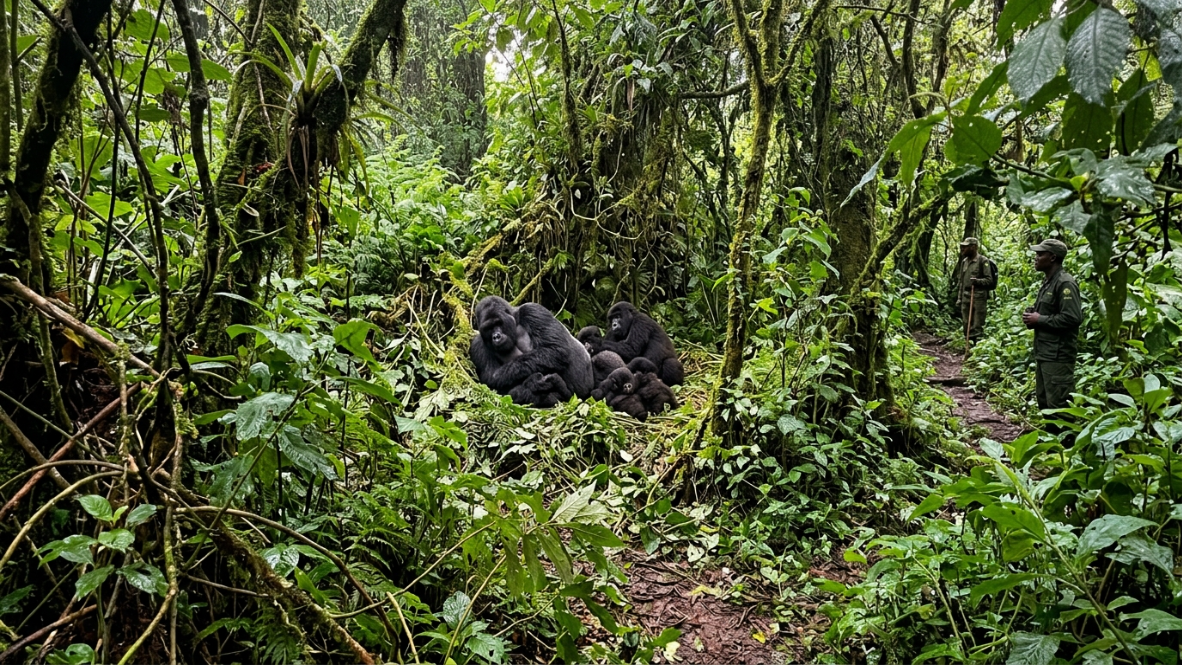
Every piece of gorilla trekking etiquette connects back to a conservation outcome. The distance rule limits disease transmission. The group size cap limits stress. The one-hour window preserves natural behavior. The no-touch rule prevents pathogen transfer at the most direct level possible.
Rwanda’s 10% community revenue-sharing law means roughly €10 million from gorilla permit revenue has been invested in building schools, roads, and drinking water supplies in communities surrounding the parks. When local communities benefit financially from living gorillas, poaching pressure drops. This is the economic architecture that makes gorilla trekking sustainable, and it only works if trekkers follow the rules that keep gorillas healthy and wild.
Rwanda’s annual Kwita Izina ceremony, where newborn gorillas are given names, celebrates this conservation success each year. It’s a reminder that behind every rule, there’s a gorilla with a name, a family, and a story worth protecting.
Ready to plan your gorilla trekking trip? See our complete guide to gorilla trekking permits, costs, and booking rules in Uganda.
Gorilla Trekking Etiquette Timeline
Before Leaving Your Lodge
-
Eat breakfast
-
Pack passport
-
Disable flash
-
Bring water
-
Wear hiking gear
During the Briefing
-
Listen carefully
-
Ask questions
-
Report illness
-
Mention mobility concerns
During the Trek
-
Stay with your guide
-
Speak quietly
-
Respect wildlife
During the Gorilla Encounter
-
Keep your distance
-
Avoid direct eye contact
-
Never touch gorillas
-
Follow ranger instructions
After the Encounter
-
Leave no trace
-
Thank your guides
-
Tip respectfully
-
Share photos responsibly
Frequently Asked Questions
What happens if a gorilla approaches closer than the minimum distance?
Hold still or move slowly backward. Never approach a gorilla yourself, but if one closes the gap on its own, stay calm, crouch low, and avert your gaze. Rangers will guide you. The distance rule governs your behavior, not the gorilla’s.
Can I use my phone camera instead of a DSLR?
Yes. Phones are allowed and many trekkers rely on them exclusively. The critical requirement is that flash must be disabled, not set to auto, but fully off. Forest canopy creates low-light conditions where auto-flash will fire, which is exactly the scenario you need to prevent.
What if I get sick the day before my trek?
Report it immediately to your operator and the park. In Rwanda, you may receive a 50% refund from the RDB. In Uganda, there is no refund policy for illness. Either way, trekking while sick is not a gray area. Rangers screen for symptoms at the briefing and can turn you away. Gorillas have no immunity to common human respiratory infections.
Is the age limit enforced strictly?
The minimum age is 15 years old in both countries, measured at the time of trekking, not at the time of booking. This is a strict Uganda Wildlife Authority and RDB rule with no exceptions. Families booking far in advance sometimes miscalculate, so verify your child’s age against the actual trek date. Read more about the gorilla trekking age limit and its implications for family travel.
Do I really need to hire a porter?
You don’t have to. But the terrain is steep, often muddy, and unpredictable. A porter costs $10 to $25 for the day, frees your hands for balance and photography, and directly supports a local community member who may have no other income source. Most experienced trekkers and operators describe hiring a porter as one of the best decisions you can make.
How strictly is the one-hour limit enforced?
Very strictly. Rangers time it from the moment you make visual contact with the gorilla family. When the hour is up, the group leaves. There is no negotiation, no extension, and no paying for extra time (outside of Uganda’s separate Gorilla Habituation Experience, which allows up to four hours).
What should I wear on the trek?
Long sleeves, long pants, sturdy waterproof hiking boots, and gardening-style gloves for grabbing vegetation on steep sections. Neutral earth tones are preferred over bright colors. For a complete checklist, see our gorilla trekking packing list.
Is the Gorilla Friendly Pledge mandatory?
No, it’s voluntary. But it takes two minutes online, reinforces every major etiquette rule, and signals your commitment to responsible tourism. Backed by IGCP (a partnership between Conservation International, Fauna & Flora International, and WWF), it’s a small gesture with real value as pre-trek mental preparation.