Gorilla Trekking Insurance 2026: Uganda & Rwanda Guide
TL;DR
Gorilla trekking insurance protects the $800 to $1,500 you spend on non-refundable permits, covers emergency medical evacuation that can cost $50,000 to $500,000 from remote forests, and fills the gap left by domestic health insurance that doesn’t work abroad. Buy it within 14 to 21 days of your first deposit to unlock critical benefits like pre-existing condition waivers and Cancel For Any Reason coverage.
A gorilla permit in Rwanda costs $1,500. It is non-refundable. A permit in Uganda costs $800, and the refund schedule is so aggressive that canceling within eight days of your trek date gets you nothing back. Emergency medical evacuation from Bwindi Impenetrable Forest to a hospital with adequate facilities can run $50,000 or more, and the air ambulance flight to Nairobi alone takes four to five hours.
These are not hypothetical risks. They are the financial realities of planning a gorilla trek in East Africa, where the average trip cost exceeds $9,150 according to Squaremouth data. Your standard health insurance almost certainly offers no coverage abroad (Medicare definitely doesn’t), and credit card travel benefits won’t cover a helicopter evacuation from a mountainside forest at 2,600 meters.
This glossary breaks down every insurance term that matters for gorilla trekking, explains each one in the specific context of trekking in Uganda and Rwanda, and tells you exactly what to look for before you buy a policy. Whether you’re comparing Rwanda and Uganda for your trek or you’ve already booked permits, this is the reference guide to keep open while you shop.
For a full breakdown of trip pricing and logistics, see our Uganda gorilla safari guide.
Gorilla Trekking Insurance at a Glance
Quick Answer Gorilla trekking insurance is strongly recommended for anyone visiting Uganda, Rwanda, or the Democratic Republic of the Congo because standard health insurance rarely covers overseas medical treatment or emergency evacuation. The best policies include: - Adventure activity coverage for gorilla trekking - At least $100,000 in emergency medical coverage - At least $250,000 in emergency medical evacuation - Trip cancellation covering gorilla permits - Cancel For Any Reason (CFAR) if you want maximum flexibility - Coverage for every country on your itinerary Buy your policy within 14–21 days of your first trip payment to qualify for pre-existing condition waivers and CFAR eligibility.
Best Gorilla Trekking Insurance Coverage by Traveler Type
|
Traveler Type |
Recommended Coverage |
|---|---|
|
Budget traveler |
Medical + evacuation + trip cancellation |
|
Luxury safari traveler |
Add CFAR and high baggage coverage |
|
Wildlife photographer |
Increase camera/equipment limits |
|
Travelers over 60 |
Pre-existing condition waiver + higher medical limits |
|
Multi-country safari |
Multi-country coverage + evacuation |
|
Family traveling together |
Family policy with interruption coverage |
Minimum Insurance Requirements for Gorilla Trekking
|
Coverage |
Recommended Minimum |
|---|---|
|
Emergency Medical |
$100,000 |
|
Medical Evacuation |
$250,000 |
|
Trip Cancellation |
100% of trip cost |
|
Trip Interruption |
150% of trip cost |
|
Personal Baggage |
$2,500+ |
|
Camera Equipment |
Verify per-item limits |
|
Adventure Sports |
Included |
|
Altitude |
3,000m+ |
|
Assistance Hotline |
24/7 |
Coverage Types You Need to Understand
Adventure Activity Rider
What it is: An add-on or built-in clause in a travel insurance policy that specifically covers activities classified as higher-risk than standard tourism. Without it, any claim related to gorilla trekking could be denied.
Why it matters for gorilla trekking: Most insurers classify gorilla trekking as a moderate-risk activity. That means a basic travel insurance policy may exclude it unless the policy explicitly names it as covered. The terminology varies by provider. Some list “gorilla trekking” directly, others use “guided hikes,” “wildlife encounters,” or “trekking above 2,000m.” If your policy doesn’t mention any of these, you are not covered.
Standard policies routinely exclude what they call “extreme sports” without explicit add-ons. The problem is that gorilla trekking, white-water rafting, and even some guided hikes can fall into this excluded category depending on the insurer’s definitions.
What to do: Call or email the insurer directly. Ask them to confirm in writing that gorilla trekking in Uganda or Rwanda is covered under the policy. Don’t assume. Each provider defines “adventure” differently, and the claim stage is the worst time to discover a gap. Understanding the safety rules for gorilla trekking also helps you understand the risk profile insurers are evaluating.
Altitude Coverage Threshold
What it is: The maximum elevation at which your insurance policy provides medical and evacuation coverage. Many policies set hard cutoffs at 2,000m, 3,000m, or 6,000m, and anything above the threshold is excluded.
Why it matters for gorilla trekking: This is one of the most common policy traps for gorilla trekkers. Gorilla habitats in Bwindi, Mgahinga, and Volcanoes National Park sit at elevations between 2,200m and 3,000m. Trekkers regularly climb above 2,400m where oxygen levels begin to thin. A policy with a 2,000m altitude ceiling will not cover you where the gorillas actually live.
World Nomads, for comparison, covers hikes up to 6,000m on their Standard Plan, which is more than enough. But cheaper policies from other providers often cap coverage at 2,000m or 3,000m without making it obvious.
What to do: Search for “altitude,” “elevation,” or “trekking height” in the policy document. If the limit is 2,000m or lower, that policy won’t work for gorilla trekking. Period.
Emergency Medical Coverage
What it is: Coverage for hospital visits, doctor consultations, medications, surgery, and other medical expenses incurred during your trip abroad.
Why it matters for gorilla trekking: Medical facilities in Uganda are extremely limited outside Kampala. If you become seriously ill or injured during a trek, local clinics near Bwindi or Mgahinga can provide only basic care. Anything serious requires transport to Kampala or across the border to Nairobi.
Most U.S. health insurance plans offer no coverage for medical care abroad. Medicare covers nothing outside the United States. Even plans that do offer some international coverage typically have low caps and slow reimbursement processes that don’t help when you’re in a remote forest.
What to look for: A minimum of $100,000 in medical expense coverage, ideally with no maximum limit. U.S. residents using World Nomads should note that their medical coverage limits range from $100,000 to $250,000, which is lower than what international residents receive on the same plan.
Emergency Medical Evacuation
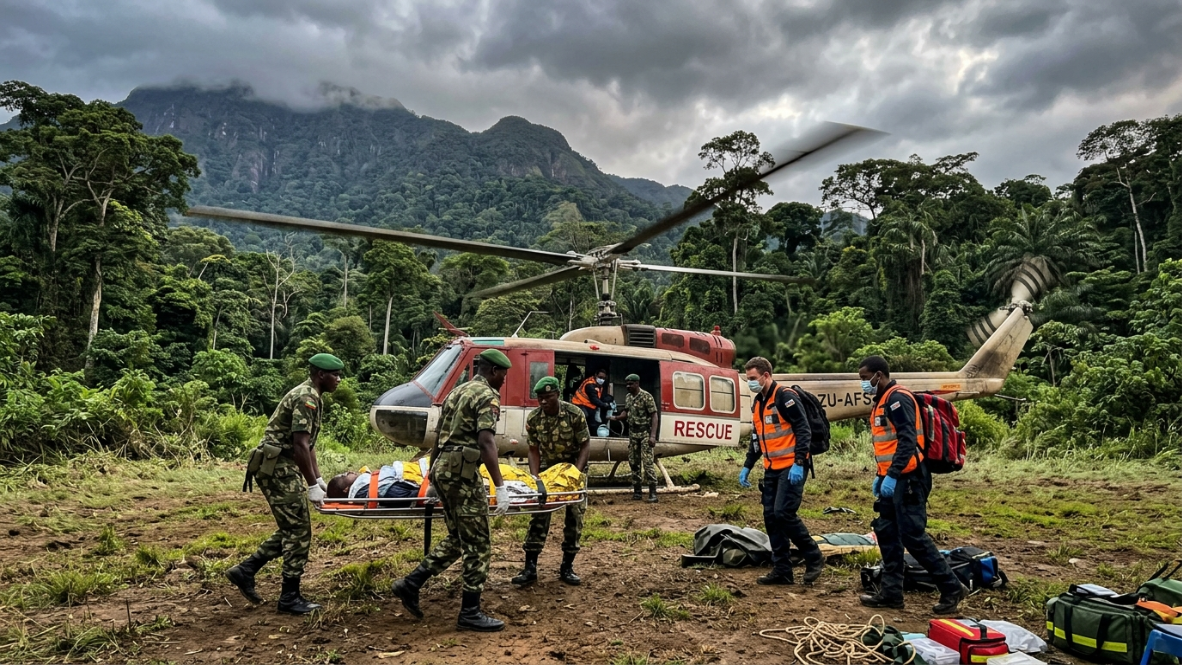
What it is: Coverage for the cost of transporting you from a remote location to the nearest adequate medical facility via air ambulance, helicopter, or ground transport.
Why it matters for gorilla trekking: This is the single most expensive risk you face. Emergency evacuation costs can easily exceed $50,000, and the CDC notes that evacuations from remote areas can surpass $100,000, with some cases exceeding $500,000. Squaremouth recommends at least $250,000 in medical evacuation coverage for travelers visiting Uganda.
The logistics are sobering. An air ambulance from Nairobi to Bwindi Forest takes four to five hours. In a serious emergency, patients typically require transport to Kampala first, and sometimes onward to medical facilities in neighboring countries. If you want to understand why remoteness is such a factor, read about how long gorilla trekking really takes, including the hours spent deep in the forest far from any road.
What to look for: At least $250,000 in evacuation coverage. Confirm whether the policy covers evacuation to the nearest adequate facility or to your home country (these are different things, covered below under Medical Repatriation).
Medical Repatriation
What it is: Coverage for transporting you back to your home country for continued medical treatment, or for returning your remains in the event of death abroad.
Why it matters for gorilla trekking: Medical evacuation gets you to the nearest adequate hospital. Medical repatriation gets you home. These are two distinct coverages, and many travelers confuse them. A policy might evacuate you to Nairobi’s Aga Khan Hospital but leave you stranded there without repatriation coverage for the flight back to the U.S. or Europe.
What to look for: Confirm that repatriation is included and covers the cost of a medically equipped flight to your home country if necessary.
Trip Cancellation Coverage
What it is: Reimbursement for non-refundable trip costs if you need to cancel your trip before departure for a “covered reason.”
Why it matters for gorilla trekking: The non-refundable nature of gorilla permits is the primary reason trip cancellation coverage exists for this type of travel. If illness, a family emergency, or a natural disaster forces you to cancel, standard trip cancellation can reimburse the permit cost plus flights, lodging deposits, and other prepaid expenses.
The catch is the phrase “covered reason.” Standard policies only pay out for specific, pre-approved causes: illness documented by a doctor, death in the family, natural disasters, airline bankruptcies, and similar events. “I changed my mind” or “work got busy” are not covered reasons. For those, you need CFAR (below).
What to look for: Read the list of covered reasons carefully. Make sure illness, injury, and family emergency are included. Confirm that non-refundable permit costs are treated as insurable trip expenses. For a complete picture of Uganda permit costs and booking rules, see our dedicated permit guide.
Trip Interruption Coverage
What it is: Reimbursement for unused, non-refundable trip costs if your trip is cut short after it has already begun.
Why it matters for gorilla trekking: Trip cancellation covers you before departure. Trip interruption covers you after. If you arrive in Uganda and fall ill on day two of a ten-day itinerary, trip interruption reimburses the unused portion. Some policies also cover the cost of a new one-way flight home.
Cancel For Any Reason (CFAR)
What it is: An upgrade to a standard trip cancellation policy that allows you to cancel your trip for literally any reason and receive a partial refund of your non-refundable costs. CFAR typically reimburses 50% to 75% of insured expenses.
Why it matters for gorilla trekking: This is the most important upgrade for gorilla trekkers specifically because of Rwanda’s $1,500 fully non-refundable permit. Standard trip cancellation only pays for covered reasons. CFAR pays for anything: cold feet, schedule changes, political unrest, a pandemic, or simply deciding you’d rather go next year.
Here’s the math. You book a Rwanda gorilla trek. The permit costs $1,500, and let’s say you’ve spent another $3,000 on flights and lodging deposits. That’s $4,500 at risk. With CFAR at 75% reimbursement, you’d recover $3,375 if you cancel for any reason at all. Without CFAR, and without a covered reason, you get nothing.
The fine print: CFAR has strict eligibility requirements. You must purchase the upgrade within 10 to 21 days of your initial trip deposit (the exact window varies by provider). You must cancel at least 48 hours before departure. And you must insure all prepaid, non-refundable costs, not just some of them. CFAR adds 40% to 60% to the cost of a standard policy and is not available in all U.S. states.
Pre-Existing Condition Waiver
What it is: A policy feature that waives the standard exclusion for medical conditions that existed before you purchased insurance.
Why it matters for gorilla trekking: The core gorilla trekking demographic skews older, with many trekkers in their 50s, 60s, and beyond. Pre-existing conditions like heart disease, diabetes, high blood pressure, and joint problems are common in this age group. Without a waiver, any claim related to a pre-existing condition will be denied, even if you had a heart episode during the trek itself.
Practitioners on TripAdvisor forums note that many insurers also have age limits or require additional medical screening for older travelers engaged in adventure activities. For more on age-related considerations, see our guide to gorilla trekking age requirements.
What to look for: Most insurers offer a pre-existing condition waiver if you purchase the policy within 14 to 21 days of your first trip deposit. Miss that window, and the waiver is gone. This is one of the strongest arguments for buying gorilla trekking insurance immediately after booking.
Gear and Valuables Coverage
What it is: Coverage for loss, theft, or damage to personal belongings, including expensive items like cameras, lenses, and electronics.
Why it matters for gorilla trekking: Many trekkers carry thousands of dollars in photography equipment. A high-end DSLR body, a telephoto lens, and accessories can easily total $5,000 or more. Standard baggage coverage caps reimbursement at low per-item limits that won’t come close to replacing a professional lens.
One important exclusion to know: a camera left on a vehicle seat during a bush walk is typically not covered if stolen. Insurers expect you to keep high-value items on your person or locked in a secure safe. For advice on what gear to bring and how to protect it, our gorilla trekking photography guide covers specific equipment recommendations.
What to look for: Check per-item limits and total baggage coverage caps. If your gear exceeds those limits, consider a separate equipment rider or a standalone policy for high-value electronics.
Personal Liability Coverage
What it is: Coverage for legal costs and damages if you accidentally injure someone or damage property during your trip.
Why it matters for gorilla trekking: This is less critical than medical or evacuation coverage, but worth having. If you accidentally injure another trekker on a steep trail or damage lodge property, personal liability coverage pays for the claim. Most comprehensive travel insurance policies include it automatically.
Multi-Country Coverage
What it is: A policy feature that covers you across all countries on your itinerary, not just the primary destination.
Why it matters for gorilla trekking: Many gorilla trekkers combine Uganda with Rwanda, Tanzania, or Kenya on a single trip. A policy purchased for Uganda may not automatically extend to Kenya or Rwanda. If you cross a border without that country listed on your policy, you are uninsured in that country.
Many policies require you to list every country you plan to visit. Forget to mention one, and the entire policy could be void for that leg of the journey. This is especially relevant for travelers using our East Africa visa guide to plan multi-country itineraries.
What to do: List every country on your itinerary when purchasing the policy. If you add a destination later, contact the insurer to update your coverage.
Travel Advisory Level
What it is: A classification system used by the U.S. State Department (Levels 1 through 4) and similar agencies in other countries to indicate the safety risk of traveling to a specific destination.
Why it matters for gorilla trekking insurance: Most standard travel insurance policies exclude coverage for travel to destinations under a Level 4 (“Do Not Travel”) advisory. This is critical because advisory levels can change rapidly. A country that was Level 2 when you booked might be Level 4 by your departure date due to disease outbreaks, civil unrest, or security threats.
Note (June 2026): At the time of writing, Uganda’s U.S. travel advisory is Level 4 due to an Ebola disease outbreak, according to the U.S. Embassy in Kampala. Most standard policies will not cover travel against this advisory. CFAR may still reimburse partial costs. This situation is fluid. Always check the current advisory status before purchasing insurance or traveling.
What to do: Check the State Department website for your destination’s current advisory level. If it’s Level 3 or 4, contact your insurer directly to understand what is and isn’t covered. CFAR becomes especially valuable during periods of advisory uncertainty.
24/7 Emergency Assistance Line
What it is: A phone number, staffed around the clock, that connects you with your insurer’s emergency coordination team for medical referrals, evacuation authorization, and claims guidance.
Why it matters for gorilla trekking: When you’re in Bwindi with limited cell reception, response time matters enormously. A 24/7 line with experience coordinating in East Africa can mobilize local resources faster than a call center that has never heard of Kisoro or Kihihi. Ask the insurer whether their assistance team has experience with evacuations in East Africa specifically.
Permit and Refund Terms
Gorilla Permit
What it is: A government-issued authorization that allows one person to spend one hour with a habituated gorilla family on a specific date. Permits are issued by the Uganda Wildlife Authority (UWA) for Bwindi and Mgahinga, by the Rwanda Development Board (RDB) for Volcanoes National Park, and by ICCN for Virunga National Park in the DRC.
Current costs:
-
Uganda: $800 per person
-
Rwanda: $1,500 per person
-
DRC: $400 per person
Uganda issues only 96 permits per day across all trekking sectors (88 in Bwindi, 8 in Mgahinga), which means availability is limited and cancellations are costly.
Non-Refundable Permit
What it is: A permit for which the issuing authority will not return your payment if you cancel. Both Rwanda and DRC permits are fully non-refundable under standard policy. Uganda permits follow a tiered schedule that still results in significant financial loss.
This is the core financial risk that makes gorilla trekking insurance essential.
Uganda vs. Rwanda Permit Refund Comparison
|
Factor |
Uganda (UWA) |
Rwanda (RDB) |
|---|---|---|
|
Permit cost |
$800 |
$1,500 |
|
Cancel 0 to 8 days before |
No refund |
No refund |
|
Cancel 9 to 45 days before |
25% refund |
No refund |
|
Cancel 46 to 90 days before |
50% refund |
No refund |
|
Cancel 91+ days before |
75% refund |
No refund |
|
Illness at the park |
50% refund at warden’s discretion |
50% refund at RDB discretion |
|
Permit transfer (name change) |
Possible, subject to availability |
Possible |
|
Rescheduling to new date |
Allowed, subject to availability |
Case by case |
Sources: Bwindi National Park permit cancellation policy and Salt Holidays Rwanda permit guide
The takeaway is stark. Rwanda’s $1,500 permit is the single largest non-refundable expense most travelers will ever book for a one-hour experience. Uganda’s refund structure looks better on paper, but canceling within 45 days still means losing 75% to 100% of the $800 fee.
Total Financial Risk Without Insurance
|
Expense |
Typical Cost |
|---|---|
|
Gorilla permit |
$800–$1,500 |
|
Safari package |
$2,000–$6,000 |
|
International flights |
$800–$2,000 |
|
Hotels |
$500–$2,000 |
|
Emergency evacuation |
$50,000–$500,000+ |
Total exposure can exceed $60,000, making insurance one of the highest-value purchases for the trip.
Permit Rescheduling
What it is: Changing the date of your gorilla trek while keeping the same permit. Both UWA and RDB allow rescheduling under certain conditions, though availability is never guaranteed.
Practical note: Rescheduling is easier in Uganda’s low season when permits are less scarce. In peak months (June through September, December through February), finding an open date can be nearly impossible.
Permit Transfer
What it is: Changing the name on a gorilla permit so a different person can use it. Rwanda allows permit transfers as an alternative to refunds. Uganda also permits transfers subject to availability.
This matters for group trips where one member drops out. Instead of losing the full permit cost, the group can transfer the permit to a replacement trekker.
Regional and Logistical Terms
AMREF Flying Doctors / Maisha Plan
What it is: AMREF Flying Doctors operates an emergency air evacuation service across East Africa. Their Maisha Tourist Plus plan is a short-term medical evacuation scheme designed for travelers exploring the region.
Cost: $35 to $55 per person for 30 days of coverage.
Coverage area: Tanzania, Kenya, Uganda, Rwanda, and Burundi.
What it covers: Unlimited emergency air ambulance transfers within the covered region. If you or someone in your group becomes seriously ill in a remote area, AMREF can mobilize a fixed-wing air ambulance or helicopter to get you to a proper hospital.
What it does not cover: Hospital treatment, medication, or any medical costs. AMREF covers transport only. It is not a substitute for travel medical insurance. Think of it as a supplemental evacuation layer.
Why competitors miss this: No other ranking page for gorilla trekking insurance explains AMREF properly, yet it solves a real problem. Many international insurers are unfamiliar with local healthcare infrastructure in East Africa, which can delay evacuation approvals. AMREF operates locally and can act faster.
One experienced traveler on TripAdvisor described the ideal layered approach as “AMREF to get out of the parks, plus Medjet to get home, plus some medical coverage for while you’re there,” noting it might be “a bit of overkill” but acknowledging the peace of mind.
Bottom line: At $35 to $55 for 30 days, it’s one of the cheapest and most practical additions to any gorilla trekking insurance setup.
What to Look for in a Gorilla Trekking Insurance Policy: Checklist
Use this checklist when comparing policies. A good gorilla trekking insurance policy should meet all of these criteria:
-
Adventure activity coverage explicitly includes gorilla trekking, guided hikes, or wildlife encounters
-
Altitude coverage extends to at least 3,000m (gorilla trekking sites reach 2,200 to 3,000m)
-
Medical coverage of at least $100,000
-
Evacuation coverage of at least $250,000
-
Trip cancellation covers non-refundable permit costs as insurable expenses
-
Multi-country coverage lists every country on your itinerary
-
Pre-existing condition waiver included (if applicable to your health history)
-
24/7 emergency assistance line with experience coordinating in Africa
-
Purchased within 14 to 21 days of your first trip deposit (required for CFAR eligibility, pre-existing condition waivers, and financial default coverage)
Insurance Providers Worth Investigating
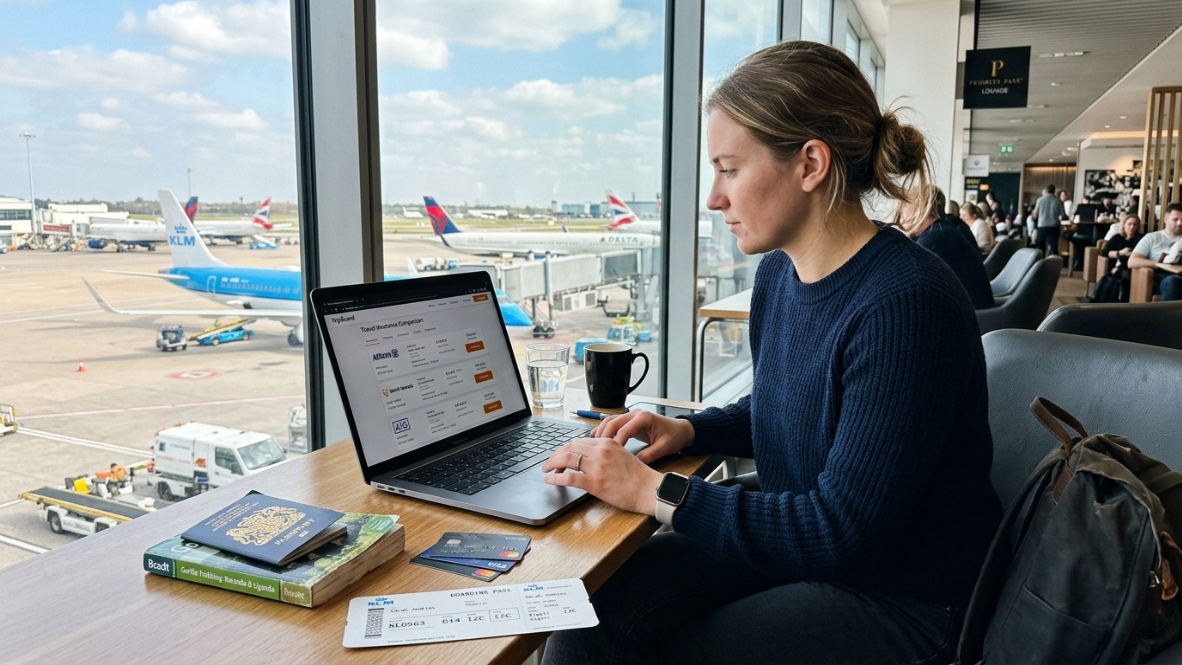
Several providers are frequently mentioned in the context of gorilla trekking coverage:
World Nomads covers adventure and active travel as a built-in feature across all plan tiers, with 250+ activities included. Their Standard Plan covers hikes up to 6,000m, well above gorilla trekking altitudes. U.S. residents should note that medical coverage limits ($100,000 to $250,000) are lower than what international residents receive.
Allianz Travel is a reputable global provider. Verify that gorilla trekking appears under covered activities, as their adventure coverage varies by plan.
IMG (International Medical Group) offers customizable travel medical insurance with evacuation and optional adventure sports coverage.
SafetyWing provides medical coverage and travel protection geared toward long-term travelers. Basic plans may need adventure add-ons for gorilla trekking.
Squaremouth is not an insurer but a comparison engine that lets you filter policies by activity type, coverage amount, and destination. It’s a practical starting point for comparing options side by side.
How to Compare Gorilla Trekking Insurance Policies
When comparing policies, don't focus only on price. Compare the features that affect whether a claim will actually be paid.
|
Feature |
Good |
Better |
Best |
|---|---|---|---|
|
Medical Coverage |
$100k |
$250k |
$500k+ |
|
Evacuation |
$250k |
$500k |
$1M |
|
Adventure Activities |
Included |
Specifically lists gorilla trekking |
Includes high-altitude trekking |
|
Camera Coverage |
$500/item |
$1,500/item |
Scheduled equipment |
|
Cancellation |
Covered reasons |
CFAR optional |
CFAR included |
|
Assistance |
24/7 |
Global |
East Africa experience |
Common Mistakes That Cost Gorilla Trekkers Money
Relying on credit card travel benefits. Credit card perks cover basic trip delays and some baggage loss. They are not adequate for medical evacuation from a remote national park or wildlife-related incidents.
Buying insurance too late. Many of the most valuable benefits, including CFAR, pre-existing condition waivers, and financial default coverage, are only available if you purchase within the first two to three weeks of your initial deposit. Squaremouth recommends buying within the first two weeks. Waiting until a month before your trip eliminates your access to these time-sensitive protections.
Forgetting to list all countries. A combined East Africa itinerary that touches Uganda, Rwanda, and Tanzania requires all three countries on the policy. Miss one, and you have no coverage for that portion.
Assuming “trekking” is automatically covered. It often isn’t. Gorilla trekking is classified as moderate-risk, and many standard policies exclude it without an explicit adventure rider.
Not disclosing pre-existing conditions. For travelers over 50, this is the most common reason claims get denied. Always disclose every pre-existing condition to your insurer. The fitness requirements for gorilla trekking are real, and insurers will investigate medical history before paying out.
Ignoring altitude thresholds. A policy that caps coverage at 2,000m is useless for gorilla trekking. Check the number. It’s that simple.
When to Buy Gorilla Trekking Insurance
The best time to purchase gorilla trekking insurance is immediately after booking your trip, ideally the same day you pay your first deposit. This isn’t just good advice. It’s a structural requirement for accessing the policy’s best features.
Here’s why timing is critical:
-
Pre-existing condition waivers require purchase within 14 to 21 days of the first deposit
-
CFAR eligibility requires purchase within 10 to 21 days of the first deposit
-
Financial default coverage (protection if a tour operator goes bankrupt) often has the same window
-
Coverage begins immediately for events that occur between purchase and departure
Waiting costs you options. Every day after your deposit that you don’t have a policy is a day when a sudden illness, a travel advisory change, or an airline bankruptcy could wipe out thousands of dollars in non-refundable bookings.
Putting It All Together
Gorilla trekking insurance is not a generic travel product. It’s a specific combination of coverage types calibrated to the unique financial and medical risks of trekking in remote East African forests at altitude. The permit economics alone (up to $1,500 with no refund) justify the cost of a comprehensive policy, and the evacuation risk makes it essential.
A working operator handles permits, ground logistics, and safety planning so you can focus on the experience itself. But insurance is the one piece of trip preparation that no operator can do for you. It’s your responsibility, and it needs to be right.
If you’re ready to start planning, explore our gorilla trekking trips and costs in Uganda or compare Rwanda and Uganda to decide which destination fits your trip.
Gorilla Trekking Insurance Buying Timeline
|
Time Before Trip |
Action |
|---|---|
|
Same day as first deposit |
Buy insurance |
|
14–21 days |
Last chance for many waivers |
|
2–6 months |
Book permits |
|
30 days |
Review policy |
|
1 week |
Save emergency numbers |
Who Can Skip Gorilla Trekking Insurance?
Most travelers should purchase travel insurance, but there are a few situations where you may already have comparable protection.
You may already be adequately covered if:
-
Your employer provides international medical insurance.
-
You have a premium global health insurance plan with evacuation benefits.
-
Your travel insurance is included through a comprehensive annual policy.
-
You have separate medical evacuation membership (such as AMREF) and independent travel medical coverage.
Even in these cases, verify that gorilla trekking, altitude, and permit cancellation are covered before relying on existing protection.
Frequently Asked Questions
Is gorilla trekking insurance legally required?
No park authority in Uganda, Rwanda, or the DRC currently requires proof of travel insurance to issue a gorilla permit. However, most reputable safari operators require it contractually before allowing you to participate, particularly coverage for medical emergencies and evacuation. TripAdvisor forum users report that their operators’ terms and conditions mandated proof of travel insurance.
Does regular health insurance cover gorilla trekking?
Almost never. Most U.S. health insurance plans provide no coverage for medical care abroad. Medicare offers zero international coverage. Even plans with some international provisions typically have low limits and slow claims processes that don’t help in a remote emergency. You need a dedicated travel insurance policy.
How much does gorilla trekking insurance cost?
A comprehensive travel insurance policy for a gorilla trek typically costs 5% to 10% of your total trip investment. For a $9,000 trip, expect to pay $450 to $900 for a standard policy. Adding CFAR increases the cost by another 40% to 60%.
Can I get a refund on my gorilla permit if I have insurance?
Insurance does not change the permit authority’s refund policy. UWA and RDB still apply their own rules. What insurance does is reimburse you for the financial loss. If you cancel for a covered reason (illness, emergency), trip cancellation coverage pays you back for the non-refundable permit cost. If you have CFAR, you can cancel for any reason and recover 50% to 75%.
What is the minimum evacuation coverage I should get?
Squaremouth recommends at least $250,000 in medical evacuation coverage for travelers to Uganda. Given that evacuation costs from remote areas can exceed $100,000 and sometimes reach $500,000 or more, this is a reasonable minimum, not an overestimate.
Should I buy AMREF Flying Doctors coverage in addition to travel insurance?
Yes, if you want the fastest possible emergency response. AMREF operates locally in East Africa and can mobilize evacuation faster than an international insurer unfamiliar with the region’s healthcare infrastructure. At $35 to $55 for 30 days, it’s an inexpensive supplemental layer. Just remember that AMREF covers transport only, not treatment.
Does gorilla trekking insurance cover my camera equipment?
Standard baggage coverage includes personal belongings, but per-item limits are often low ($250 to $500 per item). If you’re carrying a $3,000 camera body and a $2,000 lens, standard coverage won’t replace them. Look for a policy with higher per-item limits or add a separate equipment rider. Read our gorilla trekking packing list for gear recommendations.
What happens if a travel advisory changes after I’ve booked?
If your destination receives a Level 4 (“Do Not Travel”) advisory after you’ve booked, most standard policies will not cover you if you choose to travel anyway. CFAR gives you the option to cancel and recover a portion of your costs regardless of the reason, including advisory changes. Always check the current advisory status before departure and contact your insurer to understand how it affects your coverage.