

Incentive Travel Tanzania Safari: 2026 Planner’s Guide
TL;DR
Incentive travel is a performance-based reward trip, not a standard business trip, and a Tanzania safari is one of the most compelling destinations for it. This glossary covers every term corporate planners need, from exclusive-use lodge buyouts and vehicle allocation to park fees, group sizing, and the bush-to-beach itinerary arc that makes Tanzania stand apart. Ideal group size for Tanzania is 10 to 40 people, per-person costs range from $5,000 to $12,000+ for a luxury program, and lead times of 12 to 18 months are standard.
A Tanzania safari incentive trip sits at the intersection of two specialized worlds: corporate reward travel and East African wildlife logistics. If you’re an event planner, HR director, or incentive buyer evaluating this destination, you’ll encounter terminology from both sides. Some of it is straightforward. Some of it, like crater service fees or multi-camp splits, only makes sense once you understand how safaris actually operate on the ground.
This glossary defines the terms that matter most, organized by category, with Tanzania-specific context woven into every entry. The goal is to give you the vocabulary and practical knowledge to evaluate proposals, ask sharper questions, and build a program that actually works.
What Is Incentive Travel in Tanzania? Incentive travel in Tanzania is a corporate reward trip that recognizes employees, sales teams, distributors, or business partners for achieving defined performance goals. A Tanzania safari incentive program typically combines guided wildlife experiences in destinations such as the Serengeti and Ngorongoro with private group activities, luxury lodge stays, and optional beach extensions to Zanzibar. For planning purposes, corporate organizers should evaluate group size, travel dates, accommodation availability, transportation, and the total cost per participant. A luxury safari incentive program may cost $8,000–$12,000 or more per person for a five- to six-night program, excluding international airfare, depending on the accommodation, season, and experiences selected. Start planning 12–18 months in advance if the program requires exclusive-use properties during peak season.
If you’re already comparing Tanzania safari itinerary options and costs, that guide covers routing and pricing in detail.
Tanzania Safari Incentive Travel at a Glance
|
Planning factor |
Practical guideline |
|---|---|
|
Best-fit group size |
Around 10–40 participants can be a useful starting point; confirm actual lodge capacity before setting the final group size |
|
Indicative luxury budget |
Approximately $8,000–$12,000+ per person for a 5–6-night program, depending on inclusions |
|
Recommended lead time |
Begin planning 12–18 months ahead for peak-season travel or exclusive-use properties |
|
Common safari season |
June–October is popular for dry-season wildlife viewing |
|
Typical trip length |
Approximately 5–8 nights for a safari; 8–12 nights for a safari and Zanzibar combination |
|
Signature experiences |
Guided game drives, a hot-air balloon safari, a private bush dinner, and optional cultural or conservation activities |
|
Common safari regions |
Tarangire, Serengeti, and Ngorongoro, depending on the itinerary |
|
Beach extension |
Zanzibar for additional beach, cultural, and marine experiences |
|
International access |
Routing depends on the departure city and airline schedules; common connection points may include Nairobi, Amsterdam, Dubai, and Istanbul |
|
Main budget variables |
Accommodation, season, park and conservation fees, domestic flights, vehicle allocation, private events, and international airfare |
These figures are preliminary planning guidelines, not fixed quotes. Group size, itinerary, exchange rates, supplier availability, and inclusions affect the final cost. Confirm current fees and flight schedules before booking.
Core Incentive Travel Terms
Incentive Travel
The Incentive Research Foundation (IRF) defines incentive travel as “a motivational tool to enhance productivity or achieve other business objectives.” The key distinction from other corporate trips: participants earn the reward by hitting a defined performance target. It’s not a conference, not a team meeting, and not a perk that comes with the job. That earned quality is exactly what makes it motivating.
In the Tanzania safari context, incentive travel means a company sends its top performers (salespeople, dealers, distributors, or key clients) on a group safari designed to recognize achievement. The experience itself, watching a lion hunt at dawn or floating over the Serengeti in a hot air balloon, becomes the reward.
According to the IRF, incentive programs deliver an average performance lift of 22%, and non-cash rewards yield approximately three times the revenue gains of equivalent cash bonuses.
MICE
MICE stands for Meetings, Incentives, Conferences, and Exhibitions. Incentive travel is the “I” in MICE. While corporate meetings aim to inform or educate, incentive travel aims to motivate and inspire. Tanzania’s government has been investing heavily in MICE infrastructure, including plans for the Kilimanjaro International Conference Centre (KMICC) in Arusha, designed to host 5,000 people.
For safari incentive planners, the MICE label matters because it signals that Tanzania has the institutional support, ground operators, and venue pipeline to handle corporate groups, not just independent tourists.
Qualification Period
The window during which employees or partners must hit their targets to earn the trip. Most programs run qualification periods of 6 to 12 months. The trip itself typically takes place several months after the period closes, which is why lead times for Tanzania incentive safaris stretch to 12 to 18 months from initial planning to departure.
Buy-In
An option allowing participants who fall short of full qualification to purchase part of the trip at their own expense. The IRF defines this as an “opportunity for travel incentive participants to purchase part of trip if they do not fully qualify by sales performance.” Buy-ins can expand group size (helpful for hitting minimum numbers at exclusive-use properties) but dilute the exclusivity of the reward if overused.
Group Incentive Travel vs. Individual Travel
Group incentive travel means all qualifiers travel together to a single destination. This is the standard format for a Tanzania safari incentive because shared experiences (game drives, bush dinners, Zanzibar beach days) are the whole point.
Individual incentive travel gives earners a certificate or travel card to use on their own schedule. This works for some destinations but loses the bonding effect that makes a safari incentive powerful. Most corporate team-building fails because it feels artificial. The bush solves this problem because the bonding happens as a by-product of genuinely shared experience, not scripted exercises.
Non-Cash Reward
The broader category that incentive travel falls under. A non-cash reward is any performance incentive that isn’t a cash bonus. Research consistently shows that experiences, especially travel, outperform cash as motivators. People spend cash and forget it. They talk about a Serengeti sunrise for years.
DMC (Destination Management Company)
The local operator that handles ground logistics: vehicles, guides, accommodation bookings, park permits, charter flights, restaurant reservations, and event production. For a Tanzania safari incentive, your DMC is the single most important vendor. They determine vehicle allocation, guide quality, lodge selection, and whether a bush gala dinner actually happens or falls apart.
A strong DMC will have direct relationships with lodges and camps, own or control their vehicle fleet, and employ guides with recognized qualifications. For context on what guide certifications actually mean, that breakdown covers FGASA, KPSGA, and field guide training standards.
Tanzania Safari Planning Terms
Northern Circuit
The most popular safari route in Tanzania, typically connecting Tarangire National Park, Serengeti National Park, and Ngorongoro Conservation Area. Most incentive safari itineraries use some variation of the Northern Circuit because it delivers the highest concentration of iconic wildlife in the shortest time frame.
A standard Northern Circuit incentive itinerary runs 5 to 7 nights. Adding Zanzibar extends it to 8 to 12 nights. The Northern Circuit safari guide covers park-by-park routing in detail.
Exclusive Use / Lodge Buyout
Instead of sharing a lodge with other guests, the company takes the entire property: every suite, every guide and vehicle, the chef, the deck, the fire. For the duration of the stay, the lodge and its surrounding wilderness belong to the group and no one else.
Exclusive use is the gold standard for incentive safaris because it gives planners total control over the schedule, meal timing, and group activities. It also eliminates the awkwardness of mixing corporate guests with honeymooners.
Typical exclusive-use sizing: 8 to 16 people in a single camp or villa, 17 to 50 in a full lodge buyout. Properties with only 8 to 12 rooms are common in Tanzania, which is why the destination works best for groups of 10 to 40.
Fly-In Safari
A safari where participants fly between parks on light aircraft (Cessna Caravans, typically) rather than driving overland. For incentive groups, fly-in safaris save hours of road time, reduce fatigue, and allow tighter itineraries. The trade-off is cost: domestic charter flights in Tanzania can add $300 to $800+ per person per leg.
For groups of 20+, chartering a full aircraft (12 to 14 seats) can be more cost-effective than buying individual seats on scheduled bush flights.
PPPD Pricing (Per Person Per Day)
The standard pricing unit for Tanzania safari accommodations. A lodge quoting $800 PPPD means $800 per person per day, typically including accommodation, all meals, house drinks, and two game drives. Park fees are usually separate.
Understanding PPPD is critical for incentive budgeting because it makes cost comparisons between properties straightforward. A camp at $600 PPPD for 4 nights costs $2,400 per person in accommodation alone, before park fees, transfers, or flights.
Vehicle Allocation
A standard Toyota Land Cruiser 4x4, the vehicle used on virtually all Tanzania safaris, seats a maximum of 6 passengers in its game-viewing configuration (pop-up roof open, window seats for photography). For comfort and optimal viewing, most operators recommend 4 passengers per vehicle.
Practical math for incentive groups: 6 people need 1 to 2 vehicles. 12 people need 3 vehicles. 20 people need 5 vehicles. Each vehicle requires its own driver-guide, and vehicle convoys larger than 4 or 5 need careful spacing to avoid crowding at wildlife sightings. For more on safari vehicle types and configurations, that guide covers the differences.
Ground Handling / Ground Operator
The company physically executing the safari on Tanzanian soil. In incentive travel, a North American or European agency often designs the program and sells it to the client, then contracts a Tanzanian ground operator to run the trip. Understanding who your ground operator is (and whether your DMC actually owns their own fleet and employs their own guides versus subcontracting everything) is one of the most important due-diligence steps in incentive planning.
How to Choose a Tanzania Safari DMC for Incentive Travel
A destination management company (DMC) coordinates the local services needed to deliver a Tanzania safari incentive program. For corporate groups, the right DMC should demonstrate operational experience, reliable supplier relationships, clear budgeting, and the ability to manage unexpected changes.
Before appointing a DMC, evaluate the following:
|
Evaluation area |
Questions to ask |
|---|---|
|
Corporate group experience |
How many incentive groups of a similar size have you managed in Tanzania? |
|
Vehicle and guide capacity |
Can you confirm the number of vehicles, qualified driver-guides, and backup arrangements required? |
|
Accommodation access |
Can you secure the required room inventory and confirm exclusive-use terms in writing? |
|
Financial transparency |
Are park fees, domestic flights, taxes, gratuities, and event costs itemized? |
|
Emergency support |
Who is available during the trip if a flight, transfer, or accommodation arrangement changes? |
|
Supplier responsibility |
Which services are operated directly, and which are delivered by subcontractors? |
|
Safety procedures |
What are the vehicle, wildlife, medical evacuation, and incident-response procedures? |
|
Sustainability and community engagement |
How are conservation activities and community partnerships selected and evaluated? |
|
Group coordination |
How will rooming lists, dietary requirements, VIP guests, and schedule changes be handled? |
Request a written itinerary, a fully itemized quotation, cancellation terms, payment milestones, and named operational contacts before making a commitment.
For a large or complex group, ask the DMC to explain how it will handle vehicle allocation, split accommodation, flight delays, and the coordination of shared events. These operational details can have a greater impact on the participant experience than the itinerary alone.
Park Entry Fees
Fixed per-person costs charged by TANAPA (Tanzania National Parks Authority) for each day spent in a national park. These are non-negotiable and don’t decrease with group size.
Current ranges:
-
Premium parks (Serengeti, Ngorongoro): $70 to $83 per adult per day
-
Mid-range parks (Tarangire): $53 to $59 per adult per day
For a 5-day Northern Circuit safari, park fees alone can total $300 to $400+ per person.
Crater Service Fee
A one-time fee of $295 per vehicle to descend into the Ngorongoro Crater floor. This is charged per vehicle, not per person, so larger groups spread the cost more efficiently. For a vehicle carrying 6 passengers, that’s roughly $49 per person. The Ngorongoro Crater planning guide covers logistics and what to expect.
Concession Fee
A fee charged by private conservancies or wildlife management areas (as opposed to national parks) for access to their land. Some of Tanzania’s best safari camps sit on private concessions bordering the Serengeti, where vehicle density is lower and off-road driving is permitted, both significant advantages for an incentive group wanting a more exclusive experience.
Rooming List
The finalized list of participant names, room assignments, dietary requirements, and special requests submitted to lodges before arrival. Most operators need final rooming lists 30 days before the trip. For incentive programs, this timeline can be tight because qualification periods often close only 3 to 4 months before departure.
Multi-Camp Split
Dividing a group across two or more camps within the same area. This becomes necessary when groups exceed a single camp’s room count (common at 20+ people). The risk: splitting a group between two lodges even a short drive apart complicates shared meals, group activities, and logistics. Good DMCs mitigate this by selecting camps with adjacent locations and coordinating vehicle schedules to bring groups together for key moments.
Season and Timing Terms
Peak Season (June Through October)
Tanzania’s dry season, when wildlife concentrates around water sources and grass is short, making animals easier to spot. This is also when the Great Migration moves through the central and northern Serengeti, including the famous Mara River crossings. Peak season commands the highest lodge rates and fills up fastest, which is why incentive programs targeting this window need 12 to 18 months of lead time.
For a month-by-month breakdown, the guide on best time for a Tanzania safari covers wildlife patterns and pricing by season.
Shoulder Season
The transitional months between peak and off-peak: typically November and March through May. Shoulder season offers lower rates (sometimes 20 to 40% less than peak) and fewer crowds, but comes with higher rainfall risk. For incentive planners on tighter budgets or those prioritizing exclusivity over Migration timing, shoulder season can be a smart choice.
Great Migration Timing
The annual movement of roughly 1.5 million wildebeest and hundreds of thousands of zebra through the Serengeti ecosystem. The migration follows predictable seasonal patterns but not a fixed calendar. Generally:
-
December through March: Calving season in the southern Serengeti/Ndutu area
-
June through July: Herds move through the western corridor
-
August through October: River crossings in the northern Serengeti
Multiple travelers describe the Mara River crossing as one of the most memorable experiences of their lives. Timing an incentive trip to coincide with the migration adds a layer of spectacle that no hotel ballroom can match.
Choosing the Best Month for a Tanzania Safari Incentive
The best travel month depends on the experience the company wants to prioritize, the budget, and the group's flexibility. The Great Migration follows seasonal patterns rather than a guaranteed timetable, so wildlife sightings should never be promised for a specific date.
|
Planning priority |
Period to consider |
What planners should know |
|---|---|---|
|
Dry-season wildlife viewing |
June–October |
A popular period for safari travel, with strong demand for accommodation |
|
Southern Serengeti calving season |
Approximately December–March |
Herd locations and calving activity vary with rainfall and grazing conditions |
|
Western corridor migration |
Often around May–July |
Timing varies, and some travel periods overlap with changing seasonal conditions |
|
Northern Serengeti migration |
Often around July–October |
River crossings are unpredictable and cannot be guaranteed |
|
Potentially lower seasonal rates |
Selected shoulder or green-season dates |
Savings depend on the property, exact dates, weather, and availability |
|
Safari plus beach extension |
Any suitable safari period paired with Zanzibar |
Flight connections, beach conditions, and the preferred safari region affect routing |
Use these periods as starting points for itinerary planning, not as fixed wildlife schedules. Ask the local operator to recommend camp locations based on recent conditions and the group's preferred travel dates.
For incentive programs, also compare the expected experience against peak-season pricing and accommodation availability. Moving the departure date by a few weeks may create more suitable options without compromising the program's main objective.
Lead Time
The total planning runway from initial program conception to departure. The 2025 Incentive Travel Index reports that most incentive travel programs need 6 to 12 months of lead time, with luxury destinations requiring up to 18 months. For Tanzania specifically, exclusive-use bookings at small camps during peak season often need 12+ months.
|
Timeframe |
Action |
|---|---|
|
12 to 18 months out |
Set objectives, budget ceiling, destination selection; announce program to participants |
|
9 to 12 months out |
Select DMC/operator; book lodges and exclusive-use properties |
|
6 to 9 months out |
Confirm accommodations, international flights, domestic charter transfers |
|
3 to 4 months out |
Close qualification period; confirm earner names |
|
30 days out |
Submit final rooming lists, dietary needs, passport copies to operator |
Experience and Reward Elements
These are the building blocks of what participants actually do on a Tanzania safari incentive. They’re also the elements that separate an incentive trip from an ordinary vacation.
Game Drive
The core safari activity: guided drives through national parks or conservancies in a 4x4 vehicle, typically at dawn (6:00 to 6:30 AM departure) and in the late afternoon (3:30 to 4:00 PM departure). Morning and afternoon light is best for wildlife activity and photography. For incentive groups, game drives are where the shared storytelling happens, the “did you see that leopard?” moments that become company lore.
Sundowner
An evening drinks stop at a scenic viewpoint, usually arranged by the guide at a location with wide views. The vehicle pulls over, the guide unpacks a cooler, and the group watches the sun drop below the horizon with drinks in hand. Sundowners are a natural networking moment for incentive groups and cost almost nothing to arrange but deliver outsized atmosphere.
Bush Gala / Bush Dinner
A formal or semi-formal dinner set up outdoors, often on a plain or riverbank, with lanterns, white linen, and a multi-course meal prepared by a camp chef. Bush galas are the signature incentive event in the safari world, replacing the traditional hotel awards banquet with something genuinely unforgettable. Some operators can arrange live Maasai performances, fire-lit dance, and star-gazing presentations.
Hot Air Balloon Safari
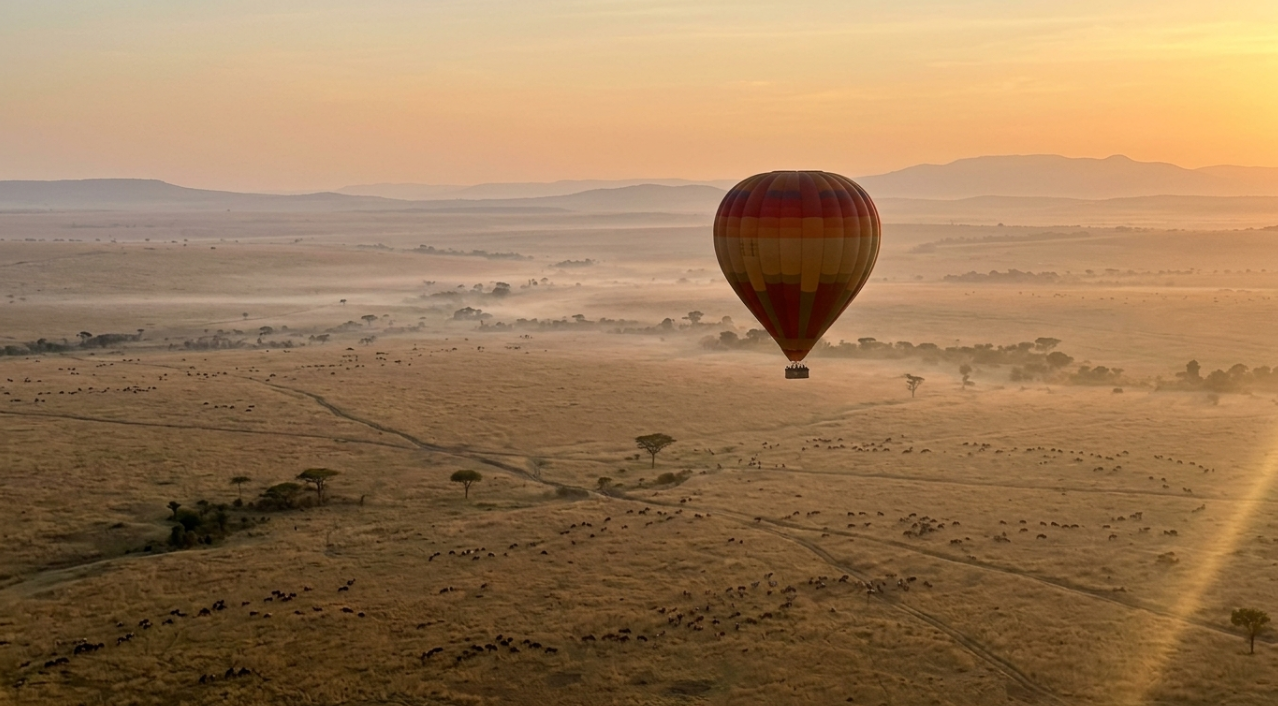
A dawn flight over the Serengeti plains, typically lasting about an hour, followed by a champagne bush breakfast. Multiple practitioners and past travelers describe this as one of the peak experiences of any Tanzania trip. For incentive groups, a balloon flight is often the “wow” moment that gets talked about back at the office. Capacity is limited (balloon baskets hold 16 passengers), so groups larger than 16 need multiple baskets or staggered flights.
Walking Safari
A guided walk through the bush on foot, accompanied by an armed ranger. Walking safaris shift the perspective from vehicle-based observation to ground-level immersion: tracking animal prints, identifying medicinal plants, reading the landscape. For corporate groups, a walking safari functions as a natural team-building activity without the forced feeling of trust falls.
Cultural Immersion (Maasai Village Visit)
A guided visit to a Maasai boma (homestead), typically including traditional songs, demonstrations of daily life, and conversation with community elders. Multiple travelers cite Maasai village visits as among the most discussed memories from their trips. For incentive groups with CSR objectives, cultural encounters ground the experience in local reality.
Zanzibar Beach Finale
The classic Tanzania incentive structure: bush days followed by Indian Ocean beach days. A Serengeti safari followed by a Zanzibar beach close gives a group the adventure high and the relaxation reward, back to back. The transition usually involves a short domestic flight from the Serengeti or Arusha to Zanzibar (roughly 1.5 to 2 hours).
Zanzibar adds 2 to 4 nights and opens up additional experience options: Stone Town heritage walks, spice tours, snorkeling, and private beach dinners. For planners structuring a safari-to-Zanzibar combination, that guide covers the logistics of connecting both halves.
Conservation Encounter
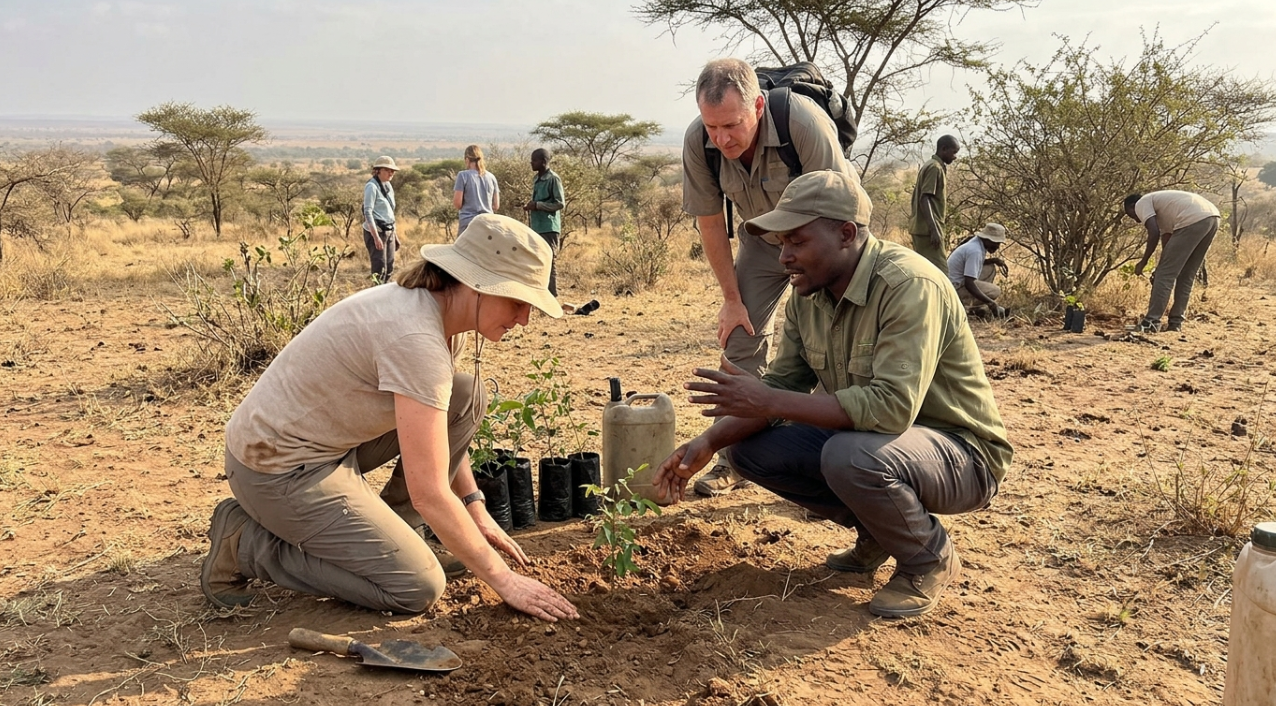
Guided activities tied to wildlife protection: rhino monitoring, tree-planting projects, anti-poaching briefings, or community conservation fund visits. These experiences add substance to an incentive program and generate content for corporate ESG and CSR reporting. According to practitioners in the corporate travel space, conservation encounters often become the most discussed memories, more than the game drives themselves.
Kilimanjaro Team Challenge
A corporate Kilimanjaro climb serving as an elite incentive add-on or standalone reward. This works for smaller groups (6 to 12 participants) with higher fitness levels and is typically positioned as a leadership challenge rather than a mass-participation event. The climb requires 6 to 9 days depending on route, and can be paired with a 3- to 5-day safari for a combined program.
Budget and ROI Terms
Per-Person Spend Benchmarks
The global average per-person spend for incentive travel is approximately $5,100, with North American programs averaging around $6,000 per person. For a premium Tanzania safari incentive (5 to 6 nights), realistic per-person costs fall between $8,000 and $12,000+, with ultra-premium programs exceeding $20,000.
The incentive travel market reached $60.85 billion in 2025 and is projected to hit $70.49 billion in 2026, growing at 15.8% annually.
What Should a Tanzania Safari Incentive Budget Include?
A corporate safari incentive budget should account for more than the nightly lodge rate. Domestic transfers, park fees, private group events, international travel, and contingency costs can materially change the final program price.
|
Budget category |
What to confirm with the operator |
|---|---|
|
Accommodation |
Room category, single or shared occupancy, meals, and drinks |
|
Safari activities |
Game drives, guide services, balloon flights, walking safaris, and other optional experiences |
|
Park and conservation fees |
Applicable entry fees, concession fees, crater-related charges, and taxes |
|
Ground transportation |
Safari vehicles, driver-guides, airport transfers, and road transfers |
|
Domestic flights |
Scheduled bush flights, charter flights, baggage limits, and transfer connections |
|
Group events |
Private bush dinners, awards presentations, entertainment, and event setup |
|
Zanzibar extension |
Additional accommodation, flights, transfers, excursions, and meals |
|
International travel |
International airfare, baggage, and any overnight stays needed for connections |
|
Participant requirements |
Travel insurance, entry requirements, dietary needs, and accessibility arrangements |
|
Contingency |
A reserve for unexpected changes, supplier adjustments, or operational disruptions |
Before comparing proposals, ask each operator to separate included costs, optional upgrades, excluded expenses, taxes, and payment deadlines. Compare the full program cost per participant rather than the accommodation rate alone.
Vehicle Cost Sharing
One of the clearest economies of scale in Tanzania safari planning. Because vehicle and guide costs are shared across passengers, per-person safari costs drop significantly as group size increases:
|
Group Size |
Per-Person Cost (7-day mid-range Northern Circuit) |
|---|---|
|
2 people |
$4,000 to $7,000 |
|
4 people |
$3,000 to $5,500 |
|
8 people |
$2,300 to $4,200 |
|
12 people |
$2,100 to $3,800 |
|
16 people |
$1,900 to $3,400 |
|
20 people |
$1,800 to $3,200 |
These figures cover mid-range accommodation. Luxury and ultra-premium properties will push the per-person cost higher, but the group-size discount still applies to vehicle and guide components.
Non-Cash vs. Cash ROI
The business case for incentive travel over cash bonuses is well-documented. The IRF reports that non-cash rewards yield approximately three times the revenue gains of equivalent cash payouts. Cash bonuses blend into payroll. A sunrise over the Serengeti becomes a story people tell for decades, reinforcing the emotional connection to the company that sent them there.
Why Tanzania for Incentive Travel
Tanzania was named Africa’s Leading Destination at the 2026 World Travel Awards, with Serengeti National Park winning Africa’s Leading National Park and Zanzibar named Africa’s Leading Beach Destination. The country’s MICE credentials are growing, with investment in conference infrastructure and a government push to position Tanzania as a continental leader in business events.
But the real case for Tanzania as an incentive destination isn’t awards. It’s the combination of three things no other country delivers in one package: the Serengeti’s unmatched wildlife density, the Ngorongoro Crater’s geological drama, and Zanzibar’s Indian Ocean beaches, all within a single country and connected by short domestic flights.
How Tanzania Compares to Other Safari Destinations
|
Factor |
Tanzania |
Kenya |
South Africa |
Botswana |
|---|---|---|---|---|
|
Best group size |
10 to 40 |
15 to 100+ |
20 to 150+ |
6 to 20 |
|
Safari character |
Remote, vast wilderness |
Classic, accessible |
City + safari hybrid |
Ultra-exclusive |
|
Air access |
Via Nairobi, Dubai, Amsterdam |
Direct from many hubs |
Direct to Johannesburg, Cape Town |
Regional connections |
|
Beach add-on |
Zanzibar (same country) |
Kenyan coast |
Garden Route |
None |
|
Unique draw |
Serengeti Migration, Ngorongoro Crater |
Maasai Mara crossings |
Conference + safari |
Okavango Delta |
Kenya offers stronger infrastructure for very large corporate groups, with direct international flights into Nairobi. South Africa works well for conference-heavy programs that add a short safari. Botswana suits ultra-premium small groups but lacks scalability. Tanzania hits the sweet spot for mid-sized incentive groups (10 to 40 people) who want genuine wilderness immersion paired with a beach reward.
For groups of 6 to 20 evaluating exclusive-use camps or Migration timing, Duma Explorer can compare specific properties and build a costed proposal. The team operates locally in Tanzania through Alika Africa, with U.S.-based trip design for easier communication across time zones.
Request a Custom Safari Itinerary
Planning a Tanzania Safari Incentive: What to Get Right
How to Plan a Tanzania Safari Incentive Program
A successful Tanzania safari incentive program begins with the participant experience and works backward to accommodation, transport, budget, and operational logistics. The best itinerary is not necessarily the one with the most activities; it is the one that gives the group a memorable experience without creating unnecessary transfers or scheduling pressure.
Match Group Size to the Program Format
|
Group size |
Possible setup |
Key planning consideration |
|---|---|---|
|
8–16 participants |
Exclusive-use villa or small camp |
Confirm room inventory, private dining arrangements, and the cost of exclusive use |
|
17–40 participants |
Larger lodge or coordinated accommodation across nearby properties |
Confirm vehicle capacity, group dining arrangements, and shared activity logistics |
|
41–80 participants |
Larger lodge, multiple properties, or a carefully coordinated camp arrangement |
Assess aircraft capacity, luggage handling, group transfers, and event-production needs |
|
More than 80 participants |
Multi-property program with phased transfers and coordinated activities |
Validate local capacity and operational feasibility before selecting the destination |
These are preliminary planning categories, not guaranteed capacity limits. A property may accommodate a group overnight but lack the dining space, vehicles, staff, or private-event facilities required to serve everyone together.
Build an Itinerary Around the Participant Experience
Plan the itinerary around a manageable number of transfers, sufficient time for wildlife viewing, and a clear reward experience. A short program might focus on one or two safari regions, while a longer program may combine multiple parks with a Zanzibar extension.
When comparing routes, evaluate the time spent traveling against the value of each additional destination. More stops do not automatically create a better incentive trip.
Confirm Accommodation and Transport Together
Lodge capacity and transport capacity must be planned as one system. Confirm the number of rooms, single-occupancy requirements, vehicle allocation, domestic flight schedules, luggage restrictions, and backup arrangements before finalizing the participant count.
Create a Clear Plan for Group Activities
Identify which activities the entire group will share and which will be optional. Private dinners, award presentations, conservation visits, and balloon safaris may require advance reservations, separate capacity checks, or staggered schedules.
Prepare for Operational Changes
Safari programs depend on weather, wildlife conditions, road access, and domestic flight operations. Establish a clear communication process, identify the on-the-ground decision-maker, and agree on contingency arrangements before departure.
A detailed itinerary should make the experience feel effortless to participants while allowing the local operator enough flexibility to manage conditions safely.
Air Access
The 2025 Incentive Travel Index found that air access is the most commonly cited “must-have” for destination selection (41% of planners), and difficult air access was the second most significant deterrent (40%). Tanzania doesn’t have direct flights from most North American or European cities. Participants typically connect through Nairobi (Kenya Airways), Amsterdam (KLM), Dubai (Emirates), or Istanbul (Turkish Airlines). This adds travel time but also creates an opportunity: the journey itself builds anticipation.
For context on planning larger group safaris, that guide covers logistics that apply equally to incentive and family groups.
Sustainability and CSR Reporting
Corporate incentive programs increasingly need to demonstrate social and environmental responsibility. Tanzania offers genuine conservation stories to tell: the Serengeti ecosystem’s protection model, community conservancy partnerships, and carbon offset programs. For companies with ESG reporting requirements, a well-structured incentive safari generates credible content about the impact of the trip, not greenwashing.
Frequently Asked Questions
How far in advance should a Tanzania safari incentive be planned?
Start 12 to 18 months before the intended travel dates. Exclusive-use camps during peak season (June through October) fill early, and qualification periods typically run 6 to 12 months before the trip. Working backward from a September departure, that means beginning the planning process in March of the previous year.
What group size works best for a Tanzania safari incentive?
Tanzania’s sweet spot is 10 to 40 participants. Camps and lodges are smaller than in Kenya or South Africa, which makes exclusive-use buyouts feasible for mid-sized groups but challenging for groups over 50. Smaller groups (8 to 16) get the most intimate experience; groups of 20 to 40 typically need two to three camps in close proximity.
How much does a Tanzania safari incentive cost per person?
For a 5- to 6-night luxury program including accommodation, game drives, park fees, and domestic flights, expect $8,000 to $12,000+ per person. Mid-range options run lower, and ultra-premium programs with exclusive-use camps, balloon safaris, and Zanzibar extensions can exceed $20,000 per person. International airfare is usually additional.
Can you combine a Kilimanjaro climb with a safari incentive?
Yes, but it requires careful participant selection. A Kilimanjaro summit attempt needs 6 to 9 days and moderate-to-high fitness. It works best as a parallel track: one group climbs Kilimanjaro while another does the safari, then both groups reunite for the Zanzibar finale. Or it can be positioned as an elite add-on for a subset of the group.
What is exclusive use, and is it necessary for a corporate group?
Exclusive use means booking an entire lodge or camp so only your group occupies it. It isn’t strictly necessary, but it’s strongly recommended for incentive programs. Without it, your group shares dining areas, guides, and vehicles with other guests, which limits scheduling flexibility and makes private events (bush galas, award ceremonies) difficult to arrange.
Is Tanzania safe for corporate incentive groups?
Tanzania is one of the most stable countries in East Africa and has welcomed safari tourists for decades. The northern safari circuit and Zanzibar are well-established tourism zones with strong safety records. Standard precautions apply: use reputable operators with qualified guides, carry appropriate travel insurance, and follow in-park safety protocols. A good DMC handles all of this as part of ground operations.
What makes a Tanzania safari incentive different from a beach resort incentive?
Two things. First, the shared intensity: watching a cheetah hunt or a river crossing together creates a bonding effect that poolside cocktails simply cannot replicate. Second, the storytelling value. Practitioners on Reddit and in corporate travel forums consistently report that safari incentive trips generate more internal buzz, more social media content, and more “I want to earn that next year” motivation than traditional resort programs. The experience is genuinely out of the ordinary, and that’s the whole point of an incentive reward.
Design a Private Safari Incentive